REVIEW · BARCELONA
Barcelona: Hop-On Hop-Off Bus & Aquarium Tour
Book on GetYourGuide →Operated by Julia Travel Gray Line Spain · Bookable on GetYourGuide
Barcelona has two great ways to explore.
This combo ticket pairs hop-on hop-off bus freedom with entry to the Aquarium of Barcelona, so you can bounce between viewpoints, neighborhoods, and big Barcelona “wow” stops without hauling a map all day. I like that it runs on your schedule: you choose when to hop off, then ride again later with the same ticket. I also like that the aquarium is built around Mediterranean habitats like the Ebro Delta and Medes Islands, not just generic tanks.
One thing to plan for: the bus experience depends on when you show up. Bus frequency can vary a lot by season (about 5 to 30 minutes), and each full route takes around 2 hours, so you’ll want a simple plan if you’re doing the whole day.
In This Review
- Key points before you go
- Why This Barcelona Combo Works: Bus Freedom Plus Aquarium Time
- Choosing 24 or 48 Hours: How to Plan Your Route
- The Orange West Route: From Miró to the Sea
- The Green East Route: Beaches, Sant Pau, and Gaudí Hot Spots
- Getting in and Getting Around: Frequency, Stops, and Smart Hopping
- Aquarium of Barcelona: Mediterranean Habitats and the Shark Tunnel
- Price and Value at a Glance for $73
- Who This Tour Suits (and Who Might Prefer Another Plan)
- Practical Tips to Make It Feel Like Your Day
- Should You Book This Barcelona Bus and Aquarium Combo?
- FAQ
- Where do I start the Barcelona hop-on hop-off bus?
- How long is the bus ticket valid?
- Do I get access to both bus routes with one ticket?
- How long does it take to complete each bus route?
- How often do buses run?
- Is the Aquarium ticket included, and can I enter more than once?
- What audio languages are included on the bus?
- Is lunch included in the price?
- What’s the main cost to plan for?
- Who operates the tour?
Key points before you go

- Two routes, one ticket: Orange and green routes are both included, so you can mix sights.
- Real flexibility: Hop on and hop off as many times as you want for 1 or 2 consecutive days.
- Air-conditioned double-decker rides: A practical break from walking heat and hills.
- Aquarium highlights are specific: Ebro Delta, Medes Islands, and an Oceanarium acrylic tunnel.
- Audio guide is multilingual: Plus a multilingual looping system adapted for people with auditory disabilities.
Why This Barcelona Combo Works: Bus Freedom Plus Aquarium Time
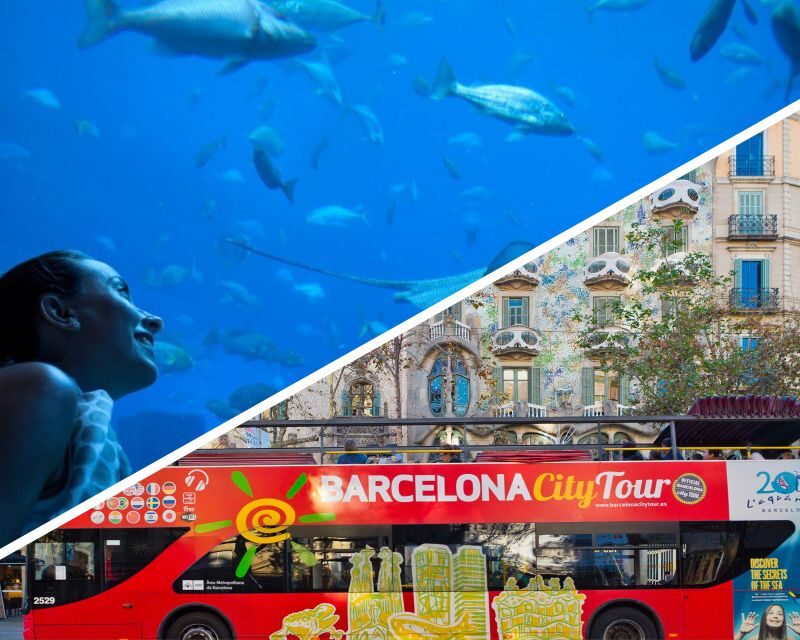
This is the kind of ticket that helps you do Barcelona on hard-mode less often. You get two different tempos in one purchase: a slow, flexible city ride during the day, and a focused indoor aquarium when you want a break from sun and crowds.
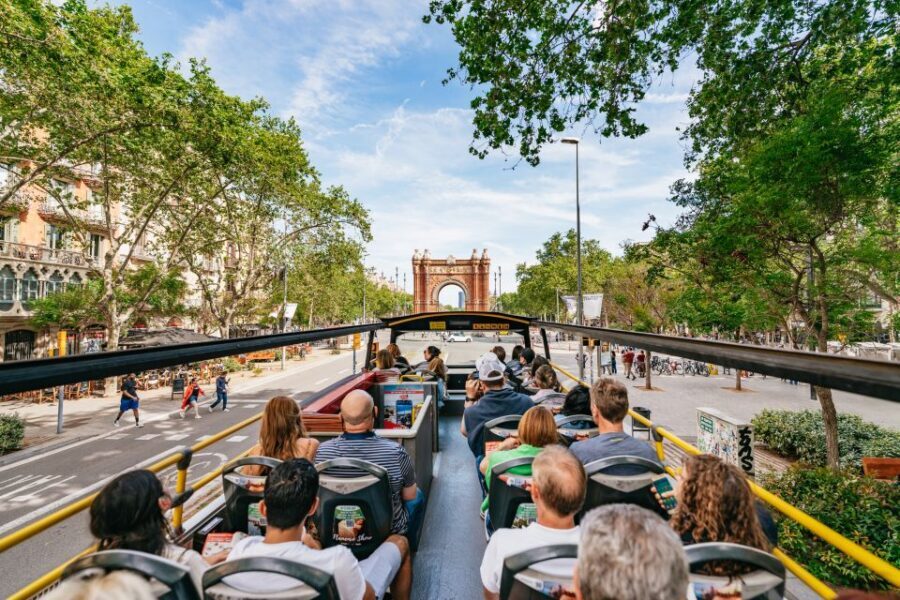
The bus part is straightforward. It’s an open double-decker with air-conditioning, and it covers a wide arc of Barcelona—from big central squares like Plaça Catalunya and Plaça d’Espanya to seafront areas and major landmark neighborhoods. The best part is the rhythm: you don’t have to commit to one long outing. You can ride, hop off for an hour or two, then return when you’re ready.
The aquarium is the other half of the equation, and it’s not an afterthought. You’re visiting the Aquarium of Barcelona, described as the largest Mediterranean-themed aquarium in the world. You’ll see Mediterranean species and habitat zones, including two that are explicitly themed around Spain’s coastline: the Ebro Delta and the Medes Islands. Then there’s the Oceanarium acrylic tunnel, which is basically designed to make you feel like you’re passing through the water with sharks.
You can also read our reviews of more tours and experiences in Barcelona


Choosing 24 or 48 Hours: How to Plan Your Route

The ticket is valid for either 1 or 2 consecutive days, depending on the option you pick. That choice matters, because each route is about 2 hours from start to finish. Even if you don’t ride the entire loop, the timing will shape how many stops you can realistically tackle.
If you choose 24 hours, I’d think of it as: do one “anchor side” of town plus the aquarium. For example, you could spend more time on the orange West Route (great for viewpoints and museum-heavy areas) and still have time to hop on the green East Route for one or two key stops like the beach strip or Gaudí landmarks.
If you choose 48 hours, you can relax into it. You can ride more segments instead of sprinting between highlights. This is especially helpful if your aquarium visit overlaps with a busy day outside, since the aquarium ticket is valid for a single use—so you’ll want to be sure you’re scheduling it when you can actually sit down and enjoy it.
One practical note: buses depart approximately every 30 minutes from 9:00 AM to 7:00 PM (last return), but the frequency at stops can be anywhere from 5 to 30 minutes depending on the season. Translation: you’re rarely stranded, but you might wait a bit if you’re hopping at the wrong moment.
The Orange West Route: From Miró to the Sea

The orange West Route is packed with big names and varied scenery. If you like Barcelona from above—parks, viewpoints, and museum areas—this is the one I’d lean into first.
Some stops that feel like “serious sightseeing”:
- Jardins de Miramar: Great for getting that classic city-view mood without needing to hike for hours.
- Fundació Joan Miró: A logical hop if you want modern Catalan culture in the middle of sightseeing.
- Anella Olímpica and Museu Nacional d’Art de Catalunya (MNAC): This area is built for major landmark photos and a sense of Barcelona’s grand, monumental scale.
- Plaça d’Espanya and Estació de Sants: Good “hub” stops where you can orient yourself fast.
- Camp Nou – Museu FC Barcelona: If you’re a football fan, this is one of the obvious reasons to ride.
- La Pedrera and Passeig de Colom: Gaudí territory and then the waterfront vibe.
A clever bit is the way some stops act as shortcuts. The route includes Sagrada Familia () and Passeig de Colom () as connection points. Those marked stops are designed so you can reach Parc Güell without having to ride through to Port Olímpic (for orange route passengers), or help green route passengers reach Sagrada Familia without taking the full route. In plain terms: you can reduce backtracking.
Drawback to consider: the orange route is long. You’ll see a lot, but if you hop off at too many “big” stops in one day, you’ll lose time waiting and walking between stops. I like treating this route as a theme loop: pick 2–4 stops that match your mood, then let the rest pass by from the top deck.
The Green East Route: Beaches, Sant Pau, and Gaudí Hot Spots

The green East Route mixes coastline energy with some of Barcelona’s most famous architecture. If you want sand, sea air, and then a quick hop to Catalan icons, this side of town is a strong bet.
Notable stops include:
- Barceloneta and Port Olímpic: You get the classic seaside neighborhood feeling and a good lead-in to the coast.
- Platja del Bogatell and Nova Mar Bella: Less “instant tourist” and more open beach atmosphere.
- Fòrum: A practical stop if you want to break up your day away from the most central streets.
- Torre Glòries: Easy to spot and useful as a landmark reference point.
- Recinte Modernista de Sant Pau () and El Born – Parc de la Ciutadella ():** Both are excellent “culture and neighborhood” stops, and the route’s notes matter here.
The green route also includes Park Güell, plus the Gaudí corridor stops like La Pedrera and Casa Batlló. Then you wrap through central areas like Plaça Catalunya and end up at Arc de Triomf, with El Born sitting right there for that old-streets, small-steps feeling.
There’s also a connection purpose built into the green route. Stops marked ( ) are connection points that help green route passengers visit Sagrada Familia without taking the full route to La Pedrera**. That’s useful if you want one major Gaudí moment without committing to every segment.
Possible drawback: the east side can feel more stop-and-walk. Beach and neighborhood zones aren’t always quick to move through compared with landmark clusters. My advice: plan a “beach time” block and then “architecture time” block, instead of trying to do everything in between.
Getting in and Getting Around: Frequency, Stops, and Smart Hopping
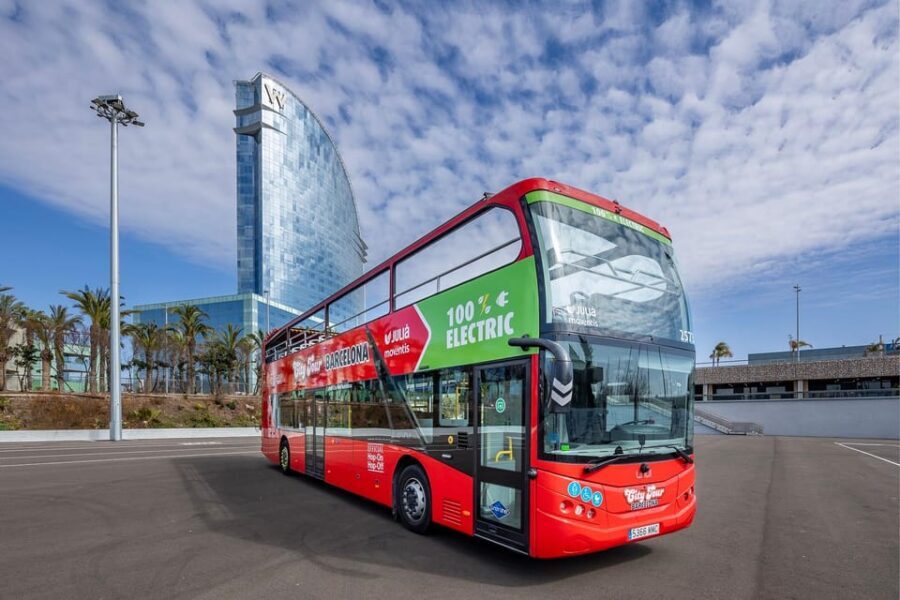
The tour’s biggest strength is also why it works for so many styles of travel: you’re not locked into a guided script. You can start at the main stop at Plaça Catalunya, and you can begin from any of the other stops listed. The bus system includes a multilingual audio guide, so you’re not relying on luck for what you’re looking at.
Here’s what “at your own pace” really means in practice. A route takes about 2 hours, and buses run frequently enough that you can usually hop off, return, and keep going. But because the frequency at stops varies by season (5–30 minutes), your day still benefits from simple timing rules.
My favorite approach:
- Pick one “must-see” stop on each route.
- Add one optional stop near it.
- Treat the rest as bonus scenery from the top deck.
Also, the bus stop signage can be inconsistent. One review flagged a lack of clear signage at stops when trying to get back on. I’d take that seriously and bring this mental checklist: know the route color you want (orange or green), and check the stop area for where that route is boarding before you assume anything. If you’re unsure, it’s quicker to ask staff or other passengers than to circle around.
Finally, remember the operating window: buses depart from 9:00 AM to 7:00 PM, with last return at 7:00 PM. If you plan to finish strong, start earlier rather than counting on a late-day miracle.




Aquarium of Barcelona: Mediterranean Habitats and the Shark Tunnel
If you only do one part of this combo, I get it: the bus is convenient. But the aquarium is the reason this ticket has range.
This aquarium is Mediterranean-themed and described as the largest of its type. You’ll see marine communities inspired by protected areas on Spain’s coastline, specifically the Ebro Delta and the Medes Islands. That matters because the exhibit logic feels geographic, not random. You’re learning how different marine environments function, at least as explained through the exhibit information.
Then comes the Oceanarium acrylic tunnel. It’s the kind of feature that makes people pause mid-walk, because it runs the length of the aquarium and gives you that swimming-with-sharks feeling. You don’t need to be an expert on marine biology to enjoy it—you just need time to stand still and look up.
A practical note: the aquarium ticket is valid for a single use. So don’t treat it as something you’ll “maybe” do later. Build your schedule around it. If you’re doing 24 hours, consider doing the aquarium earlier in the day or in the middle when you want a break, not as a last-minute task when you’re tired.
The aquarium entrance fee is included, so once you’re inside, you’re not mentally doing math every time you see another exhibit section. That alone improves the experience.
Price and Value at a Glance for $73

At around $73 per person, this combo isn’t the cheapest way to do Barcelona. But it’s priced like a “time saver” and a “one-stop ticket.”
You’re paying for:
- A 24 or 48-hour hop-on hop-off bus pass with two routes
- Multilingual audio guidance
- Entry to the Aquarium of Barcelona
The bus pass has real value because you can ride repeatedly with one ticket. If you’re trying to see multiple districts in one or two days, the cost of taxis or separate attraction tickets can pile up quickly. This ticket reduces that risk. You can shift plans without paying again.
The aquarium inclusion also changes the math. Aquarium visits are often a separate buy. Here, it’s baked in. And because it’s a Mediterranean-themed aquarium with major features like the acrylic tunnel and habitat-focused exhibits, it’s not just a generic “wet room” attraction.
Where the value can dip: if you’re only going to use one bus route, or if you rush the aquarium without enjoying it, you may feel like you overpaid. My advice is to plan to use both components meaningfully. Use the bus to reduce fatigue, and use the aquarium to slow down.
Who This Tour Suits (and Who Might Prefer Another Plan)
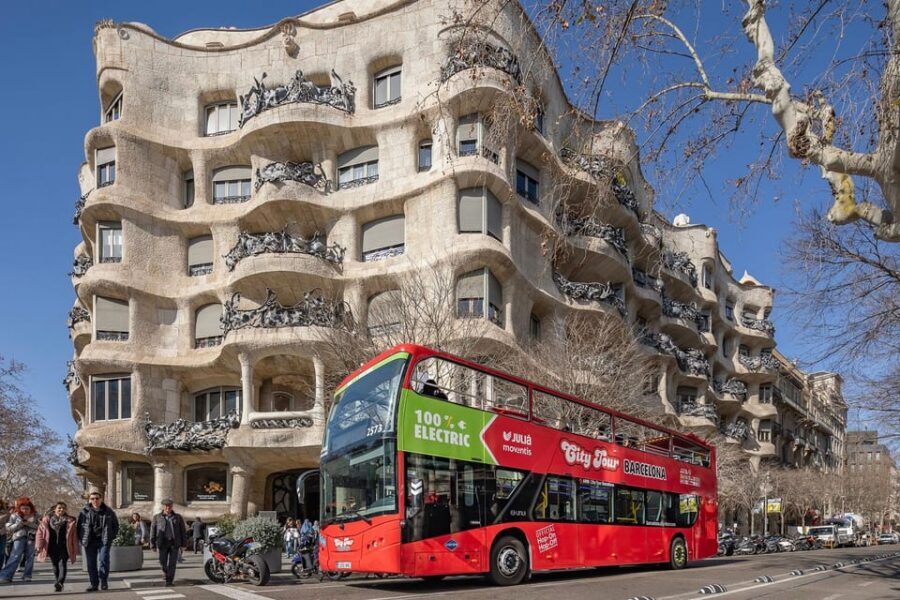
This experience is best for you if you want control without doing all the planning. The ticket fits well if:
- You’re short on time and want maximum visibility of major landmarks.
- You don’t want to rely entirely on walking between far-flung areas.
- You like having an indoor option that breaks up the day.
It also suits families, solo travelers, and couples—because the bus gives shared convenience and the aquarium gives shared “look at this” moments.
You might consider a different approach if:
- You prefer totally guided storytelling and want a host in your ear the whole time.
- You’re the type who never waits for buses and hates “hop on, hop off” logistics.
- You know you won’t use the second day (if you choose 48 hours).
Overall, I see this as a smart compromise: less friction, more coverage, and a built-in reason to take a mid-day reset.
Practical Tips to Make It Feel Like Your Day

A few small moves can turn this into a smooth, high-value day.
First, use the route colors as your mental map. The orange route is a great spine for west-side landmark clusters like Miró, MNAC, and Gaudí stops around La Pedrera. The green route is strong for the coast and central architecture stops like Park Güell, Casa Batlló, and Plaça Catalunya.
Second, think in blocks. Do one block of sightseeing from the bus (hop off, see a couple things, hop back on). Then do your aquarium time as its own block. Don’t scatter it across naps and snack breaks.
Third, use the audio guide. It’s available in many languages—English, Catalan, Spanish, French, German, Russian, Portuguese, Chinese, Japanese, Dutch, Hebrew, Italian, Arabic, Swedish, Norwegian, Turkish. Even if you don’t follow every word, it helps you place what you’re seeing.
Finally, keep an eye on the end of day. Buses operate roughly 9:00 AM to 7:00 PM. If you want a final ride for city views, don’t leave it until the last hour.
Should You Book This Barcelona Bus and Aquarium Combo?
Book it if you want a low-stress Barcelona day with high coverage. The two-route hop-on hop-off format gives you flexibility, and the Aquarium of Barcelona adds a distinct second experience that doesn’t depend on weather or shoe stamina. If you’re doing 1–2 days and you want to hit both landmark areas and a major indoor attraction, this ticket is a solid value play for your time.
Skip or rethink it only if you’re sure you’ll barely use the bus or you plan to rush the aquarium. At that point, you’d be paying for access you’re not actually using.
If you fall in the middle—curious, time-limited, and hoping to make Barcelona easy—this combo is a very sensible way to do it.
FAQ
Where do I start the Barcelona hop-on hop-off bus?
Plaça Catalunya is the main stop, but you can start the tour at any of the Barcelona City Tour stops.
How long is the bus ticket valid?
Your hop-on, hop-off bus ticket is valid for 1 or 2 consecutive days, depending on the option you choose.
Do I get access to both bus routes with one ticket?
Yes. The ticket includes all routes and stops on a single ticket, including both the orange West Route and the green East Route.
How long does it take to complete each bus route?
Each route takes approximately 2 hours.
How often do buses run?
Frequency at stops varies by season, between about 5 and 30 minutes. Buses depart approximately every 30 minutes from 9:00 AM to 7:00 PM, with the last return at 7:00 PM.
Is the Aquarium ticket included, and can I enter more than once?
The aquarium entrance fee is included, and the aquarium ticket is valid for a single use.
What audio languages are included on the bus?
Audio guides are available in English, Catalan, Spanish, French, German, Russian, Portuguese, Chinese, Japanese, Dutch, Hebrew, Italian, Arabic, Swedish, Norwegian, Turkish.
Is lunch included in the price?
No, lunch is not included.
What’s the main cost to plan for?
The price is listed as $73 per person.
Who operates the tour?
The experience provider is Julia Travel Gray Line Spain.