REVIEW · BARCELONA
Barcelona in a Day: Personalized Private 6h Tour
Book on Viator →Bookable on Viator
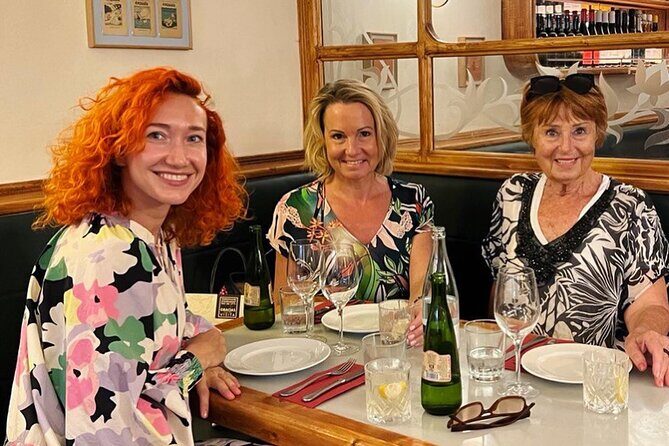
Six hours, and Barcelona clicks into place. This private Barcelona day plan is built to move fast without feeling rushed, with photo stops and plenty of time to ask questions. With guide Liliia, the vibe is more friend-walk than lecture, and you also get practical tips for the rest of your trip.
I especially like how the route mixes big names with off-the-beaten-path moments, like a medieval landmark tied to Gaudí’s story and a few “most visitors miss this” corners. I also like the food angle: you don’t just look at markets and streets—you sample local flavors, including churros with chocolate and an olive oil tasting.
One thing to consider: not everything you’ll pass through is ticket-free. Some stops involve areas where you may need to buy admission or pay for what you choose to eat, especially at the market and indoor sights.
In This Review
- Key highlights worth marking on your mental map
- Private 6-hour structure: why this works better than trying to DIY
- Hotel pickup, smooth start, and the logic behind the route
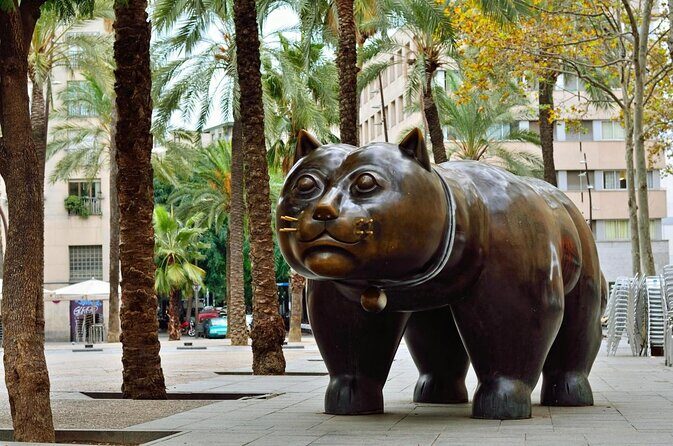
- El Raval: Gaudí’s final chapter, street art, and a secret terrace
- La Rambla: the famous boulevard, then straight into local food life
- Mercat de la Boqueria: the culinary heart that’s worth seeing up close
- Gothic Quarter: Roman walls, a cloister with geese, and quiet legends
- El Born: design energy, Roman ruins, and Santa Caterina’s roof
- Eixample modernism: Casa Mila, Casa Batlló, Sagrada Família, and a vault-room secret
- Price and value: what $226.37 buys you in real terms
- Who this tour is best for
- Should you book? My practical take
- FAQ
- How long is the Barcelona in a Day private tour?
- Is this tour private?
- What’s included in the price?
- Do I get hotel pickup?
- What about admissions and food costs?
- What language is the tour in?
- Where does the tour end?
- Can I cancel for a full refund?
- Is it suitable for everyone?
Key highlights worth marking on your mental map
- Private pacing with Q&A time so you can steer the walk toward your interests
- Photo stops planned in, not just random “pause for a second” moments
- Local snacking included, including churros with chocolate plus an olive oil tasting
- Neighborhood contrast from El Raval’s street life to Eixample’s modernist architecture
- A practical end point near Pg. de Gràcia (handy for continuing the day)
Private 6-hour structure: why this works better than trying to DIY
Barcelona is the kind of city where you can walk for hours and still feel like you missed the point. This kind of private, 6-hour format gives you a clean framework: major districts in one go, with someone who knows what’s worth your time.
The big value is not just coverage. It’s judgment. Your guide helps you choose what to look at closely, what to skip, and where to stand so you get photos that actually make sense.
And because it’s private, you can ask questions as you go. That means you can stop to understand what you’re seeing, not just collect landmarks.
You can also read our reviews of more private tours in Barcelona


Hotel pickup, smooth start, and the logic behind the route

You meet at the entrance of your hotel, then the day flows through central neighborhoods and ends near Pg. de Gràcia. That matters because Barcelona’s best sights are spread out, and transfers can burn time.
This runs Monday to Sunday, and the service window is broad. If you like starting earlier, you can usually pick a time within the 7:00 AM–5:00 PM range.
Also, the tour uses a mobile ticket, so you’re not stuck hunting for paper confirmations while you’re trying to get out the door.
El Raval: Gaudí’s final chapter, street art, and a secret terrace
El Raval is one of Barcelona’s big “before-and-after” neighborhoods. Over the last few decades it’s shifted a lot, and the mix shows in everything from street art to cozy tapas bars.
Here’s what you’re looking at:
- A medieval hospital tied to Gaudí’s death
- Shops of local designers
- Colorful street art
- Tapas-style places where locals actually gather
Two smart touches make this stop more than a quick photo break. First, you get an olive oil tasting. Second, your guide shows you a secret terrace—the kind of viewpoint that’s hard to find on your own unless someone points you there.
Timing is about 1 hour 30 minutes. That’s long enough to breathe, snack, and actually notice details like the way the streets change block by block.
La Rambla: the famous boulevard, then straight into local food life
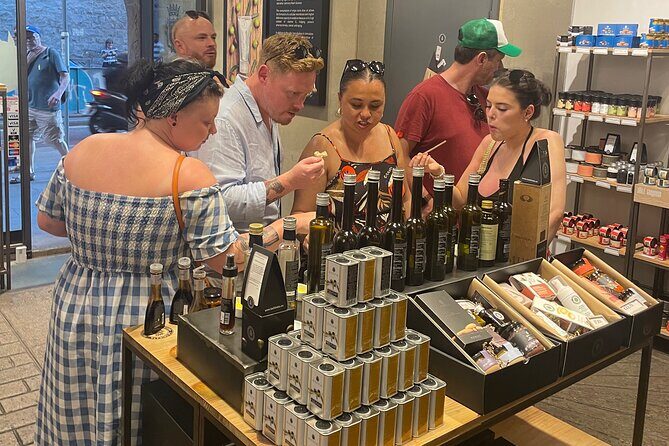
La Rambla is the postcard street that never stops moving. It’s famous for a reason: history, art, street performers, and classic Barcelona street energy all land in one long stretch.
On your walk, you’ll pass historic theaters and elegant buildings, and you’ll see the classic flower stalls. You’ll also learn about the avenue’s more complicated past, including fires and how its identity has shifted over time.
But the tour doesn’t stop at the scenery. It also builds in what to do right along the way:
- Historic and contemporary local art spots
- A connection to Gaudí’s earlier works nearby
- Places connected to where Picasso lived and created
And then comes the food angle. You’ll head toward the market area where locals go for seafood and fish. La Rambla is famous; the market life next to it is where Barcelona’s eating habits show up in real time.
This stop is about 1 hour, and it’s mostly a walking experience with frequent “look right here” moments for photos.
Mercat de la Boqueria: the culinary heart that’s worth seeing up close
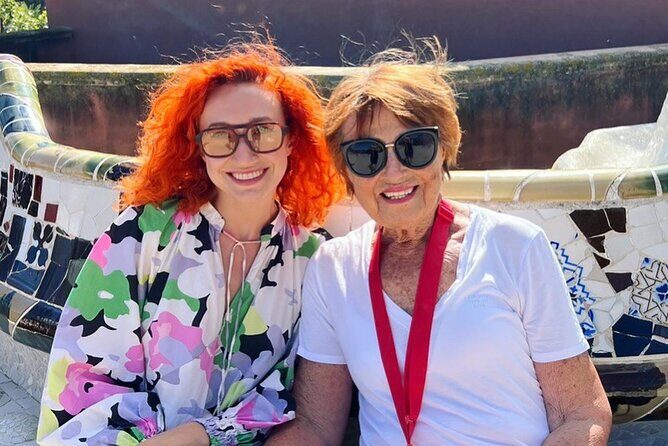
Mercat de la Boqueria is one of the city’s oldest and most famous markets. It started near the old city gates as an open-air market, and now it’s become a food center where chefs go for inspiration.
What you’ll notice immediately:
- Rows of fresh fish and seafood
- Bright fruit and vegetable stalls
- Ham counters (jamón) and cheese displays
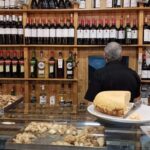
- Traditional bars where you can try typical bites and cava
Admission isn’t included, and the food you order is also not included. But even if you don’t buy much, it’s still worth going slow. Markets like this are partly about flavors, but also about craft: how vendors display produce, how customers shop, and how the place feels at peak times.
This stop is about 40 minutes—just enough time to get oriented, spot what looks best, and avoid turning it into a sprint.





Gothic Quarter: Roman walls, a cloister with geese, and quiet legends
The Gothic Quarter is Barcelona’s oldest core. The streets feel like a puzzle—narrow lanes, stone corners, and layers of building history stacked on top of each other.
Here’s what your guide points out:
- Sections of the original Roman wall
- The historic Jewish Quarter
- Barcelona Cathedral, plus a hidden cloister full of geese
- A jeweler’s workshop showing local craftsmanship
The value here is interpretation. The streets are beautiful, but the real payoff is understanding what you’re seeing and why it’s where it is.
This stop is about 1 hour. You’ll have time to walk, stop, and look up. Expect some uneven footing—this is old-city walking.
El Born: design energy, Roman ruins, and Santa Caterina’s roof
El Born is where Barcelona leans creative. It’s part history, part art scene, part shopping wander.
You’ll explore:
- Small art studios and galleries
- The oldest market in the city, Santa Caterina, with its colorful wavy roof
- El Born Cultural Centre, built over ancient Roman ruins
- Concept stores and local designer brands
- Side courtyards and cafe lanes that feel calmer than the main streets
This neighborhood has a “slow down and look” feel. Instead of only chasing big sights, you get a chance to see how locals and visitors mix—especially around the market area and quieter courtyards.
Time is about 50 minutes. It’s a solid chunk for photos, a quick browse in a couple shops, and a mental reset before modernism takes the stage.
Eixample modernism: Casa Mila, Casa Batlló, Sagrada Família, and a vault-room secret
Eixample is the modernist district that people come to Barcelona for in the first place. It’s UNESCO recognized, and you can see the late-19th-century wealth and imagination in the façades.
Your guide shows you standout works like:
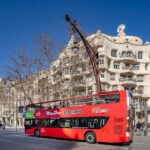
- Casa Milà
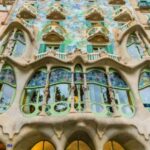
- Casa Batlló
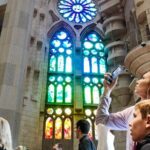
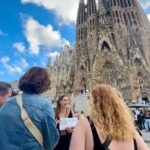
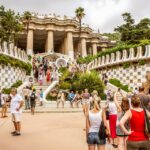
- Sagrada Família (you’ll see it from the street level viewpoints included in the route)
And you don’t just get the headline buildings. You’ll also learn the urban design logic that makes Eixample feel so different:
- Octagonal blocks
- Chamfered corners
- Nature-inspired decoration themes
One especially memorable stop is a secret vault room in an old Spanish bank. That’s the kind of interior detail that most people miss because it’s not obvious from the street.
This portion is about 1 hour. It ends near Pg. de Gràcia, which is great because you can continue the day with more dining or another sight while you’re already in a good location.
Price and value: what $226.37 buys you in real terms
At $226.37 per person, this is not a budget hop-on-hop-off. But for a private 6-hour plan in central Barcelona, the pricing starts to make sense when you add up what’s included.
You get:
- Guided tour time across multiple neighborhoods
- Hotel pickup and an end point near Pg. de Gràcia
- Water for each participant
- Churros with chocolate
- A list of recommendations after the tour
- A personalized approach based on your requests
- Built-in photo stops and time for questions
Where you may spend extra is mostly tied to optional admissions and food purchases (especially at indoor or market stops). In other words, you’re paying for expertise, route efficiency, and the chance to experience more with less confusion.
If you’re the type who likes seeing Barcelona with a plan but still wants flexibility, the value feels fair. If you’re trying to keep costs super low, this will likely feel like a splurge.
Who this tour is best for
This tour is a strong match if you:
- Want a first-time Barcelona orientation that still feels personal
- Like architecture and want more than one neighborhood’s worth of details
- Appreciate photo planning (not just snapping and moving)
- Prefer local food moments with guidance
It can also work well for repeat visitors, because a private guide can tailor stops to what you missed the first time.
If you hate walking, or you want a very slow, sit-everywhere schedule, you might find this pace a bit full. Six hours in old streets plus market corridors is still a lot of motion.
Should you book? My practical take
Book it if you want your day to feel organized but not stiff. The route balances story (Gaudí’s connections, Roman layers, Jewish Quarter context) with practical street-level Barcelona (markets, tapas-style stops, design shopping).
Skip it if you already have a tight personal plan and you don’t care about guided context, snacks, or photo stops. In that case, you might do just as well on your own with a map and a couple of must-see addresses.
If you do book, send your guide a short note about what you care about most—architecture, food, art, or hidden corners. The tour is designed for that kind of personalization.
FAQ
How long is the Barcelona in a Day private tour?
It runs for about 6 hours.
Is this tour private?
Yes. It’s a private tour/activity, with only your group participating.
What’s included in the price?
The tour includes a guided experience, bottled water for each participant, churros with chocolate, and a list of recommendations after the tour.
Do I get hotel pickup?
Pickup is offered. The meeting plan is to meet at the entrance of your hotel.
What about admissions and food costs?
Admission tickets and market food are not included. You may need to pay for what you want to eat or enter at certain stops.
What language is the tour in?
It’s offered in English.
Where does the tour end?
It ends at Pg. de Gràcia, 43, in Eixample (near Casa Batlló).
Can I cancel for a full refund?
Free cancellation is available. You can cancel up to 24 hours in advance of the experience start time for a full refund.
Is it suitable for everyone?
Service animals are allowed, and most travelers can participate.
If you tell me your travel dates and what you care about most (Gaudí architecture, food, art, or viewpoints), I can suggest which parts of this route you should prioritize first.