REVIEW · BARCELONA
Barcelona: Montserrat & Sagrada Familia Guided Tour
Book on GetYourGuide →Operated by Amigo Tours Spain · Bookable on GetYourGuide
Montserrat and Gaudí in one day.
This combo tour is interesting because it links two very different worlds: a mountain monastery built for pilgrims, then Gaudí’s ongoing masterpiece in the city. I especially like how it takes care of the heavy lifting—transport, timed entry, and guide narration—so you can focus on the sights, not the logistics. You’ll start with Montserrat Monastery up in the Catalan hills and finish at Sagrada Familia with a guided, headsets-included tour.
Two things I really like: the Montserrat portion pairs architecture with on-site context, including an audiovisual presentation, and you get a special taste of local monk-made licor. I also like the Sagrada Familia guide setup with headsets, which matters in a place where sound can bounce and crowds can get loud.
One drawback to plan around: you have limited freedom inside Sagrada Familia, since tower access isn’t included and security lines can still affect timing. Also, there’s a bit of a reset day rhythm—Montserrat ends, you go back to Barcelona, then you switch to Sagrada Familia at a set meeting time.
In This Review
- Key things worth knowing before you go
- Two icons, one schedule: how this day tour really works
- Getting to Montserrat: coach ride, Monistrol stop, and the rack railway
- Inside Montserrat Monastery: Madonna, atrium, sacristy, and monk-made licor
- The important breaks: what to do during your Barcelona gap
- Sagrada Familia with a guide: symbolism, façade contrasts, and the unfinished story
- Security, dress code, and why towers are not part of the deal
- Where the tour is a great fit (and where it isn’t)
- Price and value: is $141 a fair deal?
- My honest bottom line: should you book this tour?
Key things worth knowing before you go
- Two guided tours in one day: Montserrat Monastery + Sagrada Familia
- Rack railway ticket included for the Montserrat climb (big part of the experience)
- Sagrada Familia headsets help you actually catch the guide in the church space
- Virgin Throne access and an audiovisual room add depth beyond just walking rooms
- Time buffers in Barcelona let you eat and stretch your legs before Sagrada Familia
- Towers are not included, so you’ll visit the main basilica spaces only
Two icons, one schedule: how this day tour really works
If you’re short on time in Barcelona, this is a smart way to hit the two must-see icons without turning your day into a transportation scavenger hunt. Montserrat is the one that feels like a trip out of the city. Sagrada Familia is the one you’ll keep thinking about long after you leave the neighborhood.
What makes the schedule feel manageable is the way it’s split into clear blocks. You do Montserrat first, including the guided monastery visit. Then you ride back into Barcelona for a break. Finally, you head to Sagrada Familia at a fixed meeting time for your second guided segment. That structure means you’re not constantly waiting for the group or trying to guess which line is moving fastest.
And yes, it’s worth it that the tour explains what you’re seeing. At Montserrat, you’re not just looking at stone and stained glass. At Sagrada Familia, Gaudí’s design is loaded with symbolism, and the guide helps you read it instead of just admiring it.
You can also read our reviews of more guided tours in Barcelona

Getting to Montserrat: coach ride, Monistrol stop, and the rack railway
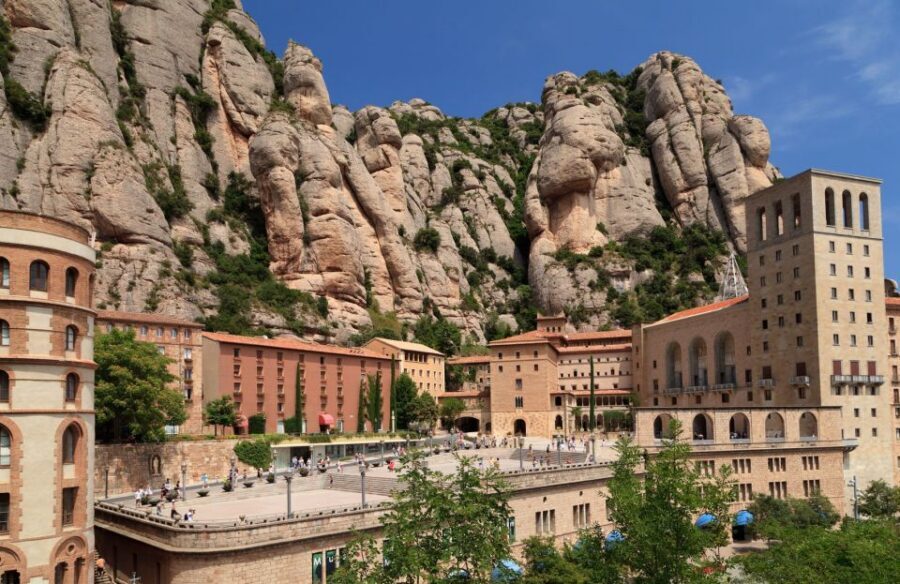
The day starts with a round-trip transport setup that takes you from Barcelona up to Montserrat. You’ll travel by bus/coach for about an hour before switching modes for the mountain ascent. A short train segment (around 15 minutes) connects you to the area near the monastery. Then you use the rack railway, and that part is more than a ride—it’s your first real preview of what Montserrat feels like.
From a comfort standpoint, this is the best way to do the climb. You avoid the hassle of figuring out connections on your own. From a feeling standpoint, it gets you into the pilgrim mindset right away: you’re moving uphill, seeing the horizon, and getting that sense of arrival before you even reach the abbey buildings.
Wear good shoes. The mountain areas can involve walking on uneven ground once you’re near the monastery. Also, try to travel light. The tour doesn’t require big luggage, and later you’ll be dealing with Sagrada Familia security checks.
Inside Montserrat Monastery: Madonna, atrium, sacristy, and monk-made licor
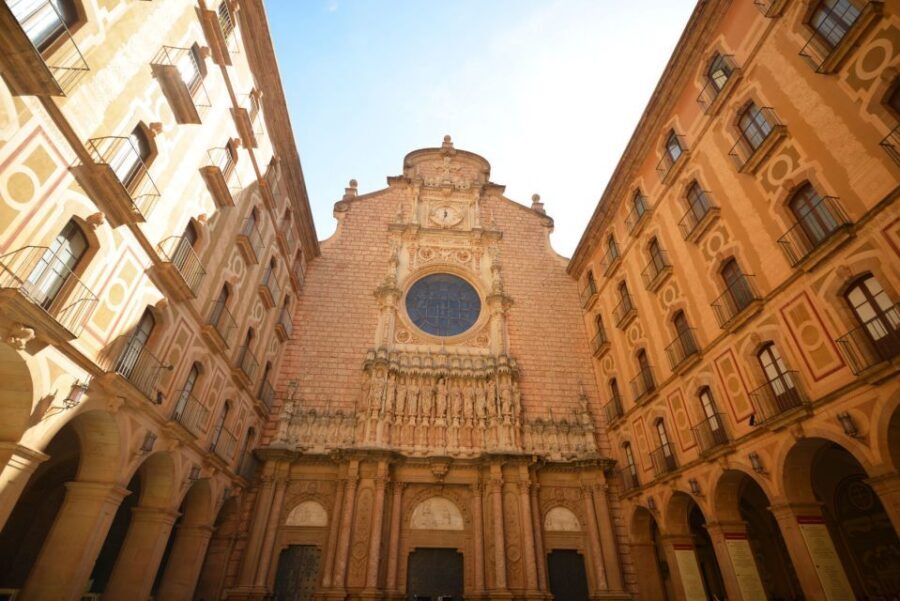
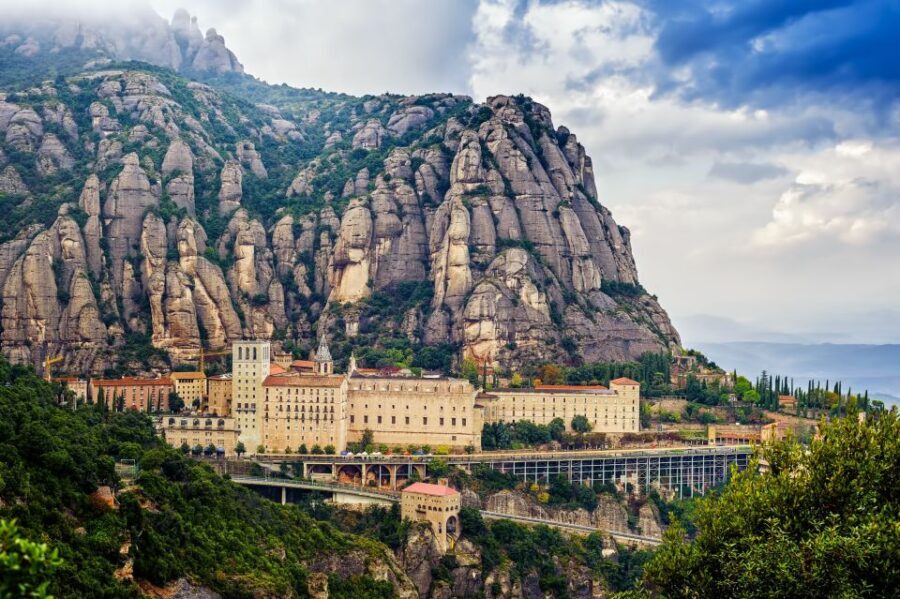
Montserrat Monastery is where the tour earns its keep, because it combines the big visuals with explanations of why this place matters. Your guided visit runs about an hour, and it’s arranged so you see the key areas without burning your whole day.
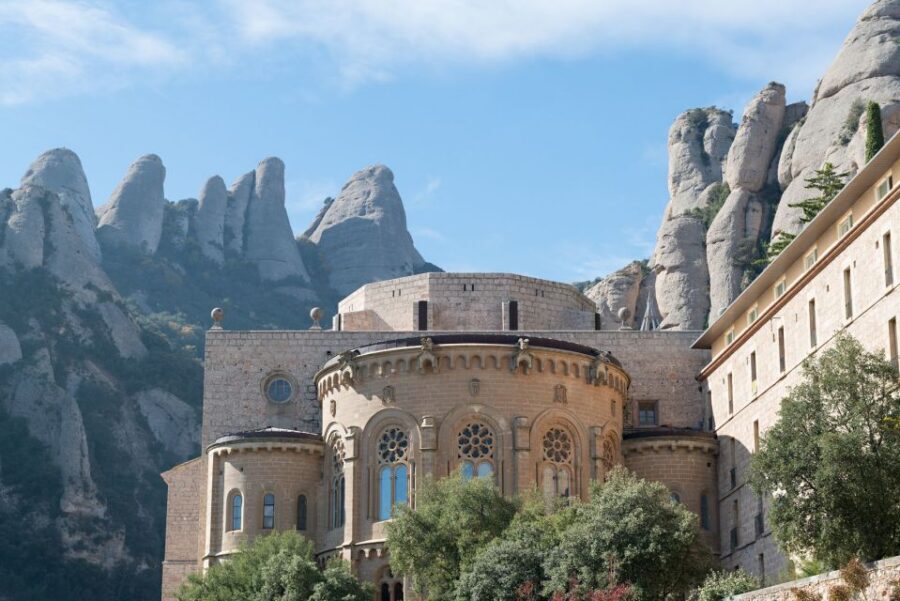
You’ll visit the monastery with a guide who brings context to the site’s architecture. The tour includes time in areas like the atrium and sacristy, plus access to the Virgin Throne. That’s not just window dressing. Being able to stand in front of important devotional spaces changes how you read the building.
One of the more memorable touches is the audiovisual presentation. It’s designed to give you a sense of the abbey’s sound culture—think singers and teachers—so you’re not standing in a quiet building wondering what you’re supposed to notice.
And then there’s the licor tasting. You’ll have a chance to taste the liquor made by the monks. If you like small, local tastings that don’t turn into a shopping detour, this is a good one. It adds flavor—literally—to the visit and gives you something to remember that isn’t just photos.
The important breaks: what to do during your Barcelona gap
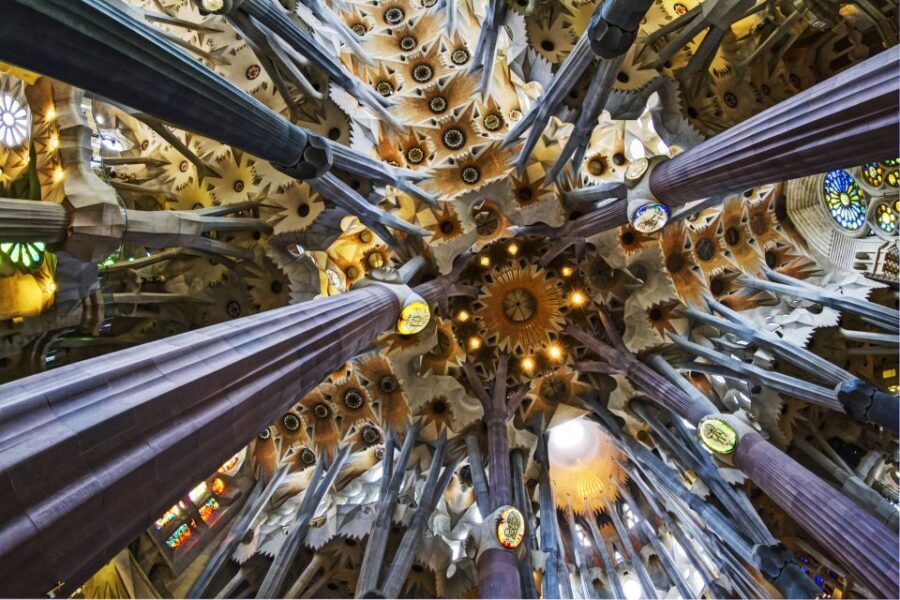
After Montserrat finishes, you return to Barcelona and get a break before your Sagrada Familia guided tour at 3:30 PM. The schedule gives you around two hours in the city.
This is the time to do the practical stuff that makes the rest of the day easier: find lunch or a snack, use the restroom, and regroup. It’s also a great window to walk a bit from your station toward a calmer lane instead of squeezing into crowds right before Sagrada Familia security.
Keep it simple with your plans. The less you rely on tight timing, the smoother your second half of the day becomes. The guide team is waiting at the Sagrada Familia meeting point, so you want to arrive calm—not rushing with a full stomach and a full bag.
Sagrada Familia with a guide: symbolism, façade contrasts, and the unfinished story
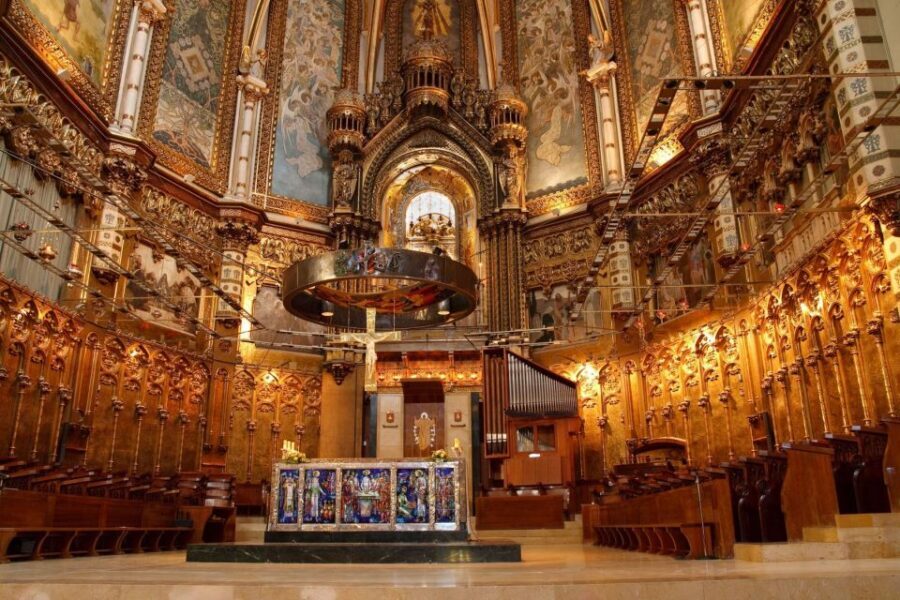
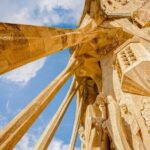
Now for the grand stage. Sagrada Familia is visited here through a guided route inside the basilica, with entry included and headsets so you can hear the guide clearly.
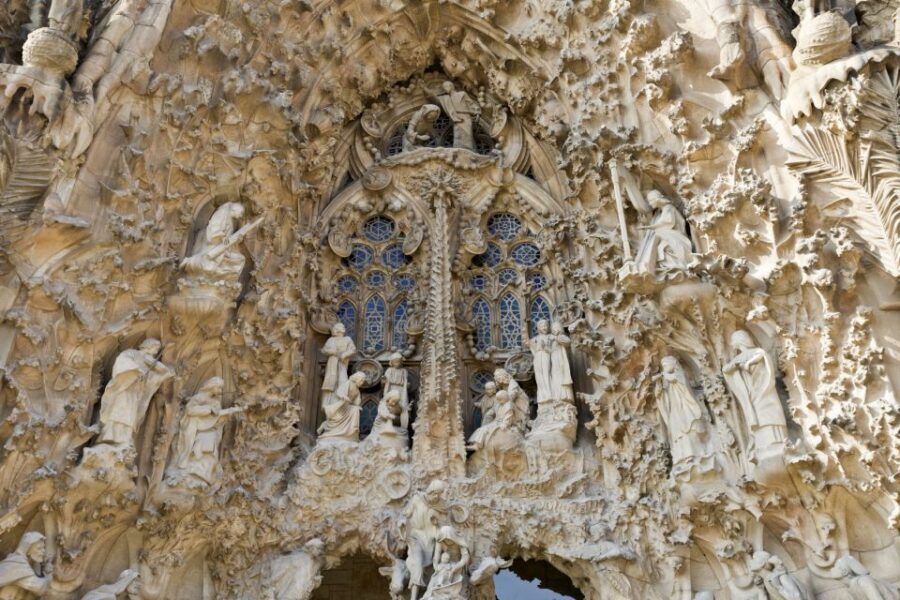
The guide focuses on Gaudí’s artistic legacy and, importantly, the symbolism behind the Holy Family. That matters because Sagrada Familia isn’t just one big sculpture—it’s a design language. When someone points out the meaning in shapes and features, your attention stops wandering and starts landing.
You’ll also learn why the basilica remains unfinished. This is one of those details you hear about before you go, but the guide helps you understand the logic and the persistence behind it. Instead of feeling like an incomplete disappointment, you start seeing it as a living project.
The tour also highlights the contrasts of the façades—how different exterior portions communicate different ideas. Even though you’re inside for much of the guided experience, having that façade context makes what you see indoors feel more connected rather than random.



Security, dress code, and why towers are not part of the deal
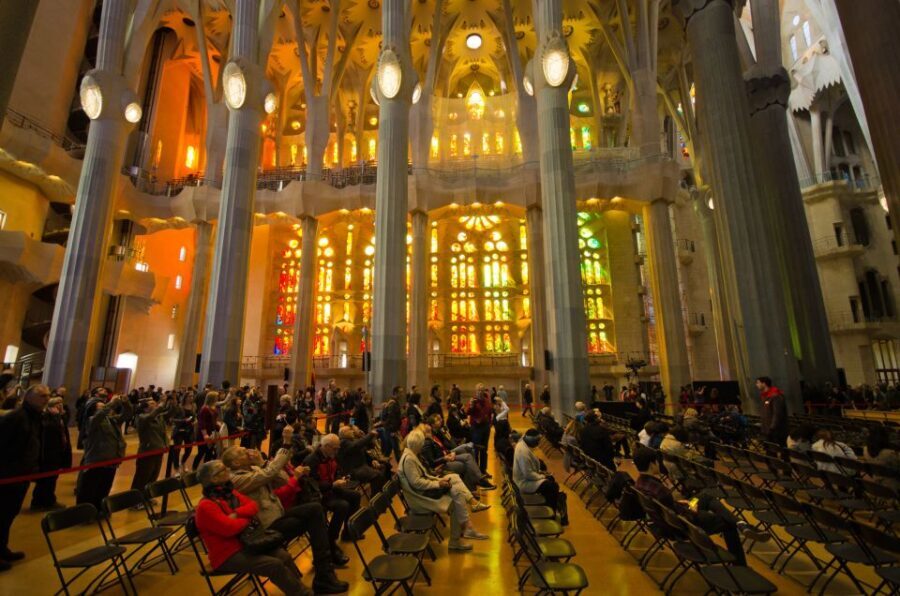
Plan for lines. Even with the benefit of timed entry and a skip-the-ticket-line setup, Sagrada Familia has queues due to security checks. That means your start time matters, and it’s smart not to carry a huge bag.
The site has a straightforward dress expectation. You shouldn’t wear shorts, short skirts, or sleeveless shirts. It’s a holy temple, so dress respectfully and comfortably for walking.
Also note a limitation: tower access isn’t included. So you’ll see the basilica experience as planned by the tour, but you won’t get that extra vertical viewpoint option from the towers. If you’re the type who wants the skyline and stairs, you’d need a different add-on or separate ticket.
Where the tour is a great fit (and where it isn’t)
This is a strong choice if you want:
- a guided day that covers two headline sights
- transport handled for Montserrat
- story-driven visits with context, not just “look at the building” time
It’s also ideal if you like the idea of hearing explanations and having a headset for Sagrada Familia. The tour is designed for people who may not know what to look for on their own.
One caution: the information includes both “wheelchair accessible” language and a note that it’s not suitable for people with mobility impairments. If mobility is a concern, I’d treat that as a “confirm details first” situation and ask the operator what the exact on-the-ground route and assistance look like.
Price and value: is $141 a fair deal?
At $141 per person for a 7-hour day, the price makes sense when you look at what’s actually covered. You’re not only paying for two guided tours. You also get:
- round-trip transportation to Montserrat
- entry to Sagrada Familia plus headsets
- the rack railway ticket for the mountain ascent
- a guided visit inside Montserrat with added access points (like the Virgin Throne)
- an included licor tasting
If you tried to price this yourself, you’d likely spend money piecing together transit, entry tickets, and a guided explanation for at least one of the two sites. What you’re buying here is time and clarity: the day is managed so you can enjoy the sights without constantly recalculating your route.
One more value note: the tour description includes free cancellation up to 24 hours in advance and a reserve-and-pay-later option. That’s useful when Barcelona weather or your travel pace is still in flux.
My honest bottom line: should you book this tour?
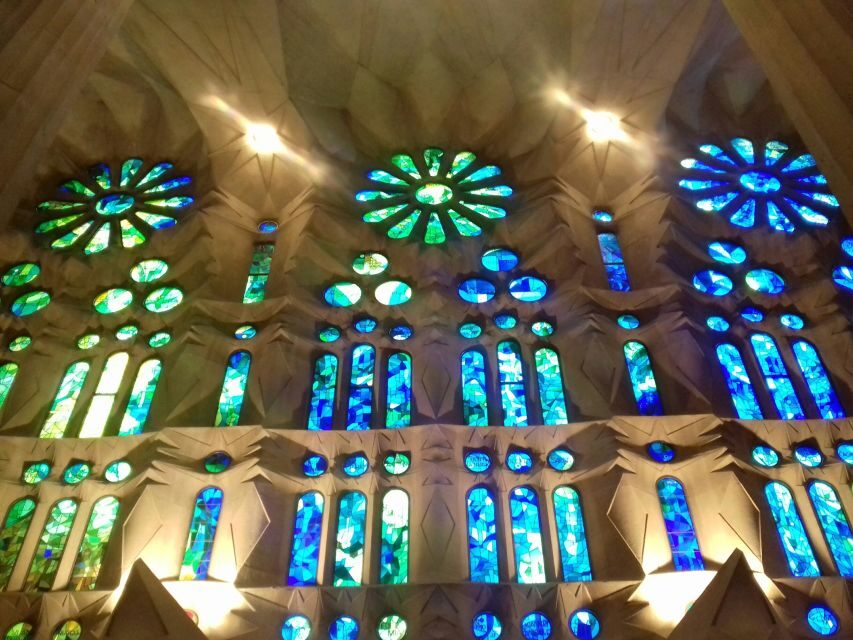
If you’re trying to see Montserrat Monastery and Sagrada Familia in one day, I’d lean toward booking. The combo solves the biggest problem—figuring out how to do both without losing half the day to transit and lines. The guide-led approach is also a big plus at both stops: Montserrat feels more meaningful with context, and Sagrada Familia becomes way more readable when someone explains the symbolism and the unfinished story.
I’d skip (or at least reconsider) if you really want maximum flexibility, especially around towers at Sagrada Familia, or if your schedule is tight enough that any security delays could throw you off. Also, if you’re sensitive to dress-code rules, plan your outfits early.
If your goal is a well-run, explanation-forward day that hits two of Barcelona’s heavy hitters, this is a solid use of time.