REVIEW · BARCELONA
Barcelona Paella Cooking Class & Boqueria & Hofmann-Trained Chefs
Book on Viator →Operated by Paella Barcelona Cooking School · Bookable on Viator
Paella in Barcelona is easy to order and hard to get right. This hands-on class links a guided walk through Mercat de la Boqueria with actual cooking in a historic studio, plus tapas and sangria you make yourself.
I especially like two parts. First, I like the ingredient hunt: you learn how to pick seafood and produce with the chef, including the practical skill of talking with vendors about what looks freshest. Second, I like the paella focus on Hofmann’s socarrat technique, cooked over open flames so you understand what gives paella that signature crust.
One thing to consider: the default paella is seafood-forward, so you’ll want to plan ahead if you prefer vegetarian or meat (or if you’re picky about squid and ink).
Key reasons this class is worth your time
- Boqueria market selection led by the chef, not just a quick photo stop
- Hands-on paella with options like golden seafood or black ink squid
- Hofmann-style socarrat cooked over open flames
- Catalan tapas + pan con tomate (the tomato-rub bread move)
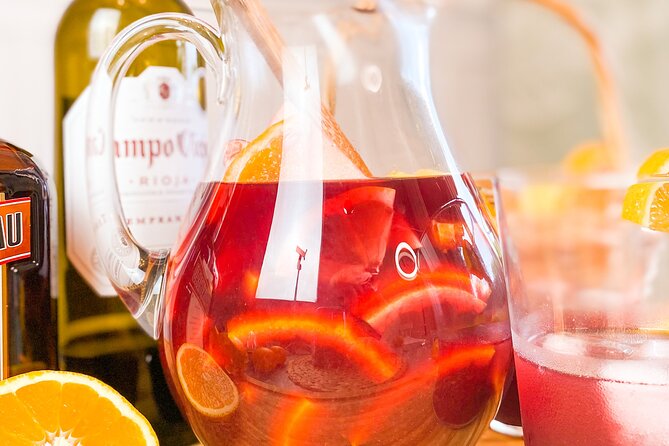
- Sangria workshop where you muddle fruit and mix a pitcher
- Small group limit of 12 so you actually cook, not just watch
In This Review
- Boqueria Market Walk: Where Your Paella Really Begins
- A Historic Studio and Open-Flame Paella Training
- Catalan Tapas and Sangria: Make It, Don’t Just Sip It
- Your Paella Options: Golden Seafood, Black Ink, or Meat/Vegetarian
- The Communal Feast: Wine Flow, Dessert, and Recipes to Keep
- Price and Value for a 3-Hour, Small-Group Evening
- Who This Is Best For (and Who Should Think Twice)
- What to Know Before You Go
- Should You Book This Barcelona Paella and Boqueria Class?
- FAQ
- How long is the Barcelona paella cooking class?
- Where does the tour start?
- What size is the group?
- What language is the class offered in?
- Is anything to drink included?
- Can you accommodate dietary restrictions?
Boqueria Market Walk: Where Your Paella Really Begins
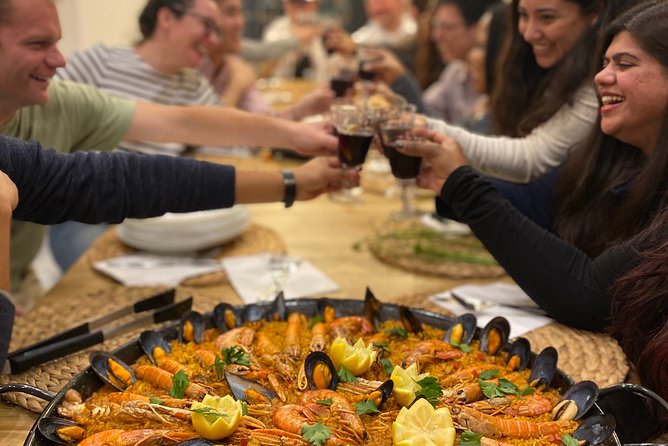
You meet at La Rambla, 89, in Ciutat Vella, and you’re in the middle of the action fast. The plan starts with a market walk at Mercat de la Boqueria, the big-name food hall that locals actually use. Your chef guides you through what to look for and how to think like someone cooking that day, not someone buying souvenirs.
This part matters because great paella starts with ingredients that are ready today. You’ll handpick fresh seafood and seasonal produce, and you’ll get coaching on how to judge quality on the spot. One of the more practical bits is learning how to bargain for fish the local way, so you’re not just relying on the vendor to guess what you want.
You also get a short walk from the market toward the cooking studio through the Gothic Quarter area—about a 7-minute stroll over roughly 700 meters. It’s not long, but it’s enough to break the “market → kitchen → meal” routine and see a little of Barcelona’s old-stone streets before you start chopping, stirring, and cooking.
A Historic Studio and Open-Flame Paella Training
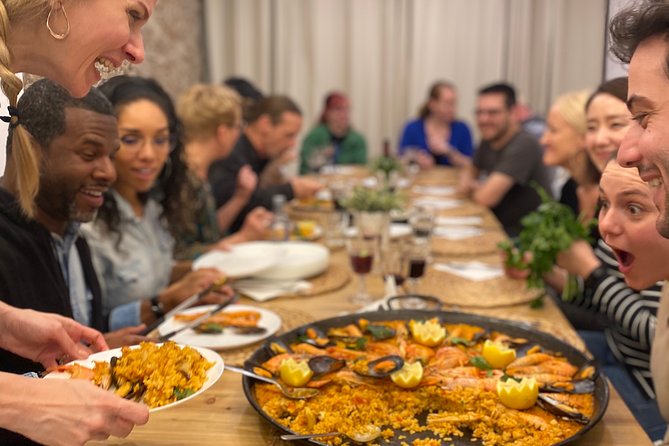
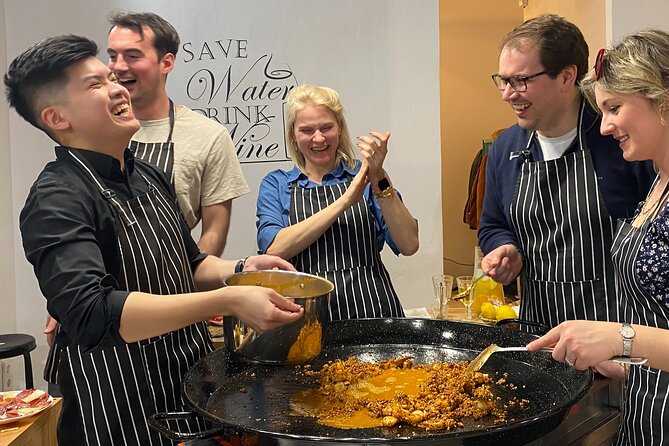
After the market, you shift into the cooking space in a building that mixes character with comfort. It’s described as a newly refurbished antique space, with modern industrial touches and Catalan features like arched wooden ceilings. You’ll be given aprons and cooking tools, and the whole setup is built for a group to work together at once.
This is also where the class gets serious about technique. The cooking includes Hofmann’s socarrat approach, and you’ll learn what to watch for as the paella cooks over open flames. The goal isn’t just eating paella; it’s understanding how the bottom forms that crust and why the heat and timing matter.
And yes, you’ll cook with a group, not from behind glass. The best part of cooking classes in Barcelona (when they’re done well) is that you leave with skills you can repeat at home. Here, the method is the takeaway: you learn what to do and what it should look like as it comes together.
You can also read our reviews of more tours and experiences in Barcelona.

Catalan Tapas and Sangria: Make It, Don’t Just Sip It
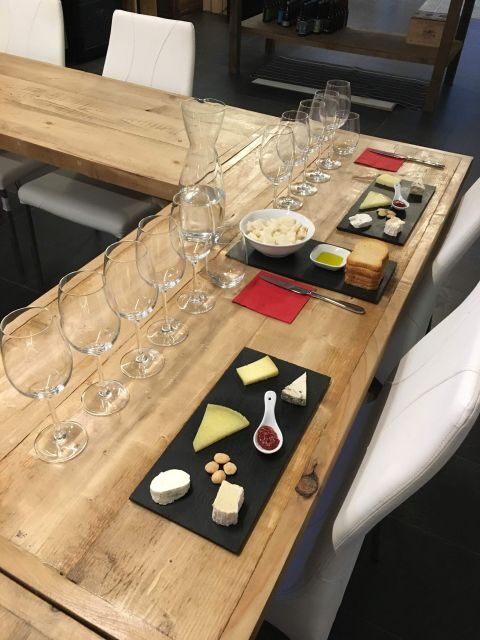
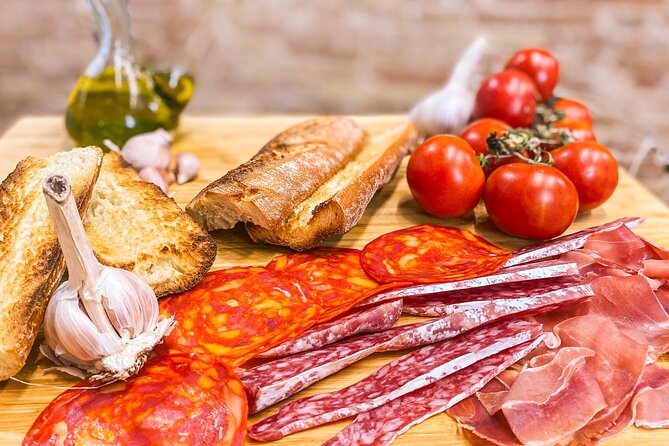
Before paella hits the flame, you build the meal with classic Catalan-style starters. You’ll make pan con tomate—the signature move is rubbing ripe tomato onto bread—then you’ll pair it with jamón and cheese. It’s simple food, but it’s the kind of simple where the technique really changes the result.
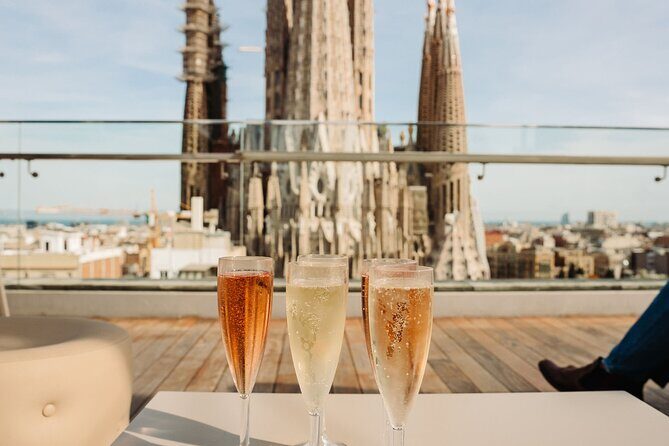
You’ll also get a cava welcome drink, and the class sets you up for a sangria workshop. In the sangria part, you muddle fruits for your pitcher and mix it with Spanish wines. Even if you’ve had sangria before, this is a different experience because you’re doing the blending steps rather than just ordering a glass.
One neat bonus: the energy stays lively because you’re constantly working in small steps—bread prep, cheese and jamón platter, fruit muddling, and mixing. That keeps the evening moving, and it helps if you don’t want a long stretch of standing around.
Your Paella Options: Golden Seafood, Black Ink, or Meat/Vegetarian
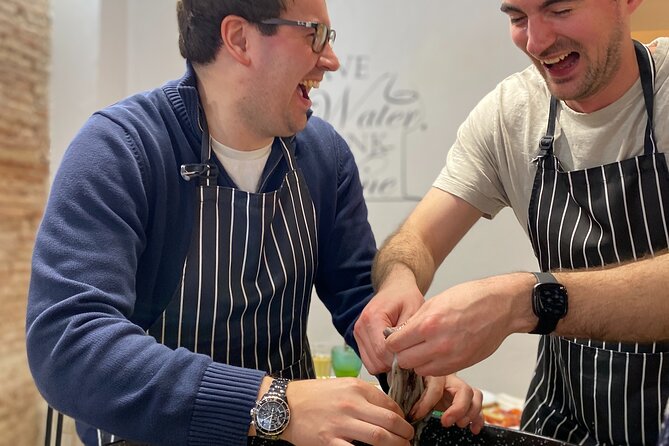
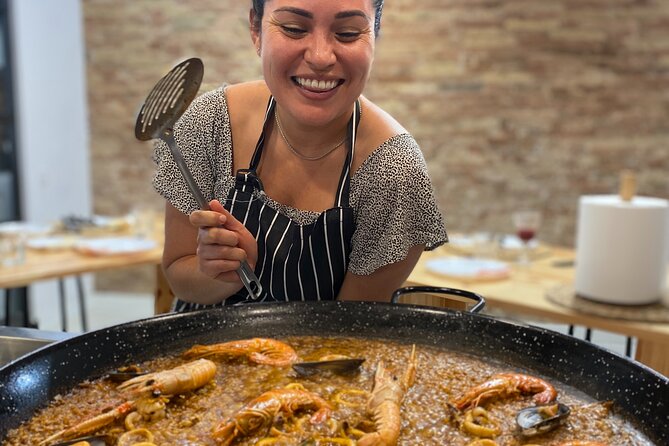
Paella here isn’t one-size-fits-all. The default is Golden Seafood Paella, and the menu is specific: prawns, Norway lobsters, mussels, squid, cuttlefish, and bomba rice. You’ll also use sofrito—your chef’s “secret trick” is part of why it tastes like it belongs in Spain rather than in a generic seafood stew.
If you want something dramatic, you can choose Black Ink Paella, which uses squid ink for that signature dark look and flavor. The black ink version is great if you like bold tastes and want to eat something you don’t see everywhere at home.
If seafood isn’t your thing, you can request a vegetarian or meat paella—but you have to notify in advance. That’s important: it’s not just swapping one ingredient at the last minute. The class is built around cooking together, so advance notice helps the kitchen keep everyone on the same timing.
And one more detail that’s worth planning around: since the paella is cooked over open flames and uses technique-based steps, you’ll want to bring a quick-to-learn mindset. This is very doable for first-timers, but it still works better if you’re ready to actively participate.
The Communal Feast: Wine Flow, Dessert, and Recipes to Keep
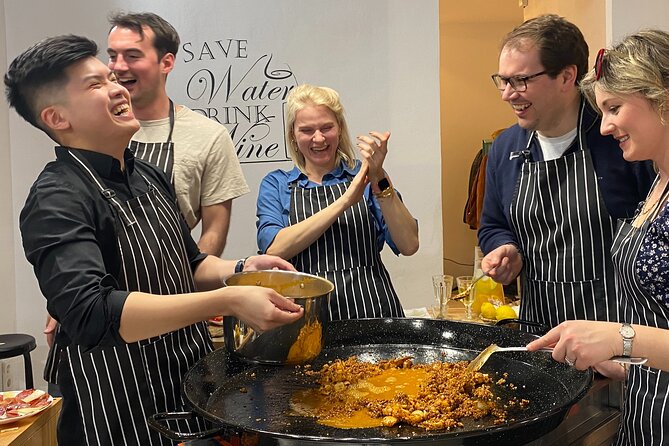
Once your paella is cooked, you sit down as a group for the meal. The class is set up as a communal feast, and you’ll eat what you made. Alongside your paella, wine is included and described as plentiful, so it turns into a real dinner—not just a “taste and go” situation.
Expect the meal to include what the class calls out as a full package:
- the Catalan tapas starter (pan con tomate plus jamón and cheese),
- your chosen paella,
- sangria,
- a seasonal Catalan dessert finale.
That dessert is a fun ending because it’s described as a surprise sweet made with fresh market ingredients. You don’t know the exact item ahead of time, but the idea is consistent: it should taste like it came from the market, not a packaged filler.
You also leave with take-home materials. You get a digital recipe book plus a certificate. That matters more than you might think. A lot of paella classes give you a memory and a photo. This one tries to give you an actual reference for cooking later.
Price and Value for a 3-Hour, Small-Group Evening
The price is $127.03 per person for about 3 hours. On its face, that can sound steep until you count what’s included and what you’re paying for.
You’re not just paying for a cooking demo. Your ticket covers:
- the market tour with ingredients,
- the tapas items and cooking inputs,
- cava, wine, and sangria,
- aprons and cooking tools,
- a digital recipe book and certificate,
- plus the option of different paella styles.
It’s also capped at a maximum of 12 people. A small group is more than a comfort perk; it directly affects your hands-on time. When the kitchen has enough tools and the group is small, you don’t lose half the evening waiting for your turn.
One final “value” point: this is also an easy way to see a real Barcelona food neighborhood without hunting and ordering solo. You get guidance on what to pick and how to buy it, which can save you time (and prevent that “we bought the wrong thing” mistake).
If you’re planning to eat well anyway—seafood, jamón, good bread, and wine—this ticket can feel like you’re paying for instruction, technique, and an organized evening where everything lines up.



Who This Is Best For (and Who Should Think Twice)
This works well for a few different traveler types.
If you’re a first-timer in Barcelona, you get a tight introduction to how locals think about food: markets first, then cooking, then eating together. It also tends to fit families well because the activities are interactive and the group size is small enough that kids aren’t lost in a crowd.
If you want a real skill, you’ll like this. The class isn’t only about recipes; it’s about learning why socarrat happens and how to manage the open-flame cooking process. You don’t need serious kitchen training to have a good experience, and the format is designed so everyone can participate, regardless of background.
If you’re traveling mainly for quiet sightseeing, you might find this too active. You’ll be moving between the market and the studio, and you’ll be hands-on throughout the cooking steps. It’s a good evening, but it’s not a low-effort sit-and-watch.
And if you don’t eat seafood, plan ahead. The default paella is seafood, so request vegetarian or meat options when booking.
What to Know Before You Go
A few practical points can make your night smoother.
- Bring comfortable shoes. You’ll walk from La Boqueria to the cooking studio (about 700 meters) and you’ll move around the market area.
- Plan for weather. This experience needs good weather, since the market and walk are part of the flow.
- Tell them about dietary needs. The class asks you to notify dietary restrictions when booking, and they aim to accommodate.
- Expect an English-led experience. Offered in English, with the chef handling both cooking and the market portion.
- Reserve early. The average booking window is about 42 days in advance, which usually means popular time slots can fill up.
Should You Book This Barcelona Paella and Boqueria Class?
I’d book this if you want an evening where Barcelona’s food culture is the main event, not a side quest. The combination of Boqueria market ingredient selection, Catalan tapas like pan con tomate, and Hofmann-style socarrat technique over open flames is a strong mix. Add in small group size, included drinks, and take-home recipes, and it becomes one of those “you can’t really replicate this by yourself” nights.
I’d pause if you’re very seafood-avoidant unless you’re confident you’ll request the vegetarian/meat option. Also pause if you hate hands-on cooking and prefer pure sightseeing. This is built for participation.
If you fit the target—curious about real ingredients, interested in learning technique, and happy to eat what you cook—this is a solid choice.
FAQ
How long is the Barcelona paella cooking class?
It runs about 3 hours.
Where does the tour start?
You meet at La Rambla, 89, Ciutat Vella, 08002 Barcelona, Spain.
What size is the group?
The experience has a maximum of 12 travelers.
What language is the class offered in?
The class is offered in English.
Is anything to drink included?
Yes. You’ll have cava, wine, and sangria as part of the experience.
Can you accommodate dietary restrictions?
The booking notes say you should notify dietary needs in advance, and the menu includes options like vegetarian/Meat and the paella style choices.