REVIEW · BARCELONA
Barcelona: Palau de la Música Guided Tour
Book on GetYourGuide →Operated by Palau de la Música Catalana · Bookable on GetYourGuide
Palau de la Música is pure stagecraft. This guided visit is interesting because it gives you off-limits access inside one of Barcelona’s top Modernist landmarks, not just a quick glance from the street. I especially love the floral grand staircase details and the way the building’s light hits once you reach the great skylight area. It also ends with organ notes, which turns a sightseeing stop into something more like performance.
There’s one consideration: the tour is short and can feel tight at busy times, especially if you want to stop for photos at every decorative moment. Some visits can also be affected by construction or by lots of people in the same rooms, so build in patience.
In This Review
- Key highlights worth your attention
- A Modernist music palace in one 50-minute visit
- Where you’ll meet and how to get there near Plaza Catalunya
- Rehearsal Hall: Orfeó Catala roots and the 1905 foundation stone
- Grand staircase floral details and flags you’ll want to photograph
- Lluís Millet Hall balcony and the columns symbolizing nature
- Concert Hall colors, shapes, and the second-floor skylight
- Organ notes to end the visit like a mini performance
- Price and value: why $28 can be worth it for the access
- Timing tips for concerts and fewer headaches
- Tour guide experience: languages, ear pieces, and what can affect clarity
- Who this tour suits best, and who might skip it
- Should you book the Palau de la Música guided tour?
- FAQ
- How long is the Palau de la Música guided tour?
- What does the tour cost?
- Where is the Palau de la Música in relation to Plaza Catalunya and Las Ramblas?
- What areas of the Palau de la Música will I visit?
- Is a concert ticket included?
- Is there an organ performance during the tour?
- What languages are the live guides available in?
- Is the tour wheelchair accessible?
- Do I need to bring ID?
Key highlights worth your attention
- Off-limits rooms and viewpoints: you go beyond the usual public path
- Rehearsal Hall of the Orfeó Catala: grounded in the story from 1905
- Ornate staircase with flowers and flags: a photo magnet with tons of materials and texture
- Lluís Millet Hall balcony details: columns tied to nature symbolism
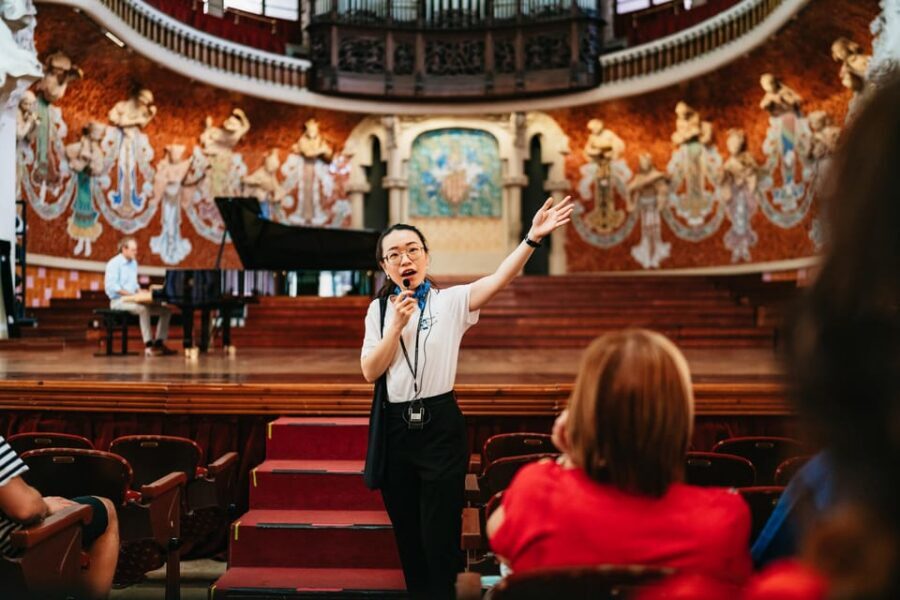
- Concert Hall light show: color, shape, and design that you really notice in person
- Organ notes at the end: a quick performance moment to close the loop
A Modernist music palace in one 50-minute visit
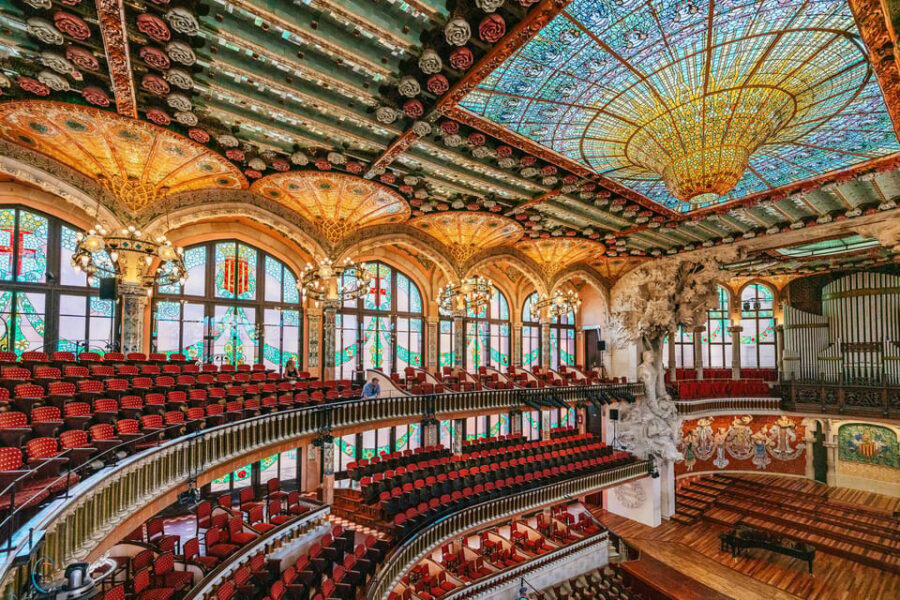
This tour is built for people who want the best of Palau de la Música without turning the day into a full-day project. At 50 minutes, you’ll move through the key spaces in a way that keeps the story moving, so the building feels like a living idea rather than a static photo backdrop.
The real value here is access. Palau de la Música is stunning from outside, sure. But the inside is where the magic lives: glassy light, sculptural detail, and architectural drama meant for music. A guide helps you see what you might otherwise miss, especially the design choices that explain why the place looks the way it does.
And yes, the organ notes at the end matter more than you’d think. It’s brief, but it adds emotion to all the shapes and colors you’ve just been staring at. Even if you’re not a classical devotee, you’ll feel how carefully this space is meant to sound and resonate.
You can also read our reviews of more guided tours in Barcelona



Where you’ll meet and how to get there near Plaza Catalunya
Palau de la Música is about a 10-minute walk from both Plaza Catalunya and Las Ramblas. That’s a good setup for a visit because you can pair it with other central sights without hauling across the city.
Meeting point details can vary by the option you book, so I’d treat the day-of instructions as the main source. A helpful rule: arrive a few minutes early and give yourself time to find the exact sign or entrance your guide expects. One practical tip from people who’ve done this: the meeting area can be described as being behind a coffee shop while you approach through the main entrance or via the side with outdoor seating.
If you’re coming from Las Ramblas, keep in mind it’s easy to lose track of time in the crowds. Plan to walk with calm, not sprint energy.
Rehearsal Hall: Orfeó Catala roots and the 1905 foundation stone
Your tour starts in the Rehearsal Hall of the Orfeó Catala. This is the kind of first stop that gives context fast. You’re not just looking at décor; you’re stepping into the kind of room that supports music practice and community.
Here’s what’s especially compelling: the foundation stone was laid in 1905, and the choir rehearses regularly. That means you’re seeing the building not only as an architectural object, but as a workplace that has kept doing its job for generations.
I like this start because it frames everything you’ll see next. When you move from a rehearsal space into more public-facing areas, the transition feels logical: the Palau isn’t built for one-off spectacle. It’s built for the long run.
Grand staircase floral details and flags you’ll want to photograph
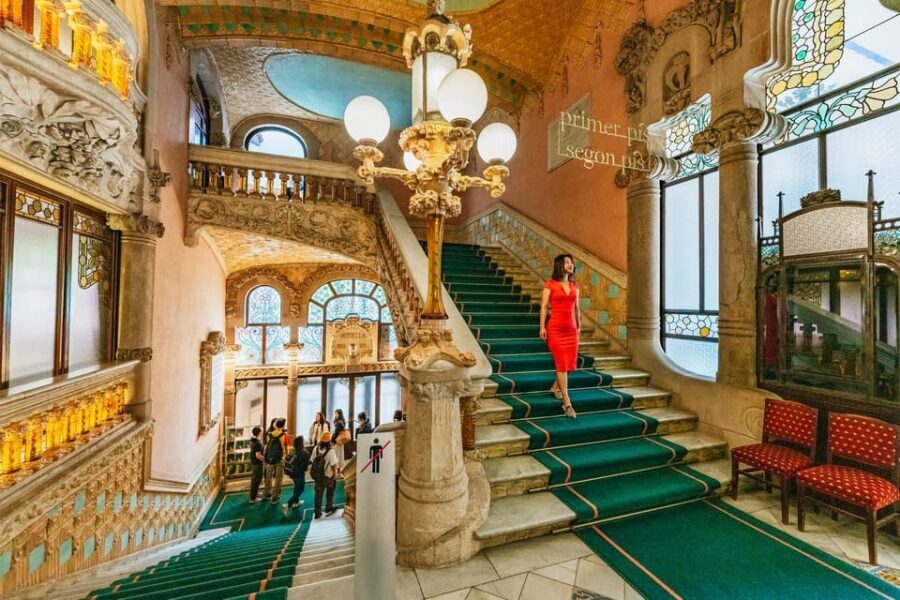
Next up is the grand staircase. This is where many visitors stop walking for a moment and just stare—because the staircase decoration is designed like artwork. You’ll see ornate flowers and flags, and you’ll also get explanations about how different materials are used in the details.
Two practical points if you’re serious about photos:
- Bring a camera and plan your angles. The staircase is busy, and light catches on surfaces in a way that looks good from more than one viewpoint.
- Don’t expect unlimited time. This tour keeps moving, so if you pause for a shot, be ready to move on quickly when the group shifts.
A guide makes a difference here. Without guidance, you might enjoy the visuals. With guidance, you’ll understand why the decoration looks the way it does and what it’s meant to communicate.
Lluís Millet Hall balcony and the columns symbolizing nature
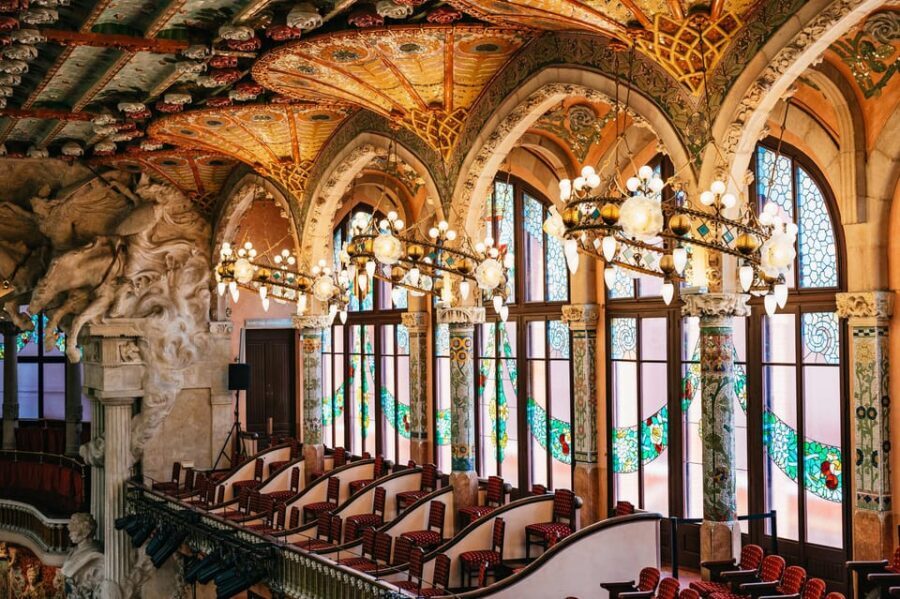
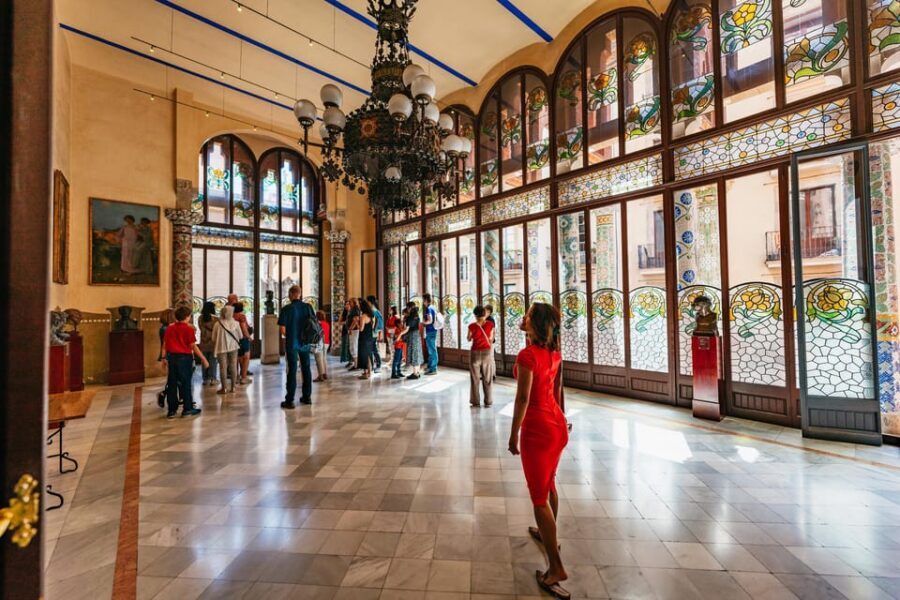
From the staircase, you’ll head to the Lluís Millet Hall. This stop matters because it brings you to another layer of the building’s intent—how the architecture works around performance and how it visually expresses ideas.
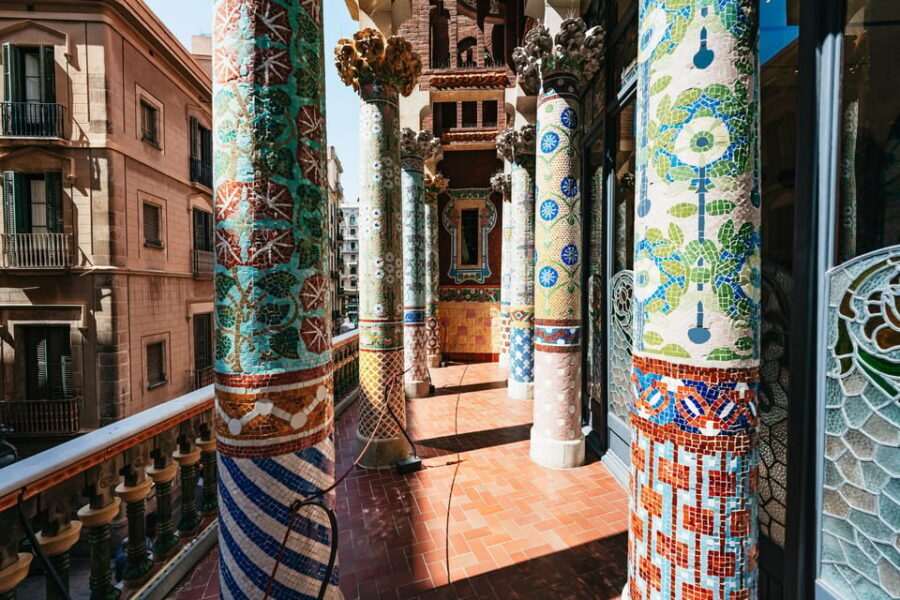
One standout is the large balcony with columns that symbolize nature. That phrase sounds symbolic on paper, but in the space it connects. You can see how the design language links to the outside world—like the Palau is treating nature as part of the musical atmosphere.
If you like architecture, this is one of the spots where a guide’s explanation helps you notice patterns. You’ll start seeing how the building repeats themes across different rooms, instead of feeling like each hall is its own unrelated scene.




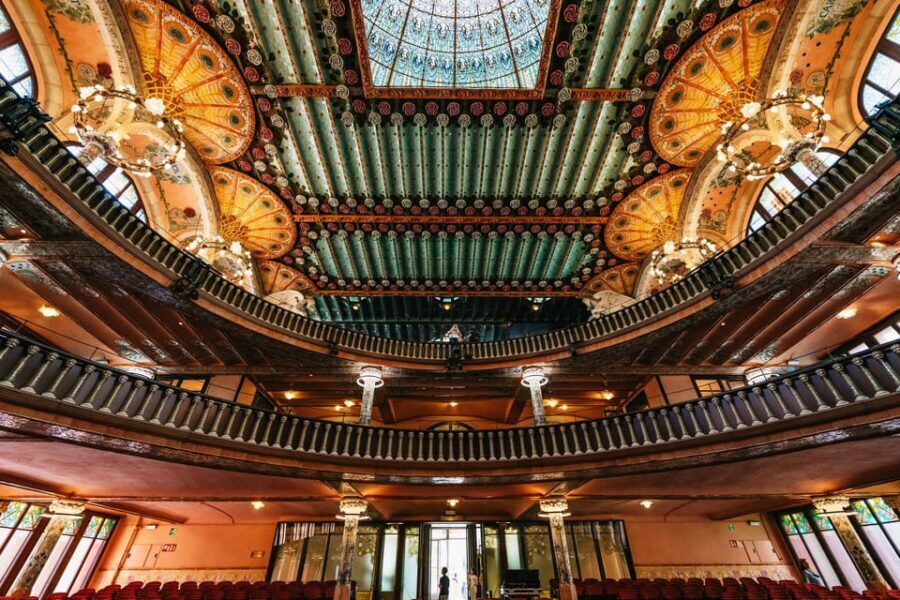
Concert Hall colors, shapes, and the second-floor skylight
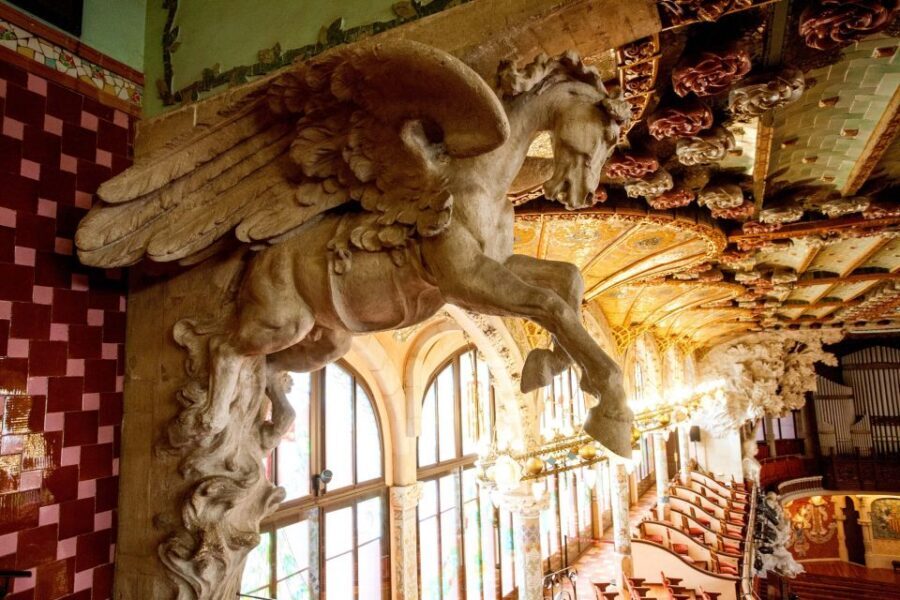
Then you enter the Concert Hall, and it’s the full payoff. This is where Palau de la Música feels like a designed experience: colors, shapes, and light all combine into a space that looks dramatic even before anyone sits down.
After that, you head to the second floor for the grand skylight. This is the kind of detail you don’t just glance at once. You’ll want to look up, then look around, because the skylight changes how the rest of the hall reads.
A good guide pace helps you enjoy it instead of racing. Some tours include moments where you can take photos and get your bearings. If your visit is crowded, you may have less freedom to linger, but the space itself still gives you plenty to focus on.
If you’re traveling with someone who thinks architecture tours are boring, the Concert Hall and skylight are where you can win them over fast.
Organ notes to end the visit like a mini performance
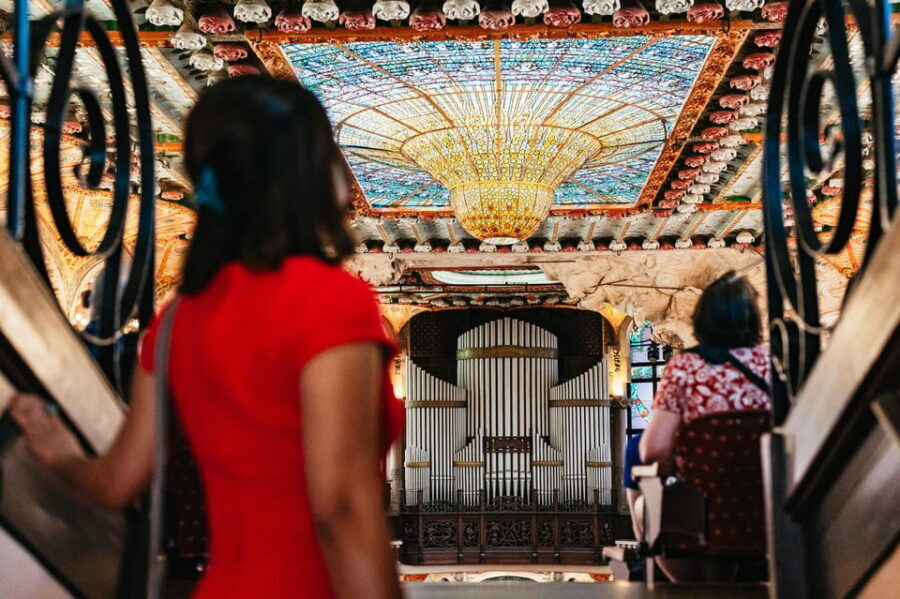
At the end of the tour, you’ll hear short performance notes from the Palau’s organ. This closing moment can turn the whole visit from a sightseeing stop into something more emotional.
Even if you don’t consider yourself a music person, organ sound in a space like this helps you understand why the building is celebrated. The notes reinforce what you’re seeing: the architecture is designed to support music, not just to decorate a room.
Also, it’s an easy win for your itinerary. You get the feeling of being in a performance setting without needing to plan around concert schedules.
Price and value: why $28 can be worth it for the access
At $28 per person for a 50-minute guided tour, the value comes from three areas:
- Guided interpretation that helps you understand what you’re looking at.
- Entrance to Palau de la Música with access to areas usually off limits.
- A performance moment with organ notes at the end.
If you only pay for self-guided sightseeing, you might see plenty. But you’ll likely miss the why behind the details, and you might not be able to access certain spaces the same way. This tour is priced as a shortcut to both comprehension and access.
One more thing: the tour guide language options are broad (Italian, French, English, Chinese, Catalan, Spanish). That matters because it helps you get the explanations clearly rather than relying on vague signage.
Timing tips for concerts and fewer headaches
You’ll find that timing changes the feel of Palau visits. The tour itself is 50 minutes, but the building can be extra special at certain times.
Two practical timing strategies:
- If you can, aim for a concert night. There’s a tip to reserve for an evening concert so you can appreciate the acoustics in the Concert Hall. The organ notes at the end are fun, but a full concert experience is the logical next step.
- If you’re photo-focused, go at a time when the building isn’t packed. Even without “perfect” timing, you’ll still get strong views. But crowded moments can make it harder to hold your position for photos.
Also, keep your day flexible. Availability may vary depending on the day, and it’s smart to confirm the time of your arrival with the supplier.
Tour guide experience: languages, ear pieces, and what can affect clarity
This is a live tour with a guide (Italian, French, English, Chinese, Catalan, Spanish), and that’s a big part of the experience because Palau de la Música is made of details. A clear guide gives you a mental map.
From real-world experience, guides like Yu, Juan, Marco, Axel, and Fei Fei have been called out as strong and engaging. You might get someone equally excellent, but even if your guide is less animated, you’re still likely to get solid context—especially for the story of the building and the significance of each room.
One thing to watch: in some crowded or noisy moments, the audio setup can make a difference. If you get an ear piece and the sound isn’t crisp, it can be harder to hear explanations during construction or busy overlap. Don’t panic if that happens; focus on the key visual stops (staircase, concert hall, skylight) and use the guide for the story beats.
Who this tour suits best, and who might skip it
This tour fits you if:
- You want a fast, guided way to see Palau de la Música’s signature spaces.
- You like Modernist design and want help noticing what’s important.
- You want a performance touch without buying concert tickets.
You might skip or reconsider if:
- You’re visiting only for a quick photo and don’t care about architectural explanations.
- You hate group pacing and feel stressed in crowds.
- You’re hoping for a full concert. Tour access is not the same as concert tickets, and concert tickets aren’t included.
If you’re on a tight itinerary, this one is efficient. If you’re a slow traveler who likes to linger, plan to spend extra time afterward in areas you can access on your own, so the highlight moments don’t feel rushed.
Should you book the Palau de la Música guided tour?
Yes, if you care about seeing the building properly. For $28 and 50 minutes, you get guided context, access to parts that are typically off limits, and a real closing moment with organ notes. It’s one of those activities that helps you “get” a place fast.
If you want the highest emotional payoff, pair it with a concert night when possible. If you mainly want visuals, still consider booking the guide—you’ll understand why the decoration and light work the way they do, and that turns pretty photos into memorable ones.
If you’re on a budget or short on time, this is a solid call. It’s not a full-day commitment, and it focuses on the Palau’s most meaningful spaces.
FAQ
How long is the Palau de la Música guided tour?
The tour lasts 50 minutes.
What does the tour cost?
The price is $28 per person.
Where is the Palau de la Música in relation to Plaza Catalunya and Las Ramblas?
It’s about a 10-minute walk from Plaza Catalunya and Las Ramblas.
What areas of the Palau de la Música will I visit?
You’ll start in the Rehearsal Hall of the Orfeó Catala, continue to the grand staircase, visit the Lluís Millet Hall, enter the Concert Hall, and then go to the second floor to see the grand skylight. The tour ends with organ notes.
Is a concert ticket included?
No. Concert tickets are not included.
Is there an organ performance during the tour?
Yes. The tour includes a short performance from the Palau’s organ at the end.
What languages are the live guides available in?
The tour guide is available in Italian, French, English, Chinese, Catalan, and Spanish.
Is the tour wheelchair accessible?
Yes, it is wheelchair accessible.
Do I need to bring ID?
You should present your ID at the box office to confirm your tour.