REVIEW · BARCELONA
Barcelona: Sant Pau Recinte Modernista Entry Ticket
Book on GetYourGuide →Operated by Turisme de Barcelona · Bookable on GetYourGuide
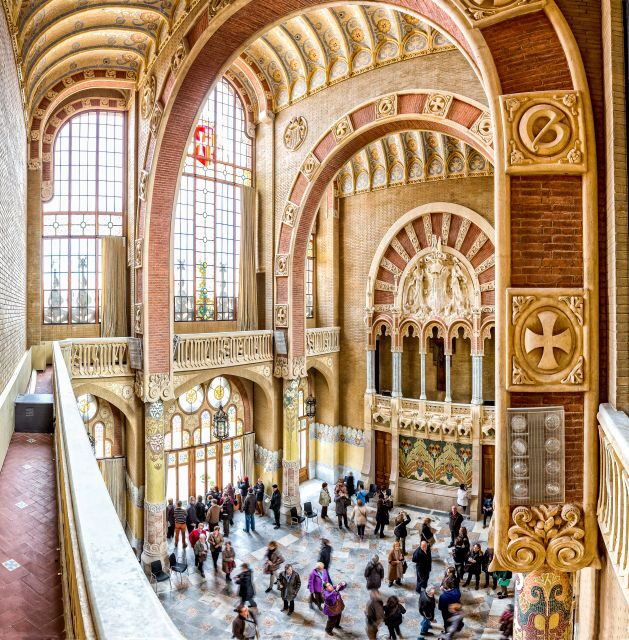
Sant Pau can feel unreal in the best way. This entry ticket gets you into the world’s largest Art Nouveau hospital complex, where gardens and ornate pavilions tell the story of early 20th-century healthcare. I like the scale and calm here, and I also love how the details reward slow looking—stained glass, mosaics, and sculpture everywhere. One possible drawback: this ticket is for entry, not a guided tour, so you’ll want to go in with a plan (or add audio/reading on-site) to get the most out of the hospital logic.
What makes this ticket especially good value is that you’re not paying for transport or a big production—you’re paying to access a remarkable building that still works as a place to learn. The visit is short enough to fit between other Barcelona classics, but long enough that you can actually wander the pavilions, understand the layout, and spot the underground connections that make the complex so clever.
In This Review
- Key things you’ll notice right away
- Why Sant Pau’s Art Nouveau Hospital Hits Different
- Ticket Value: $21 for Access, Not a Scripted Tour
- Where to Go: Sant Pau’s Address and Getting There Easy
- Before You Walk In: The Hospital’s Bigger Mission
- The “Garden City” Layout You’ll Want to Understand
- What to Look For in the Pavilions (Stained Glass, Mosaics, Sculptures)
- The Underground Passages: Where the Site’s Logic Becomes Clear
- Courtyards and Quiet Corners: A Break From Busy Barcelona
- How Much Time Do You Really Need? Plan for About 1.5 Hours
- Comfort, Practicalities, and Small On-Site Details
- Timing and Special Access: Free on the First Sunday (Over 65)
- Who This Ticket Best Fits
- Should You Book Sant Pau Recinte Modernista Entry Ticket?
- FAQ
- How long is the Sant Pau Recinte Modernista visit?
- What is included in the ticket price?
- Is a guided tour included?
- Where is the meeting point?
- Is it wheelchair accessible?
- Are there any special rules for kids or older visitors?
Key things you’ll notice right away
- Art Nouveau on a huge scale: Sant Pau is a whole garden-city, not a single showpiece building.
- Pavilions in a park-like setting: walk paths, courtyards, and restored spaces that feel cooler than the streets outside.
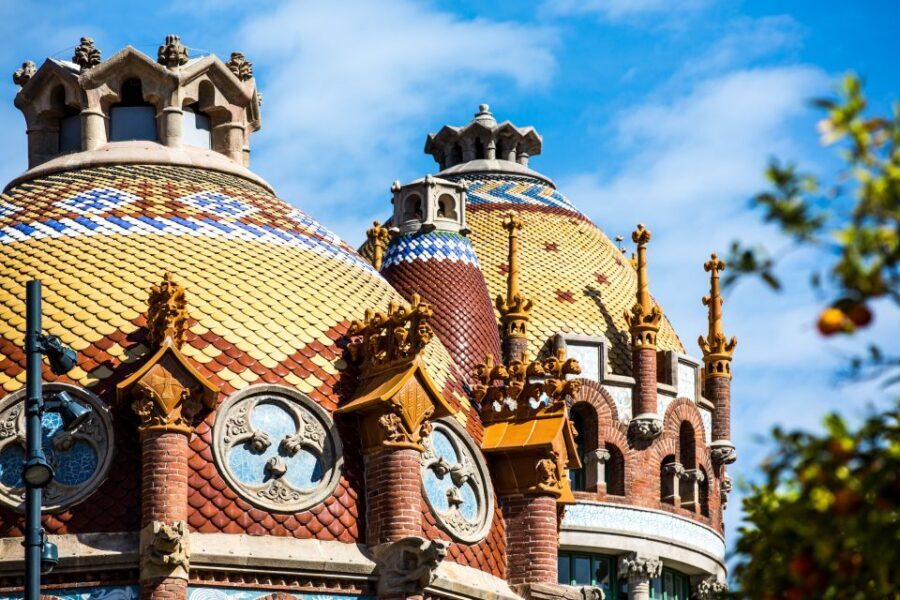
- Handsome detail work: mosaics, stained glass, and sculptures are spread throughout, including spots that reward looking up.
- The hospital design makes sense: underground passages connect buildings and help you grasp how the site functioned.
- It’s still a working campus: the complex now hosts international organizations, so the story doesn’t end at the museum door.
- Great for self-guided pacing: reviews often highlight easy flow and the ability to explore at your own speed.
Why Sant Pau’s Art Nouveau Hospital Hits Different
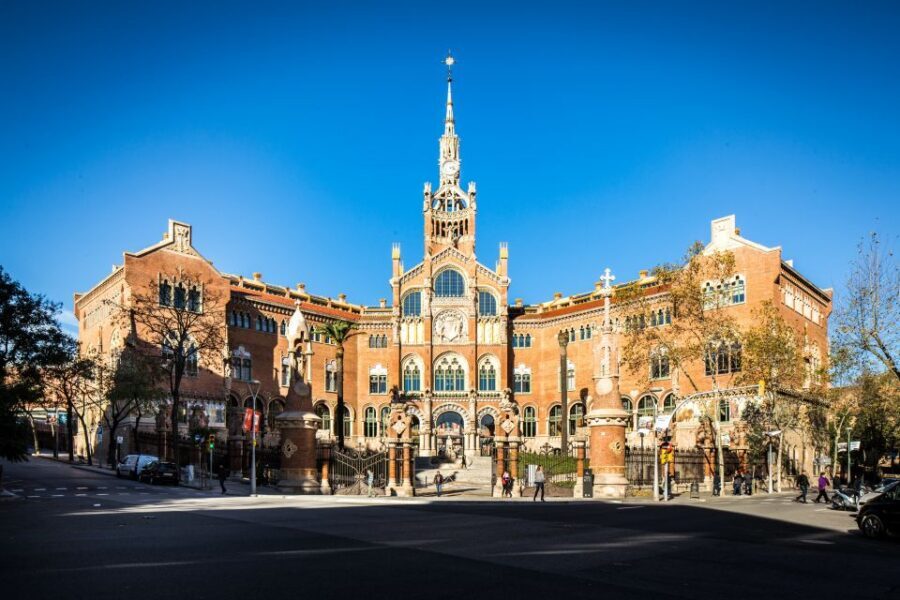
Sant Pau isn’t the usual “one building, one selfie spot” kind of attraction. You’re entering a full complex built in the early 1900s, designed to treat patients as part of a wider idea of health—light, air, nature, and hygiene.
The architect is Lluís Domènech i Montaner, and his work here is easy to appreciate even if Art Nouveau isn’t your thing. The hospital pavilions rise like elegant landmarks, but they also function as a designed system. You’ll feel that balance between beauty and purpose in the way the courtyards open up and the paths guide you forward.
You can also read our reviews of more tours and experiences in Barcelona



Ticket Value: $21 for Access, Not a Scripted Tour
At about $21 per person, this ticket is essentially what you pay to walk through one of Barcelona’s most important buildings. Since a guided tour isn’t included, the value depends on your style: if you like exploring with signage, photos, and short on-site explanations, you’ll probably feel this is money well spent.
If you want a narrative spoon-fed to you in real time, consider pairing your visit with extra interpretation (audio or an outside guide). A few people even wished they’d had more guidance, which makes sense: the complex has a lot going on, and the details take time.
The good news is that this is a 1-day-valid ticket, and the entry is timed based on availability. That helps you pick a start time that matches your energy and the heat level.
Where to Go: Sant Pau’s Address and Getting There Easy
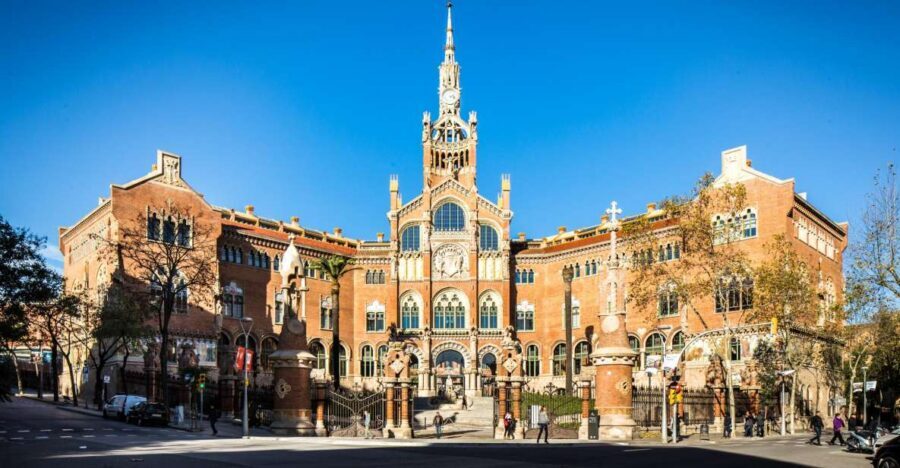
Your meeting point is Calle Sant Antoni Maria Claret, 167, 08025 Barcelona. This matters because SatNav can try to be clever and send you off in the wrong direction, so it’s worth double-checking the address you plug in.
Getting here is usually straightforward thanks to nearby transit. One reviewer noted a metro station nearby with a direct airport route, which is a handy reminder if you’re fitting Sant Pau into a day that ends with travel.
Practical tip: arrive with a little buffer. Even with timed entry, you want enough time to settle in, orient yourself, and start at the part of the route that matches your interests (architecture first, then history, or vice versa).
Before You Walk In: The Hospital’s Bigger Mission
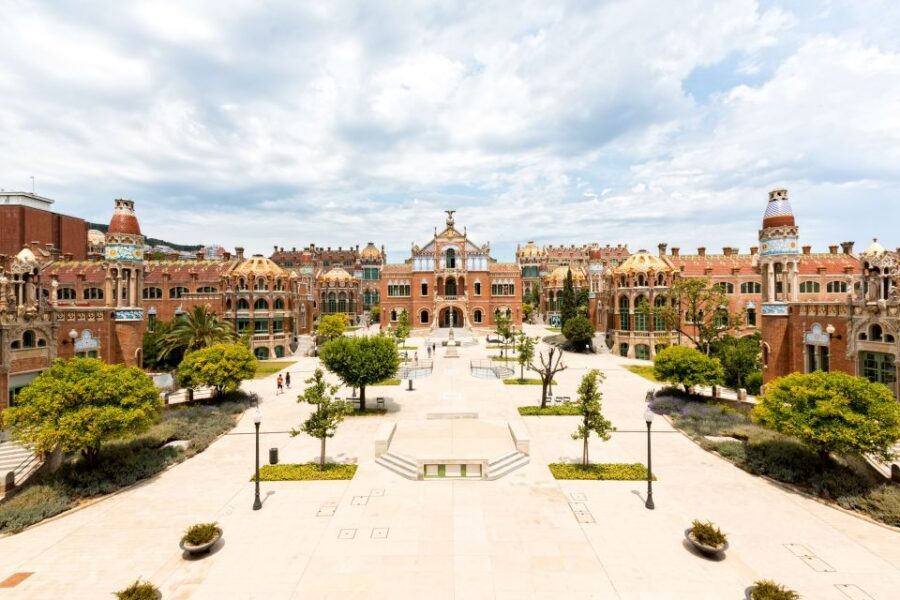
Sant Pau was built between 1905 and 1930. The intent wasn’t just to treat illness—it was to relocate the old Hospital de la Santa Creu (in Barcelona’s El Raval), because it had become too small. The new plan was inspired by advances in health and hygiene.
That design philosophy is why the place feels different from a typical museum. You’re walking through an environment created with recovery in mind: gardens and open air, pavilion spacing, and a layout that supports patient care.
After operating as a public hospital for a century, Sant Pau was refurbished back toward its earlier splendor. Today, it’s not only a monument—it’s also a knowledge campus, used by international organizations such as the European Forest Institute, Casa Àsia, the Global University Network for Innovation, and the UN University Institute on Globalization, Culture, and Mobility.
The “Garden City” Layout You’ll Want to Understand
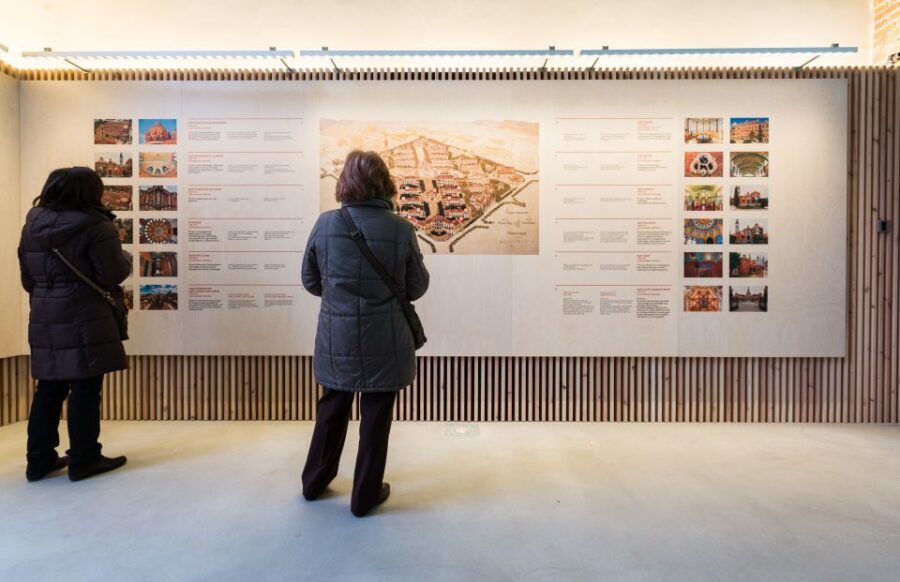
A big part of enjoying Sant Pau is realizing it’s not one long hallway. It’s a city of pavilions, connected and separated in a thoughtful way—like a small world built for health.
Start with the overall idea: the pavilions sit within landscaped areas, and you move between them along designed routes. When you pause in the courtyards, you’ll feel why the complex was created for recovery: it’s quieter, more open, and less visually chaotic than most of central Barcelona.
I also like that the complex encourages you to keep moving. You’re not stuck in a single room waiting for the next highlight. Instead, you get a sequence of spaces—some airy, some enclosed, some richly decorated.


What to Look For in the Pavilions (Stained Glass, Mosaics, Sculptures)
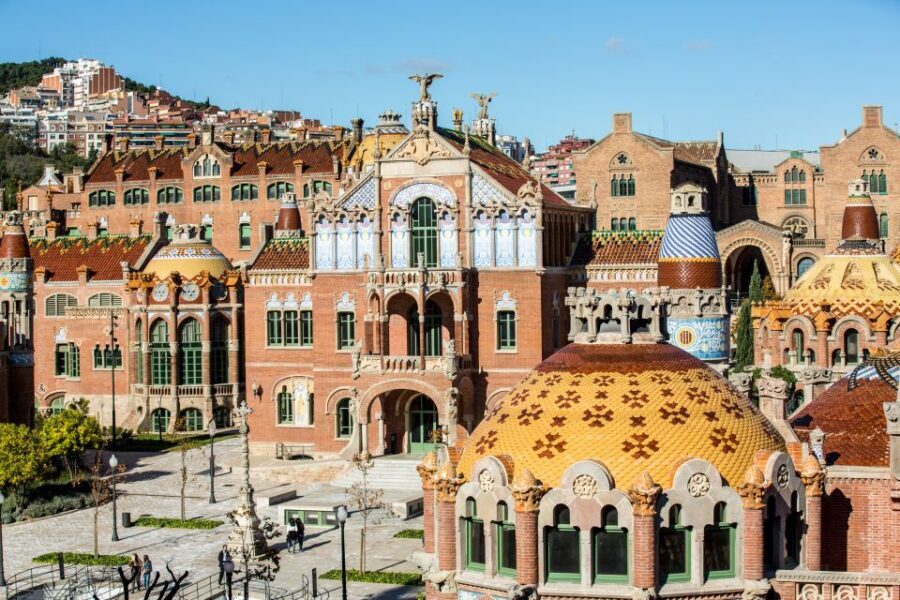
Sant Pau’s surface details are the kind you don’t notice if you rush. A lot of the magic is in how the ornamentation appears across the site, not just at the entrance.
Plan to spend time looking at:
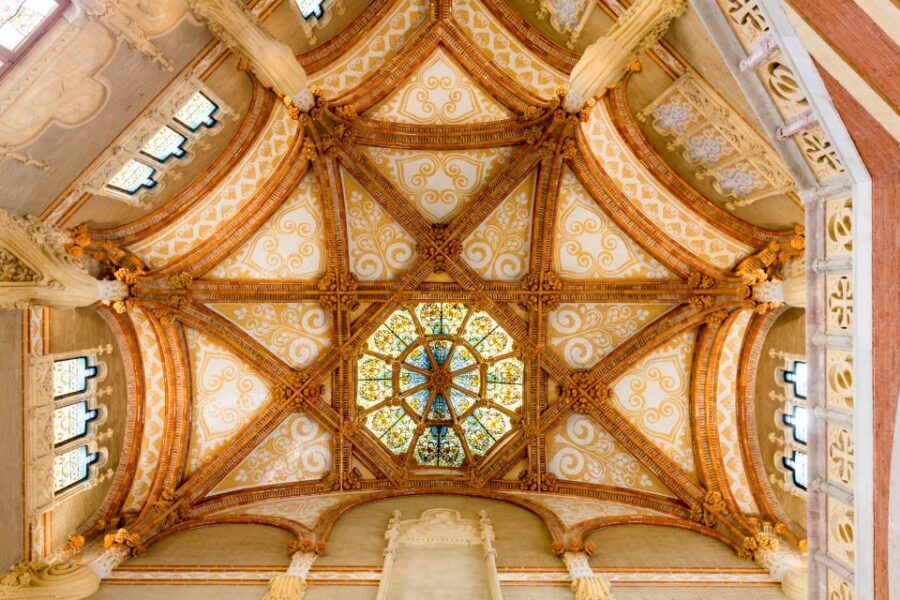
- Stained glass: bright accents that make windows feel like part of the healing concept rather than just decoration.
- Mosaics: people often recommend circling around the outer sides of key buildings to spot mural mosaics you might miss from the main approach.
- Sculptures and Modernista motifs: keep your eyes up, especially along the architectural lines that frame entrances and upper surfaces.
One review tip that I strongly agree with: always look up. Sant Pau rewards that. The proportions are beautiful at human height, but the full effect comes when you notice the top edges and ornament bands.
The Underground Passages: Where the Site’s Logic Becomes Clear
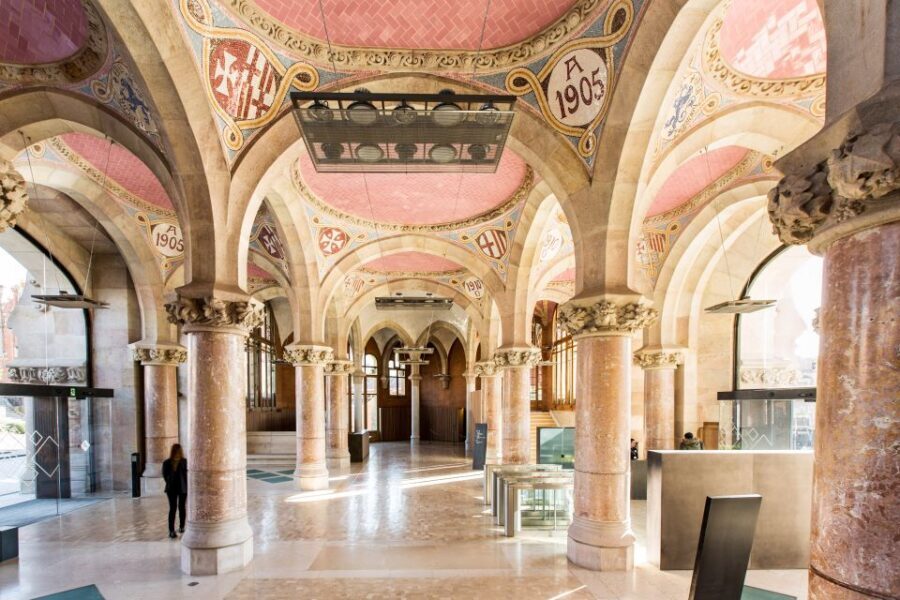
One of the most distinctive features is the connection system beneath the buildings. Sant Pau includes underground passageways, linking the pavilions in a way that supports the hospital’s day-to-day operation.
If you’re the kind of person who likes understanding how systems work, this is the part that can turn a pretty building into a genuinely fascinating visit. You start to see how the complex was designed to reduce unnecessary movement while still keeping spaces connected.
It also helps you imagine the original life of the place. Seeing the tunnels and their purpose makes the architecture feel practical, not just ornamental.
Courtyards and Quiet Corners: A Break From Busy Barcelona
Barcelona can hit you with noise and heat fast. Sant Pau often feels like the opposite: a cooler pocket of air with shaded garden paths and open courtyards.
People have specifically praised how it can feel calm—an oasis you can slow down in. Even if you don’t go “deep” into every historical detail, the setting alone makes it worth your time. Sit for a minute, watch the light shift on the facades, and you’ll see why the complex was built around the idea that environment matters.
Also, there’s plenty of room for a relaxed pace. One reviewer even described the outdoor space as good for chilling or picnicking. That’s a small thing, but it changes the vibe from “race through and leave” to “wander and breathe.”
How Much Time Do You Really Need? Plan for About 1.5 Hours

The tour-style timeframe is about 1.5 hours, and that’s a good target. You can do it faster if you rush, but you’ll miss details. You can also stretch it if you linger in courtyards or stop for extra time with the mosaics and stained glass.
Here’s a pacing approach that works well for most people:
- First pass: follow the route in a steady loop and focus on the big spaces (pavilions + main décor).
- Second pass: slow down in the sections that pull you in—especially areas with standout mosaics or glass.
- Final pass: take 10 minutes to walk any outer edges you skipped earlier, because some decorative panels are easier to spot from the side.
You’ll be able to explore at your own pace since this is an entrance ticket rather than a scheduled guided format.
Comfort, Practicalities, and Small On-Site Details
A few practical notes that help your day go smoothly:
- Lockers: there are lockers mentioned for storing belongings, which is useful if you’re using carry-on bags and want to keep your hands free.
- Walking shoes: even though the site is calm, you’re still covering a lot of ground across paths and between pavilions.
- No pets / no smoking / no alcohol and drugs: follow the site rules, which keeps the space pleasant for everyone.
If you’re traveling in warmer months, plan your start time with the sun in mind. Morning visits often feel best because you can enjoy outdoor sections before the hottest part of the day.
Timing and Special Access: Free on the First Sunday (Over 65)
Two access notes worth knowing in advance:
- On the first Sunday of the month, visitors over 65 can enjoy free access.
- Children 11 and under are permitted, and there’s free admission for participants under 12, but a parent or guardian must be present.
If you fall into either category, it’s smart to plan your visit around that schedule.
Who This Ticket Best Fits
I think this experience is a great match if you like architecture, design, or history that’s tied to real human needs. It’s also a strong choice if you’re curious about healthcare innovation—Sant Pau was built based on health and hygiene breakthroughs, and the hospital concept was ahead of its time.
It’s especially good for:
- people who want a quieter alternative to Barcelona’s mega-attractions
- anyone who likes detailed art work (mosaics, stained glass, sculptural elements)
- visitors who enjoy self-guided exploring rather than a strict group schedule
If you’re totally allergic to reading or signage, you may feel shortchanged by the lack of a guided component. In that case, look for added interpretation tools or pair your visit with a guide.
Should You Book Sant Pau Recinte Modernista Entry Ticket?
I’d book it if you want a memorable Barcelona experience that isn’t just another landmark photo. For about $21, you’re getting access to a full Art Nouveau complex—pavilions, gardens, decorative details, and even underground connections that explain how the place functioned.
Skip or rethink it only if you strongly need a live guide to explain context, because this ticket is for entry, not a guided tour. If you’re comfortable exploring and picking up meaning as you go, Sant Pau is one of the best values in the city for a short, high-impact visit.
FAQ
How long is the Sant Pau Recinte Modernista visit?
The experience is listed as a 1-day activity, with an expected tour length of about 1.5 hours.
What is included in the ticket price?
The ticket includes the entrance fee to Sant Pau Recinte Modernista.
Is a guided tour included?
No. The ticket provides entry, and it is not listed as including a guided tour.
Where is the meeting point?
The meeting point is Calle Sant Antoni Maria Claret, 167, 08025 Barcelona.
Is it wheelchair accessible?
Yes, the experience is listed as wheelchair accessible.
Are there any special rules for kids or older visitors?
Children 11 and under are permitted, and there is free admission for participants under 12 with a parent or guardian present. On the first Sunday of the month, visitors over 65 can enjoy free access.