REVIEW · BARCELONA
Barcelona City Tour Hop-On Hop-Off with Optional Boat
Book on Viator →Operated by Julia Travel S.L · Bookable on Viator
Two routes, one smart way to see Barcelona. This hop-on hop-off setup lets you ride a loop at your own speed, then jump back on whenever you feel like it. You’ll use a double-decker bus with recorded audio, and you can add a 1-hour coastal catamaran cruise if you upgrade.
I especially like the audio guide in multiple languages. It’s paired with a headset system, including an adaptation for people with auditory disabilities, so the commentary isn’t just “nice to have.” I also love the two-route flexibility: the east route is heavy on Gaudí and the waterfront, while the west route leans toward Montjuïc vibes and the historic harbor area.
One thing to think through: the optional boat can be weather- and schedule-dependent, and it can throw off a carefully planned day. If you’re aiming for timed museum or monument entry windows, you may prefer the bus-only version.
Key things to know before you ride
- Two interconnected routes on one ticket so you’re not locked into a single path.
- 24- or 48-hour validity (48 hours must be used on consecutive days).
- Multilingual audio via headphones makes stop-to-stop sightseeing feel like a guided day out.
- A 1-hour catamaran upgrade can be great, but you need to check the sailing schedule in advance.
- Park Güell stop takes a walk uphill—plan your footwear and energy level accordingly.
In This Review
- Why this Hop-On Hop-Off Bus is useful in Barcelona
- East route vs west route: how the city unfolds
- The east route: beaches, viewpoints, and Gaudí landmarks
- The west route: Montjuïc approach, museums, and the historic harbor
- Transfers and walking realities between stops (the part that can surprise you)
- Gaudí stops you can actually use: Sagrada Família, La Pedrera, Casa Batlló, Park Güell
- Sagrada Família
- La Pedrera – Casa Milà and Casa Batlló
- Park Güell: where the stop is close-ish, not at the door
- West-side wandering: Montjuïc energy, Born area, and Port Vell
- Montjuïc approach spots
- Port Vell and the harbor promenade feeling
- The optional catamaran cruise: where it fits and how not to get burned
- If the sea is rough, don’t expect miracles
- Is it worth it?
- Audio guide + headset system: the real secret to a smooth day
- If you have hearing needs, plan around the loop system
- Stops-by-stops walkthrough: what each cluster is good for
- Start points and coastal mood
- Modern landmarks and viewpoints
- Sant Pau and the modernist jump-off
- Gaudí cluster
- Born-ish and harbor links for food and strolling
- The Montjuïc/Museum signal stops
- Big transport anchors
- Price and value: is $39.65 a smart buy?
- Best way to use a 24- or 48-hour ticket without stress
- Who this tour suits best (and who should skip the boat)
- Should you book this Barcelona City Tour with optional boat?
- FAQ
- How long is the tour?
- What’s the difference between the 24-hour and 48-hour passes?
- Where do I go for the catamaran cruise, and how do I get the ticket?
- Is audio available in English?
- Is pick-up and drop-off included?
- Does the ticket include the boat automatically?
Why this Hop-On Hop-Off Bus is useful in Barcelona
Barcelona can feel like two cities: one side is built for wandering on foot, the other side moves fast and uses hills like a cardio workout. This tour is designed for that reality. You get a loop ride that covers major sights without needing to stitch together metro routes all day.
What makes it worth your time is the mix of “big icons” plus practical city legs. The bus doesn’t just show you landmark photos. It drops you near places where you can actually spend an hour—or just 20 minutes—then continue on. That’s why people like doing it early in a trip: it helps you build a map in your head.
The buses run as a true hop-on hop-off system. When you get off, you’re not committing to staying somewhere all afternoon. When you get back on, you’re not starting from scratch. It’s simple, and in a city full of choices, simple can be good value.
East route vs west route: how the city unfolds
This system uses two interconnected routes. Your ticket lets you hop between them, so you can build a day based on your energy and interests. In plain terms: the east route is the Gaudí-and-waterfront arc. The west route is where you start seeing the city’s older neighborhoods and the Montjuïc area approach.
You can also read our reviews of more boat tours in Barcelona


The east route: beaches, viewpoints, and Gaudí landmarks
On the east side, you’ll catch the city’s coastal mood first—stops along the waterfront and beach areas like Passeig Marítim de la Barceloneta and Platja Bogatell. Then the route climbs inland toward some of Barcelona’s most famous modernist and Gaudí-era sites, including:
- Recinte Modernista de Sant Pau (a standout modernist complex)
- Park Güell
- La Pedrera – Casa Milà
- Casa Batlló
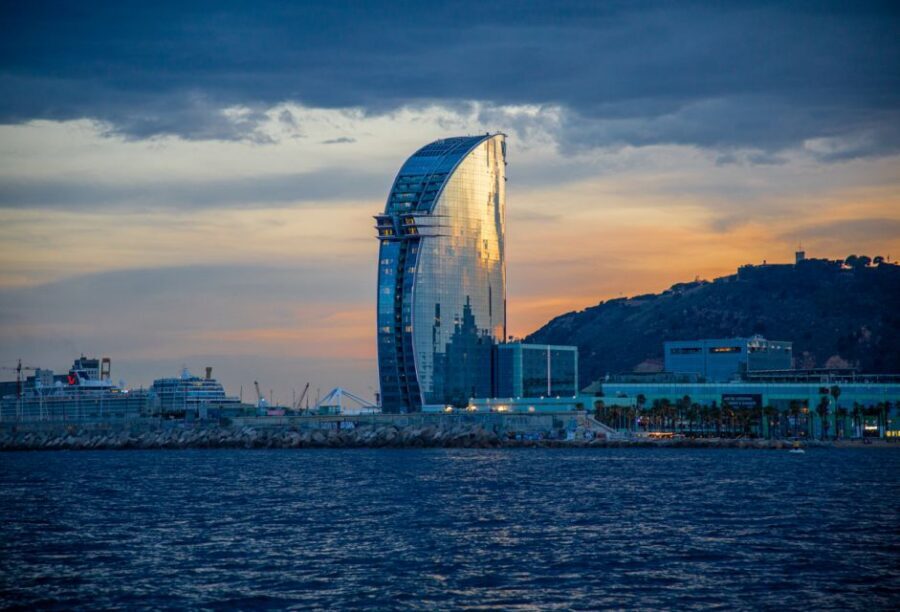
The east route also ties into the “big skyline” feel of Barcelona with stops such as Mirador Torre Glòries and it reaches back toward the harbor area with Port Olímpic.
A practical tip: if you want the best views, aim for the upper deck when weather allows. When it’s raining, the bus has cover, so you’re not totally stuck below. Expect the top deck to be popular, so you might want to board early at a busy stop.
The west route: Montjuïc approach, museums, and the historic harbor
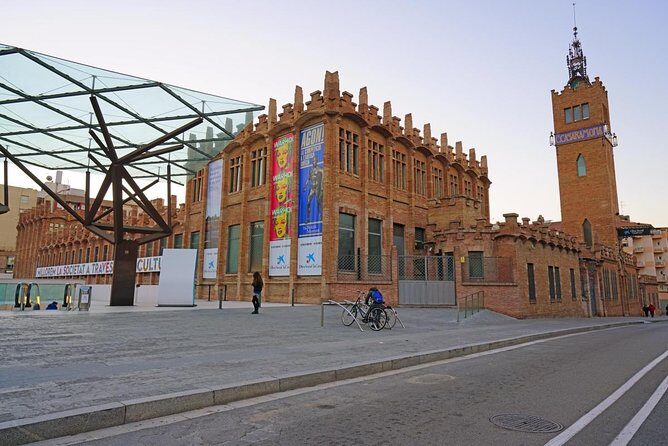
The west route is more varied. You can ride past stops that point you toward Montjuïc-area landmarks, like Poble Espanyol, and you can also reach cultural spots such as CaixaForum Barcelona. You’ll also see how Barcelona transitions from dense streets to the broad waterfront.
From there, the route brings you toward the older, historic harbor side—think Port Vell—plus the Born district feel (you’ll find this especially useful if you plan to wander streets on foot for tapas and small shops).
If you’re trying to decide which route to prioritize, here’s the rule of thumb I’d use:
- If your brain says Gaudí first, start with the east route.
- If you want neighborhoods and “Barcelona street life” (plus Montjuïc-area scenery), start with the west route.
Transfers and walking realities between stops (the part that can surprise you)
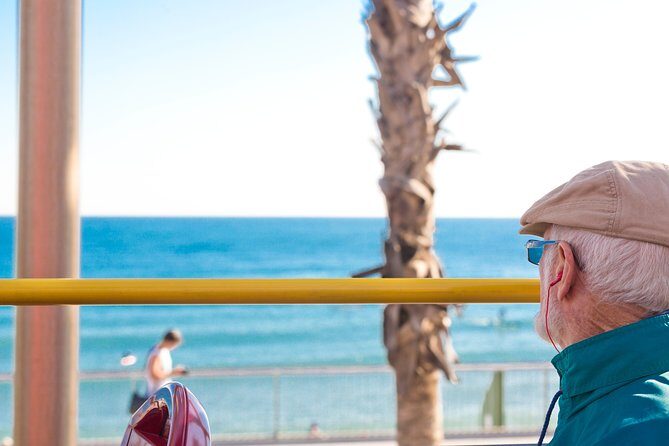
Hop-on hop-off sounds like it should be effortless. In Barcelona, it’s mostly effortless—but not always instantaneous.
The key friction point is transfers. The system connects routes, but the map can make some walking seem shorter than it feels in real life. A good example: the connection between Sagrada Família on the orange side and Recinte Modernista de Sant Pau on the other route involves an on-foot gap of about 10 minutes. That’s doable, but it’s not “hop from one bus to the next in 60 seconds.”
So I’d plan like this:
- If you’re switching routes, give yourself a little buffer time.
- Don’t assume the next bus will line up perfectly with your arrival at the stop.
- If you’re trying to hit timed entry windows (especially in summer), build in time for walking and lines.
Also, don’t ignore practical city factors. Traffic can affect how long a bus sits at a stop, and buses can sometimes skip a stop to keep the service flowing. That’s normal for busy urban routes, but it’s still a reason to keep your day flexible.
Gaudí stops you can actually use: Sagrada Família, La Pedrera, Casa Batlló, Park Güell
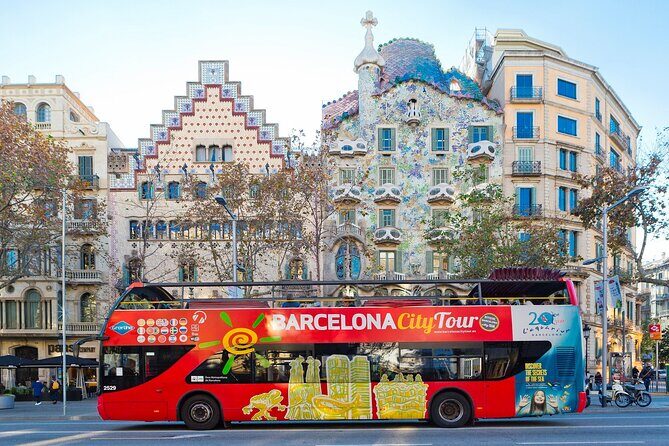
If Barcelona is your first stop in Spain, Gaudí is usually the headline. The good news: this tour touches the big names on the east route, and you can hop off close enough to make a real visit.
You can also read our reviews of more city tours in Barcelona






Sagrada Família
You’ll have a stop at Sagrada Família. This is the kind of sight where being flexible matters. Even when you’re not touring inside, the timing of light on the façade is part of the payoff. If you want an interior visit, plan extra time for entry logistics.
La Pedrera – Casa Milà and Casa Batlló
Two Gaudí houses come back-to-back on your route:
- La Pedrera – Casa Milà
- Casa Batlló
These stops are excellent for a “pick one first, come back another day” strategy. You can’t do everything perfectly on a single day unless you pre-book timed entries and move fast. But with hop-on hop-off, you can choose your priorities without losing your way.
Park Güell: where the stop is close-ish, not at the door
Park Güell is one of those places where people expect the stop to be right at the entrance. It’s not. The bus drop-off is roughly five blocks away, and it involves an uphill walk. So bring good shoes, and don’t schedule the tightest timed slot right off the bus unless you’re confident about your walking pace.
My practical advice: use Park Güell as a “plan your time and slow down a little” stop. If you’re traveling with kids, add extra buffer time too.
West-side wandering: Montjuïc energy, Born area, and Port Vell
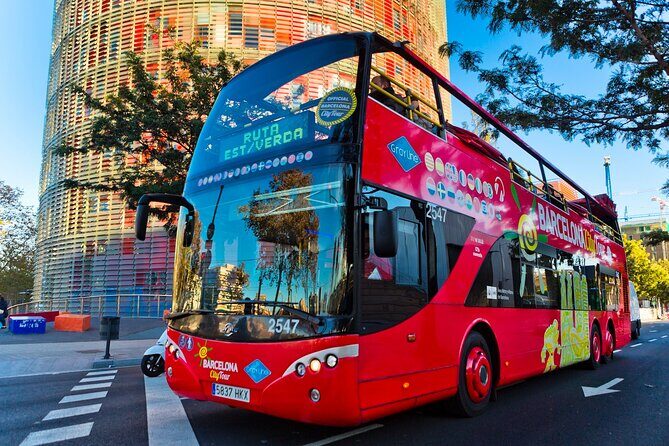
The west route is where you can shift from landmark mode into neighborhood mode. You won’t just see monuments; you’ll also get drop-offs near places that make foot wandering feel easy.
Montjuïc approach spots
You’ll pass stops that signal the Montjuïc direction, including Poble Espanyol and CaixaForum Barcelona. Even if you don’t go inside those exact buildings, these stops are useful because they help you understand where the “viewpoint” part of the city starts.
A good move: if you plan a sunset walk, aim to be somewhere on the west side and near the harbor by late afternoon. The bus makes it easy to reposition without retracing your entire day.
Port Vell and the harbor promenade feeling
On the west route, you’ll also reach the historic harbor area around Port Vell. This is a strong pairing with the catamaran upgrade, because the cruise is coastal and the harbor side is where you’ll feel that shift from city streets to sea air.
The optional catamaran cruise: where it fits and how not to get burned
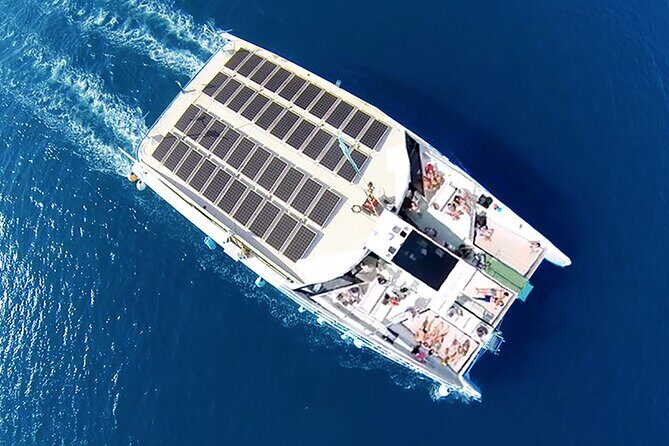
The boat part is a 1-hour tour along Barcelona coast. It’s optional, so you pay extra only if you upgrade.
Here’s how it works in real life:
- You can hop off at stops like Arc de Triomf, Passeig de Colom, or WTC Barcelona Parking.
- Your coastal cruise leaves from Moll de les Drassanes.
- When you board, the bus staff gives you the catamaran ticket, which is located nearby Columbus.
Also check the sailing schedule ahead of time. That sounds obvious, but in Barcelona, plans can shift with wind and weather.
If the sea is rough, don’t expect miracles
If the catamaran is cancelled due to meteorological causes, the operator offers an alternative day if possible. If an alternative day isn’t possible, there’s a partial refund. In other words: the boat is beautiful, but it’s not something I’d anchor a whole day around.
One more practical point: getting the timing right can be tricky in bad weather. In rough conditions, boarding can be harder than it should be, and it’s easy to lose your slot. If you upgrade, give yourself time around the meeting point.
Is it worth it?
If the timing matches your day and the weather cooperates, the cruise can be one of the most memorable “from the water” views you’ll get. But if you have timed tickets you must not miss, I’d treat the boat as a nice add-on, not the centerpiece.
Audio guide + headset system: the real secret to a smooth day
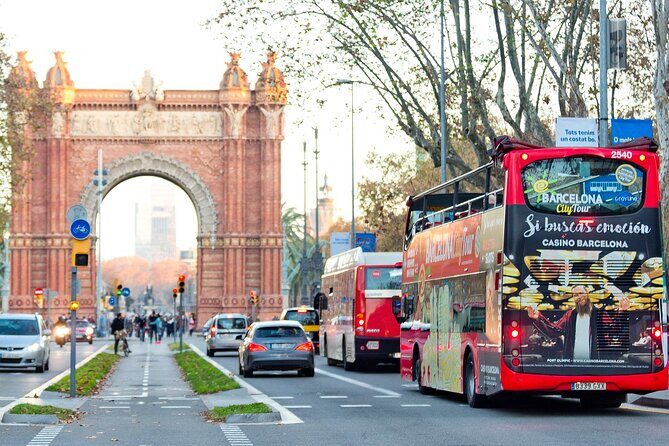
This tour leans hard on its audio system. The commentary is available in multiple languages (including English). It’s timed to the route, so when the bus moves past the right neighborhood, you hear what you’re looking at.
That matters because Barcelona has a lot of “pretty façades.” With audio, you get names, context, and reminders of what to notice at each stop. It turns random sightseeing into something you can actually remember later.
If you have hearing needs, plan around the loop system
The tour includes an audio system adapted for people with auditory disabilities using a multilingual looping system without wires. Seats that use this system are signaled, and passengers who need it can get priority. If this matters for you, sit where you’re directed so you’re not left troubleshooting.
Stops-by-stops walkthrough: what each cluster is good for
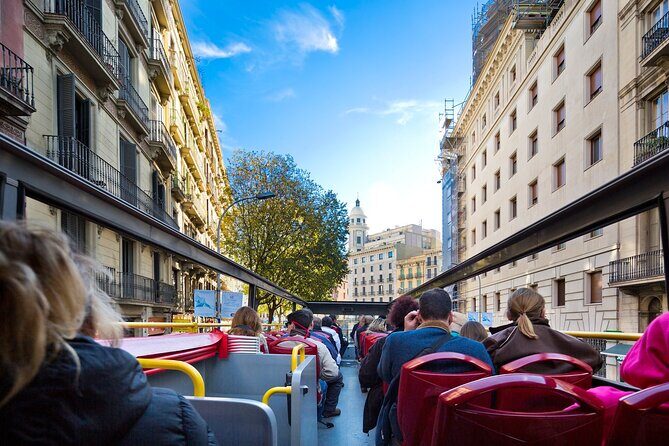
Rather than thinking of the tour as one long ride, I like to think of it as grouped neighborhoods. Here’s how the stop names translate into planning.
Start points and coastal mood
- Pla de Palau: a good reference stop. Use it to orient yourself, especially if you’re walking toward the harbor.
- Passeig Marítim de la Barceloneta: a classic waterfront segment. Great for photos, and a nice warm-up before the city sights.
- Platja Bogatell: the “beach with room to breathe” feeling, good if you want a pause.
Modern landmarks and viewpoints
- Mirador Torre Glòries: useful when you want skyline views and the city’s newer architecture in the same frame as the older streets.
Sant Pau and the modernist jump-off
- Recinte Modernista de Sant Pau: an excellent modernist stop. If you’re doing a “big sights in one area” day, pair it with nearby walking rather than rushing onward immediately.
Gaudí cluster
- Park Güell
- La Pedrera – Casa Milà
- Casa Batlló
This cluster is the reason people buy into the east route.
Born-ish and harbor links for food and strolling
- Passeig de Picasso & Passeig de Pujades: handy if you want a convenient drop point for strolling.
- Arc de Triomf: a strong transfer point and also linked to the boat upgrade.
The Montjuïc/Museum signal stops
Stops like Poble Espanyol, CaixaForum Barcelona, and Avinguda de la Reina Maria Cristina help you find that “go uphill or head toward views” direction without map panic.
Big transport anchors
- Estació de Sants
- Barcelona Nord Bus Station
These are helpful if you’re combining the tour with day trips or later evening plans. You can reposition without committing to one neighborhood all day.
Price and value: is $39.65 a smart buy?
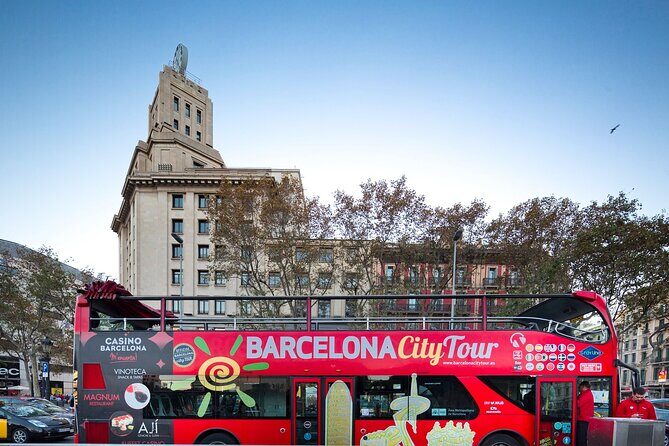
At $39.65 per person, this tour is priced like a “time-saving tool.” It works best when you use the hop-on hop-off flexibility instead of trying to treat it like a one-time ride.
You’re paying for:
- the bus loops across major areas
- unlimited use on the selected pass (24 or 48 hours)
- multilingual audio
- and, if you upgrade, the 1-hour catamaran coast cruise
So the value depends on how you use time. If you have just a day or two and you’ll visit multiple Gaudí sights plus at least one neighborhood stroll, the ticket starts to make sense fast.
If you’re the kind of traveler who insists on walking everywhere and already knows your routes, you might not squeeze enough value out of the hop-on system. In that case, a more targeted approach—metro plus timed entries—could be cheaper.
Best way to use a 24- or 48-hour ticket without stress
Because you can hop on and off, your real job is deciding when to pause. Here’s the pattern I recommend for most first-timers:
- Day 1 (overview day): ride both routes enough to “see what’s what,” then hop off at 2-3 stops max.
- Day 2 (priority day): return to your favorite areas for deeper time.
A big caution: if you buy the 48-hour option, it must be used on consecutive days. Don’t plan a gap day between them or you risk wasting time.
Also, aim to start earlier than you think you need to, especially if you want the top deck with the best views and you plan to transfer between routes.
Who this tour suits best (and who should skip the boat)
This tour fits you if:
- you like having a plan but still want freedom
- you want major sights covered without constant navigation
- you enjoy audio-guided sightseeing
- you’re visiting for 1–3 days and want efficient orientation
You might skip the boat add-on if:
- you have tightly scheduled timed tickets and can’t absorb delays
- you travel in peak wind/rain seasons and hate plan changes
- you don’t want to spend time coordinating boarding points
On the other hand, if the weather looks stable and you want water views, the catamaran cruise can be a highlight.
Should you book this Barcelona City Tour with optional boat?
Book it if you want an easy way to cover Barcelona’s big highlights with multilingual audio, frequent stops, and real flexibility. The east route gives you Gaudí and the waterfront; the west route helps you feel the city’s neighborhoods and harbor side.
I’d book the bus confidently and treat the boat as a bonus—something you’ll enjoy if the schedule lines up. If you’re worried about timing, choose the 24-hour option and skip the catamaran. If you’re relaxed and want sea views, upgrade and plan extra buffer time.
FAQ
How long is the tour?
The Barcelona city tour part runs for about 2 hours 20 minutes (approx.). If you add the optional catamaran, that boat experience is 1 hour.
What’s the difference between the 24-hour and 48-hour passes?
A 24-hour pass gives you 24 hours to explore starting from validation. A 48-hour pass gives you 48 hours starting from the date of validation, and the 48-hour ticket must be used on consecutive days.
Where do I go for the catamaran cruise, and how do I get the ticket?
You can hop off at Arc de Triomf, Passeig de Colom, or WTC Barcelona Parking, then take the cruise from Moll de les Drassanes. The bus staff provides your catamaran ticket, which is located nearby Columbus.
Is audio available in English?
Yes. The tour is offered in English, and onboard audio commentary is available in several languages.
Is pick-up and drop-off included?
No. Pick-up and drop-off service is not included.
Does the ticket include the boat automatically?
The boat experience is an optional upgrade. If you choose it, you get the 1-hour coastal catamaran cruise as part of that upgrade.