REVIEW · BARCELONA
Barcelona’s Dark History Walking Tour in El Raval
Book on GetYourGuide →Operated by ExperienceFirst · Bookable on GetYourGuide
Barcelona has a second, darker pulse. This walking tour through El Raval mixes street art, medieval architecture, and chilling legends into a route that feels like the city is telling you secrets at street-corner volume. I especially like how it pairs the infamous legend of the Vampiress of the Raval with real anchor points like the ancient Hospital of la Santa Creu and the Romanesque Sant Pau del Camp. Another thing I like: you don’t just get horror talk—you also get context for why these places and myths stuck around.
One possible drawback: El Raval is a working neighborhood, and the subject matter leans dark. If you want purely light sightseeing or you’re sensitive to grim stories, this may feel heavy.
If you’re good with that, this tour is a smart way to see Barcelona beyond the postcards—walking about 2 miles at a leisurely pace, with an English-speaking guide guiding you step by step through corners that tourists often skip.
In This Review
- Key reasons this walk works
- Why El Raval’s dark stories make sense in Barcelona
- Starting outside Sant Pere Nolasc: the route’s mood snaps into place
- Casa de Misericòrdia: where mercy and rumor collide
- MACBA and Carrer de Joaquín Costa: street art with politics in its teeth
- The Vampiress of the Raval: how legend gets attached to streets
- Old Hospital de la Santa Creu: the macabre, but with structure
- Bar Marsella and the strange comfort of old neighborhoods
- Sant Pau del Camp: the oldest church, with a troubled past
- The Three Chimneys and Jardins de les Tres Xemeneies: ending with a skyline frame
- Price, time, and value: is $33 a fair deal?
- Who this tour suits best (and who might skip it)
- Should you book Barcelona’s Dark History Walking Tour in El Raval?
- FAQ
- How long is the Barcelona’s Dark History Walking Tour in El Raval?
- How much does it cost?
- Where do I meet the guide?
- Is the tour offered in English?
- Does the tour include a guided component at every stop?
- Is this tour wheelchair accessible, and does it run in bad weather?
Key reasons this walk works
- Legends anchored to real places, like the Hospital of la Santa Creu and Sant Pau del Camp
- Keith Haring’s Mural del SIDA, plus nearby political street-art context
- Bar Marsella stop, including the fact it’s the oldest bar in town and linked to creative legends like Dalí and Picasso
- Raval’s south-side energy, with clues about clubs and cabarets that shaped the area a century ago
- Macabre atmosphere built into the route, including the former house of mercy and garden stories
- Good guide storytelling styles, with guides named Andreas and Owen (Eoghan) praised for vivid, exciting narration
Why El Raval’s dark stories make sense in Barcelona
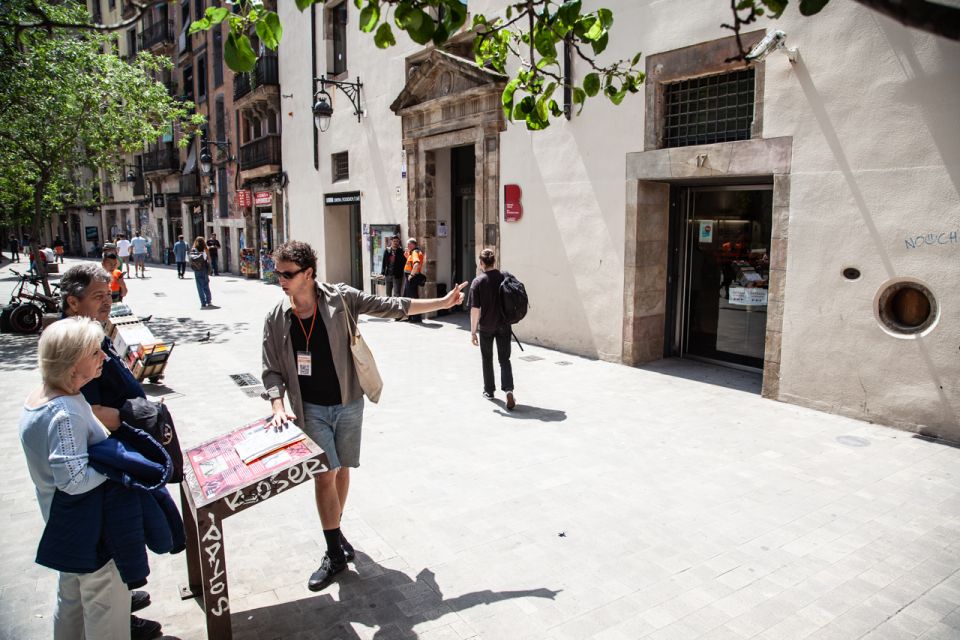
El Raval sits in that in-between zone where Barcelona’s polished image loosens its grip. It’s a dense, older part of town with narrow streets, layered architecture, and a street-life rhythm that doesn’t ask permission to be messy. That’s exactly why a dark-history walking tour fits here: the neighborhood’s past isn’t “over there” in a museum. It’s built into the streets.
What I like about this experience is that the stories aren’t random spooky noise. They tie to institutions—mercy, hospitals, churches—and to public culture—street art and politics—so the legend thread doesn’t float away from reality. You’ll also walk through places that Barcelona’s visitors usually pass quickly, if they pass at all.
At $33 per person for about 2 hours and around 2 miles on foot, it’s priced like a solid guided neighborhood tour rather than a niche museum add-on. For you, that means the value is in the route plus the guide’s ability to make links between buildings, art, and story.
You can also read our reviews of more tours and experiences in Barcelona.


Starting outside Sant Pere Nolasc: the route’s mood snaps into place
You meet at Parròquia de Sant Pere Nolasc Mercedaris in Plaça de Castella. That location matters. You’re starting at a church in a lively square, so you begin with real street noise and everyday life rather than a staged scene. From there, you’ll head into the Raval’s narrow medieval streets, where the architecture and the density help the stories land.
The tour’s pacing is intentionally gentle—a leisurely walk—so you’re not sprinting between stops. That gives you time to look up at details, register what you’re seeing, and let the guide’s connections do their work.
Casa de Misericòrdia: where mercy and rumor collide
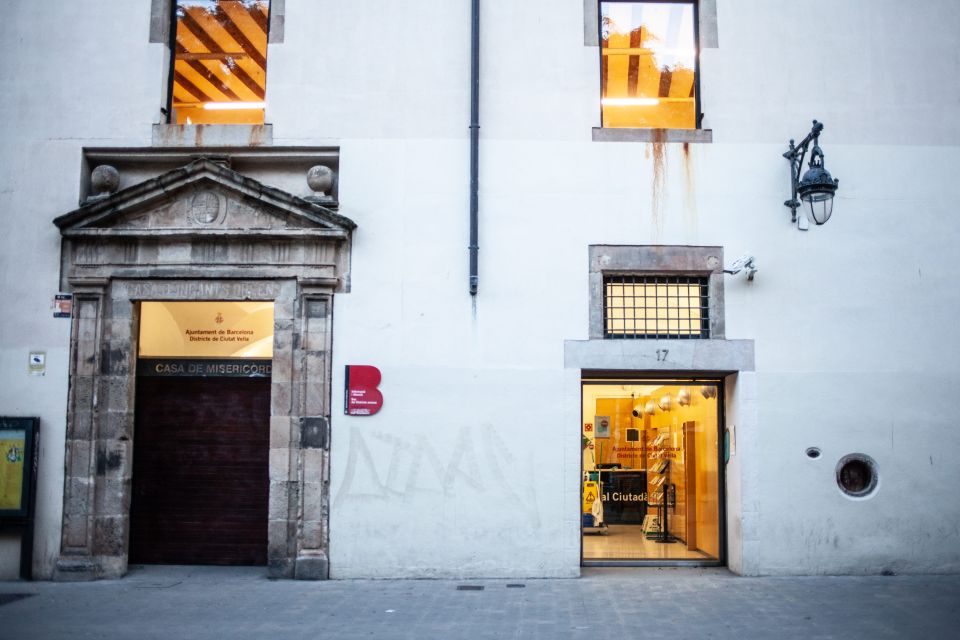
The first major stop is the Fundació Privada Casa de Misericòrdia de Barcelona—the house where children were abandoned, and where the story of the building includes claims that some visitors say still walk the halls.
Even if you take the supernatural elements as legend rather than fact, the value here is how the guide frames the place. This is a former institution connected to social hardship. When you hear stories about abandoned children tied to the building’s past, the mood shifts. It stops being a “scary tour” and becomes a conversation about what a city did for people when resources were limited—and what people later assumed or feared.
Practical note for you: this is the kind of stop where your attention matters. If you’re the type who likes to read signs and look for architectural clues, bring that energy. If you’re more into quick photo stops, you may feel slightly more grounded by the longer explanation.
MACBA and Carrer de Joaquín Costa: street art with politics in its teeth
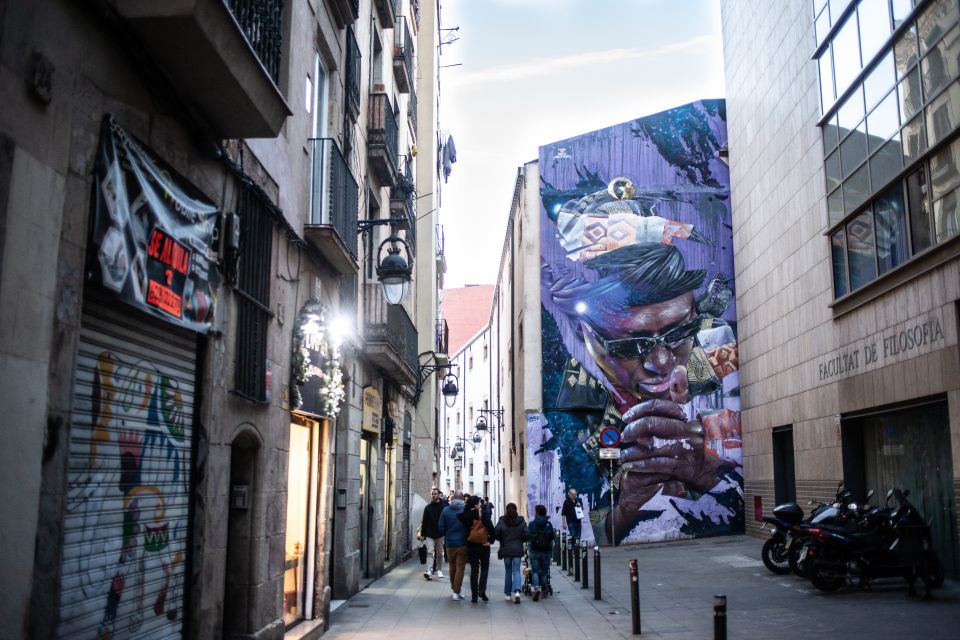
Next, the walk brings you through Raval’s modern edge, including the MACBA area—the Barcelona Museum of Contemporary Art. The tour describes it as a skate-friendly paradise, but the real hook is what’s hidden behind the architectural presence: public art that carries messages.
You’ll also hear about Mural del SIDA (Keith Haring), including the detail that it’s a mural of whimsical stick characters with a politically charged message. That pairing—cute shapes plus serious intent—is part of why the stop works. It’s not just “art exists.” It’s art as a public statement, in the open.
Then you move along Carrer de Joaquín Costa, where the guide keeps the street-level story moving. This stretch is where Raval stops being only “old” and becomes contemporary again: shops, architecture, and street culture all doing their part.
For you, this section is a good reset. The early institutional horror stories set the tone; the street-art stops keep you engaged by showing how Raval’s voices keep talking, even now.
The Vampiress of the Raval: how legend gets attached to streets
At some point, the tour positions you at the place where the Vampire of Raval used to live. The tour plays with the idea that vampires don’t just die in stories—and that’s the trick. The guide uses the setting to show how legend clings to real locations.
This part is valuable even if you don’t care about gothic folklore. It shows you a mechanism: crime stories, myths, and urban fear can all become a kind of informal history map. When you stand in the spot connected to that infamous serial-killer legend, you start to understand why the neighborhood’s reputation stuck so tightly.
If you’re sensitive to heavy crime themes, you’ll want to listen with intention. The point isn’t shock for shock’s sake—it’s how the guide links legend to place and time.





Old Hospital de la Santa Creu: the macabre, but with structure
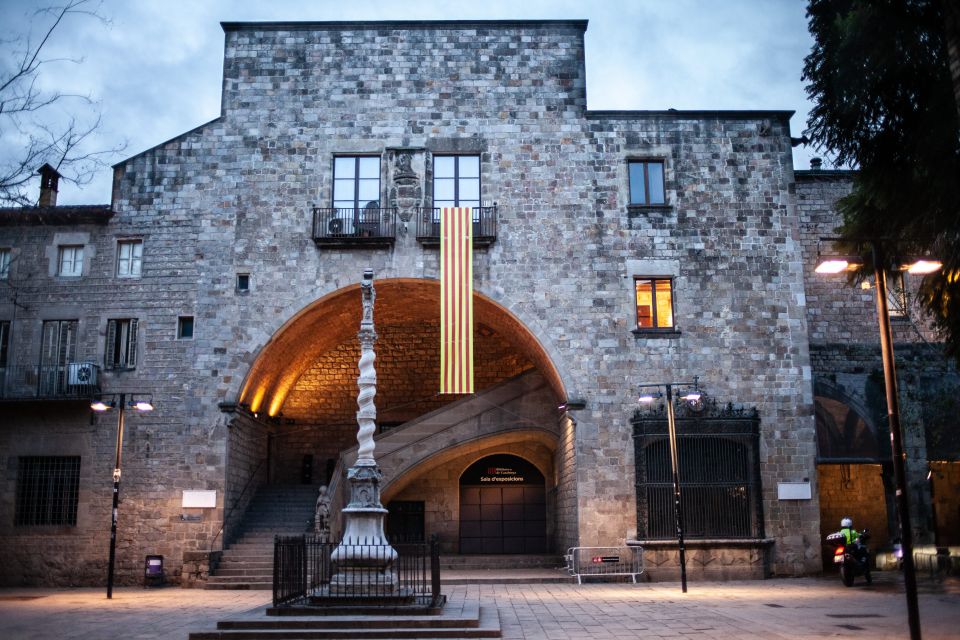
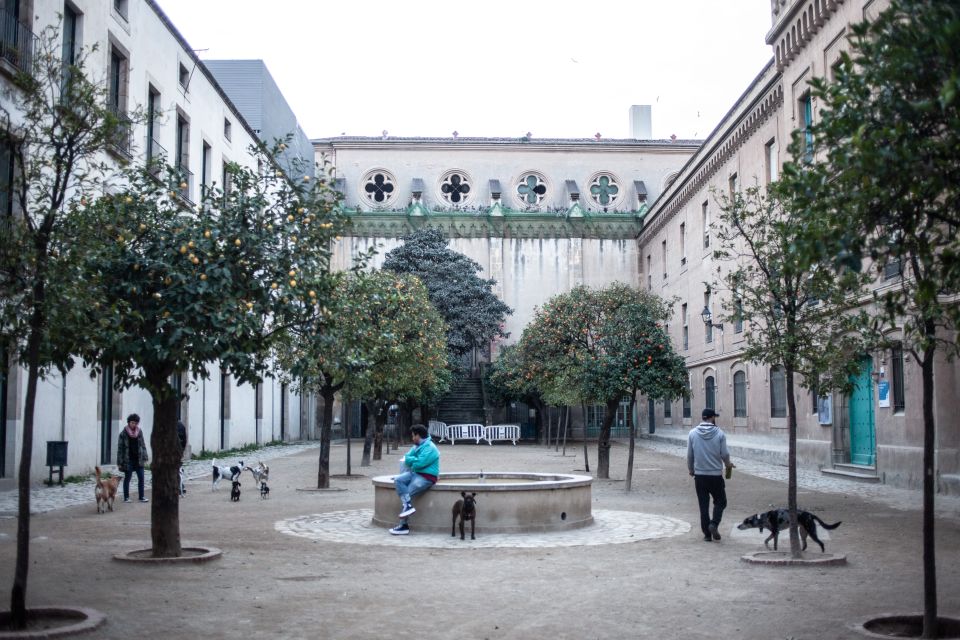
One of the most important stops is the Old Hospital de la Santa Creu. The tour invites you to wander the grounds and specifically mentions a garden where shows and spells of the most macabre once took place.
Here’s why this stop is worth your time: hospitals are history with purpose. Even when the tour frames certain scenes as theatrical or macabre, the setting itself helps you understand why stories formed around large institutions. Places that managed illness, care, and human suffering also became places where fear, rumor, and spectacle could grow.
Expect a more contemplative pace here. This isn’t the stop to rush past. You’ll want to slow down, look at how the space is laid out, and let the guide connect the dots between the hospital’s role and the neighborhood’s darker reputation.
Bar Marsella and the strange comfort of old neighborhoods
Then the tour heads to Bar Marsella, described as the oldest bar in town, opened more than 200 years ago. More than that, it’s presented as a preferred watering hole for creative minds like Dalí, Gaudí, Picasso, and others.
This is one of my favorite pivots in the route. A tour about dark history can easily become grim without relief. Bar Marsella gives you a real Barcelona counterpoint: life continues. You get to sit with the idea that even in a neighborhood with sharp edges in its past, people still gathered, talked, made art, and lived.
The practical takeaway for you: you’re not necessarily here to drink; you’re here to understand the social fabric. The guide’s storytelling turns a bar into a cultural landmark, not just a stop on a map.
Sant Pau del Camp: the oldest church, with a troubled past
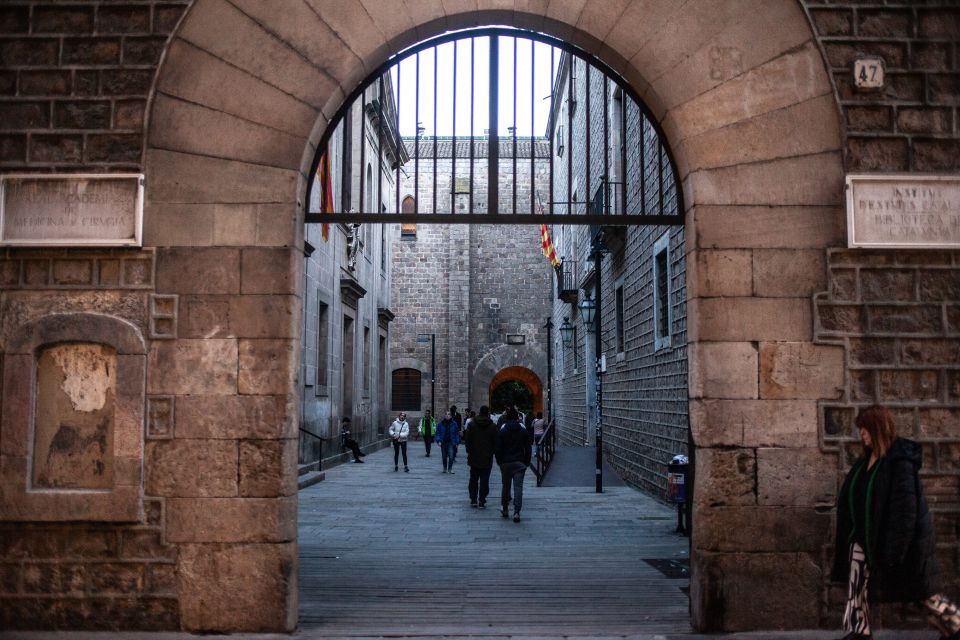
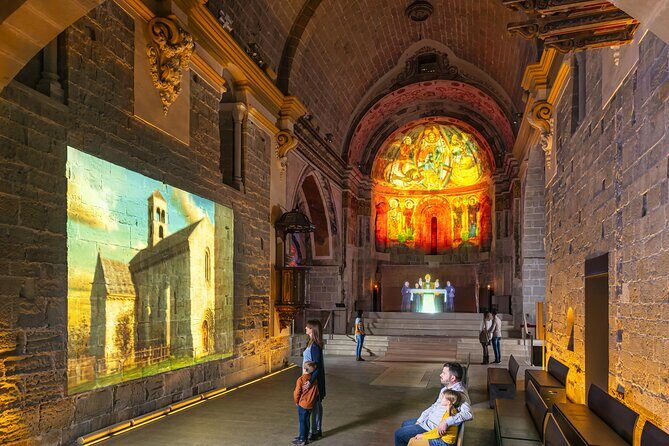
You’ll then visit Sant Pau del Camp, highlighted as Barcelona’s oldest church—a Romanesque building over 1,000 years old. The tour also notes it hides a troubled past tied to local legend.
This is a strong “history engine” stop. Old churches often function like archives made of stone—birthplaces of community memory, but also targets for conflict and rumor as cities change. When a guide ties a specific legend to a place that old, you can feel how time layers on top of itself.
If you like architecture, this is one of the best moments to pay attention to the building’s age. If you don’t, the guide should still give you a story thread you can follow without needing to know Romanesque details.
The Three Chimneys and Jardins de les Tres Xemeneies: ending with a skyline frame
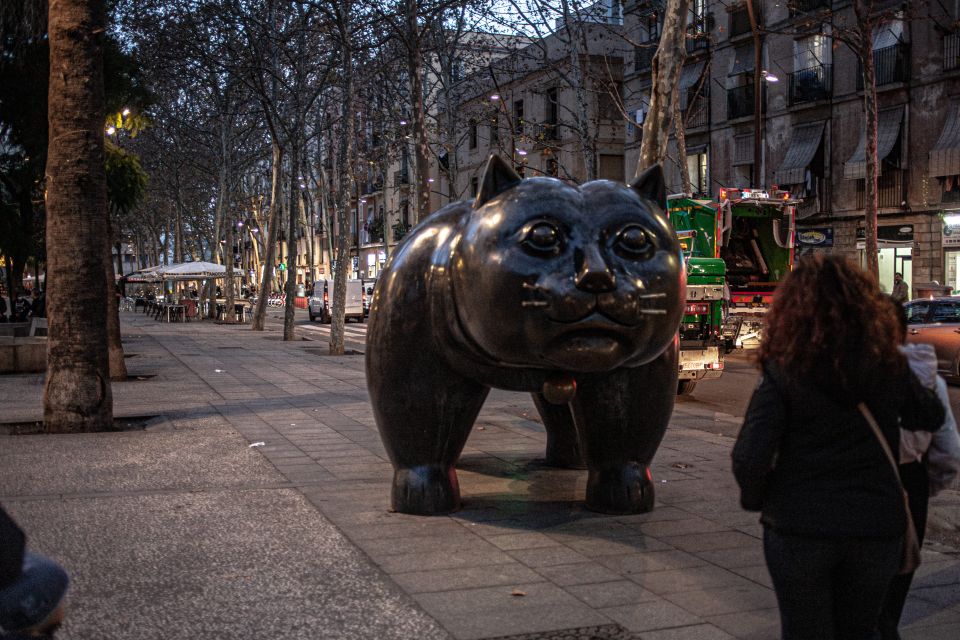
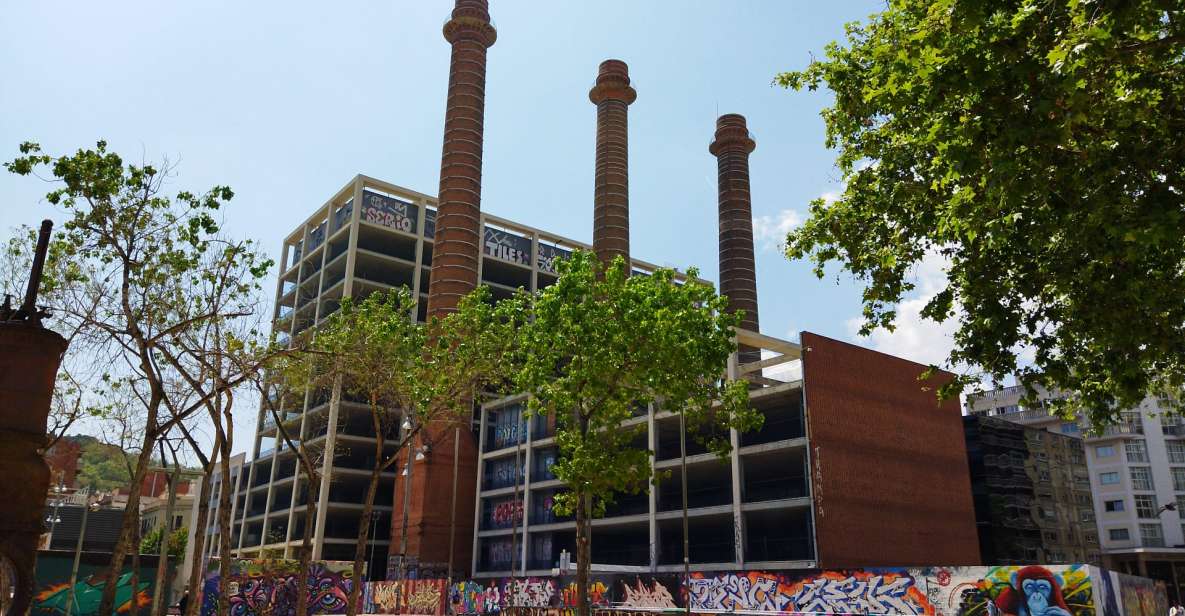
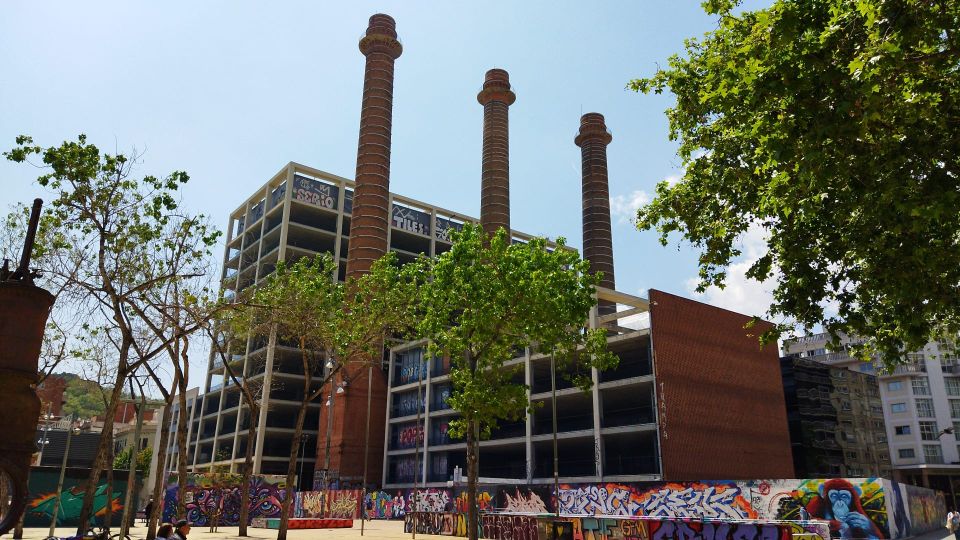
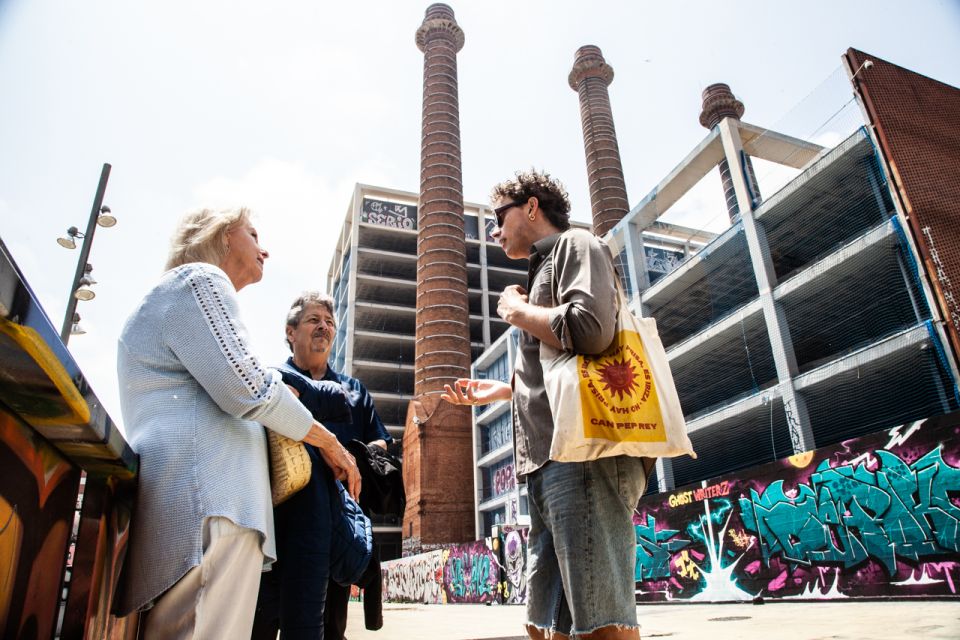
The final stretch brings you toward The Three Chimneys and ends at Jardins de les Tres Xemeneies. This is a practical finish for photos and for resetting your brain after crime, legend, and institutions.
The tour also mentions south-side street art near a former power factory, with colorful graffiti art that keeps changing—and a chance, if you’re lucky, to see street artists working. Even if you don’t catch artists in action, you’ll still notice how Raval’s visuals keep rewriting the neighborhood’s meaning.
For you, this ending works because it gives you a shift from “history talk” into “look around.” You’ll leave with a better eye for how industrial remnants, parks, and street art all fit together in the same neighborhood.
Price, time, and value: is $33 a fair deal?
Let’s do the simple math and the real-world check.
- $33 per person
- 2 hours
- about 2 miles on foot
- live English-speaking guide
- multiple guided stops at major landmarks and outdoor spaces
At this price point, you’re paying primarily for guided interpretation: connecting legend (like the Vampiress of the Raval), art (Keith Haring’s Mural del SIDA), and institutions (mercy house, hospitals, church) into one walk. If you show up ready to listen, you should get your money’s worth fast.
If you’re the type who only wants sites with clear, self-guided signage, then a guided tour may feel less necessary. But if you like stories with context—and you want to understand El Raval’s past without hopping between museums—this is a strong value.
Also, the tour has a strong rating signal: 4.8 out of 5 across 6 reviews, with top praise for guides who deliver vivid, exciting storytelling and a good balance of informative and fun.
Who this tour suits best (and who might skip it)
You’ll like this tour if you want:
- a neighborhood walkthrough focused on story and context
- a mix of legend + real institutions
- street art and politics woven into the walk, not treated like an afterthought
- a stop at something like Bar Marsella, where local culture softens the darker notes
You may want to skip it if:
- you don’t want crime or serial-killer legend themes
- you prefer only bright, postcard-friendly sights
- you’d rather explore Raval without a structured route
There’s also a nice practical note: the tour is described as wheelchair accessible, which broadens who can use this option.
Should you book Barcelona’s Dark History Walking Tour in El Raval?
I’d book it if you’re curious about how cities remember their hard chapters. The strongest part is how the tour keeps linking story to place: Casa de la Misericòrdia, the Old Hospital de la Santa Creu, Sant Pau del Camp, Keith Haring’s Mural del SIDA, and even Bar Marsella. That combination helps you see El Raval as more than a reputation.
If you’re worried about the heaviness, you can still go—but go with a plan: treat it like a guided understanding of Barcelona’s underbelly, not a horror movie. Wear comfy shoes, expect about 2 miles, and let the guide do the connecting work.
FAQ
How long is the Barcelona’s Dark History Walking Tour in El Raval?
The tour lasts about 2 hours.
How much does it cost?
It’s priced at $33 per person.
Where do I meet the guide?
Meet outside the Church of Sant Pere Nolasc, in Plaça de Castella, 08001, Barcelona.
Is the tour offered in English?
Yes, the live tour guide speaks English.
Does the tour include a guided component at every stop?
Yes, it’s a guided tour with guided visits at each listed stop.
Is this tour wheelchair accessible, and does it run in bad weather?
The tour is described as wheelchair accessible, and it runs rain or shine (with a full refund if it’s canceled due to extreme weather).