REVIEW · BARCELONA
Bean to Bar Chocolate Workshop in Barcelona
Book on GetYourGuide →Operated by Kina Chocolates · Bookable on GetYourGuide
Chocolate has a whole second life here.
At Kina Chocolates (Local Kina Chocolates), the bean-to-bar chocolate workshop turns you from a chocolate eater into a chocolate maker. You’ll learn how cocoa is grown and processed, then get your hands involved with the main steps: roasting, peeling, grinding, and forming cocoa paste. I especially like the way the class mixes practical work with real context, and I love that you leave with one chocolate bar you made. One possible drawback: it can feel a bit messy (working with cocoa and roasting), and some parts of the talk may be in Spanish even though you can get English support.
This is a small-group session (up to 8). In my opinion, that size is what makes it work. You get time to ask questions, and the team running it (people like Oscar and hosts such as Renée and Franklin come up in different sessions) keep the pace moving while you taste and make. It’s also built for adults and teenagers, so if you’re looking for an easy, purely observational food tasting, this may be more hands-on than you expect.
In This Review
- Key things to know before you go
- Where the class starts: Kina Chocolates, Barcelona
- The 2-hour flow: from cocoa pod to take-home bar
- 1) Cocoa basics and the grown-from-the-field story
- 2) Roast, peel, grind: the hands-on part
- 3) Cocoa drinks and flavor comparisons
- 4) A chocolate bar made by you
- 5) Bean-to-bar and the people behind it
- What makes this class great (and why it’s worth $47)
- The guides and the teaching style: hands-on, not stiff
- Who this workshop is best for
- Practical tips so you enjoy it more
- Should you book the bean-to-bar workshop at Kina Chocolates?
- FAQ
- Where is the bean-to-bar workshop in Barcelona?
- How long is the workshop?
- How much does it cost?
- What do I make during the workshop?
- Is the workshop hands-on or mostly tasting?
- What languages are used during the workshop?
- Can the workshop adapt for allergies or intolerances?
- Is there a small group size limit?
Key things to know before you go
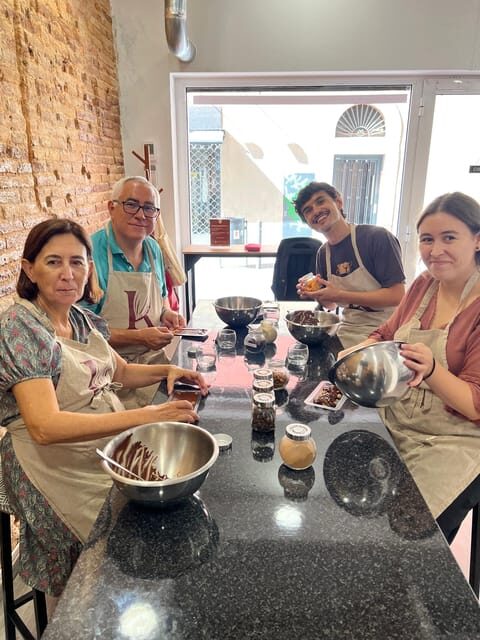
- You’ll do the bean-to-bar steps yourself: roast, peel, grind, and make cocoa paste.
- You leave with 1 take-home bar made during the workshop.
- You’ll taste more than just chocolate, including cocoa-based drinks and comparisons from different origins.
- Small group, big attention with a max of 8 participants.
- Cocoa pods and real process talk, not only a slide show.
- Bring allergy info early so the team can adapt if needed.
Where the class starts: Kina Chocolates, Barcelona
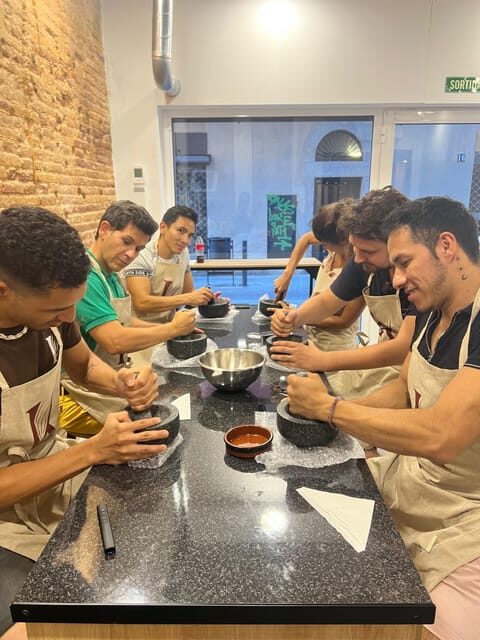
The workshop meets at Local Kina Chocolates, so you’re starting right in the environment where the craft happens. This matters more than it sounds. Chocolate-making isn’t just tasting. It’s sourcing, processing, equipment, timing, and decisions that affect flavor.
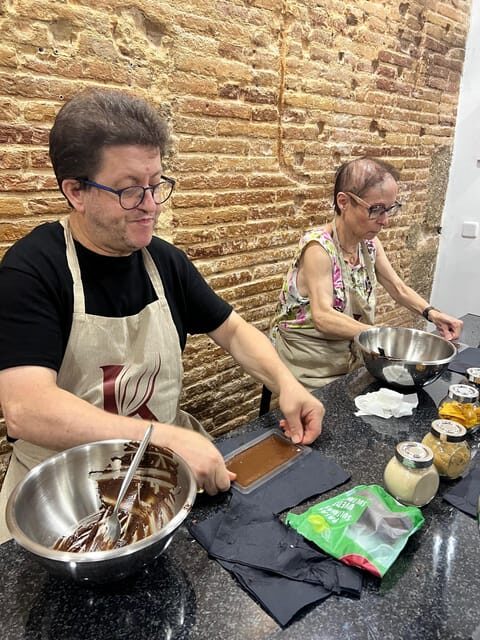
Kina keeps the feel intimate. You’re not herded into a crowded room. Instead, you’re set up with the materials you need—plus an apron and hat—so you can focus on the work without worrying about what to bring or how to get messy.
That “shop setting” also helps you connect what you’re doing to what you’ll see after. It’s easier to understand why a bar tastes the way it does when you’ve handled the ingredients and heard how they’re processed.
You can also read our reviews of more drinking tours in Barcelona



The 2-hour flow: from cocoa pod to take-home bar
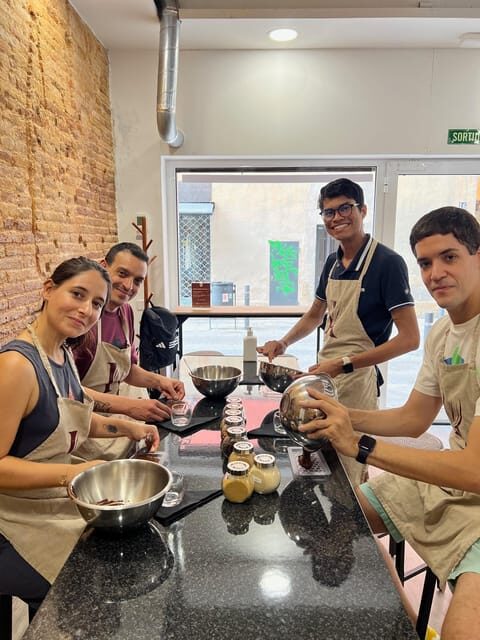
This is a 2-hour session with a guided sequence that keeps switching between learning, tasting, and hands-on production. It’s fast enough to stay fun, and structured enough that you won’t feel lost.
1) Cocoa basics and the grown-from-the-field story
The workshop kicks off with cocoa cultivation and the chocolate-making process. You’ll get to see a cocoa pod, which is a rare “whole ingredient” look for most visitors. It helps explain why cocoa beans come with a lot of identity: where they’re grown, how they’re fermented, and how processing choices shape flavor.
Then the class connects that field reality to what happens next. You’re learning why chocolate isn’t one uniform product. Even when people call it chocolate, you’re actually moving through different stages that each matter.
2) Roast, peel, grind: the hands-on part
This is the part most people remember.
You’ll prepare and work through key stages:
- Roasting cocoa
- Peeling the beans
- Grinding them down
- Turning that work into cocoa paste
This hands-on portion is exactly why the workshop can feel so satisfying. You’re not just mixing a finished ingredient and calling it chocolate. You’re participating in the transformation—from raw beans toward the paste that becomes bar-making material.
One useful thing to keep in mind: cocoa roasting is sensory. Expect smells, heat, and some kitchen-level mess. If you’re sensitive to strong food aromas, plan for that.
3) Cocoa drinks and flavor comparisons
Along the way, you’ll prepare various cocoa-based drinks and taste what’s possible from cocoa. It’s a smart way to train your palate without making the class feel like a lab test. You’ll start thinking in flavors, not just sweetness.
The workshop also includes tasting different chocolate experiences made from beans. The goal is to help you notice differences from origin and processing, not just judge by “good” or “bad.”
You can also read our reviews of more tours and experiences in Barcelona

4) A chocolate bar made by you
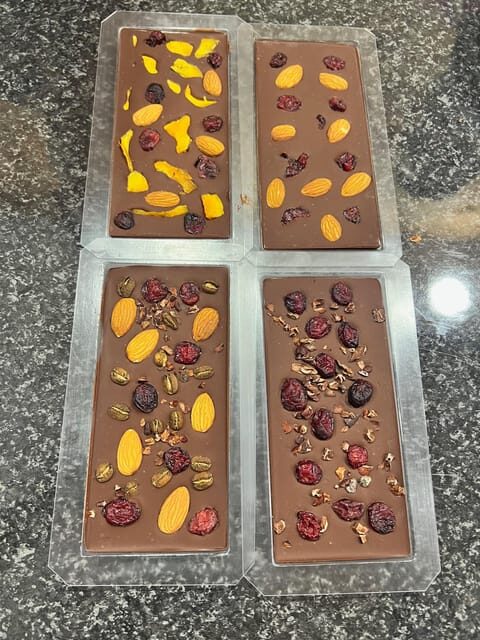
At the end, you’ll make your own chocolate bar and take it home. That small detail matters for value and memory. A tasting event gives you a couple of moments. A bar gives you a souvenir that proves you did the process, step by step.
In a practical sense, it’s also a great way to compare later. When you taste it again at your hotel, you’ll remember the roasting and grinding stages far more clearly than if you’d only watched them.
5) Bean-to-bar and the people behind it
The session closes with a discussion of bean to bar and how local cocoa-producing communities live. That part matters because bean-to-bar isn’t only a technique. It’s tied to sourcing and fairness in the supply chain.
Some of the strongest comments I kept seeing emphasized that the workshop connects craft to the farmers behind cacao. If you care about food ethics as much as flavor, this is the section that helps the whole experience feel grounded.
What makes this class great (and why it’s worth $47)
At $47 per person for 2 hours, you’re paying for more than tasting. You’re paying for:
- Guided instruction
- Materials, utensils, and protective gear (apron and hat)
- A small-group setup (max 8)
- Multiple steps of hands-on bean-to-bar production
- Cocoa drinks and chocolate samples
- A take-home bar
If you compare this to a typical “walk-in, sample, leave” tasting, the value is clearer. Here, you’re doing the work. The take-home bar adds real return—you’re not relying only on memory or a few bites that vanish in ten minutes.
Also, small groups matter. When you have fewer people at the table, you get more time and faster help as you roast, peel, and grind. That’s the difference between learning and just going through motions.
The guides and the teaching style: hands-on, not stiff
The workshop uses Spanish and English instruction, with an instructor who can support both languages. Even with that, you should expect some content may appear in the original language at certain points.
The teaching style is interactive. People mention guides who answer questions patiently and keep the workshop lively. Names that come up include Oscar, plus hosts like Renée and Franklin, depending on the session. The common thread: storytelling tied directly to what you’re doing, not detached lectures.
That’s a practical teaching approach. If you’re going to spend time roasting and grinding, you want the “why” at the same time—not an afterthought later.
Who this workshop is best for
This is aimed at adults and teenagers, and it fits a few specific traveler profiles:
- Chocolate lovers who want hands-on proof
If you like learning by doing, this is the kind of class that changes how you think about chocolate.
- Families with older kids who can handle food work
The workshop’s tone sounds accessible for teens and older children, especially when they’re curious. One reason families seem to enjoy it is the mix of tasting, making, and stories about origin.
- Food ethics and sourcing-minded travelers
The bean-to-bar discussion and attention to cocoa-producing communities make it more meaningful than a simple chocolate sampling.
If you’re only after a quick dessert stop, you might find the process work slower than you want. But if you’re the type who likes to understand where things come from, you’ll probably feel satisfied leaving.
Practical tips so you enjoy it more
- Expect some cocoa mess. Wear comfortable clothes you don’t mind getting a little dusty.
- Plan to taste with a curious mindset. The point isn’t just the final bar. Pay attention to the stages.
- Tell them about allergies or intolerances ahead of time so the team can adapt.
- If you don’t speak Spanish fluently, it still shouldn’t be a problem since instruction includes English, but some content may be presented in Spanish.
- Save room in your schedule. Two hours flies by when you’re roasting and grinding.
Should you book the bean-to-bar workshop at Kina Chocolates?
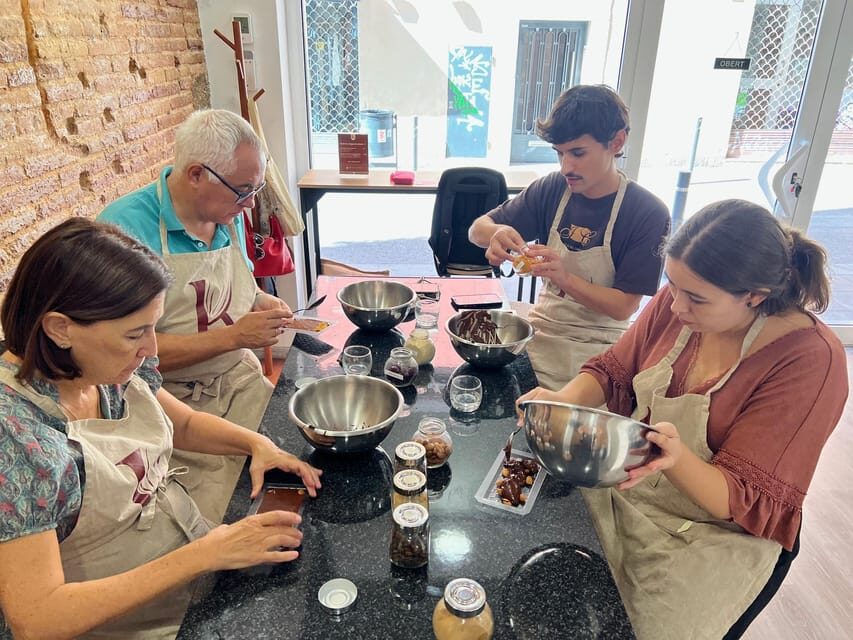
Book it if you want a true Barcelona food activity that goes beyond tasting. The big selling points for me are the hands-on steps (roast, peel, grind, cocoa paste) and the fact you leave with a take-home bar you made yourself. It also tends to work well on rainy or low-energy days because it’s fully indoors and focused.
Skip it only if you want a strictly hands-off experience, or if strong cocoa roasting aromas and a bit of mess would annoy you. Otherwise, for $47 you’re getting a focused, small-group class with tangible results and a real connection to how chocolate becomes chocolate.
FAQ
Where is the bean-to-bar workshop in Barcelona?
The meeting point is Local Kina Chocolates.
How long is the workshop?
It lasts 2 hours.
How much does it cost?
The price is $47 per person.
What do I make during the workshop?
You’ll make 1 chocolate bar that you can take home.
Is the workshop hands-on or mostly tasting?
It’s hands-on. You’ll work with cocoa, including steps like roasting, peeling, and grinding.
What languages are used during the workshop?
The instructor supports Spanish and English.
Can the workshop adapt for allergies or intolerances?
Yes. You should let them know about any allergies or intolerances so they can adapt the workshop.
Is there a small group size limit?
Yes, it’s a small group limited to 8 participants.