REVIEW · BARCELONA
Columbus Monument Access With Barcelona Seaside Guided Tour
Book on Viator →Operated by ExperienceFirst · Bookable on Viator
Columbus views start with a short seaside walk. This guided route strings together Port Vell, Drassanes Reials, and the Columbus Monument area with a pop-art stop that explains why Barcelona looks the way it does today. I especially like the small-group feel (up to 20 people) and the fact that your ticket covers the Columbus Monument entrance and elevator, so you don’t waste time later. One possible drawback: the whole thing is about 1 hour 30 minutes, so it moves at a steady pace and you won’t get long hangs at each spot.
The tour also seems to win on guide energy. In the reviews, guides like Zeynep, Kristina, and Christina were praised for keeping the pace right—even on a hot day—and for turning a simple viewpoint visit into city context you can actually use.
You’ll finish at Mirador de Colom for sky-high, 360-degree perspective, after crossing Rambla de Mar (that movable wooden bridge) toward the Maremagnum waterfront. It’s a nice way to get your bearings fast, while learning what this coastline meant for centuries.
In This Review
- Key highlights you’ll feel on the ground
- The logic of this walk: Port-to-Columbus in 90 minutes
- El Cap de Barcelona: pop art with Olympic-era context
- Port Vell: old-port vibes and why the coastline mattered
- Rambla de Mar and Maremagnum: the movable bridge moment
- Drassanes Reials: shipyards, Aragón, and the power behind the port
- Mirador de Colom and the elevator: 360-degree payoff at the Columbus Monument
- Price and pacing: what $40.48 buys you
- What to bring so it feels easy
- Should you book the Columbus Monument access with the seaside walk?
- FAQ
- FAQ
- How long is the tour?
- Is the guide speaking English?
- Where do I meet, and where does it end?
- What time does the tour start?
- What is included with the Columbus Monument access?
- Do I get a mobile ticket?
- What is the maximum group size?
- Are service animals allowed?
- Can I cancel and get a full refund?
Key highlights you’ll feel on the ground
- El Cap de Barcelona: Roy Lichtenstein pop art (1992 Olympic-era tie-in), right at your starting point
- Port Vell: an old-port setting that helps you understand how Barcelona’s waterfront grew
- Rambla de Mar: the movable wooden bridge that visually connects mainland and the Maremagnum area
- Drassanes Reials: the Royal Shipyards, tied to the region’s naval power (including Aragón)
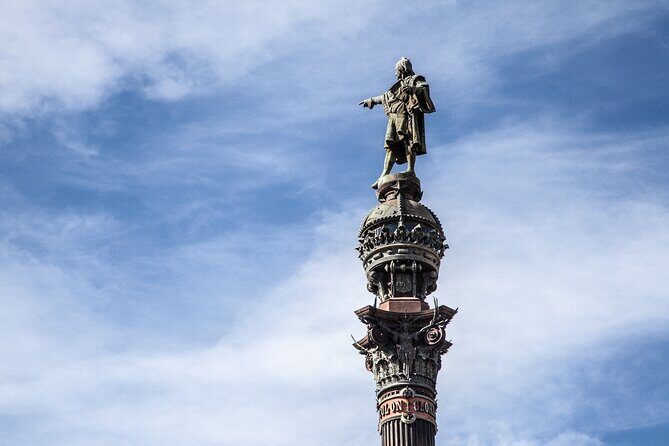
- Mirador de Colom access: entry plus elevator to reach the tower viewpoint for wide sea-and-city views
The logic of this walk: Port-to-Columbus in 90 minutes
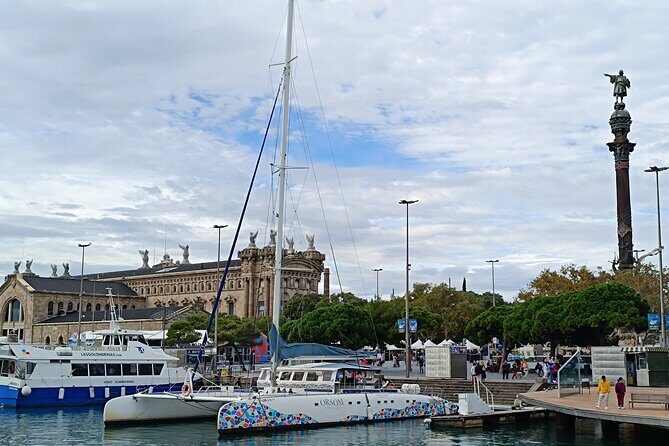
This isn’t a slow “wander and hope” kind of tour. You start at Pl. de Correus at 9:00 am and work your way toward the Columbus Monument by the end of the route. That timing matters because the waterfront area can get hot, and mornings give you a calmer feel for walking.
What you’re really buying is orientation. Barcelona’s seaside has layers—medieval harbor functions, shipbuilding power, and modern shopping-maritime zones—all packed into a compact stretch. You get the story line from an English-speaking guide, not just a list of sights.
The group size is capped at 20 people, which usually helps with questions and timing. And since the Columbus part includes the elevator, you can focus on the fun payoff instead of figuring out the access on the fly.
You can also read our reviews of more guided tours in Barcelona


El Cap de Barcelona: pop art with Olympic-era context
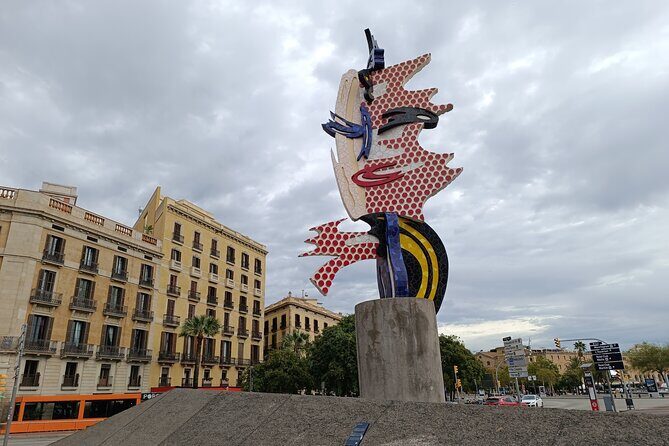
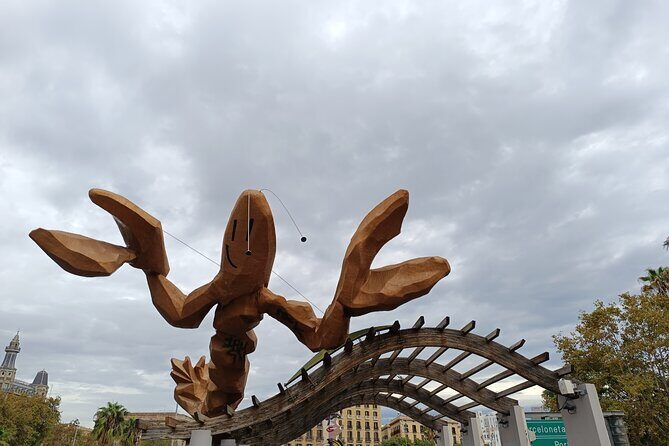
The first stop is El Cap de Barcelona, the Roy Lichtenstein pop art sculpture installed in 1992. It was created for the Olympic Games, which is a fun reminder that city landmarks aren’t only ancient stones. Sometimes they’re modern statements tied to big moments.
I like this first stop because it sets the tone: Barcelona isn’t stuck in one era. You begin with color, style, and a clear visual landmark—then you follow the waterfront into the medieval and maritime parts of the city. If you’re arriving in Barcelona for the first time, this is a good opener because it gives you a “place name” in your head right away.
Practical note: this is a quick stop (about 15 minutes), so don’t expect a long photo session. Bring your phone charger brain and keep moving.
Port Vell: old-port vibes and why the coastline mattered
Next comes Port Vell, the old port area dating back to medieval times. Even if you don’t know much about ships, you can feel the geography. Port Vell sits where the city has always had to work with trade, travel, and maritime life.
This stop works well for two reasons. First, it gives you a historical baseline—how the waterfront functioned long before today’s promenade culture. Second, the guide’s role here is to connect what you see to why it developed, so the harbor doesn’t feel like a backdrop.
Since Port Vell is outdoors, you’ll also get good flexibility: if the light is right, you can look back at skyline-and-water angles as you walk. If it’s sunny, you’ll feel the heat, so sunglasses and water help.
Rambla de Mar and Maremagnum: the movable bridge moment
Then you cross Rambla de Mar, a wooden bridge that extends from the mainland toward Maremagnum, a commercial complex on a small island. This is one of those “wait, that’s cool” moments you can’t fully appreciate from a photo.
Why it’s worth your time: it’s both a shortcut and a perspective change. The bridge physically connects areas that feel separate, so you notice the waterfront’s structure right away. And because it’s a movable bridge, it hints at how the port can shift roles over time—more than just a pedestrian route.
This stop also gives you a break in pacing. About 20 minutes here is enough to cross comfortably, look around, and reset. If you’re traveling with kids, this is often the kind of moment that keeps attention without turning the tour into a theme park.
Drassanes Reials: shipyards, Aragón, and the power behind the port
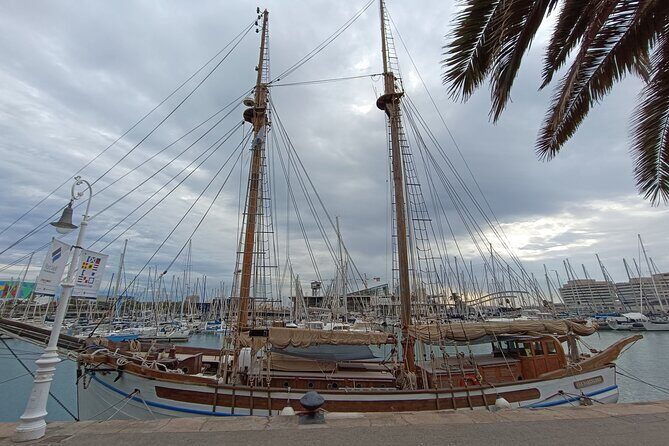
The walking route continues to Drassanes Reials, the Royal Shipyards established in the 13th century. This is where the tour gets more “why does Barcelona look like this?” It’s not only about admiring buildings; it’s about understanding the maritime muscle that shaped the region.
Your guide talks about the ancient Kingdom of Aragón and the naval power that influenced the area. That context changes how you view the shipyard zone. Instead of seeing it as just historic walls, you start imagining how ships, labor, and defense worked together.
This stop is shorter (around 15 minutes), so you’ll want to focus on the main ideas your guide shares. I’d treat this as your conceptual anchor: when you later look at the sea, you’ll understand more about what Barcelona needed from the water.



Mirador de Colom and the elevator: 360-degree payoff at the Columbus Monument
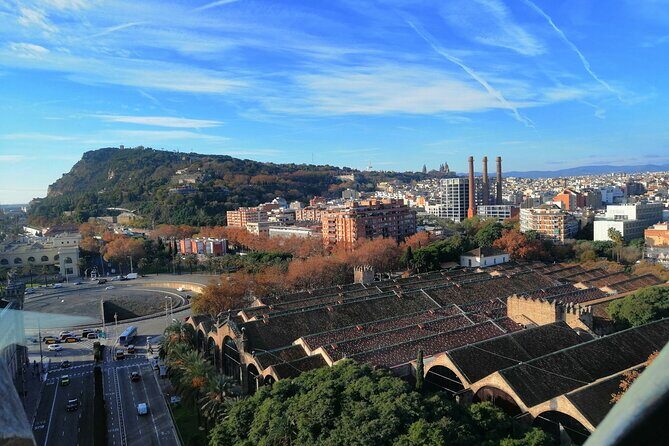
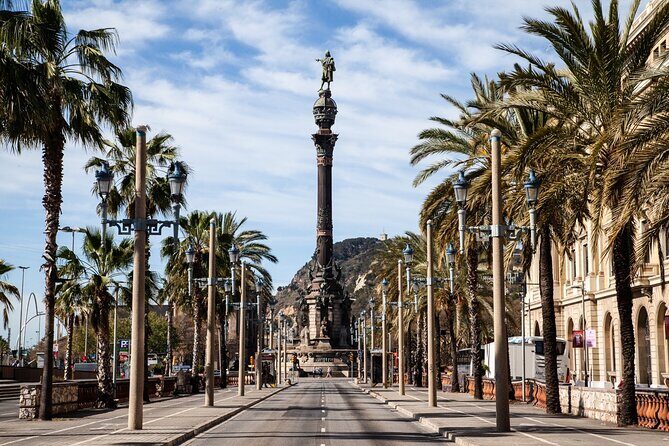
Finally, you reach the Columbus Monument area and your Columbus access includes entry to Mirador de Colom plus the elevator. That matters because viewpoint towers can be a logistics headache if you’re not prepared. Here, you’re guided to the entrance so you can start the ascent with less hassle.
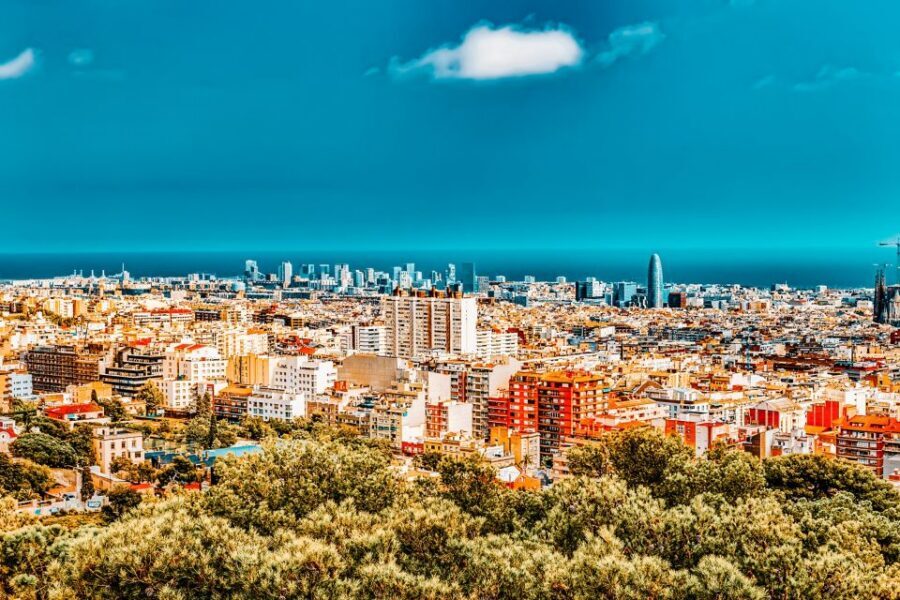
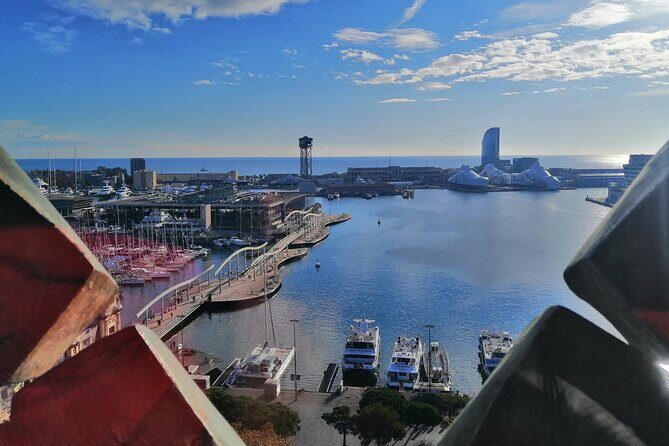
Mirador de Colom is dedicated to Christopher Columbus and was inaugurated for the 1888 World Fair. On top, you’re set up for sweeping 360-degree views over Barcelona and the Mediterranean. This is the part that turns the earlier walking into something tangible: the city and the sea snap together in one look.
What I like about finishing here is timing. By the end, you’ve learned the port’s role, crossed the bridge, and seen the shipyard connection. So when you look out from above, you’re not only taking photos—you’re matching the view to the story you heard on the walk.
One consideration: this is still a guided walking tour plus a viewpoint ascent, not a full museum day. If you want lots of time inside exhibits, you’ll likely need a separate plan after the guided portion ends.
Price and pacing: what $40.48 buys you
At about $40.48 per person for roughly 1 hour 30 minutes, you’re paying for two things: guided orientation and included access to the Columbus Monument elevator and entry. The other stops along the port route are effectively open/free to see from the outside as you walk.
Is that good value? For me, it depends on what you struggle with when you visit a new city. If you often stand in front of landmarks and think, I get it visually, but what does it mean, then a guide here pays off quickly. The route is structured enough to give you both the highlights and the connective tissue.
The pacing is also part of the value. In the reviews, guides like Zeynep and Christina were praised for pacing that didn’t feel rushed and for making it work with kids. That’s a real plus if you’re visiting with family or you hate long, slow lines with no payoff.
The one “watch this” point: because it’s only 1.5 hours, you’re not meant to linger at every corner. If you love deep museum time or long photography marathons, you may feel slightly time-pressed.
What to bring so it feels easy
Wear comfortable shoes. This is a walking tour along the waterfront, and you’ll want good grip on any bridge decking.
Bring water, especially since the tour starts in the morning but still moves through outdoor areas. One guide was noted for handling a hot day with patience and clear explanations, which is a sign you can expect real sun exposure.
Plan on a phone with enough storage for city-and-sea photos from the top. The viewpoint is the big “share it later” moment, and the photos will help you remember the route.
If you have mobility needs, the tour states that most people can participate, and it’s near public transportation. Still, for your comfort, bring that reality-check mindset: you’ll be walking between stops and then using the elevator for the main climb.
Should you book the Columbus Monument access with the seaside walk?
I’d book this if you want a fast, smart introduction to Barcelona’s port area—with a guide who connects the dots and gets you to the real payoff: the Columbus Monument viewpoint with elevator access. It’s a compact route that goes from pop art to medieval harbor to shipyards to 360-degree city-and-sea views without requiring you to plan each step.
I’d pass or adjust expectations if you want long time inside multiple sites. This experience is built for orientation and viewpoints, not for a full deep-dive museum day.
FAQ
FAQ
How long is the tour?
It runs for about 1 hour 30 minutes.
Is the guide speaking English?
Yes. The guided walking tour is in English.
Where do I meet, and where does it end?
You meet at Pl. de Correus, 1, Ciutat Vella, 08002 Barcelona, Spain. The tour ends at the Columbus Monument at Plaça Portal de la Pau, s/n, Ciutat Vella, 08001 Barcelona, Spain.
What time does the tour start?
The start time is 9:00 am.
What is included with the Columbus Monument access?
Your ticket includes entry to the Columbus Monument and the elevator.
Do I get a mobile ticket?
Yes. The experience uses a mobile ticket.
What is the maximum group size?
The group size is limited to a maximum of 20 people.
Are service animals allowed?
Yes, service animals are allowed.
Can I cancel and get a full refund?
Yes. You can cancel up to 24 hours in advance for a full refund.
If you want, tell me your travel month and whether you’re going with kids. I can suggest the best time of day for photos at the Mirador de Colom area.