REVIEW · BARCELONA
Crimes the tour through the Dark Side of Barcelona
Book on Viator →Operated by Oh my guide! · Bookable on Viator
In This Review
- A darker side of Barcelona stays with you.
- Key highlights worth planning around
- A crime-focused route that turns neighborhoods into evidence
- Price, group size, and how two hours fits your day
- Stop-by-stop: Hotel Manila to Plaça de Sant Pere
- Stop 1: La Rambla and the former Hotel Manila
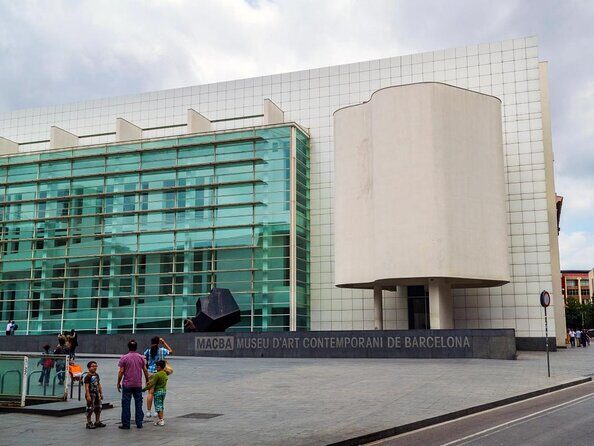
- Stop 2: MACBA and the Raval convent years
- Stop 3: Carrer de Joaquín Costa 29 and Enriqueta Martí
- Stop 4: Carrer de la Reina Amàlia and Queen Amalia’s prison
- Stop 5: Old Monastery of Sant Pau del Camp and war crimes in 985
- Stop 6: Plaça George Orwell and Spain’s Civil War crimes
- Stop 7: Muralla Romana and Barcino’s earliest crime
- Stop 8: Plaça de l’Àngel and public executions
- Stop 9: Carrer de l’Allada-Vermell and a 1934 tragedy
- Stop 10: Plaça de Sant Agustí Vell and protests against wheat prices
- Stop 11: Carrer del Portal Nou and Benvingut Funes
- Stop 12: Plaça de Sant Pere and war crimes affecting nuns in 985
- Why this tour scores high with people who love detail
- Who should take Crimes the Tour, and who should think twice
- Should you book this dark Barcelona walking tour?
- FAQ
- FAQ
- How long is the walking tour?
- What price should I expect?
- What’s the group size limit?
- Where does the tour start and where does it end?
- Is the tour private?
- What’s included, and what’s not?
- Do I get a mobile ticket?
- Is there a cancellation option?
- Is the tour suitable for everyone physically?
A darker side of Barcelona stays with you.
If you like your sightseeing with real tension, this walking tour does it on purpose. You follow a chain of crime stories through El Raval, the Gothic Quarter, and El Born, using street corners and historic buildings as your clues.
What I like most is the way the guide links present-day places to what happened there, instead of just reciting dates. I also like the pacing and the size: a small group (up to 20) makes it feel personal, and you hear the story clearly without a big crowd noise problem.
One thing to consider: the subject matter is dark. If you’re hoping for purely uplifting sights, this isn’t that kind of night stroll.
Key highlights worth planning around
- Stop-by-stop storytelling tied to named locations, like Hotel Manila and Plaça de l’Àngel
- Small group size (max 20) for a more focused experience
- A licensed guide who keeps the route clear and the narrative moving
- A route that covers El Raval, the Gothic Quarter, and El Born
- Mobile ticket convenience and a fast, walking-friendly format (about 2 hours)
You can also read our reviews of more tours and experiences in Barcelona.
A crime-focused route that turns neighborhoods into evidence
Barcelona has layers, and this tour treats the city like a living crime scene. Instead of starting with famous monuments, it starts with the places where ordinary people felt fear—through rumors, court cases, wartime trauma, and punishment carried out in public.
What makes this approach work is the cause-and-effect feel. You’re not just hearing about incidents; you’re seeing how the city’s geography and buildings shaped what could happen there. El Raval, in particular, comes off as a neighborhood where conditions and conflict mattered, not just aesthetics.
And yes, there’s a mystery element to it too. Even when a story is tied to a specific address or a named person, the guide keeps you thinking about motives, power, and why some deaths fade into uncertainty.
Price, group size, and how two hours fits your day
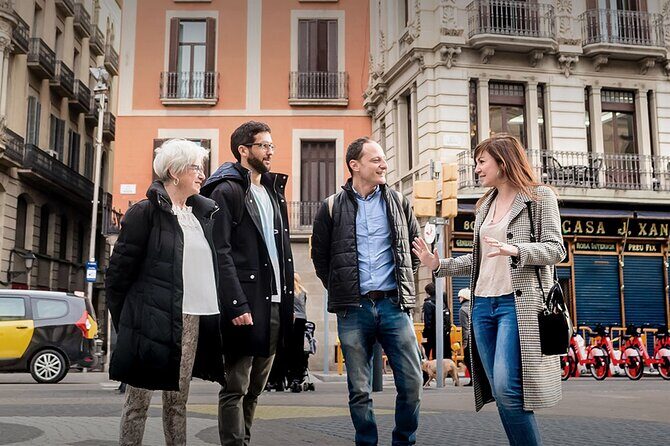
The price is $254.95 per person for about 2 hours. For many tours, that cost can feel steep. Here, it feels more like you’re paying for a licensed guide and a tightly framed theme—one that takes you through multiple neighborhoods without wasting time on generic sightseeing.
Two other factors help value. First, the group size is capped at 20, so you should be able to hear details and ask questions. Second, it’s a private activity where only your group participates, which usually means less waiting and more attention.
Logistics are simple. You get a mobile ticket, the tour is walking (moderate physical fitness is mentioned), and you’ll start at Le Méridien Barcelona on La Rambla and finish at Plaça de Sant Pere.
One practical note: snacks aren’t included. Since it’s a short route, I’d plan a light bite before you go so the story doesn’t get interrupted by low-energy hunger.
Stop-by-stop: Hotel Manila to Plaça de Sant Pere
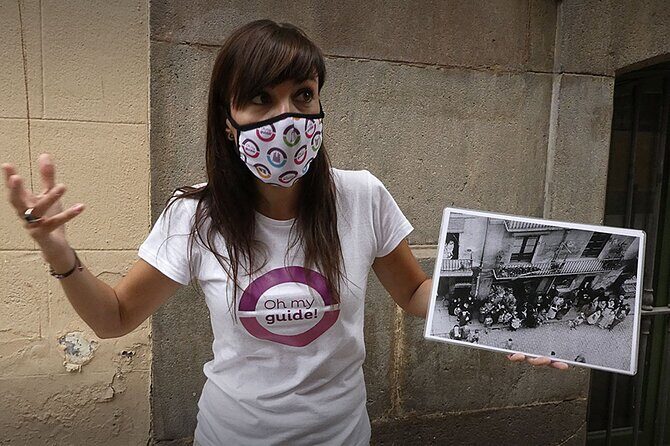
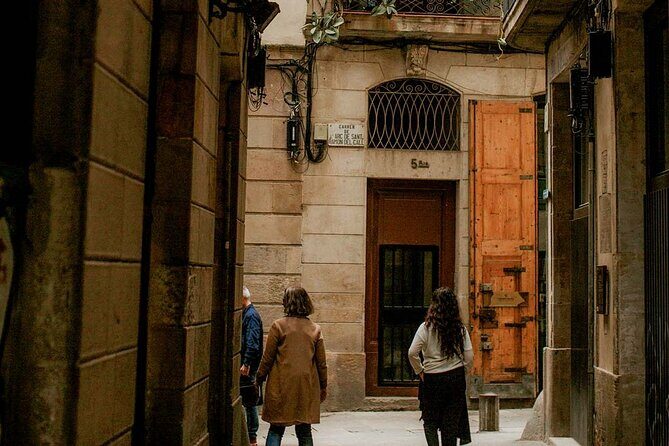
This route runs through a compact slice of central Barcelona, moving from La Rambla into El Raval, then across into the Gothic Quarter and toward El Born. Expect a sequence of dramatic stories anchored to real addresses, squares, and building sites.
Stop 1: La Rambla and the former Hotel Manila
You begin on La Rambla at Le Méridien Barcelona, and the guide opens with the former Hotel Manila, calling it the site where the first real crime took place. This is a smart start because La Rambla is busy and familiar, so it shocks your brain into recalibrating.
As you stand there, the message is clear: Barcelona’s daily surface can hide darker chapters very close to tourist sightlines. Even if you’ve walked La Rambla a dozen times, you’ll likely start seeing it as an access point to bigger stories.
What to watch for: the tour starts with context fast. Be ready to listen from the first minute, not after you’ve fully “settled in.”



Stop 2: MACBA and the Raval convent years
Next is MACBA (Museu d’Art Contemporani de Barcelona). The building’s history as a former convent sets the tone, and the guide connects it to the early 1900s misery in the Raval quarter.
This stop is where the tour becomes more than spooky street tales. It ties the crime stories to living conditions, which makes the later, more sensational details feel less like random violence and more like something that grew out of hardship.
Stop 3: Carrer de Joaquín Costa 29 and Enriqueta Martí
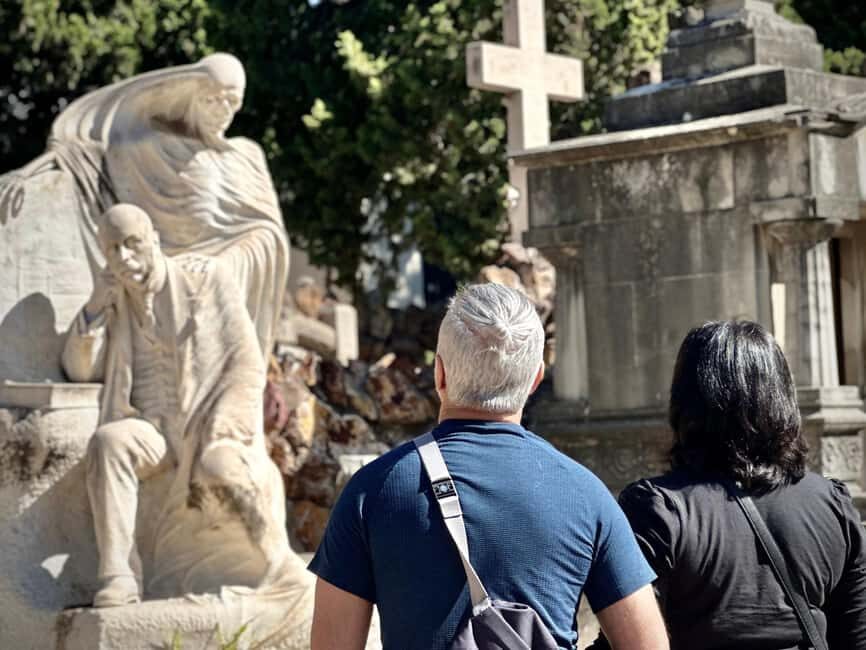
At Carrer de Joaquín Costa, 29, you reach the apartment building associated with Enriqueta Martí, known as the Vampire of Raval. It’s a name you’ll remember because it sounds like folklore, but the guide treats it like a real, location-bound story.
This is one of those stops that works whether you’re into true crime, old scandals, or just strong storytelling. The power comes from the specificity: an address and a person, not a vague legend.
Small drawback: because it’s so gripping, it can pull your attention away from the street itself. I’d still look around a bit, so you understand how the neighborhood’s layout supports the story.
Stop 4: Carrer de la Reina Amàlia and Queen Amalia’s prison
At Carrer de la Reina Amàlia, the square used to be the prison of Queen Amalia. The guide explains the difficult living conditions inside and points out that notable prisoners passed through the system.
This stop helps you grasp how institutions worked in Barcelona—how power and punishment were physically built into the city. It’s not just about who suffered, but about what the place was designed to do.
Stop 5: Old Monastery of Sant Pau del Camp and war crimes in 985
Next comes the Old Monastery of Sant Pau del Camp, a former convent tied to war crimes in 985 during an invasion of Barcelona. The year matters here. It pushes the tour’s timeline way before the more modern crimes and shows how long these patterns of conflict have haunted the area.
Convents and prisons might sound like separate topics, but the tour connects them through human vulnerability—people under control, people at risk, people living under decisions made by others.
Practical tip: wear shoes with grip. The route is walking-heavy, and you’ll want steady footing while you focus on the story.
Stop 6: Plaça George Orwell and Spain’s Civil War crimes
At Plaça George Orwell, you get the history of the Spanish Civil War and crimes linked to that period. The guide also stresses the importance of George Orwell’s Hommage to Catalonia.
This is a different kind of “crime” stop because it uses literature as context. You’re not only hearing about what happened; you’re being nudged to understand how someone on the ground tried to interpret it.
If you like reading after a tour, this is the kind of detail that can make your next library visit feel timed and relevant.
Stop 7: Muralla Romana and Barcino’s earliest crime
Then you reach the Muralla Romana, the borders of the old Roman walls. The guide talks about Barcino as a former colony and mentions the first document crime in Barcelona’s history.
This stop adds scale. It pulls Barcelona’s “dark days” far back into antiquity, so the later stories don’t feel like random outbreaks. They feel like chapters in a long municipal story.
Why it’s valuable: it prevents the tour from becoming a series of separate horror stories. Instead, it suggests continuity—where power, fear, and public control echo across centuries.
Stop 8: Plaça de l’Àngel and public executions
At Plaça de l’Àngel, the tour shifts into public punishment. This square was used as a main old-town gathering point, and the guide explains that executions took place there, including different methods used.
This is the stop that can make you look at a “normal” square in a whole new way. It’s not hard to imagine the crowd dynamics once you know what the place has hosted.
Consideration: if graphic details worry you, keep your boundaries. The tour is factual and place-based, but it is still a crime-focused route.
Stop 9: Carrer de l’Allada-Vermell and a 1934 tragedy
At Carrer de l’Allada-Vermell, the story turns toward a 1934 incident where a family lost one of their members in a tragic way.
This stop is effective because it anchors fear in a specific moment rather than turning everything into legend. It’s also a reminder that crime history isn’t only about famous names; it’s about ordinary families and sudden loss.
Stop 10: Plaça de Sant Agustí Vell and protests against wheat prices
At Plaça de Sant Agustí Vell, you hear about a 1789 demonstration against the price of wheat. That might sound less like crime and more like economics, but it fits the tour’s theme: desperation leads to conflict.
This is one of the more “human” stops. When food prices rise, social order can crack. The guide uses that idea to explain how unrest can become part of the city’s dark record.
Stop 11: Carrer del Portal Nou and Benvingut Funes
At Carrer del Portal Nou, you hear about Benvingut Funes, killed in 1936 in a savage way. The guide also shares that his death remains a mystery in the city.
This is where mystery becomes part of the sightseeing. Even with specific details, unresolved questions linger—making the neighborhood feel less settled than it looks.
Stop 12: Plaça de Sant Pere and war crimes affecting nuns in 985
The tour ends at Plaça de Sant Pere, tied to an old convent and terrible war crimes affecting the nuns in 985. Ending here is fitting because it returns to the theme from Sant Pau del Camp: religious communities in danger during invasion.
By the time you reach the finish, your brain has likely mapped the theme across the route. Instead of “we saw twelve stops,” you start feeling something closer to “we traced a long pattern across the city.”
Why this tour scores high with people who love detail
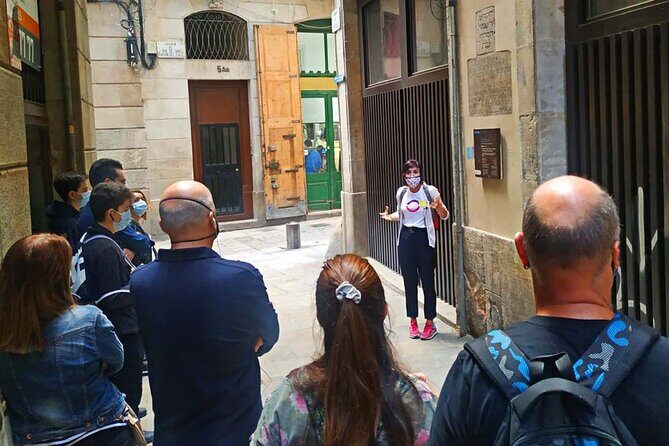
The strongest praise in the feedback is about the guide, especially Cristina (often mentioned with the surname Belenguer). People consistently point to her professionalism, her ability to communicate clearly, and how well she seems to know the material.
I also see a pattern in why this works: it’s not only educational—it’s paced like a story. The route keeps switching between time periods (Roman times, 985, the Civil War, 1930s) and it keeps you from zoning out.
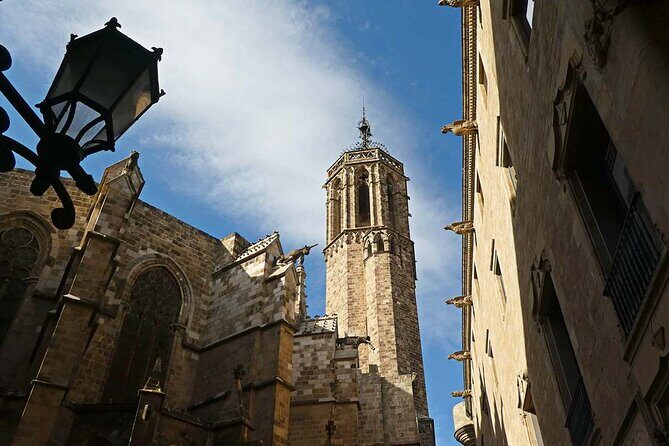
Another big win is variety in the type of incidents. You get everything from prison-era hardship to wartime crimes to public punishment, plus the Orwell stop that connects to written testimony. That mix helps the tour stay interesting even if you think you’re already familiar with the big sights of Barcelona.
Who should take Crimes the Tour, and who should think twice
This is best for you if you like:
- walking tours with a strong theme (not a grab-bag of facts)
- history that includes real conflict
- mystery and true-crime style storytelling grounded in actual places
It’s less ideal if you want:
- a relaxed, feel-good introduction to the city
- purely architectural focus with minimal violence
- a tour centered on museums or indoor time (this one is walking-based)
If you’re sensitive to dark topics, you can still choose it, but go with eyes open. I’d treat it like a guided hour of stories you’ll carry—rather than a casual stroll meant to be forgotten.
Should you book this dark Barcelona walking tour?
If you’re the type who gets curious about what happened to people where you’re standing, I’d book it. The price reflects a guided, focused experience over roughly two hours, and the small-group cap and the guide’s storytelling quality make it feel intentional.
Also, don’t underestimate timing. One review notes it can feel even better when it’s at night and with rain. Even if you don’t plan for bad weather, choosing an evening slot (if available) can add to the mood without changing the route.
Finally, if you’re coming to Barcelona and want the main streets plus something most standard itineraries skip, this tour does that in a way that feels practical, not forced.
FAQ
FAQ
How long is the walking tour?
The tour is listed at about 2 hours.
What price should I expect?
The price is $254.95 per person.
What’s the group size limit?
The tour highlights a maximum group size of 20.
Where does the tour start and where does it end?
It starts at Le Méridien Barcelona on La Rambla (111, Carrer del Pintor Fortuny, 4-6, Ciutat Vella, 08001). It ends at Plaça de Sant Pere (Pl. de Sant Pere, Ciutat Vella, 08003).
Is the tour private?
Yes. It’s described as private, meaning only your group participates.
What’s included, and what’s not?
A licensed tour guide is included. Snacks are not included.
Do I get a mobile ticket?
Yes, it’s a mobile ticket.
Is there a cancellation option?
Free cancellation is available. You can cancel up to 24 hours in advance for a full refund.
Is the tour suitable for everyone physically?
It’s noted to be suitable for travelers with a moderate physical fitness level.