REVIEW · BARCELONA
Discover Barcelona’s Gothic Quarter | Private & Semi-Private
Book on Viator →Operated by LivTours · Bookable on Viator
The Gothic Quarter is a fast, living lesson. This 2-hour walk turns Barri Gòtic streets into a simple timeline, from medieval cathedrals to Roman fragments. I like how the tour is guided by Pabelo, who explains the area’s changes over the years in a way that actually sticks. I also like that you get Catedral de Barcelona entry plus rooftop access, so your photos come with real height and real payoff. One drawback to keep in mind: you’ll be on your feet for the full loop, and there’s a dress code for church stops (shoulders and knees covered).
This is a good choice when you want “the big stuff” without racing through it. With a small group capped at 6, you’re not fighting for attention at every corner, and the pacing feels built for first-time visitors and short stays. The tour ends back at the start, so you can smoothly roll into lunch or a late stroll afterward.
If you hate crowds, the small size helps. If you hate stairs, plan for the Cathedral rooftop portion and expect some indoor walking, too.
In This Review
- Key Highlights You’ll Notice Right Away
- A Tight 2 Hours That Helps You Get Oriented
- Catedral de Barcelona: Gothic Architecture Plus Real Rooftop Views
- Plaça Sant Felipe Neri: An Under-Noticed Church With Wartime Survival
- Place de Sant Jaume: From Ancient Heart to Modern Government
- Temple of Augustus: Roman Columns That Still Feel Current
- Plaza del Dei (Dei): Columbus Meets Power, Then It Becomes a Café Stop
- What You Get for the Money (and Why It Feels Fair)
- Group Size, Pacing, and What That Means for Your Day
- Dress Code and Church Stop Reality Check
- Who This Tour Suits Best
- Should You Book This Gothic Quarter Tour?
- FAQ
- Is this tour in English?
- How long is the Barcelona Gothic Quarter walking tour?
- How big is the group?
- What’s the main stop where tickets are included?
- What should I wear for the church visits?
- Where does the tour start and end?
- Is cancellation free?
Key Highlights You’ll Notice Right Away
- Small group of 6 means you’ll actually hear the story, not just the guide’s back.
- Catedral de Barcelona tickets + rooftop access give you views above the maze of streets.
- 13 white geese in the cloisters (the Well of Geese) adds a memorable, very Barcelona detail.
- Plaça Sant Felipe Neri teaches how a church survived the Spanish Civil War and was restored.
- Roman Barcino clues show up at Place de Sant Jaume and the Temple of Augustus.
- Plaça del Rei (Dei) connects the Gothic Quarter to Columbus’ post-journey meeting with Ferdinand and Isabella.
A Tight 2 Hours That Helps You Get Oriented
Barcelona’s Gothic Quarter can feel like you’re stepping into a movie set where every street looks important. The value of this tour is that it gives you order. In about two hours, you cover the major landmarks and a few lesser-seen corners, in a sequence that makes the neighborhood’s layers easier to understand.
You’ll start at the Barcelona Cathedral, then move outward through squares where power and religion shaped daily life. Along the way, you’ll see how the Roman city of Barcino influenced later Barcelona. That’s the key: you’re not just checking off buildings. You’re learning how the city rewired itself over time.
The pace also matters. With such a small group, your guide can slow down when questions come up and speed up when you’re ready to keep walking. You don’t get stuck waiting behind other groups at every stop.
You can also read our reviews of more private tours in Barcelona



Catedral de Barcelona: Gothic Architecture Plus Real Rooftop Views
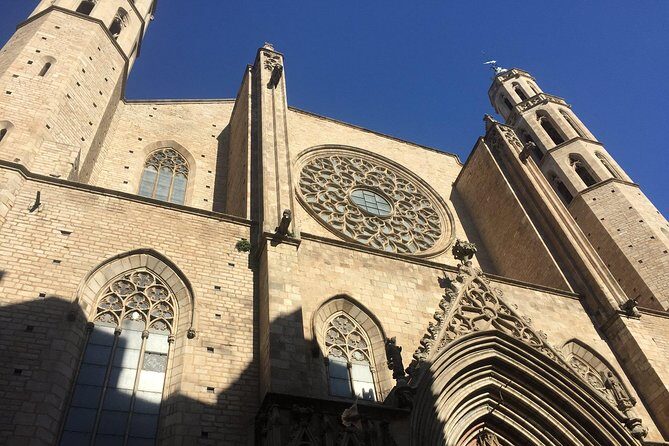
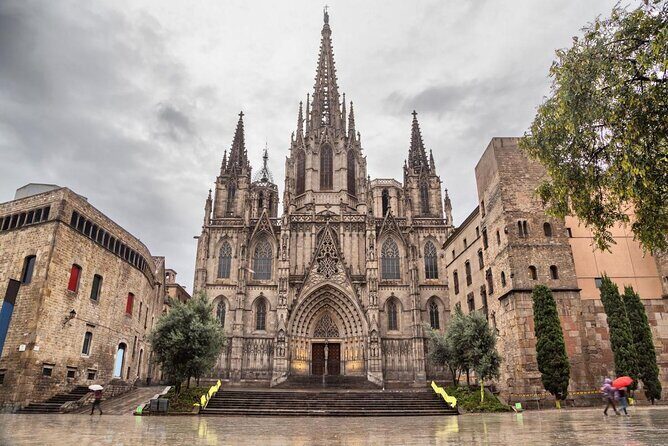
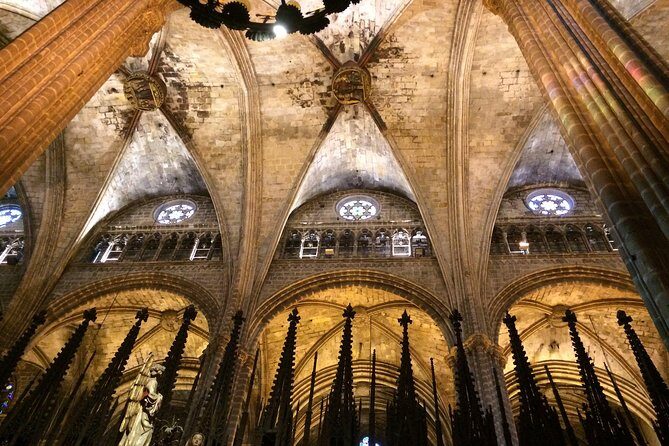
Your first anchor point is Catedral de Barcelona, also known as the Cathedral of St. Eulalia. This is the kind of place that makes the Gothic Quarter feel earned. The cathedral is a prime example of Gothic architecture, but the tour keeps you focused on what to look for instead of drowning you in details.
The experience includes time for the cloisters and an eye-catching courtyard detail: 13 white geese living in the courtyard, known as the Well of Geese. The symbolism connects to St. Eulalia’s years before she was taken by the Romans. Even if you’re not a church-history person, this is the kind of specific local detail that makes your visit memorable.
Then there’s the part you’ll be glad is included: your entrance tickets include a visit to the top of the Cathedral. That means you get photo angles and views that you simply can’t get from street level. It’s a smart add-on because the Gothic Quarter streets are dense; going up lets you “reset” your perspective so the neighborhood stops feeling like a maze.
Timing is around 45 minutes for the Cathedral portion, which is long enough to take in the key spots without turning this into an all-day cathedral marathon. If you’re visiting with limited time, this is exactly how you should spend it.
Plaça Sant Felipe Neri: An Under-Noticed Church With Wartime Survival
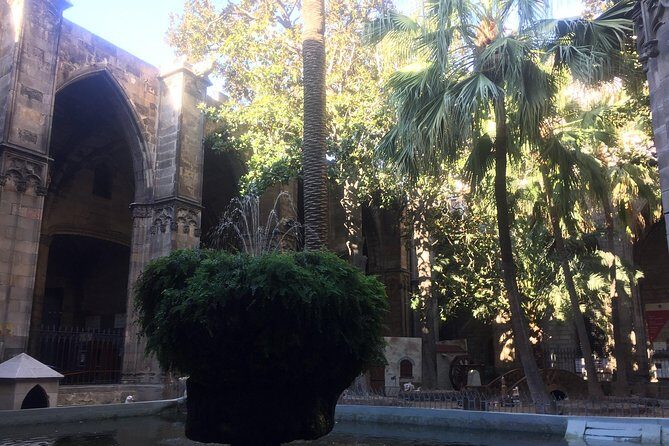
After the Cathedral, you head toward Plaza Sant Felipe Neri, home to the Church of Sant Felipe Neri. This is one of those stops that feels quieter than the headline sights, and that’s the point. You get a break from the most obvious tourist flow while still learning something important about Barcelona’s resilience.
The tour explains how the church survived the Spanish Civil War and how it was restored afterward. That matters because it adds a modern layer to your understanding. The Gothic Quarter isn’t only medieval stone. It’s also stories of damage, repair, and continuity.
If you’re the type who likes architecture but also likes context, this stop will land well. If you prefer nonstop landmark-chasing, you might wish the pace stayed more “sight to sight.” Still, the payoff is that you leave this plaza with a clearer sense of what survived and what changed.
And practical tip: keep your eyes on the entrance and the approach. Small plazas can be easy to miss when you’re distracted by the surrounding streets.
Place de Sant Jaume: From Ancient Heart to Modern Government
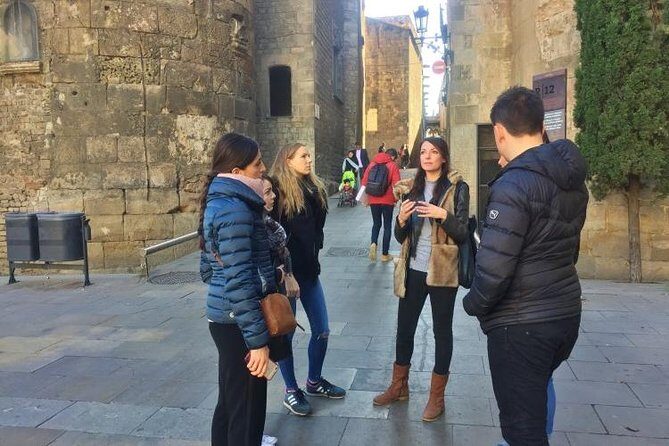
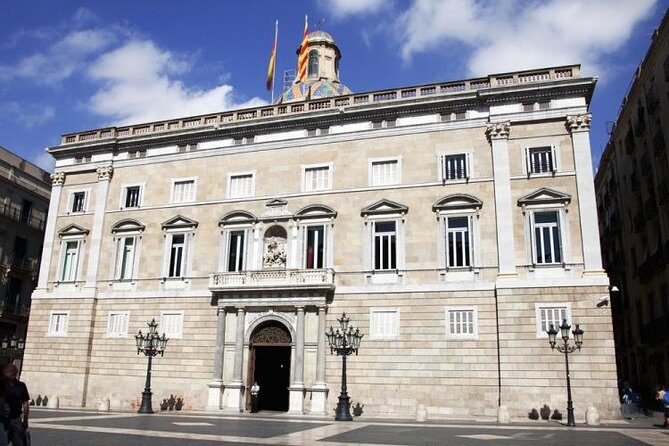
Next comes Place de Sant Jaume, a square with a strong sense of civic identity. The tour frames it as once in the heart of the Roman city of Barcino, then later becoming Barcelona’s administrative center.
This is one of the easiest places to connect “old city” to “current city.” Today, the square is home to the Barcelona City Hall and the Generalitat de Catalunya. So while you’re standing among historic streets, you’re also in a living political center.
What I like about this stop for first-time visitors: it gives you a mental anchor. Once you understand Place de Sant Jaume’s role, many of the surrounding streets start making more sense. You’ll see how the city’s layout and authority shifted, not from nowhere, but from earlier structure.
Drawback? The square can be active, depending on the day and time. If you’re trying to photograph without people crossing your frame, you may need a little patience. In a small group, your guide can help time it so you still get usable shots.
Temple of Augustus: Roman Columns That Still Feel Current
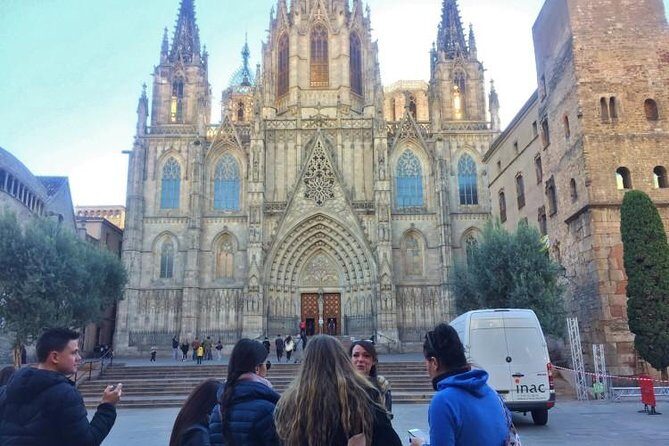
Then you walk past the Temple of Augustus, dedicated to the Roman emperor of the same name. This stop gives you direct contact with the Roman layer of Barcelona, and it’s one of those “wait, this is still here?” moments.
The tour highlights the columns and points out that they reach about 30 feet high. It’s also clear why these columns feel like they’re part of the city’s spine: they’re considered among the older Roman elements in the area.
For your mental map, this is helpful. Once you’ve seen Augustus, you can look at nearby street patterns differently. You’ll start noticing where the Roman footprint might still be shaping what you’re seeing now.
One consideration: since the emphasis is on seeing and understanding, you’ll get less time for slow “sit and stare” than at the Cathedral. If you like long, quiet ruins photos, you might want a follow-up walk on your own after the tour ends.




Plaza del Dei (Dei): Columbus Meets Power, Then It Becomes a Café Stop
The tour finishes with Plaza del Dei, a square tied to the story of Columbus. The meeting moment is the key detail: Christopher Columbus met King Ferdinand and Queen Isabella here after his first journey to the New World.
That single fact turns the square into more than another pretty place to pause. It shows how the Gothic Quarter connects to European history beyond Barcelona’s borders. You’re not just looking at stone; you’re standing where big decisions were discussed.
Today, the square is a cozy gathering spot with cafés, cocktail bars, and restaurants. That makes it an ideal “end point” for the tour because your brain shifts naturally from sightseeing mode to food-planning mode.
If you’re hungry, great. If you’re not, still pause for a minute. This stop works because it transitions you out of guided storytelling and back into independent wandering with a few history anchors in your head.
What You Get for the Money (and Why It Feels Fair)
At $130.97 per person for about 2 hours, this isn’t the cheapest way to do the Gothic Quarter. But it also isn’t priced like a huge, ticket-free walking loop.
Here’s the value you’re paying for:
- Small group size (max 6): you’re buying attention, not just movement.
- Professional local expert guide: the storyline matters here, especially in a neighborhood with overlapping eras.
- Cathedral entrance tickets plus rooftop access: that’s the biggest concrete inclusion. Rooftop time is the kind of upgrade you often pay for separately elsewhere.
For many visitors, the Cathedral portion alone is worth planning around. When you combine that with Roman and civic stops across major squares, you get a full “greatest hits” route without the usual feeling of being herded.
Also worth noting: you can upgrade to a private tour if you want more flexibility in pace or more time per stop. If you’re traveling as a couple, it can feel like the sweet spot between personal attention and not paying for a full private group.
Group Size, Pacing, and What That Means for Your Day
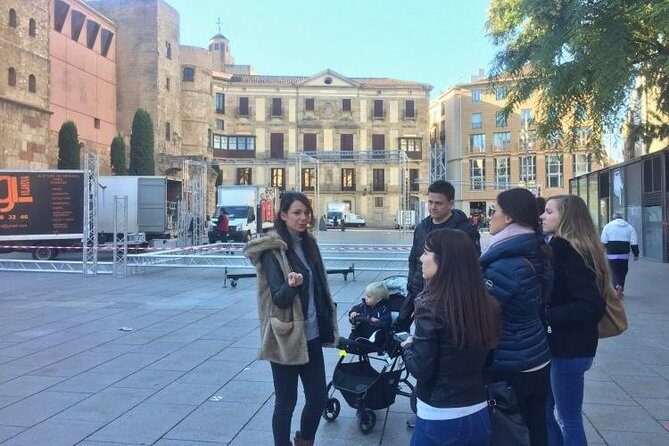
The max group size of 6 changes the experience in a practical way. You won’t constantly hear the guide over other people’s heads. You also won’t spend your time waiting for the whole group to reassemble at narrow corners.
The tour is also built around walking between stops you can recognize later. It starts at Plaça Nova, 5 (Vestibul, Ciutat Vella, 08002) and ends back at the meeting point. That loop design is convenient. After the tour, you’re already positioned in the Old Town area, ready to head to lunch or connect to other sights.
Expect a steady stroll. Comfortable walking shoes are a must. You’ll also do indoor viewing at the Cathedral and cloisters, plus time outdoors in plazas.
Dress Code and Church Stop Reality Check
You do visit places of worship, so plan for the dress code: shoulders and knees covered. That means no tank tops or short dresses. If your wardrobe is light and summery, bring a light layer so you’re not stuck outside or uncomfortable during key moments.
If you forget, you might find entry restrictions apply. Better to plan early than to stress mid-walk.
Who This Tour Suits Best
This is a strong fit for:
- First-time visitors who want a clear route and a simple timeline through the Gothic Quarter
- Travelers on a short schedule who still want the major landmarks and a few less obvious stops
- People who enjoy architecture but also want the why behind it
- Anyone who likes the idea of a small group and a calm pace rather than a constant crowd shuffle
It may be less ideal if you want a lot of free time at each stop for wandering and reading on your own. This tour is designed for structure in 2 hours, so you’ll move fairly efficiently.
Should You Book This Gothic Quarter Tour?
Book it if you want the best trade of time-to-value: Cathedral rooftop views, civic and Roman context, and a small-group pace led by Pabelo. The inclusions make the price feel reasonable, especially if you know you’ll want rooftop access and you want someone to explain the neighborhood’s layers without you having to research on your phone.
Skip it (or pair it with extra self-guided time) if you prefer very slow museum-style visits or you need long photo breaks at ruins. You’ll still get great scenes, but this tour optimizes for coverage and orientation, not drifting.
FAQ
Is this tour in English?
Yes. The tour is offered in English.
How long is the Barcelona Gothic Quarter walking tour?
It runs for about 2 hours.
How big is the group?
This experience is limited to a maximum of 6 travelers.
What’s the main stop where tickets are included?
Entrance tickets are included for the Catedral de Barcelona, with a visit to the top as part of the experience.
What should I wear for the church visits?
Places of worship require shoulders and knees covered. That means no tank tops or short dresses.
Where does the tour start and end?
It starts at Plaça Nova, 5, Vestibul, Ciutat Vella, 08002 Barcelona, Spain and ends back at the same meeting point.
Is cancellation free?
Yes. You can cancel for a full refund if you cancel up to 24 hours in advance of the experience start time.