REVIEW · BARCELONA
Barcelona Panoramic Walking Tour – Discover Montjuic
Book on Viator →Operated by The Barcelona Feeling · Bookable on Viator
A great view needs a good walk. This Montjuïc panoramic tour mixes architecture, Olympic-era politics, and hilltop scenery you usually miss when you stay in the center. I love starting at the German Pavilion (1929) and ending with Calle Blai pinchos in lively Poble Sec. The trade-off is real: you’ll do a lot of uphill walking in sun, so plan for moderate fitness and comfy shoes.
I also like that this is a small-group outing, usually capped at up to 10–15 people, which keeps the pace human and questions easy. With guides like Michael and Christian, the story stays practical, not just dates and facts. One more consideration: the route depends on weather, so expect the operator to switch dates (or offer a refund) if conditions are poor.
In This Review
- Key moments worth building your day around
- Why Montjuïc makes sense for a 3-hour walking tour
- Starting at the German Pavilion of the 1929 World Fair
- Climbing via escalators for Magic Fountain views and fair-era context
- Crossing the 1929 fair area like a city-with-a-memory
- Lluís Companys Olympic Stadium: sports, and the political story behind them
- Cementerio de Montjuïc: a brief stop with a big atmosphere
- Fortresses, watch towers, and why the hill matters more than the view
- Calle Blai pinchos finish: Poble Sec’s chaotic, delicious ending
- Small group size and guide energy: what it changes for you
- Walking difficulty, shoes, and sun: the real checklist
- Price value: what $50.57 buys you on Montjuïc
- Where you meet, where you end, and how to plan your evening
- Should you book the Barcelona Panoramic Walking Tour on Montjuïc?
- FAQ
- How long is the Montjuïc panoramic walking tour?
- How much does the tour cost?
- Is the tour offered in English?
- Where does the tour start and where does it end?
- How much walking and climbing should I expect?
- How big is the group?
- Are entrance tickets included?
- What if the weather is bad, or I need to cancel?
Key moments worth building your day around
- German Pavilion (1929) Bauhaus start: a sharp architectural way to launch the hill walk
- Magic Fountain viewpoints: elevated angles, plus photo stops on the way up
- Olympic Stadium context: 1992 sites and the Alternative People’s Game of 1936 protest
- Cementerio de Montjuïc: a short stop with heavy atmosphere and strong stories
- Fortifications and watch-tower thinking: the hill explained as a strategist’s tool, not just a park
- Calle Blai pinchos finish: practical local food culture at the end of the hike
Why Montjuïc makes sense for a 3-hour walking tour
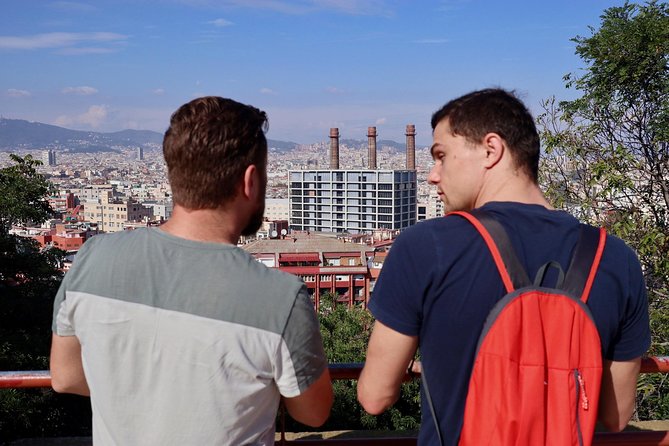
Montjuïc is Barcelona’s hill. And in Barcelona, you learn fast that the best views often come with a climb. This tour is built for that reality, but it’s also built to make the climb worth your time.
You’re not just walking to see scenery. You’re walking through layered Barcelona: the 1929 World Fair legacy, the Olympic footprint, and a hill that was used as a natural watch tower and later fortified. That combination matters because it changes how you read the place. Instead of seeing a park on a hill, you start seeing strategy, spectacle, and politics.
The best part for many first-time visitors is the rhythm: you get hilltop panorama energy, then you break it with short, clear stops (stadium, cemetery, neighborhood pinchos) so the afternoon doesn’t turn into one long grind.
You can also read our reviews of more walking tours in Barcelona



Starting at the German Pavilion of the 1929 World Fair
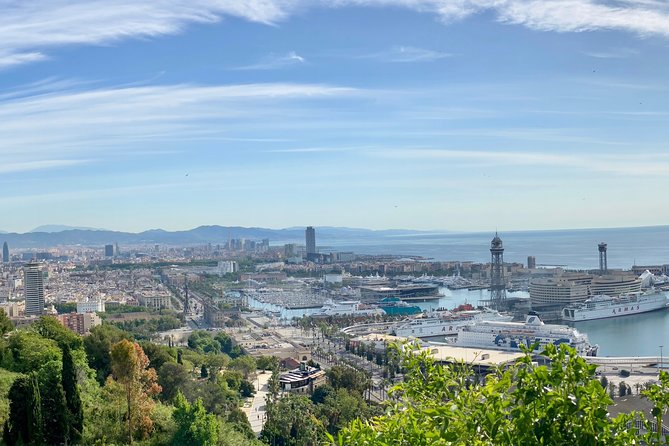
The tour begins at the German Pavilion of the World Fair of 1929. It’s known for its timeless Bauhaus design, and it gives you a neat anchor point for everything that follows on Montjuïc.
This first stop is also short. That’s on purpose. You start with a fast dose of architecture, then you move into the climb and the wider story—so you don’t spend your limited time staring at a single building when the real value here is the full route.
One practical detail: admission to this starting pavilion isn’t included, so if you want to go beyond a look from the outside, you may need to plan for a ticket. Even without that, it’s a visually strong opener, and it sets expectations for the World Fair themes later.
Climbing via escalators for Magic Fountain views and fair-era context
Next comes the steep-to-moderate uphill work, and the tour makes it smarter than just suffering stairs.
You’ll climb the first part of the hill discovering the Magic Fountain, using local escalators. That means you get movement without turning the first segment into a leg-burning wall. You’re also learning about the World Fair of 1929 as you go, while enjoying viewpoints that are genuinely good for photos.
Here’s what I think matters: the tour doesn’t treat the fountain as a postcard. It treats it as part of the hill’s long-term role as a stage for major events. That gives the view more meaning. When you look down or across the city from Montjuïc, the skyline starts to feel connected to the big Barcelona narratives instead of random scenic reward.
Do bring a real sun plan. A lot of the walk is in direct light with limited shade, and comfortable shoes are not optional.
Crossing the 1929 fair area like a city-with-a-memory
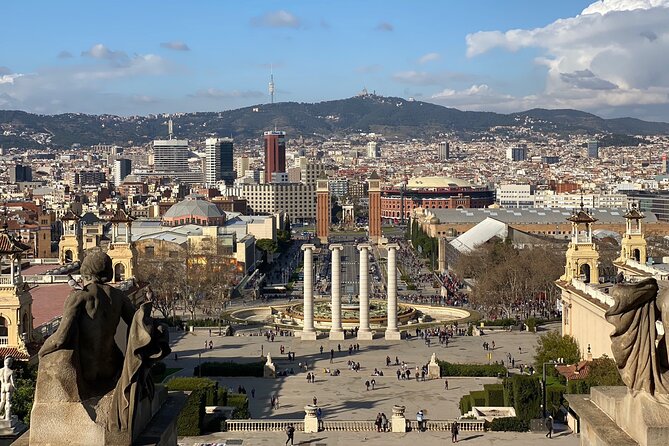
After the first hill segment, you cross the area tied to the 1929 World Fair held in Barcelona. This is where the tour stays grounded: you’re not racing between landmarks. You’re moving through the hillside spaces that link those landmarks back to the fair-era footprint.
This part works well if you like understanding how cities reuse space. Barcelona’s events are not trapped in the past. They leave shapes—routes, structures, and viewpoints—that you can still walk through decades later. Seeing that in motion is more satisfying than reading it later.
Even if you don’t love architecture, this stretch helps you build a mental map of Montjuïc. It makes the later stadium and cemetery stops feel less random.
Lluís Companys Olympic Stadium: sports, and the political story behind them
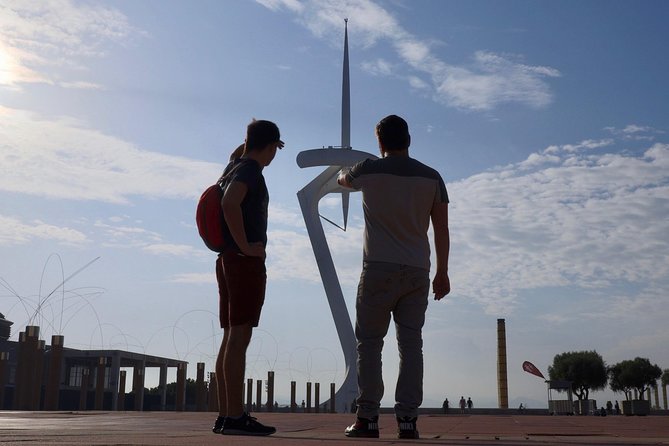
At Lluís Companys Olympic Stadium, you get a focused history lesson with a real change of tone. This is not just sports nostalgia.
The tour covers important sites of the 1992 Olympic Games, plus the Alternative People’s Game of 1936—described as a protest event against the Games in Nazi Germany. That topic can be heavy, but it’s also one of the most interesting ways to understand why stadiums and major sporting events matter beyond the track.
Another value point: the stop time is short (about 20 minutes), but the framing is not. You’re meant to leave with a clearer sense of how Barcelona used global events, and how politics followed those events into the city’s physical spaces.
Admission here is free, which is a small but helpful detail when you’re budgeting a day trip style outing.
One note from guidance in the tour description: the pace here is still walking-heavy overall, so you’re not showing up to a museum visit. You’re passing through a site with context while you keep moving.



Cementerio de Montjuïc: a brief stop with a big atmosphere
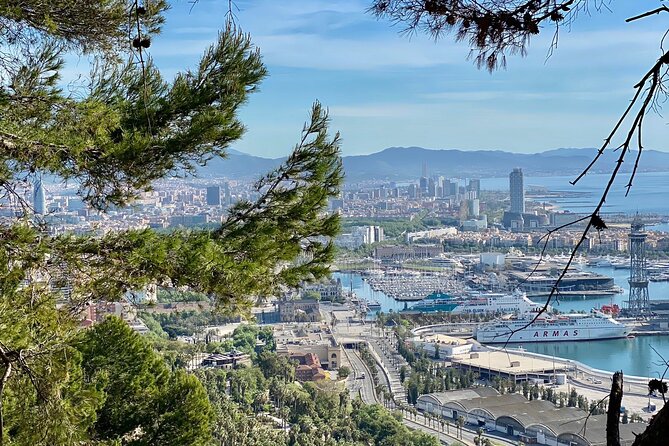
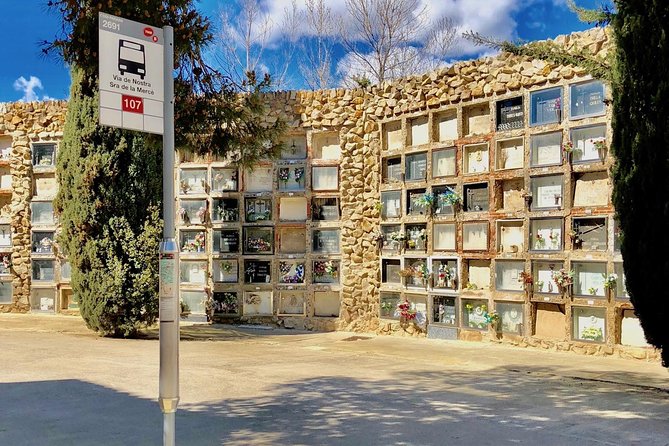
Next is Cementerio de Montjuïc. The tour gives you a glimpse of the cemetery and its role as a notable piece of Barcelona’s story, with a stop time around 10 minutes. Admission is listed as free.
Why this stop works on a panoramic walking tour: cemeteries are quiet counters to the action of a big city. When you’re already climbing for views, the switch to solemn atmosphere makes the whole day feel more human and less like a sightseeing checklist.
The tour also ties back to the hill’s identity as a watch tower and fortified space. Even in a short visit, you feel that Montjuïc is not just a park. It has layers: natural terrain, human purpose, and historical use over time.
If you’re the type who likes one “breather” moment in a walking route, this is it.
Fortresses, watch towers, and why the hill matters more than the view
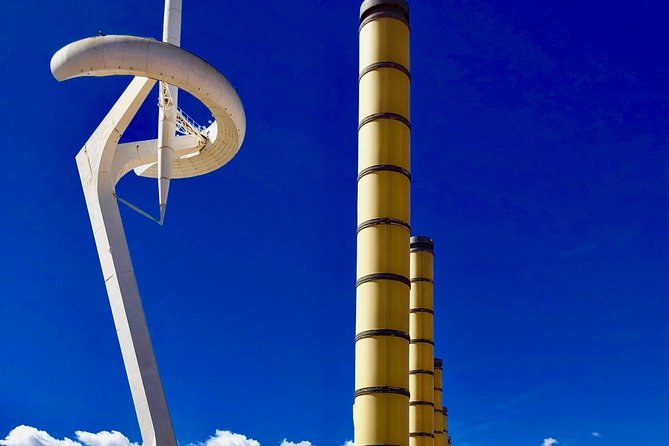
There’s another important segment between the cemetery and the later neighborhood finish where you learn about the hill as a natural watch tower and its history when it was fortified. The tour connects those ideas to both medieval and civil war history.
This is the kind of stop that doesn’t always show up in standard quick tours. But it’s exactly the kind of reasoning that improves your understanding. When you learn why the hill was valuable, the viewpoints start to feel like logical outcomes, not accidental perks.
It also helps you understand the layout of what you’re seeing. On a hill like Montjuïc, the city below isn’t just pretty—it’s strategically placed in your line of sight. That shift in thinking is one of the best “value multipliers” in this kind of tour.
Calle Blai pinchos finish: Poble Sec’s chaotic, delicious ending
The final move is into Calle Blai, where you’ll spend around 30 minutes walking through a multicultural neighborhood layout known for pinchos bars—a variation of tapas that became fashionable.
This end matters because it balances the hill theme with food culture. You’re not forced into a formal meal that eats half your day. Instead, you get time in a neighborhood where ordering small plates and snacks fits the energy you built while walking.
The tour ends in the Poble Sec area, and a practical detail helps: the green metro line is close by, so you can get back to the center without making your evening harder than it needs to be.
This is also a good moment to reset your legs and your thinking. If your legs feel tired, you still have an activity that’s low-friction and local.
Small group size and guide energy: what it changes for you
The tour is sold as a small group experience, with a maximum listed at 15 travelers, and the description also frames it as up to 10. Either way, it stays far away from the big-bus feeling.
That size change matters because Montjuïc walking is not flat. People move at different speeds on uphill ground, and in a small group your guide can adjust the flow without turning it into a chaotic shuffle. It also keeps the explanations clearer: you can hear what’s going on, and you can ask questions without waiting your turn for a loud stadium microphone.
Guide names that come up in the tour’s history include Michael and Christian, and their style described in feedback is consistent: passionate, personal, and focused on connecting what you see to Barcelona’s larger story. Even if you don’t want a deep lecture, that kind of storytelling can make each stop feel linked rather than random.
Walking difficulty, shoes, and sun: the real checklist
This is a hill tour. So treat it like one.
The tour description calls for a moderate fitness level and says it’s not recommended for anyone who cannot walk for at least 5 miles on partly very steep ground. Minimum age is 6 years, due to the length of walk and uphill portion.
Also, a heads-up based on experience from past participants: plan for sun exposure. A lot of the route has limited shade. If you’re doing this in spring or summer, you’ll want sunblock and water planning even if the tour itself does not include food or drinks.
My practical take:
- wear comfortable shoes with good grip
- bring a light layer for morning or evening temperature swings
- pack sun protection as if it’s a half-day at the beach, not a city museum
Price value: what $50.57 buys you on Montjuïc
At $50.57 per person for about 3 hours, you’re paying for two things: the guide and the structure.
This tour includes a professional guide, and that’s the key value. You’re not just walking between monuments. You’re getting interpretation that connects:
- 1929 World Fair architecture and site meaning
- Magic Fountain viewpoints tied to fair-era context
- Olympic Stadium with the 1992 events plus the 1936 protest game angle
- the Cementerio de Montjuïc stop
- the hill’s role as watch tower and fortified terrain
- a food-cultural neighborhood finish in Calle Blai
What you don’t get is food and drinks unless specified. So think of this as a guided sightseeing walk. If you want a full meal, you’ll plan that on your own during the Calle Blai time window.
Given the small group format and the multi-topic route, it often feels like a good deal compared to paying for individual tickets plus paying for multiple transport hops across Montjuïc and back.
Where you meet, where you end, and how to plan your evening
Meet at Av. de Francesc Ferrer i Guàrdia, 7, Sants-Montjuïc, 08038 Barcelona. The tour ends at Carrer de Blai, Sants-Montjuïc, 08004 Barcelona, in the Poble Sec neighborhood area, with the green metro line close by.
That layout is helpful for evening planning. You’re finishing near a neighborhood known for pinchos, so you can keep the casual, local tone going after the walking segment rather than sprinting across town.
Also, this tour uses a mobile ticket, which is the kind of modern convenience that saves you time at check-in.
Should you book the Barcelona Panoramic Walking Tour on Montjuïc?
Book it if you want a Barcelona hill day that feels purposeful. It’s a strong fit when you care about more than views and want the story behind them: Bauhaus 1929, Magic Fountain angles, Olympic 1992 context, the Alternative People’s Game of 1936 protest reference, and a cemetery stop that changes the tempo.
Skip it if you struggle with steep uphill ground or if sun exposure will be a problem for you. The tour is not positioned as an easy stroll, and the route doesn’t promise shade. Also, if you need a guaranteed indoor time buffer, this one is mostly outdoors.
If you’re visiting for a short stay and want a non-crowd Montjuïc perspective, this route gives you the hill’s big themes without turning your afternoon into a long, tiring detour.
FAQ
How long is the Montjuïc panoramic walking tour?
It’s about 3 hours.
How much does the tour cost?
The price is $50.57 per person.
Is the tour offered in English?
Yes, it’s offered in English.
Where does the tour start and where does it end?
It starts at Av. de Francesc Ferrer i Guàrdia, 7, Sants-Montjuïc (08038 Barcelona). It ends on Carrer de Blai, in the Poble Sec area (08004 Barcelona), near the green metro line.
How much walking and climbing should I expect?
The tour involves uphill walking and stairs. It’s not recommended if you can’t walk at least 5 miles on partly very steep ground, and it needs a moderate fitness level.
How big is the group?
The tour is described as a small group. The maximum size is listed as 15 travelers, and it’s also described as up to 10 travelers.
Are entrance tickets included?
The admission ticket for the Barcelona Pavilion / German Pavilion start point is not included. Admission is free at the Olympic Stadium stop and the Cementerio de Montjuïc stop.
What if the weather is bad, or I need to cancel?
The experience requires good weather. If it’s canceled due to poor weather, you’ll be offered a different date or a full refund. You can cancel for a full refund up to 24 hours in advance.