Hidden streets beat the main drag.
This is a 2.5-hour walk that threads you through El Born and the Gothic Quarter with stories you won’t pick up from a guidebook. I like the way it mixes big-sight stops (like the Palace of Catalan Music and Arc de Triomf) with quieter lanes, plus the pace of a small group—often just six people—so questions don’t get lost in a crowd. The other thing I really love: the guide keeps connecting the dots, from what El Born means to why Roman Barcelona started where it did.
One consideration: you’ll do about 2.5 hours of walking on mostly old-city streets, so if your knees are touchy or you prefer slow sightseeing, plan for breaks and comfortable shoes.
In This Review
- Quick highlights you’ll feel immediately
- Why this walk works better than a typical “see-everything” route
- The all-important start: El Born’s back streets (and why the order matters)
- Stop 1: El Born (about two hours) and the value of “time to wander”
- What to watch for while you walk
- Palace of Catalan Music: a quick stop that sets the tone
- Arc de Triomf: Modernism, history, and legend
- Mercat del Born: a historic market stop with real atmosphere
- A major post office building: the city’s infrastructure story
- Transition to the Gothic Quarter: the 2000-year context shift
- Plaça de Sant Just and Plaça de Sant Jaume: Roman-era clues in plain sight
- Plaça Sant Felip Neri: the tour’s calm landing spot
- Guides and the human factor: why the storytelling matters
- Price and value: is $55.51 worth it?
- Practical advice so you enjoy every minute
- Who should book this, and who might want a different tour
- Should you book this hidden-streets walk?
- FAQ
- How long is the tour and how much walking is involved?
- What areas of Barcelona does this tour cover?
- Is admission included for all stops?
- How big are the groups?
- Where does the tour start and end?
- What language is the tour offered in?
Quick highlights you’ll feel immediately
- Small group option (as low as six) keeps the tour conversational
- El Born first, with time to wander rather than just pose for photos
- Arc de Triomf + Mercat del Born bring Modernism and daily-market history side by side
- Gothic Quarter focus on Barcelona’s roots, including Roman-era squares
- End at Plaça de Sant Felip Neri, a calmer-feeling spot to land your walk
Why this walk works better than a typical “see-everything” route
Barcelona’s old center can feel like two things at once: gorgeous and chaotic. This tour avoids the worst of that by using a straightforward idea—start in El Born, then flow into the Gothic Quarter—while filling the gaps with what the city actually sounds like at street level.
You’re not just moving from landmark to landmark. You’re learning how the neighborhoods relate to each other: medieval El Born habits of life, then the thicker layers of the Gothic Quarter that stretch back to when Barcelona was basically in its infancy. The result is that when you look up at stone, you understand why it’s there, not just that it’s pretty.
It’s also designed for schedule flexibility. With multiple departure times, you can slot this early in your trip if you want your bearings fast, or later if you want the stories to “click” after you’ve already seen a few sights on your own.
You can also read our reviews of more tours and experiences in Barcelona.
The all-important start: El Born’s back streets (and why the order matters)
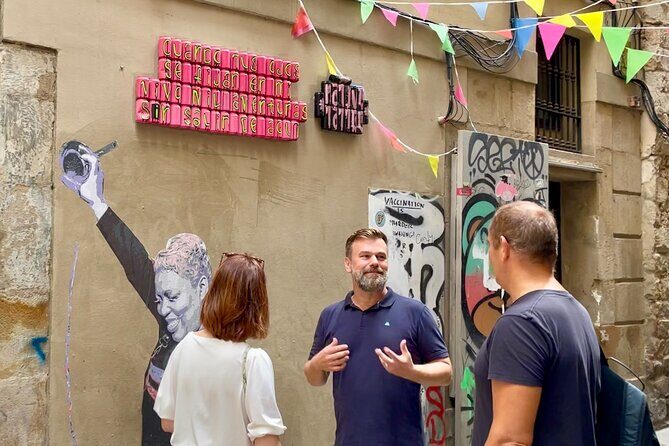
You begin at Hotel Ohla Barcelona, in Ciutat Vella. From there, the walk is built to put you in the right mindset early.
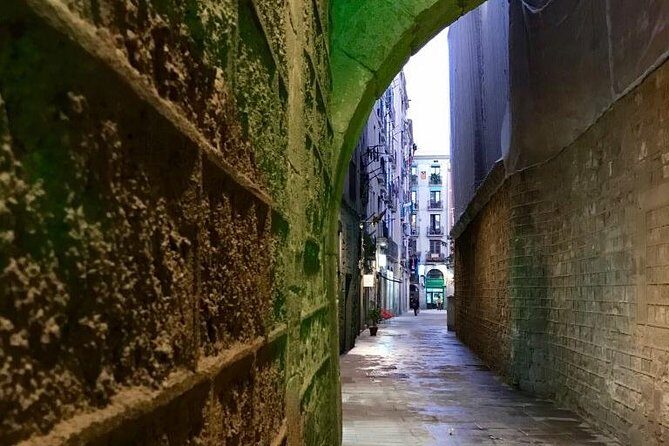
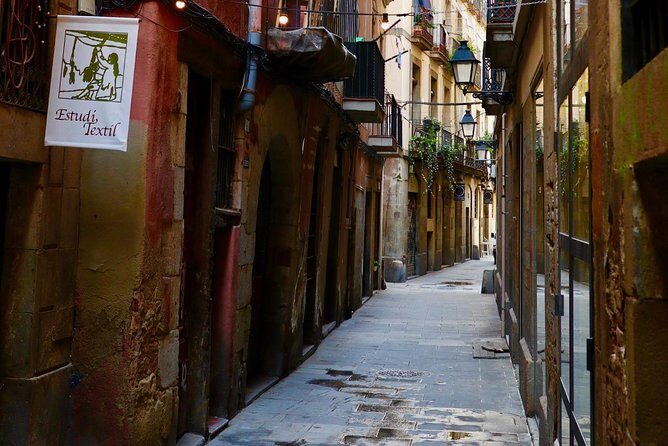
El Born gets about two hours, and that’s the sweet spot. It’s long enough to slow down, notice details, and get oriented without feeling rushed. And importantly, El Born isn’t treated like just another medieval backdrop. You’ll hear what El Born actually means, then you’ll walk through the maze of narrow streets where the neighborhood still behaves like a neighborhood—tight turns, small squares, and those sudden “how am I here already?” moments.
That El Born meaning lesson is one of the best uses of time on this kind of tour. When you know what a name points to, the place stops being generic. It becomes specific.
Stop 1: El Born (about two hours) and the value of “time to wander”
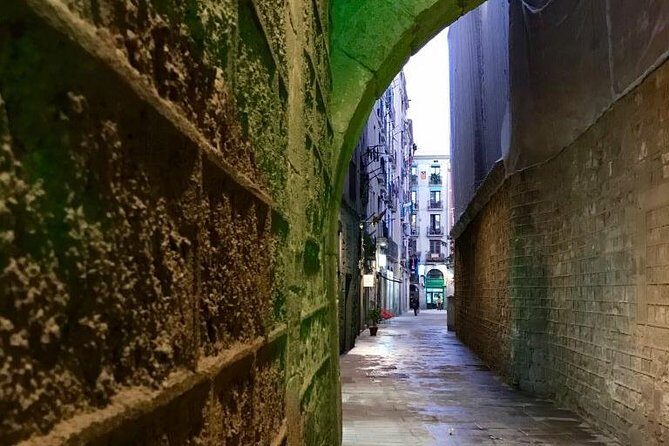
This is where the tour earns its title—hidden streets—because you’re not staring at one facade for 30 seconds. You get time to absorb the texture of the area.
During this portion, you’ll also pass by places that many first-time visitors skip, including a route close to the Picasso Museum area. You won’t just sprint past. The guide’s job here is to give you context so you can decide later if you want to return for a closer look.
What to watch for while you walk
Old towns can be visually similar if you’re not paying attention. In El Born, look for:
- Small side streets that appear to go nowhere, then suddenly connect into a courtyard or little plaza
- Buildings that look “official” but aren’t the ones in the big bus circuits
- Street patterns that hint at older boundaries and routes
Palace of Catalan Music: a quick stop that sets the tone
After El Born, you hit the Palace of Catalan Music for about 15 minutes. You won’t be there long, and admission isn’t included, so treat this as a taste-and-context moment rather than a full visit.
Why it still matters: architecture in Barcelona isn’t just decoration. It’s identity. A short stop like this is often best for people who want the feel of Modernist design without committing to a long indoor schedule.
If you later want to go back, you’ll at least know what you’re looking at and why it’s culturally significant—rather than just thinking, yep, that’s ornate.




Arc de Triomf: Modernism, history, and legend
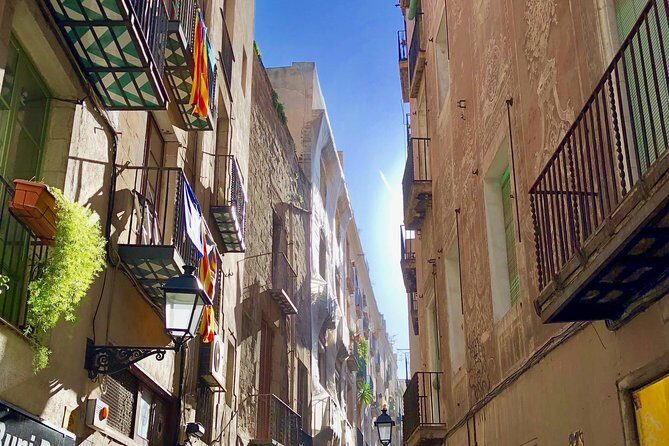
Next comes Arc de Triomf, again around 15 minutes. Admission is free for this stop, so it’s an easy win. The guide includes history and legends tied to it, which is a nice contrast after the medieval lanes of El Born.
This is also a breather spot. Big monuments create a different kind of space in your head. The guide helps you shift from “street-level layers” into “citywide symbols.”
Mercat del Born: a historic market stop with real atmosphere
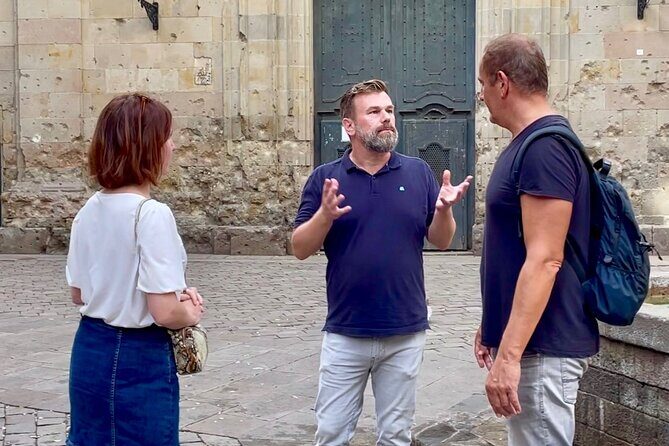
Then you reach Mercat del Born for another 15 minutes. Markets are one of the best “authentic Barcelona” stages because they’re not museums—you can’t fully recreate that energy indoors.
This stop works well because it’s short but meaningful. You get the idea of what the market represents in the neighborhood’s life, then you move on before the tour starts to feel like you’re ticking boxes.
If you’re the type who likes to plan meals, this stop also helps you notice where the food culture lives. Even if you don’t eat on the tour (food and drinks aren’t included), you’ll come away with instincts for where to look later.
A major post office building: the city’s infrastructure story
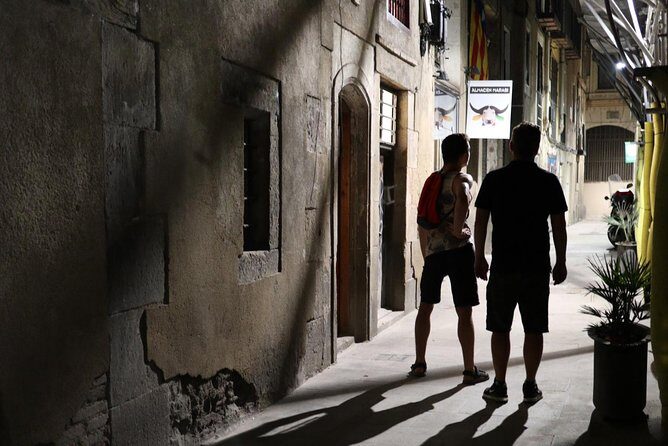
One part I enjoyed from the tour outline is that it includes Barcelona’s major post office building you come across on the way. That may sound random until you realize how important communication hubs were in shaping city life.
This kind of stop is valuable because it turns your thinking away from only churches and squares. Barcelona was also built by systems—trade, shipping, administration, and yes, mail. Old buildings that handled communication tell you a lot about what mattered at the time.
It’s a reminder that history isn’t only dramatic. Sometimes it’s practical.
Transition to the Gothic Quarter: the 2000-year context shift
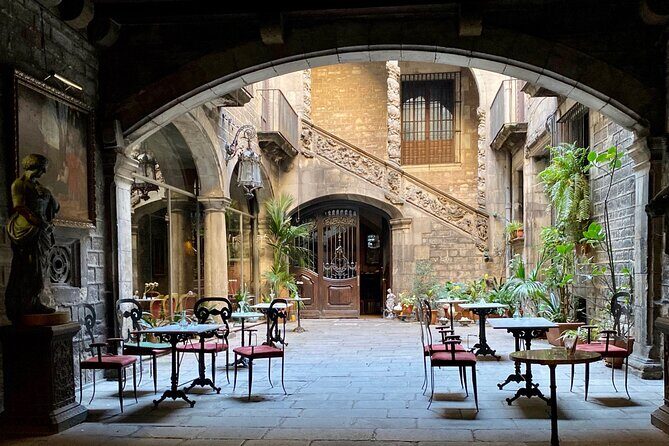
After El Born, you flow into the Gothic Quarter (Barri Gòtic) for about 1 hour 20 minutes.
This is where the tour goes from “medieval neighborhood” to “foundation-era city.” You’ll learn that the Gothic Quarter is where Barcelona was founded more than 2000 years ago—and that fact changes how you see the stone.
Instead of thinking of buildings as isolated attractions, you start imagining layers: what stood there, what replaced it, and how the city’s center of gravity moved (and stayed put in surprising ways).
Plaça de Sant Just and Plaça de Sant Jaume: Roman-era clues in plain sight
You’ll visit:
- Plaça de Sant Just (about 15 minutes), which dates back to Roman times
- Plaça de Sant Jaume (about 10 minutes), described as the heart of Roman Barcelona
These stops are short, but they’re effective because squares are where city life concentrates. If you’ve ever found yourself wondering why a certain area feels “central,” these are the answers in physical form.
Roman Barcelona being centered here is a big deal. Even if you’re not a history nerd, it gives you a mental map. You stop walking like you’re just passing through and start walking like you’re following the oldest logic of the city.
Plaça Sant Felip Neri: the tour’s calm landing spot
The tour ends at Plaça Sant Felip Neri (about 10 minutes). This is a fitting end because it’s small and atmospheric, letting you step out of guided explanation and into your own observations.
Ending in a quieter square also helps you avoid the common problem of finishing a walking tour and feeling immediately “touristed out.” You get a moment to breathe, grab a drink nearby on your own, or just wander one last street to see how your new knowledge changes your view.
Guides and the human factor: why the storytelling matters
The biggest praise in the past experiences is consistent: the guides make the city feel like it’s talking back to you.
Many groups have had Christian lead the walk, and others have been with Stefan. Both are praised for connecting history to street-level details and for sharing tips beyond the exact route.
That matters because Barcelona can overwhelm you fast. When your guide explains, for example, what El Born means or why Roman Barcelona was founded where it was, you don’t just learn facts. You get a set of mental shortcuts that help you navigate the rest of your trip.
You also benefit from the small-group feel. Even with a maximum of 15 travelers overall, the option for a group as small as six changes the vibe. You’re more likely to get direct answers and less likely to lose the thread.
Price and value: is $55.51 worth it?
At $55.51 per person for about 2 hours 30 minutes, this sits in the “good value” zone for guided walking tours in Barcelona—especially because it includes a professional guide and focuses on two neighborhoods where you’ll keep circling back anyway.
Here’s why it’s often worth the spend:
- You’re paying for interpretation more than transportation or admissions
- The route includes major landmarks plus quieter streets, which is hard to stitch together well on your own
- The small-group option makes the storytelling more personal
The main trade-off: food and drinks aren’t included, and some sights (like the Palace of Catalan Music) don’t include admission. But that’s normal for a walking tour that stays flexible and keeps you moving.
Practical advice so you enjoy every minute
This tour involves about 2.5 hours of walking. Old streets mean uneven pavement and constant turning, so do this with the right shoes. If you’re traveling with someone who needs frequent pauses, plan for it—this is not a stop-every-5-minutes kind of walk.
Also, bring a phone charger or at least battery. You can use a mobile ticket or paper voucher. Either way, having it ready helps smooth the start.
Finally, if you like small wins, aim for an early tour time on your trip. Learning the neighborhood logic on day one or day two makes later wandering much more satisfying.
Who should book this, and who might want a different tour
This walking tour fits you if:
- You want a first-time Barcelona orientation that doesn’t feel like a checklist
- You prefer learning through stories and streets, not only museums
- You like the idea of El Born and the Gothic Quarter as two linked chapters
You might choose something else if:
- You’re traveling with very young kids who need constant breaks and short attention spans
- You strongly prefer fully ticketed indoor attractions for most of your sightseeing time
Should you book this hidden-streets walk?
I’d book it if you want the kind of Barcelona experience where you leave with a mental map and a few unforgettable stories. The pacing—El Born first, then the Gothic Quarter—works well, and the emphasis on meaning (like El Born’s name and Roman foundations around Plaça de Sant Jaume) gives the walk staying power after the photos are done.
If you like adult-focused history, street-level character, and a guide who can connect symbols to real places, this is a solid pick at the price. Just go in ready to walk and you’ll have a great afternoon.
FAQ
How long is the tour and how much walking is involved?
The tour runs for about 2 hours 30 minutes, with approximately 2.5 hours of walking.
What areas of Barcelona does this tour cover?
You’ll focus on El Born and the Gothic Quarter (Barri Gòtic), finishing in Plaça Sant Felip Neri.
Is admission included for all stops?
Admission is free for several stops, but Palace of Catalan Music is listed as not included (you’ll spend about 15 minutes there).
How big are the groups?
There’s an option for a private tour or a small group of just six people. The overall experience has a maximum of 15 travelers.
Where does the tour start and end?
It starts at Hotel Ohla Barcelona, Via Laietana, 49, Ciutat Vella, 08003 Barcelona and ends at Plaça de Sant Felip Neri, Ciutat Vella, 08002 Barcelona.
What language is the tour offered in?
The tour is offered in English.