REVIEW · BARCELONA
From Barcelona: Medieval Villages Day Tour
Book on GetYourGuide →Operated by Explore Catalunya · Bookable on GetYourGuide
Medieval Catalonia feels close on this day trip. I like the way this route mixes medieval village walking with long stretches of countryside driving, so the day never feels rushed or cookie-cutter. Two things I especially like: the guided stops are specific and story-driven, and the free time in Rupit lets you pace the visit your way.
One drawback to plan for: it is a 10-hour loop, so each village gets a taste rather than a full day. If you want to really soak up one place for hours, you may wish there were a bit more time in your favorite stop.
In This Review
- Key highlights worth waking up for
- The 10-hour loop through Catalonia’s medieval villages
- Getting from Barcelona: meeting point, vibe, and pacing
- Besalú: arcaded streets, a mikveh, and synagogue remnants
- Castellfollit de la Roca: the basalt edge you glimpse on the way
- Rupit’s 2-hour free time: bridge views and cobblestone rhythm
- Cingles de Tavertet: sandstone cliffs plus the stops that add real context
- Tavertet: 48 preserved houses, Romanesque stone, and Panta de Sau views
- Return drive: Montseny biosphere and the forest views
- Price and value: why $117 can make sense for this route
- Who this day trip fits best
- Should you book this medieval villages day tour from Barcelona?
- FAQ
- What is included in the tour price?
- Where do I meet the guide in Barcelona?
- How long is the tour, and which villages are visited?
- Is the tour guided in English?
- Do I get any free time during the day?
- Is lunch included?
- Can I cancel and get a full refund?
Key highlights worth waking up for
- Besalú’s medieval layers: arcades, a 12th-century mikveh, and the remains of a synagogue
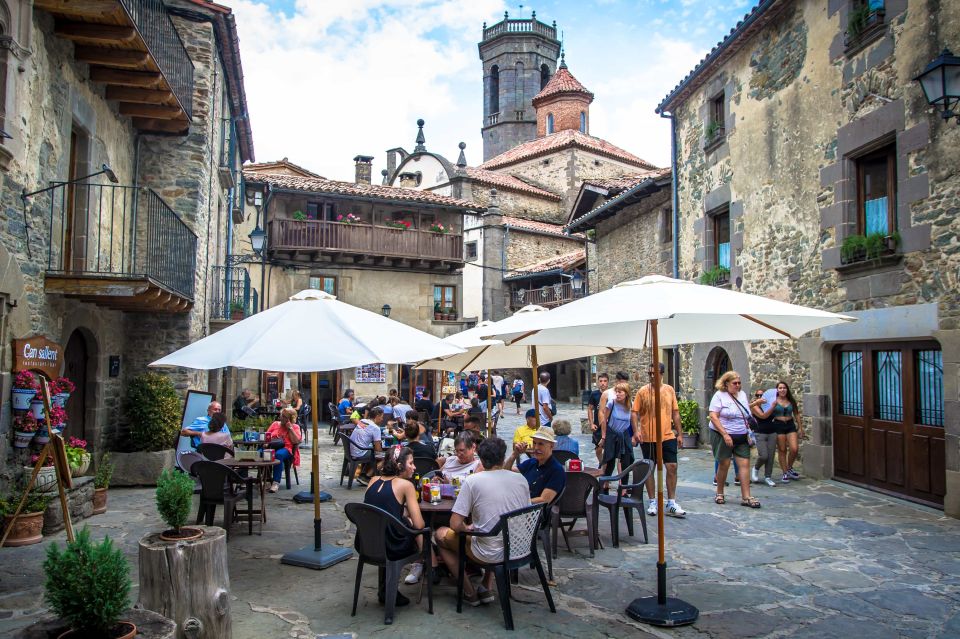
- Rupit’s 2-hour wander window: cobblestones, 16th-century houses, and the hanging wooden bridge
- Basalt-cliff pass by Castellfollit de la Roca: a tiny town perched at the edge of rock
- Cingles de Tavertet views: stop at the sandstone cliffs and pass the field of funerary urns and the Iberian Wall
- Tavertet’s preserved old town: 48 houses from the 17th and 18th centuries plus an 11th-century Romanesque church
- Small-group van experience: often in a 9-seater setup, with comfortable pacing and time for questions
The 10-hour loop through Catalonia’s medieval villages
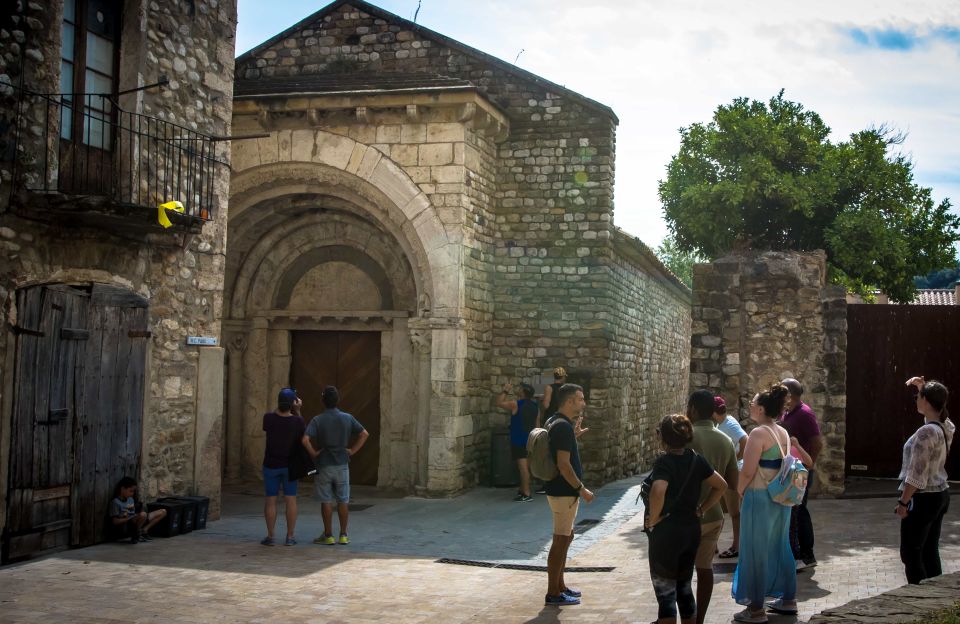
This tour is built like a circuit, not a straight line. You start in central Barcelona, then work your way north through Catalonia’s countryside toward three historic villages that feel like different chapters of the region.
The best part is the balance. You get guided walking time where the details matter (what you’re looking at, what it meant), and you get space to wander where details appear slowly: a lane turns, a viewpoint opens, and suddenly you’re planning your next photo. Guides on this route often bring the day to life, and names that pop up again and again include Berta, Nuria, Sergio, Steven, Sergi, Marta, Enrique, and Javi.
One practical note: the schedule is tight enough that the villages are memorable, but not exhaustive. It is ideal for first-timers who want context fast, and for repeat Barcelona visitors who want to escape the city for a full day without the stress of driving.
You can also read our reviews of more tours and experiences in Barcelona.


Getting from Barcelona: meeting point, vibe, and pacing
You meet at the Explore Catalunya office, directly across from the Palau de la Musica, off Via Laietena. That’s a convenient spot because you’re already near central sights—no long commute first thing.
From there, you ride out by minivan/van. The setup feels made for comfort: multiple departures are in smaller groups (some reported around 5 to 8 people in a 9-seater). That matters. In a small group, you can actually hear the guide on the move, and questions don’t vanish into the back row.
Pacing is also part of the value. You’re not stuck watching the same scenery scroll past for hours. Each segment has a clear target: first the medieval heart of Besalú, then the slower, more intimate vibe of Rupit, then the cliff-and-view finale at Tavertet.
Besalú: arcaded streets, a mikveh, and synagogue remnants
Besalú is the kind of place where you start walking and keep spotting things you didn’t expect. Your visit begins with a guided walk through this beautifully preserved medieval town, and it is built around real, specific sites rather than vague “pretty streets” storytelling.
Here’s what makes Besalú a standout stop:
- Arcaded streets: the walk feels medieval because the structure of the lanes still reads like the town once functioned.
- The restored mikveh, dated to the 12th century: this is one of those details that turns a quick photo stop into an understanding of daily life and community practice.
- Remains of a medieval synagogue: instead of skipping the Jewish history, the tour points you toward the evidence that’s still there.
You also see the town’s medieval identity through its bridges and street layout. In the same day, this matters because it gives you a baseline: after Besalú, the later villages start to feel like variations on themes—trade, defense, faith, and where people chose to live.
A small planning thought: Besalú is the first major village stop, so you’re usually at your freshest. If you’re picky about medieval architecture photos, use Besalú as your “get the sharpest shots” segment, because the later stops are more about views and atmosphere.
Castellfollit de la Roca: the basalt edge you glimpse on the way
On the drive between Besalú and Rupit, you pass Castellfollit de la Roca, a tiny town with about 1,000 inhabitants. The real hook is geographic: it sits right at the edge of a basalt precipice.
You don’t spend a long standalone visit here, but it works well as a palate cleanser. It reminds you that this tour isn’t just about stone buildings—it’s also about why people built villages where they could defend themselves, manage travel routes, and stare down the valley.
This is the kind of stop that makes the day feel off the beaten track. One quick look can do a lot. You often leave the window feeling you’ve seen more of the real Catalonia between destinations, not just the headline villages.
Rupit’s 2-hour free time: bridge views and cobblestone rhythm
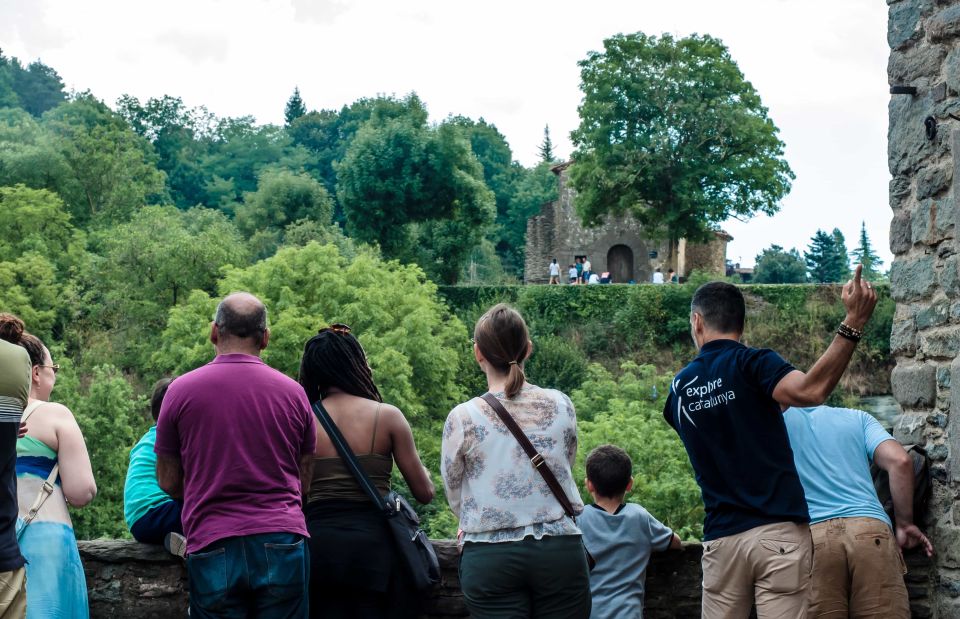
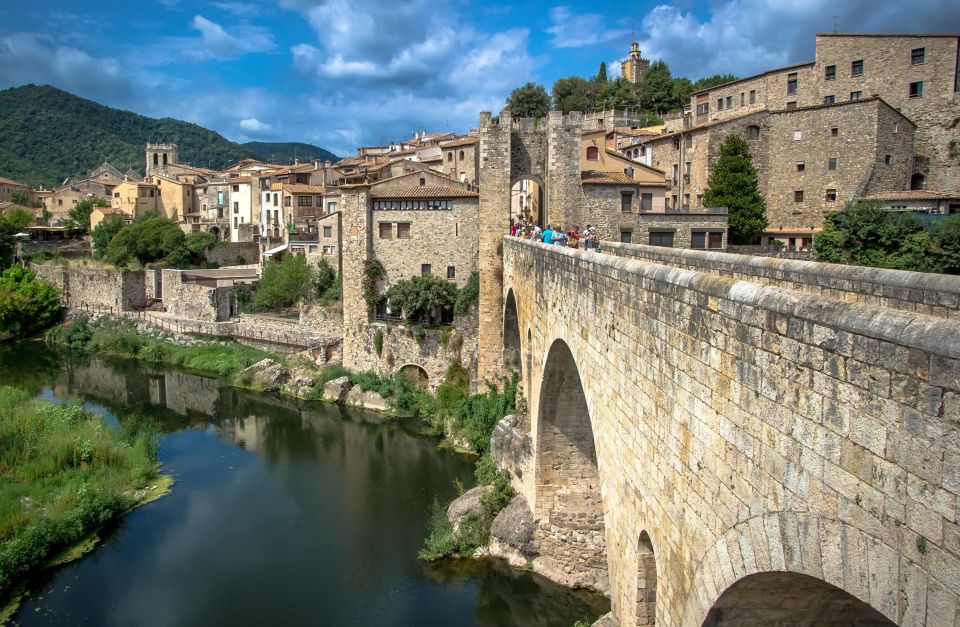
Rupit is the stop that turns the day from “guided tour” into “wander day.” After the scenic drive, you get about 2 hours of free time to explore at your own pace, plus the guide’s orientation and highlights.
What I like about this design is simple: Rupit rewards slow walking. You can follow your curiosity—shopfronts, small corners, and the way the town climbs.
In Rupit, don’t miss:
- Cobblestone streets lined with 16th-century country houses
- The hanging wooden bridge, a signature view point inside the village
- The Baroque-era Church of Sant Miquel
- The remains of the Castle of Rupit perched on a rocky peak
This is also where you’ll likely handle lunch. Food and drinks are not included, so you’ll purchase lunch at a local restaurant. That is part of the value equation: you’re paying for guided context and transportation, then you choose your meal where it fits your budget and appetite.
A practical tip: use part of your Rupit free time to time your photos. Morning light can be flat in some angles, but late afternoon can be better for the bridge-and-street views. Even if you don’t plan a sunset shoot, just leaving yourself margin inside the 2 hours helps.





Cingles de Tavertet: sandstone cliffs plus the stops that add real context
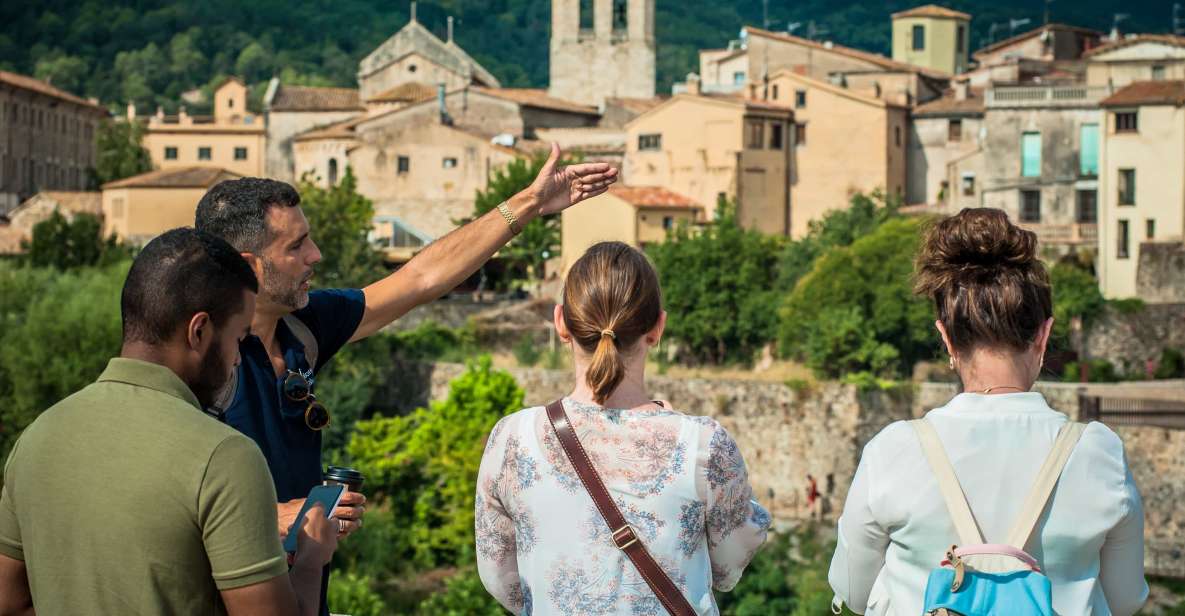
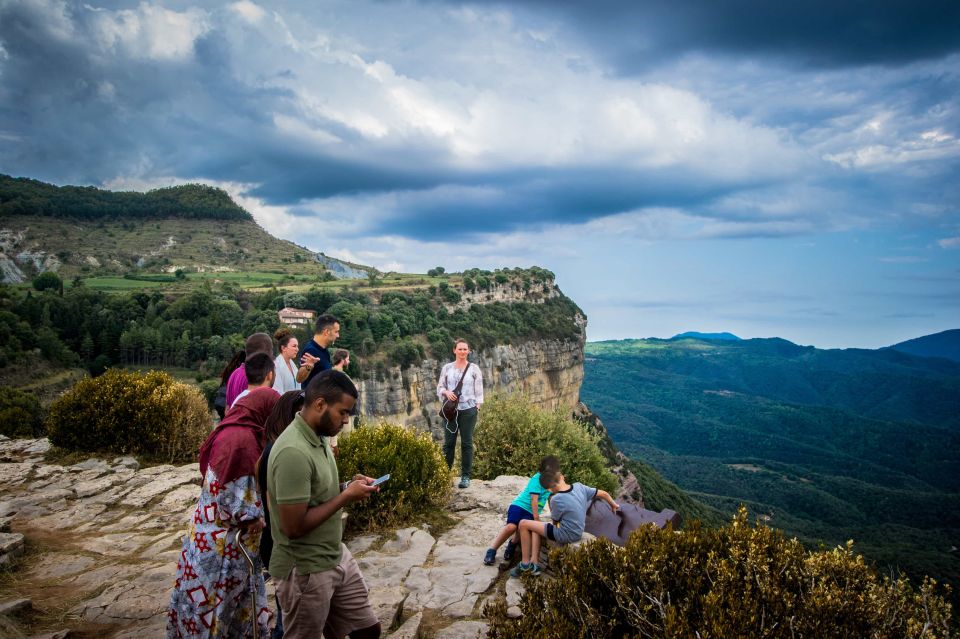
Between Rupit and Tavertet, you shift from village lanes to big views. The drive includes the Cingles de Tavertet, known for dramatic sandstone cliffs. Even from the road, the scenery changes the mood of the whole day.
Along the way you pass two extras that make the cliff segment feel educational without turning it into a lecture:
- A megalithic tomb site described as a field of funerary urns
- The Iberian Wall
These stops matter because they widen the story beyond medieval times. You’re learning that the region has layers—older than the houses you’ll see next—still written into the land.
This segment also sets up Tavertet. If Rupit is cozy and street-level, Tavertet is built for distance shots and a sense of height.
Tavertet: 48 preserved houses, Romanesque stone, and Panta de Sau views
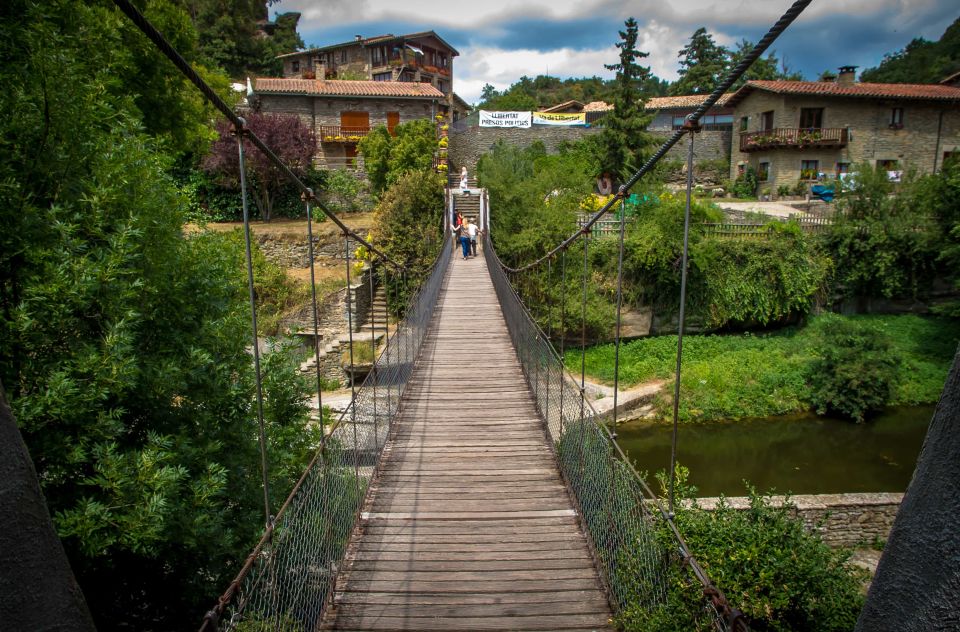
Tavertet is the final village, and it lands like the “finish strong” chapter. You’ll tour it with your guide, and the town’s character is clear fast: it has 48 preserved houses from the 17th and 18th centuries and is designated as a National Property of Cultural Interest. Translation: the town hasn’t been flattened into a theme park.
Key highlights here include:
- The houses themselves: the preservation is what you notice first—street texture, building rhythm, and how the town sits together as a whole
- The 11th-century Romanesque Church of Sant Cristòfol: the church gives you the medieval anchor for the stop
- A break for coffee at your own expense, or a walk to a viewpoint over the Panta de Sau Lake
I like that the tour offers a choice. If you’re in “coffee and people-watching” mode, take it. If you’re in “let’s earn the photos” mode, walk up to the viewpoint. Either way, it closes the day with what you actually came for: views over the valley and a sense of place.
Also worth knowing: Tavertet is smaller than Rupit. That can be a plus. You’re not stuck waiting for the clock to catch up. Some groups find that extra time isn’t necessary here because the village is compact and satisfying on its own.
Return drive: Montseny biosphere and the forest views
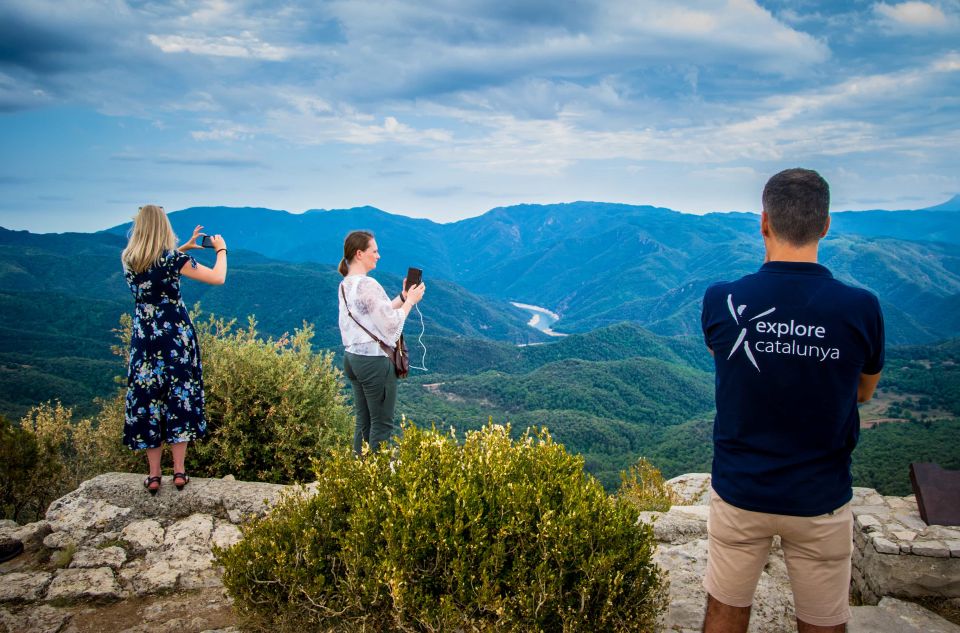
On the drive back toward Barcelona, you’ll pass through more varied scenery, including El Montseny, a UNESCO Man and Biosphere-listed natural park, plus El Magatalls, a lush forest area.
This doesn’t feel like filler. The return drive gives you a breather after village walking. It’s also where you might notice how different terrain shapes how towns grow—again, the day is telling you a geography story, not just a buildings story.
Price and value: why $117 can make sense for this route
At $117 per person for a 10-hour tour, the math only works if you’re getting more than a bus ride. Here, you are:
- Transportation between three villages and the viewpoint/cliff areas
- A local guide who leads the walking segments and provides the context
- Time structure that mixes guided walking with independent wandering
Food and drinks are not included, so budget for lunch in Rupit and a coffee stop in Tavertet if you want it. That’s the tradeoff. You’re paying for guided context and logistics, then you get to choose meals locally rather than being locked into one included option that might not match your tastes.
Is it the cheapest way to do three villages from Barcelona? Probably not. But it’s one of the more time-efficient options if you don’t want to rent a car, plan a route, and handle parking and navigation all day.
If your goal is to see medieval Catalonia without turning the day into homework, this pricing often feels fair.
Who this day trip fits best
This tour is a strong match if you:
- Want three medieval villages in one day without driving
- Like a mix of guided facts and time to wander
- Care about the “why” behind sites, not just the “look at this”
- Prefer smaller groups and a guide who can answer questions
You might reconsider if:
- You want more time in only one village. Rupit and Tavertet are excellent, but each stop is limited by the overall schedule.
- You hate spending a big chunk of a day on the road. This is still a day tour, so you’ll feel the travel time.
Should you book this medieval villages day tour from Barcelona?
Yes, if you want a well-paced, story-led day that feels like you left the city behind. Besalú gives you medieval depth fast, Rupit gives you room to breathe, and Tavertet caps it with preserved stone and big views.
Book it if your ideal day includes guided walking plus at least one chunk of free time. For the best results, go when the weather is clear enough for the viewpoints around Tavertet and the cliff country. And plan a lunch budget—because this tour hands you the chance to eat where you are, not a one-size-fits-all meal.
If medieval architecture and countryside views are your thing, this is a solid use of a day in Catalonia.
FAQ
What is included in the tour price?
The tour includes a local guide and transportation. Food and drinks are not included unless specifically mentioned.
Where do I meet the guide in Barcelona?
You meet at the Explore Catalunya office, directly across from the Palau de la Musica, off Via Laietena.
How long is the tour, and which villages are visited?
The tour lasts about 10 hours and visits Besalú, Rupit, and Tavertet.
Is the tour guided in English?
Yes. The live tour guide speaks English.
Do I get any free time during the day?
Yes. You get about 2 hours of free time in Rupit to explore at your leisure, plus a short break in Tavertet for coffee (at your own expense) or time to walk to the viewpoint.
Is lunch included?
No. Food and drinks are not included. Lunch is purchased at a local restaurant in Rupit.
Can I cancel and get a full refund?
Yes. You can cancel up to 24 hours in advance for a full refund.