REVIEW · BARCELONA
From Barcelona: Tarragona & Sitges Full Day Tour with Pickup
Book on GetYourGuide →Operated by In Out Barcelona Tours · Bookable on GetYourGuide
Roman ruins and sea air in one day.
This full-day trip mixes Tarragona’s UNESCO Roman sites with the modernist charm of Sitges and ends with free time at Playa de San Sebastián. Two things I really like: the engineering wow-factor of the Les Ferreres Aqueduct, and the way Sitges walks you through Catalonia’s artistic side. One consideration: this is a walking-and-stairs kind of day, so comfortable shoes matter.
What makes it feel easy is the setup. You get hotel pickup/drop-off in a private air-conditioned minivan, and the guide handles the story, the pacing, and the switch from Roman stonework to coastal Catalan culture. In the guide names that come up most often in this route, you’ll see people like Lluis and Miquel getting praised for keeping the day fun and organized. Just be ready for a packed 10 hours rather than a slow stroll.
In This Review
- Key Highlights You’ll Actually Feel
- First Stop: Leaving Barcelona with Smooth Private Pickup
- Les Ferreres Aqueduct: The Roman Engineering You Can’t Ignore
- Tarragona’s Roman Promenade: Circus, Walls, and the City’s Daily Pulse
- The Roman Forum: Where Ruins Meet Real Life
- Tarragona Amphitheatre by the Sea: Gladiators, But With Salt Air
- Sitges Arrival: Modernist Streets and Coastal Calm
- Free Time at Playa de San Sebastián: Best Urban Beach Energy
- What This Tour Costs and Why It Can Be Worth It
- Comfort Tips: The Real Stuff That Makes the Day Better
- Who Should Book This Day Tour
- Should You Book This Tarragona and Sitges Day Tour?
- FAQ
- FAQ
- How long is the Tarragona and Sitges day tour?
- What is the price per person?
- Is hotel pickup and drop-off included?
- How big is the group?
- What languages does the guide speak?
- What Tarragona sites are included?
- What will you do in Sitges?
- Do you get free time at the beach?
- Is food or drinks included in the price?
- What is the cancellation policy?
Key Highlights You’ll Actually Feel
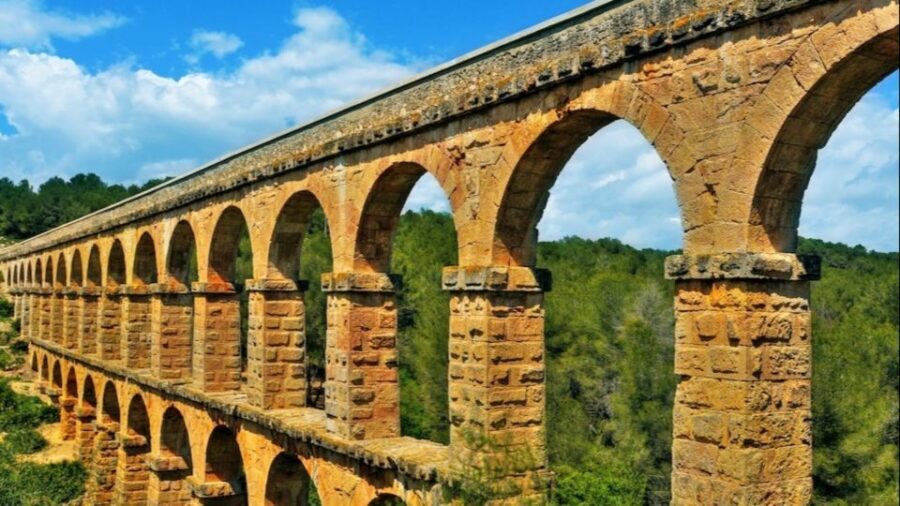
- Les Ferreres Aqueduct (Devil’s Bridge): a massive Roman structure you view from angles you won’t get on your own.
- Tarragona’s Roman Circus and Forum areas: ruins that explain how the city worked for roughly 2,000 years.
- Tarragona Amphitheatre by the Mediterranean: gladiator-era architecture with real ocean air around it.
- Sitges Modernisme + “Americanos” houses: a town story that goes beyond beaches.
- Small group size (up to 8): more time with your guide and less waiting around.
- San Sebastián Beach free time: a rare chance to cool off after the walking.
First Stop: Leaving Barcelona with Smooth Private Pickup
You start this day the easy way: pickup from your hotel in Barcelona between 8:00 and 9:00 AM, then you’re off in a private, air-conditioned minivan. It saves you the stress of navigating trains or buses on a tight schedule, and it usually means you arrive ready to walk instead of figuring things out on the fly.
The drive also sets the tone. You’re heading south along the coast toward Costa Dorada and then on toward Sitges along Costa del Garraf, so expect that slow shift from big-city pace to Mediterranean rhythms. People often comment that the return trip feels scenic, and honestly, that makes sense: once you’ve been walking ruins all morning, you want a comfortable ride back.
One practical note: since this is scheduled for a full 10 hours, you’ll want to treat it like a day with momentum. That’s great if you like structure and storytelling, but it’s less great if you’re hoping for lots of long, unplanned detours.
You can also read our reviews of more tours and experiences in Barcelona


Les Ferreres Aqueduct: The Roman Engineering You Can’t Ignore
The star of Tarragona’s first act is the Aqueduct Ferreres, often called the Devil’s Bridge. It’s 217 meters long and about 26 meters high, which is the kind of scale that makes even experienced ruin-hunters stop and look twice.
What you’ll like here is how the structure works visually. Roman aqueducts aren’t just “old water pipes.” This one is a statement—Roman planners hauling water across tough terrain with precision that still holds up. When your guide points out what you’re seeing, the bridge turns from a photo-op into an engineering story.
The bigger win is timing and viewpoint. You see it early in the day, when you’re fresh and the light can make the stonework look crisp. It’s also a good warm-up for Tarragona itself—after you get your head around the aqueduct, the rest of the Roman sites start to connect as parts of one city system.
Tarragona’s Roman Promenade: Circus, Walls, and the City’s Daily Pulse
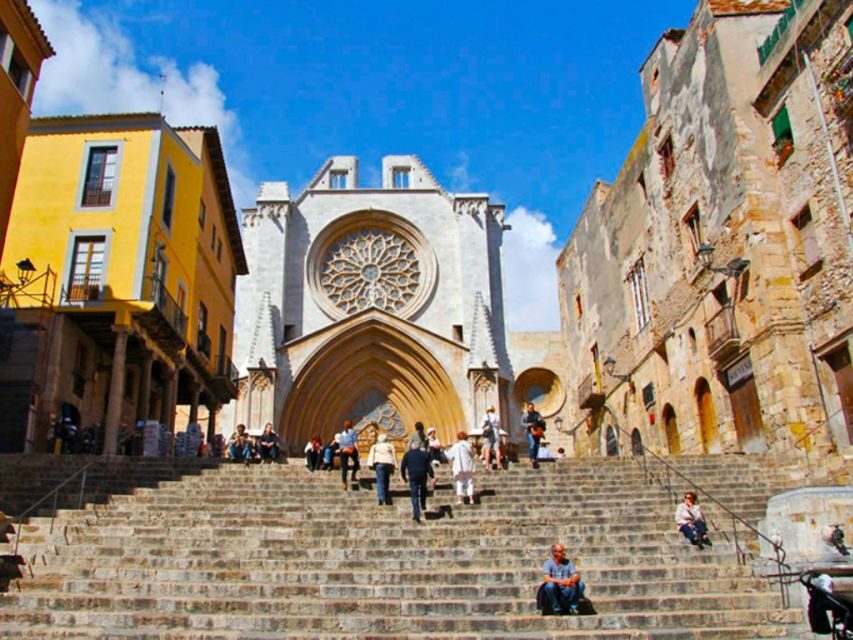
After the aqueduct, the day leans into Tarragona as a Roman capital, known historically as Tarraco. You’ll follow an archaeological promenade feel—walking through areas tied to the city’s structure, not just scattered monuments.
You’ll move past highlights like the Roman Wall of Tarragona and the Roman Circus. The wall matters because it helps you picture the city boundaries and how a place like this defended itself. The circus matters because it wasn’t a random entertainment venue; it was central to how public life ran for centuries.
The Roman Circus is described as one of the best-preserved of its kind in Europe. That’s not marketing fluff. When you stand near major remains like this, you can mentally map the space: where crowds gathered, where events happened, and how the city kept its status. Your guide’s job is to translate those stones into daily life—what people came to see and why.
A small-group setup is helpful here. With fewer people, you typically get clearer explanations and less “wait in line for the next photo.” You can keep moving at a pace that suits the group and still absorb what you’re seeing.
The Roman Forum: Where Ruins Meet Real Life
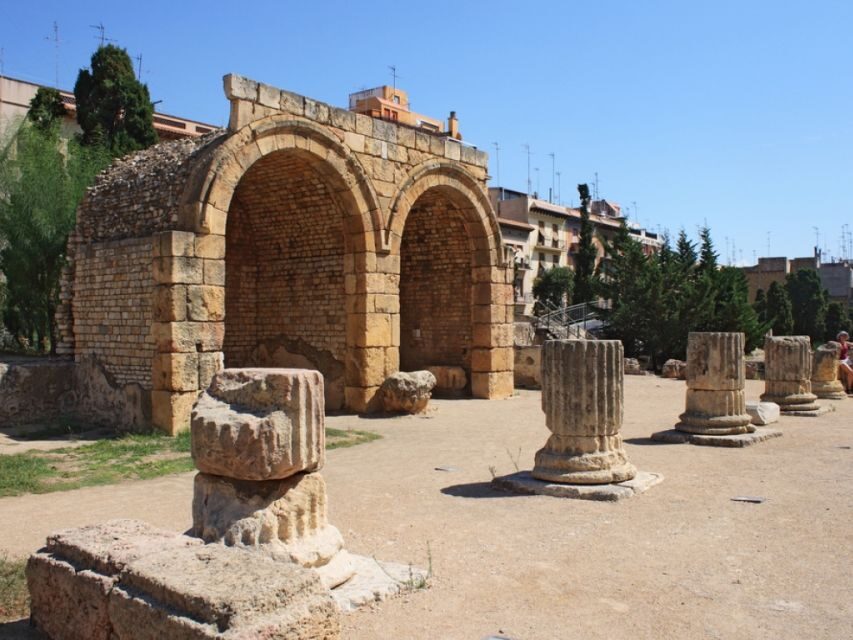
Next comes the Roman Forum, the center of Tarragona for about 2,000 years. The forum experience is often more interesting than you’d expect because it’s not frozen behind ropes. It’s a space where the ancient framework sits alongside medieval and modern layers.
That blend changes how you look at ruins. Instead of seeing isolated remains, you see continuity—how later generations used the same ground for their own civic and religious needs. It’s also one reason the forum can feel more human than a remote archaeological site: you’re walking through a place that still behaves like a town.
This is a good stop for anyone who likes context. You’ll get a sense of why Roman cities were planned with public spaces that didn’t just entertain; they organized power, commerce, and civic identity. And because you’re with an expert guide in English or Spanish, the forum becomes a guided story rather than a quick look-and-go.
If you’re the type who likes to photograph details, this is also a strong area. You’ll have corners where stones and streets line up in a way that’s hard to reproduce without the right moment of perspective.
Tarragona Amphitheatre by the Sea: Gladiators, But With Salt Air
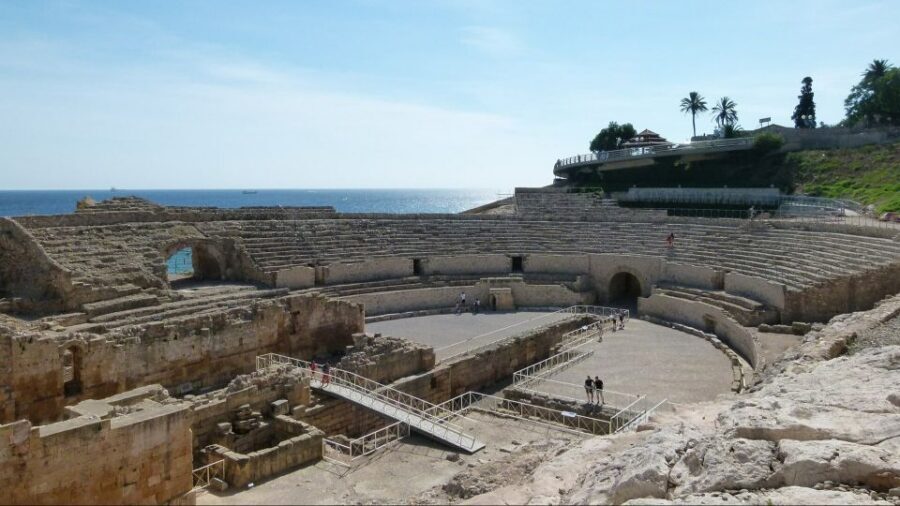
Then you reach the Tarragona Amphitheatre, with guided time and included entrance. The key detail is the setting: it sits by the Mediterranean, so you’re not just looking at ancient seating. You’re looking at a ruin that still has coastal atmosphere around it.
In Roman times, this was the kind of venue where gladiator battles took place in the 2nd century. Standing near the amphitheatre’s remains, you get a sense of scale and design—how the space shaped crowds and sound, and how it turned politics and entertainment into one public event.
A practical plus: amphitheatres are easy to understand visually. Even if you’re not a Roman-history fanatic, you’ll recognize the basic layout: performance space, seating tiers, and the way circulation must have worked for large gatherings.
One consideration: it’s part of a walking-heavy schedule, and amphitheatre areas can involve steps or uneven surfaces depending on where you pause. Plan for that and you’ll enjoy it more.





Sitges Arrival: Modernist Streets and Coastal Calm
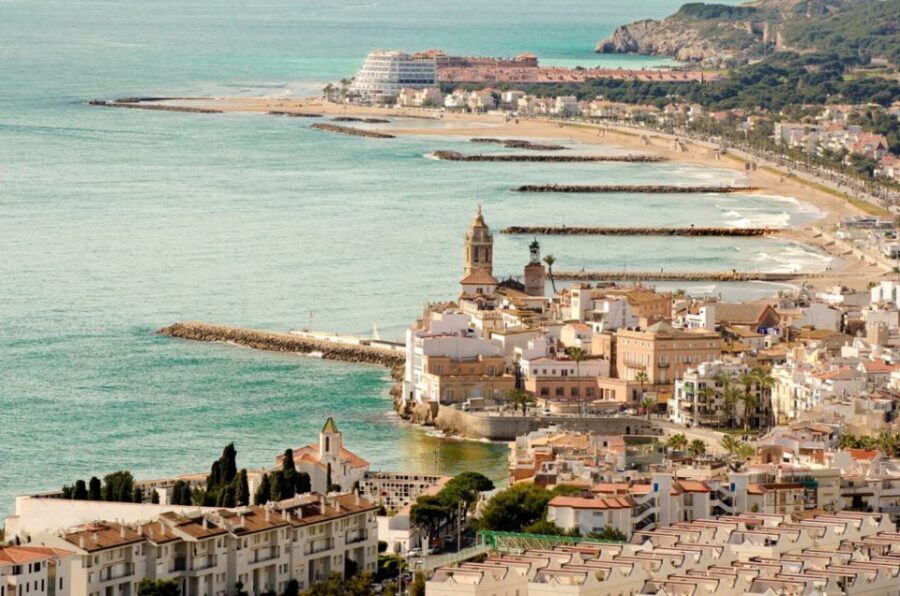
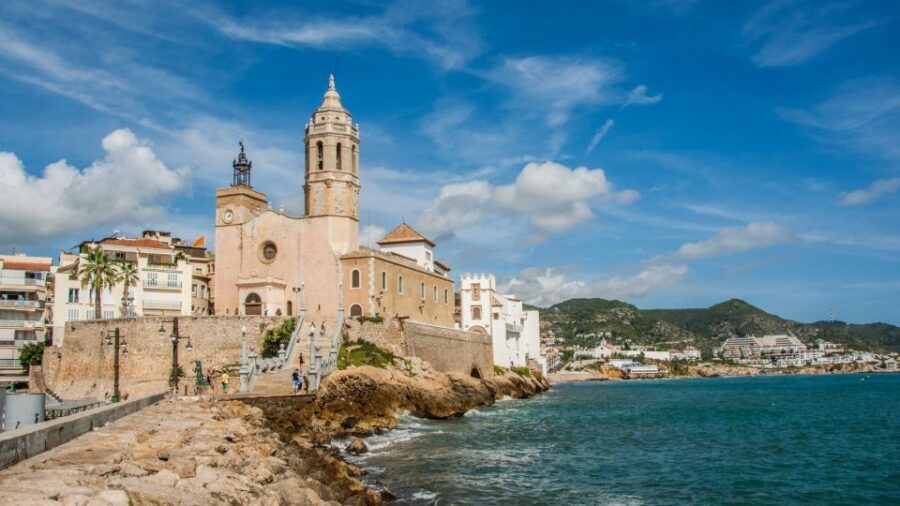
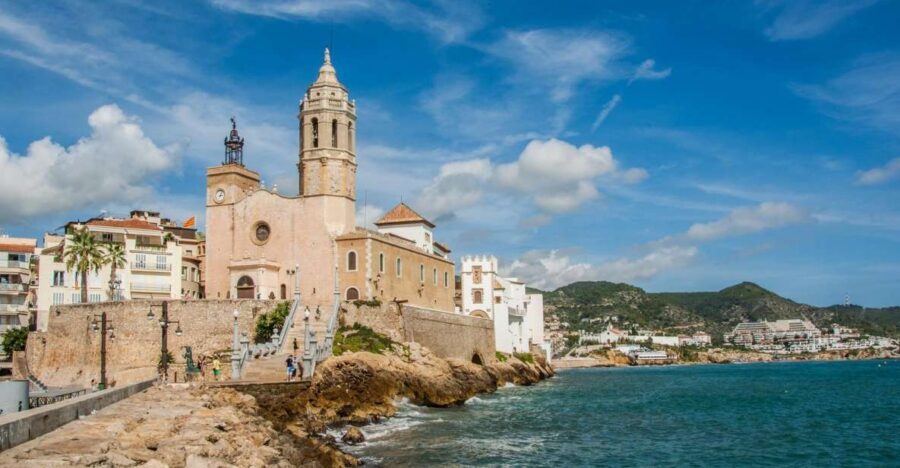
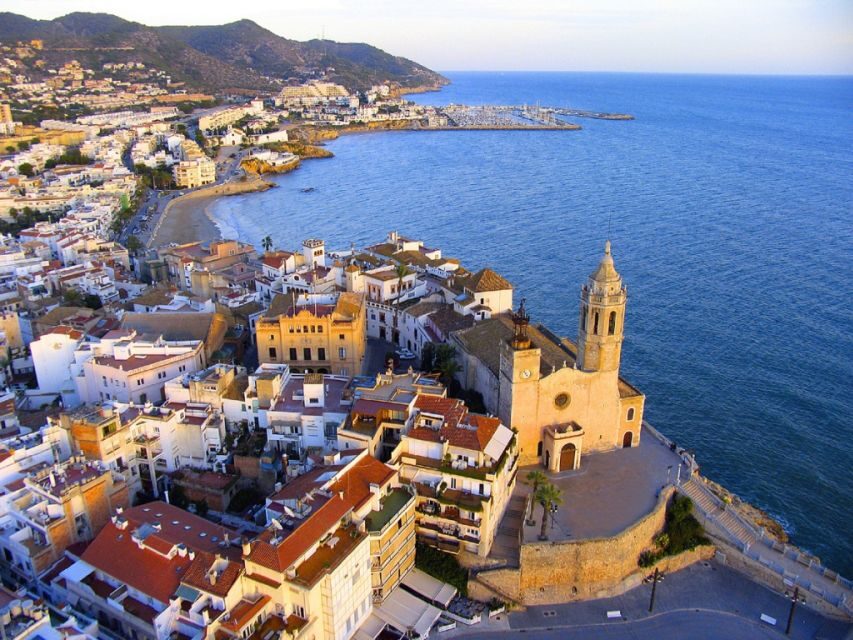
After Tarragona, the route moves you toward Sitges, a coastal town with traditional fisherman’s houses and a strong streak of Modernist architecture. The drive shift is real: you go from Roman stone time to a place that feels artistic, decorative, and designed to wander.
Your guide takes you through a walking tour in the village’s winding streets, where you can spot examples of Modernisme like Casa Bacardí and Casa del Rellotge. These aren’t just pretty facades. They show how Sitges attracted creatives and culture-minded residents long before the town became a mainstream beach destination.
You’ll also learn about the “Americanos,” wealthy emigrants who returned from the Americas and built extravagant homes. This is one of those stories that changes how you read the architecture. Instead of seeing random grand buildings, you understand the money, ambition, and social status behind them—and why Sitges became a place people wanted to show up.
Expect key sights like the Church of San Bartolomé and Santa Tecla and visits connected to Maricel Palace, plus a stop at the Quiet Corner, a small plaza where local musicians may perform. That little moment matters because it gives Sitges its everyday personality: it’s not all monuments; it’s street culture too.
Free Time at Playa de San Sebastián: Best Urban Beach Energy
The final phase is relaxation at Playa de San Sebastián, listed as one of the best urban beaches in Europe. This is your chance to slow down after hours of Roman ruins and guided walking.
You’ll have free time—enough to walk the waterfront, sit with a drink or snack, and decide if you want a swim. The beach is also paired with the idea of beachside terraces, so you can cool off without needing a car or a long commute.
The important practical call here is your energy. If you’ve been sightseeing since morning, don’t overbook yourself with extra plans. Use this time for a reset: salty air, a calmer pace, and the kind of people-watching you can only do when you’re not marching to the next stop.
What This Tour Costs and Why It Can Be Worth It
At $116 per person for about 10 hours, this day trip sits in the “premium day tour” range. You’re paying for three things that add up fast if you tried to DIY:
1) Hotel pickup and drop-off in a private air-conditioned minivan
2) A guide in Spanish or English with guided time at the main sites
3) Included entrance to the Tarragona Circus and Tarragona Amphitheatre, plus skipping the ticket line
The value becomes clearer if you compare effort. Tarragona and Sitges are doable alone, but you’d spend time coordinating transport and tickets, and you might miss the connections between sites—like how the forum ties into the civic layout or how the Aqueduct supports the city’s function.
Small group size (up to 8) also matters. Less crowding means you’re more likely to hear explanations clearly and keep the rhythm of the day.
If you prefer self-paced travel with minimal structure, you might feel the schedule is tight. But if you like seeing two destinations in one shot without logistical headaches, this is a strong use of a Barcelona day.
Comfort Tips: The Real Stuff That Makes the Day Better
This is a great day trip, but it’s still a full day. Here are the practical things to plan for:
- Wear comfortable shoes: the route includes walking and likely stairs, especially around archaeological areas.
- Bring a light layer: coastal weather can shift, and you may end up walking in sun then cooling down near the sea.
- Plan for no included food: food and drinks aren’t part of the package, so budget time and money for lunch or snacks in Sitges.
- Bring water: you’ll be walking from morning through the beach break.
- Bring a charge-ready phone/camera: you’ll want photos at the aqueduct and amphitheatre, and the Sitges architecture rewards slower looking.
If you want one simple strategy, do it like this: get your history stops done early in Tarragona, then use Sitges to mix sightseeing with recovery.
Who Should Book This Day Tour
I think this tour is a great fit for:
- You want Roman Tarragona without turning the day into a homework project.
- You like architecture stories—aqueduct engineering, Modernisme facades, and the Americanos background.
- You want a small-group guided experience with hotel pickup so you don’t burn time on transit.
- You’re happy with a full schedule as long as the pace is well managed.
It may not be ideal if:
- You want a low-walking day.
- You hate scheduled tours and would rather wander freely with no guide narrative.
- You’re sensitive to steps and uneven ground around ruins and coastal viewpoints.
Should You Book This Tarragona and Sitges Day Tour?
If you’re choosing between staying in Barcelona all day or seeing south Catalonia properly, I’d book this. The mix is smart: start with the Aqueduct Ferreres engineering shock, add Tarragona’s major Roman anchors, then finish with a genuine breather at Playa de San Sebastián.
Just go in with the right expectations. It’s not a slow picnic day; it’s a guided day built around walking, storytelling, and a beach payoff. If that sounds like your style, you’ll feel like you used your time well.
FAQ
FAQ
How long is the Tarragona and Sitges day tour?
The tour lasts 10 hours.
What is the price per person?
The price is $116 per person.
Is hotel pickup and drop-off included?
Yes. You get hotel pickup and drop-off in a private air-conditioned minivan between 8:00 AM and 9:00 AM, and you return to Barcelona at the end of the tour.
How big is the group?
It’s a small group, limited to up to 8 guests.
What languages does the guide speak?
The live tour guide is available in Spanish and English.
What Tarragona sites are included?
You’ll visit stops including the Les Ferreres Aqueduct, the Roman Forum area, and you also get entrance to the Tarragona Amphitheatre and the Tarragona Circus.
What will you do in Sitges?
You’ll enjoy a guided walking tour of Sitges village, including Modernist architecture highlights and key local sights like the church of San Bartolomé and Santa Tecla, plus time to enjoy the town’s streets.
Do you get free time at the beach?
Yes. You’ll have free time at Playa de San Sebastián, with the option to relax at beachside terraces or swim.
Is food or drinks included in the price?
No. Food and beverages are not included.
What is the cancellation policy?
Free cancellation is available up to 24 hours in advance for a full refund.