REVIEW · BARCELONA
Gaudí and Modernism – Private Walking Tour
Book on Viator →Operated by Be Local Tours · Bookable on Viator
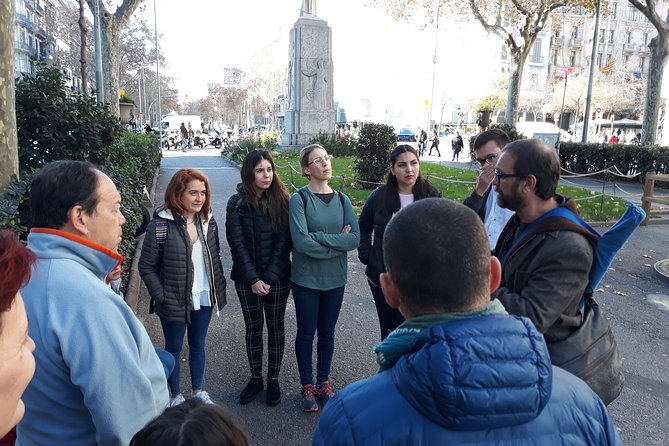
Gaudí and Modernism make more sense on a walk. This is a private 2.5-hour journey through Barcelona’s Eixample, where architecture is explained in plain language and tied to real city change—before you even get close to Sagrada Família. I like how the route sets up the story of the city, not just the sights.
My favorite part is having Patrick guide the walk with big-picture context: politics, social life, and design choices all connect in a way that sticks. I also like the built-in pacing; it feels relaxed enough for questions and for slowing down to notice details on façades and street elements.
One consideration: the tour leans on good walking and outdoor viewing, and it requires decent weather—so bring comfortable shoes and be ready to be outside most of the time.
In This Review
- Key things you should notice on this walk
- Why this Gaudí-and-Modernism route fits a 2.5-hour day
- Plaza de Catalunya: the city split that sets up everything else
- Passeig de Gràcia: where Catalan bourgeois life turns into architecture
- Bancs Fanals: read the street the way a modernist would
- Casa Lleó i Morera and the modernism idea of ownership
- Casa Amatller (Amattler) and its chocolate-era symbolism
- Sagrada Família: the outside facades and why Gaudí left it unfinished
- Casa Malagrida: a bourgeois house with Argentina–Spain decoration
- Pickup, mobile tickets, and practical logistics that matter
- Price and value: is $66.08 per person worth it?
- Who should book this private Modernism walk
- Should you book the Gaudí and Modernism private walking tour?
- FAQ
- How long is the Gaudí and Modernism private walking tour?
- Is this tour private?
- What language is the tour offered in?
- Where does the tour start and where does it end?
- Do I need paid tickets to see the stops?
- What if the weather is bad or I need to cancel?
Key things you should notice on this walk
- A guide who links design to real life: you get explanations that connect modernism to Barcelona’s social and political shifts.
- Eixample as a living timeline: the route is set up to show how the city evolved and how scars from the Spanish Civil War linger in the landscape.
- Passeig de Gràcia in full luxury mode: you’ll walk the boulevard associated with Catalan bourgeois families of the late 1800s and early 1900s.
- Modernism isn’t just buildings: the symbolic details on Bancs Fanals lampposts help you read the street like a text.
- Manzana de la Discordia in two flavors: Casa Lleó i Morera and Casa Amattler/Amatller are compared through their themes, owners, and façade symbolism.
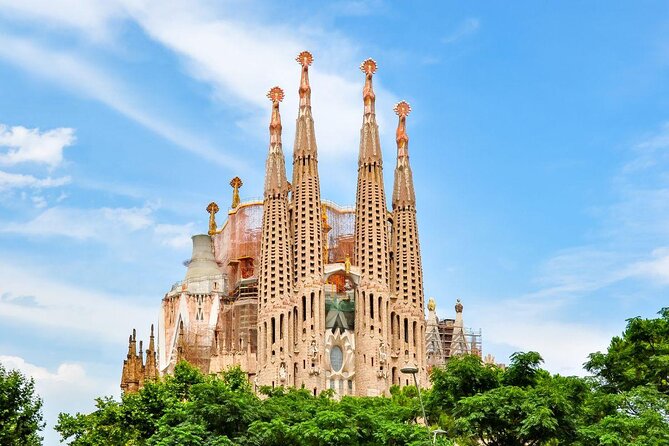
- Sagrada Família as the grand finish: you’ll see multiple façades from the outside and get the long, surprising story behind its construction—while noting it’s still unfinished by Gaudí.
Why this Gaudí-and-Modernism route fits a 2.5-hour day
This tour is built for first-timers who don’t want to guess. Barcelona’s modernism can feel like a wall of stone details—fun, but overwhelming. Here, the order matters. You start at Plaza de Catalunya, then move into Eixample, and you end at Sagrada Família. That flow helps your brain connect what you see in each zone to the next idea.
Also, it’s private, so you’re not stuck in a cattle line. The experience is designed around discussion time and a relaxed pace, which is especially helpful if you’re traveling with seniors or anyone who likes to pause and ask questions.
Finally, the tour is priced at $66.08 per person for about 2 hours 30 minutes, which makes sense when you think about what you get: a guided explanation plus a route that focuses on major modernist landmarks spread across a logical walking path.
You can also read our reviews of more tours and experiences in Barcelona.

Plaza de Catalunya: the city split that sets up everything else
The walk begins at Plaza de Catalunya, a famous square that acts like a hinge between two worlds: the old city on one side and the modernist Eixample on the other. That physical split matters because it explains why Eixample feels different from the older streets. You’re not just traveling across Barcelona—you’re moving between chapters.
From here, the guide sets the context: you’ll hear about the evolution of Barcelona and about marks left by fighting in the Spanish Civil War that can still be seen. Even if you’ve heard that history before, having it tied to where you stand makes it more real. It also gives you a lens for the rest of the walk: modernism isn’t just decoration. It’s tied to who had money, who had influence, and what people wanted the city to become.
This stop stays light on logistics and doesn’t require you to pay an admission ticket, so it’s a good reset point before you step into the more decorative side of Barcelona.
Passeig de Gràcia: where Catalan bourgeois life turns into architecture
Next you move to Passeig de Gràcia, one of the most famous streets in Barcelona. The tour focuses on the street’s role as the luxury boulevard of Catalan bourgeois families in the 19th century and into the early 20th century. This framing is smart. It helps you understand why the buildings look the way they do: when a wealthy class invests in an address, it often shows up in every façade choice.
The time spent here is short but purposeful. You’re given enough to orient yourself and absorb the vibe without turning the afternoon into a long, repetitive stroll. And because the walk is guided, you’re not just staring at pretty façades. You’re learning what symbols and design choices mean in the city’s social language.
The stop is also admission-ticket-free, which keeps the value focused on guidance rather than paying repeatedly for entry.
Bancs Fanals: read the street the way a modernist would
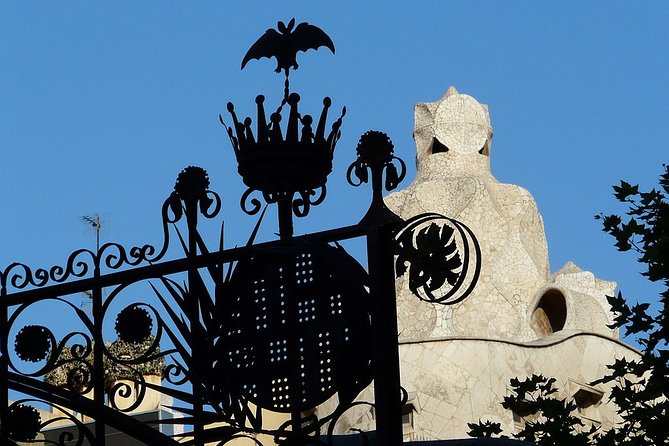
Right along the route, you’ll pause at Bancs Fanals, the elaborate modernist lampposts that decorate Passeig de Gràcia for more than a century. These aren’t just street furniture. The tour points out how they’re full of symbols and details, and that matters because it trains your eye.
If you’ve ever looked at a lamppost and thought it was purely functional, this is a useful correction. Modernism often treats public space like a canvas. When you learn to notice the “hidden” messages in smaller elements like street fixtures, the larger façades start to make more sense.
This stop is also free to view (no ticket needed), but it can become one of the most memorable parts because it makes you look closer.
Casa Lleó i Morera and the modernism idea of ownership
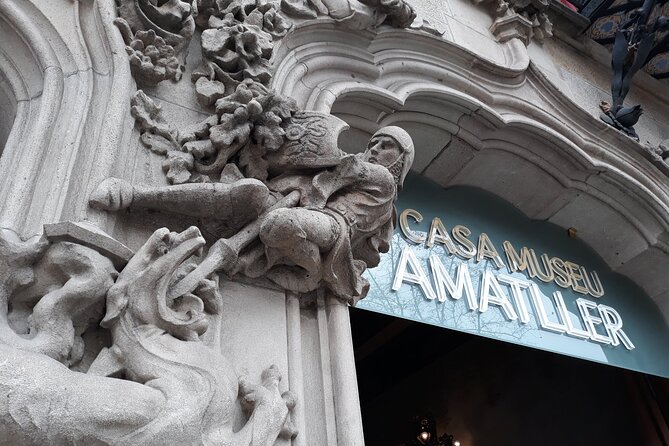
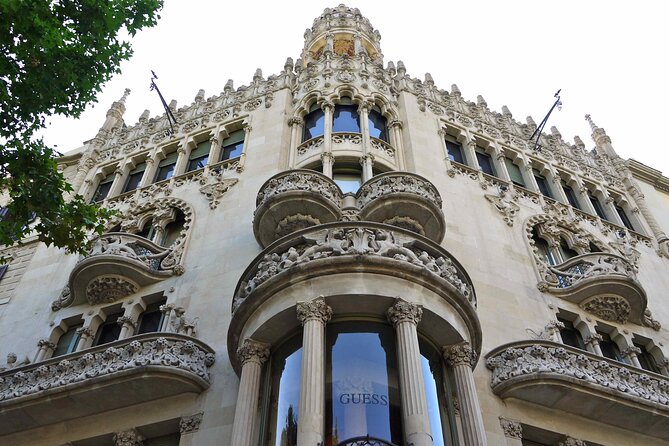
The heart of the experience is your time in the Manzana de la Discordia, a block famous for its modernist buildings. You’ll spend time at Casa Lleó i Morera, designed by architect Domènech i Montaner at the beginning of the 20th century.
What makes this stop work is the way the tour connects the building to its people and ideas. The explanation isn’t only about style. You’ll hear that the house is full of details about the life and thoughts of both the architect and the owner, and that the façade carries secrets you’re encouraged to look for.
In plain terms: you’re learning how to “read” Casa Lleó i Morera rather than treating it like a quick photo stop. That’s one of the best ways to get value out of modernist architecture—spend a little time decoding, and the building stops feeling random.
Even if you’re not a hardcore architecture person, this kind of guided symbolism helps you connect the look of the façade to the personality behind it.




Casa Amatller (Amattler) and its chocolate-era symbolism
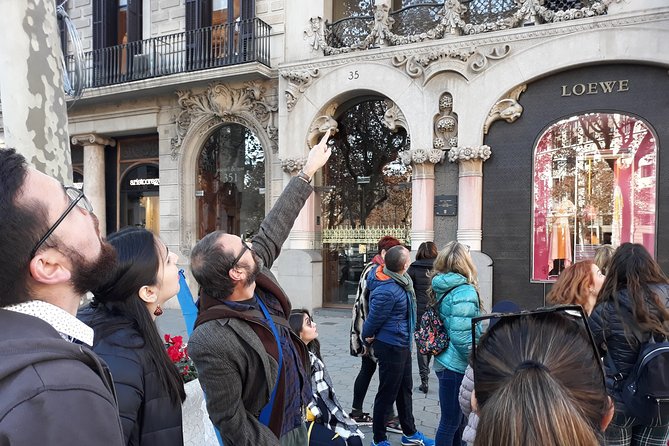
Another highlight in the Manzana de la Discordia is Casa Amatller (listed as Casa Amattler). This building is tied to a family of chocolate producers, and the tour uses that detail to connect modernism to everyday economic power.
The guide walks you through the history of chocolate at the time and the life of the Amatller, with a focus on the symbols hidden on the façade. This is one of those moments where you start to see a theme across the whole route: wealth didn’t just buy better materials. It bought identity, and it turned façades into messages.
There’s also a practical bonus here. It’s possible to go for free to the inner courtyard of the house to admire elements like the staircase, the old elevator, and refined sculptures. Even if you don’t go inside a full museum-style space, that courtyard visit can give you a different perspective than street-level viewing alone.
Sagrada Família: the outside facades and why Gaudí left it unfinished
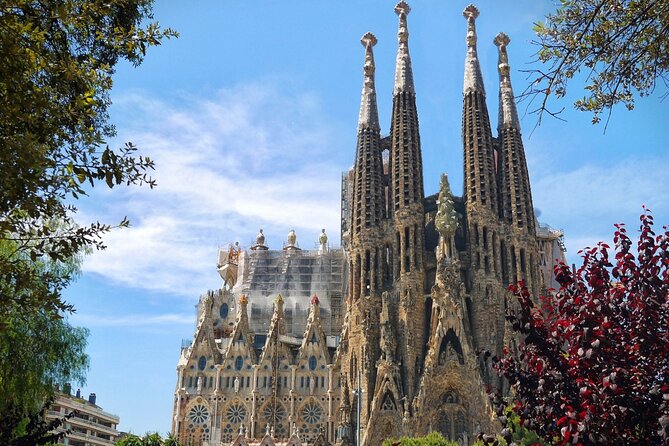
The tour finishes in a grand way: outside Sagrada Família, ending in front of the basilica. You’ll spend about 30 minutes looking at its various façades from the outside, and you’ll hear a surprising and long story about its history and construction.
The key point the tour emphasizes is that it’s still incomplete by Gaudí, and that fact changes how you interpret what you see. Instead of thinking of Sagrada Família as a single finished monument, you’re asked to see it as a construction story—something ongoing, something shaped over time. That framing makes the outside views more interesting, even if you’re not going in.
If you plan to visit Sagrada Família later during your trip, this tour is a strong “primer.” It gives you a way to understand what you’re seeing when you return, instead of walking in cold.
Casa Malagrida: a bourgeois house with Argentina–Spain decoration
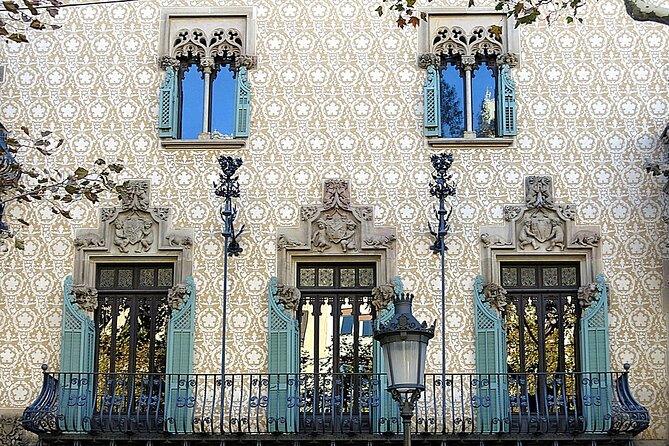
On the way, you’ll also see Casa Malagrida, described as the first example of a modernist bourgeois house on the route. The story centers on Señor Malagrida, a rich tobacco industrialist.
Here’s what makes the stop more than just an architectural detour: the guide explains his life between Argentina and Spain and shows how the façade decoration connects to that personal history. That’s the kind of storytelling that helps you understand modernism as a social document. It’s not only about curves and ornament. It’s about identity—where someone came from, what they believed, and what they wanted to display.
Time here is enough to appreciate the concept and the façade choices, without dragging the tour pace down.
Pickup, mobile tickets, and practical logistics that matter
This is a private tour/activity, so only your group participates. That generally means you’ll get more flexible pacing than a large group tour—useful if someone in your party needs slower breaks.
You can also get pickup offered, but the provided details say the start point is at Apple Passeig de Gràcia (Pg. de Gràcia, 1, L’Eixample). So it’s worth confirming how pickup works for your booking date and where you’ll meet your guide.
You’ll likely use a mobile ticket, which is convenient. It’s one less thing to manage on a walking day.
Price and value: is $66.08 per person worth it?
At $66.08 per person for roughly 2 hours 30 minutes, the value comes from the combination of (1) a guided narrative that connects multiple stops and (2) time-efficient coverage of Eixample modernist landmarks.
A lot of architecture tours fail because they only list buildings. This one focuses on how the city changed and why modernism looks the way it does. That kind of context tends to make the walk feel more substantial than just “we saw pretty façades.”
Also, many parts of the route are ticket-free to view, and that keeps your spend from climbing with each stop. Add in that you’ll end at Sagrada Família with a guided explanation, and you’re basically getting an educational primer plus a route designed to make each building easier to understand.
One caution: you’re paying for the guide more than paid admissions. So if you’re the type who wants purely self-guided sightseeing with minimal explanation, this might feel less satisfying. If you want connections and context, it’s strong value.
Who should book this private Modernism walk
I’d book this if:
- You’re in Barcelona for the first time and want a clear modernism storyline without spending hours researching.
- You enjoy architecture but want help noticing details—especially symbols and façade “messages.”
- You’re traveling with someone who appreciates pacing and flexibility; the tour is noted as adaptable for seniors.
- You want Sagrada Família to feel more meaningful when you see it, not like a quick photo moment.
I’d reconsider if:
- You want lots of indoor time and museum-style touring, because this route emphasizes outdoor viewing and guided context.
- Your trip dates are tight and you dislike weather risk, since it requires good weather.
Should you book the Gaudí and Modernism private walking tour?
Yes—if your goal is to understand Barcelona’s modernism, not just collect images. The route is efficient: it starts at the city’s big historical hinge (Plaza de Catalunya), walks the luxury and symbolism of Passeig de Gràcia (including Bancs Fanals), and lands you at Sagrada Família with a guided explanation of what you’re seeing outside and why Gaudí’s story is still unfinished.
Book it if you like architecture with context and you want your eyes trained. If you’re chasing mostly quiet, unstructured wandering, you might prefer to go self-guided. But for a focused, guided modernism day, this one earns its price.
FAQ
How long is the Gaudí and Modernism private walking tour?
It lasts about 2 hours 30 minutes (approx.).
Is this tour private?
Yes. It’s a private tour/activity, so only your group participates.
What language is the tour offered in?
It’s offered in English.
Where does the tour start and where does it end?
It starts at Apple Passeig de Gràcia, Pg. de Gràcia, 1, L’Eixample, 08007 Barcelona, Spain. It ends in front of the Sagrada Família in the Eixample.
Do I need paid tickets to see the stops?
The itinerary notes admission ticket free for key stops like Plaza de Catalunya, Passeig de Gràcia, and Bancs Fanals. It also says it’s possible to go for free to the inner courtyard of Casa Amattler/Amatller to admire features like the staircase and sculptures.
What if the weather is bad or I need to cancel?
This experience requires good weather. If it’s canceled due to poor weather, you’ll be offered a different date or a full refund. You can also cancel for free up to 24 hours in advance for a full refund.