REVIEW · BARCELONA
Gothic Quarter Barcelona Tour with Audioguide
Book on Viator →Operated by TouringBee · Bookable on Viator
Gothic lanes, but with room to breathe. This is a self-guided walk with an audio app, so you can learn what’s behind Barcelona’s monuments without getting trapped in a group pace. I like that the route is designed for wandering, and you still get guided context as you move from Plaça de Catalunya into the Gothic Quarter and beyond. One thing to weigh: it’s not a live guide, so you’re responsible for staying on the map and keeping up with your own timing.
If you want a “see it, understand it, then go your way” kind of Barcelona day, this works well. The loop runs about 1 hour 30 minutes (approx.), and it mixes big sights like Barcelona Cathedral with hands-on city energy like La Rambla and the Boqueria food market. Bring your own headphones, and you’ll enjoy the freedom; forget them, and the whole thing becomes a lot less fun.
In This Review
- Key points before you go
- Self-guided by app: how this walking tour really works
- Starting at Plaça de Catalunya: the city’s switchboard
- Parroquia Santa Anna and Barcelona Cathedral: Gothic shapes up close
- Palau Reial Major: medieval power in a smaller footprint
- Palau de la Generalitat: Catalonia’s seat of government
- Plaça Sant Felip Neri and Santa Maria del Pi: two very different church experiences
- La Rambla and La Boqueria: when the walking becomes food time
- Plaça Reial, Mirador de Colom, and Maritime Museum: Barcelona’s story turns coastal
- Port Vell and Rambla del Mar: slow down by the water
- Price and value: what $8.27 buys you (and what it doesn’t)
- Who should book this tour (and who might not love it)
- Should you book this Gothic Quarter audio walk?
- FAQ
- How long is the Gothic Quarter Barcelona tour with audioguide?
- Where does the tour start and end?
- Is this tour guided by a person?
- What’s included in the price?
- Are entrance tickets included?
- Do I need headphones?
- Can I cancel for a refund?
Key points before you go
- Audio guide with 21 recordings to follow the landmarks in order, at your pace
- Offline map + GPS route so you can navigate without constantly chasing your phone signal
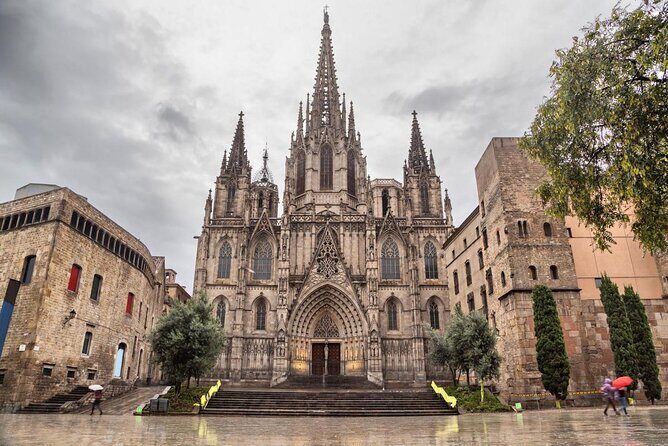
- Learn Gothic and civic Barcelona through stops like Barcelona Cathedral, Palau Reial Major, and Palau de la Generalitat
- Market time built in with Mercado de La Boqueria and snack-stopping options nearby
- Sea views included with Port Vell, Mirador de Colom, and the wooden Rambla del Mar bridge
- You control the pace with a maximum of 20 travelers and no human guide involved
Self-guided by app: how this walking tour really works
This isn’t a bus tour or a guided walk with a person at the front. Instead, you buy a mobile ticket and use an audio guide app on your iPhone or Android. After you activate your purchase, you follow the route on the mobile app map while listening to the recordings tied to specific stops.
What I like about this style is simple: you can stop for a photo, pause for a coffee, or linger at a church doorway without waiting for anyone else. It’s also easy to tailor the route to your energy level since you’re not managing a group dynamic.
The biggest practical detail is also the most important one: headphones are not included. If you want the “stories behind the stones” part of the tour, pack a pair before you leave your hotel. Also note that the audio guide is available anytime, and the date and time shown at checkout are approximate—so you can usually start when you’re ready.
You can also read our reviews of more tours and experiences in Barcelona.

Starting at Plaça de Catalunya: the city’s switchboard
Your walk begins at Plaça de Catalunya in the Eixample area. This square is a natural launch point because it connects Barcelona’s older heart with the more modern grid of Eixample. If you’re new to the city, it’s a smart way to orient yourself before you slip into the medieval streets.
Expect a lively, people-watching start: fountains, greenery, and iconic sculptures. It’s the kind of place where you can take 3 minutes to get your bearings, spot landmarks, and decide where you want to spend extra time later.
Parroquia Santa Anna and Barcelona Cathedral: Gothic shapes up close
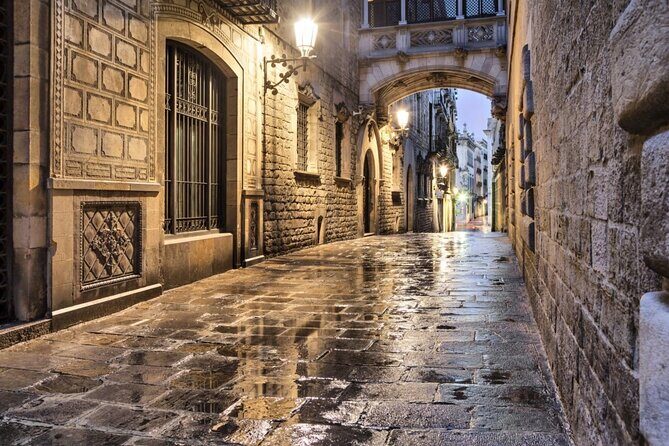
After starting at Plaça de Catalunya, you enter a more sheltered, story-filled part of town. The route includes Parroquia Santa Anna, described as a 12th-century church tucked into the Gothic Quarter lanes. You’ll get a moment of calm as you step inside, with attention drawn to its Gothic architecture, serene atmosphere, and stained glass.
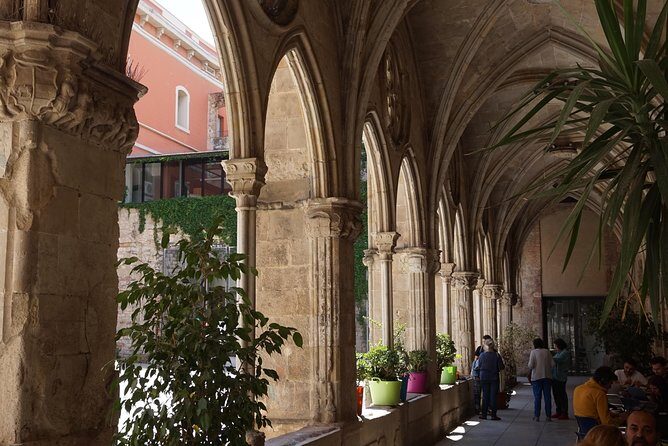
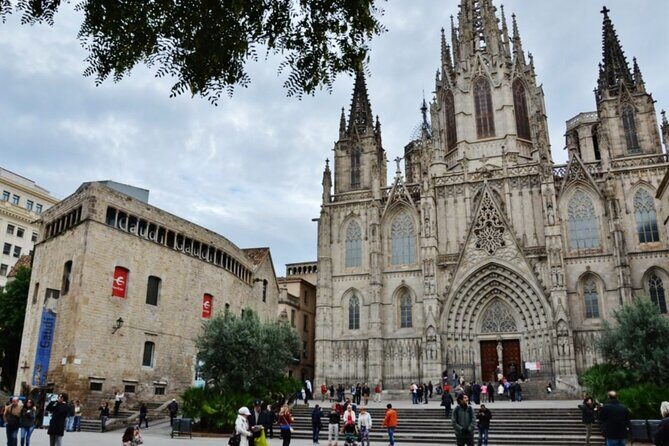
From there, you reach Barcelona Cathedral, one of the anchors of the Gothic Quarter. This is the stop that usually makes first-time visitors sit up straight. The cathedral combines Gothic and neo-Gothic elements, and the experience is not only about the exterior façade. You’ll also be pointed toward the chapels and the cloister, which tend to feel quieter and more contemplative than the street.
A useful detail for planning: the tour notes panoramic views from the bell tower. If you want a skyline moment, this is one of the places to look into, but remember entrance fees aren’t included in the tour price. So your decision here is about priorities: views versus keeping the trip budget simple.
Palau Reial Major: medieval power in a smaller footprint
Next up is Palau Reial Major, a historic palace tied to counts of Barcelona and kings of Aragon. This stop is appealing for two reasons.
First, it gives you a different angle on the Gothic Quarter. You’re not just looking at sacred buildings; you’re seeing how civic and royal authority lived in stone—courtyards, medieval architecture, and the ceremonial spaces where events unfolded. Second, it highlights the Saló del Tinell, a named interior space that matters for understanding why this place mattered.
In a normal guided tour, you might get a fast glance and move on. With audio, you can slow down and really read the room—literally—if the place lets you linger. Just be aware that palaces and official buildings can have rules about where you can stand or photograph.
Palau de la Generalitat: Catalonia’s seat of government
The route then shifts from royal history to modern political identity with Palau de la Generalitat de Catalunya. This is Catalonia’s seat of government, so the audio context here is about how architecture intersects with power and autonomy.
You’re guided to the Gothic façade and an inner courtyard, plus a key interior space: Saló de Sant Jordi. If you enjoy civic history—how countries and regions narrate themselves through institutions—this is one of the stronger stops on the route.
Practical tip: because this is a government building, the atmosphere can be more formal than a church. You’ll probably want to keep your phone use and movement respectful while you listen to the audio and follow along.


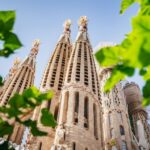


Plaça Sant Felip Neri and Santa Maria del Pi: two very different church experiences
Two church stops in this route make a good contrast: Plaça Sant Felip Neri and Santa Maria del Pi.
Plaça Sant Felip Neri is described as a serene square where traces of the Spanish Civil War still appear on church walls. That detail changes the mood. Instead of only admiring medieval styling, you’re also invited to notice how history leaves marks you can still see—often without loud explanations.
Then comes Santa Maria del Pi, a Gothic basilica famous for its soaring spires and a rose window. The audio points you toward the 14th-century interior and the chance to climb the bell tower for panoramic views. This is the kind of stop that works whether you’re a church person or not, because the exterior lines and window details give you plenty to focus on even if you keep it brief.
If you’re short on time, pick your moment. I’d choose either the tower view for the wide perspective or the rose-window close-up for architectural detail. Trying to do everything can turn even a great stop into a checklist.
La Rambla and La Boqueria: when the walking becomes food time
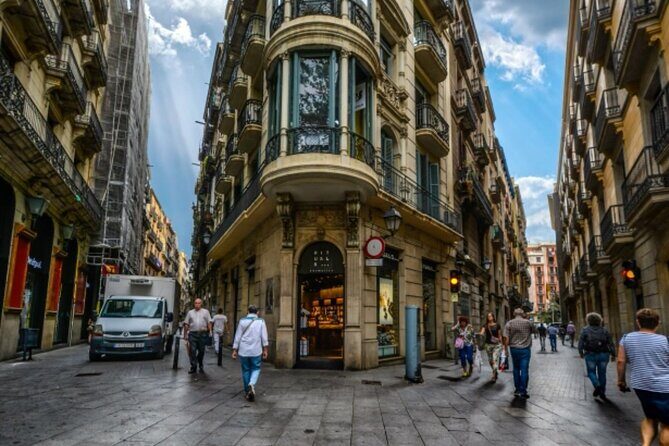
Now you hit La Rambla, Barcelona’s famous boulevard. The audio tour treats this as a shift from quiet stone to street life—shops, cafés, and street performers. It’s a good reminder that the Gothic Quarter is not a museum bubble. It’s part of a living city.
Importantly, La Rambla also functions as your gateway to Mercado de Sant Josep de la Boqueria. The route calls it a world-famous food market, and the vibe here is exactly what you’d expect: seafood, cured meats, fresh produce, and an easy path to grabbing a quick bite.
One practical note: food and drinks aren’t included. That’s actually helpful, because you can decide how you want to spend. You can do a small tasting budget, or treat it like a full meal plan if you’re hungry.
Also, the market can be crowded depending on the time of day. Since this is self-guided, you can adjust by listening to your audio at the edges and doing the tastings where you can move comfortably.
Plaça Reial, Mirador de Colom, and Maritime Museum: Barcelona’s story turns coastal
After the market, you move to Plaça Reial, lined with palm trees and known for the iconic Gaudí lampposts. This is where the route starts to feel more Mediterranean—open space, relaxed strolling, and a setting that’s especially good in the evening.
From there, you reach Mirador de Colom, the Columbus Monument viewpoint. The audio guide notes that you can take an elevator to the top for panoramic views, and you can also check out an exhibition room for history context. If you’re the kind of person who likes seeing the city layout from above, this stop pays off.
Then you’re guided to the Maritime Museum, located in a medieval shipyard. This is a great change of pace from Gothic architecture because it connects Barcelona to the sea through ship replicas, navigational instruments, and maritime art. If your Barcelona interest runs beyond buildings—trade, exploration, port life—this is one of the most meaningful segments of the route.
Time saver idea: if you want the museum context but don’t want to spend hours inside, you can listen to the audio segment while you focus on the items the app points out and then decide how far you go.
Port Vell and Rambla del Mar: slow down by the water
Finally, you reach Port Vell, Barcelona’s old port area. The route frames it as a waterfront promenade with palm trees, superyachts, and seafood nearby. You’ll also have options around the area like the Barcelona Aquarium and Maremagnum mall, plus the sandy Barceloneta Beach close by.
This is a good part of the day to take a breath. The sea air and open walking space give your legs a break after tighter lanes near the cathedral and churches.
Then there’s Rambla del Mar, the wooden footbridge described as an undulating walkway connecting you toward the maritime world. It’s lined with restaurants and shops, and the views of Port Vell and the Mediterranean are a big part of why it’s on the route. If you want a calm finish, this is where I’d focus on walking slowly and letting the scenery replace the need to “get through” stops.
Price and value: what $8.27 buys you (and what it doesn’t)
At $8.27 per person for an approximately 1.5-hour self-guided experience, the value comes from what’s included rather than what’s included inside monuments.
You get:
- an audio guide app for iPhone and Android
- offline map + GPS route
- 21 audio recordings plus illustrations to help you recognize landmarks
- 1 year of access in the language of your choice
- a mobile ticket
That’s a lot of guidance for a small price—especially if you hate feeling lost in a city with complicated streets. The independence factor is real here: no waiting for a group, no awkward question lines, no pressure to keep up.
What you don’t get is also important. The tour does not include food and drinks, and it does not include entrance fees/tickets. Some stops listed for this route show admission as free, but if you decide to pay for specific experiences like tower access or museum entry, you’ll want to budget those separately.
A last value angle: the max group size is listed as 20 travelers. Since it’s self-guided, that number mainly signals the type of product, but it also supports the idea that you’re not dealing with a massive crowd organized around a single start time.
Who should book this tour (and who might not love it)
This experience is a strong match if you:
- want a self-paced walk through the Gothic Quarter and nearby waterfront areas
- like learning through audio while you move, not sitting in one place
- enjoy both architecture and city life, from Barcelona Cathedral to La Rambla
- would rather carry a phone and follow a route than manage a group schedule
You might like something else if you:
- want a live human guide to answer questions on the spot
- don’t enjoy planning your timing around multiple stops
- can’t or don’t want to bring headphones
It also helps if you’re comfortable walking. The route includes places like Port Vell and Rambla del Mar, which means you’re not just doing a tight “churches-only” loop.
Should you book this Gothic Quarter audio walk?
Yes, with a few common-sense conditions. If you’re happy to explore at your own pace, you’ll likely love the mix: Gothic Quarter landmarks, civic Barcelona at Palau de la Generalitat, food energy at La Boqueria, and coastal views around Port Vell and Rambla del Mar. The audio format turns many stops into something more than photo opportunities.
Before you buy, do two things: pack headphones and decide whether you’re likely to pay extra for tower views or museum entry. If you do that planning, the $8.27 price feels less like a bargain gimmick and more like a smart way to get context without paying for a guided group day.
FAQ
How long is the Gothic Quarter Barcelona tour with audioguide?
It takes about 1 hour 30 minutes.
Where does the tour start and end?
The tour starts at Plaça de Catalunya, Eixample, 08002 Barcelona, Spain, and it ends back at the meeting point.
Is this tour guided by a person?
No. It’s self-guided using a mobile app. You follow the route on the app map and listen to the audio recordings.
What’s included in the price?
You get the audio guide app for iPhone and Android, an offline map with the route, 21 audio recordings, illustrations to recognize landmarks, and 1 year of access in the language of your choice.
Are entrance tickets included?
Food and drinks are not included, and entrance fees or tickets are not included in the tour price.
Do I need headphones?
Yes. Bring your own headphones since they are not included.
Can I cancel for a refund?
Yes. You can cancel for free up to 24 hours in advance for a full refund. If you cancel less than 24 hours before the start time, the amount you paid is not refunded.