REVIEW · BARCELONA
Gothic Quarter & Beyond: Leisurely Local Discoveries
Book on Viator →Operated by Icono Spain Tours · Bookable on Viator
Barcelona has layers, and this walk shows them. This 3.5-hour route through Barcelona’s Gothic Quarter focuses on the quieter corners—convents, chapels, and centuries-old sites—so you get the story in plain language, not just postcard views. I especially liked the small-group feel, with lots of chances to ask questions as you go, plus plenty of moments to photograph lesser-known details.
I also loved how the guide explained what matters. In my case, Laura was clear and easy to follow, and she didn’t stop at history—she also shared practical ideas for where to eat and what to look for afterward. That kind of guidance makes the whole afternoon feel smoother.
One thing to keep in mind: the pace is walking-first, with short stops (many are around 10 minutes). And since the experience requires good weather, you’ll want comfortable shoes and a backup plan if conditions change.
In This Review
- Key takeaways before you go
- Why this Gothic Quarter route is a good use of 3½ hours
- Starting at Palau de la Música: a landmark with real context
- Centre Cívic Convent de Sant Agustí: old walls repurposed for modern Barcelona
- Sant Pere de les Puelles: how a monastery shaped (and got shaped by) the city
- Capella d’en Marcús: a Roman road, a Romanesque chapel, and help for travelers
- Basilica dels Sants Martirs Just i Pastor: medieval grandeur in an easier corner
- MUHBA Temple d’August: Roman columns that somehow survived everything
- Palau de la Música Catalana meets Frederic Marès: artsy Barcelona past the obvious sights
- The snack, the photos, and the guide’s value (not just the landmarks)
- Price, pace, and weather: what $61.54 buys you
- Who should book this tour
- Should you book Gothic Quarter & Beyond?
- FAQ
- How long is the tour?
- Is the tour offered in English?
- How big is the group?
- Are admissions included for the stops?
- Where do we meet and where does it end?
- What if the tour is canceled due to weather, or if I need to cancel?
Key takeaways before you go
- Small group, lots of Q&A: Maximum 12 people means you’re not shouting to be heard.
- Eat like a local: You get a traditional snack, not just sightseeing photos.
- Short stops, smart route: Each stop is brief, so you’ll see more variety with less queue-waiting.
- Roman-to-Gothic mix: You’ll spot surviving Roman elements right in the middle of the Gothic Quarter.
- Photo-friendly, lesser-visited streets: Your guide helps you aim at spots most people miss.
Why this Gothic Quarter route is a good use of 3½ hours
If you’ve ever walked into the Gothic Quarter and felt like you were following your own instincts (with mixed results), this tour fixes that. You’re guided through a chain of sites that connect over centuries—church to convent to chapel to Roman columns—so the city starts to make sense as one long story.
The value here is not just the price. You’re paying for timing, context, and a route that avoids feeling random. Plus, many stops are marked as free admission, so the cost goes toward your guide, the walk, and the snack, rather than adding entrance fees that can sneak up later.
And yes, you’ll get photos—but not the usual “everyone takes the same shot” kind. The walk is built to give you angles at spots that are quieter, smaller, and more characterful.
You can also read our reviews of more tours and experiences in Barcelona.

Starting at Palau de la Música: a landmark with real context
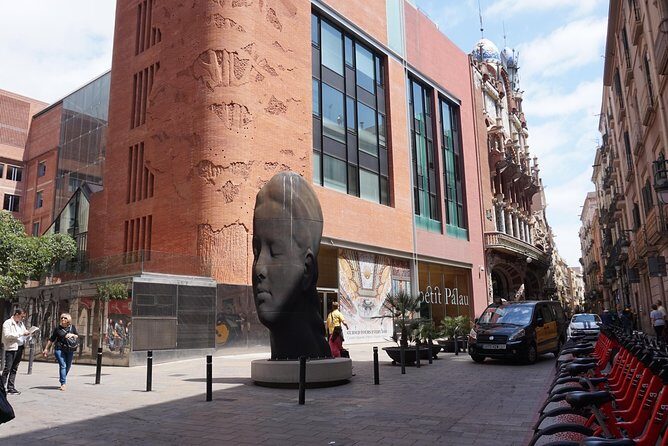
You meet near Carrer del Palau de la Música, and that’s a smart warm-up. The Palau de la Música Catalana is one of Barcelona’s big statements: it’s the only concert hall in the world declared a UNESCO World Heritage Site. It was designed by architect Domènech i Montaner as the home for the Orfeó Català choir, and it was funded by public donations—so it’s not just a building, it’s a community project.
Even if you’re not a music person, you’ll get why it matters. The design and the idea behind it give you a framework for what you’re about to see next: Barcelona’s medieval and cultural life wasn’t separate from art and public identity. It all ties together.
If you’re thinking ahead to photos, this is a good moment to slow down. You’ll be transitioning from open streets into a medieval maze, and that first visual anchor helps you “read” the neighborhood faster afterward.
Centre Cívic Convent de Sant Agustí: old walls repurposed for modern Barcelona
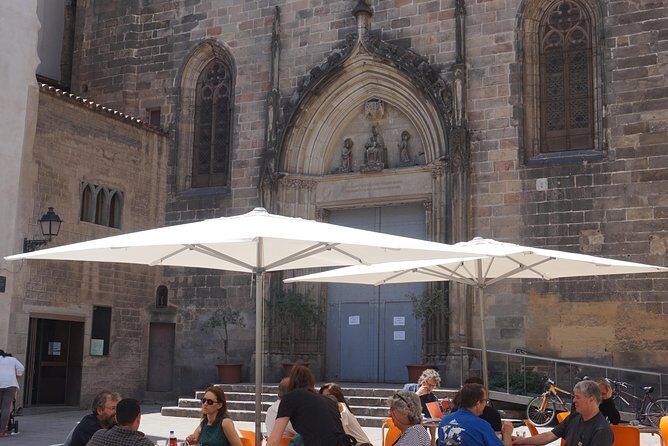
Stop one takes you to the Convent de Sant Agustí area, where dates do the talking. The earlier convent began in 1349, but the Augustinians left when the Fortress of the Ciutadella construction pushed them away. Between 1728 and 1750, a new convent and church were created on the replacement site.
Here’s why I like this stop: you see how a city doesn’t erase its past—it reuses it. Much of the older convent today houses the Ciutat Vella Civic Centre, the Barcelona Photographic Archive, and the Chocolate Museum. So even if you’re not stopping to buy tickets to those specific places, the setting already tells you something about how Barcelona treats heritage: keep it alive with new functions.
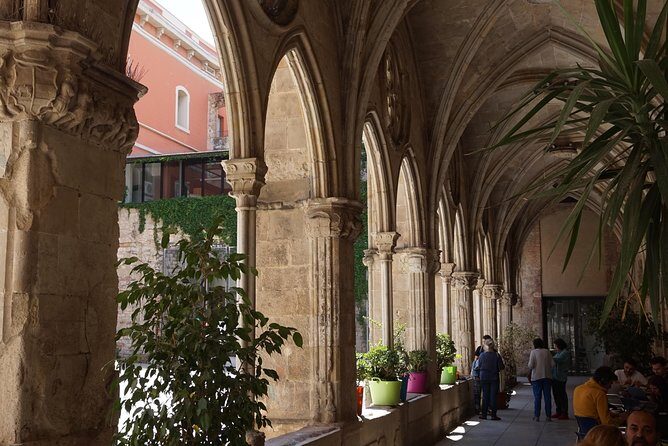
The Gothic Convent of Sant Agustí el Vell also conserves elements from the earlier complex, including a restored wing of the sanctuary and part of the church. In other words, you’re not just looking at a “historic photo.” You’re seeing surviving fabric.
A practical note: because the stop is around 10 minutes, don’t try to memorize everything. Use it to orient yourself—then let the later convent and chapel stops add detail.
Sant Pere de les Puelles: how a monastery shaped (and got shaped by) the city
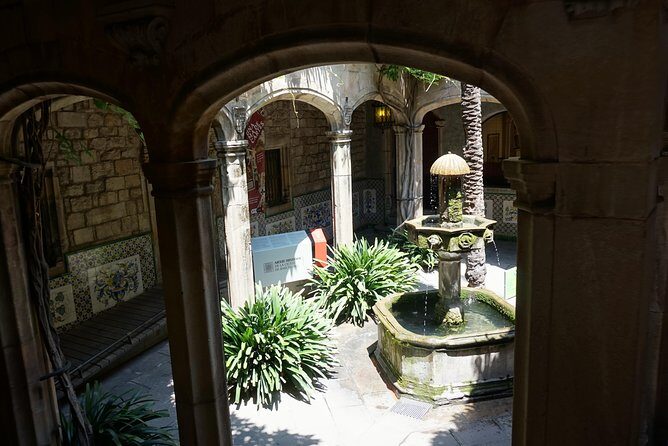
From one convent story to another, the tour heads to Sant Pere de les Puelles. Its history starts far back: the monastery was consecrated in 945 AD, and at that time it became Barcelona’s first convent of Benedictine nuns. The building began outside the city walls, which matters because it reflects how Barcelona expanded and where religious communities were positioned.
This stop is a lesson in how fragile things were. Over the centuries, the Romanesque building faced attacks by Arab troops and fires, and the religious community was expelled in the 19th century. After that, the nuns moved to a permanent site in Sarrià-Sant Gervasi in 1879.
What I like about this stop is the cause-and-effect feel. You’re not just hearing names and dates—you’re getting a sense of why the Romanesque form changed, why the community shifted, and how politics and conflict left physical marks on the city.
Drawback to expect: like many Gothic Quarter stops, it’s more about seeing the place in context than spending hours inside. If you want long museum-style time, this tour is more “guided sampling” than a deep-dive inside one single building.
Capella d’en Marcús: a Roman road, a Romanesque chapel, and help for travelers
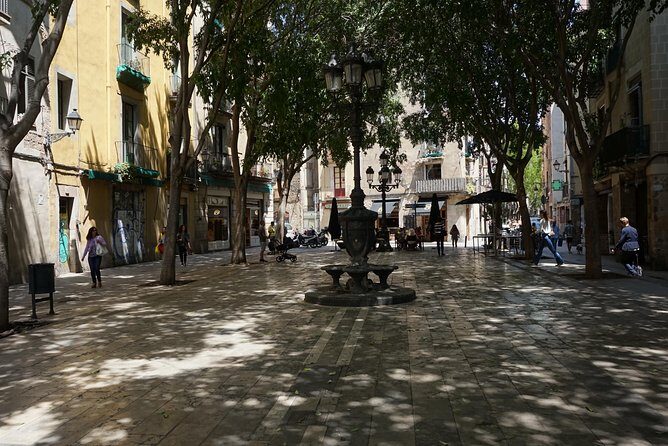
Next up is Capella d’en Marcús, tied to a Barcelona citizen named Bernat Marcús. He sponsored a small chapel in 1166 that was meant for travelers and also to act as a hospital for the poorest people in Barcelona.
That blend—religion plus practical care—is the kind of detail that turns a chapel from “just another church stop” into something you remember. The chapel initially carried the name Capella de la Mare de Deu de la Guia. It also sat in a right place because it was near the old Roman road that led to France.
So when you look at this stop, picture movement: people passing through, stopping to ask for help, and community support built into the landscape.
Because you’re there briefly, I suggest you use that window to look for the human clue. Ask yourself what kind of street life this would have served centuries ago. Even if you don’t know Catalan or Latin, the story is visible in the purpose.





Basilica dels Sants Martirs Just i Pastor: medieval grandeur in an easier corner
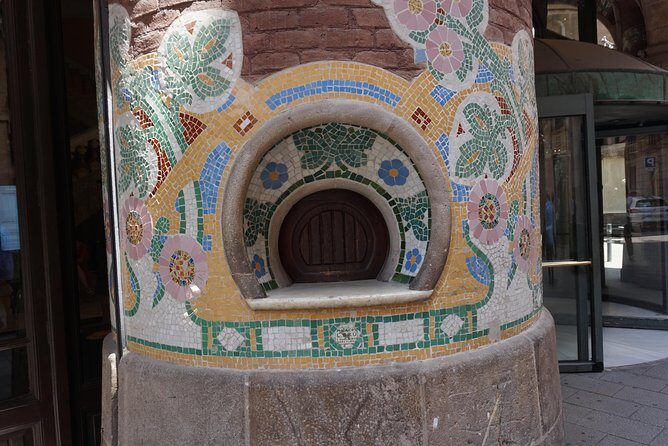
This segment focuses on Basilica dels Sants Martirs Just i Pastor, described as potentially Barcelona’s oldest church by tradition. Whether that exact claim is true or not, the key point for your visit is the feel of the place: it’s a 14th-century building in one of the Gothic Quarter’s most beautiful and least explored spots.
In practice, that means you can slow down a little. This isn’t one of those stops where you’re trying to squeeze through tour crowds every ten seconds. It’s a good opportunity to look at the way Gothic architecture creates mood—height, shadow, stone texture—without the constant interruption of the busiest attractions.
If you care about atmosphere (and who doesn’t in Barcelona?), this is one of the places where you’ll understand why people fall for the Gothic Quarter.
MUHBA Temple d’August: Roman columns that somehow survived everything
Now comes one of the tour’s most memorable “wait, what?” moments: MUHBA Temple d’August. You’ll find it in a building on Carrer Paradís, and it’s famous for a very specific reason—the four surviving columns from the Temple of Augustus.
The setting is almost comical in the best way. You see the columns inside a small medieval courtyard, and they’ve lasted through centuries of change. The columns are more than 2,000 years old, which makes Barcelona’s layering feel real instead of theoretical.
This stop is also a photo moment, but not because it’s flashy. It’s because it’s surprising. You’re used to thinking of the Gothic Quarter as medieval. Then a Roman structure quietly interrupts your assumptions right there under the same sky.
Time is brief here too, so don’t treat it like a full archaeological visit. Treat it like a punch of perspective.
Palau de la Música Catalana meets Frederic Marès: artsy Barcelona past the obvious sights
After the Roman and medieval stops, the tour returns you to Barcelona’s cultural side in a more modern way—with two very different institutions.
First, there’s the Palau de la Música Catalana again as the walk continues near your start point. This matters because it ties the route together: medieval faith and Roman foundations feed into later Catalan identity and public art. You’ll remember it more clearly because you’ve just walked through sites that show how Barcelona adapted and reused space.
Then you finish at Museu Frederic Mares in Plaça Sant Iu. This museum sits in the heart of the Gothic Quarter, in part of a former royal palace that once belonged to the Counts of Barcelona. The collection centers on objects and artworks collected by Frederic Marès throughout his life.
This ending works well because it gives you a way to continue the theme after the walk. Even if you don’t go deep into the museum exhibits during the tour time, just knowing it’s in a former palace—and that it’s tied to a collector’s personal archive—gives you a direction for what to look for next.
The snack, the photos, and the guide’s value (not just the landmarks)
The tour’s highlights aren’t only about famous buildings. There’s also a built-in rhythm: walk, pause, listen, look, take a photo, then repeat. That’s what makes the Gothic Quarter feel less overwhelming.
A big plus is the traditional snack. You get to taste something in the middle of the sightseeing instead of leaving it for later when you’re hungry and indecisive. It also keeps the tour from feeling like a checklist. Food is an anchor.
Then there’s the guide’s practical side. When your guide is clear—like Laura’s style described by visitors—you don’t just learn facts. You get usable ideas: where to eat next, what kinds of shopping are worth your time, and how to keep the day moving without wasting effort.
That’s hard to put a price on, and it’s why this kind of small-group walk often feels like better value than bigger, faster tours.
Price, pace, and weather: what $61.54 buys you
At $61.54 per person for about 3 hours 30 minutes, this is priced like a mid-range guided experience. The value comes from a few specific things you actually get:
- A small group (max 12), so the Q&A is realistic.
- A guided route through multiple major and lesser-known sites.
- A traditional snack included.
- Free admission listed at several stops, meaning you aren’t stacking entrance fees.
The main tradeoff is pace. With many stops around 10 minutes, you’ll get orientation and key highlights rather than long, unhurried time inside one place. That’s ideal if you like variety and want a grounded overview fast.
Also remember the weather requirement. If conditions are poor, the tour may be rescheduled or refunded. Since the whole thing is walking-heavy, you’ll enjoy it more if you plan for comfortable shoes and layers.
Who should book this tour
This one fits best if you:
- Want a guided Gothic Quarter walk without racing crowds
- Like architectural details and “why this place is here” explanations
- Prefer small groups where you can ask questions
- Want a practical add-on like a snack and ideas for what to do next
If you’re the type who wants hours inside one museum or you hate being outdoors, you might feel the short stop times. But as a way to understand Barcelona’s medieval and Roman layers in one afternoon, it’s a strong option.
Should you book Gothic Quarter & Beyond?
Yes, if you want an organized route that makes the Gothic Quarter feel understandable, not chaotic. The small-group format, the clear guiding style (including the kind of explanations Laura is known for), and the blend of convents, chapels, and even Roman columns create a day with genuine momentum.
I’d skip it only if you need long indoor time at a single site or if your schedule can’t flex with weather. Otherwise, it’s one of those experiences where the city starts speaking back—through stone, stories, and a snack that keeps you moving.
FAQ
How long is the tour?
It runs about 3 hours 30 minutes (approx.).
Is the tour offered in English?
Yes. It is offered in English.
How big is the group?
The maximum group size is 12 travelers.
Are admissions included for the stops?
Many stops list admission tickets as free. The tour includes a mobile ticket.
Where do we meet and where does it end?
Start: Carrer del Palau de la Música, C/ Palau de la Música, Ciutat Vella, 08003 Barcelona, Spain. End: Museu Frederic Mares, Plaça Sant Iu, 5, Ciutat Vella, 08002 Barcelona, Spain.
What if the tour is canceled due to weather, or if I need to cancel?
The experience requires good weather. If canceled due to poor weather, you’ll be offered a different date or a full refund. You can cancel for a full refund up to 24 hours in advance; cancellations less than 24 hours before the start time are not refunded.