REVIEW · BARCELONA
Horta Labyrinth Walking Tour in Barcelona
Book on Viator →Operated by Mediaticos en ruta · Bookable on Viator
The cool hush of a royal garden beats the city rush. This guided walk through Parque del Laberint d’Horta mixes mythology, palace-like views, and one famous cypress labyrinth that’s been charming people for centuries. It’s a different side of Barcelona: less postcard, more lived-in peace.
I especially love how the park’s design connects art and nature. You’re not just wandering paths—you’re learning how the garden grew from a 1794 estate into a landscaped stage inspired by French neoclassical and English romantic garden styles.
One drawback to know up front: the labyrinth experience can feel a bit short for people expecting an enormous maze, and some hedges may not look fully “mature.” If you like long, high-tension maze hunts, build in extra time to explore beyond the walk.
In This Review
- Key highlights you should care about
- Where the Laberint d’Horta story starts: 1794 meets Greek myth
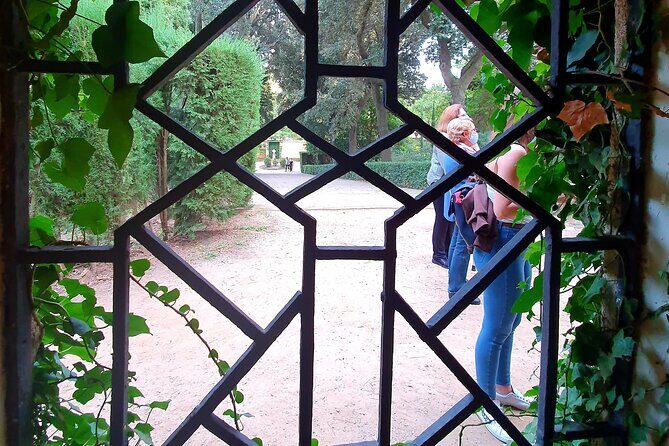
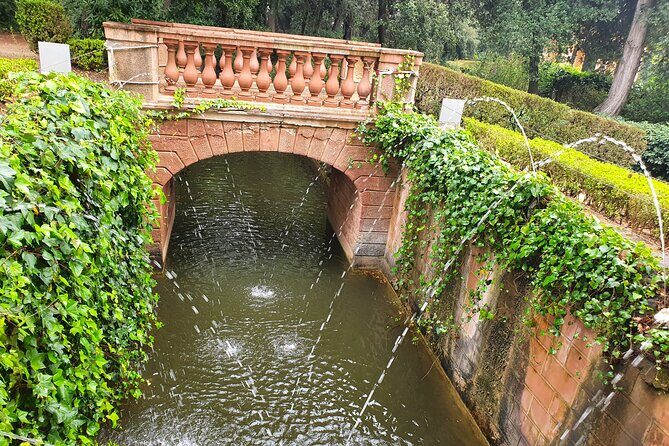
- What you’ll see on the walk: palaces, fountains, and garden squares
- The Desvalls and Lupià family background (and why it feels personal)
- The palace of the Marqués de Alfarrás and other architectural beats
- The heraldic fountain of the Pelícano: a small stop with a big theme
- Plaza del Reloj and Plaza de los Leones: formal garden rooms
- The garden of the Boxes and the domestic garden: design that teaches your feet
- Climb to the Belvedere and meet the Pavilion of Carlos IV
- The labyrinth: cut cypresses, royal footsteps, and a reality check
- How long it takes and what pace feels right (about 1 hour 45 minutes)
- Price and ticket value: what $16.22 really buys you
- Meet-up near Horta Velodrome: easy to find, easy to end
- Who this tour is best for (and who might want a different plan)
- Should you book the Horta Labyrinth Walking Tour?
- FAQ
- What is the duration of the Horta Labyrinth walking tour?
- How much does it cost?
- Where does the tour start and end?
- What time does the tour begin?
- Do I get a mobile ticket?
- How big are the groups?
- Is the tour dependent on weather?
- Is there free cancellation?
Key highlights you should care about
- A story-led guide explains the Desvalls and Lupià family and the garden’s hidden layers
- Mythology stops with Greek references like Egeria, built into the garden layout
- Neoclassical garden design shaped by Domenico Bagutti in the late 1700s
- A real royal connection: kings like Carlos IV, Fernando VII, and Alfonso XII walked these grounds
- Cool shade and water features help make a warm-day visit more comfortable
- A practical visit length that fits well into a half-day plan at a relaxed pace
Where the Laberint d’Horta story starts: 1794 meets Greek myth
What makes this place more than a pretty garden is how deliberate it is. Parque del Laberint d’Horta began as an estate in 1794, laid out with an eye toward Domenico Bagutti’s inspiration from French neoclassical formality and English romantic garden moods. The result is a park that feels theatrical, but you still move through it like a normal human on foot.
And then there’s the myth layer. As you walk, you’ll see sculptures and garden moments tied to Greek stories—so the place has something to “read” as you go. It turns a stroll into a guided experience where the garden’s layout actually makes sense.
You can also read our reviews of more walking tours in Barcelona



What you’ll see on the walk: palaces, fountains, and garden squares
You start in Horta’s green pockets and move through scenes that feel like separate little worlds—because that’s exactly how the park is arranged. One moment you’re looking at a palace façade and the next you’re in a quieter domestic section of greenery.
Here are the main garden stops and why they matter:
The Desvalls and Lupià family background (and why it feels personal)
The guide—an official #bcnlover—sets the tone by explaining the history of the Desvalls and Lupià family, the original owners. That context makes the garden feel less like an attraction and more like a carefully maintained estate with long-term taste. It also helps you understand why the park jumps between grand viewpoints and intimate corners.
If you like details—names, themes, and how places got shaped over time—this part gives your eyes something to latch onto.
The palace of the Marqués de Alfarrás and other architectural beats
You’ll pass through views tied to the palace of the Marqués de Alfarrás and the Subirana tower. These aren’t just backdrop structures. They help you see how the park balances showy architecture with walkable garden design.
A good sign you’re in the right place: you’ll notice the park is built around sightlines, so the “best view” often appears just as you turn a bend.
The heraldic fountain of the Pelícano: a small stop with a big theme
The heraldic fountain of the Pelícano is the kind of detail that makes you slow down. Heraldic symbols belong to a world of identity and family display, and placing that theme inside a garden tells you the estate owners treated this place like a statement.
Even if you’re not a fountain fanatic, this stop helps you feel the park’s logic: it’s planned, not accidental.






Plaza del Reloj and Plaza de los Leones: formal garden rooms
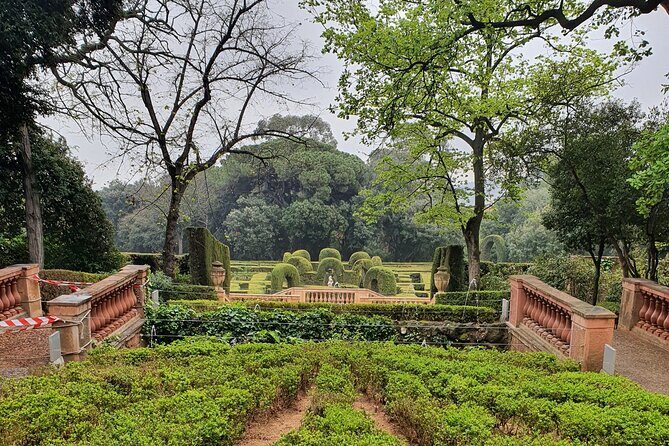
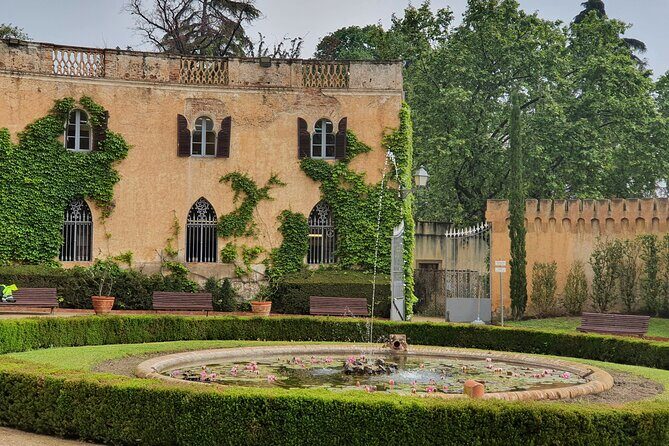
Later you’ll reach garden plazas like the Plaza de los Leones and the Plaza del Reloj. These work like indoor rooms, just with sunlight instead of ceilings. Because the park is compartmentalized, these spaces help break up the walking and keep the experience feeling structured.
The drawback is simple: if you’re racing through Barcelona and want one big continuous loop, these “rooms” can feel stop-and-start. If you’re okay with breaks and looking, you’ll enjoy the rhythm.
The garden of the Boxes and the domestic garden: design that teaches your feet
The garden of the Boxes and a more domestic garden area show the park’s control over shape and structure. It’s where the hedges and pathways start to feel like design tools rather than random greenery.
This section is especially helpful if you’re curious about how the labyrinth concept fits into the wider layout. You’ll start seeing the park as one big plan, not a series of unrelated sights.
Climb to the Belvedere and meet the Pavilion of Carlos IV
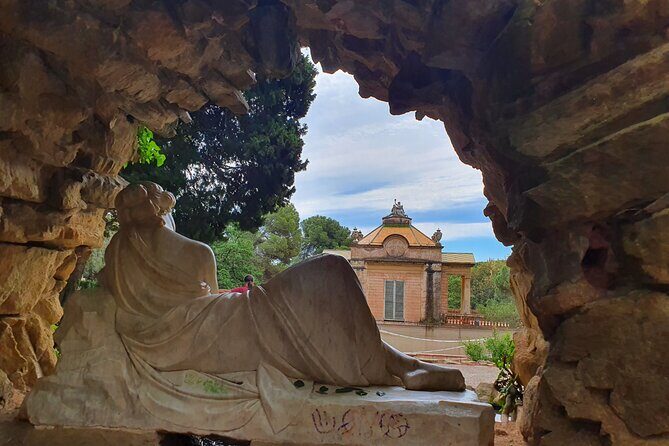
After those formal garden rooms, you’ll head toward the higher points of the park. The walk includes the Belvedere of the park, which is your payoff zone for putting in the effort—views and perspective that feel separated from the rest of Barcelona.
From there, you reach the pavilion of Carlos IV, inspired by architecture associated with Palladio. This is one of the big “architecture nerd” moments, but you don’t have to be a nerd to enjoy it. It simply adds a different flavor: classical elegance in the middle of landscaped nature.
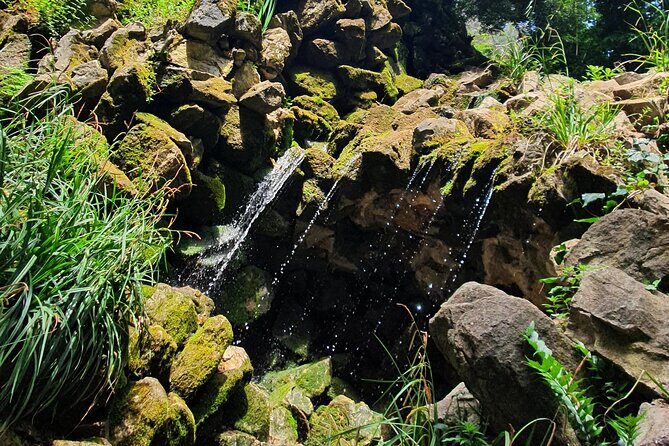
You’ll also visit the cave of the nymph Egeria, one of those myth-linked stops that makes the garden feel alive with stories. It’s the kind of moment that turns the park’s theme into something you can almost picture.
The labyrinth: cut cypresses, royal footsteps, and a reality check
The main event is, of course, the labyrinth. This maze is made with cut cypresses, and it has a reputation that goes beyond Barcelona’s usual tourist magnets. The park also has a famous royal association—kings including Carlos IV, Fernando VII, and Alfonso XII walked through this very space.
Here’s the practical side: a guided experience helps you engage with the maze instead of just wandering until your phone dies. And the labyrinth layout makes you notice tiny changes in height, turns, and what hedges block from view. That’s the point.
Reality check, though: some visitors found the labyrinth experience smaller or less dramatic than expected, and hedges may not be fully grown in every section. If your personal idea of a great maze is maximum size and maximum challenge, treat this as a pleasant puzzle rather than a multi-hour survival game.
How long it takes and what pace feels right (about 1 hour 45 minutes)
The walk runs about 1 hour 45 minutes. That’s long enough for story, sightlines, and several named stops, but short enough that you don’t feel trapped in a half-day plan.
If you’re visiting in warm weather, the park’s tree cover and the presence of water features can make a noticeable difference. One strong theme in people’s comments is that the garden feels cooler and calmer than central city streets. You’ll likely find you slow down naturally once you’re in shade and on smaller paths.
Tip for your enjoyment: wear comfortable shoes with grip. The park pathways can be uneven in places, and the labyrinth portion asks you to move carefully.
Price and ticket value: what $16.22 really buys you
The tour price is listed at $16.22 per person, and it includes a mobile ticket plus liability insurance. The admission part is handled as part of this experience, so you’re paying mainly for guidance and a planned route through the park’s highlights.
Here’s why that can be good value: the park is full of named features—palace, towers, plazas, and myth moments. Without a guide, you can still enjoy the scenery, but you might miss the reasons those places are there and how the garden was designed to direct your attention.
Also, note this park can have very different entrance costs depending on the day. One visitor noted free entrance on Wednesday and Sunday, with low-cost paid entry on other days. So if you’re visiting on a free day, you may feel the guided portion is the real value. If you’re visiting on a paid day, the overall deal can feel even easier to justify.
Meet-up near Horta Velodrome: easy to find, easy to end
The tour starts at Pg. de la Vall d’Hebron, 169 in the Horta-Guinardó area, with a start time of 10:00 am. You’ll finish at the Horta Velodrome area, specifically near Pg. de la Vall d’Hebron, 185—at the park exit in front of the entrance to the velodrome.
This matters because the park isn’t right in the middle of Barcelona’s main gallery of sights. Starting and ending in a defined area helps you build a clean plan around it. If you’re using public transit, being near transit access is a plus for avoiding wasted time.
One more practical detail: group size is capped at 20 travelers, so you’re unlikely to feel lost in a crowd.
Who this tour is best for (and who might want a different plan)
This is a great fit if you want:
- a garden walk with a clear story instead of a self-guided drift
- an experience that feels calmer than the city center
- a family-friendly outing that includes both playful and cultural elements
It’s also a good choice if you like “thematic places”—parks built with symbolism, architecture, and myth. The mixture of formal plazas, classical pavilions, and the Egeria cave gives you variety in a compact time frame.
If what you want is a huge all-day labyrinth-style adventure, you might feel the maze portion is over before you’re ready. In that case, plan extra time before or after for wandering the park independently.
Should you book the Horta Labyrinth Walking Tour?
Book it if you like structured walking and want the garden explained as you go—especially if you care about design, symbolism, and Greek-myth themed corners. The guide’s historical framing around the Desvalls and Lupià family adds real meaning, and the route keeps you moving through the park’s best scenes without guesswork.
I would skip or rethink it if you’re chasing a long, super-challenging maze. The experience is designed as a compact, scenic walk. Treat it as a short puzzle with a cool, calming atmosphere, not as an all-day quest.
If your schedule allows it, arriving at the 10:00 am start helps you make the most of the garden light and avoid peak heat.
FAQ
What is the duration of the Horta Labyrinth walking tour?
It runs about 1 hour 45 minutes.
How much does it cost?
The price is listed as $16.22 per person.
Where does the tour start and end?
It starts at Pg. de la Vall d’Hebron, 169, and ends at the Horta Velodrome area, near Pg. de la Vall d’Hebron, 185.
What time does the tour begin?
The start time is 10:00 am.
Do I get a mobile ticket?
Yes, the tour includes a mobile ticket.
How big are the groups?
The group size is capped at a maximum of 20.
Is the tour dependent on weather?
Yes. The experience requires good weather, and if it’s canceled due to poor weather, you’ll be offered a different date or a full refund.
Is there free cancellation?
Yes. You can cancel up to 24 hours in advance for a full refund. After that time, the amount paid isn’t refunded.