REVIEW · BARCELONA
Mon St Benet Self Guided Medieval Experience
Book on Viator →Operated by Mon St Benet · Bookable on Viator
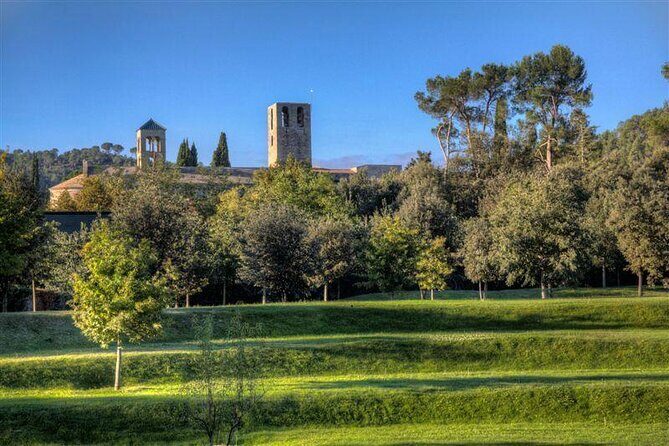
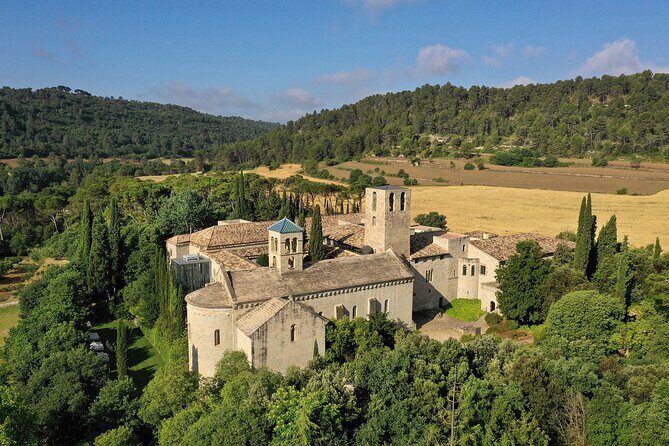
Món Sant Benet (Mon St Benet) is a 1,000-year-old monastery site just outside Barcelona, shaped into a self-guided experience with an audioguide. You walk the cloister, church, and wine cellar, while guided media helps you picture daily routines inside monastic walls.
What I especially like is the way this place connects Catalan history to what you can actually see. You’re not stuck with vague plaques. You get a route through the key areas, including the Montserrat gallery cells, and you learn how monks lived here and why the site matters.
One thing to consider: it’s self-guided and designed for about one hour, so if you want long, live Q&A or a slower pace, plan to arrive ready to move.
In This Review
- Quick hits you’ll feel right away
- Món Sant Benet near Barcelona: a medieval site with modern neighbors
- The self-guided audioguide experience: how the story actually works
- Entering the monastery church: where life gathered
- The cloister walk: quiet space with real purpose
- Wine cellar time: the work behind the prayers
- Montserrat gallery cells: the human scale of monastic life
- Natural grounds around the complex: don’t rush the air
- Modern Mon Sant Benet: culinary research, restaurants, and shops
- Pricing and value: what $18.51 buys you
- Who should book this self-guided medieval tour
- Practical timing: fit it into a Barcelona day
- Should you book Mon St Benet?
- FAQ
- How long is the Mon St Benet self-guided tour?
- What’s included in the ticket price?
- Is transportation to and from the monastery included?
- Is this experience self-guided?
- What parts of the monastery complex do you visit?
- Can I get a full refund if I cancel?
Quick hits you’ll feel right away
- Self-guided audioguide that delivers the story as you walk the route
- Cloister + church + wine cellar in a single, logical circuit
- Montserrat gallery cells and monastery rooms that add depth to the timeline
- One thousand years of monastic life explained through on-site sights and media
- Modern additions nearby, including a culinary research centre, plus restaurants and shops
- Small group cap (up to 40), even though you’re on your own with the guide
Món Sant Benet near Barcelona: a medieval site with modern neighbors
If you’re looking for a Barcelona-side day that feels real and grounded, this monastery is a strong pick. It sits just outside the city, in natural surroundings where you can shift gears from street life to stone, silence, and routine. The site pairs a medieval monastery with a modern culinary research centre, and you feel that contrast as soon as you walk in.
The experience is built around a route. You go from the big spiritual spaces to work spaces and back again. That matters because monastery life wasn’t only prayer and sermons. It was also maintenance, food, storing wine, and day-to-day chores that kept everything running.
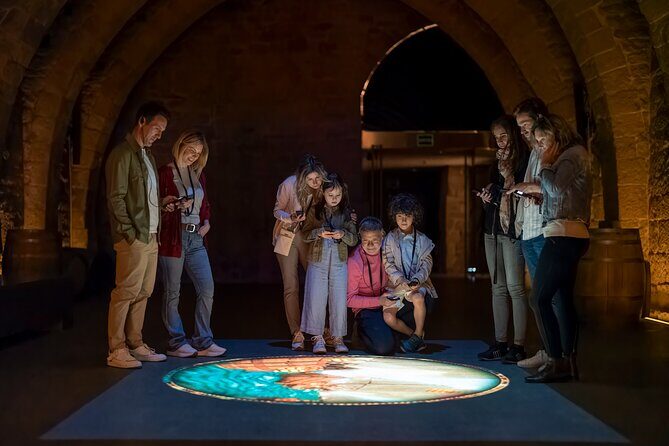
And yes, there’s a touch of showmanship here. The story is presented through audio and on-site media, including visual scenes tied to monastic work. That can help you understand what you’re looking at, especially if you’re not a medieval architecture expert.
You can also read our reviews of more guided tours in Barcelona

The self-guided audioguide experience: how the story actually works
This is a self-guided tour, but it doesn’t feel like you’re wandering with a map and guessing. You get an audioguide included with your ticket, and the explanations are designed to play as you move along the route.
That’s a big plus for two reasons:
First, you don’t lose time figuring out what’s next. The path through the monastery features is clear, and the audio support keeps you oriented. Second, the media is set up to match the spaces you’re in. When you’re in a church area, you’re not hearing random facts about cell life. When you’re near a cellar, the story tracks the practical side of monastic existence.
From a “how much effort does this take” standpoint, it’s easy. You’re not coordinating a group. You just follow the route at your pace, with the guide doing the heavy lifting.
Possible downside: because it’s audio-based, the experience won’t replace a live guide who can tailor answers to your questions. If you like hearing personal stories or asking follow-ups, you might want to pair this with another Barcelona history stop where you can talk to someone face-to-face.
Entering the monastery church: where life gathered
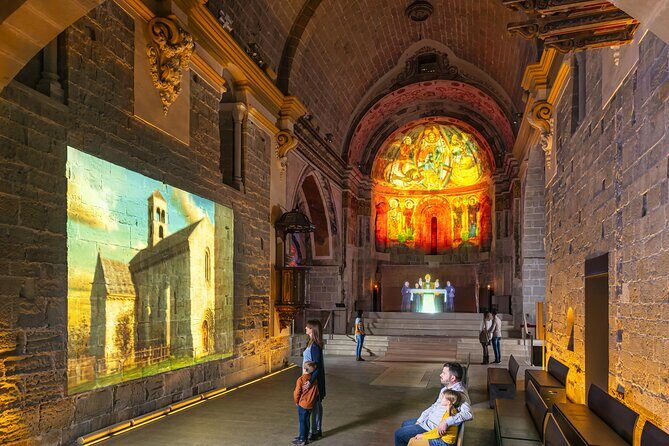
The church is one of the first places you’ll focus on. Monastic churches were central because they shaped schedules and community life. Standing in that space, the best part is how the experience helps you connect the setting to daily rhythms, not just architecture.
Even if you’re only spending an hour here, the church moment is important. It’s the anchor that ties the monastery story together. You can look at the building, yes, but the audio helps you frame what that place meant to the people who lived and worked there.
If you’re visiting with kids or people who get bored easily, this church stop is also a good “attention reset.” It’s a natural change of tone compared with more hands-on areas like the wine cellar.
The cloister walk: quiet space with real purpose
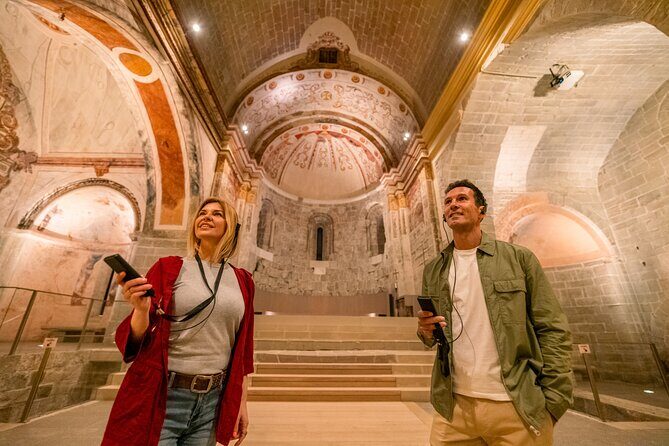
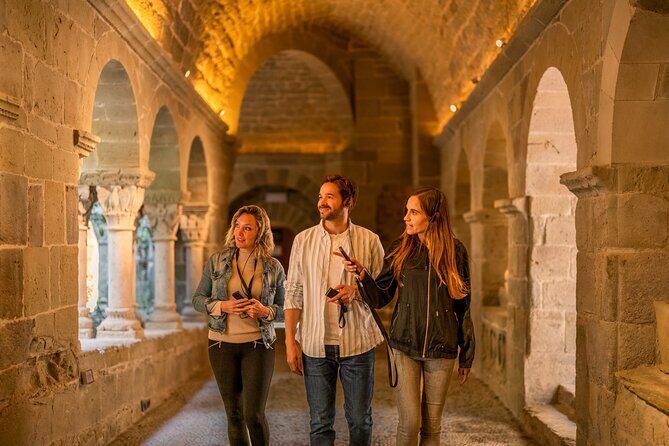
Next, you’ll spend time in the cloister, one of the most recognizable parts of a monastery complex. Cloisters are often pictured in medieval art as peaceful courtyards. Here, the value is that you don’t just look. You’re guided through what you can infer from the layout and the spaces around it.
A cloister isn’t only a beautiful hallway garden. In a functioning monastery, it supports routines: walking, passing between areas, and staying connected to the rhythm of the day. The audio approach helps you connect the physical layout to how the monastery worked.
I like that the tour doesn’t try to overload you. It’s a guided route, but you still get the feeling of place. You can pause for photos, catch the details of stonework, and keep moving without feeling rushed—within the limits of the overall one-hour flow.
Wine cellar time: the work behind the prayers
A monastery wine cellar can sound like a minor stop. It isn’t. In a working monastic setting, storing and managing food and drink was practical survival. This is where the experience balances spiritual life with the hands-on tasks that kept the monastery functioning.
Visiting the wine cellar adds a fresh layer. You see a place tied to production and storage, not just worship. The audio and on-site media help explain how work and daily needs shaped monastery life over centuries.
If you like food history, this is the most satisfying “why it mattered” stop. Even if you’re not a sommelier, it helps you understand that monastic communities depended on planning, labor, and careful use of resources.
You can also read our reviews of more tours and experiences in Barcelona



Montserrat gallery cells: the human scale of monastic life
The tour route also includes cells in the Montserrat gallery. That’s where the story shifts from public spaces (church, communal areas) to private or semi-private life.
Cells are small by design. That means you feel the contrast right away: the monastery isn’t only about grand rooms and formal ritual. It’s also about daily habits and personal discipline.
What I appreciate about including the cells is that it makes the monastery feel less like a museum and more like a place where people actually lived. Even with a short duration, this part grounds the experience. You can’t help but think about routines: where a person would rest, work, and spend quiet time.
If you’re the type who likes “small spaces with big meaning,” you’ll probably linger here a bit longer than you expect.
Natural grounds around the complex: don’t rush the air
Outside the main buildings, the monastery sits in natural surroundings. That matters more than it sounds. After you’ve spent time reading medieval stone walls with an audioguide in your ear, stepping into open air gives your brain a break.
This is also a good moment for simple pacing. Don’t treat the tour like a race. Use the natural grounds to catch your breath, reset your attention, and come back for the final parts of the route.
Because the full experience is about an hour, timing helps. You’ll get the most out of it if you move steadily and save your deeper stops for places like the cloister and the cells, where details tend to reward your attention.
Modern Mon Sant Benet: culinary research, restaurants, and shops
One cool twist: this medieval monastery experience lives right beside modern food culture. The complex brings the medieval monastery only a few meters away from an international culinary research centre, and the area includes restaurants and shops.
This doesn’t dilute the medieval story. It gives you a place to land afterward. You can turn your medieval learning into an easy meal. And if you want to pick up something to take home—without turning the day into a shopping marathon—you can do that too.
It’s a nice way to close the loop: monasteries were about food, preservation, and routine. Modern culinary research is about food, but in a different form. Seeing the connection in the same complex makes the whole stop feel more intentional.
Pricing and value: what $18.51 buys you
At about $18.51 per person, this is priced like an affordable attraction add-on rather than a long guided tour. That’s a good fit for many visitors. You get a focused one-hour experience with an audioguide included, and the ticket points you through major monastery areas.
Here’s why I think it’s good value: you’re not paying for just a hallway visit. You get a route that includes several key parts of the complex—church, cloister, wine cellar, and the cells in the Montserrat gallery—plus media that helps explain what you’re seeing.
The main value trade-off is time and depth. You won’t get an all-day immersion here. But if you want a meaningful monastery stop during a Barcelona trip without blowing your schedule, this is one of the better “high meaning per hour” options.
Who should book this self-guided medieval tour
This tour is a good match if you:
- Want a low-effort, structured experience with an included audioguide
- Like history you can see in real spaces, not just read about
- Prefer a flexible pace over a strict group schedule
- Want a simple day-trip feeling without committing to a full guided tour format
It may not be ideal if you:
- Want a long, live guide talk or deep Q&A
- Need more than one hour to absorb sites
- Don’t want to handle transportation on your own (since it’s not included)
Practical timing: fit it into a Barcelona day
Since the duration is about one hour, you can slot this in as a mid-morning break, an early afternoon shift, or a calmer alternative to more crowded attractions. The site being just outside Barcelona is a plus, but you’ll want to plan the route to get there, because transportation isn’t included.
Also, check your expectations on pacing. Self-guided means you can slow down or speed up slightly, but the route is still designed as a short, complete loop.
Should you book Mon St Benet?
I’d book it if you want a compact medieval experience near Barcelona that uses an audioguide to make the spaces understandable. The combination of cloister, wine cellar, and church keeps it from feeling repetitive, and the included audio helps connect the dots in a way that’s easier than reading labels alone.
Skip it if you need transportation arranged for you or you’re chasing a longer, more interactive guide-led experience. In that case, look for a full guided tour option in Barcelona or a nearby historical site where you can spend more time per stop.
FAQ
How long is the Mon St Benet self-guided tour?
The tour is about 1 hour (approx.).
What’s included in the ticket price?
Your ticket includes an audioguide.
Is transportation to and from the monastery included?
No. Transportation to/from the attraction is not included.
Is this experience self-guided?
Yes. It’s a self-guided medieval experience, and you use a mobile ticket.
What parts of the monastery complex do you visit?
You visit the monastery and route areas including the church, cloister, wine cellar, and cells in the Montserrat gallery.
Can I get a full refund if I cancel?
Yes. You can cancel up to 24 hours in advance for a full refund.