REVIEW · BARCELONA
Montserrat Complete Guided Tour & The Boys Choir’s Performance
Book on Viator →Operated by Turisme de Barcelona · Bookable on Viator
Montserrat feels like a time machine.
This day trip takes you out of Barcelona and up into Montserrat, where monastery walls sit in the middle of dramatic rock formations. I love that the schedule is tight but not rushed, with built-in transport so you don’t spend your day figuring out connections. I also like that the itinerary weaves religion, local legends, and real mountain scenery into one smooth arc. One thing to keep in mind: the choir moment is short and seating can be tight, so arrive ready to hunt for a good view.
The big win here is the rack railway up the mountain. The ride covers about five kilometers, and those big train windows give you panoramic views as you climb. Another standout is the Abadia experience, including time at the basilica and the chance to see La Moreneta, the Black Madonna linked with Catalonia’s patronage. The trade-off is crowding: Montserrat draws everyone, and your best sightlines during the choir depend on timing and where you end up.
If you’re the kind of person who likes a calm seat for every moment, plan for a bit of standing and shifting. The tour is designed for group flow, not for perfect front-row viewing. That’s not a dealbreaker, but it is worth knowing upfront before you build your whole day around the performance.
In This Review
- Key points to look for before you go
- Why Montserrat fits so well into one day from Barcelona
- From Estació del Nord to Monistrol: the ride that sets the tone
- Stop in Monistrol de Montserrat: what that short window is for
- Montserrat Natural Park: chapels, legends, and your two-hour walking block
- Abadia de Montserrat: La Moreneta and the living monastery feel
- Escolania de Montserrat boys choir: a short show, big emotions, tight seating
- Museum of Montserrat: why the art stop can be the best surprise
- Guides and drivers: what makes the group feel smooth
- Price and logistics: is $95.52 actually good value?
- Who should book this Montserrat tour
- Quick practical tips that make the day easier
- Should you book this Montserrat Complete Guided Tour?
- FAQ
- How long is the Montserrat tour?
- What time does the tour start and where is the meeting point?
- Is the tour offered in English?
- What’s included in the price?
- Are there any paid entry fees during the stops?
- Is lunch included?
- Does the boys choir perform every day?
- What group size should I expect?
- What is the cancellation policy for a full refund?
Key points to look for before you go
- Rack railway panoramas: a quick 5-kilometer climb with large windows.
- Abbey focus without the scramble: tickets and guided time at the Montserrat complex.
- La Moreneta and Benedictine life: you’re stepping into a living worship site with monks.
- Escolania choir is a short set: expect a brief performance and a packed space.
- Watch the day-of-week rule: Saturday and Sunday departures don’t include the boys choir and the Black Madonna statue.
Why Montserrat fits so well into one day from Barcelona
Montserrat is one of those places that feels bigger than the trip itself. You’re not just doing a viewpoint and photos. You’re moving through layered meaning—Catalan religious tradition, centuries-old legends tied to the mountain, and real time inside the abbey.
This tour format is practical. It starts early in Barcelona and returns you to the same meeting spot, so you don’t need a second plan for the ride back. And because the group size is capped at 50, you’re less likely to feel like you’re trapped in a never-ending crowd.
If you want the highlights without turning your day into logistics, this is the kind of structure that helps. Just be honest about your priorities: if the choir is your main reason for booking, you’ll want to be mentally prepared for crowding and limited sightlines.
You can also read our reviews of more guided tours in Barcelona

From Estació del Nord to Monistrol: the ride that sets the tone
You leave from Estació del Nord in Barcelona, with a 9:00 am start. The whole day runs about 6 hours 15 minutes, including travel time. That means you’re back in the city in the late afternoon, with enough daylight left for a relaxed dinner instead of a frantic sprint for connections.
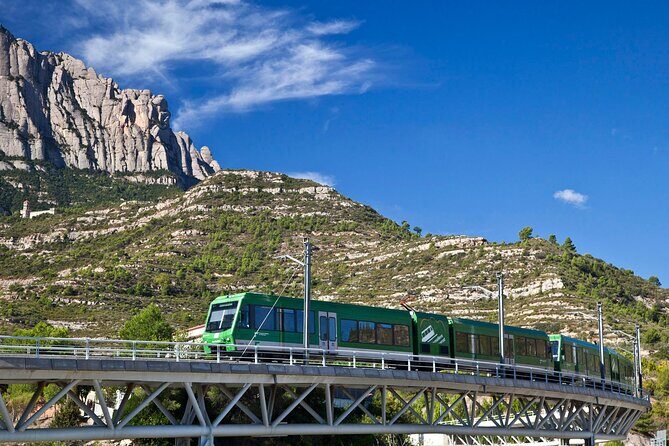
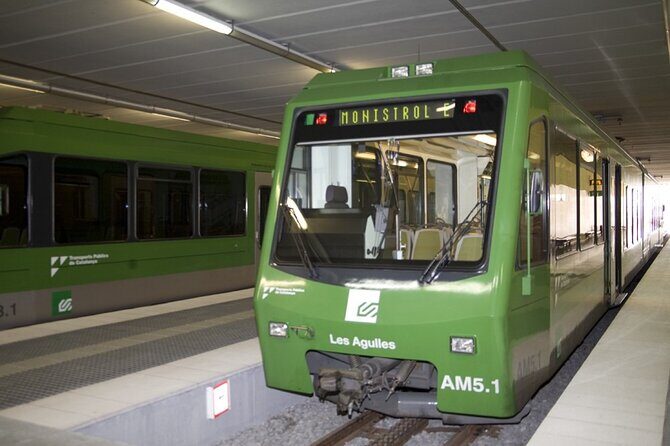
The first big highlight is the trip up via the rack railway between Monistrol de Montserrat and the monastery area. It’s only about five kilometers, but it feels like a real ascent because you can see the slope change through those large windows. It’s also a classic piece of mountain engineering—this railway dates back to 1891, inspired by engineer Joaquim Carrera’s passion for Montserrat and Swiss mountain train style.
Even if you don’t care about trains, this segment matters. It gets you the mountain drama right away and reduces the effort you’d otherwise spend waiting for other options. It’s the kind of time you actually enjoy rather than endure.
Stop in Monistrol de Montserrat: what that short window is for
You’ll have around 20 minutes in Monistrol de Montserrat. That’s not long, but it’s enough to orient yourself, use the facilities if needed, and settle in for the next transfer.
What you should expect here is mostly transition and scenery. The point isn’t a long break or a shopping stop. It’s to position you correctly for the rack railway experience and keep the day’s pacing working.
Since this is a morning climb, it’s also the moment where weather matters most. If it’s chilly, you’ll feel it early on the mountain. Reviews over time mention cold seasons like November, so bring layers even if Barcelona feels mild in the morning.
Montserrat Natural Park: chapels, legends, and your two-hour walking block
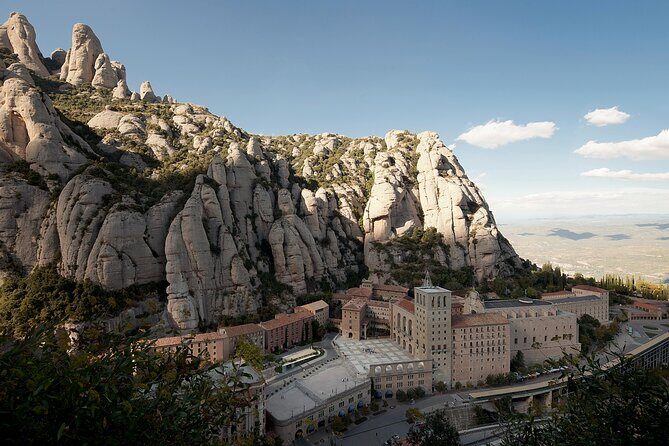
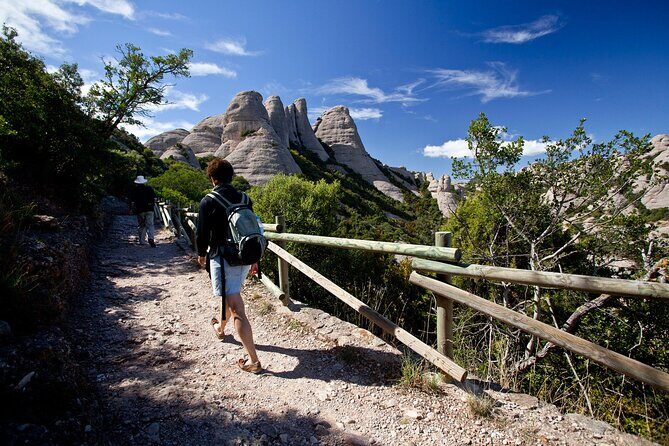
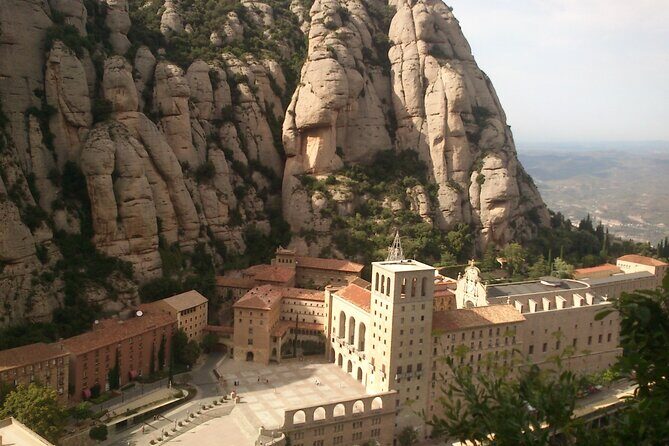
Once you’re up, you get about two hours in the Montserrat Natural Park area. The mountain is famous for its distinctive rocky silhouette, shaped over millions of years by sandstone and hard calcareous cement. In plain terms: it looks like the mountain belongs in a legend, because the rock formations are oddly dramatic from nearly every angle.
During this time, you’re placed close to the key religious points—such as the Holy Cave and chapels linked with Sant Joan and Sant Miquel—plus the monastery complex beyond. Montserrat is often called the magic mountain, and two legends get repeated again and again for good reason.
One legend centers on the discovery of the wooden statue of the Virgin Mary in the so-called Santa Cova (Holy Cave) in 880. Another tells of a woodcutter who made a pact with the Devil to get a fast horse. Whether you treat the stories as history, faith, or folklore, they shape how people move through the space and what they pay attention to.
This two-hour block is where you should decide how you want to spend your energy. If you want photos and viewpoints, this is the time. If you prefer a slower pace, don’t overcommit to long trails. You’re still going to want time later inside the abbey and for the choir segment.
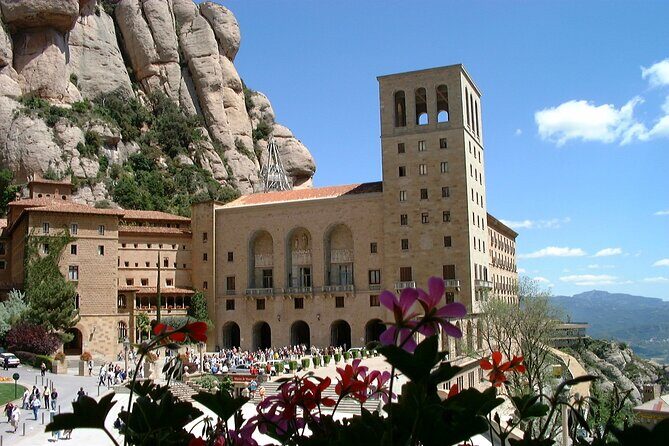
Abadia de Montserrat: La Moreneta and the living monastery feel
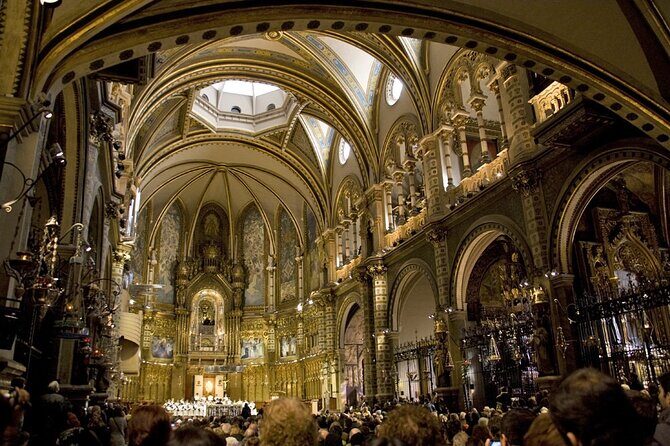
Your next step is the Abadia de Montserrat, with about two hours allocated there. This is the sacred center of the trip, and it’s the part that turns the day from scenic to meaningful.
The abbey’s story goes back centuries. One tradition says that shepherds witnessed a visit from the Virgin Mary in light and music around the year 880, with written testimony dating to 1239. Later, in 1025, Abbot Oliba founded the monastery and helped establish it as a pilgrimage destination.
Today, the abbey is inhabited by around 80 Benedictine monks. That living presence changes the atmosphere. It’s not a theme park. People come here to worship, and the rhythm of the place shows in how the visit is handled.
The centerpiece is La Moreneta, the Black Madonna. The statue is described as a 12th-century Our Lady of Montserrat, and it’s tied to the patron saint of Catalonia. The details matter: the Virgin Mary holds an orb in her right hand, symbolizing the cosmos, and her left hand rests on the back of the Infant Jesus.
Even if you’ve seen other European madonnas, this one feels distinct because of how strongly it’s woven into Catalan identity. It’s also the moment where the tour’s structure becomes useful. You get the entry covered, plus time that’s coordinated enough that you aren’t stuck waiting in random lines.



Escolania de Montserrat boys choir: a short show, big emotions, tight seating
This is why many people book, and it’s also where you need to plan your expectations. The Escolania de Montserrat is one of Europe’s oldest and most respected choirs. The choristers are boys aged 7 to 13 who receive full musical training and schooling, and they participate in the abbey’s liturgical life.
The choir’s roots are often traced to a school founded in the 14th century, and in 1474 the boys sang for King Ferdinand the Catholic during his Barcelona visit. In the present-day performances, you may hear pieces such as Virolai, plus salves and polyphonic motets.
Timing is the key point. The choir segment is about one hour, but the actual singing can be brief. Multiple experiences point out that it can be as short as 15 minutes, and the performance space is crowded enough that you may not get a great view. In some cases, the audience stands for parts of the set, so you’ll want to accept that you might see more of heads than faces.
Seating is not guaranteed for everyone. Some groups were able to sit near the front; others ended up with scattered seats or stood at the back. If you want to see more than listen, act early in the performance area and be ready to adjust quickly when you’re directed inside.
Also, the day-of-week rule matters. Saturday and Sunday departures do not include the boys choir performance or the Black Madonna statue. If your schedule lands on a weekend, you should treat this as a different experience, not a lighter version of the same one.
Museum of Montserrat: why the art stop can be the best surprise
A Museum of Montserrat visit is included. Depending on your tastes, this might be either a calm break or a rewarding add-on. On this day, it often functions as your decompression point between the mountain air and the intensity of the basilica.
The museum time is also a way to keep the day from feeling purely ceremonial. The art focus can be mostly art, and some visitors note it includes works from well-known artists. Even if you’re not a museum person, it’s a structured indoor activity that helps you avoid that mid-afternoon slump when you’re still thinking about the choir.
Because the day is timed, you shouldn’t expect long wandering. But you should expect a useful pause that makes the rest of the experience feel less rushed.
Guides and drivers: what makes the group feel smooth
Guide quality can change your whole day. In past departures, I’ve seen names like Marta, Alva, Mariana, Alba, and Maria attached to groups, and their styles tend to be the difference between a rushed facts-only outing and a trip that actually helps you understand what you’re seeing.
Look for how your guide manages transitions. When it works well, you get clear instructions on when to enter areas and where to be for the choir. When it doesn’t, you can lose precious minutes inside crowded spaces—which is exactly when people feel disappointed most.
The driver also matters more than you’d think on a mountain route. Comfort and careful driving help you arrive calmer, ready to soak it in. Some departures mention drivers like John doing excellent work, especially during tough weather like heavy morning rain in Barcelona.
Even with a solid guide, bring layers and keep your patience handy. Montserrat crowds don’t care that your day trip is on schedule.
Price and logistics: is $95.52 actually good value?
At $95.52 per person for about 6 hours 15 minutes, this tour can be a strong value if your goal is a full Montserrat experience with minimal planning. You’re paying for coordination plus key inclusions: air-conditioned transportation, the rack railway ticket, the choir element, the museum visit, and the Abadia entry.
Here’s the practical way to think about value:
- If you were to DIY the trip, you’d spend time mapping transport, buying multiple tickets, and managing arrival timing inside a crowded religious site.
- If you’re booking for the choir and monastery, the package removes a lot of friction.
But there’s a real consideration. Since Saturday and Sunday departures don’t include the choir and Black Madonna statue, the value depends on day-of-week match. If your choir night is the main thing you want, make sure your travel dates line up with the included performance.
Also note that lunch isn’t included. That’s normal for a half-day structure like this, but it means you’ll want to plan what you’ll eat when you get back or during any free time you have on-site. In cold seasons, you’ll burn time waiting for a warm meal, so keep snacks in mind if you have them available.
Who should book this Montserrat tour
This is a great fit for you if you:
- want a structured day trip out of Barcelona without wrestling transport
- care about monastery culture and the specific story of La Moreneta
- want to hear the Escolania boys choir and you can handle crowding
It might not be the best fit if:
- you only care about the choir performance visuals and need guaranteed seating
- you’re traveling on a Saturday or Sunday, since the choir and Black Madonna are not included in those departures
- you prefer long unstructured time on trails; this is a guided day with set blocks
Quick practical tips that make the day easier
- Wear layers: the mountain can feel cold, even when Barcelona isn’t.
- Arrive ready for crowding: for the choir, get in early when you’re directed.
- Bring patience: timing at Montserrat can feel tight because the site is popular.
- Have a backup mindset: if your main goal is the choir, match your day-of-week carefully.
- Consider the funicular if you have time: some departures mention extra time after the choir and basilica to use it, which can add more views.
Should you book this Montserrat Complete Guided Tour?
If you’re aiming for a complete Montserrat day with the rack railway, monastery time, and the Escolania choir, this tour is easy to recommend—especially on weekdays when the choir and Black Madonna statue are part of the program. The price is reasonable for what’s bundled, and the structure helps you get the essentials without wasting your day on planning.
But if your trip lands on Saturday or Sunday, or if you’re extremely sensitive to seating and visibility during the choir, you may feel like you’re paying for the wrong version of the experience. In that case, it’s smarter to choose an option that matches your exact priorities.
FAQ
How long is the Montserrat tour?
It runs about 6 hours 15 minutes, including travel time.
What time does the tour start and where is the meeting point?
The start time is 9:00 am at Estació del Nord de Barcelona, Carrer d’Alí Bei, 78, L’Eixample, 08013 Barcelona, Spain. The tour ends back at the meeting point.
Is the tour offered in English?
Yes, the tour is offered in English.
What’s included in the price?
The price includes air-conditioned vehicle transport, the rack railway ticket, the Choir of Montserrat, the Museum of Montserrat visit, and the Abadia de Montserrat ticket.
Are there any paid entry fees during the stops?
Admission is free for the Monistrol de Montserrat and Montserrat stops. The Abadia de Montserrat is included in the tour, and the choir performance admission is included as well.
Is lunch included?
No. Lunch and snacks are not included.
Does the boys choir perform every day?
No. Tours on Saturdays and Sundays do not include the Boys’ Choir performance and the Black Madonna statue.
What group size should I expect?
The tour has a maximum of 50 travelers.
What is the cancellation policy for a full refund?
You can cancel up to 24 hours in advance for a full refund.