REVIEW · BARCELONA
Palau de la Musica Catalana Guided Tour
Book on Viator →Operated by Palau de la Musica Catalana · Bookable on Viator
Barcelona’s music palace is pure craft.
This small-group guided visit is interesting because it turns a famous building into a clear story: you get skip-the-line entry, a short historical video, then a guided walk through the spaces where concerts and rehearsals truly happen. I love how the experience is structured, starting in the Rehearsal Hall and ending in the Concert Hall with its stained-glass arches and inverted-dome skylight. I also like that you’re not stuck outside squinting at details.
One possible drawback: the tour is only about 1 hour, so you’ll need to be okay with a brisk pace and quick stops for photos. If you like to linger in museums for ages, this won’t feel like that kind of visit.
Tip: prebooking helps because the time slots can fill. Pick a departure that fits your day, then use the short walking flow to see the building’s biggest “wow” moments without exhausting your feet.
In This Review
- Quick hits before you go
- Why the Palau tour is worth $26.60
- Before you go: meeting point, mobile ticket, and picking the right time
- Stop 1: Rehearsal Hall and the 1905 story on the screen
- Stairs, glass balusters, and tiled underside details up to the second floor
- Lluís Millet Hall: flower mosaics, balcony views, and built-in daylight
- Concert Hall finale: stained-glass arches and the inverted-dome skylight
- Architects and artists you’ll hear named: Arnau, Gargallo, Bru, Rigalt
- Making the most of your 1-hour visit in Barcelona
- Should you book this Palau tour?
- FAQ
- How long is the Palau de la Musica Catalana guided tour?
- Is the tour offered in English?
- Does the price include admission to the Palau?
- Is it a small-group tour?
- Do I need a printed ticket?
- Where do I meet the guide, and where does the tour end?
- What’s included, and what’s not included?
- What’s the cancellation policy for a full refund?
Quick hits before you go
- Skip-the-line entry gets you straight inside the Palau without wrestling with queues
- Rehearsal Hall video sets the stage with context for the early 1900s Catalan world
- Staircase details are a highlight, from tiled underside patterns to glass balusters and marble banisters
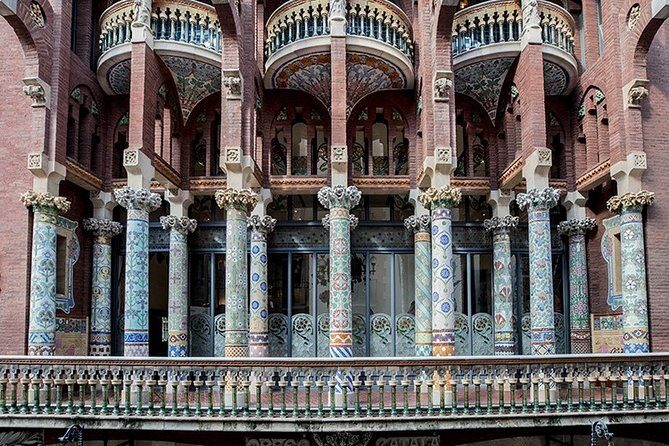
- Lluís Millet Hall light comes from floor-to-ceiling windows looking to the façade’s balcony colonnade
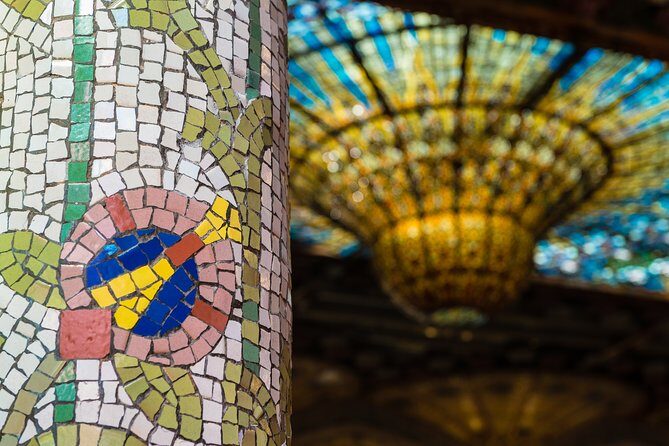
- Concert Hall centerpiece is the stained-glass wall arches plus the inverted-dome skylight
- Max 15 people keeps the pace personal and the guide’s explanations more focused
Why the Palau tour is worth $26.60
At $26.60 per person for roughly an hour, this is a strong value for Barcelona if you want the building’s highlights with context. You’re not just buying a ticket to a landmark; you’re paying for a guide to point out what matters and connect the dots between architecture, decoration, and why the hall sounds the way it does.
This also works well for vacation pacing. The Palau of Catalan Music is easy to squeeze in between other Modernisme stops because you get a guided route that doesn’t waste time. And since the admission ticket is included, you’re not piecing together costs once you arrive.
The best part is that the tour is designed like a guided walkthrough, moving from the Rehearsal Hall up through the stairways to the Lluís Millet Hall, then finishing in the Concert Hall. Each stop has a distinct look and a distinct purpose, so you keep gaining new details instead of staring at the same façade from different angles.
You can also read our reviews of more guided tours in Barcelona



Before you go: meeting point, mobile ticket, and picking the right time
Meet at Palau de la Música Catalana on C/ Palau de la Música, 4-6, in Ciutat Vella. The tour ends back at the meeting point, which is handy when you’re mapping the rest of your day. It also means you don’t have to worry about transit from a far-off drop-off.
You’ll receive a confirmation at booking time, and the ticket is mobile, so you can keep it on your phone. That’s a small thing, but it saves time when you’re already navigating busy central Barcelona.
Choosing the time slot matters because this is a popular interior visit and spaces can fill. If you’re doing other sights the same day, try to give yourself breathing room before and after. You’ll want time to watch your footing on the stairs and time to look around briefly once the guided portion ends.
One more practical note: the tour is offered in English, and it’s set up for most travelers. If you’re traveling with a service animal, it’s allowed.
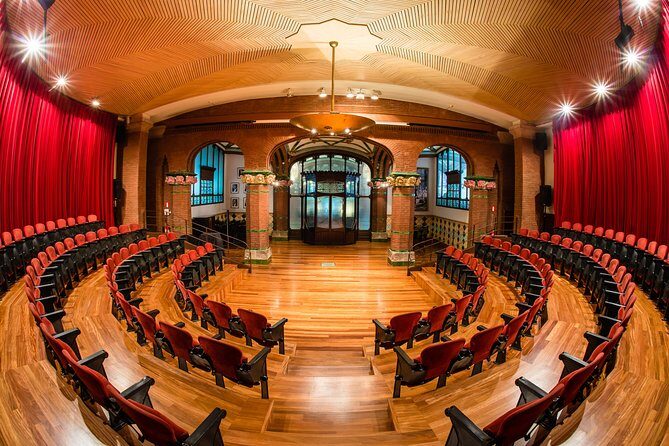
Stop 1: Rehearsal Hall and the 1905 story on the screen
The tour starts inside at the Rehearsal Hall of the Orfeó Català. This is a smart first move. You’re not jumping straight into the grand concert space; you begin with the calmer room where the building’s cultural life gets explained.
You’ll learn about the foundation stone laid in 1905, which gives the building a concrete starting point. Instead of treating it like a pretty shell, the story grounds the architecture in the early 20th-century Catalan setting.
Then you watch a short 15-minute audio-visual clip. That clip is there for a reason: it helps your eyes land on the right details during the walk afterward. It’s the kind of setup that makes later halls feel more meaningful, because you’ve already been given the big picture.
A practical thing I like about this style of tour: it begins with context before you start seeing the ornamental stuff up close. If you’re the type who appreciates meaning behind design, this sequence will click fast.
Stairs, glass balusters, and tiled underside details up to the second floor
After the video, you move into the staircase area, and this is where the Palau’s engineering personality shows up. You’ll climb toward the second floor, and the tour pays attention to the parts people usually miss when they only glance upward.
Look closely at the lavish tiling that covers the underside of the stairs. That underside pattern is one of those details that turns a “walk up some steps” moment into a mini spectacle. The tour also highlights the glass balusters that support the marble banisters.
Here’s the advantage for you: a guided pace helps you notice materials and transitions. Without a guide, it’s easy to focus only on the grandest room at the end. With this stop, you start collecting “why it works” details early—glass supports, marble shapes, and decorative surfaces all doing different jobs.
If you’re sensitive to stairs, plan for it. The route is short and guided, but it still involves climbing and moving around inside a historic building.
Lluís Millet Hall: flower mosaics, balcony views, and built-in daylight
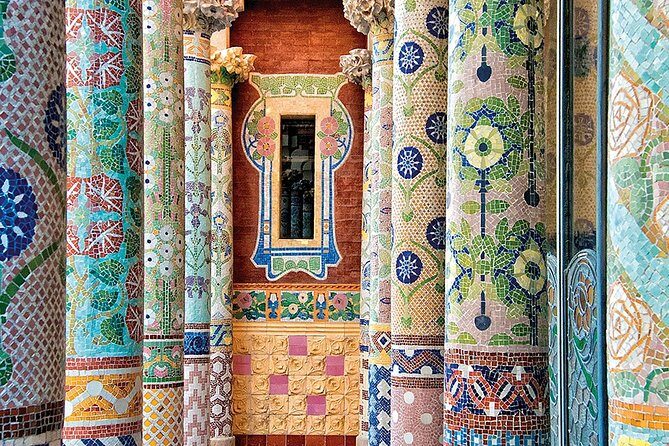
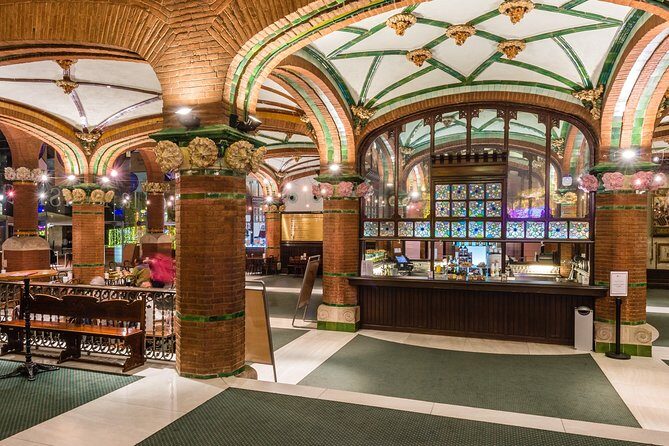
Next comes the Lluís Millet Hall, and it’s the point where the Palau feels almost theatrical in a different way. You’ll be surrounded by floor-to-ceiling windows that look out onto the balcony colonnade of the main façade. That outside-to-inside connection is what makes this space feel airy instead of cramped.
The pillars are another major focus. You’ll see decorative mosaics, including flower motifs that serve as a tribute to nature. The guide points out how the decoration isn’t random. It’s tied to the building’s overall idea that beauty and symbolism belong inside serious performance spaces, not just on street corners.
If you like photography, this hall is where you’ll likely slow down. The combination of views through the windows and the strong vertical lines in the décor makes it easier to frame shots that feel different from the stained glass and skylight later.
Just remember: daylight changes through the day. If you’re choosing a time slot, keep in mind that different light can affect how vivid the mosaics and glass look once you’re inside.




Concert Hall finale: stained-glass arches and the inverted-dome skylight
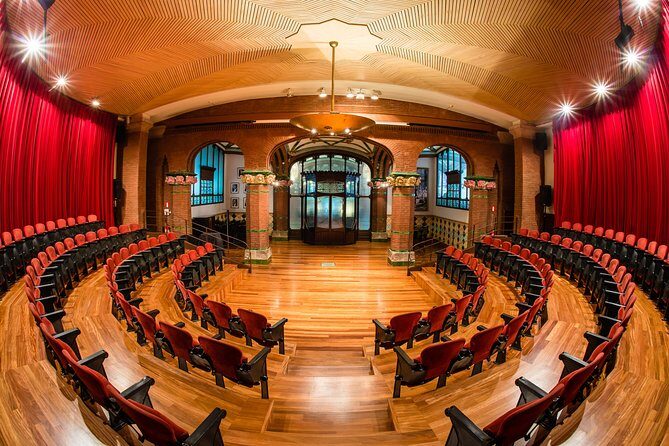
The final stop is the Concert Hall, widely considered the building’s centerpiece. This is the big finish, and it’s designed to hit you visually the moment you step into the space.
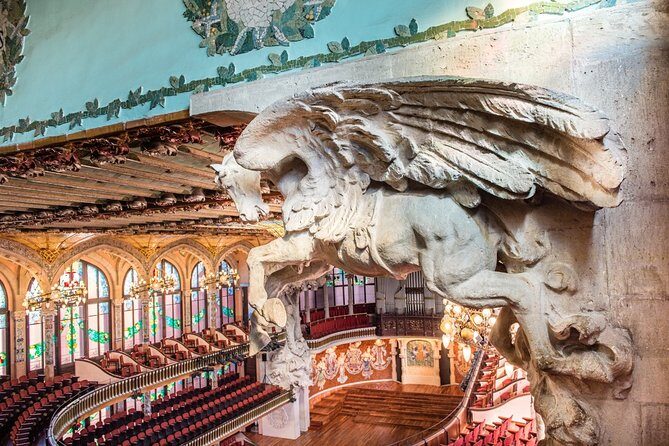
First, you’ll notice the massive panes of stained glass set into arches along the walls. Then you look up for the room’s signature feature: a large skylight shaped like an inverted dome. That dome effect is one of the reasons the hall feels special, because it changes the way light falls and how the space holds sound.
Your guide walks you through the hall as a working performance room, not just an architectural object. If you’re curious about music venues, you’ll appreciate the way the décor and structure are explained alongside what you’re seeing.
One bonus possibility: if there’s an active rehearsal happening at the time you visit, you might catch musicians practicing or even hear organ-related moments. The tour timing can overlap with what’s going on inside the Palau, and some departures may sound more alive than others.
Also, the “standing back and looking” moment here matters. Take a few seconds to scan the walls and ceiling before you start moving for photos. The hall rewards that slow look.
Architects and artists you’ll hear named: Arnau, Gargallo, Bru, Rigalt
One of the best parts of the tour is that the guide doesn’t just describe shapes. You’ll also get names tied to the décor and the way the building came together.
As you tour the auditorium, you’ll learn about Catalan artists and architects connected to the hall’s artistic elements, including Eusebi Arnau, Pau Gargallo, Lluís Bru, and Antoni Rigalt. Hearing these names during the visual walkthrough helps you remember what you’re seeing.
For your planning, think of it like this: the Palau isn’t only an architecture story. It’s also a collaboration story. When you learn the people behind the decorative work while you’re standing in the finished spaces, the building stops feeling like a single designer’s sketch. It feels like a team effort shaped by performance needs and artistic ambition.
If you’re the type who enjoys reading about places after you visit, jot down those names so you can follow up on your own later.
Making the most of your 1-hour visit in Barcelona
This is a compact tour, so I treat it like a focused “greatest hits” pass. You get the Palau’s core spaces in sequence, plus the context that makes the ornamentation feel intentional instead of decorative clutter.
Here’s how to get the best experience without rushing:
- Wear comfortable shoes. You’ll be moving and climbing inside.
- Bring your phone for photos, but pause before every shot to take in the overall room view.
- If you’re sensitive to sound levels, you might find yourself in a group where extra listening support is used. The tour data doesn’t guarantee it, but it can happen, and it makes the guide easier to hear.
After the tour ends near the exit, you’ll still be in the heart of La Ribera. If your schedule allows, treat the remaining time as a chance to spot Modernisme details outside too. The Palau is the anchor, but the surrounding neighborhood can add texture to your day.
Should you book this Palau tour?
Book it if you want the Palau de la Música Catalana in a structured, time-efficient way. This tour gives you entry to the key rooms, a 15-minute history/context clip, and guided explanations of the architectural and decorative features that make the building famous.
Skip it only if you’re searching for a long, independent self-paced visit. Since it runs about an hour, you won’t have the luxury of soaking up every surface for as long as you might at a museum.
If your goal is to see Barcelona’s Modernisme brilliance and understand what you’re looking at, this is a solid buy for the money.
FAQ
How long is the Palau de la Musica Catalana guided tour?
It lasts about 1 hour.
Is the tour offered in English?
Yes. The tour is offered in English.
Does the price include admission to the Palau?
Yes. The Palau de la Musica admission ticket is included, along with a local guide.
Is it a small-group tour?
Yes. The tour has a maximum of 15 travelers.
Do I need a printed ticket?
No. You’ll have a mobile ticket.
Where do I meet the guide, and where does the tour end?
You meet at Palau de la Música Catalana, C/ Palau de la Música, 4-6, Ciutat Vella, 08003 Barcelona. The tour ends back at the meeting point.
What’s included, and what’s not included?
Included are the local guide, a 15-minute audio-visual clip, and admission. Food and drinks are not included.
What’s the cancellation policy for a full refund?
You can cancel for a full refund up to 24 hours in advance of the experience’s start time.