REVIEW · BARCELONA
Picasso’s Footsteps: Private Tour & Museum
Book on Viator →Operated by Icono Spain Tours · Bookable on Viator
Picasso’s Barcelona feels personal fast. This private tour links the city you see today with the artist’s early life, from his possible first home stop to the skip-the-line Picasso Museum visit. I like that you also get a built-in break with coffee or tea at Els Quatre Gats, so the experience doesn’t turn into one long museum stare.
Two more things I really enjoy: the meeting plan is simple (right near Picasso’s childhood area), and you’re guided through key training and art-world stops, not just a random gallery checklist. One thing to consider is that entry is not included for a couple of the smaller architecture/school stops, so you may be viewing parts of them on the short time you’re there (and you’ll want to plan for museum time, which is the main included ticket).
If you’re after a tight, efficient Picasso route in a few hours, this is a good fit. The tour runs about 2 to 3 hours, and it stays focused on early formation and Barcelona context rather than trying to cover all of his styles.
In This Review
- Key highlights worth marking on your map
- A smart Picasso route through Barcelona’s Gothic-quarter orbit
- Porxos d’en Xifré: the 1840 building tied to Picasso’s early address
- Real Academia Catalana de Bellas Artes de San Jorge and the Escola de Llotja path
- The Picasso Museum hour: where skip-the-line time pays off
- Sala Pares and the 1901 Picasso pastel moment
- Els Quatre Gats: coffee included, and modernist Barcelona in one room
- How the guide focus changes what you get from the museum
- Price and value for a 2 to 3 hour private experience
- Small logistics to watch before you go
- Who this Picasso’s Footsteps tour suits best
- Should you book Picasso’s Footsteps?
- FAQ
- What’s included in the Picasso Museum visit?
- Is coffee or tea included?
- Do I need tickets for every stop?
- How long is the tour?
- Where does the tour start and end?
- Is this a private tour?
- What happens if the weather is bad?
Key highlights worth marking on your map
- Skip-the-line Picasso Museum entry so your time goes to art, not waiting outside
- Coffee or tea at Els Quatre Gats in the very place tied to the modernist art scene
- A tight, logical route starting near Passeig d’Isabel II and ending at Carrer de Montsió
- Short stops with big context, including Porxos d’en Xifré and the Real Academia Catalana building
- Strong guide impact, with guides like Adriano, Paloma, Olga, Victoria, Alexandra, and Jordi earning praise for turning Picasso into a story
- Small-group feel for your own pace, since it’s a private tour for only your group
A smart Picasso route through Barcelona’s Gothic-quarter orbit
This tour works because it doesn’t treat Picasso like a museum-only person. You move through the older parts of Barcelona that shaped his youth: streets, institutions, and the art hangout culture that helped ideas travel fast. You’re not just seeing buildings for decoration. The stops are picked to connect training, early life, and what you’ll later recognize in his work.
The schedule also makes sense for real life. The walking time is manageable, and the museum is the main time investment, about an hour. Everything else is shorter, which keeps the tour from dragging. If you’ve ever done a long city sightseeing day and then tried to handle a major museum after, this one feels built for timing.
One practical note: it’s offered in English, and you’ll have a local guide with a monolingual format. That matters if you want clarity on details like schooling, family context, and the way style shifts.
You can also read our reviews of more private tours in Barcelona

Porxos d’en Xifré: the 1840 building tied to Picasso’s early address
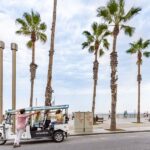
Your first stop is Porxos d’en Xifré, a historic block-defining building inaugurated in 1840 after four years of work. The setting matters: it occupies the city block formed by Passeig d’Isabel II, Pla de Palau, and streets like Reina Cristina and Llauder, on land urbanized in the 1830s after the demolition of the sea wall. That’s the kind of background that helps you understand why the city looks the way it does today.
Here’s the Picasso connection. The building is noted for being part of the first daguerreotype made in Spain, and it’s decorated with Masonic symbols. But the most useful detail for your tour is that this was linked to Picasso’s first Barcelona living situation after his family moved. The specific reference is the address now listed as number 4 on Passeig d’Isabel II, where a boarding house used to be.
Plan your expectations for this stop. The time on site is short (about 10 minutes), and admission ticket is not included. So think of this as a context stop: you’re getting the “why this place matters” version more than a full building interior tour.
Real Academia Catalana de Bellas Artes de San Jorge and the Escola de Llotja path
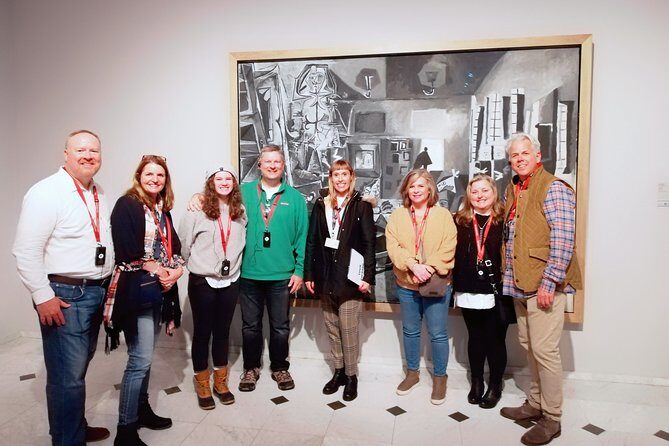
Next up is the Real Academia Catalana de Bellas Artes de San Jorge. The fine-arts school connection here is the point. The stop ties into Escola de Llotja, the Fine Arts School that took up the top floor of the building.
Picasso entered the School of Fine Arts (Escola de Llotja) in 1895, and the building’s structure is part of that story. You’ll be in the orbit of a neo-classical setting reached from Carrer del Consolat del Mar. It’s the kind of institutional environment where artists from Catalonia—and artists temporarily living in Barcelona—would study.
This stop can be a big win if you like “how training shapes outcomes.” Several guide experiences in the feedback emphasize exactly that: taking early schooling and turning it into context you can recognize while you’re staring at the paintings later.
Just be aware of the practical side. Like the first stop, admission ticket is not included and your time is brief. Don’t count on a long indoor tour here. Instead, use it like a primer for the museum hour that follows.
The Picasso Museum hour: where skip-the-line time pays off
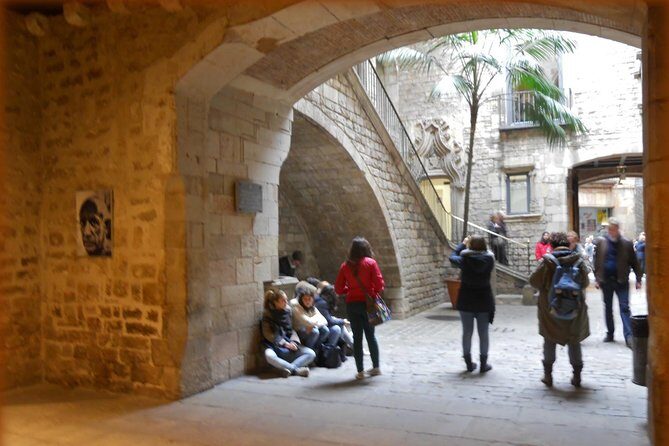
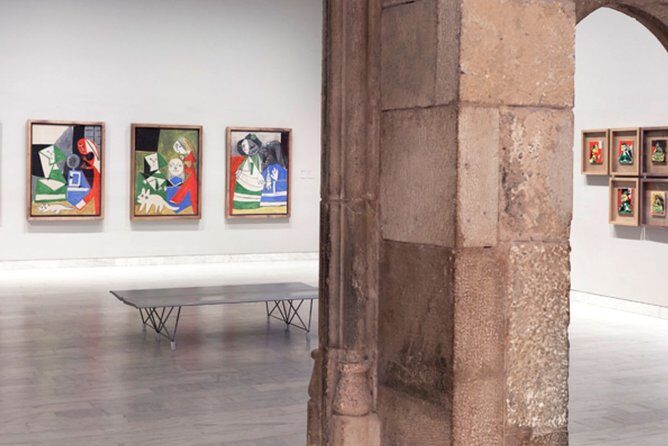
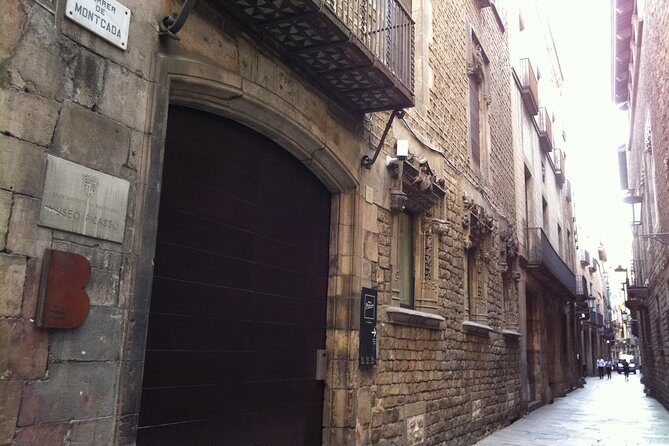
The Museu Picasso is the centerpiece for a reason. It’s the key reference for understanding Picasso’s formative years in Barcelona, and the permanent collection includes thousands of works—4,251 to be exact. The museum opened in 1963 and keeps the relationship between Picasso and the city in focus.
You get an hour here, and the Picasso museum admission ticket is included. That inclusion is more than convenience. When museum lines form, your day can slip out from under you. With skip-the-line entry provided by the tour, you can protect that hour for the part you actually came for: the works and the story around them.
If you’re new to Picasso, this museum is often where the “I don’t get it” moment starts to flip into “oh, this is connected.” The tour format helps, since the earlier stops set up what you’ll later see: early education, Barcelona’s art world, and the building blocks before his later big style changes.
If you’ve been to the museum before, this is still useful because the guidance focus is on his early years and Barcelona relationship, not just general museum facts. The best guides mentioned in feedback—people like Adriano, Paloma, Olga, Victoria, Alexandra, and Jordi—tend to bring out the through-lines so you don’t just skim labels and hope it clicks.
Sala Pares and the 1901 Picasso pastel moment
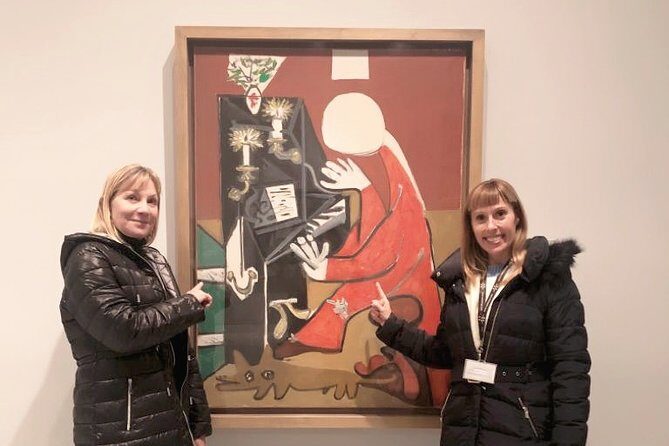
Sala Pares is short on time (about 10 minutes) and has free admission. That makes it a perfect contrast stop after the more official museum and school settings. This is where modern art culture becomes more human-scale.
The key detail: Sala Parés, on Carrer Petritxol, dealt in modernist art and put on an exhibition in 1901 featuring pastel drawings by Picasso alongside Ramon Casas. That joint appearance is a useful reminder that Picasso wasn’t building in isolation. He moved inside a network of artists and galleries that shaped what got seen.
Because the visit is brief and admission is free, you’ll want to go in with the right mindset. Don’t expect a long gallery session. Instead, use it like a marker: this is the kind of Barcelona art-world moment your museum hour can echo.
You can also read our reviews of more museum experiences in Barcelona


Els Quatre Gats: coffee included, and modernist Barcelona in one room
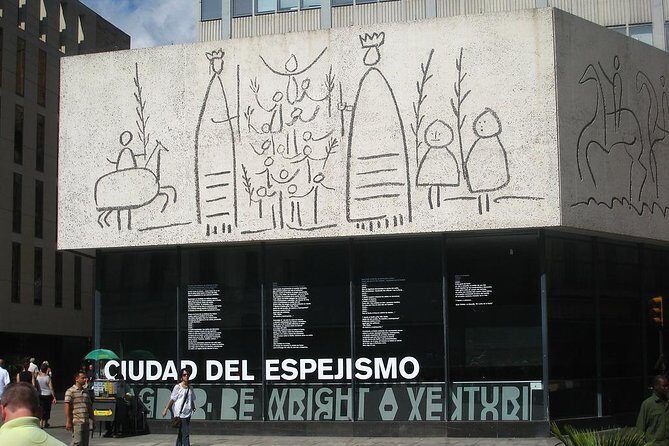
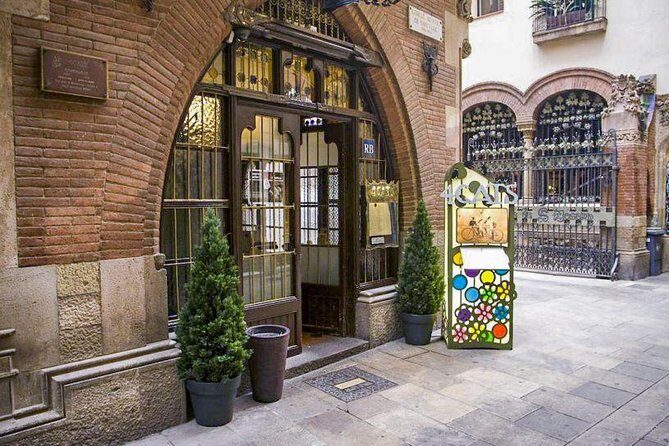
Then you wrap at Els Quatre Gats, at Carrer de Montsió, 3. The place matters even if you’re not an architecture detail person. Els Quatre Gats opened on June 12, 1897, and it was founded as a meeting tavern by Pere Romeu, Ramon Casas, Santiago Rusiñol, Miquel Utrillo, and others.
The founders modeled it after Le Chat Noir in Paris, and the purpose was social as much as artistic: gatherings for artists, plus events like concerts, exhibitions, puppet shows, and shadow plays. In other words, it wasn’t just a café. It was stage lighting for the modernist scene.
The stop includes coffee and/or tea, and that’s one of the tour’s smartest practical touches. You get a breather right when you’re likely to be museum-saturated. It also gives you a natural time window to ask follow-ups to your guide without rushing to your next entry ticket.
The interior story is part of why this place sticks. The bar was in a smaller room with two big Casas pictures in a prominent position. Even the menu was painted by Picasso, and exhibitions or concerts happened in a larger space.
One small caution: one guide-led experience noted that the restaurant was closed, so the planned drink moment didn’t happen that time. Since the tour includes coffee/tea, I’d still expect it to be part of your plan, but it’s worth keeping in mind that day-of operations can sometimes change.
How the guide focus changes what you get from the museum
The museum content is strong on paper, but your take-home value depends heavily on the guide’s framing. The feedback repeatedly points to guides who make Picasso’s early life readable, with specific emphasis on schooling and how family and life pressures fed into later artistic shifts.
You’ll see this in the kinds of details guides bring up, like connecting his training at Escola de Llotja with the way you interpret early works. Guides such as Adriano, Paloma, Olga, Victoria, Alexandra, Dani, and Jordi are repeatedly described as making those links feel clear rather than technical.
There’s also a listening-tech perk that popped up in one experience: the guide provided listening devices. If you’re in a group, that can make the tour much easier to follow, especially inside museums where sound is tricky.
My practical advice: come with one question in mind. For example, ask how early training might show up in the works you’re seeing right now. If your guide is strong—and the tour’s track record suggests they often are—you’ll leave with a mental map instead of a pile of disconnected images.
Price and value for a 2 to 3 hour private experience
At $161.60 per person, this isn’t the cheapest way to see a museum. But it’s also not trying to be. The value comes from four things working together:
First, you get a private group setup, so you aren’t fighting for attention in a crowd. Second, the Picasso Museum ticket is included and skip-the-line entry is handled, which is where many self-guided plans quietly lose their best time. Third, you get a café break with coffee or tea at Els Quatre Gats, included rather than optional. Fourth, the route adds context stops that make the museum feel more connected to the city.
Duration is about 2 to 3 hours, so it’s a practical “in and out” outing. This is especially useful on days when you also want time for other sights in Ciutat Vella.
There’s also a budgeting angle. Two stops note that admission tickets are not included: Porxos d’en Xifré and the Real Academia Catalana de Bellas Artes de San Jorge. Depending on whether you’re able to enter or just view during the time window, you may end up paying little extras or nothing. Either way, the main included cost—Picasso Museum admission—is covered.
Finally, the tour runs in English and you’ll have a local monolingual guide. That’s often worth something if you’ve had to “translate yourself” in other parts of Barcelona.
Small logistics to watch before you go
This tour is simple, but it’s not immune to real-world friction.
Meetup is at Pg. d’Isabel II, 14, Ciutat Vella, 08003 Barcelona, Spain. End point is Els 4 Gats, Carrer de Montsió, 3, Ciutat Vella, 08002 Barcelona, Spain. You’re near public transportation, which helps if you need to adjust timing.
One piece of feedback flagged that the meetup location on a voucher wasn’t correct and the group had to scramble to find the right spot. That doesn’t mean your day will go wrong. It does mean you should double-check the start address in Google Maps before you head out, and arrive a little early so you’re not trying to solve a puzzle while hungry.
Weather matters too. The experience requires good weather, and if it’s canceled due to poor weather, you’ll be offered another date or a full refund.
Who this Picasso’s Footsteps tour suits best
This is a great match if you want Picasso’s Barcelona story in a compact time window. It also suits you if:
- You plan to spend a serious hour at the Picasso Museum but don’t want it to feel like a standalone event
- You like context stops tied to early training and art-world culture
- You prefer private pacing and your own small-group questions
- You want included coffee/tea in a famous modernist meeting place
It’s less ideal if you want a long museum deep session at a slow pace. The museum time is about one hour, so if you’re the type who reads every label and sketches every room, you might want extra time on your own afterward.
Should you book Picasso’s Footsteps?
Yes, if you want a smart, time-efficient way to connect the Picasso Museum with the Barcelona streets and institutions that shaped his youth. The combination of skip-the-line museum entry, the focused early-years angle, and included coffee/tea at Els Quatre Gats makes the price feel more like a package than a random walking tour.
Book it especially if you value strong guide storytelling. Names mentioned in feedback—Adriano, Paloma, Olga, Victoria, Alexandra, Dani, and Jordi—show a pattern: guides who connect schooling, early life, and what you’re seeing in the museum.
Skip or reconsider if you mainly want a long museum visit, since the plan is built around short context stops plus that one-hour museum window.
FAQ
What’s included in the Picasso Museum visit?
The tour includes Picasso Museum admission and skip-the-line tickets, and you spend about 1 hour at the museum.
Is coffee or tea included?
Yes. Coffee and/or tea at Els Quatre Gats is included.
Do I need tickets for every stop?
No. The Picasso Museum ticket is included. Admission tickets are not included for Porxos d’en Xifré and the Real Academia Catalana de Bellas Artes de San Jorge, while Sala Pares is free.
How long is the tour?
The tour runs about 2 to 3 hours.
Where does the tour start and end?
It starts at Pg. d’Isabel II, 14, Ciutat Vella and ends at Els 4 Gats, Carrer de Montsió, 3, Ciutat Vella.
Is this a private tour?
Yes. It’s a private tour/activity, and only your group participates.
What happens if the weather is bad?
The experience requires good weather. If it’s canceled due to poor weather, you’ll be offered a different date or a full refund.