REVIEW · BARCELONA
Private Barcelona Modernism and Gaudí Walking Tour
Book on GetYourGuide →Operated by In Out Barcelona Tours · Bookable on GetYourGuide
Barcelona’s buildings start talking.
On this private Modernism and Gaudí walk, I love how the guide turns stonework into stories you can actually follow, from Gaudí’s imagination to the broader Modernisme movement. You’ll also get a smart route through Sagrada Familia and the Eixample streets, with plenty of context so the iconic façades feel more than just photos. One thing to keep in mind: it’s a walking tour, and the famous stops do take time.
The best part is the guide-led pace: you’re not just stopping at landmarks, you’re learning why they look the way they do. I like that you’ll see major works like La Pedrera and Casa Batlló, but you’ll also get pointed to the lesser-discussed buildings along Passeig de Gràcia. A possible drawback is simple—if you’re hoping to go inside multiple sites, plan your schedule carefully because this tour is focused on the walk and views.
In This Review
- Key things you’ll notice (before you go)
- A Modernist Walk That Makes the Buildings Make Sense
- Sagrada Familia: Gaudí’s Vision and the Passion Façade Story
- Eixample’s Grid: How Barcelona Planned for Modernisme
- Passeig de Gràcia: Where Gaudí’s Style Gets Loud (in a Good Way)
- La Pedrera (Casa Milà): Form, Function, and Gaudí’s Last Civil Project
- Casa Batlló: The Rolling-Sea Look and Why It Works
- Casa Calvet: A Shortcut to Gaudí’s Early Thinking
- The Modernisme Cast Beyond Gaudí: Domènech i Montaner and Puig i Cadafalch
- Casa Lleó Morera: Lluís Domènech i Montaner’s Character
- The Passeig de Gràcia Trio: Batlló, Amatller, and Lleó Morera
- Casa Comalat and Palau del Baró de Quadres: Extra Variety
- Casa de les Punxes and Palau Montaner: Finishing with More “How Did They Do That?”
- How Much Walking You’re Really Doing (and How to Prepare)
- Price and Value: Why Around $21 Can Still Be a Good Deal
- Who This Tour Suits Best
- The Guides: What You Can Expect in Real Conversation
- Should You Book This Private Barcelona Modernism and Gaudí Walking Tour?
- FAQ
- How long is the Private Barcelona Modernism and Gaudí walking tour?
- Is the tour private?
- What languages are the guides?
- Where is the meeting point?
- What should I bring?
- Is cancellation available?
Key things you’ll notice (before you go)
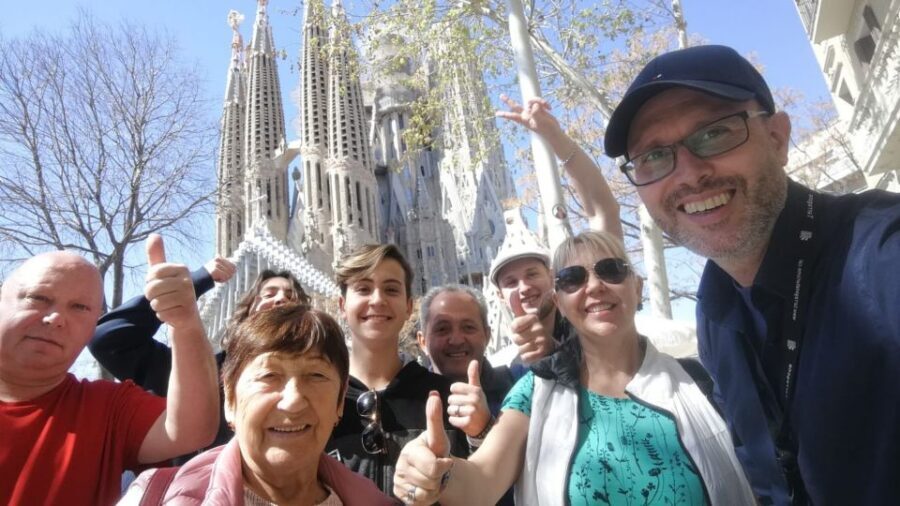
- Small group size (max 12) means you can actually ask questions and keep the conversation going.
- Sagrada Familia first, including discussion of the ongoing construction and the Passion façade by Josep Subirachs.
- Eixample context explains the grid, the wide streets, and how Ildefons Cerdà’s plan shaped what you see.
- Passeig de Gràcia in full Modernisme mode, with Gaudí plus other key architects on the same avenue.
- Multiple architect names matter, so you learn the differences between Gaudí, Domènech i Montaner, and Puig i Cadafalch.
A Modernist Walk That Makes the Buildings Make Sense
If you’ve ever stood in front of a Gaudí façade and thought, Okay, but what am I looking at, this is the kind of tour that helps. The route is built around the idea that Barcelona’s Modernisme isn’t random decoration—it’s a design language, connected to city planning, new materials, and bold artistic personalities.
This tour lasts about 3 to 3.5 hours and stays in central Barcelona, mainly around the Eixample district and Passeig de Gràcia. With a professional local guide speaking English or Spanish, you’ll move between stops at a pace that leaves room for questions.
You’ll likely feel that difference right away at the first major sight. Instead of just admiring, you’re learning what to notice: proportions, shapes, symbolism, and the “rules” the architects bent on purpose.
You can also read our reviews of more walking tours in Barcelona



Sagrada Familia: Gaudí’s Vision and the Passion Façade Story
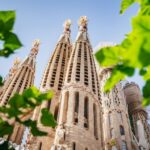
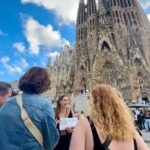
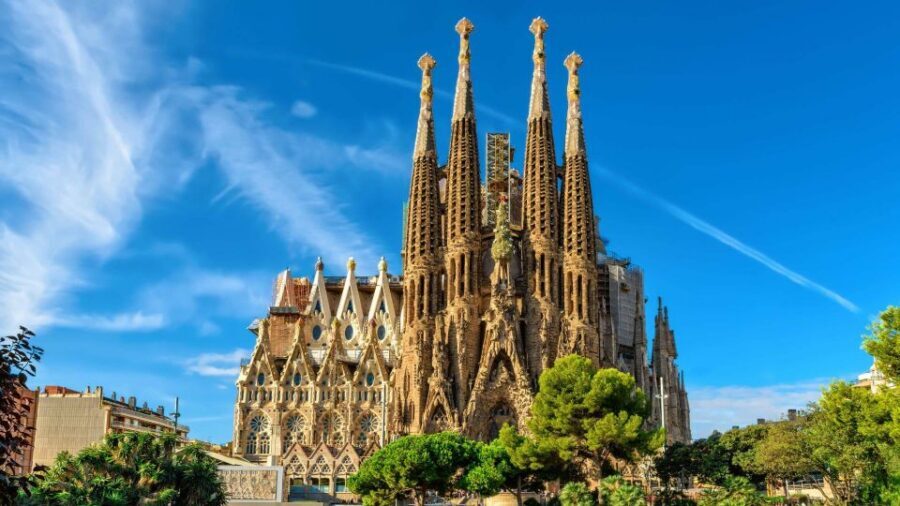
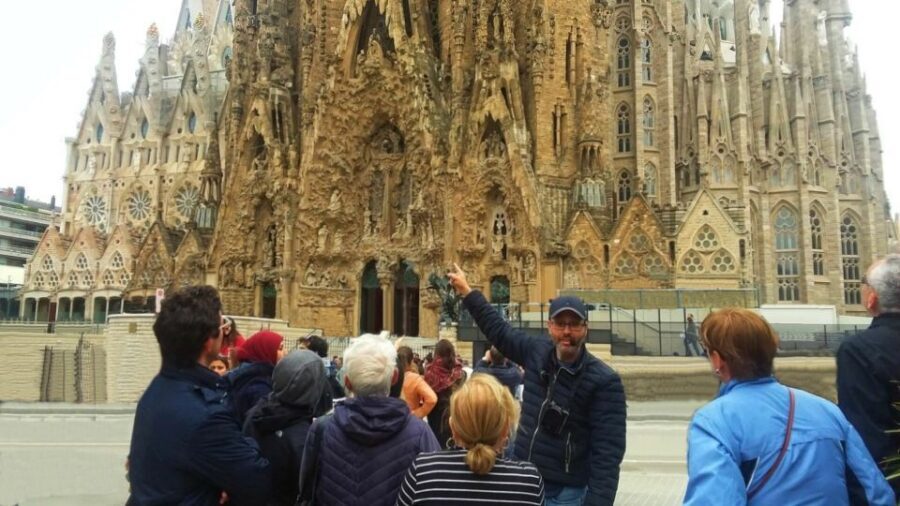
You start at La Sagrada Família, the monumental basilica that’s been under construction for more than a century. It’s also a UNESCO World Heritage Site, and the guide’s job here is to help you look past the scaffolding and still read the design clearly.
This is where the tour does something useful: it doesn’t treat the building like a finished monument. You’ll learn about the ongoing construction and why it has sparked controversy over time. The specific focus on the Passion façade, designed by Josep Subirachs (Gaudí’s successor), gives you a concrete example of how the project evolved after Gaudí’s era.
Why this matters for you: Sagrada Família can feel confusing if you’re only seeing it from one angle or only expecting a single “Gaudí style.” The guide helps you understand that the building is also a timeline—creative decisions, artistic handoffs, and interpretation across generations.
One practical consideration: even if you’re not going inside, it’s a big visual moment. Wear comfortable shoes and let your eyes adjust. The detail work is the whole point.
Eixample’s Grid: How Barcelona Planned for Modernisme
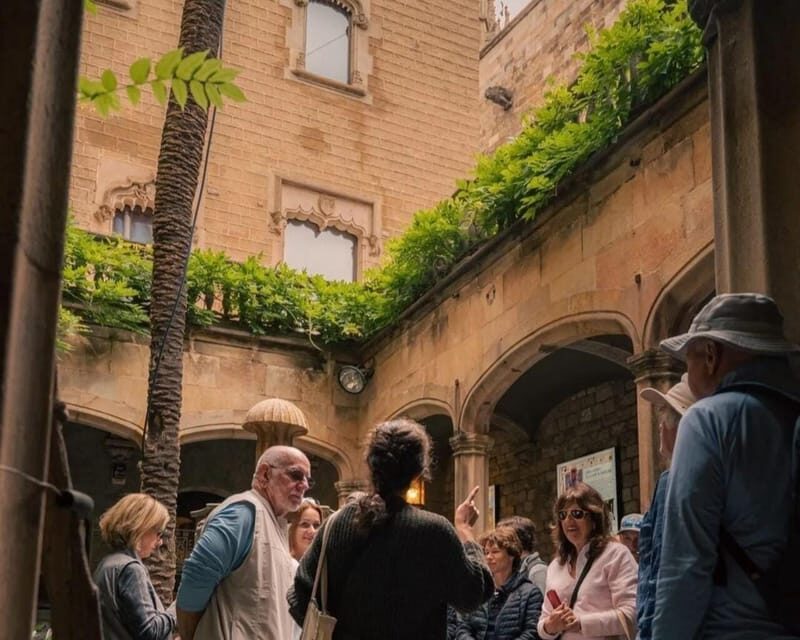
After Sagrada Família, you shift into the logic of the city. The tour moves to the Eixample district, the area designed in the mid-19th century when Barcelona grew beyond its medieval walls.
This is not just background filler. The grid-like layout, wide streets, and planned urban blocks are part of why Modernisme flourished where it did. The guide explains the urban planning ideas tied to Ildefons Cerdà, including the goal of balancing architecture, nature, and everyday city life.
Once you understand that planning layer, Passeig de Gràcia starts making more sense. Buildings feel less like isolated masterpieces and more like parts of a deliberate streetscape where architects could compete and experiment.
Also, this is where you’ll start picking up architectural “tells” more quickly. After the first couple façades, you’ll see patterns in how different architects handled curves, ornament, and the relationship between street and window.
Passeig de Gràcia: Where Gaudí’s Style Gets Loud (in a Good Way)
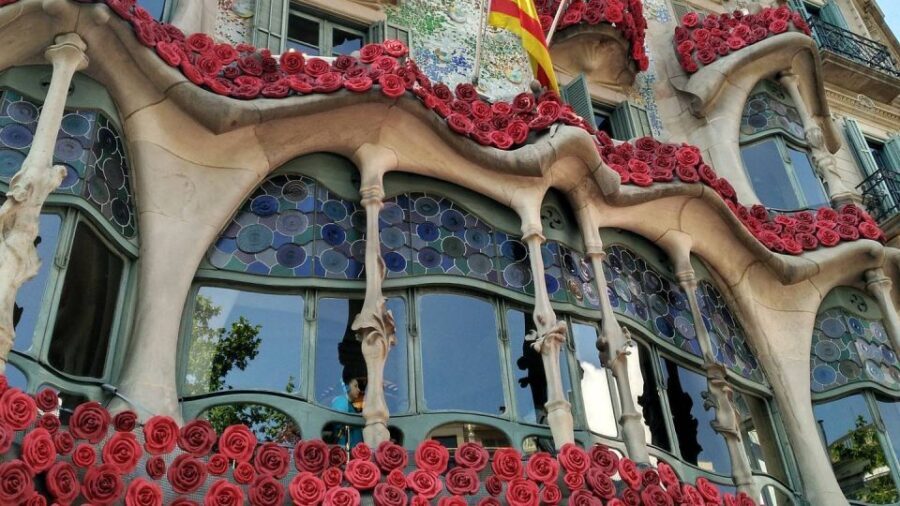
Passeig de Gràcia is where Barcelona turns into a walking gallery, and the tour focuses on several of the avenue’s biggest names. Expect frequent moments where you slow down without meaning to.
La Pedrera (Casa Milà): Form, Function, and Gaudí’s Last Civil Project
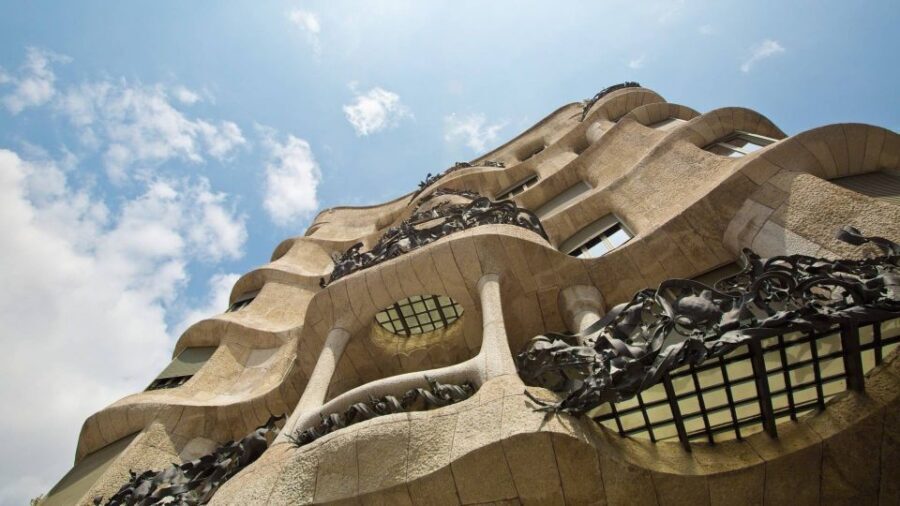
You’ll see La Pedrera, a UNESCO World Heritage Site and described here as Gaudí’s last civil project. The point of stopping at this one is to understand Gaudí’s “no straight lines” mindset and how he worked with structure and atmosphere at the same time.
Even if you’ve only seen La Pedrera in photos, seeing it on the street gives you scale. That curve-driven façade looks playful up close—but the tour frames it as careful design rather than decoration for decoration’s sake.
You can also read our reviews of more private tours in Barcelona




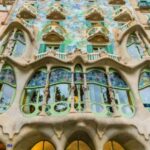
Casa Batlló: The Rolling-Sea Look and Why It Works
Next is Casa Batlló, a favorite because its forms often get compared to a rolling sea. The guide connects that visual effect to Gaudí’s broader approach: organic shapes, expressive surfaces, and a willingness to treat a building like a living thing.
Casa Batlló is also a reminder that Modernisme wasn’t only for grand churches. It was also for daily life—homes, commerce, and the identity of a fashionable neighborhood.
Casa Calvet: A Shortcut to Gaudí’s Early Thinking
You’ll also encounter Casa Calvet, which is identified as an example of Gaudí’s early work. This stop is valuable because it gives you a before/after feeling. You get to see how Gaudí’s ideas develop rather than assuming his style appeared fully formed.
If you love watching artists evolve, you’ll appreciate this placement among the later “wow” buildings.
The Modernisme Cast Beyond Gaudí: Domènech i Montaner and Puig i Cadafalch
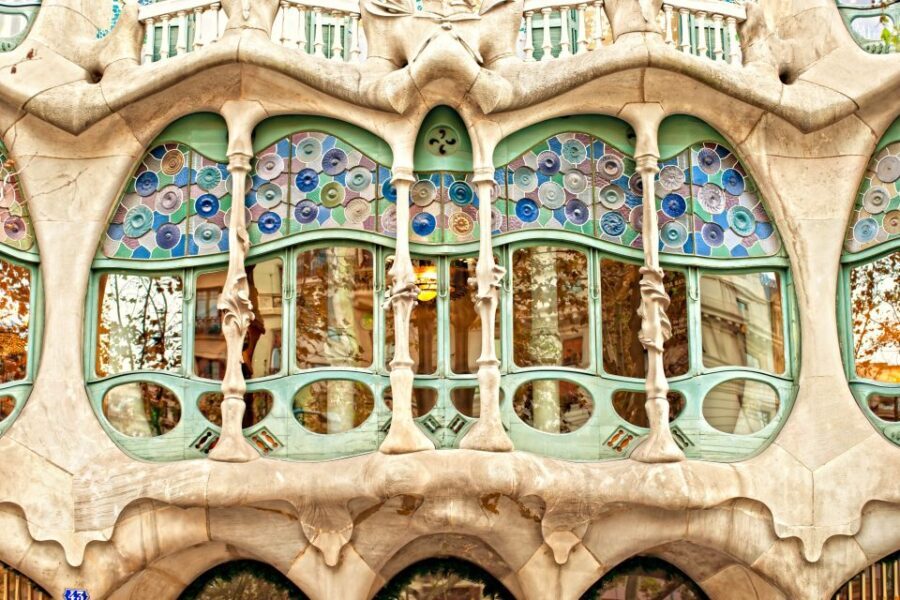
One reason this tour works for me is that it doesn’t force everything into a Gaudí-only story. Modernisme in Barcelona involved multiple star architects, and you’ll see several of their signatures on the same avenue.
Casa Lleó Morera: Lluís Domènech i Montaner’s Character
You’ll visit Casa Lleó Morera, attributed here to Lluís Domènech i Montaner. The guide helps you connect the building’s look to Domènech i Montaner’s design identity—so you’re not just memorizing names, you’re recognizing differences.
The Passeig de Gràcia Trio: Batlló, Amatller, and Lleó Morera
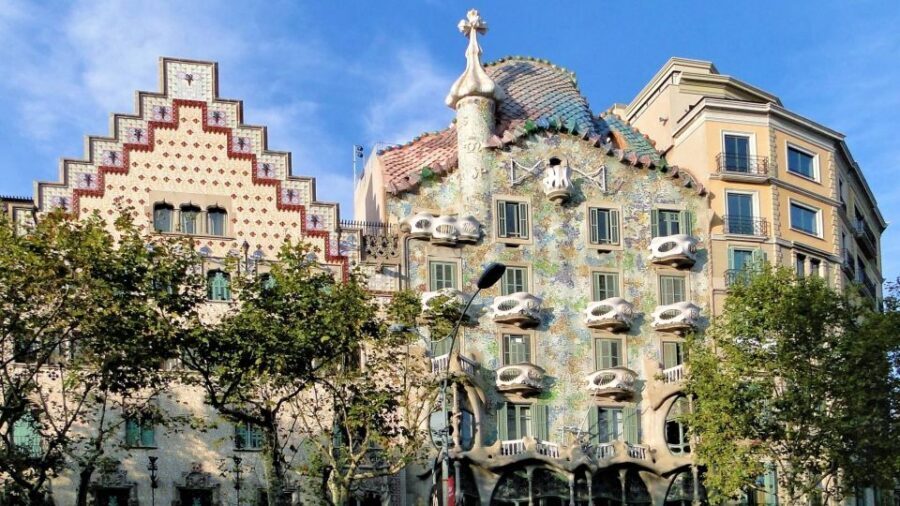
The tour highlights the famous “trio” dynamic on Passeig de Gràcia: Casa Batlló, Casa Amatller, and Casa Lleó Morera. Casa Amatller is attributed to Josep Puig i Cadafalch.
This trio matters because it shows a kind of visual conversation between architects. Instead of one style dominating, you get a streetscape where each building makes a distinct argument—about beauty, craft, and what “Modernisme” should feel like.
Casa Comalat and Palau del Baró de Quadres: Extra Variety
You’ll also see Casa Comalat, described as influenced by Gaudí’s organic shapes. Then comes Palau del Baró de Quadres, described here as Modernisme by Puig i Cadafalch.
Stops like these are smart for you if you want more than the greatest-hits photos. You’ll leave with a richer sense of how varied the movement can be even when you’re walking the same street.
Casa de les Punxes and Palau Montaner: Finishing with More “How Did They Do That?”
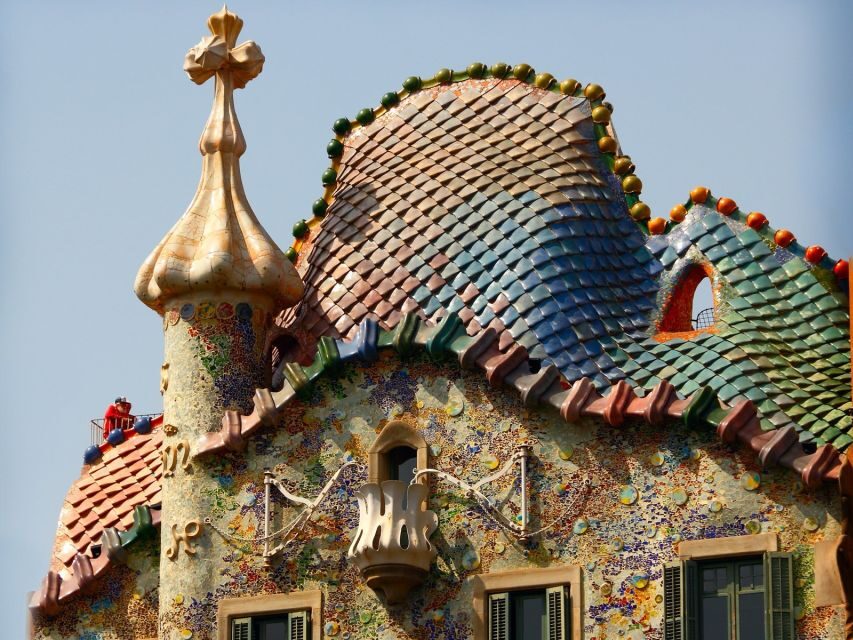
As the walk continues, the tour adds Casa Terradas (Casa de les Punxes) and Palau Montaner. These are positioned as additional architectural jewels that show the breadth of Barcelona’s Modernisme heritage.
This is a good way to end if you’ve started to get architectural fatigue. By the time you reach these, you’ve learned enough to notice details faster. That means the final stops feel like payoffs instead of repeats.
One small planning note: some people find the end point back near Sagrada Família a bit of a surprise if they had planned to go inside after the walk. If entering is on your list, I’d schedule your “inside time” separately from the walking window so you don’t feel rushed.
How Much Walking You’re Really Doing (and How to Prepare)
This tour is about 3 to 3.5 hours, and it’s a walk through multiple architectural stops. That sounds easy on paper, but Modernist landmarks are spread out enough that you’ll be on your feet for most of the experience.
I’d come with two things ready:
- Comfortable shoes (non-negotiable here)
- A mindset that the tour is mainly about seeing and interpreting, not sprinting between entrances
The tour runs as a small group with a maximum of 12 participants, and that size helps keep the pace human. In some cases, the group can be just a few people, which makes Q&A and side questions more natural.
If you get tired easily, you’ll still be fine—just plan a slower next day. This is one of those experiences where you leave with your eyes full and your feet quietly complaining.
Price and Value: Why Around $21 Can Still Be a Good Deal
The listed price is $21 per person, which is unusually low for a guided architecture experience across multiple major stops. The value here comes from several practical factors: a guided route that saves you from piecing everything together, plus a local guide who can explain what you’re seeing at each façade.
Included in the experience is a professional local guide (English and Spanish options), the guided tour, and optional gratuities. There are also no personal expenses listed, which means you should budget only for what you personally choose to add—like snacks, transit, or any optional entry fees if you decide to go inside sites.
If you’re weighing cost vs. benefit, the big question is simple: do you want to understand the architecture while you’re looking at it? If yes, this price can feel like a steal.
Who This Tour Suits Best
This tour fits you if you want:
- A structured way to understand Modernisme, not just a photo walk
- Focus on Gaudí plus other key architects like Domènech i Montaner and Puig i Cadafalch
- A guided pace that works well for curiosity, questions, and comparison between buildings
It’s also a strong choice for your first full day in Barcelona. Seeing Sagrada Família and then walking Passeig de Gràcia helps you get your bearings fast, and the guide can point out extra things in the historic center you might want to return to later.
If you’re traveling with teens or family members who like art and design, you’ll likely find the explanations engaging—especially because the route includes both famous and less-mentioned buildings.
The Guides: What You Can Expect in Real Conversation
What shows up again and again in guide performance here is clarity and enthusiasm. Names connected with the experience include Stephanie, Isabel, Antonio, André, Roberto, Olga, Flora, Jordi, Miguel, and Daniel—and the common theme is that the guide treats the walk like a conversation, not a lecture.
The best version of this tour is when the guide:
- points out the details you might miss on your own
- answers questions as they come up
- shares helpful context about how and why the city developed the way it did
If you want the route to feel personal, the small group size helps a lot.
Should You Book This Private Barcelona Modernism and Gaudí Walking Tour?
Book it if you want a guided architecture experience that stays practical and helps you see patterns across Barcelona’s Modernisme, not just admire single façades. The combination of Sagrada Família, the Eixample planning context, and the Passeig de Gràcia building cluster is a smart way to compress a lot of architectural learning into a short walking window.
Skip or adjust expectations if you’re mainly chasing interior visits or you’re sensitive to lots of time on your feet. In that case, consider pairing this with separate ticketed entry plans, so the tour doesn’t become a rushed compromise.
FAQ
How long is the Private Barcelona Modernism and Gaudí walking tour?
It runs about 3 to 3.5 hours, depending on the starting time and how the walk is scheduled.
Is the tour private?
Private group options are available, and the tour also runs as a small group with a maximum of 12 participants.
What languages are the guides?
Guides are available in English and Spanish.
Where is the meeting point?
The meeting point may vary depending on the option booked.
What should I bring?
Bring comfortable shoes since this is a walking tour.
Is cancellation available?
Yes—free cancellation is offered up to 24 hours in advance for a full refund.