REVIEW · BARCELONA
Private electric bike tour – Discovery of Barcelona
Book on Viator →Operated by Visites Guidées de Barcelone · Bookable on Viator
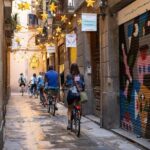
Four hours, a whole Barcelona education. The loop is built for speed and meaning: you glide past major landmarks, then get the story behind what you’re seeing. I love the private format (your group sets the pace), and I love how the e-bike makes Barcelona’s hills feel manageable without cutting out the sights.
One thing to consider: central Barcelona can get tight with pedestrians and crowds, especially later in the day. If you want an easier ride and fewer stop-and-go moments, plan a morning start when you can.
In This Review
- Key highlights to look for
- Why a private e-bike loop works so well in Barcelona
- Getting set up: meeting point and bike confidence
- The historic core: Plaça de Sant Jaume and the city’s power story
- From Cathedral Square to Santa Maria del Mar: Gothic Barcelona in two flavors
- Palau de la Música and Santa Caterina: Catalan modernism and working neighborhoods
- Port Vell to La Barceloneta: old port transformation and a terrace reset
- Gaudí’s core run: Sagrada Família, Casa Milà, and Casa Batlló
- Placa d’Espanya to the Montjuïc viewpoints: fairgrounds, museums, stadium energy
- Pace, length, and what the ride feels like
- Value for money: $96.11 and what you’re actually buying
- Who this tour fits best (and who should rethink it)
- Should you book it?
- FAQ
- How long is the Discovery of Barcelona private e-bike tour?
- What is the price per person?
- What’s included in the tour price?
- Are attraction tickets included?
- Is this tour private?
- What language is the tour offered in?
- Where is the meeting point?
- Can I cancel for a full refund?
- What happens if the weather is poor?
Key highlights to look for
- Private group pacing so you can linger for photos and questions
- E-bike support that helps on steep climbs without killing your legs
- Jean-Pierre’s storytelling that connects city politics, architecture, and daily life
- A single loop that ties together Gothic sights, Gaudí, and Montjuïc views
- Practical breaks including a short pause in La Barceloneta for a terrace stop
Why a private e-bike loop works so well in Barcelona
Barcelona rewards curiosity, but it punishes the slow traveler in the wrong way: long walking distances, uneven sidewalks, and hills that sap energy fast. This tour solves that problem with electric bikes plus a real guide who talks you through what matters, not just what to pose next to.
The ride is also designed for variety. You’re not doing one neighborhood at a time for hours. You hop between the political core of the city, the Gothic Quarter vibe, the modernist showpieces, and then the Gaudí-and-sea axis. By the time you reach Montjuïc, the city’s “shape” finally makes sense: hills, harbor, and the way Barcelona builds identity out of architecture.
You also get something that’s hard to replicate on a bus: movement plus context. Walking from one landmark to the next can turn into a checklist. Cycling there makes it feel like a journey.
You can also read our reviews of more cycling tours in Barcelona

Getting set up: meeting point and bike confidence
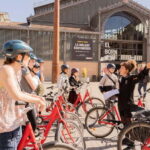
The tour meets at Carrer de Cervantes, 5, in Ciutat Vella, and you end back at the same spot. That matters because you’re not reinventing your logistics after you’re done. The starting point is in the older center of Barcelona, where you’ll likely be near public transport anyway.
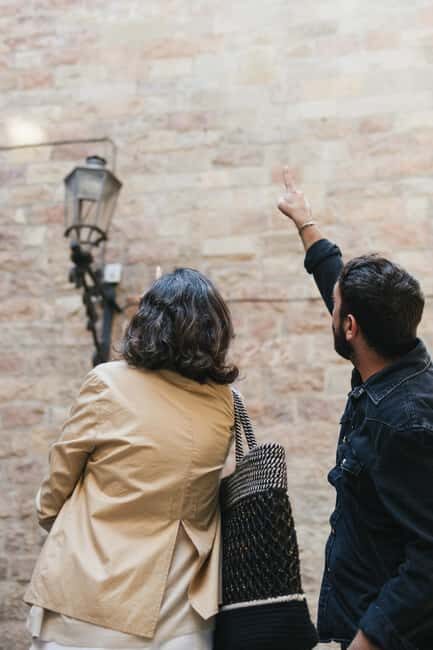
The guide (Jean-Pierre is commonly named in customer feedback) spends time helping you get comfortable on the bike first. That’s a big deal if you’ve never ridden an e-bike in a real city. Expect instruction focused on basic handling and safety, so you can focus on the road and the sights rather than worrying about control.
Because it’s a private tour, you also avoid the chaos of big groups weaving through narrow streets. You may still ride near pedestrians, but your stops are more coordinated, and you don’t have strangers tugging at your schedule.
The historic core: Plaça de Sant Jaume and the city’s power story
Your first big stop is Plaça de Sant Jaume, where Barcelona’s civic identity shows up in stone. The square holds both the Barcelona City Hall and the Palau de la Generalitat (Catalan Government Palace). This is the place where you start to understand how Barcelona thinks about itself—politically, culturally, and historically.
What I like about starting here: it gives you a framework. Later, when you see modernist architecture or debate Catalan identity through landmarks, you’ll already know why those stories land so deeply. It’s the difference between viewing buildings and understanding what they represent.
This segment is short in time—enough for the key points, not a long standstill. That works well on a bike tour. You’re always moving, but you’re not sprinting past meaning.
From Cathedral Square to Santa Maria del Mar: Gothic Barcelona in two flavors
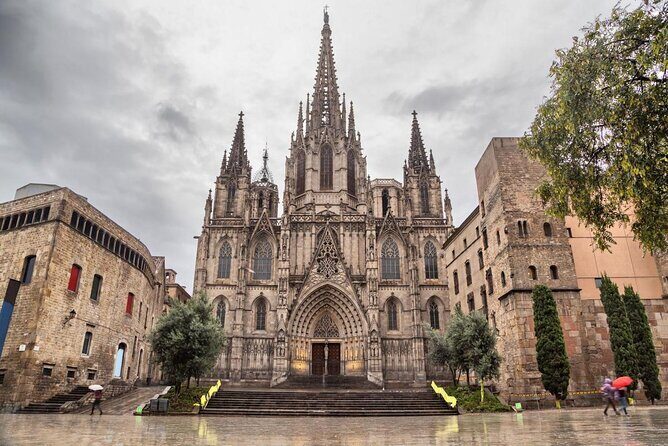
Next comes Barcelona Cathedral, where you’re shown important history tied to the square. Cathedrals are tricky on tours: either you get a rushed exterior glance, or you’re pushed into a long ticketed visit. Here, you get the “why it matters” layer with a quick look at the setting.
Then you roll toward Basilica de Santa Maria del Mar, often described as the most beautiful Gothic church in the city. The big value isn’t only the architecture—though that’s a highlight. It’s the way the guide connects the church to the city’s social story. You start to see the Gothic Quarter as lived-in space, not just a postcard.
In a tight 4-hour window, this “two Gothic stops” approach is a smart use of time. You leave the center knowing the main religious and civic centers, not just one famous façade.
Palau de la Música and Santa Caterina: Catalan modernism and working neighborhoods
A bike tour earns its keep when it reaches beyond the headline list. This stretch does that.
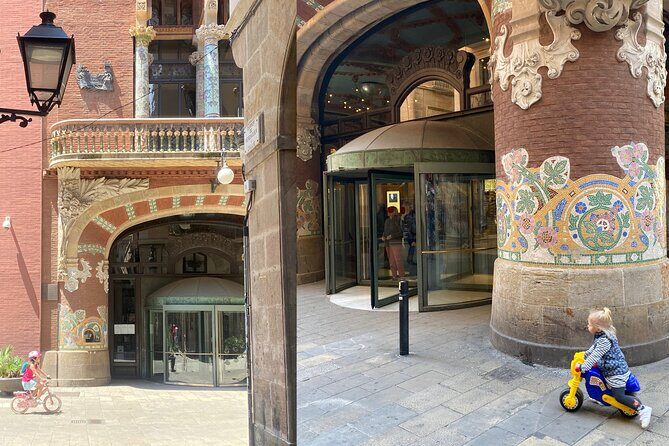
At the Palace of Catalan Music, you’re led to the gates and guided through the story behind the concert hall—one of the signature works of Catalan modernism. You also get answers to two questions that help you read the building: what Catalan modernism means, and who architect Lluís Domènech i Montaner was. Once those pieces click, the details around you make more sense.
Right after that, you reach Mercado de Santa Caterina, a smaller neighborhood market with a 19th-century foundation that was transformed in the early 20th century. Markets can feel generic on tours, but this one is framed as a local story of change and craft. Even if you only stop briefly, you’re looking at the city’s everyday rhythm.
I like pairing these two stops because they show contrast: public culture and music versus daily commerce and neighborhood life—both shaped by the same era’s ambition.
You can also read our reviews of more private tours in Barcelona


Port Vell to La Barceloneta: old port transformation and a terrace reset
Then the tour pivots toward Port Vell (Old Port), with the spotlight on how the harbor area was radically transformed ahead of the Olympic Games. This helps you understand why the waterfront looks the way it does: Barcelona didn’t just grow naturally here; it redesigned.
From there it’s on to La Barceloneta, the seaside district with roots as a workers’ and fishermen’s area. The ride lands you in a part of Barcelona that’s easy to love and easy to oversimplify. Here, it’s treated as a place with a past, not just a beach strip.
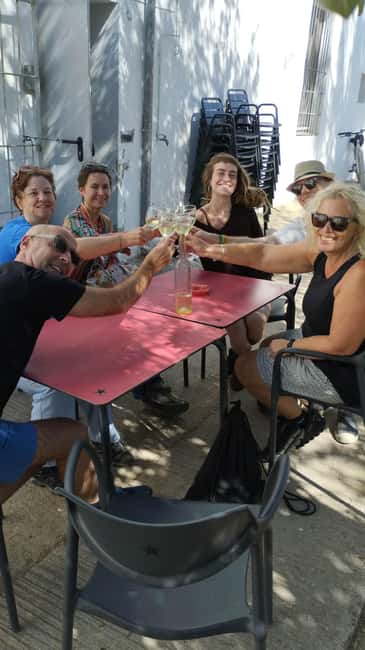
You also get a short break—about 25 minutes—on a terrace to quench your thirst. That’s not just a comfort stop. It’s time for your brain to catch up after several architecture-focused stops in a row.
If you’re visiting in warmer months or you tend to feel heat faster than others, this pause is especially welcome.
Gaudí’s core run: Sagrada Família, Casa Milà, and Casa Batlló
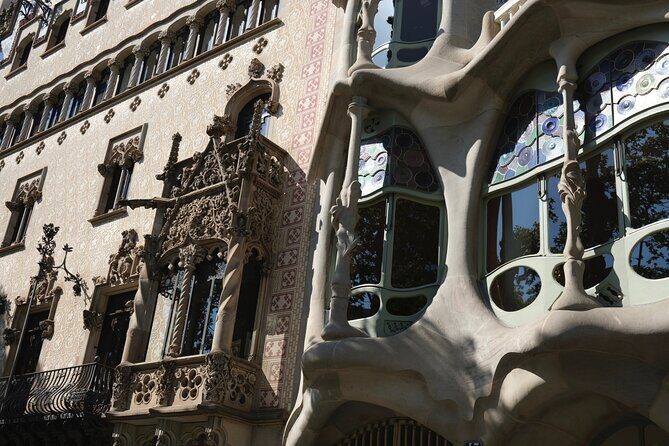
Now you hit the portion that most visitors come for: Gaudí. The tour includes three major stops in a tight sequence, and that sequencing matters.
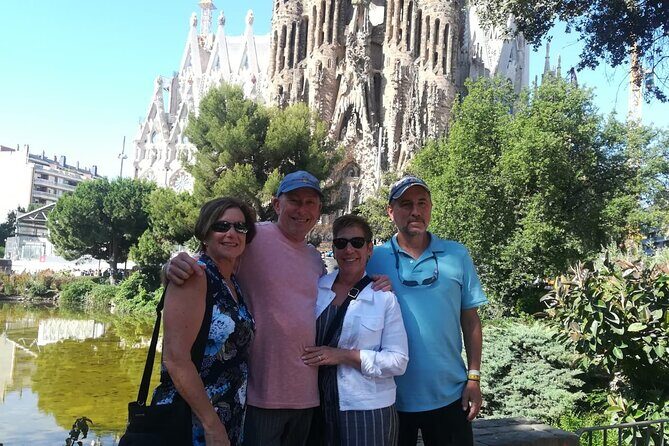
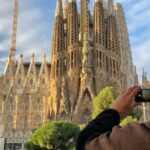
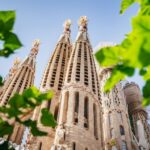
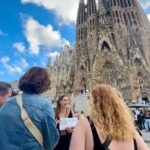
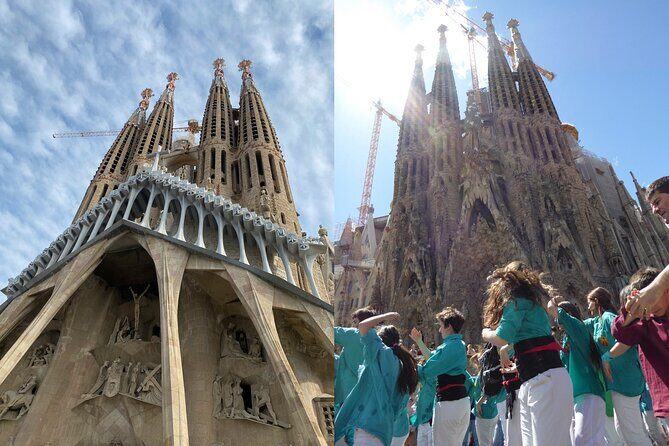
First is Basilica de la Sagrada Familia, presented as Antoni Gaudí’s key work and the most important monument in the city. Even without a long ticketed deep dive, you’re getting the context for why it’s treated like Barcelona’s defining building—shape, symbolism, and the way craft becomes identity.
Next are the two famous houses:
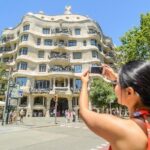
- Casa Mila (La Pedrera), described as Gaudí’s last civilian commission, called La Pedrera.
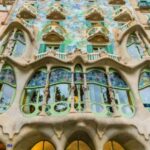
- Casa Batlló, another Gaudí creation and one of his most admired works.
You’ll likely notice that the tour frames these homes not just as pretty façades. You get the sense that Gaudí used buildings as experiments—style as an idea, not decoration.
One practical note: this is where the crowds can feel real. The ride itself helps you move through the city without losing half your day stuck in lines. But keep your expectations flexible for photo time and street-level traffic.
Placa d’Espanya to the Montjuïc viewpoints: fairgrounds, museums, stadium energy
After Gaudí, the tour shifts to Placa d’Espanya, with the arenas and fountain, and a setting tied to the Universal Exhibition of 1929. You’re also pointed toward modern architecture around the area, including the Mies van der Rohe pavilion (mentioned as a major modern architecture jewel) and other nearby structures tied to that exhibition-era vision.
Then you enter the Poble Espanyol, described as the Spanish Village built as part of the 1929 World’s Fair. Even though it’s not the same as wandering every region of Spain naturally, the concept is useful: you see how events can package culture into an organized space—and how Barcelona hosted that idea.
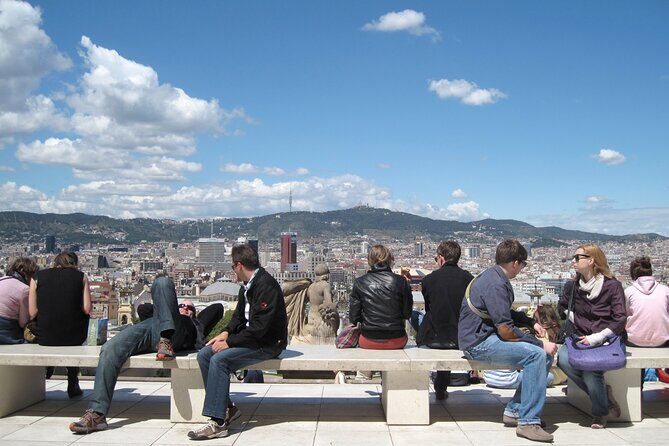
From there it’s to the Museu Nacional d’Art de Catalunya, which originally functioned as the Spanish pavilion for the 1929 exhibition. Today it’s framed as the city’s most important museum, and the stop includes a very nice view of Barcelona. If you like photos but also want the city to make sense, this viewpoint moment is worth your attention.
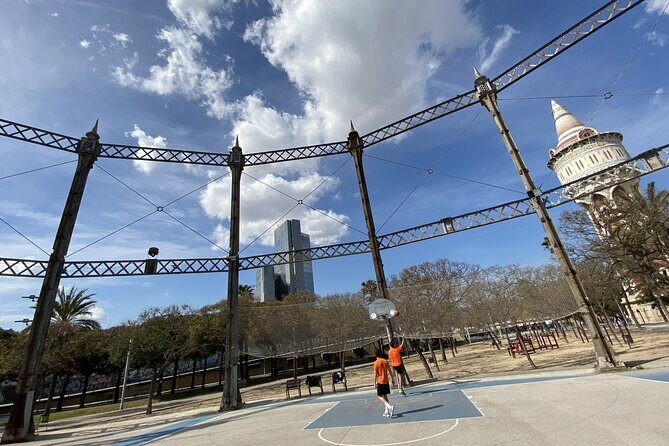
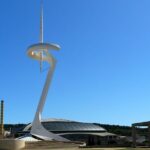
Next comes Estadi Olímpic, part of the Olympic ring, with the Palau Sant Jordi and a telecommunications tower designed by Santiago Calatrava. This isn’t just sports history. It’s another clue about Barcelona’s strategy: big events reshaped the city, then left behind architecture you can still navigate decades later.
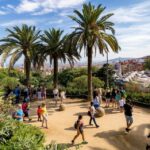
After that, you reach culture-on-the-hill territory with the Joan Miró Foundation, plus Jardins del Mirador del Alcalde, where you get a beautiful view over the city and the port. This is the “exhale” section: the ride slows mentally because the view gives you a wider context.
Pace, length, and what the ride feels like
The tour is listed as about 4 hours, but in practice it can stretch a bit depending on how much you stop, take photos, and ask questions. One reviewer experience notes it lasted longer than expected, while another mentions a longer duration too. With a private guide, the schedule is more flexible than group tours.
You’ll also cover a lot of ground. Customer feedback mentions a ride that can be around 20+ km, with plenty of up-and-down terrain. This is exactly where e-bikes earn their keep. They help you keep your energy for the sights instead of turning the hills into the whole tour.
I also like that the route doesn’t treat the ride like a treadmill. Stops are short and targeted: 5–25 minutes at key places, plus the terrace break. That keeps the tour lively and prevents museum-drift, where you forget what you were supposed to learn in the first place.
Value for money: $96.11 and what you’re actually buying
At $96.11 per person, this isn’t a bargain price in the absolute sense. But for Barcelona, it’s a strong value when you look at what’s included.
You get:
- A private tour format for just your group
- Use of an e-bike and helmet
- A guided route that hits major sights across multiple neighborhoods
- A city-history narrative that ties architecture, politics, and events together
Tickets are not included for attractions. That’s fine because many stops are exterior or square-based, and the time spent is focused on orientation and context. If you’re planning to do ticketed interiors later (like a full Sagrada Família visit or house tickets), this tour works as a smart primer.
So think of the cost as paying for time, movement, and a guide who helps you make sense of the city fast.
Who this tour fits best (and who should rethink it)
This tour is ideal if:
- You want a half-day overview that still feels specific
- You’re drawn to architecture and want real explanations, not just location names
- You have limited time and want to cover central Barcelona efficiently
- You want the comfort of a private group pace, especially around busy areas
It might be less ideal if:
- You’re not comfortable riding in traffic-heavy areas with pedestrians nearby
- You dislike sharing road space, even with an experienced guide
- You want a purely ticketed museum day with deep entry time everywhere (this is more about viewing and storytelling than long indoor visits)
Should you book it?
If you’re aiming to understand Barcelona without spending your whole trip crisscrossing on foot, I’d book this. The mix of civic Barcelona, Gothic landmarks, modernism, sea-front atmosphere, Gaudí icons, and Montjuïc viewpoints gives you a complete first look at the city’s “logic.”
Book it especially early if you can, since crowds can make bike riding more stressful later. And because the guide helps with safety and bike use, it’s a good pick even if you’re new to e-bikes.
If your priority is ticketed interiors only, you may want to pair this with separate visits. But as a fast, meaningful orientation tour, this one earns its place near the top of the list.
FAQ
How long is the Discovery of Barcelona private e-bike tour?
It’s about 4 hours.
What is the price per person?
The price is $96.11 per person.
What’s included in the tour price?
The tour includes use of an e-bike and a helmet.
Are attraction tickets included?
No. Tickets to attractions are not included.
Is this tour private?
Yes. It’s private, so only your group participates.
What language is the tour offered in?
The tour is offered in English.
Where is the meeting point?
The start point is Bike rental, Carrer de Cervantes, 5, Ciutat Vella, 08002 Barcelona, Spain, and the tour ends back at the same meeting point.
Can I cancel for a full refund?
Yes. Free cancellation is available up to 24 hours in advance for a full refund.
What happens if the weather is poor?
This experience requires good weather. If it’s canceled due to poor weather, you’ll be offered a different date or a full refund.