REVIEW · BARCELONA
Sant Pau Art Nouveau Site Skip The Line | Sant Pau Hospital
Book on Viator →Operated by THINGS TO DO IN FZCO · Bookable on Viator
Sant Pau Hospital is Barcelona at its most imaginative. This Art Nouveau medical complex was designed to help patients heal, and the result is a peaceful campus of domes, stained glass, and garden paths. I love how the architecture turns a hospital into something almost playful and uplifting, not grim. Art Nouveau pavilions here feel like living sculpture.
I also love the practical comfort of a skip-the-line ticket: you can get in, take photos, and roam at your own pace without waiting around in a queue. One possible drawback: this option includes admission only, not a guided tour, so the story behind what you’re seeing is mostly up to you (or your phone/printed materials) rather than a live guide.
In This Review
- Key Things to Know Before You Go
- Why Sant Pau Hospital Still Feels Ahead of Its Time
- Ticket Value: What You’re Paying (and What You Get)
- Arriving at Recinte Modernista de Sant Pau (and Getting Oriented Fast)
- The Pavilion City: 16 Pavilions of Catalan Art Nouveau
- Learning the Medical Logic Behind the Beauty
- Gardens and Tranquility: The Part That Makes You Exhale
- Stained Glass and Photo Stops You’ll Actually Use
- Underground Tunnels: The Surprise Element
- How Long You Really Need (and How to Avoid a Rushed Visit)
- Who This Works Best For
- Should You Book This Sant Pau Skip-the-Line Ticket?
- FAQ
- What does the ticket include?
- How long should I plan for the visit?
- Is this a skip-the-line ticket?
- Where is it located, and is public transportation nearby?
- When will I get confirmation after booking?
- Is the experience refundable if I cancel?
Key Things to Know Before You Go
- Skip-the-line style admission helps you start your walk faster.
- Art Nouveau planning for healing shaped the whole layout, from pavilions to gardens.
- Sixteen pavilions (plus restored hospital buildings) make this a real walking experience.
- Stained glass and tiled details are photo gold, especially in daylight.
- Underground tunnels add an unexpected layer to the visit.
- Gardens are part of the design, not just decorative extras.
Why Sant Pau Hospital Still Feels Ahead of Its Time
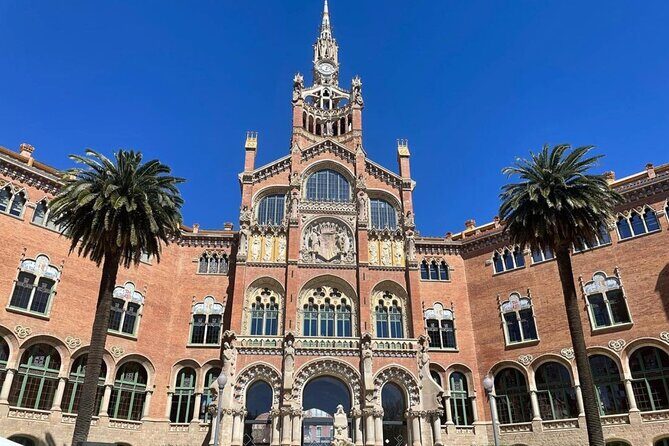
Sant Pau is not another pretty building you quickly glance at and move on. It’s a full-on campus of healthcare spaces, arranged with enough thought that it still reads like a concept you could understand in 2026. The site traces back to a hospital presence dating to 1401, then later became the modernist vision you see today.
The big name here is architect Lluis Domènech i Montaner, with construction spanning 1901 to 1930. That timeline matters because it helps explain the mix of craft and intention: this was a major public project, not a quick decorative stunt. And yes, it’s a UNESCO World Heritage Site (since 1997), which is a polite way of saying the world agrees this place deserves your attention.
You can also read our reviews of more tours and experiences in Barcelona



Ticket Value: What You’re Paying (and What You Get)
At $26.41 per person for about 1–2 hours, you’re paying for a museum-like experience plus direct access to a large, photo-friendly historic site. The value is strongest if you want to wander on your schedule. With admission included, you get entry and can explore the grounds, pavilions, and tunnels without needing a group timing.
Where the math gets a little less perfect: this ticket does not include a guided tour. If you’re the type who loves names, dates, and how the medical layout worked step by step, you might feel like you’re doing some of the learning yourself. That doesn’t ruin the visit, but it changes the experience from explained to self-paced.
Arriving at Recinte Modernista de Sant Pau (and Getting Oriented Fast)
The complex is in Barcelona and is close to public transportation, which is a relief in a city where walking everywhere can be a choice you regret later. Plan for a few minutes of getting your bearings when you enter, because the grounds spread out and it’s easy to start in the wrong direction and lose time.
Once you’re inside, the key is to think like a visitor, not a tourist with a checklist. You’re walking through a planned system: pavilions, pathways, and open spaces that were meant to move patients through light, air, and calm. If you slow down early, you’ll enjoy more later, including the smaller details people miss when they speed through.
The Pavilion City: 16 Pavilions of Catalan Art Nouveau
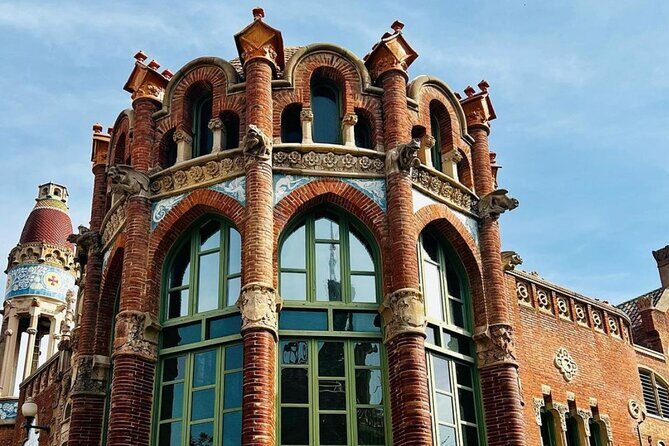
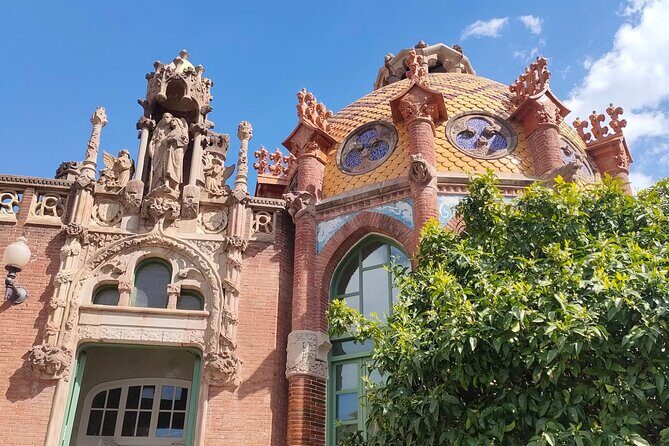
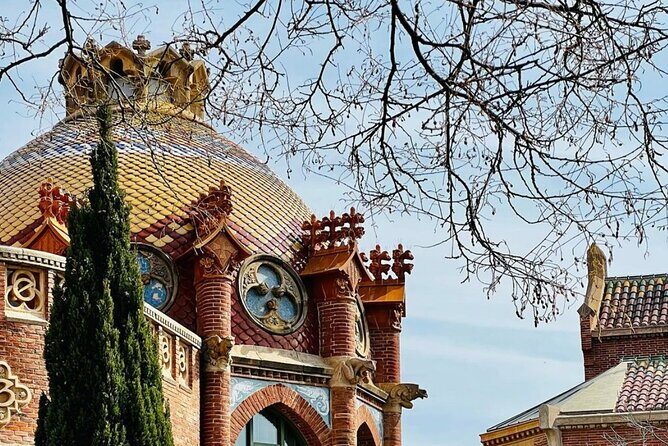
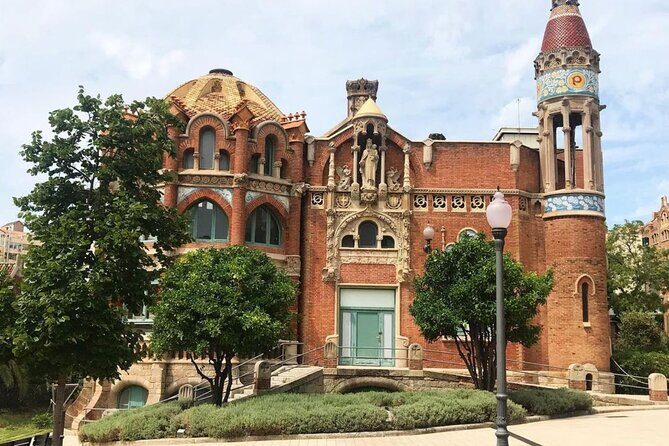
This is the part you came for: the vast property, the dramatic scale, and the fine detail that makes Sant Pau feel joyful even though it’s a former hospital. You’ll see a cluster of restored buildings and pavilions—the site layout is described as having 16 pavilions—so it’s more than one main attraction. Plan for a real walk, not a quick stroll.
What to look for:
- Domes and rooftops that change shape as you move around the complex.
- Tiled surfaces and patterned facades that reward slow turning.
- Window work and architectural framing that make the buildings look “finished,” even from a distance.
One of the reasons this place lands so well for first-timers is that it doesn’t just copy Art Nouveau into architecture. It uses it as a building language for function—so the curves, colors, and ornament also help define spaces. You can see the overall design logic as you move from pavilion to pavilion, even without a deep architecture degree.
Learning the Medical Logic Behind the Beauty
Sant Pau isn’t pretty by accident. The whole concept is tied to how the hospital was meant to support healing. The gardens aren’t “nice extras”; they’re part of the same design plan that shaped circulation and the patient experience.
It helps to know a few anchor facts as you explore:
- The modern project was built between 1901 and 1930.
- The site served as a municipal hospital for many decades, from 1912 to 2009.
- The campus includes a sense of separation between spaces that feels thoughtful, not random.
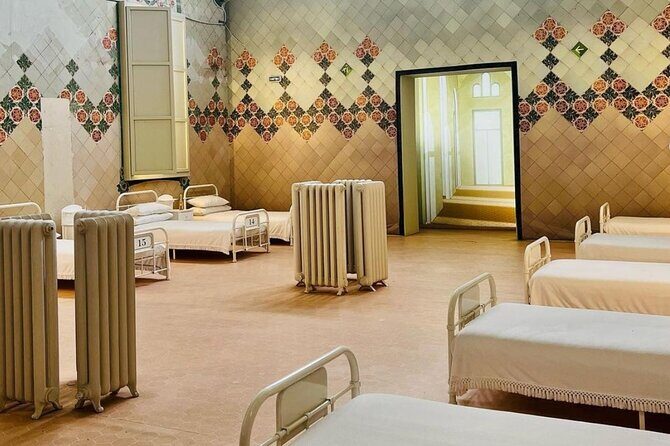
You’ll likely notice recreated areas inside some pavilions, including an old-ward style scene and a solarium-like visiting room. Even if you don’t get every historical detail, these kinds of recreations make the site feel less abstract. You’re not only viewing a shell—you’re seeing how rooms were used.



Gardens and Tranquility: The Part That Makes You Exhale
If you’ve only seen Art Nouveau as exterior decoration, Sant Pau can flip that idea. The gardens are designed to calm you down, and they do. After you’ve been staring at facades and photographing domes, the paths and open green space help your brain reboot.
This is where the visit becomes emotional, not just visual. You can feel how an architect might have aimed to reduce stress for patients in the early 20th century. People often think of hospitals as loud and harsh; here, the spaces are airy and reflective. Take a slow route through the garden areas rather than trying to “finish” them. Sit for a minute if you can. That small pause makes the rest of the architecture click.
Stained Glass and Photo Stops You’ll Actually Use
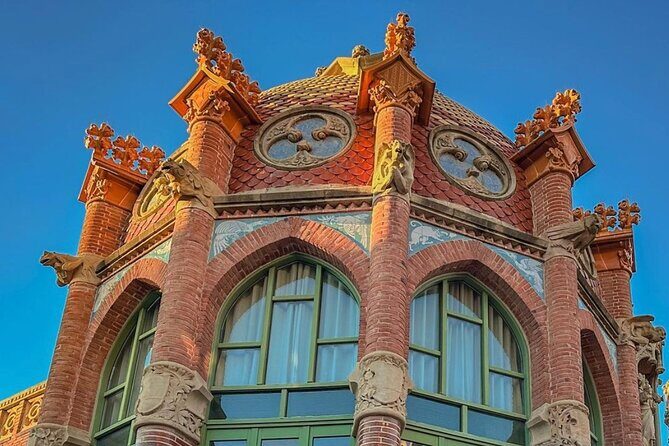
Yes, you should take photos. Sant Pau is one of those places where you’ll keep raising your phone because the light hits differently on each pavilion. Stained glass is a highlight, and it’s the kind of detail that looks stunning in person even if you’ve seen photos before.
Practical photo tips that pay off:
- Shoot from a few angles, not one spot. The domes and facades change character when you step sideways.
- Use the garden light to soften the scene. Bright sun can be intense on stone, but shaded paths bring out the color in smaller details.
- If you care about clean shots, pause before you press the shutter. The complex is popular, but it’s large enough that you can usually find quieter pockets if you move a bit.
Also, because this is a museum-adjacent site, you may find you want to frame more architecture than faces. That’s a good fit here. Let the buildings do the talking.
Underground Tunnels: The Surprise Element
One of the most interesting add-ons to your visit is the chance to explore underground tunnels. Many historic buildings feel like they only exist above ground, but Sant Pau adds a second layer: service and circulation spaces below the main level.
It’s not just a novelty hallway. It changes how you understand the whole campus because you realize the hospital had to function as a system. When you see connections below, the overall layout feels more logical, like the architecture was designed to support movement and operations—not only views.
If you’re short on time, don’t automatically skip the tunnels. They’re one of the parts that make the visit feel more complete and less like a “pretty exteriors” pass.
How Long You Really Need (and How to Avoid a Rushed Visit)
The ticket says about 1 to 2 hours, and that range makes sense. If you’re a fast walker and you’re mostly focused on the highlights, you can manage in around an hour. If you like photos, details, and stopping to look at gardens like they’re part of the exhibit (because they are), aim closer to the full two hours.
My suggestion: start strong with the main pavilion loop, then save your slower time for the garden and stained-glass moments. People often rush the scenic parts first and then find themselves glancing at the last buildings without appreciating them.
When to go? The data doesn’t give exact times, but the general rule holds: if you can, pick a time when you expect fewer crowds. Sant Pau is large enough that even busy periods don’t feel claustrophobic, yet a calmer slot makes the architecture feel even more respectful.
Who This Works Best For
Sant Pau is a great match if you:
- Love Art Nouveau architecture and want something beyond the usual Barcelona icons.
- Enjoy self-guided exploring and like controlling your pace.
- Want a cultural stop that mixes beauty with a clear sense of purpose.
- Care about photography and architectural details like stained glass, tiled surfaces, and domes.
It’s less ideal if you:
- Need a live guide to connect every space to its history. This ticket is admission-only, so you’ll rely on your own reading materials.
- Want a short, stop-and-go experience. This place rewards wandering.
Should You Book This Sant Pau Skip-the-Line Ticket?
If you want an Art Nouveau site you can explore at your own speed, I’d book this. The skip-the-line admission helps you start without delay, and the campus layout gives you enough variety—pavilions, gardens, tunnels, stained glass—to justify the time. At $26.41 for 1–2 hours, the value is solid, especially if architecture and details matter to you.
Just be honest about what kind of learning you want. If you’re craving a full guided explanation, you may prefer a guided option instead. If you’re okay doing the connecting yourself while you walk through the spaces, this is one of Barcelona’s most rewarding “slow down and look” stops.
FAQ
What does the ticket include?
The ticket includes admission to the venue. A guided tour is not included.
How long should I plan for the visit?
Plan for about 1 to 2 hours.
Is this a skip-the-line ticket?
Yes. It’s described as a Sant Pau Hospital skip-the-line ticket.
Where is it located, and is public transportation nearby?
It’s in Barcelona, Spain, and it is listed as being near public transportation.
When will I get confirmation after booking?
Confirmation is received within 48 hours of booking, subject to availability.
Is the experience refundable if I cancel?
No. This experience is non-refundable and cannot be changed for any reason.