REVIEW · BARCELONA
Private Photography Walking Tour with a Local
Book on Viator →Operated by Photo Walking Tours Barcelona · Bookable on Viator
Great photos start with new eyes.
This private photography walking tour mixes Barcelona sightseeing with practical camera instruction, from composition rules to shutter speed. I especially like how the guide asks about your photography interests and level at the start, then adjusts the pace with 1-to-1 tuition in a small group. One possible drawback: it’s a walking tour with a moderate fitness requirement, so you’ll want comfortable shoes and patience for side streets.
What I love most is the tight pairing of photo technique + local storytelling—you learn how to build a visual story, not just take pictures. The tour also welcomes smartphone shooters, including people using an iPhone, so you don’t have to bring a big camera to benefit. The only consideration is that if you prefer total freedom with no structure, you might find the planned stops and photo prompts slightly directive.
In This Review
- Key highlights
- From Santa Caterina Market to City Hall: the walk that teaches you to look
- How the guide teaches: composition rules, camera settings, and shutter speed thinking
- Stop by stop: building Barcelona photo stories, not just pictures
- Meeting at Santa Caterina Market: matching your interests to your practice
- Photography history facts: why the modern camera feels the way it does
- Diving into photo rules: composition and shutter speed as story tools
- Spanish Civil War storytelling: make the image feel like a scene
- Famous artists and Barcelona influence: why style matters
- Catalan culture and art: a one-photo challenge that forces integration
- City Hall recap: your checklist for the next time you shoot
- What you get for $63.05: value comes from coaching, not just walking
- Practical expectations: walking pace, camera needs, and getting the most out of it
- Who should book this Barcelona photo tour (and who might skip it)
- Final verdict: should you book this private photo walk?
- FAQ
- Where does the tour start and where does it end?
- How long is the photography walking tour?
- Is it suitable for beginners or people with phones?
- What’s included in the price?
- Is there walking involved, and what fitness level do I need?
- What is the cancellation policy?
Key highlights
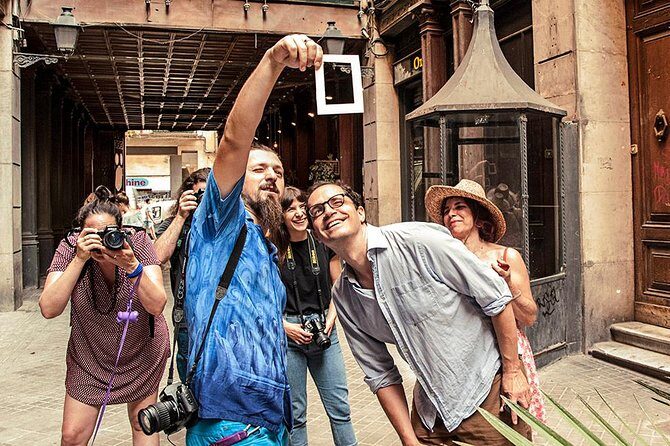
- Meet at Santa Caterina Market and get matched to your interests and skill level right away
- Learn the photography “rules” you can actually use on the street: composition and manual-style thinking
- Spanish Civil War photo storytelling makes your images feel like a sequence, not a snap
- Barcelona artists and Catalan culture add context so your pictures have a sharper point of view
- A one-photo challenge pushes you to combine what you learned before the tour ends
- Recap in front of City Hall, with optional deeper photo feedback at a nearby bar
From Santa Caterina Market to City Hall: the walk that teaches you to look
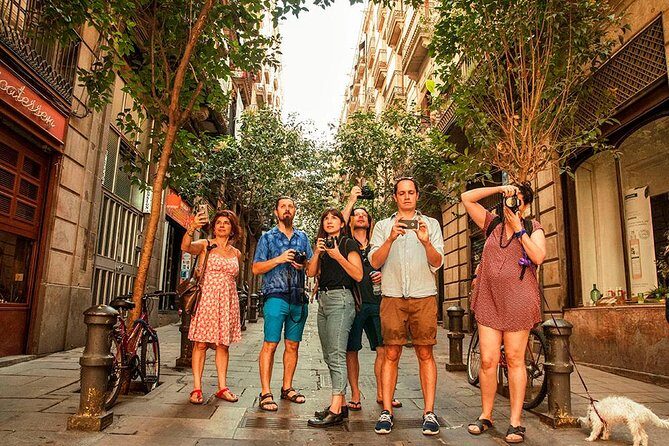
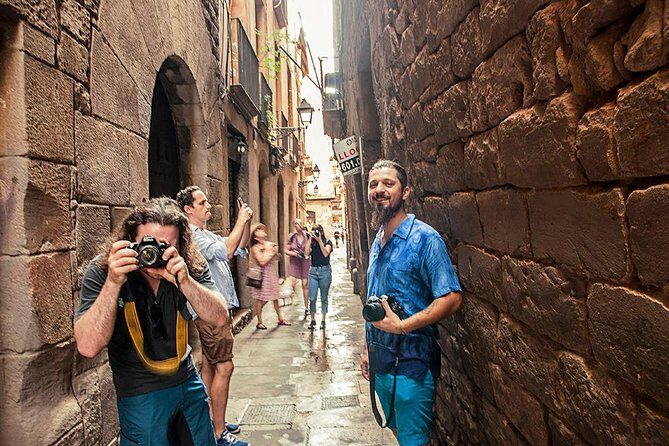
This tour is built for one simple goal: learn how to see Barcelona through a photographer’s lens while you’re still moving. It starts outside Santa Caterina Market, which is a smart choice because the area feels lived-in and full of real visual textures. You’re not standing in a perfect postcard spot; you’re surrounded by the kinds of details street photographers love—angles, contrasts, and everyday moments.
After that, you’ll work your way through Barcelona’s historic center, with plenty of time to stop and practice. The final point is in front of City Hall, where you’ll do a quick recap of the photo tips and tricks you picked up. If you want a little extra help, you can also ask for deeper feedback in a local bar nearby, which is a great way to turn learning into something you can repeat on your own.
Because the group max is 10 people, and it’s sold as private, you can expect more attention than you’d get on a large group tour. That matters because photography teaching isn’t just lectures—it’s coaching your choices. When the instructor can quickly see your framing and settings, you improve faster.
You can also read our reviews of more walking tours in Barcelona



How the guide teaches: composition rules, camera settings, and shutter speed thinking
The heart of this experience is practical. You’re not only told what to photograph; you’re taught how to structure what you photograph. The instruction includes composition, manual camera thinking, and specific guidance around shutter speed. Even if you keep using Auto, the key shift is learning what to change and why, so your photos stop feeling random.
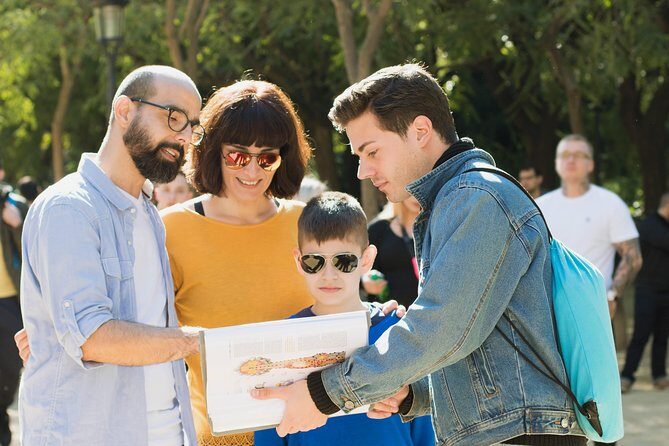
At the start, the guide gets to know you: your interests (street photography, architecture, travel-style shooting, and more) and your photography level (all levels are accepted). Then the teaching is tuned to you. That’s why this tour works for beginners—there’s a path into the basics—and it also works for experienced shooters who want more targeted prompts and critique.
One thing I really like from the way the tour is described is how you’re shown the idea of shooting through someone else’s eyes. The guide doesn’t just say follow my route. You learn how to make choices: where to stand, what to include, what to cut, and how to make the scene readable.
And yes, it’s phone-friendly. People have used iPhones and smartphone cameras on this tour and still got useful results. The lesson here is that the instructor focuses on what you control—framing, light, pacing, and story—more than the size of your camera.
Stop by stop: building Barcelona photo stories, not just pictures
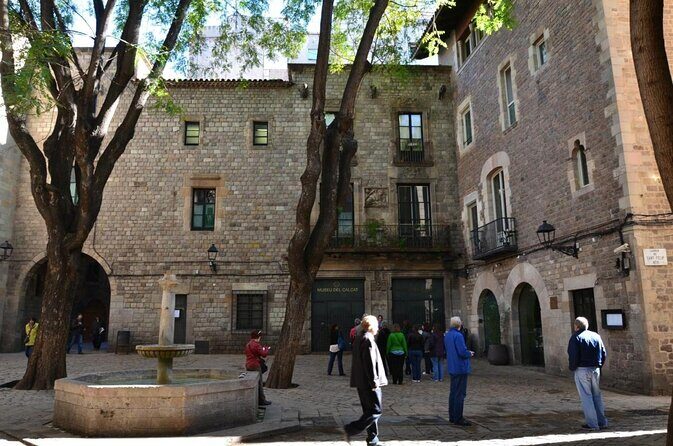
This is where the tour earns its value. Each stop adds a different layer: history for context, then a photography idea that you apply to what you’re seeing.
Meeting at Santa Caterina Market: matching your interests to your practice
You meet at Santa Caterina Market, and before you even start walking much, you’re asked about your photo interests and current level. This matters because Barcelona can be photographed in wildly different ways—street scenes feel different than architectural studies, and architecture needs different framing priorities than people-and-motion images.
You’ll also get an explanation of how small-group, 1-to-1 support works during the tour. That’s a big deal if you’re the kind of traveler who’s worried about keeping up. Here, you’re encouraged to ask questions and get corrections as you practice.
Photography history facts: why the modern camera feels the way it does
The next portion shifts from Barcelona to photography itself. You pass through photography history, and the guide shares interesting facts about the industry and how we ended up with today’s tools and expectations.
This part doesn’t feel like a museum lecture. It gives your camera choices a reason. If you understand what shutter speed and exposure are trying to do, you’ll stop treating settings like magic buttons. You start treating them like tools for a specific visual result.
You can also read our reviews of more private tours in Barcelona

Diving into photo rules: composition and shutter speed as story tools
After that, you start “building your toolkit.” The guide provides a full description of what you’ll be doing—covering composition and the mechanics behind the shots. Based on what the tour emphasizes, you’ll focus on how to use the camera rather than letting the camera decide everything.
The practical payoff is simple: you get more keepers because you spend less time hoping your framing works. Instead, you learn a repeatable way to think before you press the shutter.
One small consideration: if you’re extremely new, you may feel like there’s a lot to absorb quickly. The upside is that you’re not stuck—this tour’s structure and small group size help you get personalized adjustments on the fly.
Spanish Civil War storytelling: make the image feel like a scene
One stop turns toward the Spanish Civil War, and the goal shifts from taking attractive images to building a photo story. You’re encouraged to think in narrative terms—how to imply time, meaning, and tension using the frame.
This can be surprisingly useful even if you don’t care about history. A story prompt gives you a job. Instead of photographing a wall because it looks cool, you photograph it because it helps you communicate a theme.
Andrei (the guide named in multiple accounts) is noted for blending city history with photo fun, so this section isn’t just facts. It’s facts that lead into an image-making goal.
Famous artists and Barcelona influence: why style matters
Next, you talk about famous artists and how Barcelona influenced their life and work. This adds a cultural lens to your shooting. When you learn that a place shaped an artist’s perspective, you start looking for perspective choices too—angles, symmetry, materials, and how the city’s lines guide your eye.
It also gives you a second way to approach composition. You’re not only looking for what’s visually strong—you’re looking for what matches the emotional or stylistic mood of the artist’s connection to Barcelona.
Catalan culture and art: a one-photo challenge that forces integration
The last learning stop focuses on Catalan culture and art, and then you do a photography challenge. The idea is to compress everything you learned into one photo.
That challenge is brilliant for real learning. You can’t rely on luck or endless shooting. You must decide: subject, angle, background elements, and the role of light. It turns coaching into action.
In practice, you’ll likely find this is where beginners catch on fastest, because the guide can help you simplify choices. Experienced photographers often like it too, because it forces you to be intentional rather than technical for technical’s sake.
City Hall recap: your checklist for the next time you shoot
In front of City Hall, you do a brief recap of the photo tips and tricks. This is where you leave with a short internal checklist you can actually use.
If you’re willing, you can get deeper feedback in a local bar. That optional add-on can be especially helpful if you want to understand why a shot worked (or didn’t) and what to try the next day. Even without the bar, the recap helps you carry the learning home.
What you get for $63.05: value comes from coaching, not just walking
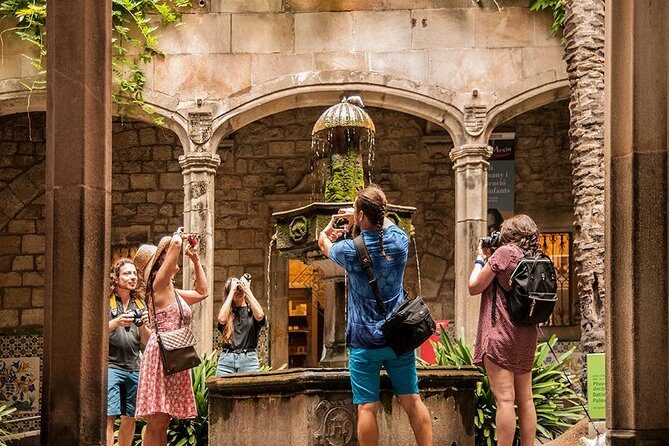
At $63.05 per person for about 2 to 2 hours 10 minutes, the pricing makes sense when you think about what’s included: a private tour with a professional photographer who teaches, not just an escort who shares general sightseeing tips.
Here’s the value logic I’d use as a buyer:
- If you’re the type who wants better photos, coaching in real time is hard to replicate on your own.
- If you like history but also want to connect it to what you’re photographing, this format gives you both.
- If you travel with a phone, this tour can still be worthwhile because it focuses on technique choices you can apply immediately.
What’s not included is also important. Souvenir photos are available to purchase, but they’re not part of the base cost. Food and drinks are not included either. That’s typical for a walking workshop, but it means you should plan a meal before or after so the tour doesn’t disrupt your day.
Finally, the group is capped at 10, which affects value: smaller groups generally mean more attention. The tour description also promises 1-to-1 tuition, so you’re not just receiving a generic talk while everyone watches.
Practical expectations: walking pace, camera needs, and getting the most out of it
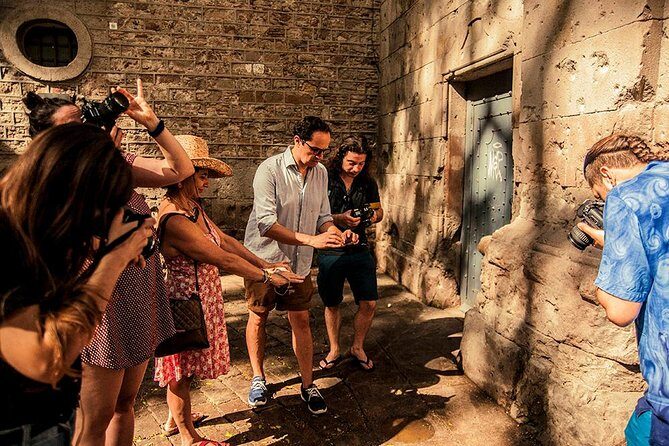
This is a walking tour, and it requires moderate physical fitness. It’s not described as extreme, but you should expect moving between sights and standing still when the guide calls for a practice moment. If you tire quickly, consider that Barcelona’s historic center includes lots of small street segments.
Bring whatever camera you’ll actually use:
- A DSLR or mirrorless camera is great if you want to use shutter speed and manual controls.
- A smartphone is fine if you want composition and story prompts you can execute right away.
- If you’re stuck on Auto, you’ll still learn what to change so your results start looking intentional.
You’ll also get the most out of the tour if you come with at least one personal goal. Examples from the tour’s tone are street photography, architecture, or travel-style shooting. You don’t need advanced gear—just clear intent.
A small tip: wear layers. The tour is designed for outdoors practice, and Barcelona weather can shift quickly. If conditions are rough, it can still work, and there’s even a bit of humor in how the tour has been reported when rain eased right when the photo session started.
Who should book this Barcelona photo tour (and who might skip it)
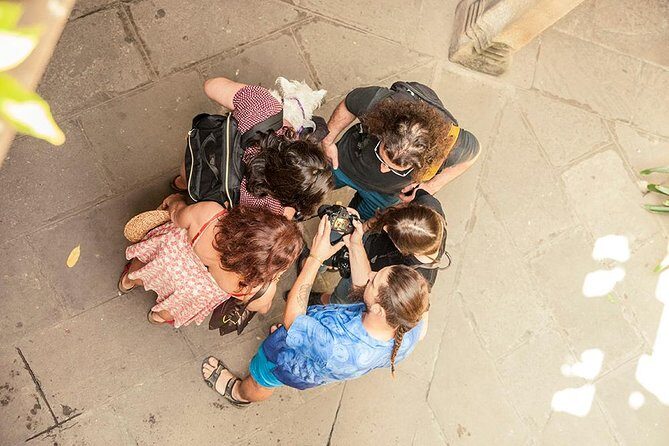
This tour is a great fit if you want Barcelona in two formats: sightseeing plus instruction. It’s especially good for:
- Beginners who want clear guidance on composition and camera settings without intimidation
- Intermediate photographers who want sharper prompts and critique-like coaching
- Smartphone photographers who want to stop relying on Auto and start making stronger frames
- People who enjoy history, because the tour uses Barcelona’s past to guide photo storytelling
You might not love it if:
- You only want free-roaming time and hate structured prompts
- You’re looking for a purely cultural walking tour with no photography focus
- You’re uncomfortable walking for a couple of hours and standing to practice
Final verdict: should you book this private photo walk?
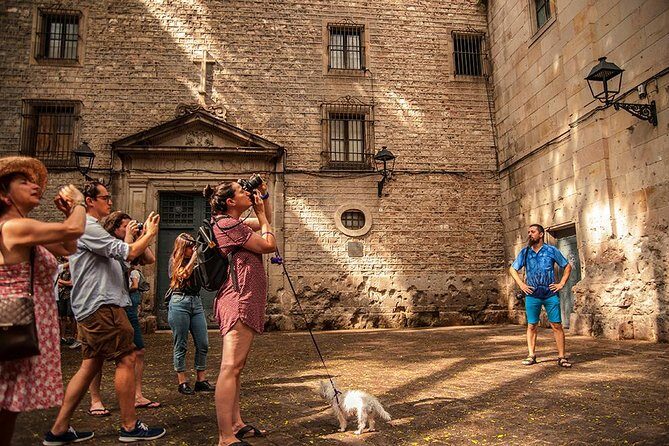
If you care about getting better images and you like the idea of learning while you see Barcelona, I’d book it. The best part isn’t any single viewpoint—it’s the teaching method: you get photo technique, then you apply it immediately to the city. That’s how you leave with transferable skills instead of just a bunch of pretty shots.
I’d especially recommend it if you’re traveling with someone who wants both history and fun with photography, including teens. The route also has a reputation for including side streets and less obvious angles, so you can get a fresh view even if you’ve visited Barcelona before.
If you’re undecided, ask yourself one question: do you want to learn how to take photos here, or do you just want to take photos? This experience is built for learning.
FAQ
Where does the tour start and where does it end?
You meet in front of Santa Caterina Market at the start of the experience. The tour ends at Jaume I (Ciutat Vella), in front of the City Hall.
How long is the photography walking tour?
The tour runs about 2 hours to 2 hours 10 minutes.
Is it suitable for beginners or people with phones?
Yes. All levels are accepted, and the guide provides 1-to-1 tuition within the small group. People have used smartphones like iPhones and still received helpful guidance.
What’s included in the price?
The tour includes the private tour. Souvenir photos are available to purchase, but they are not included in the base price.
Is there walking involved, and what fitness level do I need?
The tour notes moderate physical fitness. You should be comfortable walking and pausing for photography practice.
What is the cancellation policy?
You can cancel for a full refund if you cancel at least 24 hours before the experience’s start time. If you cancel less than 24 hours before, the amount paid is not refunded.