REVIEW · BARCELONA
Barcelona: Sagrada Familia Skip-the-Line Guided Tour
Book on GetYourGuide →Operated by Golden Tour Guide · Bookable on GetYourGuide
Sagrada Familia feels unreal.
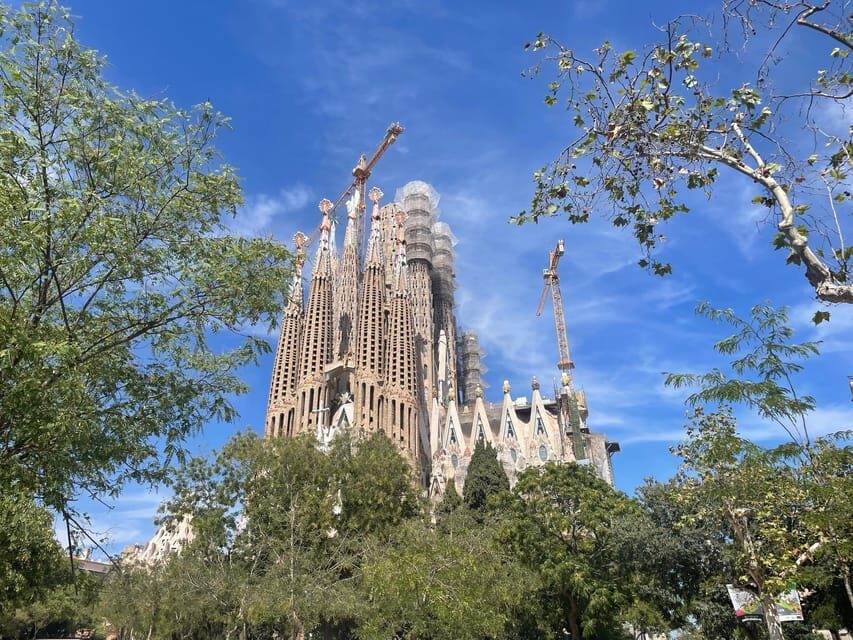
I love how this tour pairs skip-the-line entry with a certified guide, so you spend your limited time soaking up Gaudí’s details instead of waiting in a crowd. You’ll get a guided walk that explains why the façade looks like it’s growing from the stone, then slows down inside where the stained glass turns the basilica into colored light and forest-like shadows.
One thing to plan for: you still must go through metal detectors, and that security check can take about 20–30 minutes, which can squeeze your energy if you show up late or under-dressed.
In This Review
- Key things I’d prioritize before you go
- Entering Sagrada Familia Fast, Without Missing the Point
- Meeting Point on C/ de Mallorca: Don’t Be That Person
- Security and Dress Code: Small Rules, Big Reality Check
- The Nativity Façade First: Why the Stone Looks Alive
- Inside the Basilica: Stained Glass Light and Gaudí’s Forest Ceiling
- Passion Façade: The Drama—and a Reminder It Was Built After Gaudí
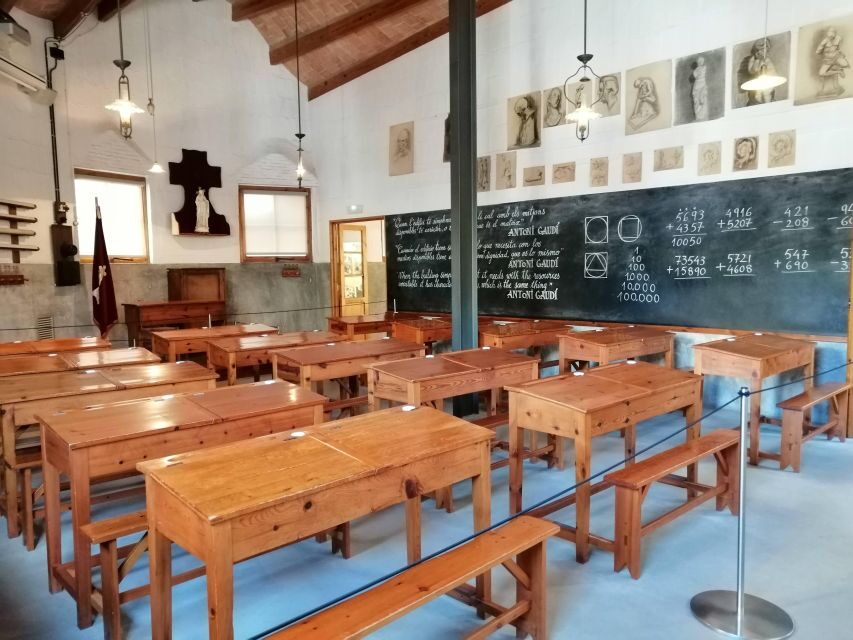
- Sagrada Familia Schools: The Workers Behind the Magic
- The Sagrada Familia Museum: Sketches, Plans, and a Real Sense of Process
- What the Tour Pace Feels Like (and Why Small Groups Help)
- Price and Value: Is $64 Worth It?
- Who Should Book This Skip-the-Line Tour
- Should You Book This Tour or Wing It?
Key things I’d prioritize before you go
- A certified Barcelona Tourism Authority guide who turns shapes and symbols into a clear story
- Skip-the-line tickets via a separate entrance, so you start the experience sooner
- Audio headset so you don’t lose the guide when you’re craning your neck up at the columns
- Nativity and Passion Façades explained, including what was built after Gaudí died
- Sagrada Familia Museum stop, where sketches, plans, and plaster construction models make the design click
- Sagrada Familia Schools visit, a fast look at the workers and their lives—not just the monument
Entering Sagrada Familia Fast, Without Missing the Point
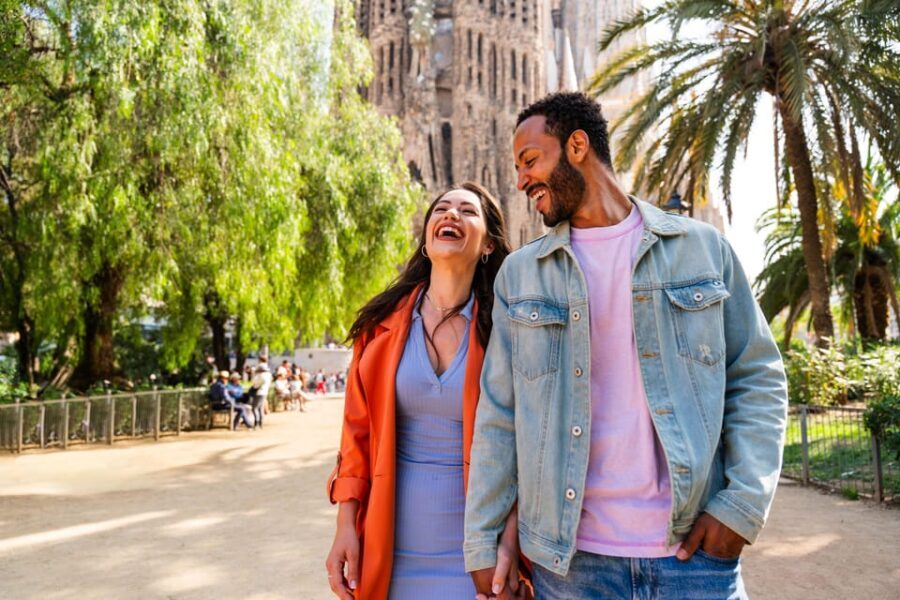
The big selling point here is simple: you get in with skip-the-line tickets through a separate entrance, and you’re not left figuring out the flow of security, crowd control, and where to stand. At a site this popular, that matters. Even if you’re a planner, the bottleneck is real, and Gaudí isn’t going anywhere.
The tour is also built for attention. With an audio headset, you can keep your eyes on the church instead of hunting for the guide’s voice. In past tours with guides like Ania (who mentioned she used to work at the basilica) and Alva, the best moments were the ones where the guide tied the artwork to purpose—so you don’t just see shapes, you understand why they’re there.
If you hate structure, this might feel like a push. It’s a tight 1.5-hour experience, so you’ll get highlights, not a slow, days-long wander.
You can also read our reviews of more guided tours in Barcelona

Meeting Point on C/ de Mallorca: Don’t Be That Person
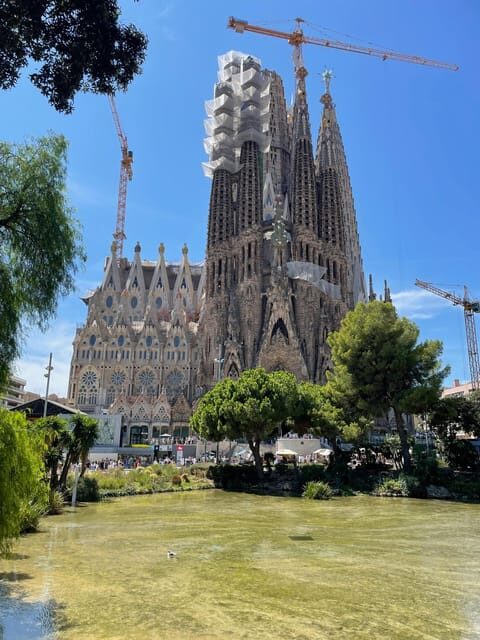
Your starting point is C/ de Mallorca, 418 (Ringels souvenir shop). You’re told to find your guide holding a Golden Tour Guide sign, and to arrive 15 minutes early.
That early buffer matters more than you think. One guide situation that came up in the feedback: someone was about 10 minutes late and the group was called and waited for them. That’s the exception, not the rule. Show up on time, get sorted, and you’ll feel the day go smoother.
This is also one of those tours where you want to be mentally ready to go from meet-and-greet to security to entrance quickly. You’ll have restroom facilities at the meeting point, which helps.
Security and Dress Code: Small Rules, Big Reality Check
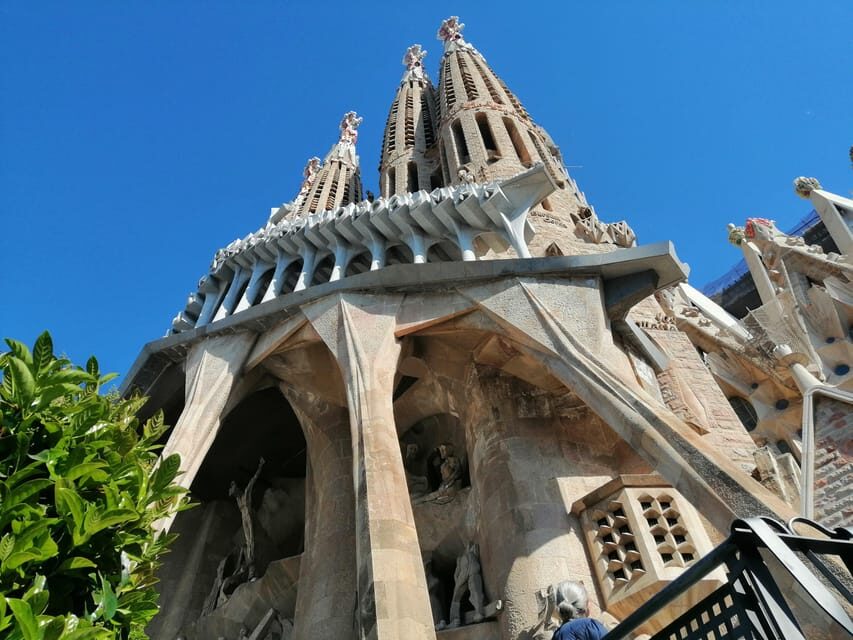
Even with skip-the-line entry, you’ll still need to pass through metal detectors at security. Plan for about 20–30 minutes of waiting. If you’re the type who hates standing still, treat it like a short pre-show. Once you’re past it, the tour momentum kicks in.
Dress code is also strict because this is a Catholic church. Tank tops and strapless shirts aren’t permitted. Short shorts are out. Sandals aren’t allowed. You should also avoid clothing intended for celebrations or festivities.
If you show up dressed wrong, entry can be refused and you might not get a refund. So if your Barcelona plans include beach wear, swap into something church-appropriate before you head over.
One more practical item: you must bring an ID to prove your age. If you can’t, Sagrada Familia won’t allow entry.
The Nativity Façade First: Why the Stone Looks Alive
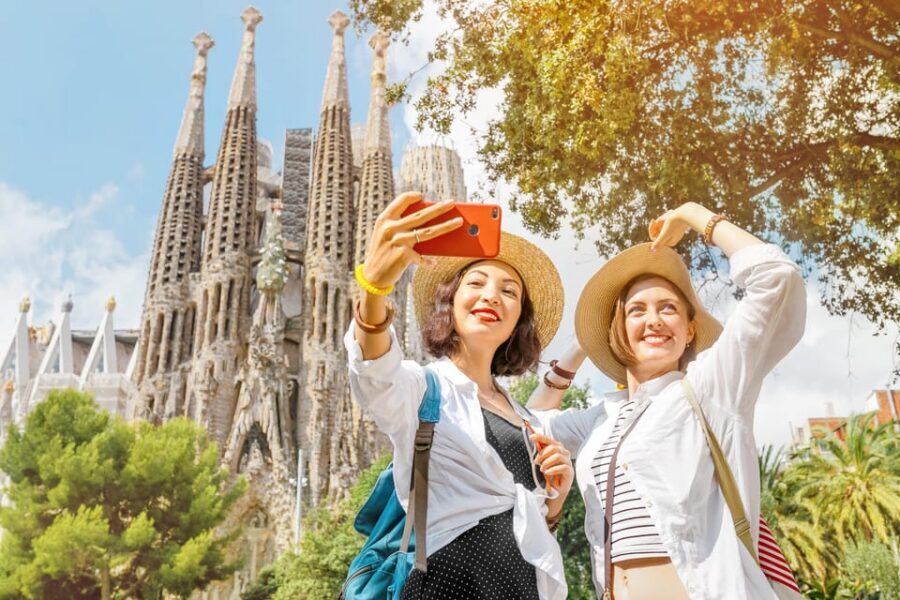
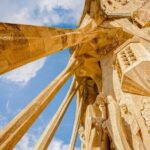
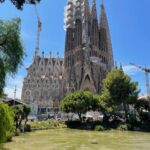
After security, your guide brings you to the entrance and starts with the story behind the Nativity Façade. This is the first completed section of the basilica, and it’s also where many people feel the “wow” hit hardest, even before they step inside.
What makes a guided explanation worth it is that the façade isn’t just decorative. It’s narrative. Your guide connects the details to the symbolism in the Nativity story, then sets you up for the interior so you don’t just see stained glass—you understand how the whole design language works together.
You’ll likely hear a lot about Gaudí’s approach and about how the work continues today, including the idea of an expected completion timeline (the exact date isn’t something you need to memorize, but you do want the big-picture sense that this is still a living construction project).
Inside the Basilica: Stained Glass Light and Gaudí’s Forest Ceiling
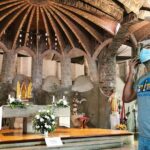
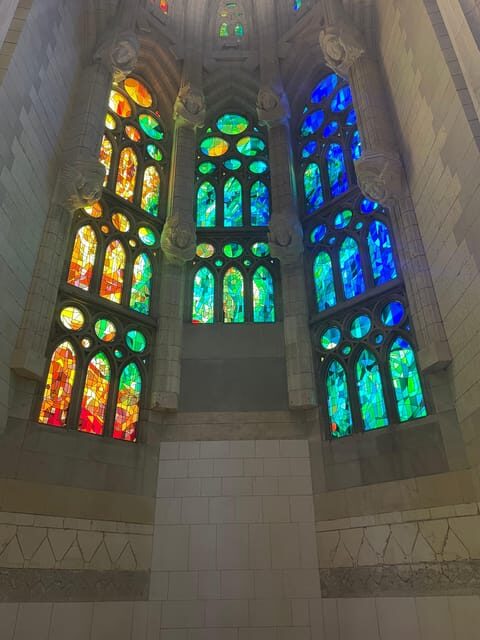
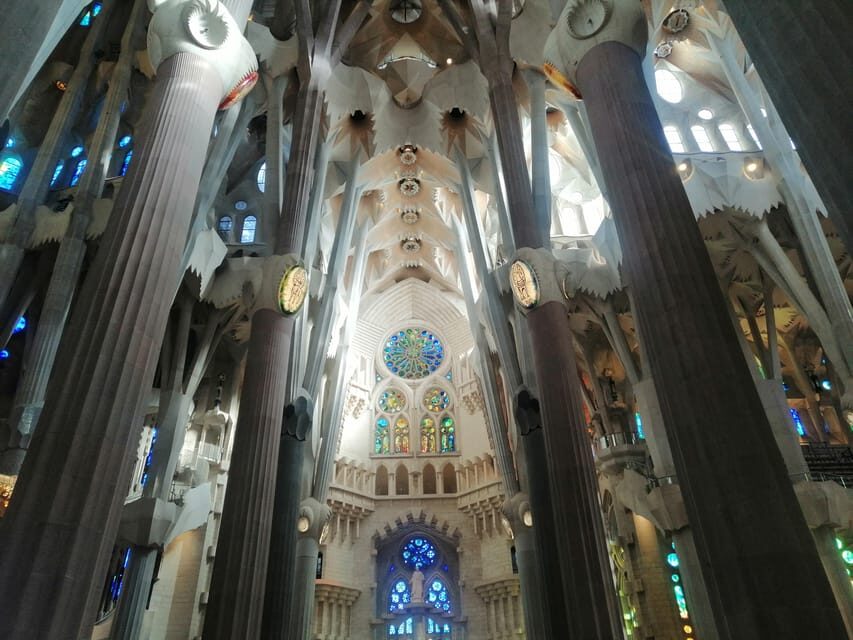
Once you step in, the interior is where the tour really earns its keep. The basilica is famous for light, and your guide helps you notice how it’s made. The stained glass windows throw intense color across the interior, and the columns rise like branching forms that extend upward over the ceiling.
Gaudí intended the interior to feel like walking through a woods. The idea is that you’re beneath a canopy, with light filtering the way it does through leaves. A good guide will point out the design logic behind that feeling, so it doesn’t stay as a poetic claim.
This is also where you’ll see the benefit of the audio headset. When you’re inside, you’re constantly turning your head. Without audio, you either miss the explanation or you stop looking at the basilica. With the headset, you can do both—hear the story and still track the details.
In feedback from multiple guides—people like Alba, Aurelia, Daria, and Jose—the standout pattern was clarity mixed with energy. The best tours don’t just list facts. They keep the pacing lively and make you look at specific areas, like the way light lands in different spots depending on where you stand.
You can also read our reviews of more tours and experiences in Barcelona
Passion Façade: The Drama—and a Reminder It Was Built After Gaudí
When you exit, your guide shifts to the Passion Façade, which represents the story of Jesus’ crucifixion. This part is noticeably different in mood and style. Where the Nativity side often feels intricate and storybook, the Passion side carries more sharp drama in its sculptures and tower shapes.
A key point you’ll hear: like most of the Sagrada Familia, the Passion Façade was built after Gaudí’s death. That matters, because it explains why the basilica feels both personal and communal. You’re not only seeing Gaudí’s original intent—you’re seeing generations of people continuing it.
Your guide will likely frame how later work stays tied to Gaudí’s concepts while also dealing with time, materials, and evolving construction methods. That context turns the building from a single-artist fantasy into a long-running craftsmanship project.
Sagrada Familia Schools: The Workers Behind the Magic
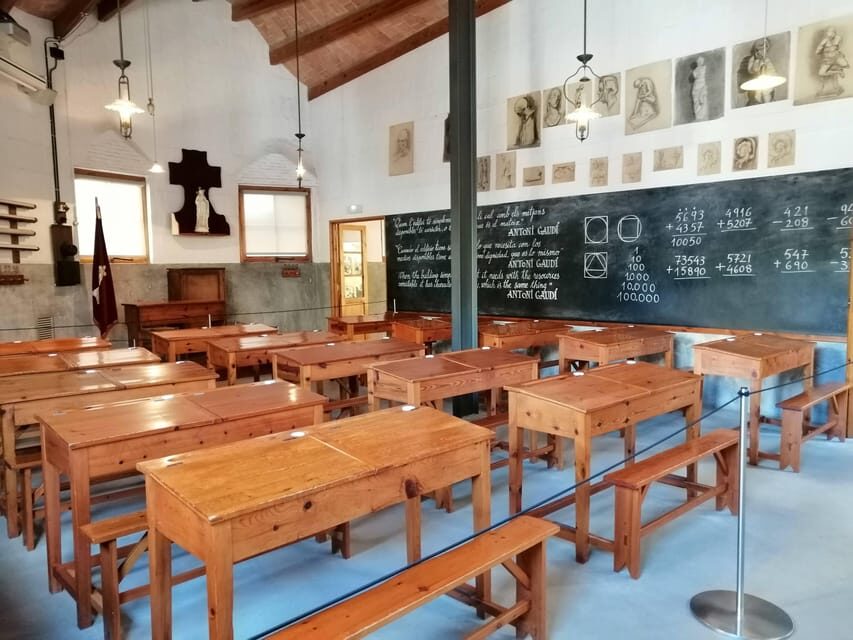
Then you’ll visit Sagrada Familia Schools. This isn’t an afterthought. It’s your chance to see the basilica as a workplace and a neighborhood, not just a photo stop.
Your guide will explain how these schools were designed for the children of the workers building the basilica. You’ll also learn that the school space was reconstructed more than once and even moved locations to make way for the growing church.
That’s an important shift in perspective. If you only look at Gaudí’s art, you can forget the people who turned those ideas into engineering. This stop brings you back to the human scale: builders, teachers, families, and the day-to-day reality behind the dream.
The Sagrada Familia Museum: Sketches, Plans, and a Real Sense of Process
Your final stop is the Sagrada Familia Museum, and this is where the tour becomes more than sightseeing. The museum gives you access to the thinking behind the building.
Your guide will share original sketches and plans, helping you grasp the complexity of Gaudí’s architecture and vision. You’ll also see construction artifacts from the cathedral build itself, including plaster models from the design process.
One artifact that stands out in the descriptions you’ll get: an upside-down model of the basilica. That detail is a perfect example of why this museum stop works. It turns the surreal shapes into something technical and solvable—like Gaudí was building with math and imagination at the same time.
If you’ve ever wondered how a structure as wild as this could be constructed, the museum answers that question in a concrete way. Even in a short tour, it gives you a payoff that feels different from the main church areas.
What the Tour Pace Feels Like (and Why Small Groups Help)
This tour is described as a small group experience. That matters because Sagrada Familia is crowded, and it’s hard to keep your attention when you’re jostled and squeezed into photo lines.
With a smaller group, your guide can keep the explanations moving without losing everyone. It also helps you hear the story and notice details at the right moments—especially inside, where the best visuals depend on your exact position.
One helpful tip that came through in the experience patterns: the guides often give practical photo guidance, like where to stand for the best angles. Some guides were also mentioned as sharing photo timing and camera settings. If you care about photos, this can help you walk away with shots that match the experience you actually felt inside.
Price and Value: Is $64 Worth It?
At $64 per person for a 1.5-hour guided tour with skip-the-line entry, audio headsets, and a museum stop, the value depends on how you like to travel.
Here’s the honest balance:
- If you’re the kind of visitor who wants to understand what you’re seeing (façades, ongoing construction, craftspeople, and symbols), $64 can feel fair. You’re paying for time saved (skip-the-line), plus real interpretation, plus the museum context.
- If you mainly want a quiet self-guided wander and you don’t mind reading a bit on your own, you might feel the price is high compared with other Barcelona attractions.
One piece of feedback pointed out the price felt steep compared with other sights that can be similar depth for less. So treat this as a “pay for clarity” option. If you want the story and the structure in a short window, it’s a smart buy. If you’d rather DIY, you might prefer spending that money on a flexible plan and using paid entry on your own.
Who Should Book This Skip-the-Line Tour
This is a strong match for:
- First-timers who want Sagrada Familia to make sense fast
- People who hate wasting time in lines and want to get moving after security
- Visitors who appreciate guided storytelling, especially about the Nativity and Passion Façades
- Anyone interested in the behind-the-scenes side: craftspeople, ongoing construction, and museum models
It’s less ideal if:
- You prefer long, silent exploring and don’t want your time boxed into a 90-minute arc
- You’re expecting a slow, deep museum session. The museum stop is part of the flow, not a standalone hour-long visit.
Should You Book This Tour or Wing It?
Book it if you want the easiest, cleanest path to the best parts: skip-the-line entry, a certified guide, audio headsets, and a museum stop that explains the building process instead of leaving you with only impressions.
Skip it and do a DIY visit if you’re on a tight budget and you’re comfortable spending extra time navigating ticket lines and creating your own route through the basilica and museum.
If you do book, set yourself up for success: arrive on time at C/ de Mallorca, dress for the church, bring your ID, and treat security as a short delay before the real magic begins.