REVIEW · BARCELONA
Barcelona: 2,5h Gaudí Segway Tour
Book on GetYourGuide →Operated by Sun & Segway Barcelona · Bookable on GetYourGuide
Barcelona begs for momentum. This Gaudí-focused Segway tour is a fun way to see Catalan Modernisme with a real guide, zipping between major sights while you learn what makes Gaudí’s style tick. I particularly love how the route strings together Gaudí’s big landmarks (Casa Batlló, La Pedrera, and Sagrada Familia) in one smooth sweep, and I also like that the experience starts with proper training so you’re not white-knuckling the whole time. The one drawback to plan for is that you’ll mostly get exterior views, since entry tickets aren’t included.
I also like the people part of this tour. In the notes I picked up, guides like Freddy and Danny come across as patient and helpful, and you’ll typically ride in smaller groups even when the total tour size is larger. Still, the Segway format means it’s not for everyone—if you’re prone to motion discomfort, it might feel like too much, too fast.
You’ll cover a lot of Barcelona ground without feeling like you walked every meter. The ride takes you from the older streets near the Gothic Quarter and Born, through Ciutadella Park, across Arc de Triomf into Eixample, and then along Passeig de Gràcia for Gaudí’s showpieces. For me, that mix of city layers is the real win: you get modernism, yes, but you also get the neighborhoods that frame why those buildings matter.
In This Review
- Key things to know before you book
- How the Segway Training Works Before You Roll
- From Passatge de la Canadenca to the Waterfront Views Fast
- Ciutadella Park: Learning Modernisme in the Middle of It
- Arc de Triomf to Eixample: Where Gaudí’s Neighborhood Makes Sense
- Passeig de Gràcia: Casa Batlló at a Glance, With Context
- La Pedrera (Casa Milà): Why “The Quarry” Still Works
- Sagrada Familia: A Big Moment Without the Ticket Line
- Old Streets and Born Energy: Roman Ruins and Santa Maria del Mar
- La Monumental and Local Rules: A Bullring Pass You Can Learn From
- Time, Pace, and Group Size: Getting Value from 2.5 Hours
- Price Check: Is $45 Worth It?
- Who This Tour Suits Best (And Who Should Skip It)
- Should You Book This Gaudí Segway Tour?
- FAQ
- How long is the Barcelona Gaudí Segway tour?
- Is entry to Sagrada Familia or other attractions included?
- What’s included in the tour price?
- What’s the minimum age and the rider requirements?
- What languages are the live guides?
- Where does the tour start and end?
- Is food or hotel pickup included?
Key things to know before you book
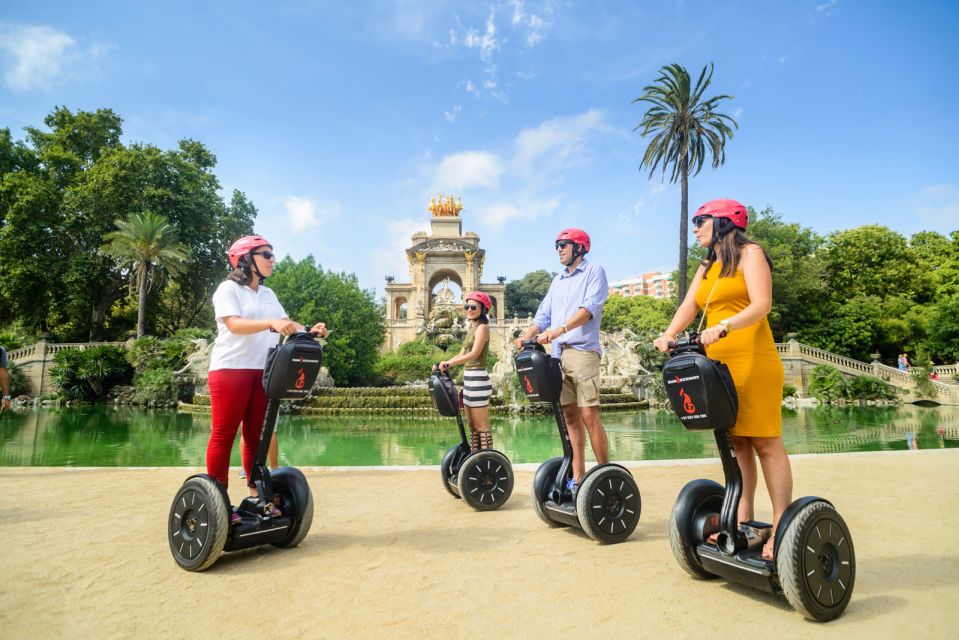
- Training first: you get a safety briefing and an orientation session before you head out
- Gaudí trio covered: Casa Batlló, Casa Milà (La Pedrera), and Sagrada Familia are all on the route
- Photo-stop pacing: many stops are short, so your guide’s context matters most
- City layers on one loop: Old City sights, Ciutadella Park, and Eixample’s modernism come together in 2.5 hours
- Outside views for landmarks: entry into attractions is not included
- Works best with comfort on wheels: Segways have minimum age, height, and weight rules
How the Segway Training Works Before You Roll
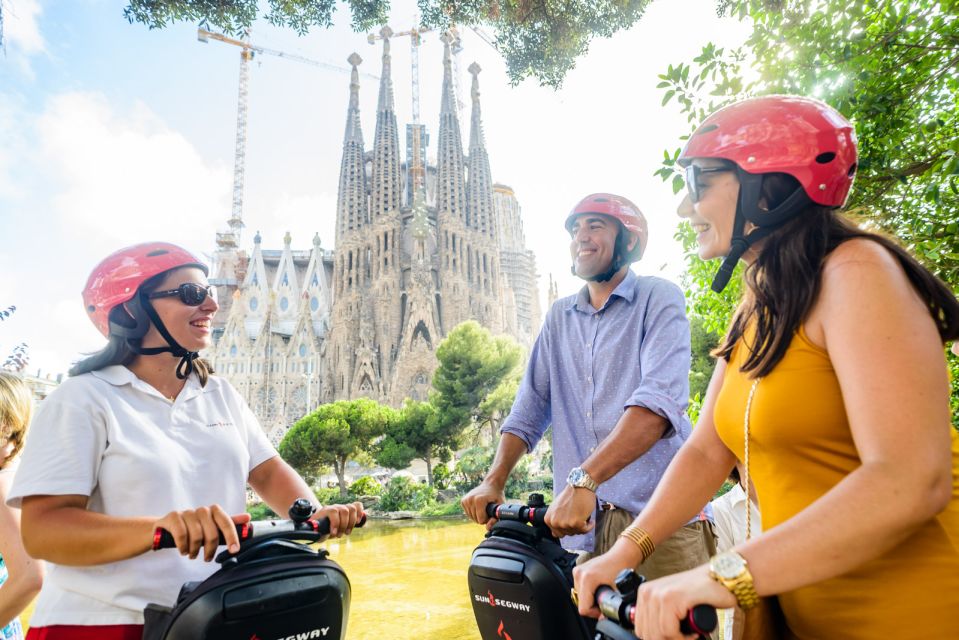
The tour starts with something many people care about: control. Before you move into traffic and crowds, there’s a safety briefing (about 10 minutes) and a training session so you learn the basics of steering and balance. If it’s your first Segway ride, this is exactly what you want—less guessing, more instruction.
Your guide meets you at Passatge de la Canadenca, 6, inside Jardins de Les Tres Xemeneies. The Segways and helmet are part of the package, so you’re not scrambling for gear. The operator also keeps the start organized: your guide is set to be there about 5 minutes before your booked time, in the training area rather than some far-off storefront.
One practical tip: wear comfortable shoes you’d actually walk in for a couple of hours. You’ll be on and off the Segway repeatedly for quick looks and photos, and Barcelona’s sidewalks can be uneven. Also bring sunglasses and plan for the weather; this is a mostly outdoor ride.
Finally, remember this is a physical activity with rules. Minimum age is 14, and you must fit the weight and height requirements (more on that later). If you meet those basics, the training stage usually makes the rest of the tour feel much easier.
You can also read our reviews of more tours and experiences in Barcelona.


From Passatge de la Canadenca to the Waterfront Views Fast

Once you roll out, you’ll start collecting big city sightlines right away. The early stops are quick photo-and-sightseeing moments, which is smart on a Segway: you get the highlights without turning this into a long hiking day.
You’ll begin near the station area by taking in views from Mirador de Colom, and you’ll also stop for photos around El Cap de Barcelona. These aren’t the Gaudí interiors most people imagine, but they’re useful orientation points. You’ll start seeing how Barcelona’s waterfront-to-center geography shapes where the big buildings and districts sit.
A few more “get your bearings” moments follow, including a stop at the Pla de Palau lampposts linked to Antoni Gaudí. It’s a small detail, but it helps you connect dots early: Gaudí wasn’t only about famous façades and signature forms. He also left marks in the public space language around the city.
If you’re the type who likes learning while you move, these early stops do a good job. Your guide can point out what to look for later—curving lines, symbolic details, and the way Catalan modernism grew out of local identity.
The only downside is that the photo stops are short (often around 5 minutes each). So have your camera ready, and don’t plan to read every sign on the spot. Use your guide’s narration to absorb the meaning; use your photos just to remember where to go next.
Ciutadella Park: Learning Modernisme in the Middle of It
Then you hit the green lung of the route: Parc de la Ciutadella. This is where the tour feels like more than a checklist, because you’re mixing nature space with architecture context.
Inside the park, you can see the Parliament of Catalonia and Castell del 3 Dragons. And your guide will explain how this area connects to Gaudí’s early work—specifically, his first collaboration when Antonio Gaudí was still relatively inexperienced. That detail matters because it frames Gaudí as a builder-in-progress, not just an untouchable genius locked in museum mode.
The park stop is also a nice break in pacing. Segway tours move quickly, so having a scenic “breather” helps keep your energy steady through the later, more crowded streets near Eixample. You’ll still be looking at buildings, but the atmosphere is calmer than the big shopping avenues.
One practical note: parks mean paths and crossings. You’ll move slowly enough to stay safe, but still expect a bit of stop-and-go. If you’re coming in with sore feet or stiffness, this is where your comfortable shoes earn their keep.
Overall, Parc de la Ciutadella is a smart inclusion because it gives you a setting for modernism that isn’t trapped behind ticket gates. You get atmosphere first, then you earn the landmark façades later.
Arc de Triomf to Eixample: Where Gaudí’s Neighborhood Makes Sense
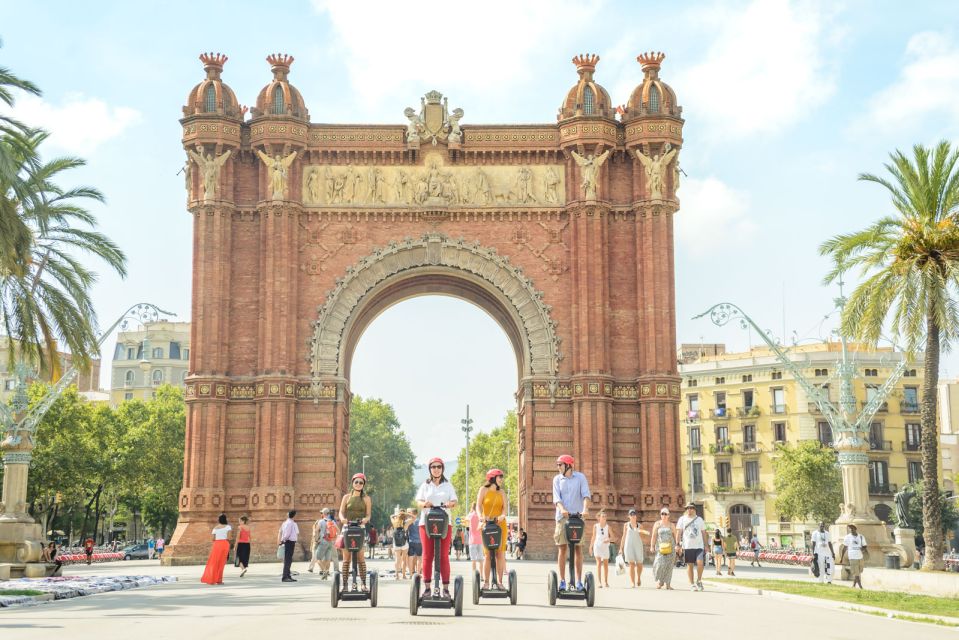
Crossing Arc de Triomf is one of those “you can feel the shift” moments. The tour includes a stop there, and your guide ties it to Barcelona’s Universal Exhibition of 1888—so you understand why this area developed into a showpiece zone rather than just a convenient crossing.
From there, you’ll ride into Eixample, the city’s most populated quarter and the area where Gaudí’s masterpieces sit in very recognizable street patterns. One of the useful things your guide can do here is point out that Gaudí didn’t appear out of nowhere. You’ll get a sense of other modernist façades nearby too—places like Casa Calvet, Casa Amatller, or Casa de les Punxes come up as part of the bigger architectural neighborhood story.
This is also where Passeig de Gràcia starts to feel like the main stage. The avenue is lined with luxury shops, and it’s busy in a way that can make architecture disappear if you just stand there. On a Segway, you’re able to keep moving while still pausing to look closely.
If you like your sightseeing organized, this middle segment works well. You’ll get guided context that makes the later stops much easier to understand. Instead of seeing buildings as isolated photo backgrounds, you start seeing them as part of a designed urban identity.
The one consideration: Eixample streets can be crowded. Your route timing is built around a fast, guided flow, but you should still expect some traffic and pedestrian density. Stay focused on your balance and let your guide set the pace.
Passeig de Gràcia: Casa Batlló at a Glance, With Context
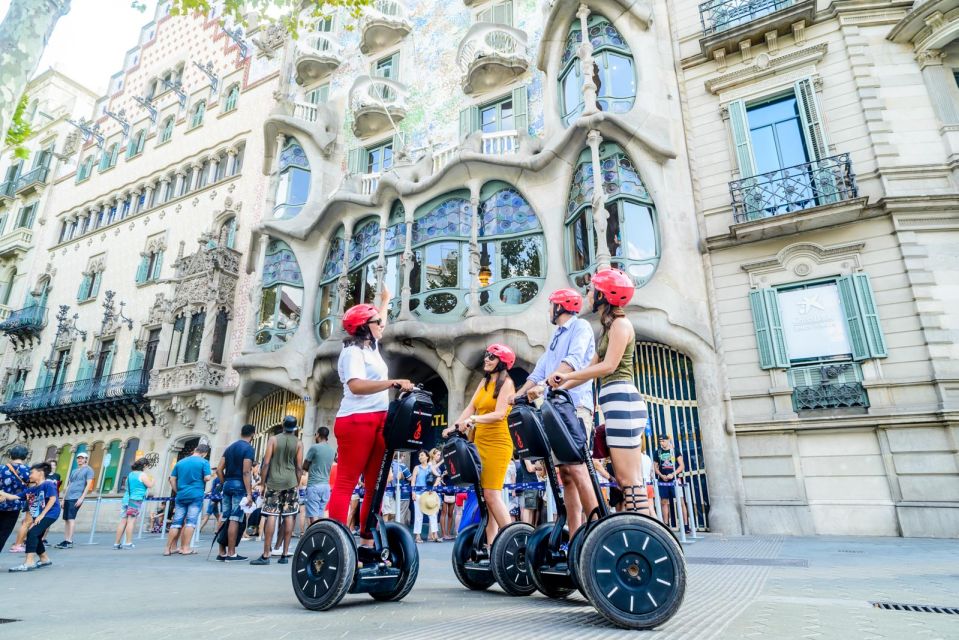
Passeig de Gràcia is where Gaudí turns from local architect into international headline. You’ll glide along the avenue and take in the luxury boutiques while your guide steers you toward what’s important to notice on the façades.
Casa Batlló is one of the core photo stops. You’ll get a guided explanation of why it’s such a signature piece of Catalan modernism—its fantasy shapes, colors, and the way the building reads almost like a sculpture rather than a simple apartment façade. Even if you don’t go inside, the exterior is where the drama lives.
Why this stop is valuable on this tour: your guide can tell you what to look for before you get overwhelmed by details. People often stare at Gaudí façades without knowing how to interpret them. Here, you get a short, targeted narration that helps you read the building instead of just admiring it.
The pacing is the key trade-off. The stop is brief (about 5 minutes in a schedule full of short stops), so you won’t have time for a deep “stand in front and study every curve” session. If you want to spend more time on one façade, this tour is best as the intro, then you can come back later.
Still, as a first pass, it’s excellent. You’ll leave understanding why Casa Batlló is famous, and you’ll have photos that actually match what you learned.





La Pedrera (Casa Milà): Why “The Quarry” Still Works
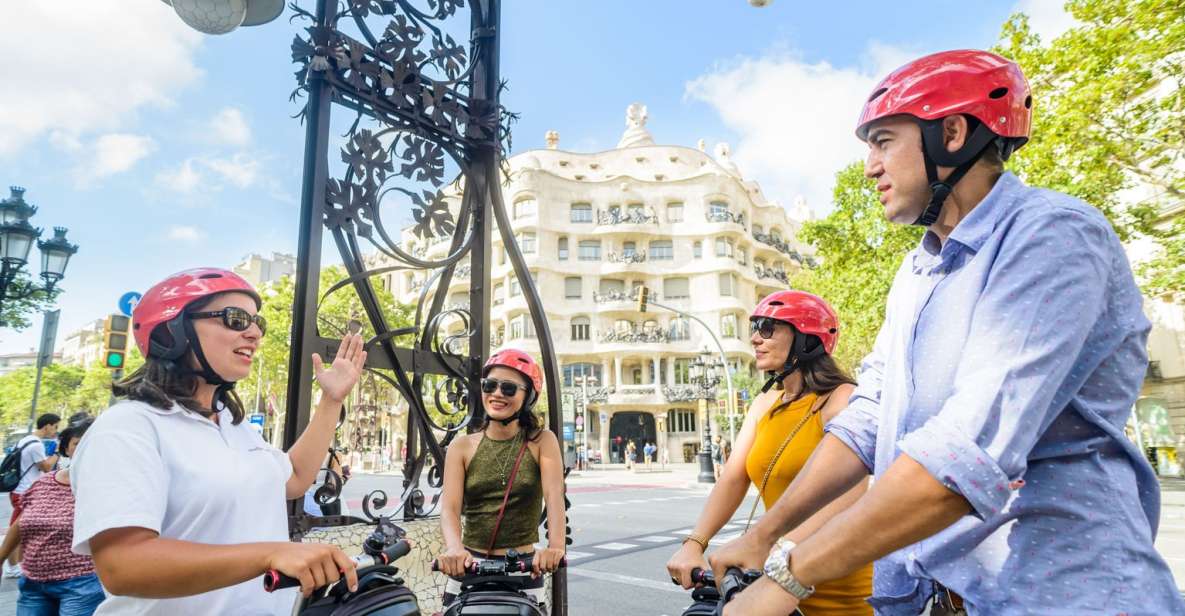
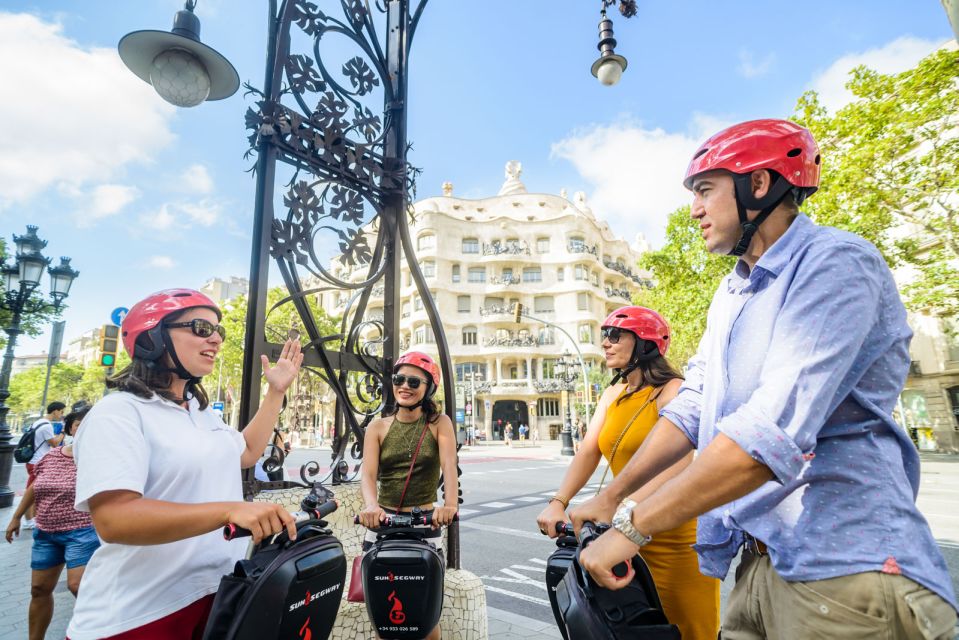
Next comes Casa Milà, popularly known as La Pedrera. Your guide frames it as one of Gaudí’s last works and highlights why the construction style feels rugged and unusual, which is exactly where the nickname comes from. It’s a building that looks like it was shaped by weather and imagination at the same time.
This stop also comes with a useful local-history angle. Casa Milà was built in 1906, and it sat at a boundary between Barcelona and Vila de Gràcia when it hadn’t yet been annexed to the city. That kind of context turns the façade from a random iconic photo into a marker of a changing city.
On a Segway, you get enough movement to view the building from multiple angles around your route, even though the stop itself stays short. That helps you notice the overall form, not just the front view that everyone photographs.
Practical note: La Pedrera areas can be busy. Quick photo stops work here, but you’ll want to be patient and keep your attention on your guide’s instructions. The advantage is that you won’t spend your entire tour stuck behind the same group.
If you’re hoping for an in-depth study from close-up, you’ll likely want a separate visit afterward. But as part of a 2.5-hour orientation to Gaudí, this is the kind of stop that makes the tour feel worth the money.
Sagrada Familia: A Big Moment Without the Ticket Line
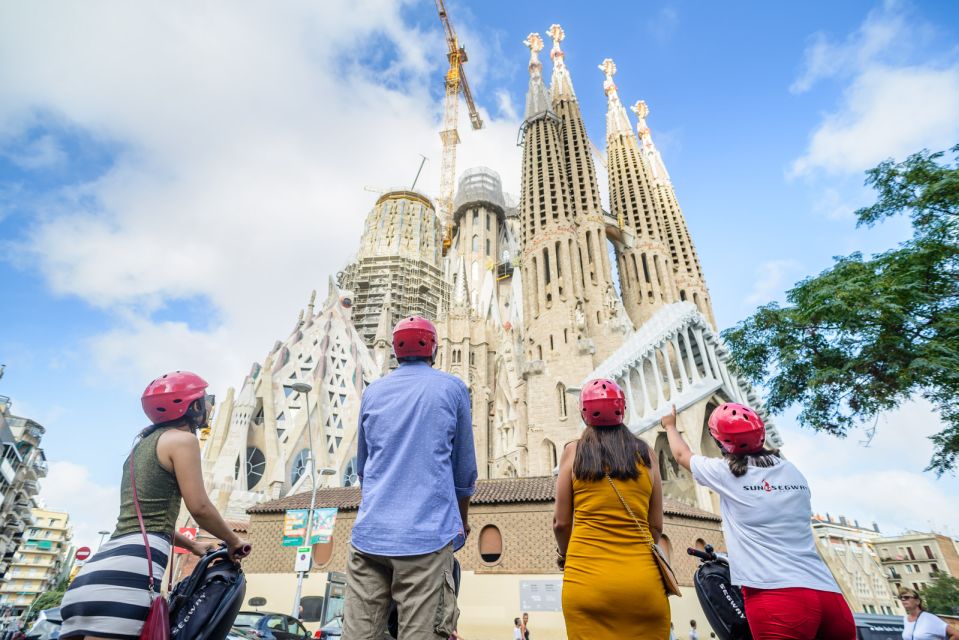
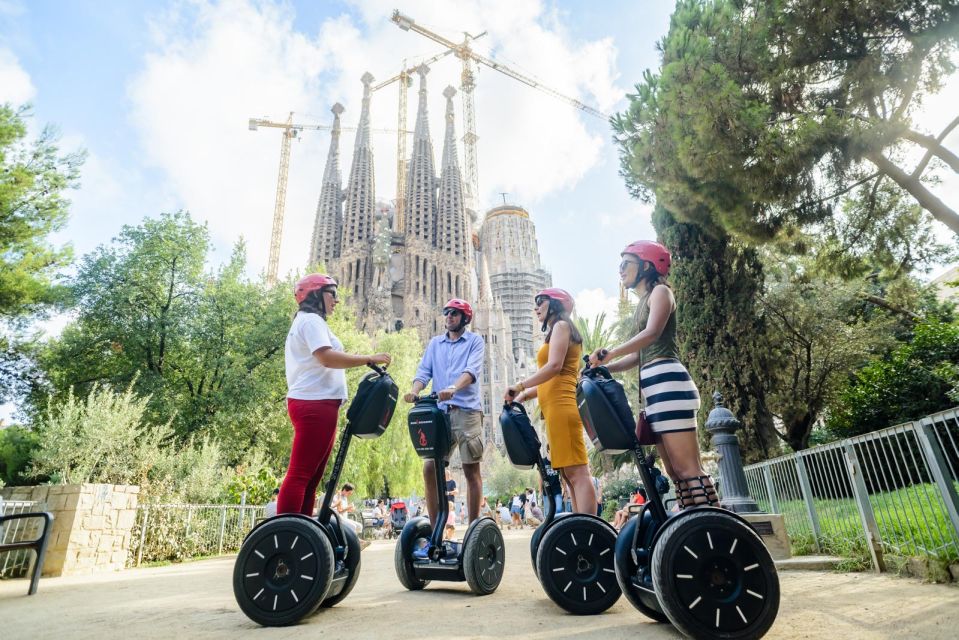
No Gaudí tour in Barcelona would feel complete without Sagrada Familia. On this Segway route, you’ll arrive at the monument that’s considered the most visited in the city, and your guide gives you the essential story.
Construction began in 1882, and it’s still ongoing. That fact changes how you look at the building—this isn’t a finished monument frozen in time. It’s an active work, and your guide’s commentary helps connect the architecture to that long timeline.
Importantly, entry isn’t included. You’ll see it from outside during the photo-and-sightseeing window, which is around 5 minutes in the tour’s rhythm. That means you should not expect to tour the interior on this outing.
Still, as an exterior experience, it works well. You’ll get the timing right for pictures, and the guided explanation makes the façade feel less like random stone shapes and more like a planned language of design.
If Sagrada Familia is your number-one priority, I’d treat this as a strong first encounter. Afterward, decide if you want the separate ticketed visit when you have more time and can slow down.
Old Streets and Born Energy: Roman Ruins and Santa Maria del Mar
After the big modernist mile on Passeig de Gràcia, the tour turns back toward older Barcelona. You’ll ride through the Gothic Quarter and Born areas, some of the oldest neighborhoods in the city.
This part of the tour is where you get the city’s layers. The route includes Roman ruins and the Basilica of Santa Maria del Mar as part of the broader storytelling about this older district. You also stop at El Born Centre Cultural, which helps you connect the neighborhood’s cultural presence to the architecture around it.
Another stop includes the Basilica of Our Lady of Mercy. Even when you only get a brief viewing window, your guide’s narration can help you recognize what you’re seeing and why that building belongs in this story.
Why I like this segment: it keeps the tour from feeling like only modernism posters. Barcelona is a mix. Old stone and new visions exist side by side, and seeing that contrast while you move makes the whole day click.
The only drawback is the time limits. Short stops mean you won’t wander for long or take extended detours. If you want to shop, browse side streets, or linger in one square, you’ll need extra time on your own later.
But as a guided “orientation to old Barcelona” inside a Segway framework, it’s a smart mix.
La Monumental and Local Rules: A Bullring Pass You Can Learn From
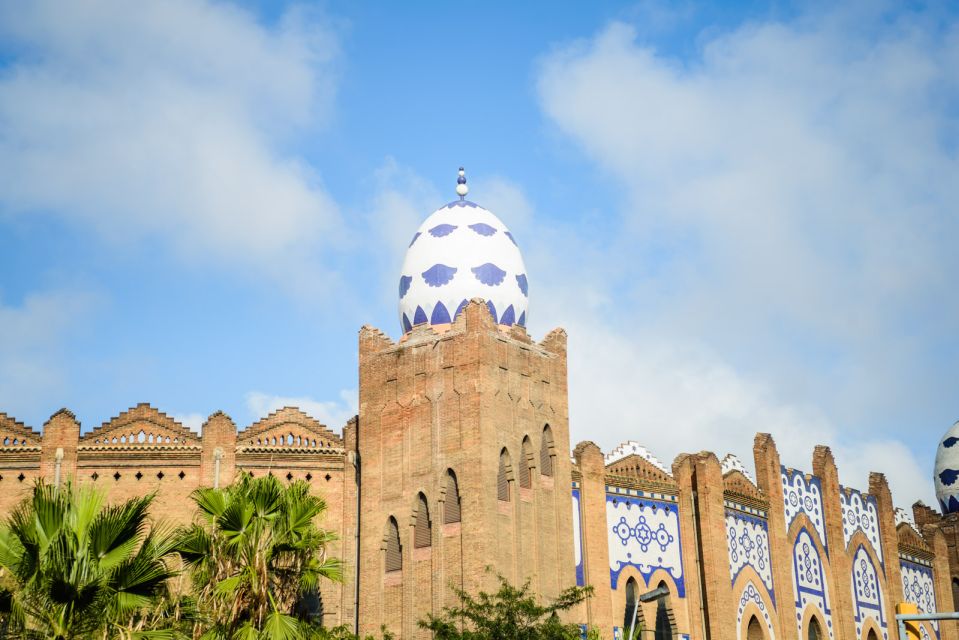
You’ll also see La Monumental, an old bullring. It’s included as a photo stop with guided sightseeing context, and the guide connects it to Catalonia’s rules around bullfighting.
Bullfighting has been prohibited in Catalonia since 2012, and that helps you read the building differently. Instead of treating it as just an old landmark, you see it as a symbol of cultural change and political decisions that shape public space.
This is one of those stops that makes the tour feel more like a conversation than a photo sprint. It’s not only about Gaudí. It’s about Barcelona as a place with strong identity, and that identity includes debates.
If you’re sensitive to the topic, you’ll want to consider your personal comfort. But if you like understanding how modern cities evolve, this stop adds perspective.
As with other moments, the stop is short. So ask yourself what you want from it: a quick exterior glance with context, or a deeper history that you’d do on foot later.
Time, Pace, and Group Size: Getting Value from 2.5 Hours
The whole tour runs about 2.5 hours. That’s long enough to cover multiple districts and several major Gaudí landmarks, but short enough that you don’t feel exhausted if you’re traveling on a tight schedule.
Stop timing matters here. Many of the stops are around 5 minutes for guided sightseeing and photos. That’s why the guide matters so much—your job is to show up ready to listen and look, not to expect unhurried museum-style pacing.
Group size is also handled in a way that helps the experience. The tour can accommodate up to 30 participants, but larger groups are organized into smaller groups of six or fewer, each with a professional guide. That keeps the ride manageable and usually makes it easier for the guide to help when you need it.
If you’re traveling solo, the small-group feel can be a plus. If you’re with family or friends, it still can work because everyone gets attention, though the tour is not suitable for kids under 14.
One more pacing note: the route includes both major avenues and tighter older streets. Your comfort on the Segway matters, but the training and the guided flow are designed to keep you from getting lost.
Think of this as a guided fast tour that tells you where to spend more time later.
Price Check: Is $45 Worth It?
At $45 per person for a 2.5-hour guided Segway tour, you’re paying for three big things: the Segway rental, the helmet, and the live guide plus training. Those inclusions matter because you’re not just buying transportation—you’re buying instruction and storytelling.
What’s not included is also important for your budgeting. You’ll pay nothing extra to ride the Segway and get the guide’s narration, but entry to attractions is not included. That likely means you’ll spend later on any ticketed visits you decide to add (especially if Sagrada Familia becomes a must-do with interior access).
Food and drinks aren’t included either. So plan a meal before or after you ride.
For value, I’d think of this as an architecture orientation plus movement. If you tried to do the same set of landmarks by walking, you’d lose time, energy, and probably your ability to connect details because you’d be focused on distance. On a Segway, you can actually absorb the meaning of the buildings as you pass them.
So the $45 price feels fair when you:
- want guidance you can’t easily replicate solo
- want to cover a lot of Barcelona efficiently
- are okay with exterior viewing as part of the deal
If you already know you want to go inside major sites right away, you might find better value pairing this with a separate ticketed visit later.
Who This Tour Suits Best (And Who Should Skip It)
This tour fits best if you’re comfortable riding a Segway and want a guided hit list of Gaudí’s signature sights. Minimum age is 14, and you must fall within a weight range of 45 to 130 kg and be at least 150 cm tall. Pregnant women can’t join for safety reasons, and it’s not suitable for people with back problems.
You should also be prepared for time outdoors and quick photo windows. Bring passport or ID, wear comfortable shoes, and expect you’ll be stopping and starting through different parts of the city.
Language coverage is a plus if you’re not traveling in English. The live guide can run in Spanish, English, French, Italian, Portuguese, and Arabic.
This is also a great pick if you’re visiting for the first time and want to understand how Barcelona’s districts relate to Gaudí’s architecture. You’re getting modernism on Passeig de Gràcia, city-park context at Ciutadella, and older-street texture through the Gothic Quarter and Born.
If you’re the type who hates guided group timing or wants to linger in one place for an hour, you may find the short stops limiting. But if you’re happy moving along with a plan, it’s a very efficient way to see the city.
Should You Book This Gaudí Segway Tour?
I’d book it if you want a fun, organized introduction to Barcelona’s Catalan modernism and Gaudí’s biggest hits, without needing to line up for everything. The Segway training makes it approachable, and the route mixes the modernist “poster buildings” with older neighborhoods and park architecture so the experience feels like a city story, not just a checklist.
I wouldn’t book it if you’re expecting museum-style time at Sagrada Familia or inside Casa Batlló or Casa Milà. Entry isn’t included, and the stops are short, so you’ll want to pair this with separate ticketed visits if those interiors are your top priority.
One last thought: if $45 is a stretch, treat it as a value decision. You’re paying for convenience, narration, and gear (Segway, helmet, training). If those are exactly what you want for 2.5 hours, this tour is a strong match.
FAQ
How long is the Barcelona Gaudí Segway tour?
It lasts about 2.5 hours.
Is entry to Sagrada Familia or other attractions included?
No. Entry to attractions is not included, so you’d need separate tickets if you want to go inside.
What’s included in the tour price?
The price includes Segway rental, a helmet, a training session, and a live guide.
What’s the minimum age and the rider requirements?
The minimum age is 14. Riders must weigh between 45 and 130 kg and be at least 150 cm tall.
What languages are the live guides?
Live guides are available in Spanish, English, French, Italian, Portuguese, and Arabic.
Where does the tour start and end?
It meets at Passatge de la Canadenca, 6 (inside Jardins de Les Tres Xemeneies) and ends back at the same meeting point.
Is food or hotel pickup included?
No. Food and drinks are not included, and hotel pickup and drop-off are not included.