REVIEW · BARCELONA
Barcelona & Chocolate Amatller History and Culture + Activity and Tasting
Book on GetYourGuide →Operated by Chocolate Amatller · Bookable on GetYourGuide
Chocolate has a city behind it.
I love the audiovisual journey that walks you through how Amatller shaped Barcelona sweets, and I love the hands-on workshop where you work with roasted cacao (one highlight people call out is grinding in a heated stone mortar). One thing to consider: the chocolates may have traces of milk, peanuts, and tree nuts, so this isn’t a safe pick for nut allergies.
You’ll base yourself in El Born at Plaça de les Olles, where the brand’s story started, and you’ll get real time with chocolate instead of just standing in line. The group stays small (up to 10), the guide speaks English/Spanish/Catalan, and you skip the ticket line—nice when your day is already packed.
In This Review
- Key Points to Know Before You Go
- Why This Amatller Experience Feels More Real Than a Typical Chocolate Stop
- Starting in El Born: Plaça de les Olles and the Feeling of Being in the Right Place
- The Audiovisual Journey: How Amatller Connects to Barcelona’s Chocolate Past
- Five-Sense Tasting Kit: Flors and Hojas Finas, Up Close
- Making Cocoa by Hand: The Craft Moment (and Why It Changes Your Taste)
- Original Barcelonese Hot Chocolate: The Classic Finish
- Store Time at the End: How to Use It Without Overspending
- Price and Value: Is $14 Worth It?
- Who This Tour Fits Best (and Who Should Rethink It)
- Practical Tips for a Smooth Visit
- Should You Book This Amatller Chocolate Experience?
- FAQ
- How long is the Amatller Chocolate Barcelona experience?
- Where does the experience start?
- What languages are the guided tours offered in?
- What’s included in the price?
- Is it suitable for children?
- Is it safe if I have a nut allergy?
Key Points to Know Before You Go
- El Born location (Plaça de les Olles) keeps the story grounded in the neighborhood where it began.
- 40-minute format fits easily between other Barcelona sights.
- Five-sense tasting helps you notice aroma, texture, and flavor, not just taste.
- Make-your-own cocoa gives you the tactile part most chocolate stops miss.
- Original Barcelonese-style hot chocolate adds a classic Barcelona finish.
- Free store time lets you keep exploring the collections after the guided experience.
Why This Amatller Experience Feels More Real Than a Typical Chocolate Stop
If you’ve ever had chocolate and wondered why people keep arguing about dark vs. milk, sweetness vs. bitterness, or why hot chocolate tastes different in each place, this is a smart way to get answers. You’re not just eating samples—you’re learning how chocolate was consumed, traded, and crafted in Barcelona across time.
What makes this experience work is the mix. You start with a guided, story-driven audiovisual presentation. Then you slow down with tastings designed to get your senses involved. Finally, you get a real craft moment—hands-on cocoa elaboration—so the food connects to process, not just marketing.
The “value” angle is strong here. At $14 per person, you’re paying for multiple components in one slot: history presentation, a tasting kit, a workshop, an original hot chocolate tasting, and time in a gourmet store with additional brand tastings.
You can also read our reviews of more food & drink experiences in Barcelona



Starting in El Born: Plaça de les Olles and the Feeling of Being in the Right Place
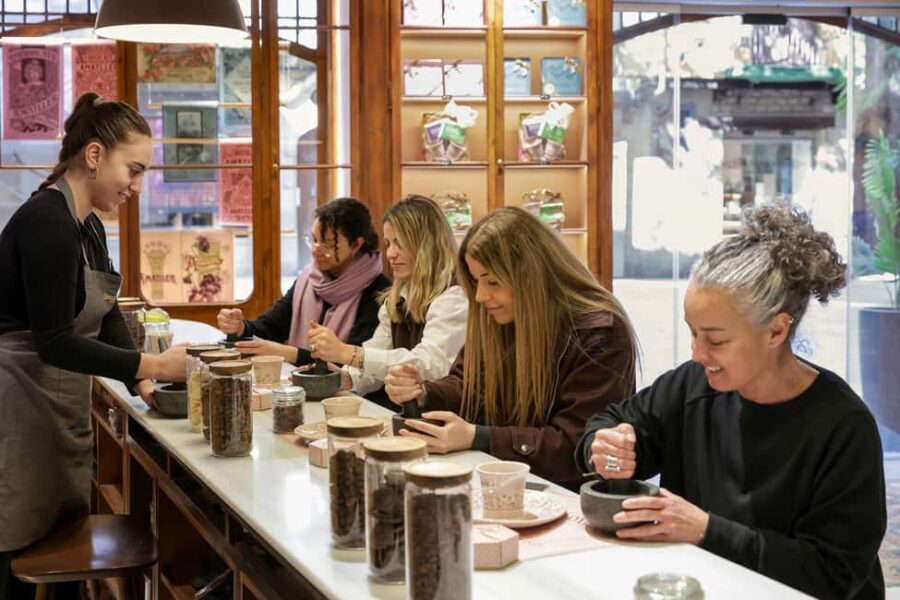
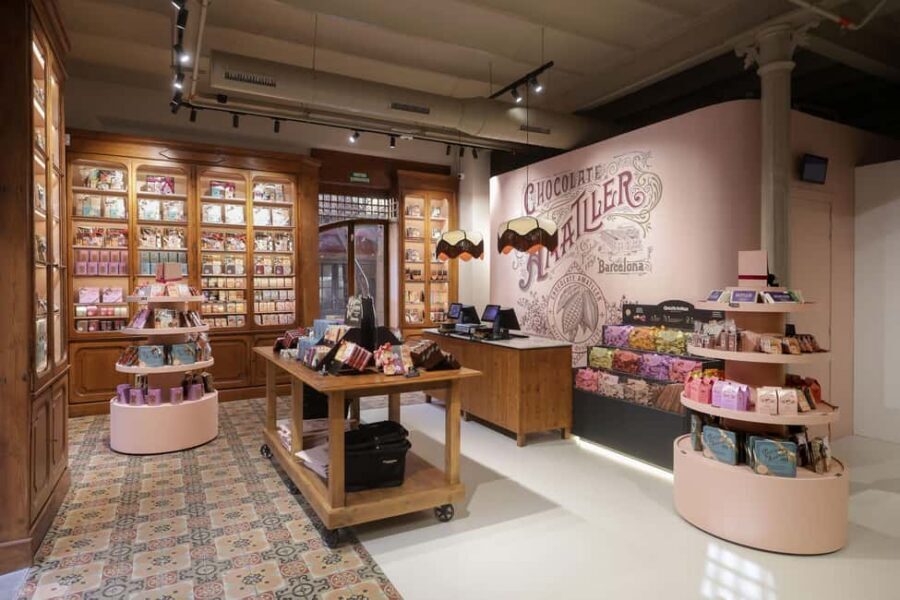
Your experience begins at Plaça de les Olles, 9, in the Amatller shop. This matters more than it sounds. Chocolate brands can feel interchangeable when they’re only sold in modern storefronts. Here, the whole premise is that Amatller’s legacy lives where it started.
El Born is the kind of neighborhood where you can mix old streets with good eating and wandering. So even if you arrive a little early, you’re in an area that supports an easy walk-and-snack day. And since this tour is short, you can treat it like a lunch-break activity: focused, structured, and not a full afternoon commitment.
Also, you enter directly into the shop. That keeps things moving, especially if you’re hopping between sights and want your time to feel efficient.
The Audiovisual Journey: How Amatller Connects to Barcelona’s Chocolate Past
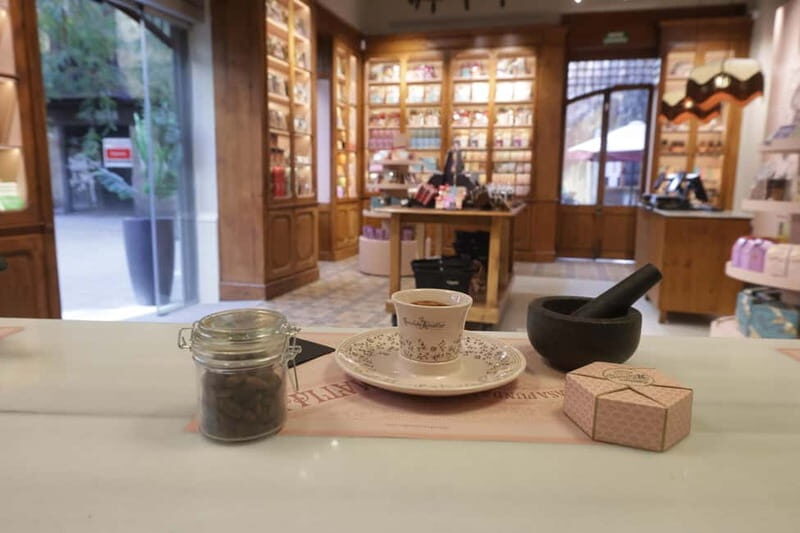
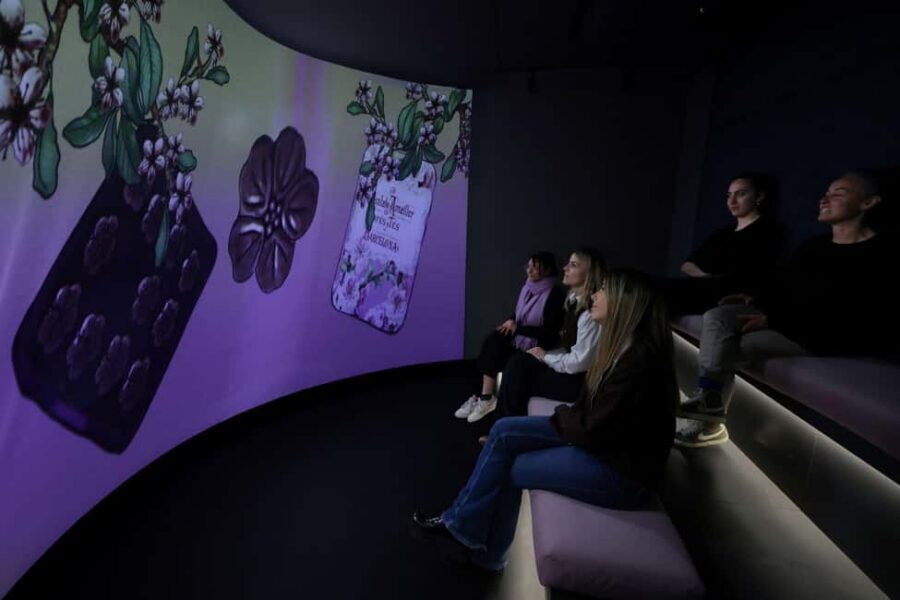
The guided portion runs about 40 to 45 minutes, and the first chunk is an audiovisual presentation called the Journey to the Barcelona of Amatller Chocolate. It’s built to take you back to the 18th century, when chocolate culture in the city was forming its identity.
Instead of giving you a dry lecture, the story format helps you picture how chocolate fit into Barcelona life: where it came from, how it was made, and why it became part of the city’s rituals. Then it keeps branching forward into how consumption evolved.
This is a good piece of context for two reasons. First, it makes your tastings feel intentional. You’re not just comparing chocolate bars—you’re tasting within a timeline. Second, it helps you understand why Amatller’s approach is presented as tradition, not trend.
If you like learning while you’re eating, this part is the engine of the experience.
Five-Sense Tasting Kit: Flors and Hojas Finas, Up Close
After the presentation, you shift into tasting mode with a personalized kit. The focus is taste with all five senses, which is a real step up from random sampling. You’ll slow down to notice aroma, texture, and the way flavors change as the chocolate melts.
You also get a chance to sample iconic Amatller products, including Flors and Hojas Finas. That matters, because it’s not just one flavor profile. You’re tasting within a brand range, and that gives you a better sense of what the brand is trying to do with craft and style.
One practical tip: take a breath before the first bite. Chocolate aroma can be subtle, and the kit approach pushes you to pay attention rather than rush. If you’re usually a “just tell me what’s best” eater, the five-sense method may feel a little different at first—but it’s also where a lot of the enjoyment comes from.
Making Cocoa by Hand: The Craft Moment (and Why It Changes Your Taste)
Here’s the part people remember: you experience the elaboration of cocoa with your own hands, inspired by how Gabriel Amatller worked in the 19th century.
What you’re doing isn’t framed as a kitchen class where you leave with a product. It’s more like a guided craft experience. You’ll work through the process enough to understand what “making chocolate” actually means before it becomes a bar or a cup.
One guest highlight specifically calls out grinding roasted cacao beans in a heated stone mortar. Even if your version of the hands-on steps varies in detail, the key idea stays the same: you’re touching the process, not just tasting the outcome.
And that changes what you taste afterward. When you’ve handled cacao and learned the basic transformation, sweetness levels and flavor bitterness feel less mysterious. Instead of guessing, you start connecting flavor to cacao, processing, and technique.
If you’re the type who enjoys food craft—coffee roasting, olive oil pressing, pasta making—this workshop angle fits your style.
You can also read our reviews of more historical tours in Barcelona


Original Barcelonese Hot Chocolate: The Classic Finish
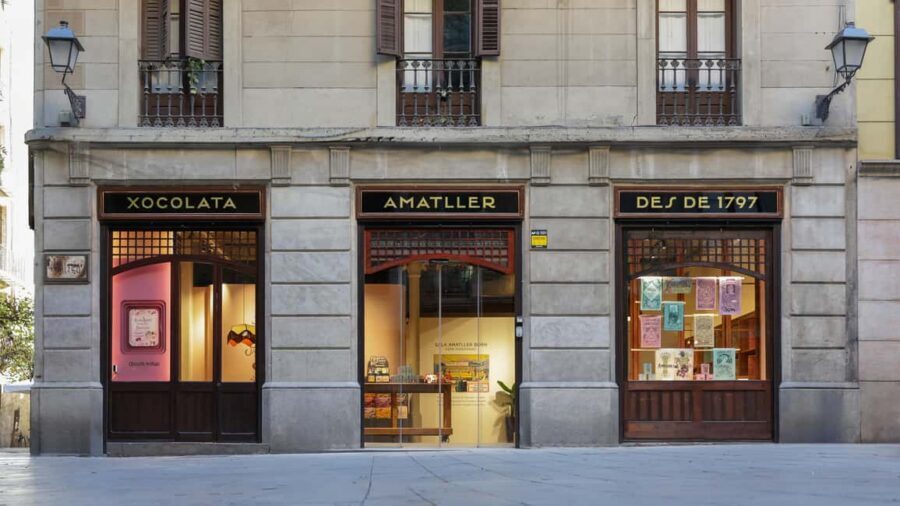
The experience also includes an original Barcelona-style hot chocolate tasting. This is important because hot chocolate is a cultural marker in Spain, and it’s often different from what people expect if they’re used to a sugary mix from elsewhere.
You’ll be guided on how chocolate was consumed and drunk in the 17th century in Barcelona, and you’ll taste it in a way tied to that tradition. In other words, it’s not just a warm drink—it’s presented as a historical habit.
A detail worth noting from guest feedback: one person highlighted cinnamon as part of their hot chocolate. Even if you don’t get the exact same spicing, the hot chocolate is definitely part of the tour’s signature tasting lineup.
This hot chocolate stop works as a palate reset. After tasting different chocolate forms, the drink gives you a different texture and temperature experience—thicker, warmer, and often more comforting. It also sets you up well for a final browse in the shop.
Store Time at the End: How to Use It Without Overspending
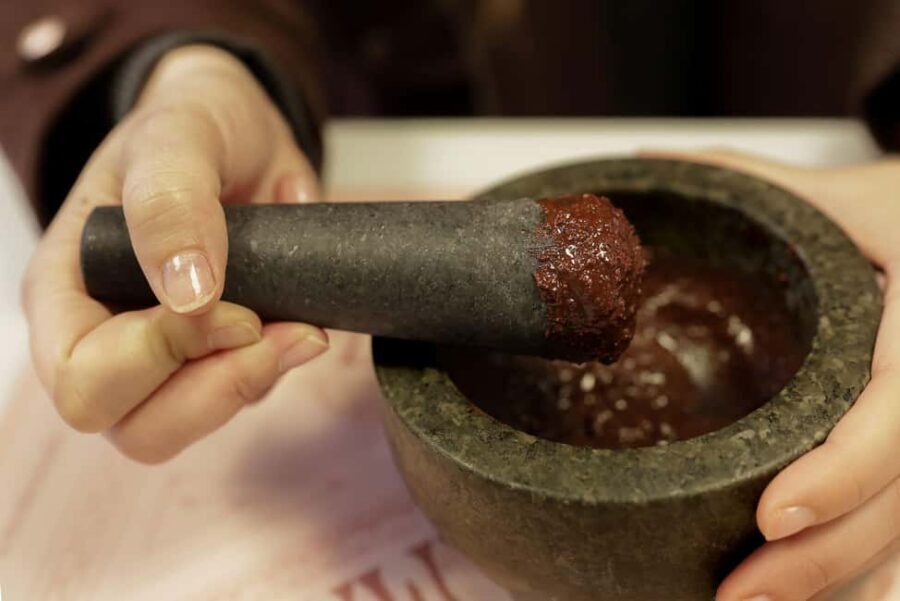
After the guided portion, you get free access to the gourmet store. This is your chance to continue discovering and tasting emblematic collections from the brand.
I like using this time with a simple plan:
- Taste first, decide second.
- Pick one item to buy that matches what you actually enjoyed in the workshop and tastings.
- Don’t buy “the fancy one” just because it looks giftable.
The store part is also useful if you want to bring something home. Chocolate from a brand with a local origin story tends to feel more meaningful than a generic souvenir bar.
One more practical note: audio recording isn’t allowed during the experience. That’s not unusual in food and craft settings, but it can affect how you plan to document your visit.
Price and Value: Is $14 Worth It?
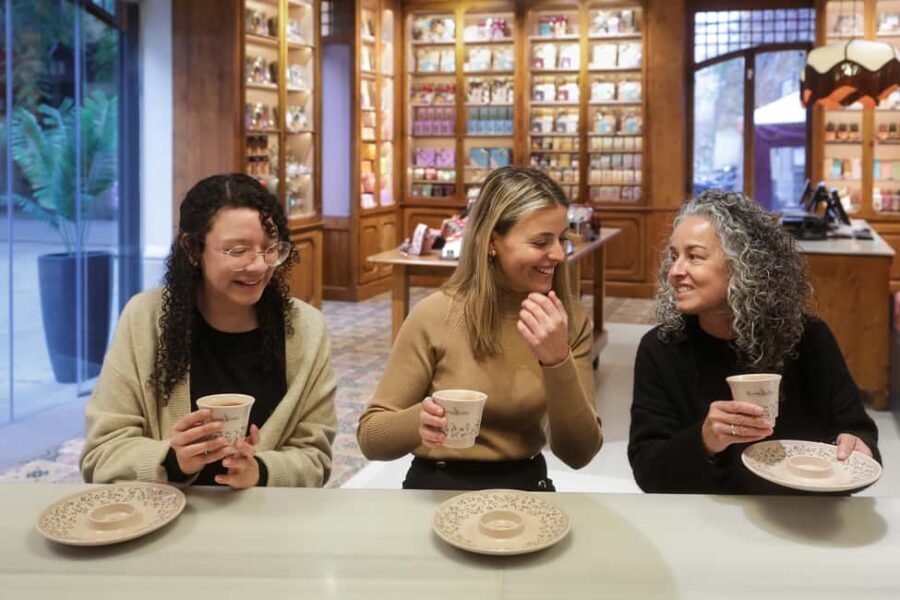
At $14 per person, the value comes from bundling several distinct parts into one tight time slot. You’re getting:
- The audiovisual history presentation (about 40 minutes total experience length)
- A tasting kit designed around aroma and texture
- A hands-on workshop tied to historic craft
- An original Barcelonese hot chocolate tasting
- Store access with tasting of emblematic collections
If you compare that to paying separately for a tasting and a class-like activity, the total cost often climbs quickly. Here, you’re basically paying for structure: a guide, a set tasting flow, materials, and a guided historical storyline.
The experience also helps you avoid one common tourist mistake: blindly grabbing desserts without learning what you like. Instead, you taste a brand range and learn how to describe what you’re noticing.
Who This Tour Fits Best (and Who Should Rethink It)
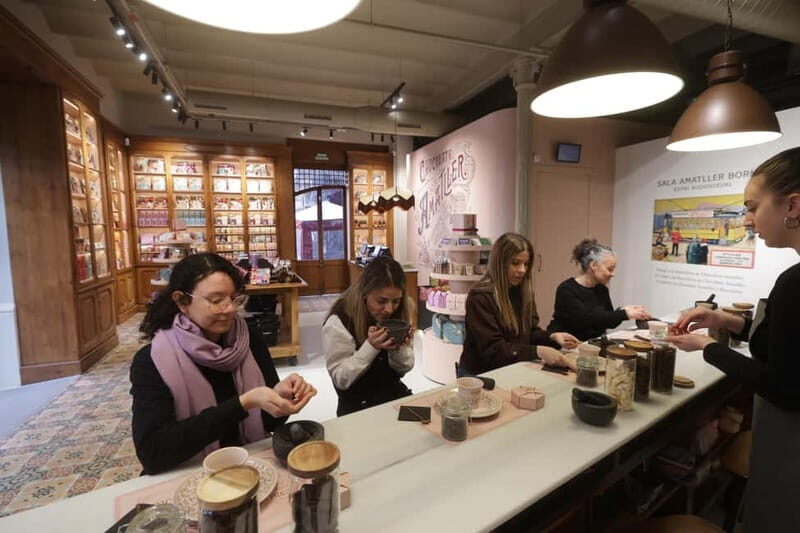
This is a great match if you want a food experience that’s hands-on and story-based, without being long or exhausting. The small group size—limited to 10 participants—keeps it from turning into chaos, and the guide format supports questions and pacing.
It’s also a good fit as a break in a busy day in Barcelona. Forty-ish minutes is exactly the length that keeps you from feeling rushed everywhere else.
That said, I’d rethink it if any of these apply:
- You’re dealing with nut allergies. The chocolates may have traces of milk, peanuts, and tree nuts.
- You’re traveling with a child under 5 years (not suitable).
- You have visual impairment (not suitable).
- You want audio recording (not allowed).
- You plan to bring pets (pets aren’t allowed; assistance dogs are allowed).
If none of those are issues, you’re likely to leave with both better chocolate knowledge and a more memorable story than a standard tasting flight.
Practical Tips for a Smooth Visit
A few small things can make your experience smoother:
- Go in with curiosity, not expectations of a long workshop. This is a guided experience, not a DIY class.
- If you’re sensitive to dairy or allergens beyond nuts, double-check how the tasting is described for your situation, since traces can be present.
- Wear comfortable shoes. Even though the tour itself is indoors and short, you’ll likely want to walk around El Born afterward.
- Plan it as a central stop rather than something you tack on after a late-night schedule. The 40–45 minute rhythm feels best when you’re not already running on fumes.
Should You Book This Amatller Chocolate Experience?
Yes, if you want a short, high-impact chocolate lesson in Barcelona. The mix of an 18th-century–focused audiovisual story, a five-sense tasting kit, and a hands-on cocoa moment is exactly what makes this better than simply buying chocolate and calling it a day.
If you’re specifically avoiding nut allergens, then skip it. And if you need options for visual accessibility, this one may not fit your needs.
For everyone else, it’s one of the more practical ways to understand Barcelona chocolate culture while spending your money on an experience that actually uses your senses and hands—rather than just your wallet.
FAQ
How long is the Amatller Chocolate Barcelona experience?
It lasts about 40 to 45 minutes. Starting times depend on availability.
Where does the experience start?
You start by entering directly into the Amatller Chocolate Shop at Plaça de les Olles, 9.
What languages are the guided tours offered in?
The live guide is available in English, Spanish, and Catalan.
What’s included in the price?
You get the audiovisual journey, a chocolate tasting kit, an experimental workshop with necessary materials, an original Barcelona-style hot chocolate tasting, and free access to the gourmet store with tasting of the brand’s emblematic products.
Is it suitable for children?
It is not suitable for children under 5 years old.
Is it safe if I have a nut allergy?
No. The chocolates may contain traces of milk, peanuts, and tree nuts, and the tour is not suitable for people with nut allergies.