REVIEW · BARCELONA
Barcelona: City Walking Tour with Local Guide
Book on GetYourGuide →Operated by Carpe Diem Tours · Bookable on GetYourGuide
Gothic streets feel like a time machine. I like this tour because it strings together 2,000-plus years of Barcelona in a way you can actually follow on foot, from the Roman colony roots to the medieval core. I also love the story-led stops—the kind that turn famous squares into places you remember (and point out spots you’d miss alone). One possible drawback: the format is mostly walking between short guided moments, so if you want lots of seated time, this may feel brisk.
For a straightforward price of $25 per person, you get a live English guide and a classic central loop, starting and ending at Escultura Barcino (meeting point can vary by option). Entry tickets are not included, so you may still want to plan for inside-the-building time if that matters to you.
In This Review
- Key highlights at a glance
- Why This Barcelona Gothic Quarter Walk Works So Well
- Price and What You Really Get for $25
- Where the Tour Starts: Escultura Barcino and the Roman Foundation Feeling
- Els Quatre Gats and The Kiss of Freedom: Art Energy in the Middle of Old Stones
- Barcelona Cathedral, La Casa de l’Ardiaca, and Carrer del Bisbe
- Plaça Sant Felip Neri: A Small Square With Big Story Atmosphere
- MUHBA El Call and Plaça de Sant Jaume: City Life Across Different Eras
- Plaça del Rei and Plaça de Santa Maria, 1: Medieval Power in Front of Your Eyes
- The Pace Reality Check (So You Enjoy It, Not Just Survive It)
- Who This Tour Suits Best (And Who Might Prefer Another Plan)
- Make It Better: What to Bring and How to Get More From the Guide
- Should You Book This Barcelona City Walking Tour?
- FAQ
- How long is the Barcelona City Walking Tour?
- What language is the tour guide?
- Where do I meet, and where does the tour end?
- What is included in the price?
- Are entry tickets included for attractions?
- Is there a cancellation option if plans change?
- Can I book without paying right away?
- Is the tour private or small group?
Key highlights at a glance
- Roman-to-medieval orientation that helps you read the city street by street
- Famous landmarks with local angles, like Barcelona Cathedral and Plaça de Sant Jaume
- Short, efficient stop plan (about 10 minutes of guided focus at each key point)
- Real “how to notice things” guidance, not just dates and names
- Humor and storytelling praised across guides like Darren, Maria/Mariah, Lydia, Jorge, Jordan, Adriana, Vanessa, and Sara
Why This Barcelona Gothic Quarter Walk Works So Well
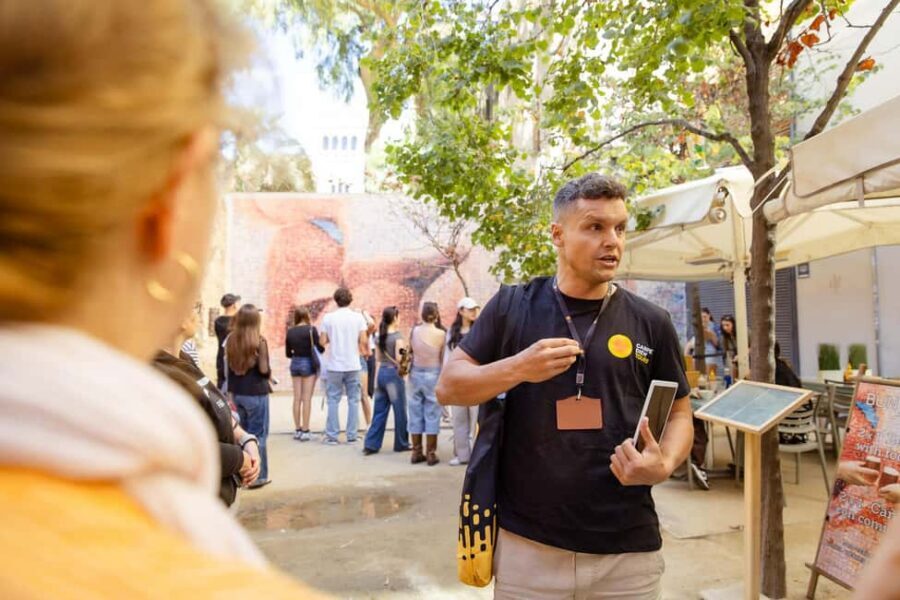
If Barcelona is your first stop in Spain, the quickest way to enjoy it is to get your bearings early. This tour is built for that. In just 2–3 hours, you’ll move through the Gothic Quarter and the adjacent medieval web of plazas and narrow lanes, with a local guide helping you connect what you’re seeing to what came before.
What I like is that it’s not only about big sights. The walk is structured around moments that make the city feel continuous—Roman foundations that shaped later building, medieval civic life that still echoes in today’s squares, and the layering you notice when you slow down for the right corners.
Also, the group style matters. You can book private or small groups, which is a big deal in a place like Barcelona where crowds can smother good explanations. When the group is small, you actually hear the guide and you can ask questions without feeling like you’re shouting over a bus tour.
You can also read our reviews of more walking tours in Barcelona



Price and What You Really Get for $25
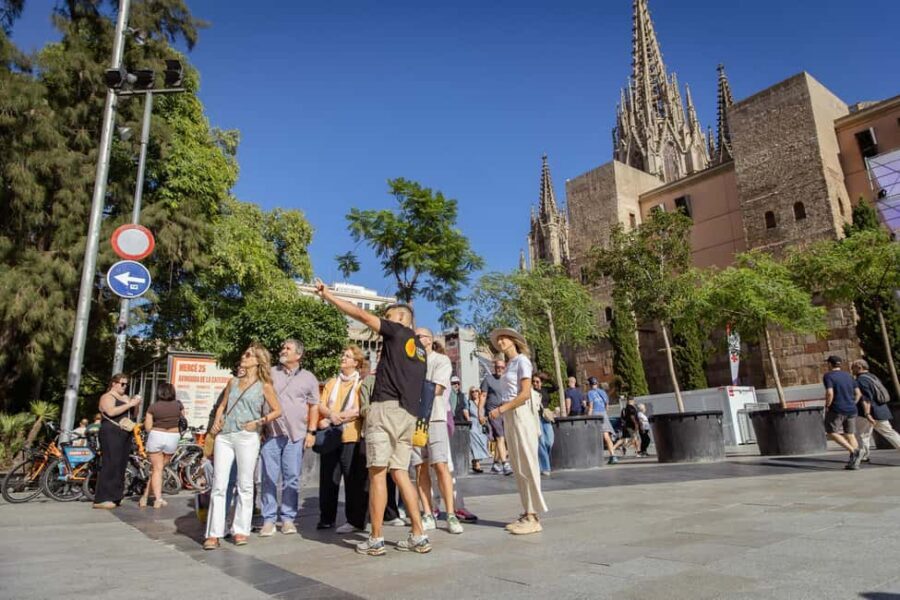
At $25 per person, this is not a “pay extra to access something” type of tour. It’s paying for interpretation: a local guide to help you understand why each street and square matters, and how the city changed over more than 2,000 years.
That’s good value if your time is short. You’re basically buying context so your self-guided exploring feels sharper right after the tour. But do note the one clear trade-off: entry tickets are not included. So if your top goal is spending time inside Barcelona Cathedral or any museum spaces, you’ll still need to handle that separately.
For me, the value is strongest if you’re the kind of visitor who likes to walk with a plan, then roam on your own with confidence.
Where the Tour Starts: Escultura Barcino and the Roman Foundation Feeling
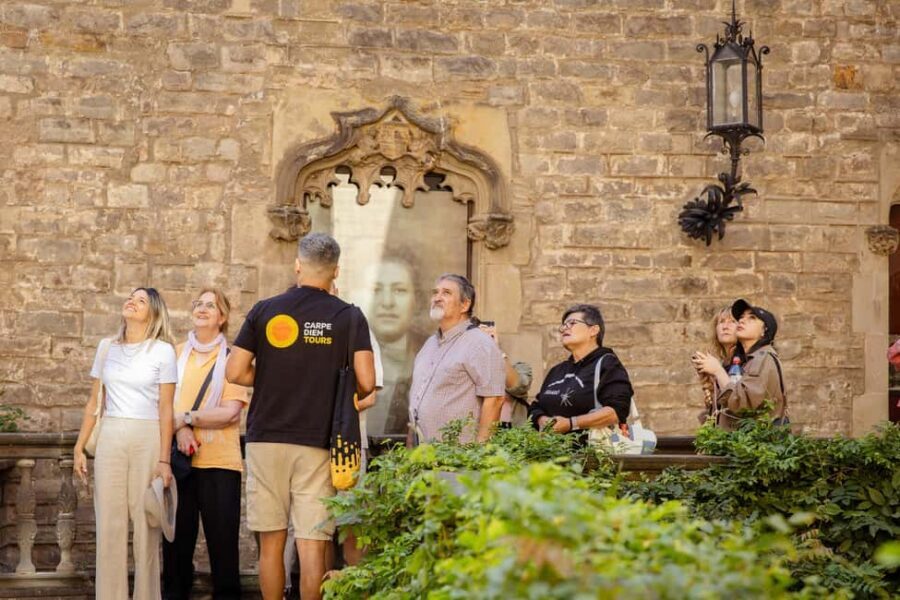
You begin at Escultura Barcino. Even without going inside anything, that start matters because it frames the whole day around Barcelona’s Roman starting point. Barcino isn’t just a historical footnote—it’s the root idea for how the city grew.
From that starting vibe, the guide helps you notice the city like a map:
- where movement and street lines feel inherited from older planning
- how later builders reused space and reinterpreted it
- how you can “read” medieval Barcelona even when modern buildings surround it
If you like understanding cities in layers, you’ll appreciate this setup. It also makes the rest of the walk land better. The tour doesn’t treat the past as separate chapters; it connects them.
Els Quatre Gats and The Kiss of Freedom: Art Energy in the Middle of Old Stones
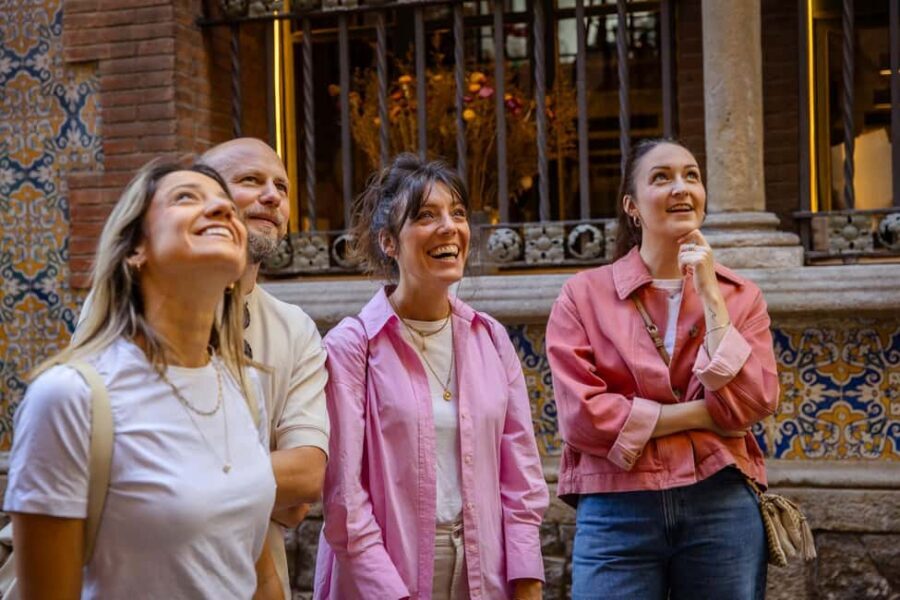
Two early stops keep the walk from turning into a straight line of solemn monuments.
First, Els Quatre Gats. This is a famed name in Barcelona, and the guide’s job here is to bring it into focus as part of how Barcelona expressed itself culturally. Expect the storytelling to connect the building name to the city’s creative pulse—because old cities aren’t only about stone and power. They’re also about people making art, meeting, debating, and shaping ideas.
Next is The Kiss of Freedom. This is the kind of stop that’s made for a quick story + photo pause. The point isn’t just where the sculpture is; it’s what it represents in Barcelona’s modern self-image. A good guide will tie this moment back to the city’s long memory—how symbols show up again and again in public spaces.
These are short guided moments, about 10 minutes each, which keeps the pace from dragging.
Barcelona Cathedral, La Casa de l’Ardiaca, and Carrer del Bisbe
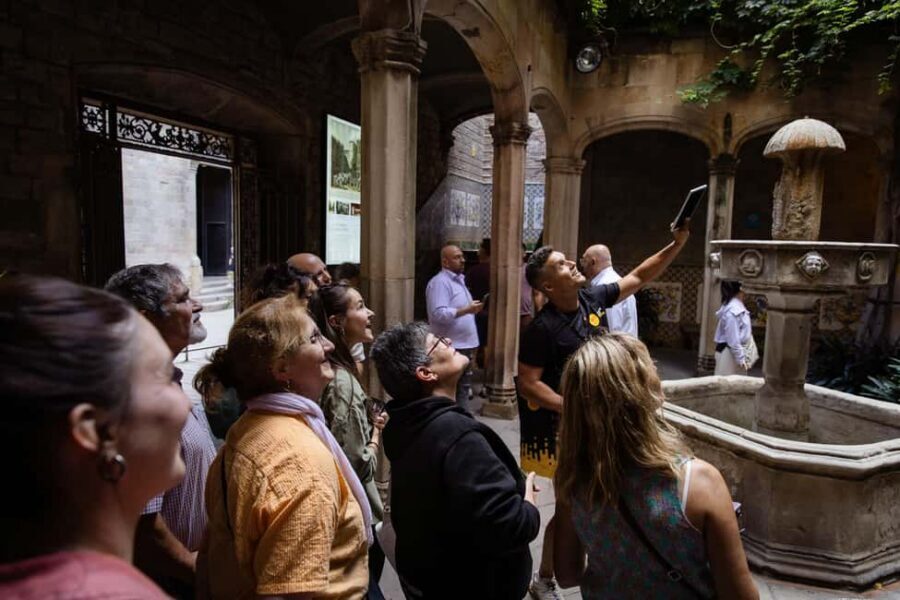
If you came to Barcelona for landmark architecture, this is where the tour pays off.
At Barcelona Cathedral, you’ll get a guided overview that helps you make sense of the scale and layout rather than just taking quick pictures. The guide’s explanation is what turns “big church” into “why this place mattered.”
Then you move to La Casa de l’Ardiaca. This stop is the kind of detail most people don’t plan for, but it’s exactly what a local guide is good at: showing you a building you might otherwise walk past while missing the story embedded in the façade and setting.
After that, Carrer del Bisbe brings you into a different mood. A bishop’s street sounds simple, but in old towns it often means concentrated power, proximity to key institutions, and streets that feel like they still remember who walked them. The guide’s narration helps you picture the city’s social hierarchy without needing a textbook.
A note on the trade-off here: the stop descriptions are short. That’s great for covering more in less time, but it does mean you won’t linger long at each detail unless you stay after the tour on your own.
You can also read our reviews of more guided tours in Barcelona





Plaça Sant Felip Neri: A Small Square With Big Story Atmosphere
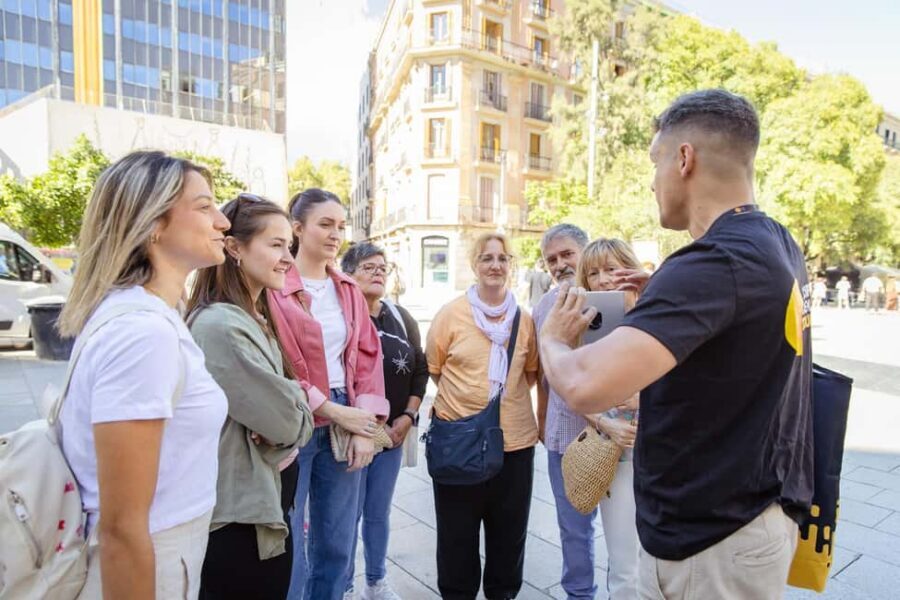
Placa Sant Felip Neri is one of those stops that can feel quietly magical. It’s not the kind of place you run into by accident; it’s a deliberate pause in the tour.
This is where the ambience starts to take over. You’ll hear legends, anecdotes, and the kinds of local context that make squares feel personal—like you’re stepping into a scene rather than passing through a location tag.
If you tend to get overwhelmed by too many monuments in a row, this kind of stop balances the day. It’s a calmer moment where the guide can connect history to the way people still move through the space today.
MUHBA El Call and Plaça de Sant Jaume: City Life Across Different Eras
Next up is MUHBA El Call. El Call refers to the Jewish quarter area, and this stop is where the tour expands beyond medieval Catholic-era landmarks and into the city’s more complex social history.
The guide’s explanations help you understand that old Barcelona wasn’t one uniform story. It was multiple communities living side by side, shaping what streets became important and what locations held memory.
Then you reach Plaça de Sant Jaume, a major civic heart. This is a place where history feels official—government, identity, public life. A good guide will show you how this plaza’s meaning evolved, and why it’s still a natural meeting point in the modern city.
This pairing—MUHBA El Call followed by a civic plaza—works especially well because it gives you a broader view of what “old city” means. It isn’t just religious architecture. It’s everyday life, civic decisions, and community presence.
Plaça del Rei and Plaça de Santa Maria, 1: Medieval Power in Front of Your Eyes
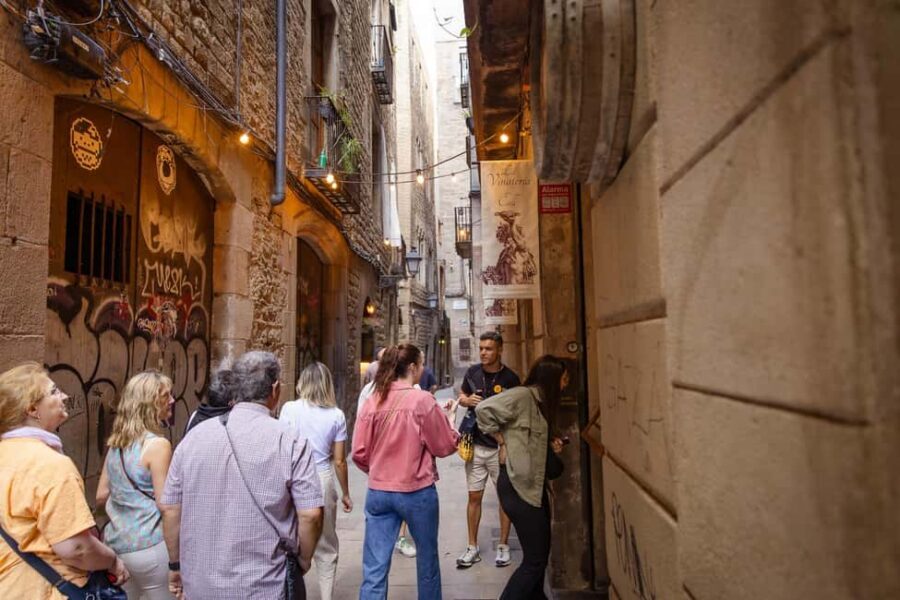
The route finishes strong with two more big-feeling squares.
At Plaça del Rei, the guide will help you see the medieval power structure without needing extra reading. This kind of plaza tends to look dramatic because it’s shaped by authority. Even if you’re not a history buff, the guide can make the place intelligible—why buildings around the square matter, and why this area became a focal point.
Finally, you reach Plaça de Santa Maria, 1. This stop is close to the Cathedral area and helps tie the day back into the religious-and-cultural core. You’ll get guidance that pulls together the themes you’ve been hearing all along: old routes, institutional influence, and the city’s habit of rebuilding important spaces again and again.
At the end, you arrive back at Escultura Barcino—so you’re not left figuring out how to retrace your steps.
The Pace Reality Check (So You Enjoy It, Not Just Survive It)
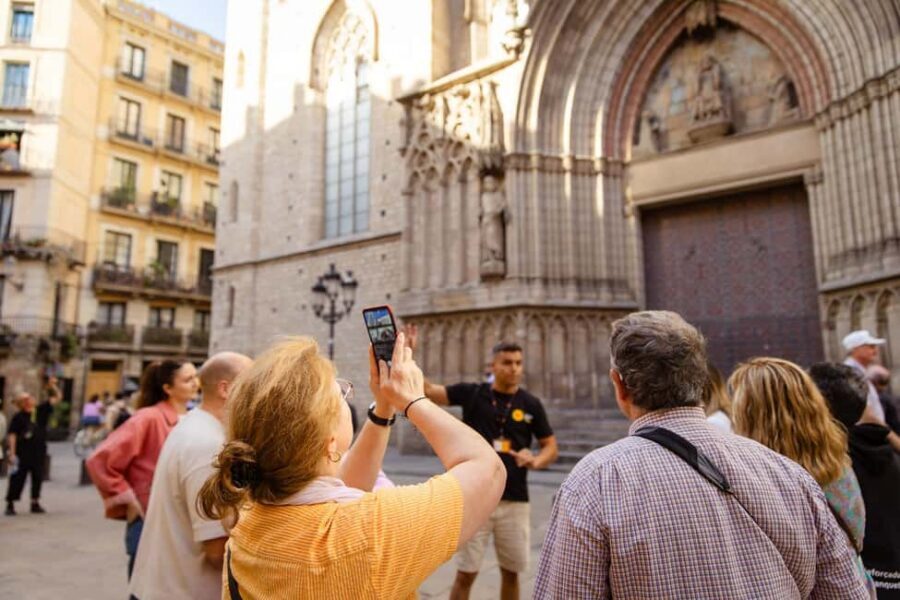
The structure is efficient: multiple stops, each with guided focus, about 10 minutes per stop, wrapped into a 2–3 hour walk.
That’s a smart design for a city-walking tour. You get momentum and variety. But here’s the honest consideration: at times, it can feel like there’s more walking than talking, especially when the group moves through busy pedestrian zones.
This is also where choosing the right footwear matters. Plan for cobbles, uneven sidewalks, and lots of standing. Bring a camera, but also bring patience—when you’re in a crowded central area, it can take a moment for a guide to get everyone lined up to hear clearly.
One more plus: guides in this program are praised for staying on top of the group’s ability to hear, even when other tour groups or street activity create noise. That’s not a small detail. In a walking tour, listening is the whole game.
Who This Tour Suits Best (And Who Might Prefer Another Plan)
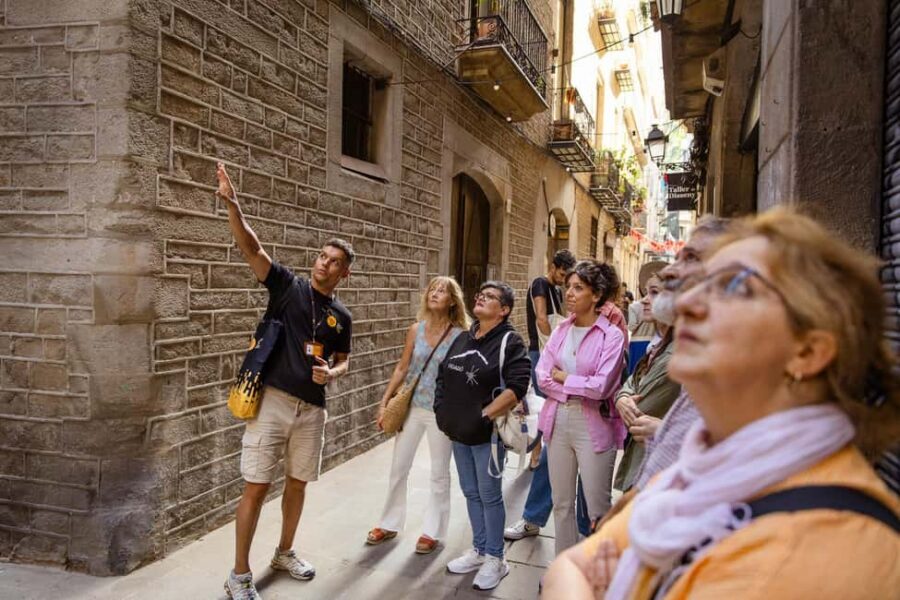
This is a great match if:
- you’re short on time and want a guided orientation in the Gothic Quarter
- you like stories that connect history to the street you’re standing on
- you want to keep moving but still get explanations, not just sightseeing
It might be less ideal if:
- you want a slow museum-style pace with long indoor time
- you’re mainly focused on paid entry sites, since entry tickets aren’t included
- you hate walking back-to-back stops, even if explanations are good
If you’re traveling with kids, it can work if everyone is comfortable walking for a couple hours and paying attention during short stops. If you prefer a “sit and read” day, consider pairing this with a lighter afternoon afterward.
Make It Better: What to Bring and How to Get More From the Guide
You already know the basics, but they matter here:
- Comfortable shoes for cobblestones and standing time
- A camera for quick photo moments at major stops
- Comfortable clothes for time outdoors and changing light
Your biggest secret weapon is simple: ask one question when you hear a detail you don’t fully grasp. Good guides often have extra context on demand. Names people have credited for great storytelling include Darren, Maria/Mariah, Lydia, Jorge, Adriana, Jordan, Vanessa, Sara, and Valida—so whichever guide you get, you’re likely in for humor and clear explanations, not a monotone lecture.
Should You Book This Barcelona City Walking Tour?
I’d book it if you want your first visit to Barcelona to feel grounded fast. The tour is built for smart orientation: you leave with a clearer mental map of how the Roman city became the medieval core you’re walking today. It also tends to deliver exactly what walking tours should do—use the guide to notice more than you would alone.
Skip it only if your main goal is sitting inside major sites for long periods. Since entry tickets aren’t included, you’ll need to plan those separately anyway. If that’s your priority, you can still do the walk, but treat it as the context builder, not the ticketed attraction plan.
If you’re willing to walk, listen, and collect stories for 2–3 hours, this one is a strong value.
FAQ
How long is the Barcelona City Walking Tour?
It runs about 2 to 3 hours. Starting times vary, so you’ll need to check availability for the specific time slot you want.
What language is the tour guide?
The live tour guide offers the tour in English.
Where do I meet, and where does the tour end?
The meeting point may vary depending on the option booked, and the tour ends back at the meeting point.
What is included in the price?
The included items are a local guide and the walking tour itself.
Are entry tickets included for attractions?
No. Entry tickets are not included.
Is there a cancellation option if plans change?
Yes. Free cancellation is available up to 24 hours in advance for a full refund.
Can I book without paying right away?
Yes. You can reserve now and pay later.
Is the tour private or small group?
The activity offers private or small groups, depending on the option you choose.