REVIEW · BARCELONA
Barcelona escape game, time travel
Book on Viator →Operated by Escape the City · Bookable on Viator
This is escape-room energy, but outside on the streets. The idea is simple: you do not stay trapped in a single room. You move through Barcelona via a secret route, tackling team tasks that unravel the mystery and bring a time-travel feel to everyday corners of the city.
I like the outdoor format because it turns the game into a moving walk through Ciutat Vella, not just a screen or a single set. I also like how it uses Barcelona’s historical elements so the puzzles can feel connected to the place, not random trivia.
One thing to keep in mind: the story line and stage-to-stage links can feel a bit light, so you’ll get the most out of it if you pay attention when the game starts and follow the guide’s instructions closely.
In This Review
- Key things to know before you play
- A street-based escape game with a Barcelona time-travel twist
- Meeting at Plaça de la Mercè and getting your team ready
- The secret route: clue stations, teamwork, and street navigation
- The mid-route mystery stop you can’t skip
- Finishing at La Rambla: what you take with you
- Price and timing: does $29.09 make sense?
- Guides that keep the game fun: Mar Poc and Paula
- Outdoor escape games: the main upsides and the main cautions
- Who should book this street time-travel game
- Practical tips so your team solves faster
- Should you book Escape the City’s Barcelona escape?
- FAQ
- How long is the Barcelona escape game?
- Where does the experience start and end?
- How much does it cost?
- What’s included in the ticket price?
- Do I need private transportation to get there?
- When will I get confirmation after booking?
- What is the cancellation timeframe?
Key things to know before you play
- Street-based challenges: you solve the enigma with your team by moving through Barcelona, not by clicking through a single room.
- Time-travel theme: the game’s mystery wraps around a travel-in-time vibe, which helps the walk feel like a plot, not wandering.
- Historic clues: parts of the challenge draw on Barcelona elements, with interesting facts mixed into the tasks.
- Small-team energy: the format is easy to run in a way that supports friendly competition between groups.
- Start and end are in classic spots: you begin at Plaça de la Mercè and wrap up near La Rambla, so you can keep exploring after.
A street-based escape game with a Barcelona time-travel twist
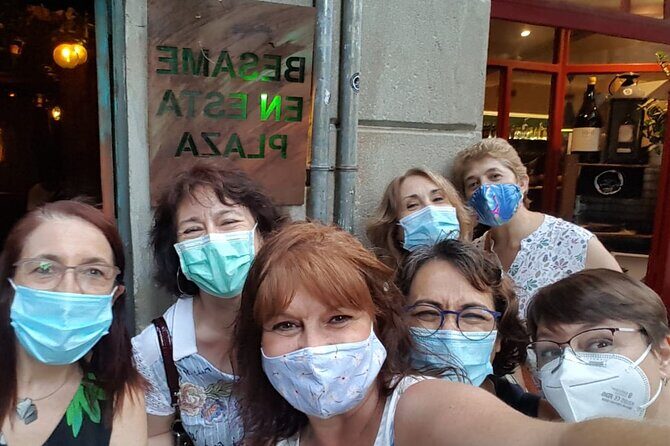
If you’ve done an escape room before, you know the core loop: find clues, solve puzzles, beat the clock. This version keeps that spirit, but swaps the room for Barcelona itself. The operator’s pitch is about overcoming the mythical escape-room idea, and the practical result is that you experience the city as part of the game.
The time-travel framing matters. It gives you a reason to look at ordinary details with fresh eyes. Even when you’re just following your guide’s direction, the theme pushes you to notice how Barcelona’s layers sit next to each other street by street. That theme is what makes it feel more like a guided mission than a scavenger hunt.
And you’re not doing it alone. This is built for teamwork. The whole point is that the answer isn’t in one person’s head; it’s in how your group communicates, shares clues, and splits tasks while still staying together.
You can also read our reviews of more tours and experiences in Barcelona.



Meeting at Plaça de la Mercè and getting your team ready
Your game starts at Plaça de la Mercè (Ciutat Vella), at 6:00 pm. That timing is great for people who like the city in the early evening: you can combine this with dinner plans nearby and still have time to keep going once the game ends.
The meeting point is also central to your route. Starting at a plaza makes the handoff easy. You meet, you get oriented, and then you go. You’ll have an in-person guide with you for the experience, and that guide is key because this is not just about puzzles. It’s about moving correctly and not missing the next step.
This is one of the places where I’d suggest you set yourself up for success. One of the practical complaints is that there can be too few instructions at the beginning. So if anything feels unclear, ask right away. The better you understand how to play, the less likely you are to burn time later trying to decode what you should be doing.
The secret route: clue stations, teamwork, and street navigation
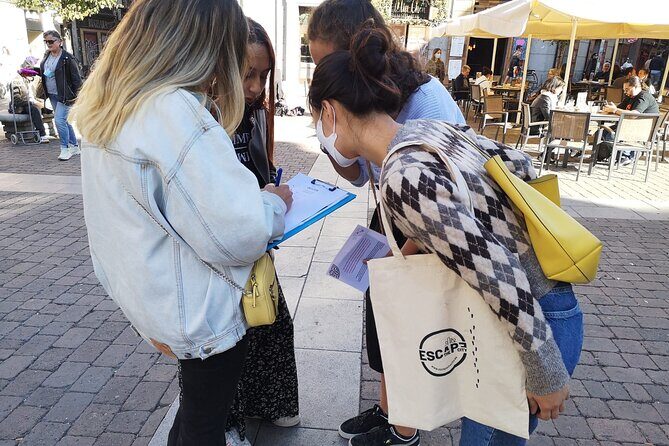
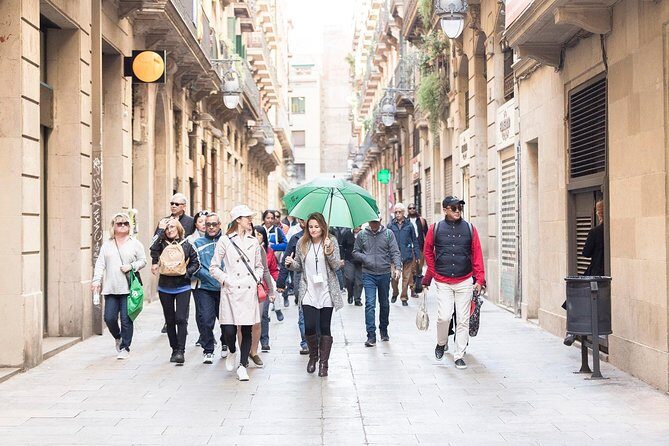
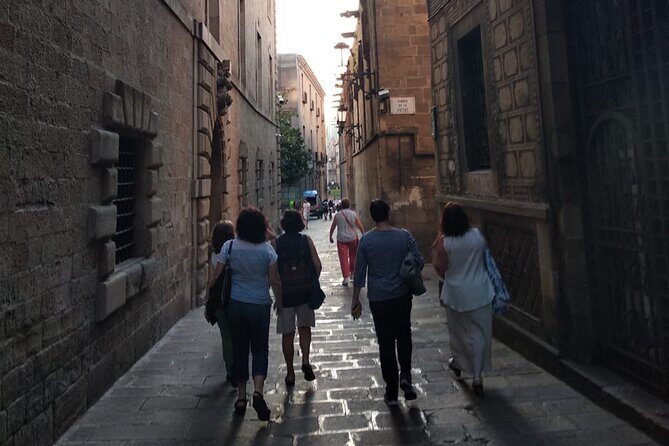
The heart of the experience is the secret route through Barcelona and its unique corners. You’ll be solving an enigma as you go, with different team activities at different points. Think of each stop as a checkpoint: you complete a task, collect what you need for the next challenge, and keep the team momentum going.
Because it’s outdoors, the game also functions like a guided walk with a purpose. That’s a real value for Barcelona. You get movement, you get variety, and you get a reason to look closer at details you might otherwise pass by without noticing.
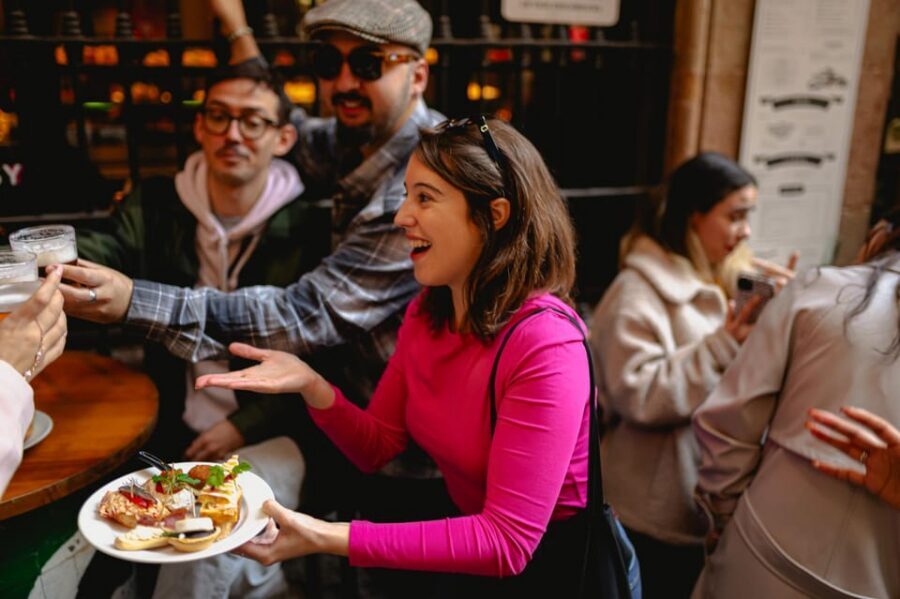
Teamwork is not just a buzzword here. It’s how you clear the steps. You’ll likely be doing tasks that require quick coordination: one person can focus on reading clues, another can manage the discussion, and someone else can keep the group focused on timing. On at least one outing, groups were split into smaller teams and competed, which is a nice bonus if you have friends or want that game-night vibe in the open air.
The mid-route mystery stop you can’t skip
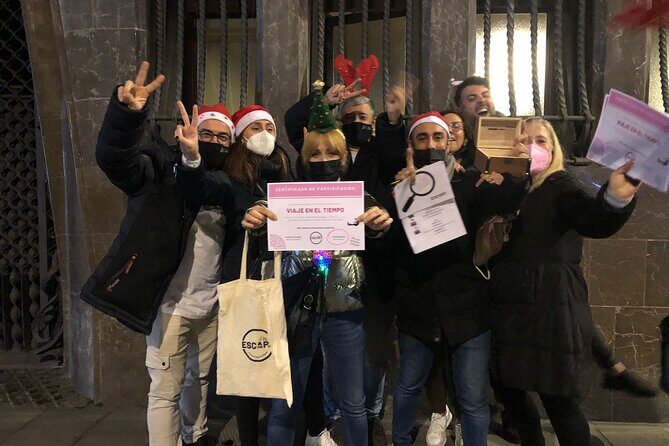
There’s an intermediate point on the route. The operator keeps it unnamed in the public description, and that’s on purpose: part of the fun is that you don’t know exactly what kind of challenge is coming next.
In practice, this mid-route stop is where you feel the structure of the whole game. Early on, you learn the rhythm. Around the middle, the tasks usually feel like the moment where information from earlier clues needs to come together with what you’re doing now. If you rush the earlier stages or miss instructions, this is where your group can start to feel behind.
It also tends to be the “check your teamwork” moment. These games live or die by group communication. If your team splits too much, you can lose time. If you don’t agree on what you’ve found, you can solve the wrong thing and carry that mistake to later checkpoints.
So treat this middle segment like a reset. Slow down enough to compare notes. Decide who does what for the next phase. Then keep moving.
Finishing at La Rambla: what you take with you
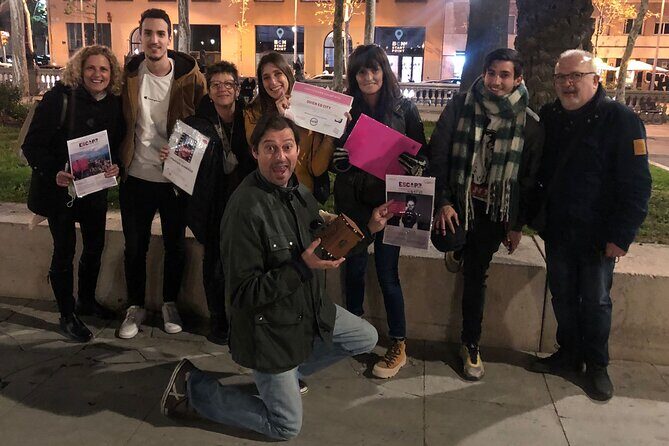
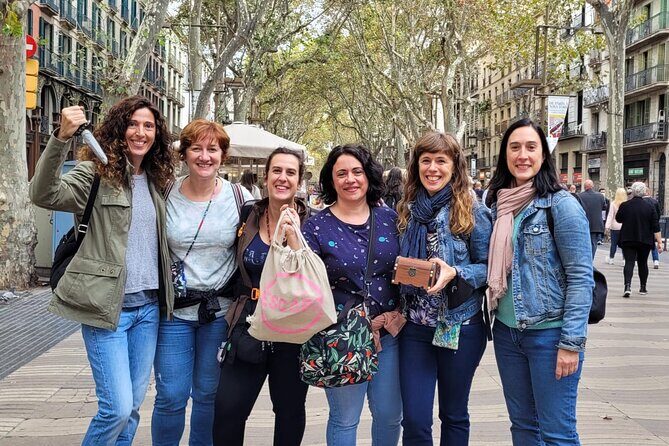
The tour ends on La Rambla in Barcelona. That’s a big deal in terms of convenience. You’re not stuck back at a random location far from everything. Instead, you land in an area where it’s easy to grab food, wander, and keep your evening going.
This ending also shapes how the whole experience feels. When you have a clear finish line in a known neighborhood, you relax. You focus on the game instead of worrying about how to get back later. It makes it easier to treat this as both an activity and a way to get bearings in the city.
What you’ll take away isn’t just a solved mystery. The game draws on historical elements of Barcelona in the process, and that can turn the walk into learning you actually remember because you encountered it while playing. One reviewer called out that the game revealed interesting data using Barcelona’s historic components. That’s the sort of “I didn’t expect to learn that today” value that makes street challenges feel worth doing.






Price and timing: does $29.09 make sense?
The price is $29.09 per person for about 1 hour 30 minutes. That’s a sweet spot length-wise. Long enough to feel like an experience with momentum, short enough that it doesn’t wreck a full day of sightseeing.
Value comes from a few specific things you get for that price:
- An in-person guide
- A ticket you access on your mobile
- A structured activity built around teamwork
- A route that uses real city corners, starting at Plaça de la Mercè and ending near La Rambla
Private transportation is not included. That matters because this is very much a walking-and-street activity in central Barcelona. You’ll want to plan to reach the meeting point via public transport or a reasonable walk.
Also, the group size has a maximum of 50 travelers. That isn’t small enough for a fully private tour, but it’s not so huge that the guide can’t manage the flow. In a game format, that cap helps the organizers keep the experience moving without turning it into a chaotic line of people all trying to read the same clue.
If you want a light, fun evening activity that still uses your brain and gives you something to do in the streets, this cost-to-time ratio is fairly reasonable.
Guides that keep the game fun: Mar Poc and Paula
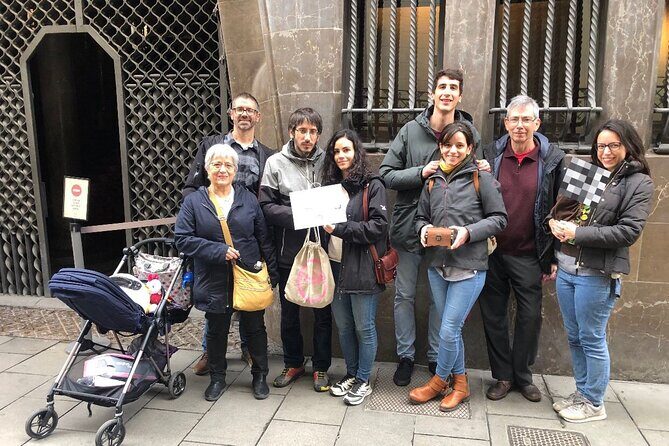
Good guides make street games work. Bad guides turn puzzles into frustration. The tone in the feedback is strongly positive about guide performance, especially mentions of Mar Poc and Paula.
Mar Poc is described as friendly, fun, and knowledgeable, with the ability to transfer that knowledge in a way that doesn’t feel like a lecture. Paula also gets positive recognition, which suggests the guides aren’t just reciting trivia. They’re shaping the experience so the story, the tasks, and the city context all connect.
That matters for you because the game’s main job is to keep you moving and thinking. When the guide is good, you spend more time solving and less time guessing what you’re supposed to do next.
One practical note: if you’re the type who freezes when instructions are brief, you should still speak up early. The experience can be very smooth with the right start, but if the initial guidance isn’t enough for your learning style, you may feel behind.
Outdoor escape games: the main upsides and the main cautions
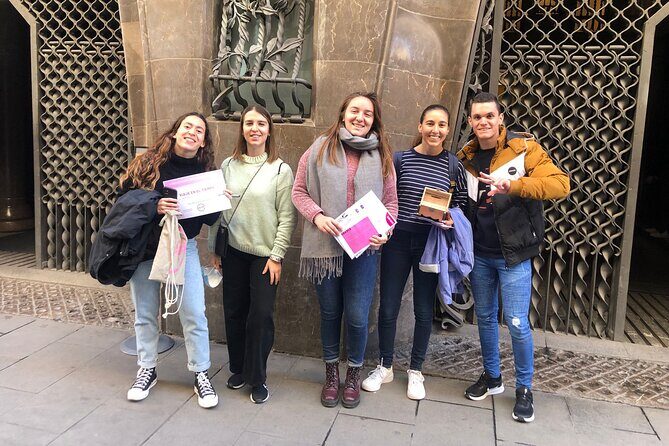
This experience leans into the fun of street play. Immersive outdoor challenges and a thrilling atmosphere are part of the appeal. If you like games that get you out of your comfort zone and make you work with others, you’ll probably enjoy this format.
It also seems family-friendly in how it’s delivered. One family shared that they could do it together with a child who was not yet two years old, with staff acting patiently and kindly. That doesn’t mean it’s built for every family situation, but it does suggest the guides can be flexible in how they support participants.
Now the cautions, because they’re important for your planning:
- The storyline can feel thin. One comment called the plot poor and suggested enriching the narrative and better connecting each stage.
- Early on, you might need more guidance. Another note said there were not enough indications at the start.
- Operational hiccups can happen. There’s at least one account of a cancellation about an hour before the start time. You can’t control that, but you can control your flexibility: don’t schedule something tight right after.
If you treat it as a fun street puzzle walk rather than a deep, cinematic narrative, you’ll likely be happier.
Who should book this street time-travel game
I’d book this if you want:
- A structured evening activity in Barcelona (about 1.5 hours)
- Team puzzles that get you interacting instead of just sightseeing
- A route starting at Plaça de la Mercè and ending on La Rambla, so it blends with dinner plans
It’s also a good fit for groups of friends. One outing had 13 participants split into two groups to compete, which shows how the activity can handle a lively mix of people.
You might skip it if:
- You hate walking through city streets and want everything in one place
- You need a very strong storyline to enjoy puzzles
- You’re sensitive to last-minute changes and can’t flex at all on your schedule
Practical tips so your team solves faster
Because this is a street escape game, your success comes down to basics. Here’s what I’d focus on:
- Listen carefully at the beginning. If instructions feel light, ask clarifying questions right away.
- Keep communication tight. In team puzzle games, misunderstandings cost minutes.
- Stay together. Street games work best when the group stays aligned on the next checkpoint.
- Bring a plan for your group’s pace. If you’re competing against another team, agree on who leads at each stage so you don’t spend time debating.
Also, you’ll get a mobile ticket. That’s a good convenience feature, but still make sure your phone is charged and easy to access.
Should you book Escape the City’s Barcelona escape?
Yes, I’d recommend booking if you’re looking for a playful, teamwork-first activity that uses Barcelona’s streets as the game board. The combination of outdoor challenges, time-travel theme, and historic elements gives you a reason to explore beyond the usual photo spots.
Before you hit confirm, decide what matters most to you. If you want heavy storytelling, you might feel the plot is not the strongest part. If you want a fun evening puzzle walk with a capable guide, this fits well.
My call: it’s a smart value pick at around $29.09 for 1 hour 30 minutes, especially if you’re traveling with friends, or you want something interactive to break up your sightseeing day.
FAQ
How long is the Barcelona escape game?
It lasts about 1 hour 30 minutes.
Where does the experience start and end?
It starts at Plaça de la Mercè (Ciutat Vella) and ends at La Rambla.
How much does it cost?
The price is $29.09 per person.
What’s included in the ticket price?
An in-person guide is included.
Do I need private transportation to get there?
Private transportation is not included, so plan to reach the meeting point using public transport or your own method.
When will I get confirmation after booking?
You should receive confirmation within 48 hours of booking, subject to availability.
What is the cancellation timeframe?
You can cancel for a full refund if you cancel up to 24 hours in advance of the start time. If you cancel less than 24 hours before, the amount paid is not refunded.