REVIEW · BARCELONA
Barcelona: Espadrilles Shoe-Making Workshop
Book on GetYourGuide →Operated by Handmade · Bookable on GetYourGuide
Espadrilles become personal in two focused hours. This workshop turns a classic Catalan staple into something you actually helped design, right inside the HANDMADE THE BRAND® shop on Carrer d’Avinyó. I like the hands-on control—base size, stitching style, lace colors, and lace type—plus the patient coaching from instructors such as Annie, Stephanie, Pamela, Luis, and Eva.
One thing to keep in mind: the room can feel lively when there’s a bigger group, so if you prefer quiet activities, you may want to aim for a smaller session.
In This Review
- Key things you’ll notice fast
- From humble canvas to everyday fashion in Catalonia
- Inside HANDMADE THE BRAND® on Carrer d’Avinyó
- Choosing the base, stitching style, and lace colors (the fun part)
- The hands-on build: what those two hours really feel like
- Your instructors: patient coaching and real attention to fit
- Drinks, snacks, and the social pace of the workshop
- Lacing tricks you can actually use after you leave
- Taking your pair home: wearable souvenir, not just a photo prop
- Price and value: what $118 gets you in Barcelona
- Who should book (and who might not)
- Should you book this Barcelona espadrilles workshop?
- FAQ
- How long is the Barcelona espadrilles workshop?
- Where is the meeting point?
- What’s included in the price?
- Is transportation included?
- What languages do the instructors speak?
- Is the workshop wheelchair accessible, and can I cancel?
Key things you’ll notice fast
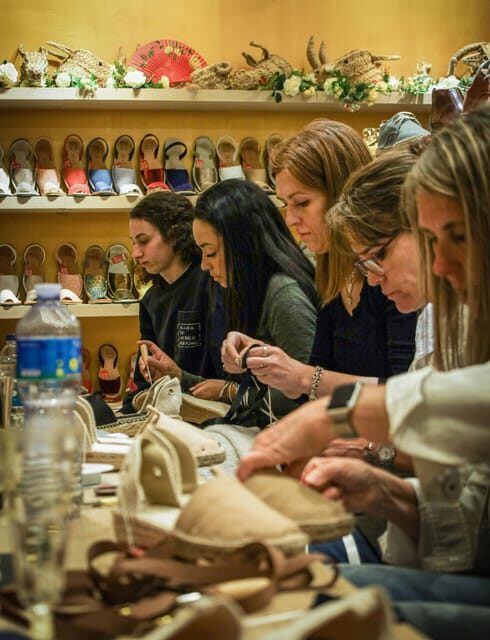
- 100k+ combination choices let you build a pair that looks like yours, not a generic souvenir.
- You select laces like a designer, then learn practical lacing methods to match the style.
- It’s a real workshop visit, with materials, tools, and finished espadrilles you can study up close.
- You get taught by hands-on artisans, including English-speaking instructors like Luis and Eva.
- Snacks and drinks are part of the experience, with options ranging from cava to non-alcoholic beverages.
- You leave with wearable shoes, not just photos or a sketchbook.
From humble canvas to everyday fashion in Catalonia
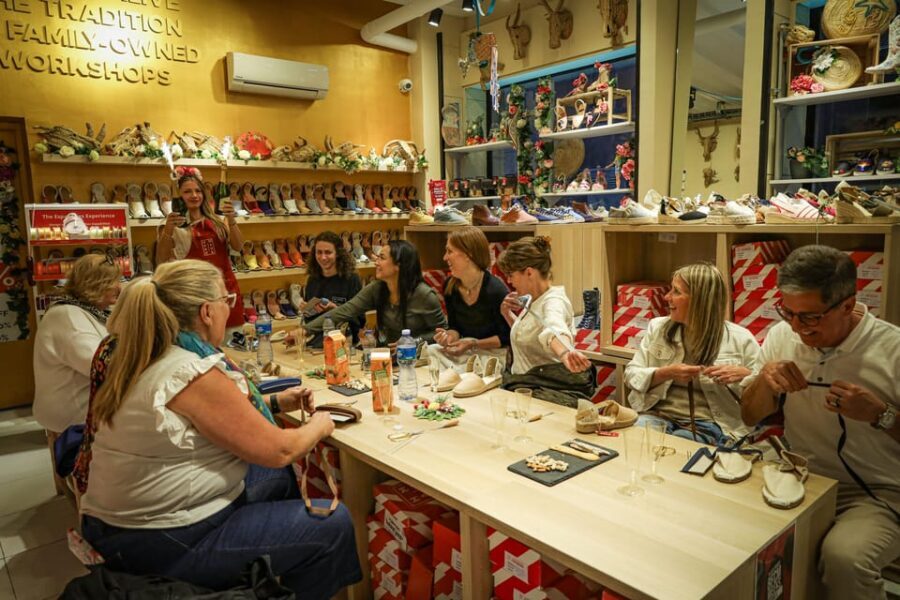
Espadrilles start with a simple idea: shoes that work, breathe, and don’t pretend to be something they aren’t. In the workshop, you’ll hear how these humble canvas-and-jute shoes became a major fashion trend, while still keeping their Catalan roots. That history matters because the design choices you make aren’t random—they reflect what traditionally goes where and why.
I also like that the class treats espadrilles like craft, not costume. You’re learning materials and techniques, then applying them to your own pair, which makes the final result feel earned.
You can also read our reviews of more tours and experiences in Barcelona



Inside HANDMADE THE BRAND® on Carrer d’Avinyó
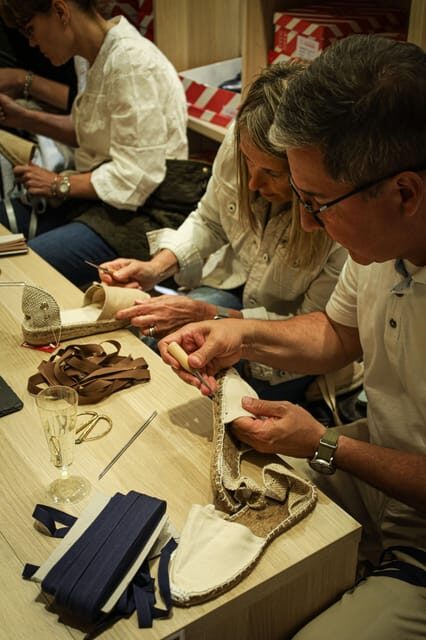
You meet inside the HANDMADE THE BRAND® shop at Carrer d’Avinyó, 8. Expect a workshop setting: materials out in front of you, tools nearby, and finished pairs that show what different stitching and lace choices look like in real life. It’s not a lecture hall vibe, and that’s the point.
This location is also great for pre- or post-workshop strolling. You’ll be in central Barcelona, so pairing the class with a meal in the area is easy, as long as you plan for the two-hour slot.
Choosing the base, stitching style, and lace colors (the fun part)
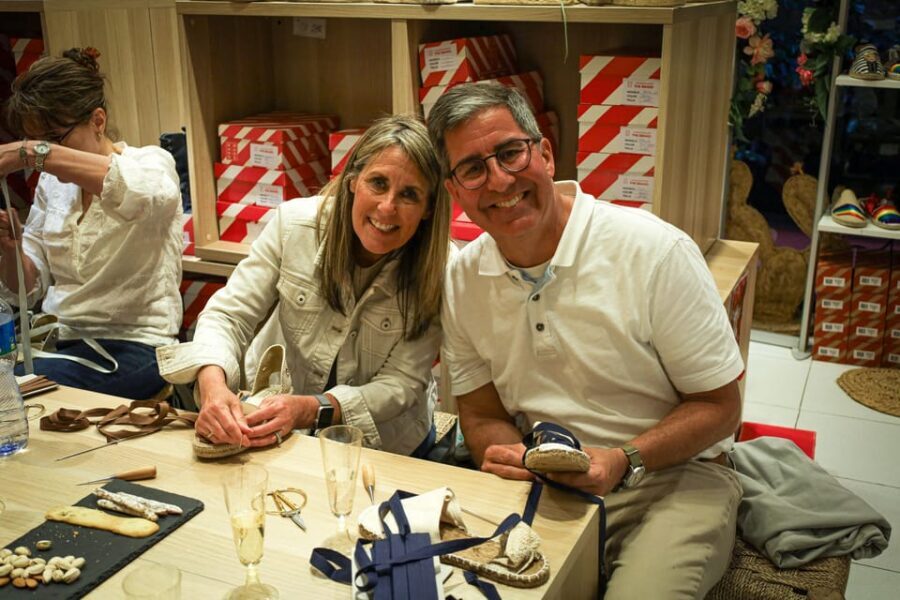
The heart of the experience is customization. You’ll start by selecting the size of the base, then move into stitching style and lace choices, including lace color and type. The workshop frames this as a huge menu of options—over 100k combinations—so even people who think they want something “simple” usually end up with a more personal twist.
You’ll also learn how to think about balance: how lace color interacts with the overall shoe look, and how stitching affects the feel and character of the finished pair. That’s useful because espadrilles are often bought as a style item. Here, you’re treating them like a product you can configure.
The hands-on build: what those two hours really feel like
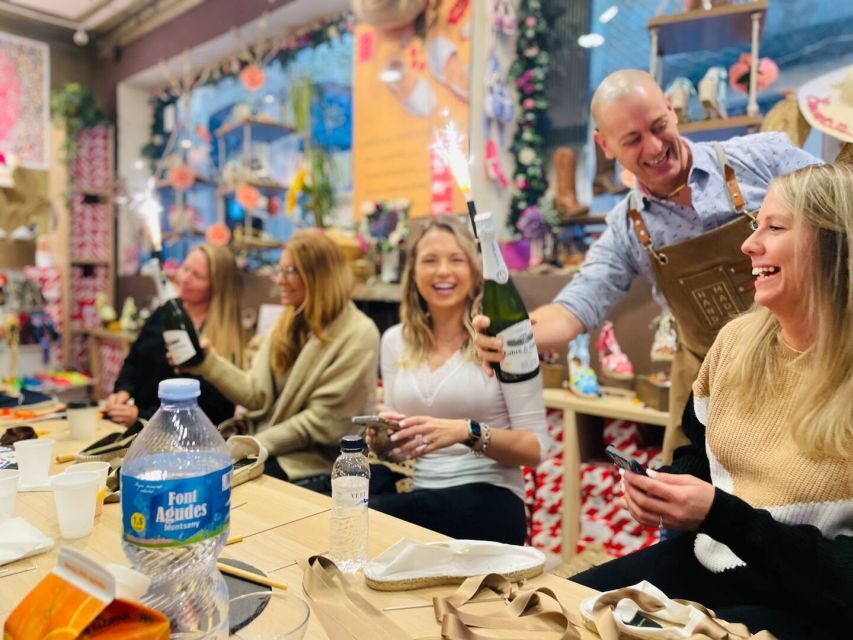
The class runs for 2 hours, and it moves in a clear sequence: orientation, design choices, then practical build and lacing guidance. First you’ll get oriented in the workshop space and learn about the parts that make espadrilles work—the materials and what each piece contributes.
Next comes the design portion, where you’re making selections from a wide set of options. You won’t just point at a sample; you’re building a pair step-by-step with an artisan’s help, so you understand what you picked and what it changes.
Then you get the lacing lesson. They don’t treat lacing like an afterthought. You’ll learn different ways to lace up your finished design, which matters because espadrilles can look similar but fit and feel different once the laces are set.
Your instructors: patient coaching and real attention to fit
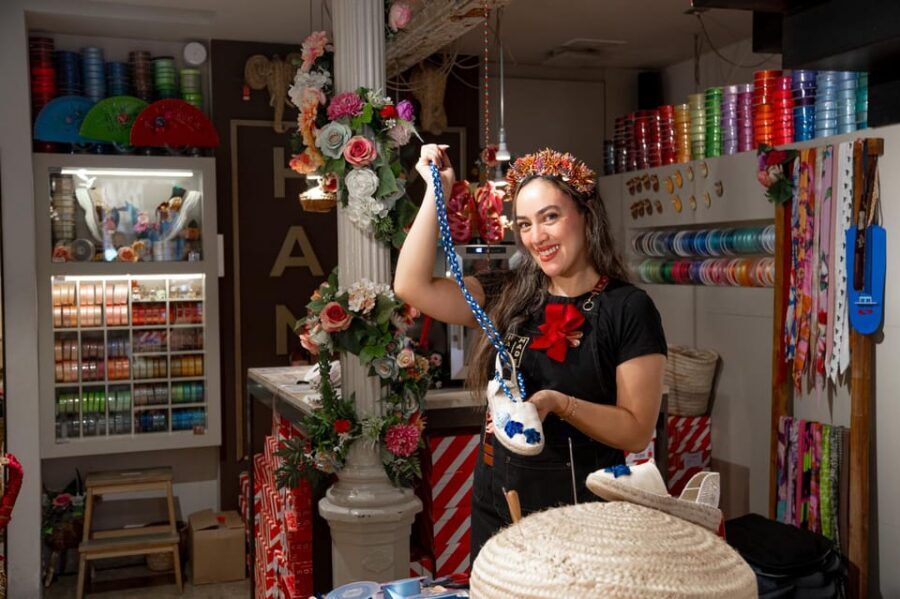
A standout theme in the experience is teaching style. The guidance tends to be hands-on and patient, with instructors who clearly want you to end up with shoes that fit well and look right. Names that come up often include Annie, Stephanie, Pamela, Pilu, Luis, Eva, Nina, and Sonu, and the common thread is supportive, energetic instruction.
That level of attention is why this feels more like craft training than a quick “make-and-go” activity. If you’re worried about getting the fit wrong, the coaching reduces that stress because you’re making choices while someone watches what you’re doing and helps you adjust.





Drinks, snacks, and the social pace of the workshop
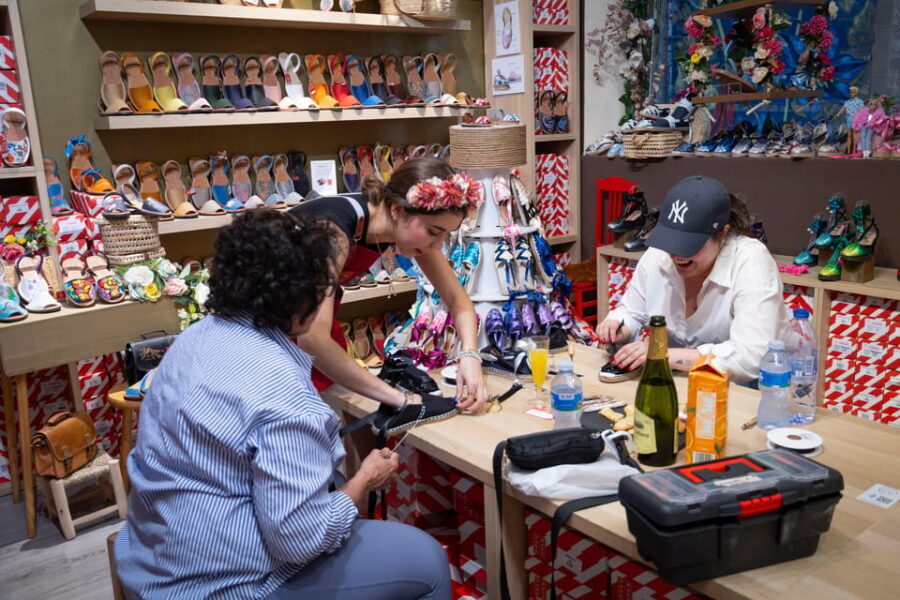
You can enjoy the class with cava or non-alcoholic drinks. Light snacks are included, and the tone is friendly, with moments to relax while you work and then get back to the build.
Based on what people describe from past sessions, the snack setup can include things like breadsticks and biscuits, along with water and juice. It’s a small detail, but it adds up: you’re at a table doing hands-on work, and having something to nibble makes the time feel comfortable rather than rushed.
The one pacing note: if the group is larger, the room can get a bit loud. That doesn’t stop the class from being enjoyable—it just means you’ll want to be okay with energy and chatter while you concentrate.
Lacing tricks you can actually use after you leave
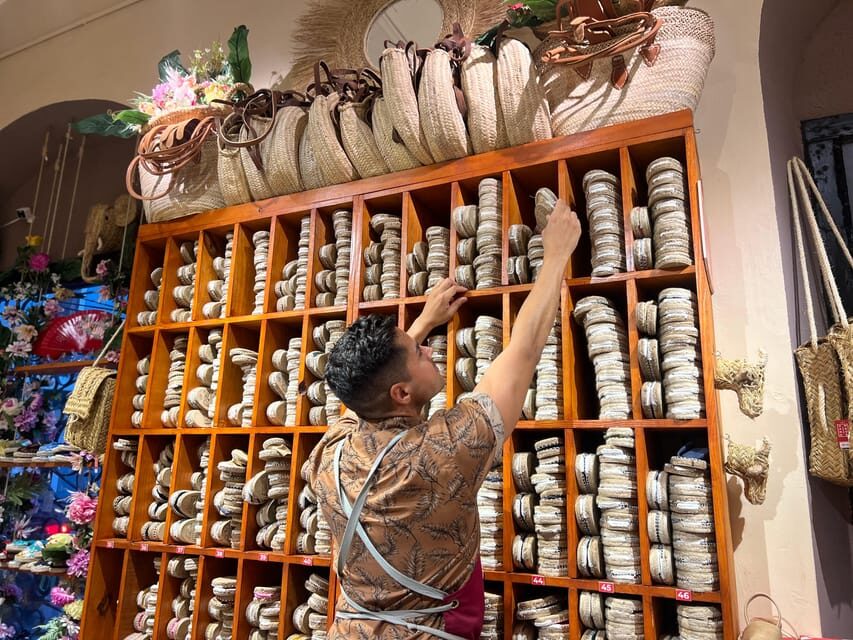
Lacing is the part that most souvenir purchases don’t teach you. Here, you learn ways to tie your espadrilles that match the design you chose, which can affect how the shoe sits on your foot.
I love that this turns into practical knowledge. If you plan to wear your espadrilles the next day in Barcelona heat—walking from lunch to museums to late dinner—you’ll appreciate that you know how to adjust and tie them for comfort.
Taking your pair home: wearable souvenir, not just a photo prop
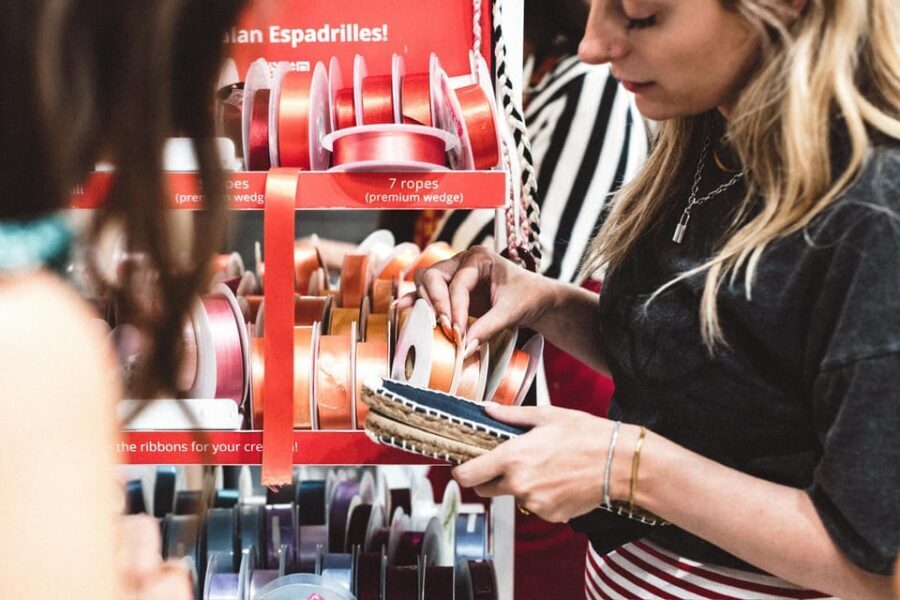
The included prize is simple and important: you get a pair of espadrilles you designed. You’re not leaving with a half-finished project or a kit to assemble later. The value here is that the craft becomes wearable right away, and your choices are built into the shoes.
For care and wear, think of them like canvas-and-fiber shoes: they’re meant for everyday strolling, not for heavy rain days. If you keep them reasonably clean and store them dry, they’ll stay looking good and feel comfortable.
Price and value: what $118 gets you in Barcelona
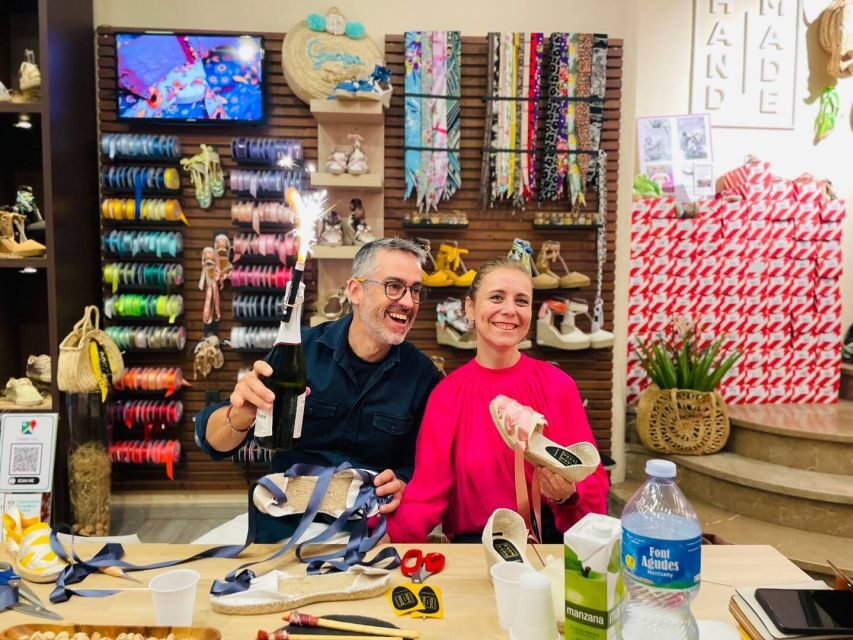
At $118 per person for a 2-hour workshop, the price looks like more than a typical activity—until you zoom in on what’s included. You’re paying for instruction, snack-and-drink support, workshop time, and the finished pair of custom espadrilles.
That matters because you’d normally pay a similar amount (or more) for a decent pair of branded espadrilles, and you’d get none of the crafting instruction or personalization. Here, the shoe is the souvenir, and the story is built into the process of making it.
Also, the experience supports different language needs. The instructor list includes Catalan, English, French, Spanish, and Chinese, which is a real quality-of-life advantage if you want to understand the craft steps without guessing.
Who should book (and who might not)
This is a great match if you:
- love hands-on activities where you make real choices
- want a Barcelona souvenir that’s actually usable
- enjoy learning craft history tied to everyday life in Catalonia
- like guided attention, especially for fit and finishing details
It might be less ideal if you:
- want a quiet, low-stimulation activity (larger groups can be noisy)
- dislike any wait at a workshop bench during the design steps
- are hoping for a broad sightseeing route (transportation isn’t included)
Should you book this Barcelona espadrilles workshop?
I’d book it if you want a meaningful souvenir that doesn’t end up unused in a drawer. The customization is the hook, but the bigger win is the coaching—people leave with shoes they helped build, plus practical lacing knowledge they can use right away.
If you’re in Barcelona and you’re even mildly tempted by espadrilles, this is one of the few shopping-to-craft experiences that feels worth the money. You trade generic tourist browsing for a craft table, a personal design, and a pair of shoes that looks like it came from Catalonia—because it did.
FAQ
How long is the Barcelona espadrilles workshop?
It lasts 2 hours.
Where is the meeting point?
Check in with staff inside the HANDMADE THE BRAND® shop at Carrer d’Avinyó, 8, in Barcelona.
What’s included in the price?
Included items are the workshop visit, instructions, snacks, and a pair of espadrilles made during the session.
Is transportation included?
No. Transportation is not included.
What languages do the instructors speak?
Instructors speak Catalan, English, French, Spanish, and Chinese.
Is the workshop wheelchair accessible, and can I cancel?
Yes, it is wheelchair accessible. You can cancel up to 24 hours in advance for a full refund.