REVIEW · BARCELONA
Barcelona Expert Plus Tour with Local Guide in Eco Tuk Tuk Private
Book on Viator →Operated by Eco Tuk Tuk - Spain · Bookable on Viator
Less walking. More Barcelona.
This private eco tuk-tuk tour is built for first-time city planning: you zip between big landmarks without the slog, then get a local guide’s context on what you’re seeing. Two things I really like: the 100% electric ride (quiet, smooth, and more comfortable than you expect), and the weather-readiness—blankets and protective layers come in handy when the sky does its Barcelona thing. One thing to consider: photo stops and routes are fixed. You can’t swap in your own must-sees or request extra photo breaks on the fly.
If you’re the type who wants a tailored “we’ll stop whenever we want” tour, this may feel a bit rigid. The good news: the pacing is designed to fit real sight-seeing, not just driving past the postcard spots.
In This Review
- Key things that make this tour work
- Why this Barcelona eco tuk-tuk tour is such a smart overview
- Electric ride comfort (and why the weather gear matters)
- Gaudí and modernist sights you can actually enjoy
- Sagrada Familia: the one you understand more after the ride
- Casa Milà (La Pedrera): UNESCO-worthy details without the full day commitment
- Casa Batlló: the façade that grabs you before you even think
- Hospital de la Santa Cruz y San Pablo: modernism with a calmer pace
- Plaza Monumental: a bullring you might not expect to see
- Montjuïc, the Olympic Port, and Pedralbes: the scenic payoff for longer tours
- Olympic Port and Barceloneta: sea air without wasting the day
- Pedralbes and the Güell Pavilions: elegant gates and a quieter monastery mood
- Plaça Catalunya, Camp Nou, and the big-city landmarks you’ll remember
- Plaça Catalunya: the link between Ciutat Vella and the Ensanche
- Camp Nou: Barcelona’s stadium energy, with the numbers that stick
- Plaza de España and Arc de Triomf: two different “exhibition-era” entrances
- Ciudadela Park: a former fortress turned public space
- How the route pacing works (and why you shouldn’t over-plan expectations)
- Meeting point reality check: getting on board at Carrer de Casp
- Is the price a good value?
- What it feels like with the guides (and what to expect from the talk)
- Who should book this, and who should skip it
- Should you book the Barcelona Expert Plus Eco Tuk Tuk Private Tour?
- FAQ
- How long is the tour?
- What stops are included for each duration?
- Is the tuk-tuk electric?
- Is this a private tour?
- Where is the meeting point?
- Are kids or pets allowed?
Key things that make this tour work
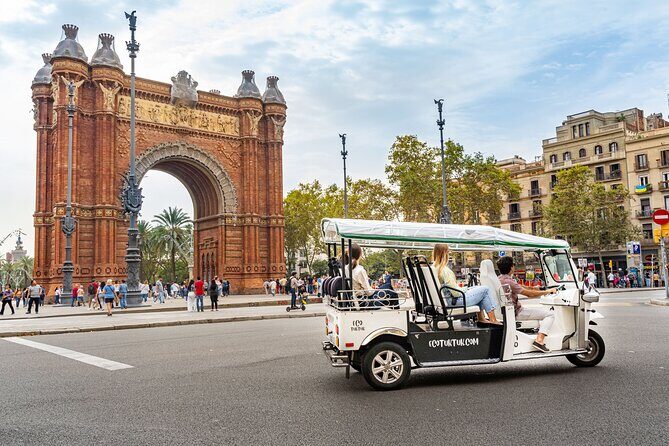
- Electric, private ride: A 100% electric vehicle reserved for your group, with up to 4 passengers per tuk-tuk.
- Minimal walking between stops: You get an overview without burning your legs.
- Queue-free start: The tour starts without queues or waiting.
- Weather gear included: Blankets and rain/wind protection help you stay comfortable.
- Pre-selected photo stops: Helpful for getting good angles—just know you can’t change them.
- Big-icon coverage: Gaudí landmarks, Ciutat Vella/Eixample connections, Camp Nou, and more.
Why this Barcelona eco tuk-tuk tour is such a smart overview
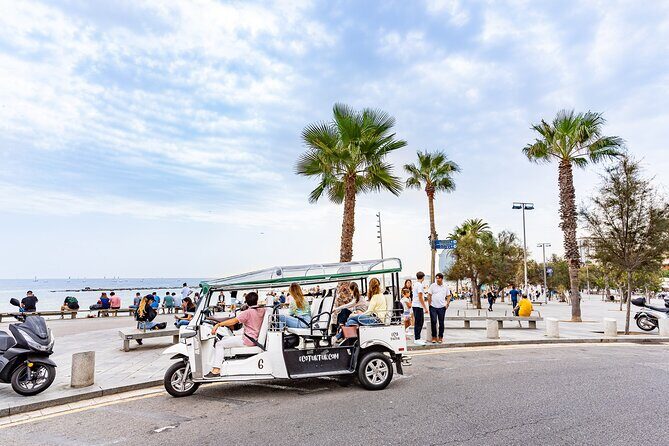
Barcelona is a “walk everywhere” city—until you don’t want to walk anymore. That’s where this tour shines. You’re trading time on sidewalks for time looking at the real stuff: the façades, the squares, the design details, and the view lines you’d otherwise miss while you’re stuck navigating traffic on foot.
The other big value is the private setup. Even though it’s offered in English, it’s not a massive free-for-all. Your group rides together, your guide explains what you’re seeing, and you’re not spending your tour time trying to hear over someone else’s conversation.
It also works well for travelers who want to return later and explore on their own. Think of this as the “get oriented fast” chapter of Barcelona—so the rest of your trip feels less like guessing.
And yes, it’s a tuk-tuk—but it’s not the rattly, uncomfortable kind you might fear. The tour is designed around being usable for older people too, with driver help getting on board if needed.
You can also read our reviews of more guided tours in Barcelona

Electric ride comfort (and why the weather gear matters)
One of the most practical details here is the inclusion of blankets and protective layers against rain and wind. I’m not going to pretend Barcelona weather is predictable. The point is: you won’t be stuck cold and miserable for two to four hours because you chose the wrong jacket.
The eco angle is real, too. A 100% electric vehicle means less noise and a smoother feel than older motor vehicles. That matters when you’re trying to take in architecture and conversation at the same time.
You should also know the ride is open-air enough that weather still affects you. The covers and blankets help, but if you run cold easily, bring your warm layer anyway. If it’s hot, you’ll still feel sun and breeze more than you would in a closed bus. So it’s “weather-ready,” not “climate controlled.”
One more comfort note from real-world experience: if you’re tall, your legs might feel cramped depending on how you fit in. A higher-than-average height can turn a short ride into a long one. If you’re tall, consider choosing a duration that matches how your body handles sitting time.
Gaudí and modernist sights you can actually enjoy
This tour keeps Barcelona’s design heavy hitters on your route, with explanations that help you see beyond just pretty buildings. Here’s how the main stops land.
Sagrada Familia: the one you understand more after the ride
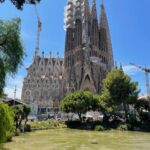
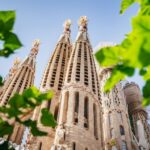
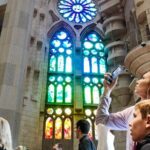
The Expiatory Temple of the Sagrada Familia is the standout. Construction started in 1882, and it’s still under construction—part of what makes it feel alive rather than like a frozen museum piece.
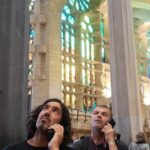
Your guide’s role here is big: instead of you just spotting towers and stained-glass vibes, you get the architectural story. That makes future visits much better, too. You’ll likely come away with a clearer sense of why Gaudí’s forms look the way they do and how the basilica’s design fits Catalan modernism.
If you want photos, you’ll get well-timed moments—just remember you’re working with pre-set stops. This isn’t a slow, linger-and-loop kind of schedule.
Casa Milà (La Pedrera): UNESCO-worthy details without the full day commitment
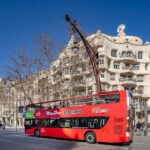
Casa Milà, also known as La Pedrera, was built between 1906 and 1910 and later declared a UNESCO World Heritage Site in 1994. Even if you only catch the exterior views, it’s the kind of building where your eye keeps returning to details—stone-like shapes, sculptural lines, and that unusual roof silhouette.
La Pedrera is often a “walk past it” stop for many visitors. Here, you get time and context so it doesn’t just look strange. It starts to look intentional.
You can also read our reviews of more private tours in Barcelona


Casa Batlló: the façade that grabs you before you even think
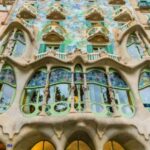
The Batlló family residence designed by Gaudí is one of those buildings where you notice it first, then you learn what you’re looking at. If you’ve ever seen photos where the façade looks like it’s moving, that’s the feeling you get when you’re close enough to notice textures and proportions.
Even if your stop is short, the guide’s framing can make the building click fast—especially if it’s your first Gaudí encounter of the trip.
Hospital de la Santa Cruz y San Pablo: modernism with a calmer pace
This complex—designed by Lluís Domènech i Montaner—is a change of rhythm from the explosive drama of Gaudí. If you like architecture but don’t want your whole day to be one type of “wow,” this stop is a smart balance.
It’s designed as part of a broader building complex, so it’s not just a single façade moment. You’ll get a clearer idea of why the architecture is known for Catalan modernism and what makes the site significant.
Plaza Monumental: a bullring you might not expect to see
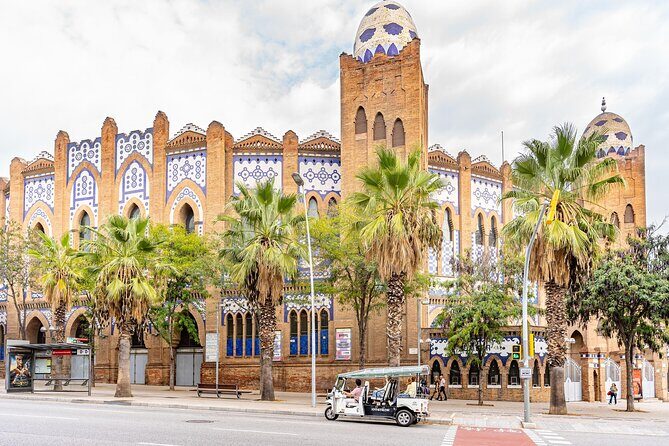
The Plaza Monumental de Barcelona (inaugurated in 1914 as Plaza de El Sport and renamed in 1916 to Monumental) gives you a different Barcelona layer—sports and tradition—mixed into the modernist-heavy route.
It’s also a reminder that the city isn’t only Gaudí and beaches. You’re seeing how different kinds of Barcelona life sit side-by-side.
Montjuïc, the Olympic Port, and Pedralbes: the scenic payoff for longer tours
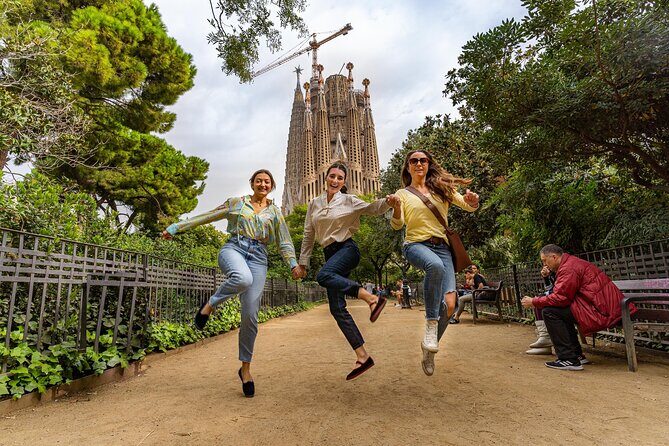
This is where the duration choice matters. The tour design is built around adding specific areas as time increases.
- The 60-minute option doesn’t stop (so it’s best as a rapid overview).
- The 120-minute option includes a stop in Montjuïc.
- The 180- and 240-minute options add stops in the Olympic Port and Pedralbes.
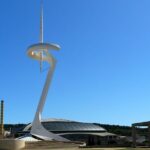
Montjuïc is a mountain area with a neighborhood built around it, sitting about 177 meters above sea level. The views and the shift in atmosphere are often why people want at least the 2-hour version. You’re trading “street-level city walls” for a more scenic, city-meets-hill experience.
Olympic Port and Barceloneta: sea air without wasting the day
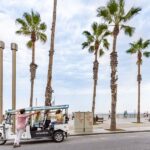
You also hit the Old Port area and the beach zone on the route, with stops that can include Barceloneta and the Olympic Port depending on duration. Barceloneta is the oldest and most famous beach in Barcelona, remodeled ahead of the 1992 Olympic Games.
The Olympic Port sits between Barceloneta and Nova Icària, in the San Martín district. It’s a marina managed by the municipal company on behalf of the city council. In other words: it’s part of how the city organized itself around the Olympics—and you’ll see that legacy in the setting.
What you’ll get here is the coastal “breather” between dense architecture. Even if you don’t stay long on the sand, the change of scenery helps your brain reset.
Pedralbes and the Güell Pavilions: elegant gates and a quieter monastery mood
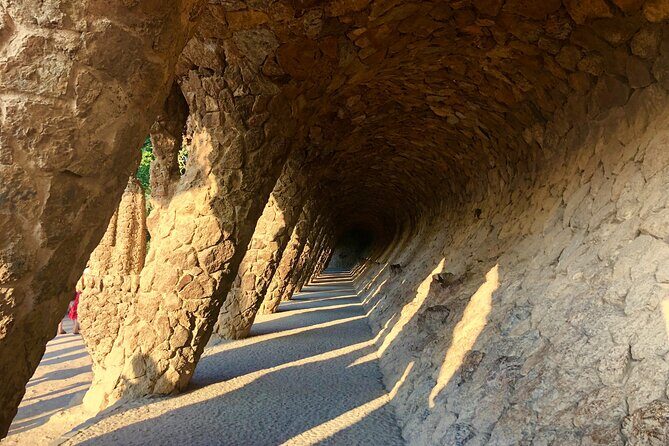
Pedralbes is known for elegant villas and the Güell Pavilions—ornate gates designed by Gaudí at the entrance to the Pedralbes Gardens. It’s a very specific kind of Gaudí beauty: less about the big-city spectacle and more about detail and gate-level grandeur.
Then there’s the Pedralbes Monastery, a gothic complex with gardens and cobbled streets nearby. If your brain has gotten overloaded by modernism headlines, this stop helps by offering a calmer, more contemplative atmosphere.
Plaça Catalunya, Camp Nou, and the big-city landmarks you’ll remember
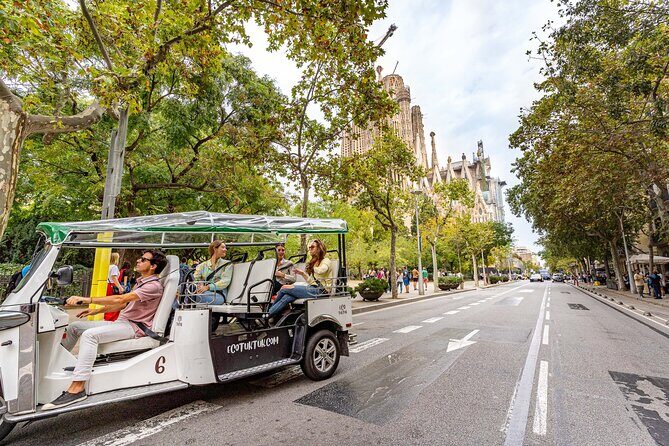
A good city overview isn’t only about landmarks. It’s about the “connections” between them—where Barcelona changes its texture.
Plaça Catalunya: the link between Ciutat Vella and the Ensanche
Plaça Catalunya is the kind of place you’ll recognize instantly because it’s a major transport convergence point. It links Ciutat Vella and the Ensanche neighborhood, so it’s a practical landmark in its own right. On a first visit, it helps you understand where the city’s old core ends and where the more planned, wider streets begin.
Camp Nou: Barcelona’s stadium energy, with the numbers that stick
Camp Nou is the home of FC Barcelona and sits in the Les Corts district. It opened on September 24, 1957. The current capacity is 99,354, making it the largest capacity in Europe and third in the world.
Even if you’re not a soccer superfan, this stop gives you context for why the stadium is such a powerful cultural symbol.
Plaza de España and Arc de Triomf: two different “exhibition-era” entrances
Plaza de España was built for the International Exhibition of 1929, with the project drawn up by Josep Puig i Cadafalch and Guillem Busquets and completed by Antoni Darder. It’s the kind of place where Barcelona shows off its ambition and planning.
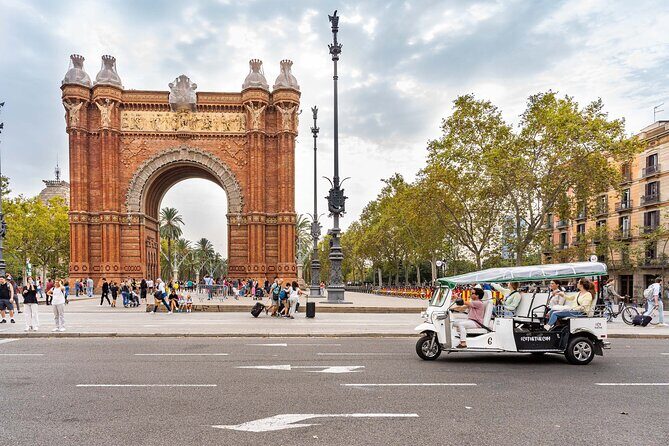
Arc de Triomf was designed for the Barcelona Universal Exhibition of 1888 as the main entrance. It sits at a confluence of major streets, so it’s both a monument and a street marker. You’ll get it as a quick “where you are” reference point for future wandering.
Ciudadela Park: a former fortress turned public space
Ciudadela Park sits in Ciutat Vella and was long considered the only public park in Barcelona. It was laid out on the former grounds of the Citadel fortress, which explains the park’s layout and historic weight.
It’s also said to be laid out in the image and likeness of the Luxembourg garden in Paris. That’s a fun cross-city comparison to keep in mind as you look at how green space is designed and used.
How the route pacing works (and why you shouldn’t over-plan expectations)
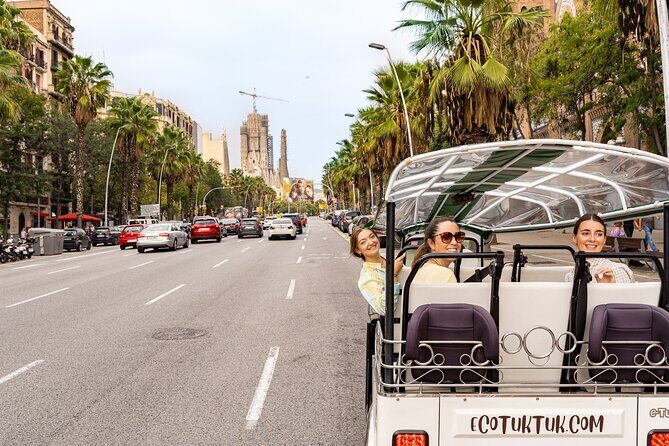
This tour is built around making a set series of photo stops depending on your selected duration. That’s both the strength and the limitation.
The strength: you won’t be debating logistics on the spot. You’re moving from sight to sight with an expert companion guide driver, and stops are pre-set for efficient viewing.
The limitation: you can’t modify the route or ask for stops that aren’t already in the plan. Barcelona regulations also limit photo stop flexibility, and that shows up in the experience design.
Closed streets and demonstrations can affect the route on the day, so you might see minor variations. That’s normal in a city with constant life on the move.
If you’re trying to fit this into a tightly timed trip, here’s how I’d choose:
- If you only have one short window, the 60-minute option can help you orient quickly, but it doesn’t include stops.
- If you want the Montjuïc scenery, go for the 120-minute duration.
- If you want the coast + the Pedralbes/Güell pavilions area, choose 180 or 240 minutes.
Meeting point reality check: getting on board at Carrer de Casp
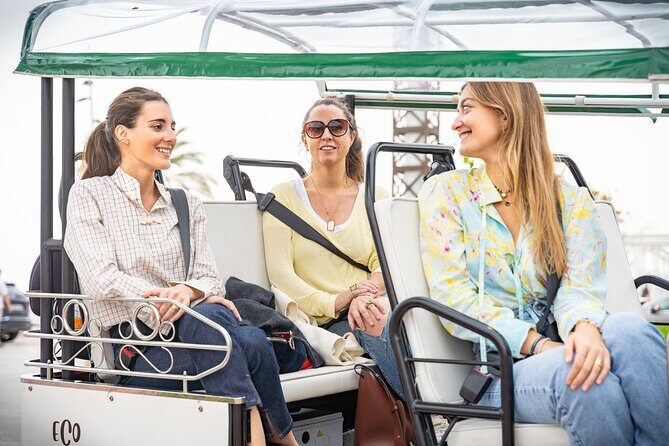
The meeting point is specific, and that’s worth respecting. You meet at Carrer de Casp, 13 in Eixample, near public transportation.
The pickup point is where the lift access to the Interparking Novedades car park is located, opposite the entrance of the ME Barcelona hotel. You’ll wait at street level in front of the entrance elevator, and your driver-guide comes to that point to pick you up.
If you’re the type who likes to be early, show up a few minutes before your scheduled start. It reduces stress and gives you time to confirm you’re at the right elevator entrance.
Is the price a good value?
At $28.45 per person, the value depends on what you’re comparing it to.
This is not a low-cost “bus tour full of strangers” type of price. Instead, you’re paying for:
- Private vehicle use for your group (and likely multiple tuk-tuks if needed),
- an English-speaking local guide,
- and an easier, more time-efficient way to hit a lot of major Barcelona sights.
Because it’s electric and includes weather gear, you also avoid the cost and hassle of trying to bundle gear for rain/wind on a tight schedule.
Where value tends to be strongest is when you’re either:
- doing Barcelona for the first time and want orientation,
- short on time and don’t want to crisscross the city by foot,
- or traveling with someone who doesn’t want long walking distances.
What it feels like with the guides (and what to expect from the talk)
The guide quality is clearly a highlight. You might be with guides such as Nacho, Richard, Roger, Simone, or Diana—names that show up with consistently positive feedback for being fun, informative, and responsive to questions.
You can also expect the guide to shape what you notice. Some stops are the kind you’d normally rush past; the guide helps you see what matters, whether that’s Gaudí’s design logic at Sagrada Familia and La Pedrera or the city-planning story behind squares and monuments.
That said, if you’re looking for full customization based on your personal preferences, keep your expectations aligned with the fixed stop structure. The tour is designed to show key sights efficiently.
Who should book this, and who should skip it
I’d book this if you want a practical first-look at Barcelona with minimal walking and a modern, electric ride. It’s also a great “day 1” choice because you’ll learn enough to guide your next moves—where to linger, where to return, and how to structure the rest of your sightseeing.
I’d think twice if you:
- need lots of unscheduled photo stops,
- want to choose your own landmarks instead of the pre-set ones,
- or plan on turning this into a long museum visit day (this isn’t designed for that).
Also, if you’re very tall or sensitive to sitting comfort, take the duration seriously and plan for leg room.
Should you book the Barcelona Expert Plus Eco Tuk Tuk Private Tour?
If your goal is to get your bearings fast and see major Barcelona highlights without turning your trip into a walking test, this is a strong bet. The guide-led format plus the electric tuk-tuk pacing makes it a smart use of a half-day to a full afternoon.
Two quick decision tips:
- If you’re choosing between durations, prioritize the one that includes Montjuïc if you want scenic variety.
- If your schedule is tight and you’re okay with moving past sights rather than pausing, the shortest option can still work for orientation.
With a rating of 4.7 out of 5 and 92% recommending it, the overall pattern is clear: people like the overview, the guidance, and the ease. Just go in knowing the stops are set, and you’ll get the kind of experience this tour is designed to deliver.
FAQ
How long is the tour?
You can choose from short to longer options. The tour is offered for about 2 to 4 hours, and the schedule can also include a 60-minute run. The exact stops depend on which duration you pick.
What stops are included for each duration?
The shortest option does not include stops. The 120-minute version includes a stop in Montjuïc. The 180- and 240-minute versions also include stops at the Olympic Port and Pedralbes.
Is the tuk-tuk electric?
Yes. You ride in a 100% electric and sustainable vehicle.
Is this a private tour?
Yes. It’s private, and only your group participates. Tuk-tuks are reserved based on group size, with a legal maximum of 4 passengers per tuk-tuk.
Where is the meeting point?
Meet at Carrer de Casp, 13, Eixample (08010). You wait at street level in front of the entrance elevator for the Interparking Novedades car park, opposite the entrance of the ME Barcelona hotel.
Are kids or pets allowed?
The minimum age is two years (babies are not allowed). Pets are not allowed. There is also a minimum weight requirement of 9 kg.