REVIEW · BARCELONA
Barcelona Ghosts of a Dark Past Gothic Walking Tour
Book on Viator →Operated by Nostos Tours · Bookable on Viator
A darker side of Barcelona waits.
This is a 2-hour, nighttime-feeling Gothic Quarter walk that focuses less on jump scares and more on what happened here—public trials, executions, plague-era rumors, and even Roman burial spaces. You’ll move through Barri Gòtic streets and major medieval landmarks while your guide connects the dots between persecution, punishment, and the way stone buildings still shape the story.
I especially like the way this tour treats the subject with real historical weight, not just mood. And I love the small-group feel (max 10) with an emphasis on being heard clearly, including a headset rental option for 1€.
One heads-up: if you’re expecting a classic ghost-and-ectoplasm show, you may find the tone more fact-heavy than spooky. Still, the “gruesome goings-on” angle comes through in the storytelling.
In This Review
- Key highlights and what they really mean
- Getting oriented: the 6:30 pm start in the center of it all
- The Barri Gòtic opener: tragedy, persecution, and mystery in walking-distance
- Barcelona Cathedral: short stop, strong mood—without included entry
- Plaça del Rei: where medieval authority and plague rumors collide
- MUHBA Via Sepulcral Romana: Roman tombs and the city’s long memory
- What the guide style is like (and why it matters to your evening)
- Price and value: what $30.17 buys you in real terms
- Practical tips so you get the most from a dark-history walk
- Who should book this tour—and who might want a different vibe
- Should you book Barcelona Ghosts of a Dark Past?
- FAQ
- How long is the Barcelona Ghosts of a Dark Past Gothic Walking Tour?
- What time does the tour start?
- Where does the tour start and end?
- What is the price per person?
- Is the tour offered in English?
- Is a guided tour included?
- Are tickets or entry fees included for churches or buildings?
- Do I need to buy admission for the Barcelona Cathedral or MUHBA Via Sepulcral Romana?
- Is there a headset available?
- What happens if the weather is bad?
Key highlights and what they really mean
- English guides who mix humor with accuracy: Expect a chatty, story-driven approach that still keeps facts grounded.
- Gothic Quarter focus that’s more history than hauntings: The goal is understanding the area’s dark past, even if the ghost factor is lighter.
- Roman tomb stop at MUHBA Via Sepulcral Romana: You’ll be looking at burial history tied to the city’s deep timeline.
- Plaça del Rei as a medieval pressure point: This square gets attention for links to medieval punishment, Inquisition trials, and plague-era rumors.
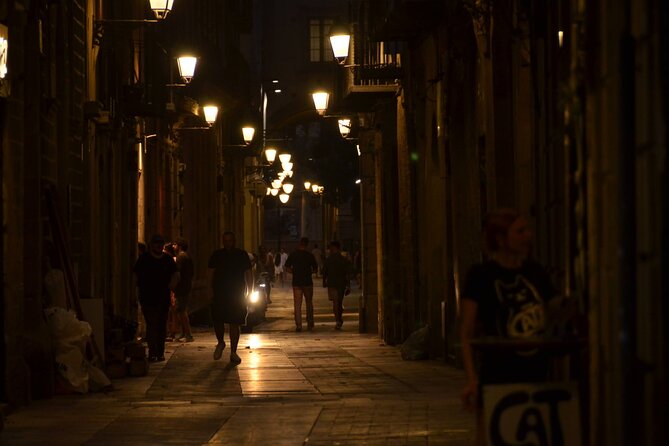
- Clear audio in tight streets: Headsets are available (1€ rental), which matters when streets are narrow and the group is moving.
- Two-hour timing with multiple “setup” landmarks: It’s fast-paced enough to pack a lot in without feeling like a lecture marathon.
Getting oriented: the 6:30 pm start in the center of it all
You start at Foot Locker, Plaça de Catalunya 20 in Ciutat Vella at 6:30 pm, and the walk ends at Plaça del Rei. That matters because Plaça del Rei is one of those places where the Gothic Quarter’s atmosphere feels concentrated. Starting near Plaça de Catalunya also makes it easy to get there using public transport—useful because this is a moving tour, not a sit-down museum session.
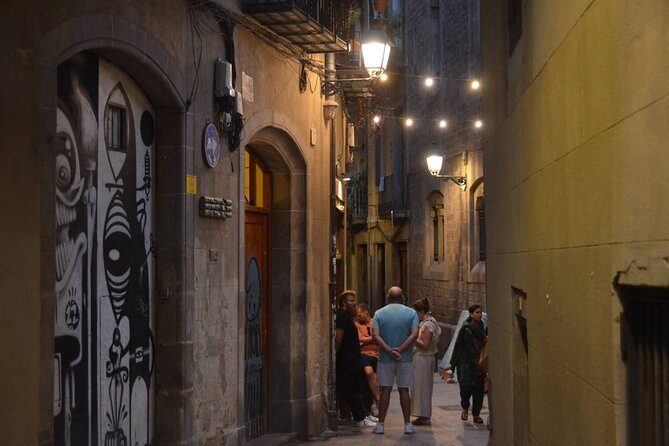
The timing is part of the experience. A Gothic Quarter walk at dusk gives you built-in drama: the stone looks darker, the streets feel narrower, and the stories land better when the lighting changes. The tour runs about 2 hours, so you’ll want to arrive with comfortable shoes and enough energy for a steady pace.
You also get a mobile ticket for this activity, and you’ll receive confirmation at booking. With a maximum group size of 10, the guide can usually keep the flow tight while still answering questions—something that helps if you’re visiting with kids or teens.
You can also read our reviews of more tours and experiences in Barcelona.


The Barri Gòtic opener: tragedy, persecution, and mystery in walking-distance
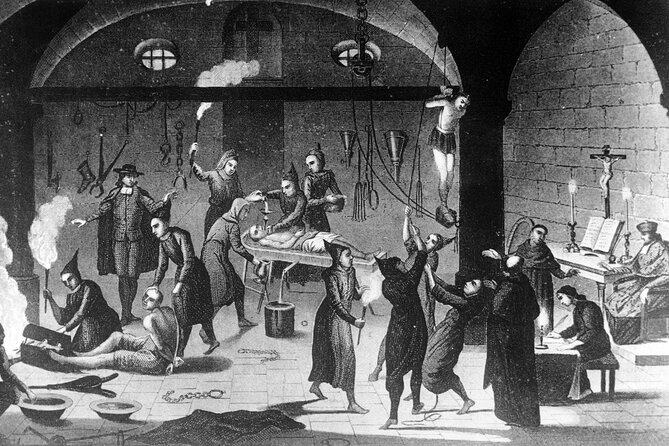
Your first stop is the Gothic Quarter (Barri Gòtic), where the tone shifts from “pretty medieval streets” to “this is where real pressure and punishment played out.” The big theme here is the Spanish Inquisition period, including public trials and executions tied to this area. You’ll hear the kind of story that explains why people feared institutions, why authorities used spectacle, and how that fear shaped neighborhoods.
This stop is listed as having admission ticket free, which is a relief if you want to keep your evening simple. Practically, it means you can focus on the storytelling and the street context without needing to line up for entry.
One thing I like about tours that begin this way: it gives you a map in your head. After you understand the “why” of the area, every next stop feels less random. You’re not just collecting sights—you’re building a timeline as you walk.
Barcelona Cathedral: short stop, strong mood—without included entry
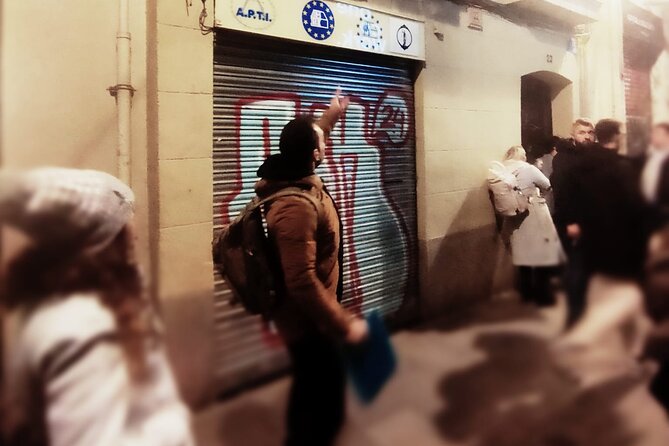
Next comes Barcelona Cathedral, a stop that’s brief (about 10 minutes) and not tied to included admission. The tour frames the connection to the dark past through historical events, martyrdom, and Gothic architecture—so you’re not going into the building as part of this experience.
That’s important for expectations. You get the exterior presence and the context, but the tour isn’t promising a full cathedral visit. If you want interior time, you’ll likely need separate tickets and your own pace decision.
Still, even a short stop can work well here. Cathedral architecture has a way of making everything feel heavier. When your guide links the building’s form to stories of suffering and faith, the stone stops looking decorative and starts looking like evidence.
Plaça del Rei: where medieval authority and plague rumors collide
After the cathedral moment, you move to Plaça del Rei, another 10-minute stop with admission ticket free listed for this segment. This is one of the most atmospheric locations on the route, and the tour explains why: it’s tied to medieval executions, Inquisition trials, and rumored mass burials during plagues.
You’ll feel the difference between “history you read” and “history you stand near.” Squares like this act like stages—authority, punishment, crowd watching. Even if you don’t see anything “gory” in the modern streetscape, the guide’s job is to help your brain place the past back into the same physical geometry.
A consideration for you here: because the stop is short, the square is more about guided interpretation than time to linger. If you’re the type who wants to take photos for 20 minutes, you might want to do that before or after the tour rather than expecting it during the stop.
MUHBA Via Sepulcral Romana: Roman tombs and the city’s long memory
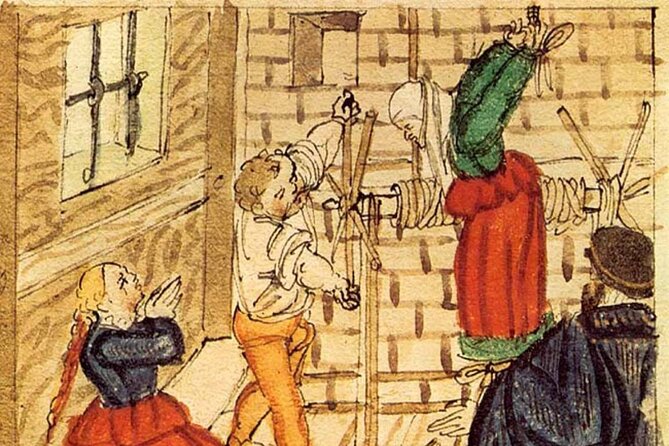
The final major highlight is MUHBA Via Sepulcral Romana, the Roman burial setting described as ancient tombs from the city’s necropolis days. This stop is about 10 minutes, and tickets are not included for it.
What makes this worthwhile is the shift in scale. The Inquisition and medieval punishments belong to one chapter of fear. Roman tombs belong to another. Together, they show how death history keeps reappearing in different forms—sometimes formal, sometimes politically charged, often both.
Because entry isn’t included, your decision comes down to how you prefer to spend your time. If you want to see the Roman tomb area more closely, plan for additional admission time or funds. If you’re happy with the guided outdoor context and you want the tour to stay tight, this stop still adds a powerful endpoint: the walk ends with a physical reminder that people have been buried here for a very long time.





What the guide style is like (and why it matters to your evening)
This is where the tour tends to win people over. The guides are described as engaging, informative, and often funny—plus English is consistently called out as strong. Names that pop up in the guide feedback include Onno, Evangelos, Loic, and Luis. More than the names, though, the pattern is the same: the storytelling is descriptive, history-focused, and paced so you don’t get bored.
One review detail that’s especially relevant for your planning: some people went in expecting more ghost stories, and instead got an approach that prioritized true history of the area. That’s not a flaw—it just tells you what to value. If you like knowing what happened and why it mattered, you’ll probably enjoy this even if the supernatural dressing feels secondary.
You should also expect a fast-paced structure. Reviews describe it as moving quickly with historical facts and photos, plus spooky elements drawn from more recent times. Practically, that means you’ll want to listen closely rather than multitask. If you’re constantly stopping to read plaques, you may feel rushed.
Price and value: what $30.17 buys you in real terms
At about $30.17 per person for roughly 2 hours, the price is mainly paying for two things: a live guide and a structured path through places that you’d otherwise read about on your own. Since the tour includes a live tour guide and is scheduled at a fixed evening start, you’re also buying convenience—especially in an area as dense as the Gothic Quarter.
Where value can vary for you is in admissions. The tour explicitly notes that no tickets or entry into any church or building are included, and it flags that Barcelona Cathedral and MUHBA Via Sepulcral Romana do not have admission included. By contrast, Gothic Quarter and Plaça del Rei are listed as admission ticket free segments.
So the smart way to think about value is this: you’re paying to understand the story in sequence, and some stops may cost extra if you want to go inside. If you’re fine with the guided exterior context, you’ll likely feel the pricing is straightforward. If you want full interior access at multiple stops, you’ll want to budget a bit more.
Practical tips so you get the most from a dark-history walk
A Gothic Quarter evening is mostly about comfort and attention. A few things I’d do before you start:
- Wear solid shoes. The streets can be uneven, and the pacing is described as fast.
- Bring a light layer. Evening in Barcelona can cool down, especially once the walking starts.
- Use the headset option if you’re in the group. A radio headset rental is listed at 1€, and it’s a big help in narrow streets.
- Do a quick mental reset at each stop. This tour works best when you treat each landmark like a “chapter,” not a quick photo stop.
Also, note that the experience runs in good weather conditions. If weather is poor, you’re offered a different date or a full refund. So check the forecast close to start time and plan around it.
Who should book this tour—and who might want a different vibe
If you love history that feels human—fear, punishment, belief, and survival—this is a great fit. It’s also a nice option if you’re visiting as a parent and want something that can handle tough topics in a guided way; guides are described as patient and engaging, and at least one family singled out the experience as fun for a teen.
It may be less satisfying if you’re chasing pure “ghost tour” thrills. The tour’s angle leans toward true history of the area and the atmosphere comes from what the places represent, not from scripted haunt effects.
If you’re short on time and want a guided route through multiple major zones—Barri Gòtic, the cathedral area, Plaça del Rei, and the Roman necropolis—this tour’s structure is efficient.
Should you book Barcelona Ghosts of a Dark Past?
I think you should book this tour if you want an evening walk that turns Gothic Quarter landmarks into a coherent story about Inquisition-era trials, medieval punishment, plague-era rumors, and Roman-era burial history. The best part is how well the guides communicate: people highlight humor, patience, strong English, and a way of making facts stick without turning it into a dry lecture.
Skip it only if you’re mainly after cartoonish ghost content and you’d be disappointed by a more history-first approach. For the right traveler, this is a smart value: $30.17 for an efficient two-hour guided route, a small group size, and a lineup of places you’ll remember because you understand what happened there.
FAQ
How long is the Barcelona Ghosts of a Dark Past Gothic Walking Tour?
It runs for about 2 hours.
What time does the tour start?
The start time is 6:30 pm.
Where does the tour start and end?
It starts at Foot Locker, Plaça de Catalunya 20, Ciutat Vella and ends at Plaça del Rei, Plaça del Rei, Ciutat Vella.
What is the price per person?
The price is $30.17 per person.
Is the tour offered in English?
Yes, the tour is offered in English.
Is a guided tour included?
Yes. The tour includes a live tour guide.
Are tickets or entry fees included for churches or buildings?
No. No tickets or entry into any Church or Building are included.
Do I need to buy admission for the Barcelona Cathedral or MUHBA Via Sepulcral Romana?
Admission tickets for the Barcelona Cathedral and MUHBA Via Sepulcral Romana are not included.
Is there a headset available?
A radio headset is available so you can clearly hear the guide, with a rental cost of 1€.
What happens if the weather is bad?
The experience requires good weather. If it’s canceled due to poor weather, you’ll be offered a different date or a full refund.