REVIEW · BARCELONA
Barcelona: Raval Street Art and Graffiti Walking Tour
Book on GetYourGuide →Operated by Street Art Barcelona · Bookable on GetYourGuide
Graffiti turns Barcelona into an open gallery. In Raval (the old barrio Xino), you stroll past murals on apartment walls and nearby corners, then wrap up around the MACBA area to connect street culture to modern art.
Two things I love here: you get a real local perspective from the guide, and the stops are built around recognizable street-art signals, not random photo moments. Guides such as Juan, Anais, Jeanne, and Sylvia are called out for being friendly, generous with personal context, and willing to answer tougher questions, including politics, plus they explain graffiti styles from origins to how you spot the differences.
One possible drawback: the tour doesn’t include MACBA admission, so you’ll only get the exterior as part of the guided walk. You can still visit inside after the tour, but plan to buy the ticket then if you want more than the outside views.
In This Review
- Key highlights at a glance
- Raval’s barrio Xino: why street art makes sense here
- Getting to Jardins Talia and starting on solid ground
- The guide makes or breaks the experience
- Arnau Gallery: seeing how local urban art gets shaped
- Spotting street art like a pro in Raval
- Tres Chimeneas skate spot: street art meets street culture
- MACBA exterior stop and how to plan your museum time
- Price and value: what you’re really paying for at $33
- Accessibility, pace, and practical comfort tips
- Who should book this Raval street art walk
- Should you book this tour?
- FAQ
- How long is the Barcelona Raval Street Art and Graffiti Walking Tour?
- Where do I meet the guide?
- Is hotel pickup included?
- Is MACBA admission included?
- What languages are available for the guide?
- Can I cancel for a refund?
- Is the tour wheelchair accessible?
Key highlights at a glance
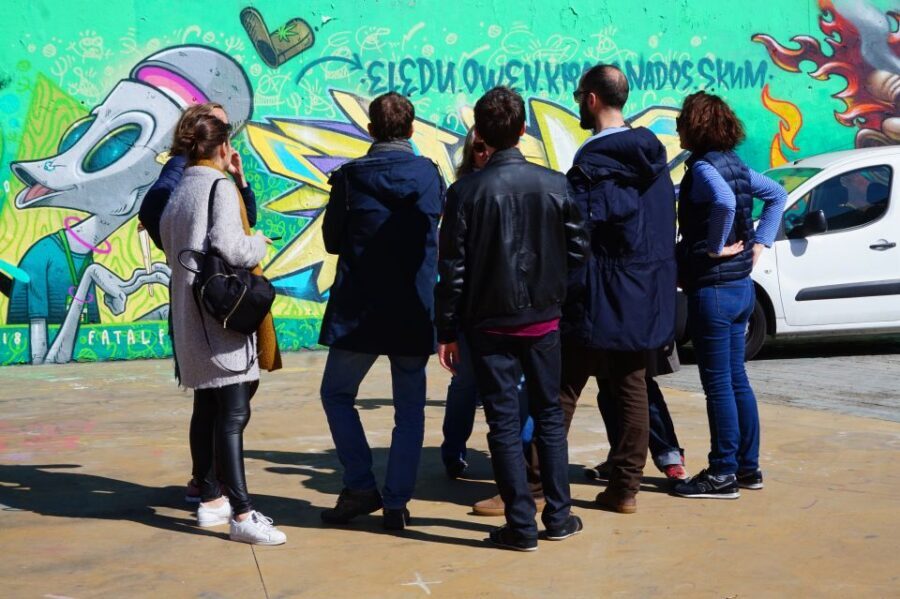
- Raval street art on real walls: murals and graffiti across houses, blocks, and parks, with time to look closely
- Local-guided explanations: graffiti origins, styles, and local projects you’d likely miss solo
- Arnau Gallery stop: see examples tied to local residents and urban-arts work
- Keith Haring exterior works: you’ll spot major international influence in the neighborhood
- Tres Chimeneas skate spot: a legendary hangout that shows how street art and street life overlap
- MACBA exterior + optional museum time: tour ends near the museum, and you can go in independently
Raval’s barrio Xino: why street art makes sense here
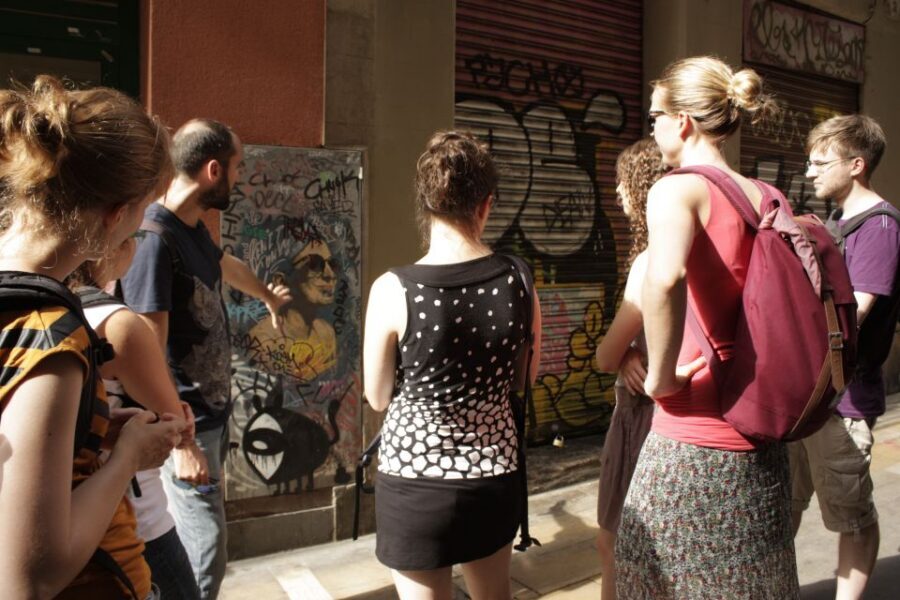
Raval is the kind of neighborhood where art isn’t limited to museums. You’ll see it on the surfaces people use every day—apartment blocks, side walls, and corners that feel more like lived-in spaces than a curated route. That’s why this 2-hour walk works so well: it trains your eyes fast.
The tour focuses on street art and graffiti as a language. You’re not just looking at pictures; you’re learning what different styles communicate and why they show up where they do. In one group experience, the guide even talked about the origin of graffiti in general and how styles evolved—then brought it back to what you’re seeing in Barcelona’s streets.
And yes, there’s an international dimension here. You’ll run into major works by international artists such as Keith Haring. That’s a good anchor point if you’re newer to street art. If you already know the classics, it’s still useful because the guide helps you connect global names to the local scene.
You can also read our reviews of more walking tours in Barcelona



Getting to Jardins Talia and starting on solid ground
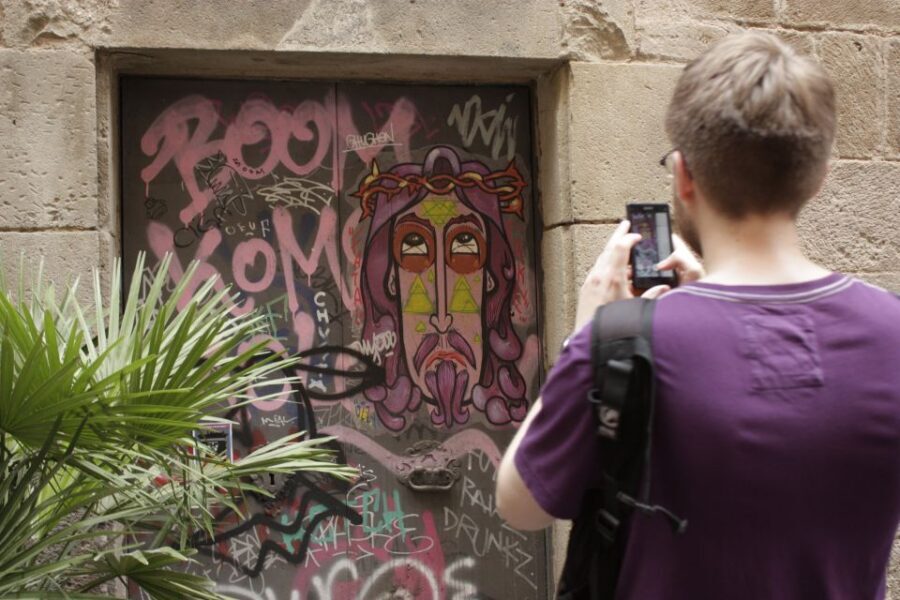
The meeting point is Jardins Talia Park, Avenida Paral·lel 100, 08015 Barcelona. That matters because Raval is made of small streets and changes in vibe block to block. Starting in a clear spot helps you get your bearings fast and focus on the art right away.
Some descriptions also mention Hotel Serhs del Port nearby for meeting orientation. If you’re walking over, don’t overthink it—just use the official meeting location as your reference point and show up a few minutes early to settle before the group heads out.
From there, you follow a guide-led route through Raval designed to hit the most meaningful street-art stops within the time limit. The best part of this setup is that you’re not wandering around hoping you’ll stumble onto the good walls. You’re walking a path with purpose.
The guide makes or breaks the experience
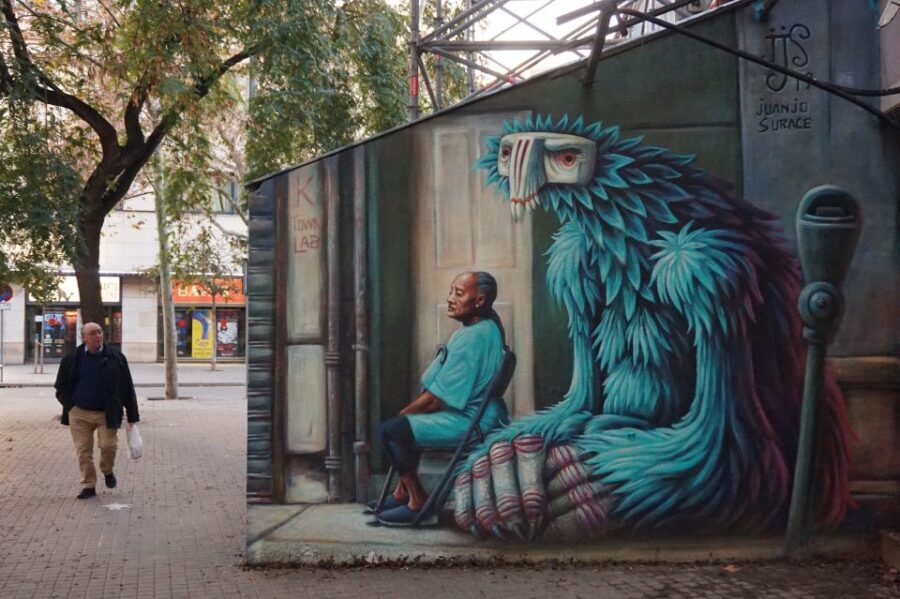
This is the one factor that shows up again and again: the guide. Several named guides—Juan, Anais, Jeanne, and Sylvia—are repeatedly singled out for being friendly and generous with explanations, and for bringing a personal touch rather than reading from a script.
What you’ll feel in the moment is that the guide doesn’t treat street art like random decoration. They talk about:
- how graffiti styles differ
- why certain projects appear in specific parts of the neighborhood
- how local residents contribute to the scene
- what street art can say when it touches culture, identity, and even politics
One of the most practical tips you’ll likely hear is to start noticing small details on walls. People noted guides pointing out tiny elements they would have otherwise walked past—like small features that help you read the artwork more accurately.
Also, languages are covered. The live tour guide can speak English, French, or Spanish, which helps a lot if you’re traveling with mixed language needs.
Arnau Gallery: seeing how local urban art gets shaped
One of the tour’s most useful stops is Arnau Gallery. Street art can look spontaneous from the sidewalk, but this kind of stop helps you understand that it often connects to local initiatives and spaces that support artists.
Here’s what to watch for: you’re looking at examples tied to local residents and local street-art work. That connection changes how you interpret the walls later on the walk. Instead of treating every mural as a standalone piece, you start thinking in terms of community contribution and ongoing projects.
If you love street art, this stop is worth it even if you usually prefer the outdoors. It gives you a bridge between the public wall world and the structured art-world side of urban creativity.
Spotting street art like a pro in Raval
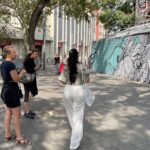
The core of the tour is the walking time through Raval’s street-art zones. You’ll see murals and graffiti pieces across a mix of settings: walls on buildings, surfaces around parks, and the kind of corners that only make sense once you look up close.
During this time, the guide’s explanations are what raise the experience above a basic photo walk. People especially liked hearing about the origin of graffiti in general and the different styles. That might sound like a lecture, but the point is practical: once you understand style differences, you can spot them yourself as you walk.
A simple mindset shift helps you get more out of the route:
- Look for repeated motifs and how artists build a visual signature
- Pay attention to layers—older marks and newer additions can exist in the same area
- Notice how the artwork interacts with its host surface (wide walls vs. narrow gaps)
And don’t rush. The tour works because it slows you down enough to actually see.
You can also read our reviews of more tours and experiences in Barcelona



Tres Chimeneas skate spot: street art meets street culture
Midway through the walk, you’ll spend time at Tres Chimeneas, often described as a legendary skate spot. This stop isn’t just for visual interest. It’s a reminder that street art and street culture feed each other.
Why this matters: skate spots tend to attract people who care about style, movement, and identity in public space. When you combine that with street art—graphics, tags, murals—you get a fuller picture of why Raval feels the way it does.
Expect the tour to treat Tres Chimeneas as part of the story, not just a landmark. It’s one of the moments where you can feel how the neighborhood’s creative energy has a physical place, not just a digital feed.
MACBA exterior stop and how to plan your museum time
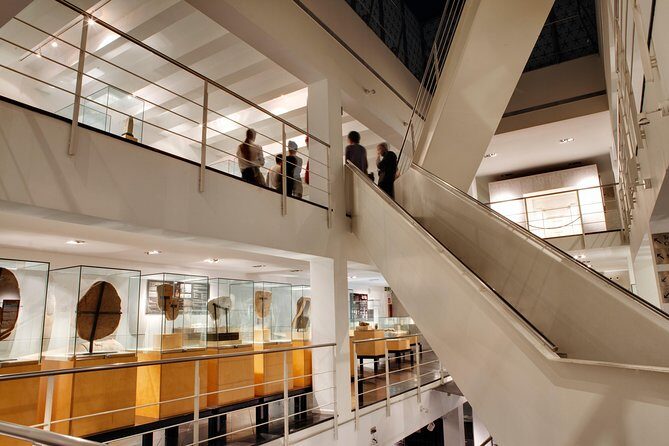
The tour finishes around the Barcelona Museum of Contemporary Art (MACBA) area. Importantly, you’ll see the exterior as part of the guided experience. That’s great for context, but it also means you should set expectations: museum admission isn’t included.
The good news is that you’re free to visit after the tour. MACBA is described as showcasing works from three distinct periods of modern art, so going in on your own can turn this walk into a full art day. If you’re the type who needs quiet time to read labels and take it in at your pace, this add-on is exactly the kind of follow-through that makes the initial street-art focus pay off.
Practical tip: if you plan to go inside, don’t schedule other timed activities right after the tour. You’ll likely want time to get oriented and choose what to see first once you’re inside.
Price and value: what you’re really paying for at $33
At $33 per person for a 2-hour guided walking tour, the value depends on what you want out of it.
If you’re the type who loves street art but also wants context, the price makes sense. You’re not just buying access to walls—you’re buying the guide’s ability to translate what you’re seeing. The standout praise centers on how guides explain origins, styles, and local projects, and how they’re open to questions (even political ones). That’s the kind of “why” that turns street art from decoration into understanding.
If you only want the outside look and don’t care about explanations, you could do it yourself for less. But you’ll likely miss parts of the story. In Raval, the best parts aren’t always obvious at street level, especially if you don’t know where to look.
A small but meaningful detail: the tour includes the guide and the walking portion, while museum entry is separate. That keeps the tour flexible. You can decide how much you want to spend on indoor art after you’ve seen the exterior and shaped your interests.
Accessibility, pace, and practical comfort tips
This tour is wheelchair accessible, and it’s designed as a straightforward walking experience. You’ll want comfortable shoes because it’s a street walk, not a sit-down museum loop.
Since it’s only 2 hours, the pace is efficient. That can be great if you’re short on time. Just don’t expect a slow, lingering crawl where you get to spend half an hour on every wall. The best approach is to arrive ready to look, ask, and keep moving.
Also, because this is in a working neighborhood, it helps to keep your attention on the group when you’re crossing streets and turning corners. Not because it’s complicated—just because it keeps the walk smooth and lets you focus on what matters: the art.
Who should book this Raval street art walk
Book this tour if:
- you like street art and graffiti and want to understand the styles
- you want a local guide pointing out things you’d likely miss
- you want a route that includes both outdoor street art and a bridge toward modern art at MACBA
- you enjoy culture stops that connect art with real street life, like Tres Chimeneas
Skip it or reconsider if:
- you mainly want to spend time inside museums, since the tour includes the MACBA exterior and museum admission is not included
- you want a super long tour. At two hours, this is focused, not stretched out
If you’re visiting Barcelona and your days are packed, this one is a strong way to add depth. You’ll leave with better “street eyes,” plus a clear reason to stop by MACBA afterward if you’re in the mood for modern art indoors.
Should you book this tour?
I’d book it if you want street art with context, not just snapshots. The guide quality is the main selling point—named guides like Juan, Anais, Jeanne, and Sylvia are highlighted for friendly, personal explanations and for being open to questions. Add in the specific stops—Arnau Gallery, Keith Haring, and Tres Chimeneas—and you get a route that feels built, not random.
If you’re unsure, think about this: street art in Raval is all around, but the meaning isn’t always visible from the first glance. This tour helps you read the walls faster, then gives you the option to extend the art day at MACBA on your own.
FAQ
How long is the Barcelona Raval Street Art and Graffiti Walking Tour?
The tour lasts 2 hours.
Where do I meet the guide?
Meet at Jardins Talia on Avenida Paral·lel 100, 08015 Barcelona.
Is hotel pickup included?
No, hotel pickup and drop-off are not included.
Is MACBA admission included?
No. The tour includes a visit to the MACBA exterior, and you can visit the museum independently afterward. Admission is not included.
What languages are available for the guide?
The live tour guide is available in English, French, and Spanish.
Can I cancel for a refund?
Yes. You can cancel up to 24 hours in advance for a full refund.
Is the tour wheelchair accessible?
Yes, it’s listed as wheelchair accessible.