REVIEW · BARCELONA
Barcelona Grand Segway Tour
Book on Viator →Operated by Barcelona Segway Day · Bookable on Viator
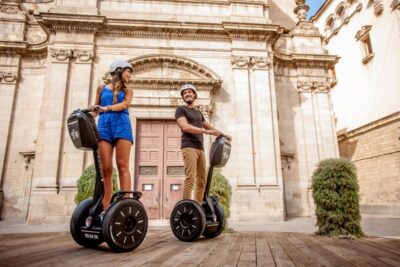
Segway time in Barcelona feels like cheating. You trade long walking stretches for a fast, guided loop that still gives you real stops, photo moments, and context as you glide past big landmarks. It’s built for people who want highlights without doing a full-day sprint, and it starts right where Barcelona feels most atmospheric: El Gòtic.
My two favorite parts are the small group size (max 6 per guide) and the way your guide turns each stop into a story you can actually use on the rest of your trip. Guides like Natasha and Phil pop up in the kind of reviews you hope you’ll get: friendly, sharp on details, and good at keeping the pace fun rather than rushed.
One thing to weigh first: Segway riding has height and weight limits. If you’re outside the ranges, or you’d rather not ride, you’ll want a Plan B before you show up at Carrer de Rull.
In This Review
- Key highlights at a glance
- Entering the Segway zone in El Gòtic (Carrer de Rull)
- Gothic Quarter to Basilica de la Mercè: old streets with a clear plan
- Port Vell and Columbus: the waterfront with 2,000-year context
- Cara de Barcelona and the 1888 World Fair arc
- Port Olímpic: from Olympics to a leisure harbor
- Parc de la Ciutadella and El Born / La Ribera: end with neighborhoods
- Cost and value: why $32.38 can make sense
- Who should book this Segway tour (and who should skip it)
- Weather, timing, and the little things that make it smoother
- Should you book the Barcelona Grand Segway Tour?
- FAQ
- FAQ
- How long is the Barcelona Grand Segway Tour?
- Where does the tour start and end?
- Is the tour offered in English?
- What’s included in the price?
- What is not included?
- Are there age or physical restrictions for riding?
- What if it’s raining?
- Can I cancel for free?
Key highlights at a glance
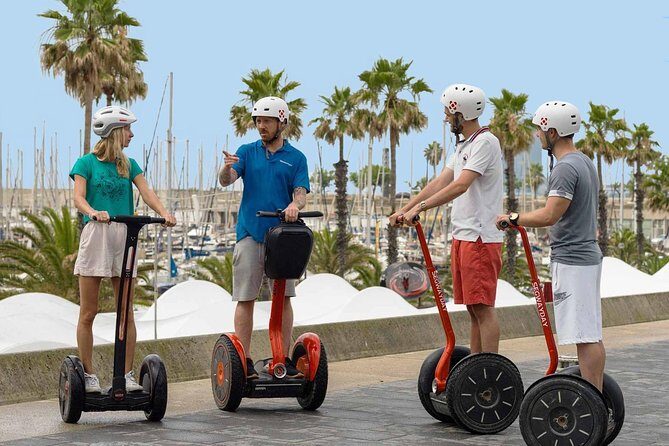
- Max 6 riders per guide for a more personal feel than big-group tours
- Free training time plus helmet and insurance, so you’re not thrown in blind
- A tight “greatest hits” route from the Gothic Quarter to Port Olímpic in about 2 hours
- Landmarks with real context, including the 1888 World Fair sites
- Roy Lichtenstein’s Cara de Barcelona adds a modern-art twist to the classics
- You end where you start, making it easy to roll into lunch or a museum stop next
Entering the Segway zone in El Gòtic (Carrer de Rull)
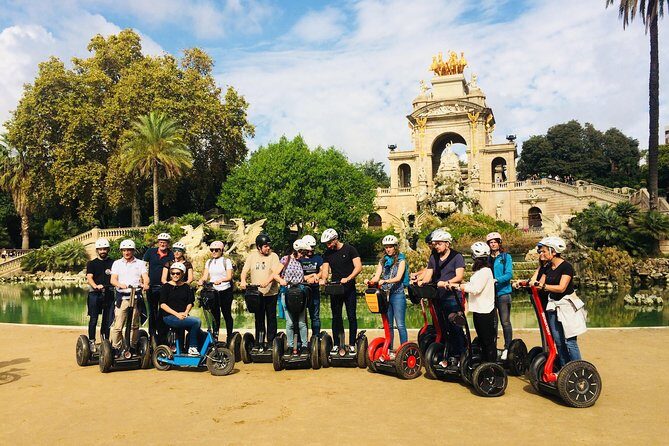
The tour kicks off at Barcelona Segwayday, at Carrer de Rull, 2, in Ciutat Vella. This matters because El Gòtic is the part of Barcelona where streets feel older and tighter, so you’re not spending your first minutes commuting across town. You’re starting in the thick of it.
Before you head out, you get free training time and you use the included helmet. That training is the difference between a Segway tour that feels smooth and one that turns into a nervous shuffle. You’ll also get whatever basic guidance you need to steer confidently, which keeps the rest of the route calm and safe.
What I like about this setup for first-timers is that it respects your comfort. You’re not only learning how to ride; you’re also learning how the route works in real streets. Segway tours aren’t just transportation. They’re a choreography between guide, group pace, and the fact that you’re stopping often.
Practical note: comfortable shoes are recommended. Even though you’re not walking most of the time, you’ll still step off for brief moments—photos, looking up at facades, and listening to your guide.
You can also read our reviews of more tours and experiences in Barcelona.



Gothic Quarter to Basilica de la Mercè: old streets with a clear plan
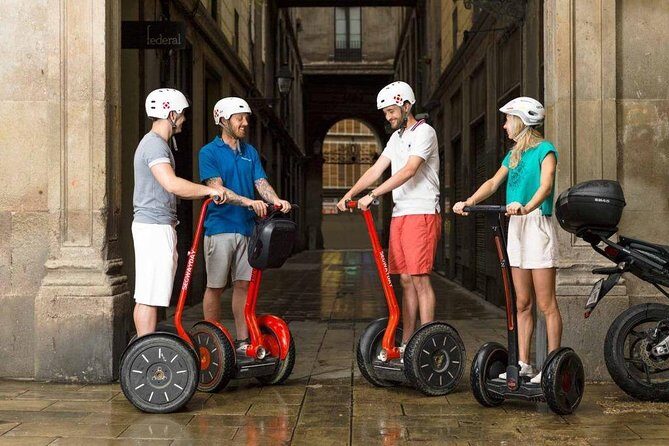
Your route moves into the Gothic Quarter, one of Barcelona’s most recognizable historic areas. This is where the city’s layers show: buildings that range from Roman-era foundations up through later periods. Riding here feels especially good because the streets are narrow enough that you really get that “I’m inside the city” feeling, without having to do a long hike.
At a stop focused on the Gothic Quarter, you’re not just taking pictures. The point is to understand what you’re looking at. If you tend to walk past churches and plaques without absorbing anything, this kind of guide-led pause helps you turn the scenery into knowledge you’ll remember.
Then you move to the Basilica de la Merce, a Baroque-style basilica. Baroque doesn’t always mean much if you don’t know what to look for. With a guide, you’re more likely to notice the visual language—shape, ornament, and the way religious architecture tries to move your attention. Even if you only get a brief stop, it gives you a hook for later when you’re comparing styles around the city.
A possible drawback here is the same as with any historic-center tour: you’re moving through an area where you may encounter pedestrians and tight streets. The good news is the tour is organized for that reality, and the small group size helps keep things manageable.
Port Vell and Columbus: the waterfront with 2,000-year context
Port Vell is the oldest section of Barcelona’s port, with more than 2,000 years of history. That’s a big number, and it can sound abstract until someone frames it. As you roll along this area, the tour gives you a reason to care about the waterfront beyond the views.
This stop works well if you like the “why” behind what you see. Barcelona didn’t become a major city by accident, and the port is one of the simplest ways to grasp how trade and movement shaped the city.
Next comes Monument a Colom, the Columbus monument built for the World Fair of 1888. It’s one of those spots that’s hard to ignore because it’s visually dominant. A quick guided context can turn it from a landmark you pose by into something you understand as part of a specific moment in Barcelona’s growth.
If you like your photos, this section is also practical. You get photo moments that aren’t buried under long detours, which is a win when your vacation schedule is tight.
Cara de Barcelona and the 1888 World Fair arc
One of the most interesting stops on the route is Cara de Barcelona. This is a surrealist sculpture by American Pop artist Roy Lichtenstein. It’s the kind of moment that changes the tone of the tour. You’re not only seeing classic architecture; you’re seeing how Barcelona also plays with contemporary art and public installations.
For me, art stops are best when they give you a quick way to interpret them. Even if you’re not an art critic, you can enjoy the contrast: a pop-art face hanging out in a city known for medieval streets. That contrast helps you remember the tour as more than just “big sights on a checklist.”
Then you hit the Arco di Trionfo, a triumphal arch built as the main access gate for the 1888 Barcelona World Fair. This is a great stop for anyone who wants to connect Barcelona’s monuments to the time period that produced them. It also gives you a break from pure navigation. An arch is a focal point. You can orient yourself and understand where the city wanted attention back then.
Tip for your own pacing: if you’re the type who loves photos, take the extra few seconds to look up. Arches and monuments tend to be more impressive when you notice proportions, not just the front view.
Port Olímpic: from Olympics to a leisure harbor
Next is Port Olimpic, built for the 1992 Summer Olympics. Today, it functions as an attractive leisure harbor in front of the Olympic village. That shift is a big theme in modern city travel: sports infrastructure becomes everyday public space.
This stop is valuable because it shows a different Barcelona than the Gothic Quarter and the old-port layers. The scale feels different. The vibe feels different. And your guide’s explanation helps you see it as planned development, not random waterfront.
If you’re wondering how a Segway handles this kind of area: it’s ideal. You’re in open spaces compared to the tight old streets, so the riding feels less stop-and-start and more like a glide through the city’s rhythm.






Parc de la Ciutadella and El Born / La Ribera: end with neighborhoods
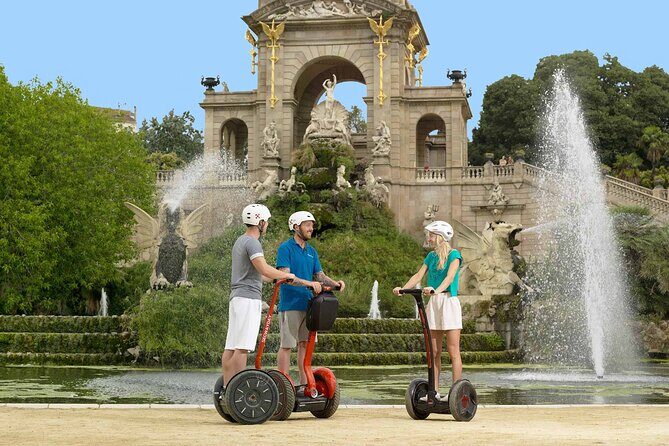
Your route finishes with two areas that are perfect for reorienting your trip after the Segway portion.
First is Parc de la Ciutadella, the biggest and oldest park in Barcelona, where you’ll find a range of attractions. Parks in cities can feel like a filler stop unless the guide frames what you’re seeing. With a guided pause, you’re more likely to notice how the park fits into the city plan and why it’s still a magnet for locals and visitors.
Then you move into El Born / La Ribera. El Born refers to Sant Pere, Santa Caterina i La Ribera, and it’s known as one of the oldest and most interesting areas of Barcelona. This is a smarter ending than squeezing one more landmark at the start because it sets you up to wander after the tour.
In practical terms, finishing in a neighborhood means you can turn your new orientation into your own choices. You can keep walking, grab a bite, or hop into the next activity without feeling like you’re restarting your day from scratch.
Cost and value: why $32.38 can make sense
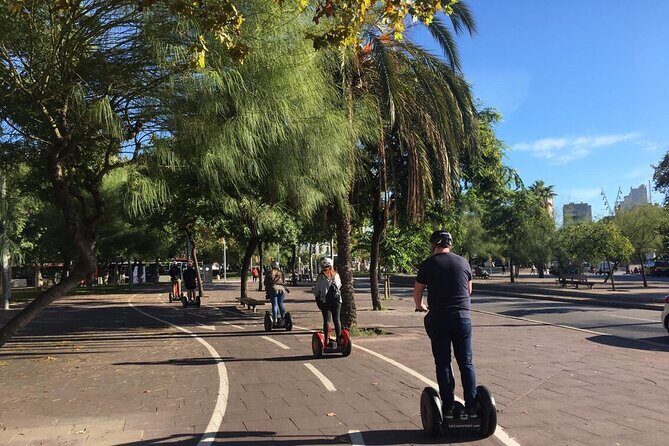
At $32.38 per person for about 2 hours, the math works best when you factor in what you’re getting, not just the sticker price.
You’re paying for:
- a professional guide
- the Segway (plus helmet)
- free training time
- insurance
- and a small-group experience (max 6 per guide)
The tour also avoids the biggest time cost of a city break: transit and long walking routes between scattered sights. Instead, you’re guided through a sequence of key areas that connect naturally. That saves you effort, and it helps you use your limited Barcelona time on the rest of your day too.
Is it the cheapest way to see Barcelona? Probably not. But it can be one of the best value options if your goal is efficient sightseeing with real explanation, without spending your whole morning on foot.
Also worth noting: there’s an option to upgrade to a private tour exclusively for your party. Even if you don’t choose it now, it’s a good sign the company can adapt to groups that want more flexibility.
Who should book this Segway tour (and who should skip it)
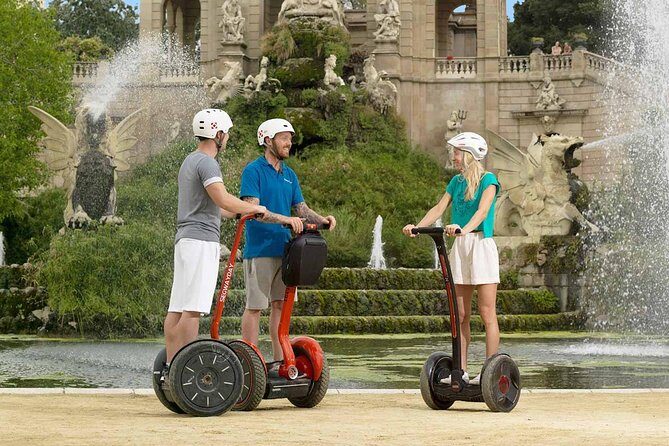
This is a good fit if you:
- want to cover major Barcelona landmarks fast
- like short explanations at each stop instead of a long lecture
- enjoy small-group tours where you’re not fighting for attention
- are comfortable riding a Segway and want the training included
It’s likely not the best fit if:
- you don’t meet the Segway limits (minimum weight 45 kg / 100 lbs, maximum 110 kg / 242 lbs; minimum height 145 cm / 4 ft 8 in)
- you’re expecting a fully walk-based sightseeing day
- you strongly dislike riding in city traffic-like conditions on foot-adjacent streets (even though the tour is organized, you’ll be sharing space)
Age note: the minimum age for Segway riding is 14+. If you’re traveling with younger kids, they may join by riding an e-bike instead. If you’re planning a family day, this matters for expectations.
Weather, timing, and the little things that make it smoother
The tour runs in all weather conditions, so you should dress for reality. That means rain gear if it’s wet, breathable layers if it’s hot, and shoes you don’t regret. A Segway tour can still be fun in light rain, but you want your feet and hands comfortable.
The route is designed around frequent stops, usually just a few minutes each, with longer pauses where it makes sense (like at Parc de la Ciutadella). Since you’re not stuck sitting in one place, the overall feel is active. You get movement and variety without feeling like you’re sprinting.
Also, it’s offered in English, and you get a mobile ticket. That’s helpful if you hate printed paper and want everything on your phone.
Finally, the tour ends back at the meeting point. That’s a quiet but practical win. When you’re done, you’re already in Ciutat Vella, which makes it easier to keep exploring on your own without re-planning logistics.
Should you book the Barcelona Grand Segway Tour?
I’d book it if you want a high-efficiency Barcelona morning or early afternoon that doesn’t turn into a checklist slog. The combination of small group size, included training, and stops that cover the Gothic Quarter, port history, 1888 World Fair monuments, Olympic Port, and then a neighborhood finish makes it one of the more time-smart ways to see a lot in about 2 hours.
I’d hesitate if your group falls outside the Segway restrictions, if someone in your party isn’t comfortable riding, or if you’re hoping for a slow, wandering-by-foot day with lots of long museum-style stops. For those trips, a walking tour or a tailored private guide might fit better.
If you can ride, this tour is easy to recommend. It’s the kind of experience that helps you get your bearings fast, so the rest of your Barcelona time feels less like navigating and more like choosing.
FAQ
FAQ
How long is the Barcelona Grand Segway Tour?
It lasts about 2 hours.
Where does the tour start and end?
It starts at Barcelona Segwayday on Carrer de Rull, 2, in Ciutat Vella, and it ends back at the same meeting point.
Is the tour offered in English?
Yes, it’s offered in English.
What’s included in the price?
Included items are the professional guide, free training time, the Segway, helmet use, and insurance. A private tour option is also available.
What is not included?
Hotel pickup and drop-off are not included.
Are there age or physical restrictions for riding?
Yes. The minimum age for Segway riding is 14+. There are also minimum and maximum height and weight requirements for riders, including a minimum height of 145 cm and a minimum weight of 45 kg, with a maximum weight of 110 kg.
What if it’s raining?
The tour operates in all weather conditions, so you’ll want to dress appropriately for the day.
Can I cancel for free?
Yes. You can cancel for a full refund if you cancel at least 24 hours before the experience start time.