REVIEW · BARCELONA
Barcelona: Montjuïc Walking Tour With Optional Flamenco Show
Book on GetYourGuide →Operated by ExperienceFirst · Bookable on GetYourGuide
Montjuïc makes Barcelona feel close. This walking tour turns a single hill into a mini guided course on the city, with panoramic viewpoints and Catalan dance connections woven into the gardens, monuments, and big final stop at the Magic Fountain. You’ll get photo-worthy sights along the way, plus a guide who links what you see to why this place matters in Barcelona.
One thing to plan for: the route includes stairs, and it’s not built for wheelchairs or strollers. If you want maximum time inside the 17th-century Montjuïc Castle or a proper evening performance, you’ll want to consider the optional upgrades, not just the base walk.
In This Review
- Key highlights at a glance
- Why Montjuïc Works as a Walking Tour in Barcelona
- Starting at Montjuïc Castle: Fortress Views First
- Mirador del Alcalde: The Hill’s Human Stories
- Joan Brossa Gardens and the La Sardana Statue
- Carmen Amaya Monument: Flamenco Beyond the Stereotype
- Laribal’s Gardens and the Teatre Grec: Witches, Wizards, and 1929
- Magic Fountain of Montjuïc: The Best Photo Finish
- Optional Flamenco at El Paraigua: A Night With a Local Rhythm
- Price and Value: When the Upgrades Make Sense
- Tips for a Smooth Walk (Shoes, Stairs, and Getting Your Bearings)
- Who This Montjuïc Tour Suits Best
- Should You Book This Montjuïc Tour?
- FAQ
- Where do we meet for the Montjuïc walking tour?
- How long is the tour?
- Does the tour run in rain?
- Is the tour accessible for wheelchairs or strollers?
- What flamenco show options are available?
- What should I wear or bring?
Key highlights at a glance
- Hilltop viewpoints with real “first-timer” payoff from Mirador del Alcalde and the castle area
- Garden stops that explain Catalan dance history, including La Sardana and Carmen Amaya
- Teatre Grec context tied to the 1929 Barcelona International Exposition
- Magic Fountain of Montjuïc finish with strong photo angles and nearby architecture
- Optional flamenco in an intimate historic venue, with a drink included
Why Montjuïc Works as a Walking Tour in Barcelona

Montjuïc is one of those places where Barcelona’s layers stack neatly: grand views, ornate gardens, old monuments, and a few surprises that make the hill feel like more than a scenic detour. This tour is designed to move at a comfortable walking pace while still giving you stops that feel like they have a point, not just random prettiness.
What I like most is that it connects scenery to stories. You’re not only looking at fountains and flowers; you’re learning why specific spots exist and how local culture shows up in stone and statues. That makes the walk feel lighter, too, because you’re mentally bookmarking what you see.
The core experience lasts about 2 to 3 hours, rain or shine. That timing matters: it’s long enough to feel like a real plan, but short enough that you can still enjoy the rest of your Barcelona day without rushing.
You can also read our reviews of more walking tours in Barcelona



Starting at Montjuïc Castle: Fortress Views First
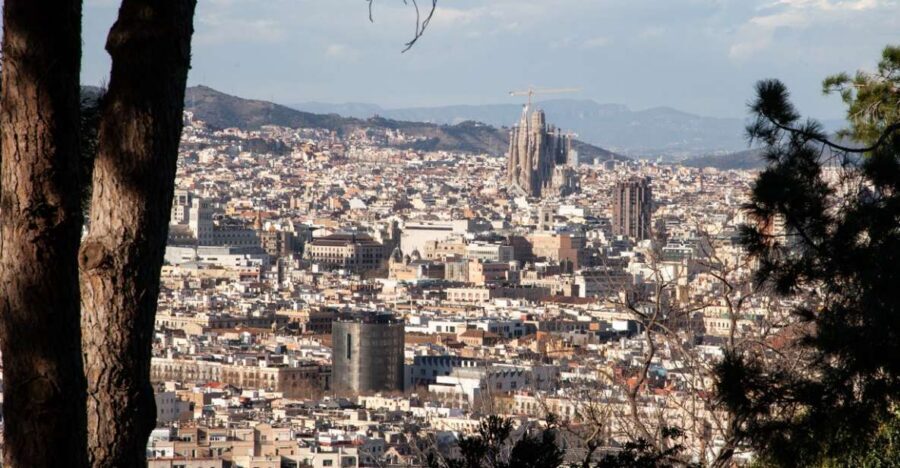
The tour meets outside Montjuïc Castle, at these coordinates: 41.36396300563352, 2.167071231085228. Your guide is there holding a sign that says ExperienceFirst, and the vibe is straightforward: you start with big-location context, then you move into the gardens and viewpoints.
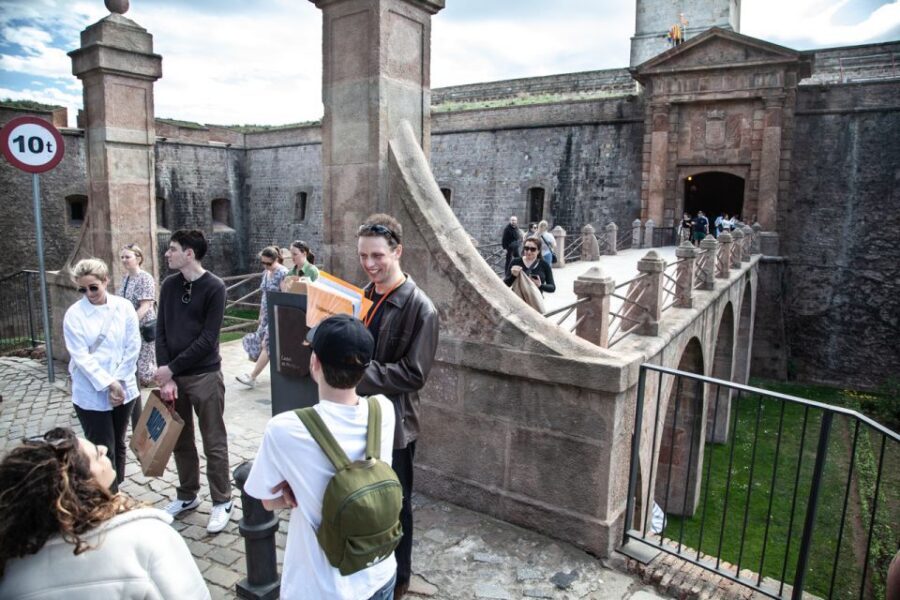
If you upgrade, you’ll go inside Montjuïc Castle itself, a 17th-century fort. That upgrade is for you if you want more than the exterior photo angles. Once you’re inside (and then moving back out), you get a stronger sense of why this hill was so important for control and defense, and why the sightlines over Barcelona matter.
Even without the upgrade, the base plan still positions you well. Starting at the castle area gives you a natural “top of the hill” frame, so the later viewpoint stops don’t feel repetitive. You’re setting up your mental map as you go.
Mirador del Alcalde: The Hill’s Human Stories
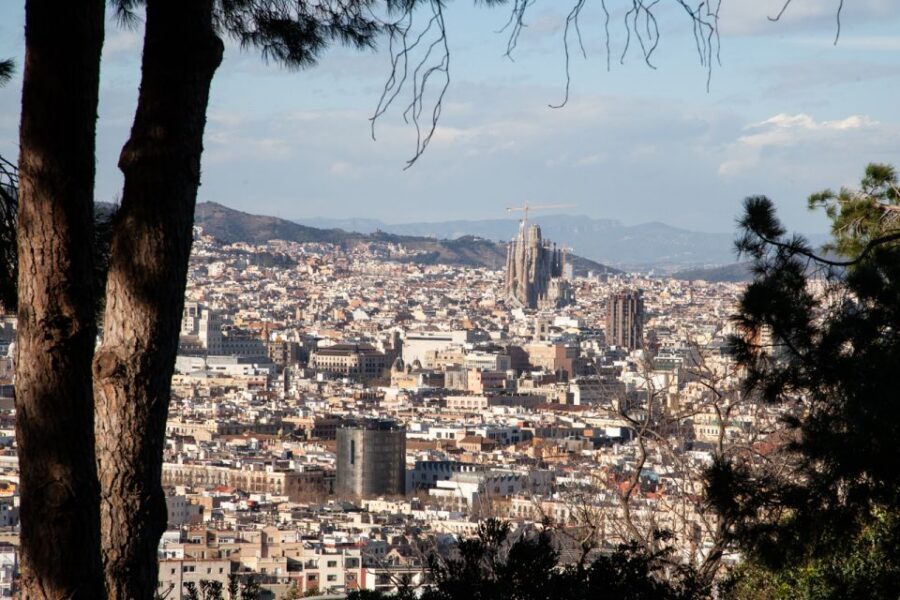
From the castle area, you head toward Mirador del Alcalde. This stop isn’t just about the view (though yes, the panoramas help). It’s where your guide shares the unusual human history of the hill, including stories about an ancient migrant community that once lived here and the hill’s many changes over time.
This is a good moment to slow down for a minute. When you learn that people once lived in places that now feel like formal gardens and monuments, the whole hill makes more sense. You stop thinking of Montjuïc as a backdrop and start seeing it as a lived-in part of the city.
If you’re visiting for the first time, this kind of context is practical. You’ll understand later stops faster, because you already know the hill has been evolving, not frozen in time.
Joan Brossa Gardens and the La Sardana Statue
One of the most distinctive stops is in the Jardins de Joan Brossa. Here, you’ll learn about a statue dedicated to La Sardana, the traditional Catalan dance. This isn’t just a trivia stop; it helps you spot how culture shows up outdoors, in public space, and why certain traditions are treated like identity.
If you’ve only heard of flamenco, you might not expect a Catalan dance stop on Montjuïc. That’s exactly why this tour can be worth it. You get a bigger picture of Spanish and regional culture in one outing, without needing to book multiple experiences.
This is also a relaxing segment of the walk. Gardens tend to give you a break from the constant stair-and-angle grind. You’ll still be moving, but the surroundings make it feel more like a slow stroll with a lesson.
Carmen Amaya Monument: Flamenco Beyond the Stereotype
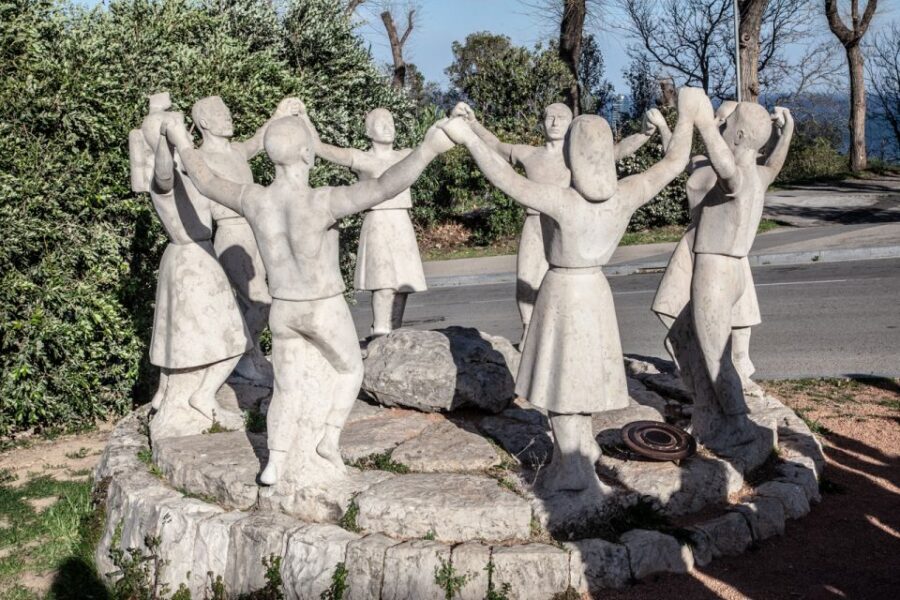
Next comes a monument dedicated to Carmen Amaya, one of the famous figures associated with flamenco. Your guide connects it to the roots of Catalan dance traditions, so the story doesn’t feel like two separate worlds.
For me, the payoff here is perspective. Flamenco is often treated like one thing: a performance. On this tour, it shows up as something with connections, influences, and places where people chose to honor it in the city landscape.
If you’re the type who wants to see culture embedded in neighborhoods, this stop lands well. It’s not only about watching art; it’s about noticing how communities remember it.
You can also read our reviews of more tours and experiences in Barcelona




Laribal’s Gardens and the Teatre Grec: Witches, Wizards, and 1929
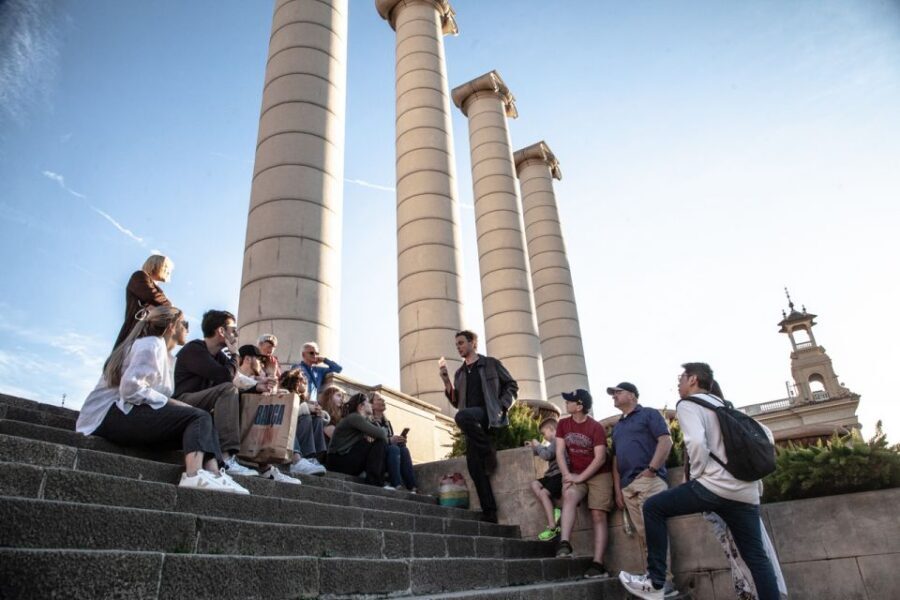
At Laribal’s Gardens, the tour leans into the more playful, almost myth-like side of Montjuïc. Your guide uncovers the idea that witches and wizards used to gather here, giving the gardens a different flavor than the typical “pretty walk.”
That theme continues as you head toward the Greek Theater (Teatre Grec). The theater was built for the 1929 Barcelona International Exposition, and your guide shares how the walking route echoes the way those legendary figures were said to travel on the hill.
Even if you don’t buy the witch-and-wizard angle literally (fair), it still works. It turns a physical route into a story, and that makes it easier to remember the hill’s layout. The theater is also a satisfying “checkpoint” moment, because it signals you’re nearing the big finale.
Magic Fountain of Montjuïc: The Best Photo Finish
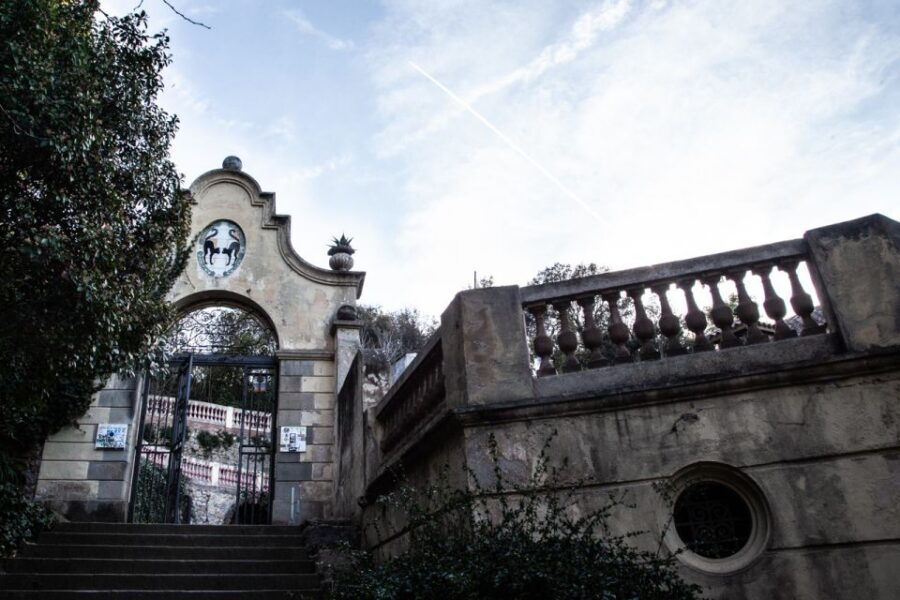
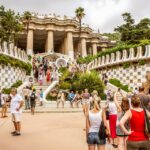
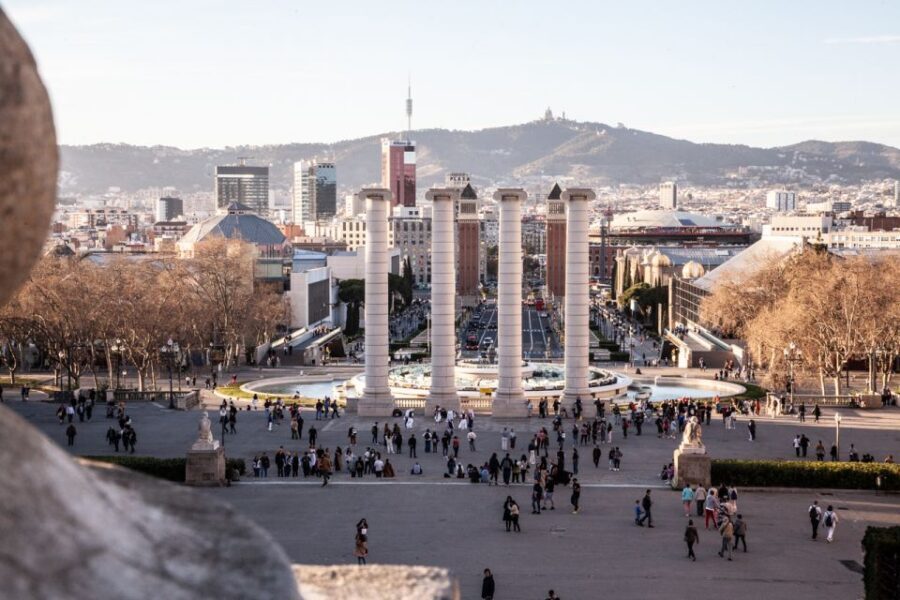
The walk ends at the Magic Fountain of Montjuïc, with one of the strongest scenery finishes on the hill. The fountain area is surrounded by notable architecture, including the Museum of Catalan Art, and there’s a walkway lined with shallow waterfalls that make the area feel alive even when you’re just walking through.
This stop is ideal for photos because you get foreground texture and dramatic architecture in the same area. It also gives you flexibility after the tour: you can stay longer, wander the fountain area, or use it as a smooth jumping-off point to keep exploring the neighborhood.
If you’re planning your day, I’d treat the Magic Fountain as your anchor. Build in time after the tour so you can linger without checking the clock.
Optional Flamenco at El Paraigua: A Night With a Local Rhythm
If you choose the flamenco upgrade, you’ll head to the evening show after the walking tour. The performance is at El Paraigua (Carrer del Pas de l’Ensenyança 2), in an intimate venue inside a historic tapas bar. The venue is said to be in the walls of an 11th-century convent, so the setting alone makes it feel special.
The show schedule is specific: it’s available at 7 and 9 p.m. Fridays and Saturdays, and 7 p.m. on Wednesdays. Your ticket also includes a complimentary drink.
Why this upgrade makes sense: the walking portion gives you cultural context, and flamenco gives you the emotional payoff. You’re not only learning what traditions are; you’re seeing how they land in real time.
This part is also a smart value move. You’re adding a full evening activity without needing to hunt for tickets or find a venue on your own, and the included drink helps offset the extra cost.
Price and Value: When the Upgrades Make Sense
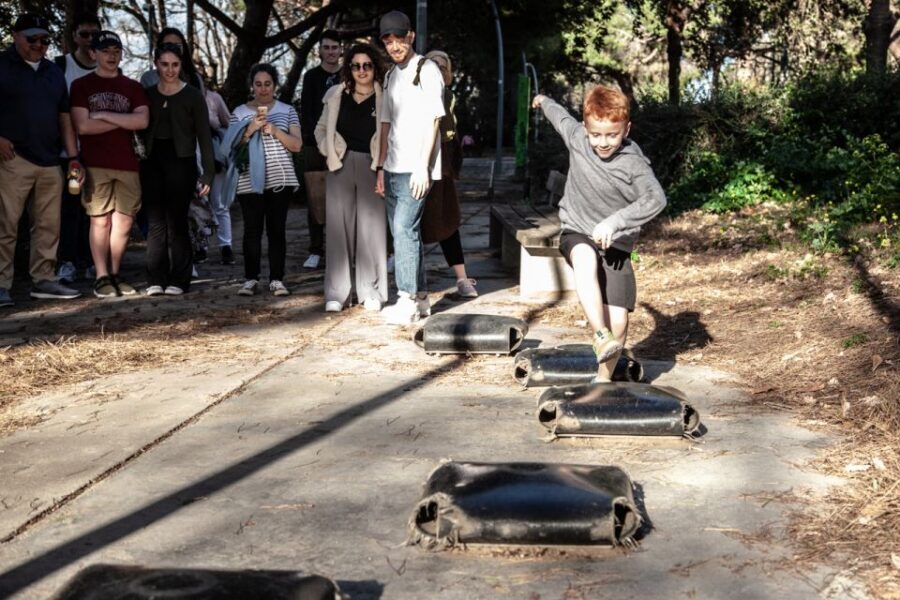
At $34 per person for the base walking tour, you’re paying for three things: a guided route through Montjuïc’s key points, an English-speaking guide, and a structure that turns viewpoints and gardens into an organized experience.
For the base price alone, the value is strongest if you want a guided “orientation” day. You’ll get photo ops at viewpoints, explanations at each major stop, and a finish at the Magic Fountain.
Here’s where I’d decide about upgrades:
- If you care about history and want more than exterior views, the castle tour upgrade is worth considering, because it adds real interior time in a fortress setting.
- If you want a night plan and prefer watching flamenco in a smaller, intimate room, the flamenco upgrade is the move, especially with the venue’s historic setting and the complimentary drink.
The timing of the tour also matters. With just 2–3 hours for the walk, adding flamenco makes your day feel “complete” without feeling like you’re spending your entire vacation in transit.
Tips for a Smooth Walk (Shoes, Stairs, and Getting Your Bearings)
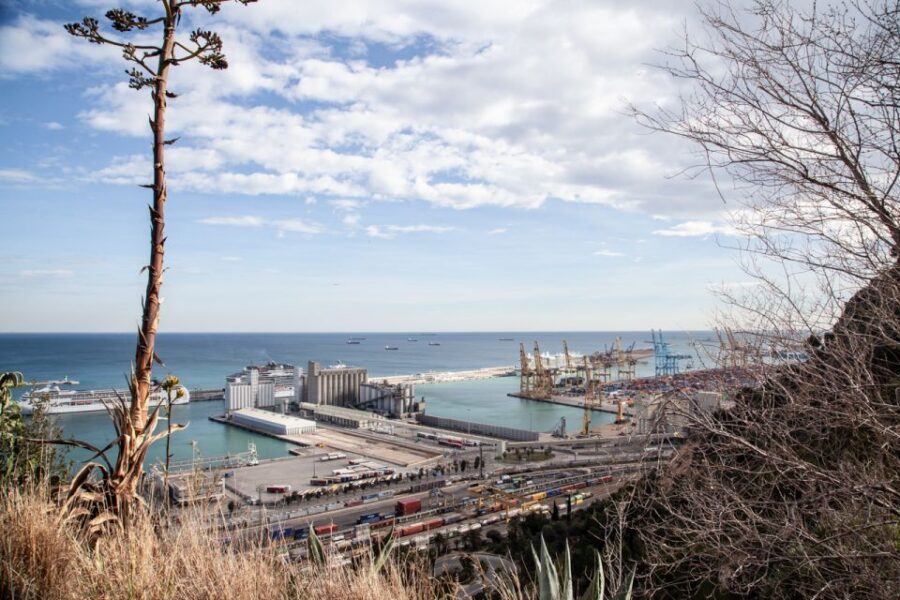
Wear comfortable shoes. This is not optional here, because the route includes some stairs and there are enough staircases to notice if you’re prone to knee or calf fatigue. Plan to move at a steady pace and take your time at the viewpoints rather than trying to rush the whole hill.
Bring a mindset for rain, too. The tour runs rain or shine, so light layers help, and you’ll want shoes with grip.
For navigation, the meeting point is clear and fixed: outside Montjuïc Castle at the coordinates given earlier. That reduces one of the biggest stress points in Barcelona tours, which is wandering around looking for the group.
Finally, think about guide style. In past departures, guides like Thomas and Eoghan have stood out for being engaging and adding plenty of personality to the walk. Another guide, Daria, was also praised for making the experience click through strong storytelling. That said, if you expect a highly scripted, information-heavy narration every minute, go in expecting a walking tour first, plus stories at each stop.
Who This Montjuïc Tour Suits Best
This tour fits best if you want:
- A culture-and-views plan, not just scenic walking
- A gentle way to learn about Catalan identity through real places (La Sardana, monuments, and garden stories)
- A structured Montjuïc outing that ends at the Magic Fountain instead of leaving you wandering
It’s also a great fit for first-time visitors who want to see major landmarks without stacking three separate tickets in one day.
You might skip the flamenco upgrade if you already have a different show booked, or if you know you don’t enjoy seated performances. But if you do like live music and dance, adding it turns the hill into a full arc: context in the afternoon, performance in the evening.
And if mobility is an issue, be cautious. The walk is not suitable for wheelchair users, and stairs make it tough for strollers too.
Should You Book This Montjuïc Tour?
Book it if you want a guided Montjuïc experience that feels organized and pays off at the right moments: castle area context, Catalan dance monuments, Teatre Grec 1929 connection, and a strong ending at the Magic Fountain. The base tour is a solid value for a half-day, and the upgrades help you turn it into a fuller afternoon and evening plan.
I’d consider skipping the upgrades if your goal is only quick views and you’re comfortable doing a self-guided garden walk. But if you want more depth inside Montjuïc Castle and/or a flamenco show in an intimate historic venue, the added cost tends to make sense.
If you’re planning your Barcelona day, this is one of those tours that helps you leave Montjuïc feeling like you actually understood it, not just photographed it.
FAQ
Where do we meet for the Montjuïc walking tour?
You meet outside Montjuïc Castle. Use 41.36396300563352, 2.167071231085228 in Google Maps, and look for the guide holding an ExperienceFirst sign.
How long is the tour?
The walking tour lasts 2 to 3 hours.
Does the tour run in rain?
Yes. The tour takes place rain or shine.
Is the tour accessible for wheelchairs or strollers?
No. It includes stairs and is not accessible for wheelchairs and strollers.
What flamenco show options are available?
The flamenco upgrade is available at 7 and 9 p.m. Fridays and Saturdays and 7 p.m. Wednesdays. The show takes place at El Paraigua (Carrer del Pas de l’Ensenyança 2), and your ticket includes a complimentary drink.
What should I wear or bring?
Wear comfortable shoes, since the route includes stairs and involves a fair amount of walking.