REVIEW · BARCELONA
Barcelona: Old Town Private Walking Tour of Past and Present
Book on GetYourGuide →Operated by Barcelona by Fábio · Bookable on GetYourGuide
Barcelona’s Old Town changes fast.
This private walking tour strings together past and present in a way that feels like moving through time: Roman traces under medieval streets, then a turn into today’s food and beach life. You’ll start near big landmarks, pause for green space, and end with options that can lead you toward La Barceloneta or up toward Gaudí’s streets.
What I really like is the balance. You get big-name sights plus time for the guide to point out the less-obvious corners you’d usually miss. I also like the La Boqueria tasting stop built into the route, so you’re not stuck hunting for the one food stall you should trust.
One drawback: it’s a lot of walking in 2 to 3 hours, so if you’re expecting a sit-down tour or you’re dealing with limited mobility, plan your pace and bring good shoes.
In This Review
- Key highlights worth centering in your plan
- Why this Old Town route feels more useful than a list of monuments
- Starting near Arc de Triomf or Plaça de Sant Jaume: getting your bearings fast
- Parc de la Ciutadella: the shaded breather before the maze
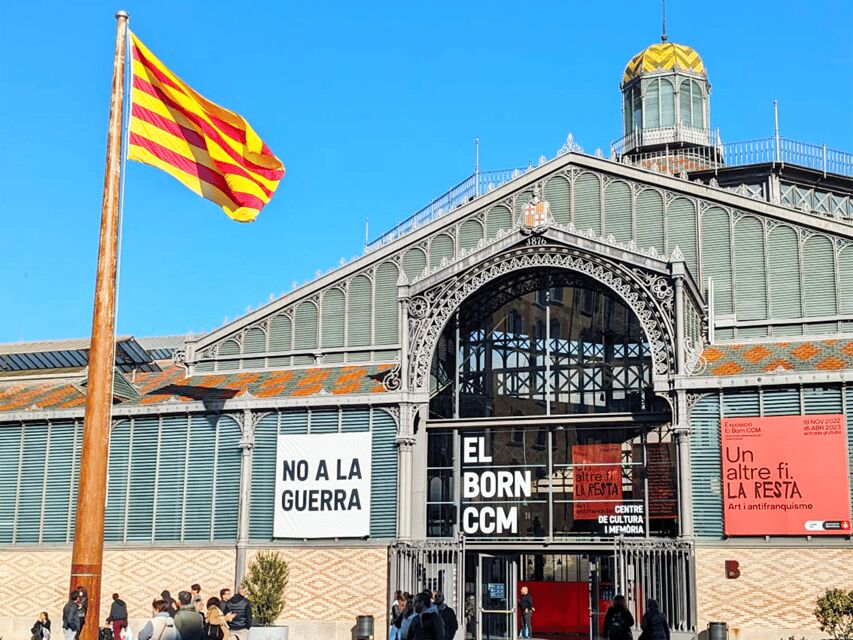
- El Born and La Ribera: where the city’s older economic heart shows up
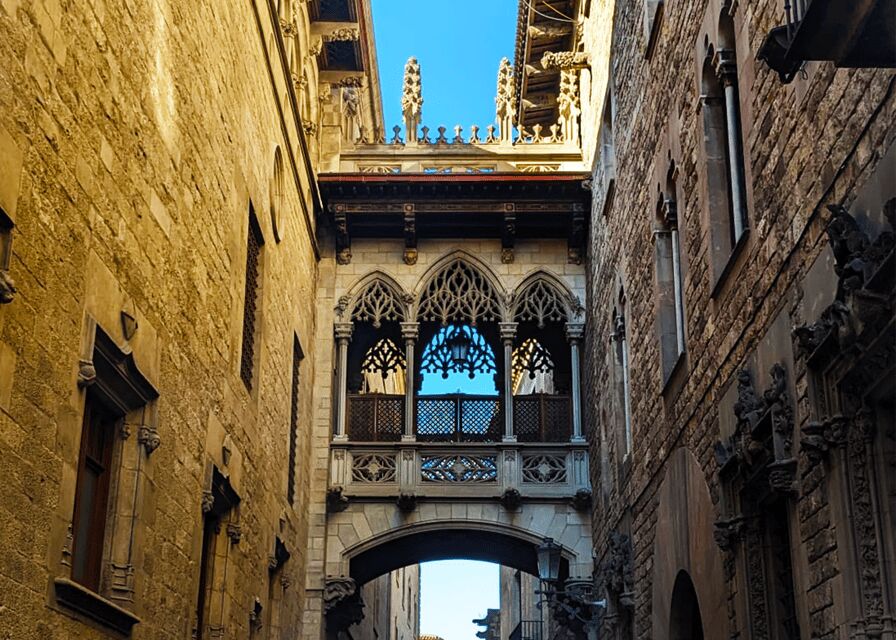
- Gothic Quarter time travel: Roman traces under the medieval streets
- From narrow alleys to La Rambla: a controlled route into the crowds
- La Boqueria tasting: where the tour gives you something real
- Two smart ways to finish: Barceloneta beach or Gaudí-area streets
- Option A: toward La Barceloneta and the port vibe
- Option B: up toward Plaza Catalunya and Gaudí streets (outside views)
- What makes Fábio’s private guiding style a big part of the value
- Price and time: when this tour is a great deal
- Practical tips so the walk stays fun (not tiring)
- Who should book this tour—and who might want a different format
- Final call: should you book this Barcelona past-and-present walk?
- FAQ
- How long is the Barcelona Old Town private walking tour?
- What does it cost?
- Is this a private tour?
- Where do we meet?
- What languages does the live guide speak?
- What is included in the tour price?
- Are tickets to major attractions included?
- Can you bring children or pets?
- Is the tour wheelchair accessible?
- What is the cancellation policy?
- One last thought before you go
Key highlights worth centering in your plan
- Arc de Triomf and/or Plaça de Sant Jaume as the start gives you a quick sense of Barcelona’s geography and layers
- Parc de la Ciutadella acts like a reset before the tight streets of the Old Town
- Roman-to-medieval storytelling in the Gothic Quarter, including sites tied to ancient Barcelona
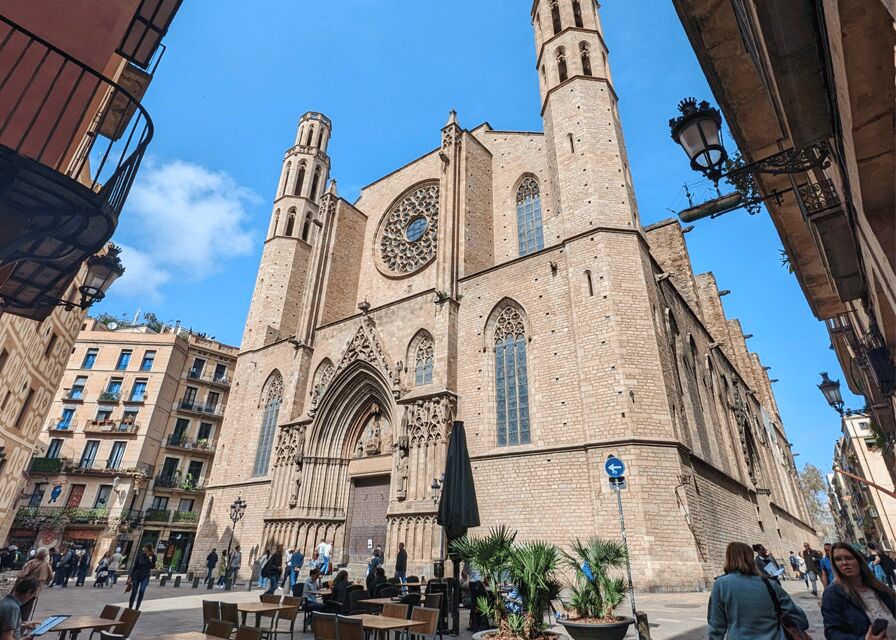
- Santa Maria del Mar area stops, with possible inside time depending on timing
- La Boqueria market tasting that focuses on classic Barcelona flavors
- Two clean ways to finish: toward La Barceloneta or up toward Gaudí-area streets and sights outside the buildings
Why this Old Town route feels more useful than a list of monuments
Barcelona is a city of layers, but most walking tours stop at snapshots. This one is built around a simple idea: walk the neighborhoods that shaped the city, then connect them to what you see today. That means you understand why streets curve, why certain squares matter, and how the city’s energy shifted from inland power and commerce to waterfront life.
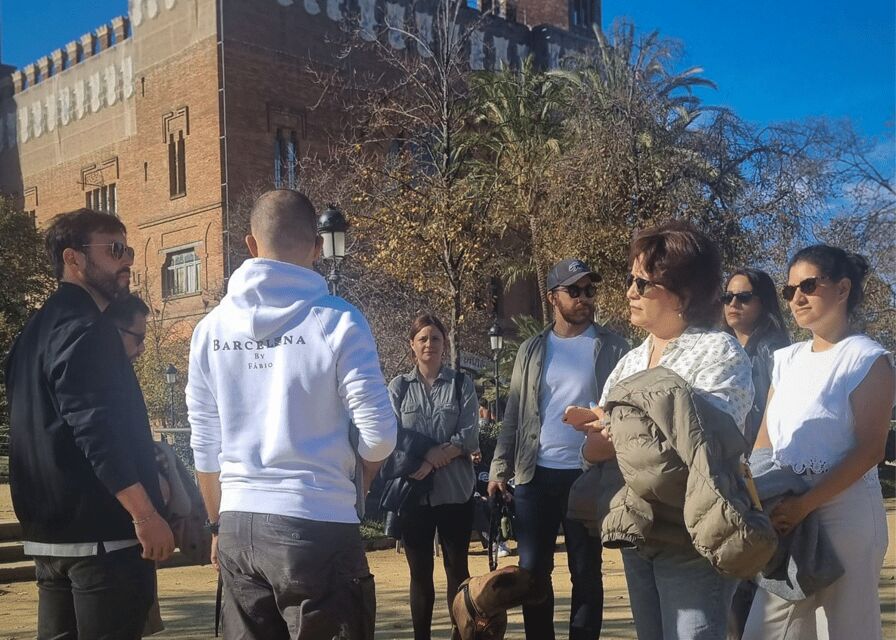
The “private” part matters here. With a small group (up to 8 people), your guide can slow down when you want photos, speed up when you’re on a mission, and swap in more street-level details when you’re curious. In multiple accounts, Fábio is singled out for adjusting the pace and for answering questions in a way that makes history feel practical, not just memorized.
The other value point is food. A lot of cultural tours say they’ll show you where to eat. This one builds in a real stop at La Boqueria and includes a taste of local products so you can anchor your first impression of Catalan flavors.
You can also read our reviews of more walking tours in Barcelona



Starting near Arc de Triomf or Plaça de Sant Jaume: getting your bearings fast
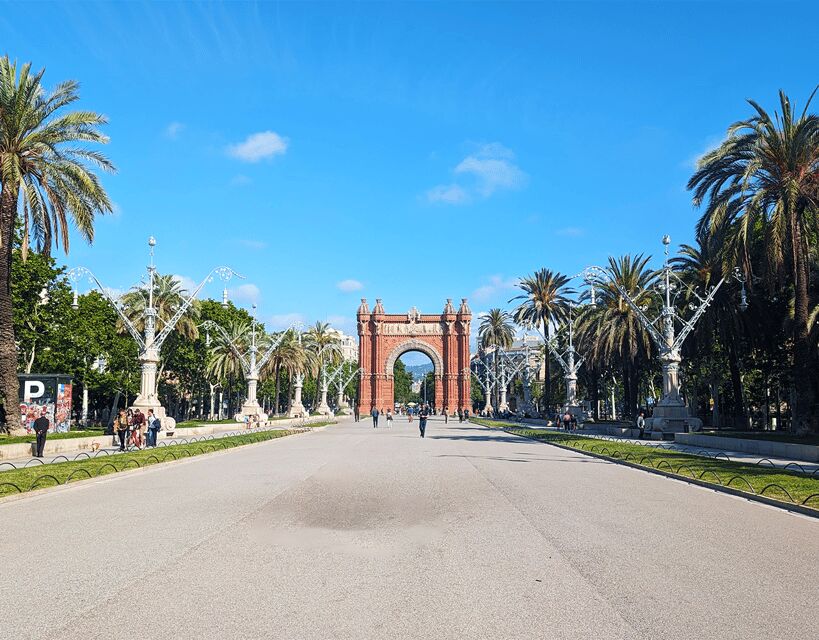
You’ll meet at one of two points, depending on the option you choose: Arc de Triomf or Plaça de Sant Jaume. Both work because they place you immediately into two different vibes.
Arc de Triomf is your visual warm-up: wide lines, big space, and the sense of “start of the walk” rather than “hiding in alleyways.” Plaça de Sant Jaume is the more historic, civic-feeling start, with the Old Town’s importance close at hand.
Either way, the early minutes set up how you’ll interpret the rest of the day. Your guide links what you see now to what used to run this area—power, trade, religion, and everyday life—so later stops don’t feel like random stops glued together.
Parc de la Ciutadella: the shaded breather before the maze
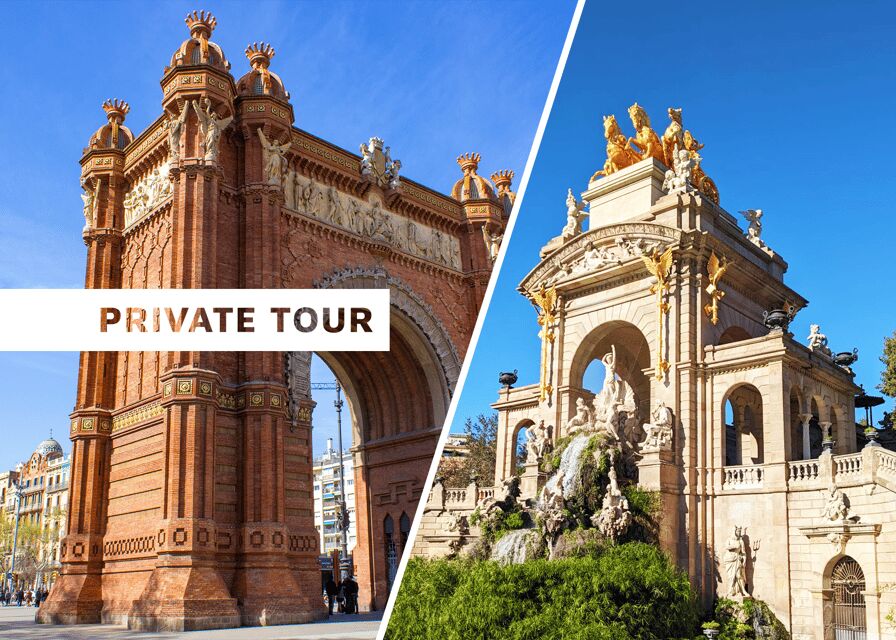
Before the medieval streets tighten, you get Parc de la Ciutadella—a real urban pause. Even if you’re not a park person, it’s smart timing. The route uses the greenery as a breather so your legs and your head can reset before the Gothic Quarter and El Born get narrow and dense.
This stop is also a good reminder that Barcelona’s “history” isn’t only stone and dates. It’s living public space too. A park here helps you understand how the city balances heavy Old Town density with places for walking, relaxing, and moving people through the day.
If you’re visiting in hot weather, this park moment can be the difference between having energy for photos and feeling wiped out too early.
El Born and La Ribera: where the city’s older economic heart shows up
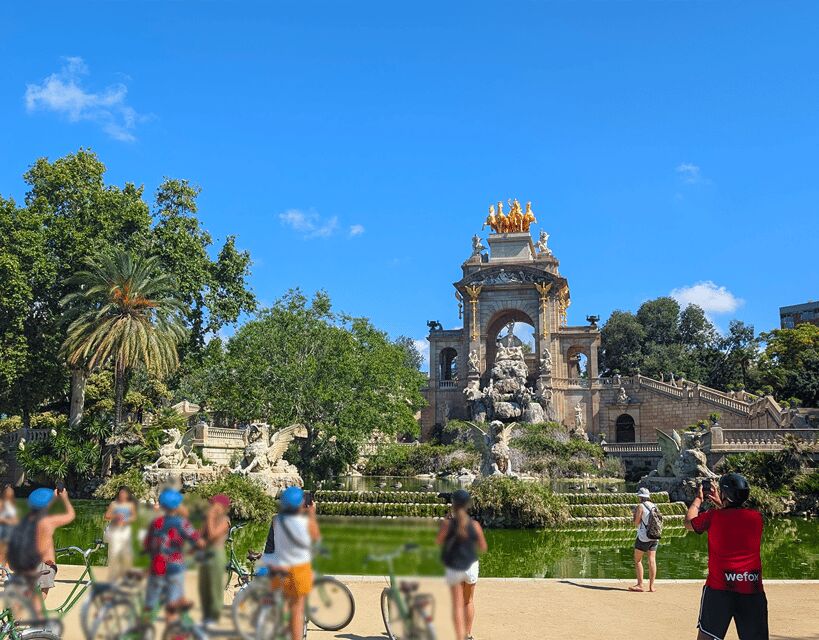
El Born and La Ribera are the kind of neighborhoods where you can walk for an hour and still feel like you’re at the beginning. That’s because the streets stay human-scaled and the building patterns tell stories.
Here’s what makes this part of the tour useful: you’re not just being shown landmarks. You’re getting context for why this area was so important economically, and how the city’s growth shaped the streets and civic spaces you’ll see later.
You’ll move through the area around the Cultural Center and, if timing allows, you can step inside Santa Maria del Mar without extra ticket cost. That matters. Even a quick interior look helps you understand the style and scale of Catalan religious architecture—especially because later you’ll be walking through squares that feel very “public” and civic, not only sacred.
A small consideration: entry timing can depend on how the day flows. If you’re the type who hates “maybe,” build in flexibility and keep your expectations light.
Gothic Quarter time travel: Roman traces under the medieval streets
The Gothic Quarter is where the tour’s storytelling energy peaks. Instead of treating the area like one big photo stop, you get a sense of how old Barcelona layers beneath newer street patterns.
Key stops include:
- Plaza Sant Jaume, a civic anchor in the Old Town
- Plaça del Rei, tied to royal residence history
- Santa Eulalia Cathedral area
- Temple of Augustus (ancient Roman context)
- Plaça Sant Felip Neri
- Barcelona Cathedral
You’ll also hear about legends, and that’s part of why this section lands. Barcelona doesn’t just show you ruins; it explains how people used them—how they lived next to old stones, and how the city changed without wiping out the past.
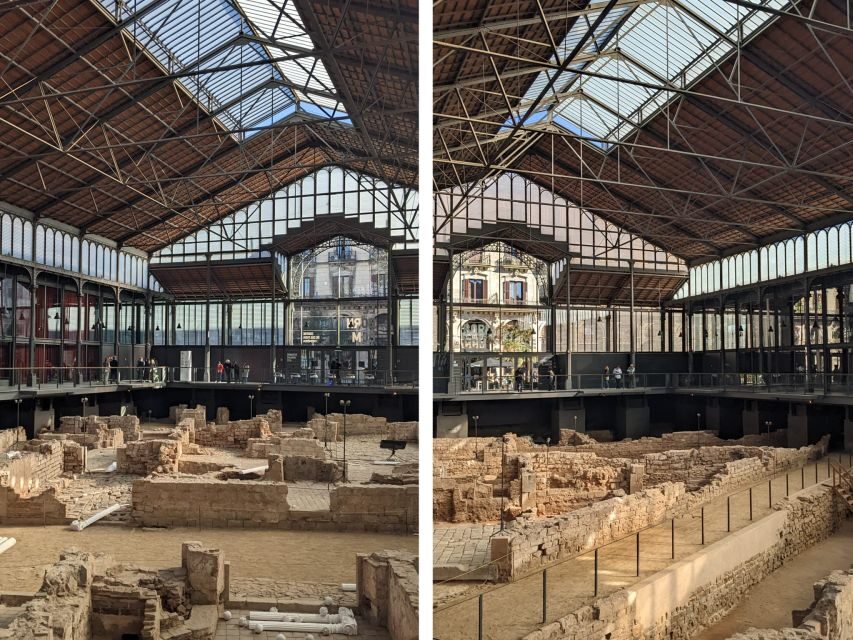
One highlight that comes up often in people’s experiences is the presence of a secret stop tied to Roman ruins. That’s the kind of moment you can’t replicate by just following a map. A good guide helps you spot what’s there, but also helps you understand why it matters.
You can also read our reviews of more private tours in Barcelona



From narrow alleys to La Rambla: a controlled route into the crowds
After the Gothic Quarter’s tight streets, you’ll come out toward Las Ramblas / La Rambla. This part of the day can be busy, so it helps that you’re not wandering on your own.
The value here is navigation and context. Your guide connects what you’re seeing to how the city’s identity shifted—from the medieval core to modern public life—so La Rambla doesn’t feel like just a straight line of shops.
Expect a walk that keeps you moving but doesn’t turn into a race. You’ll have a natural break built in at the market stop next.
La Boqueria tasting: where the tour gives you something real
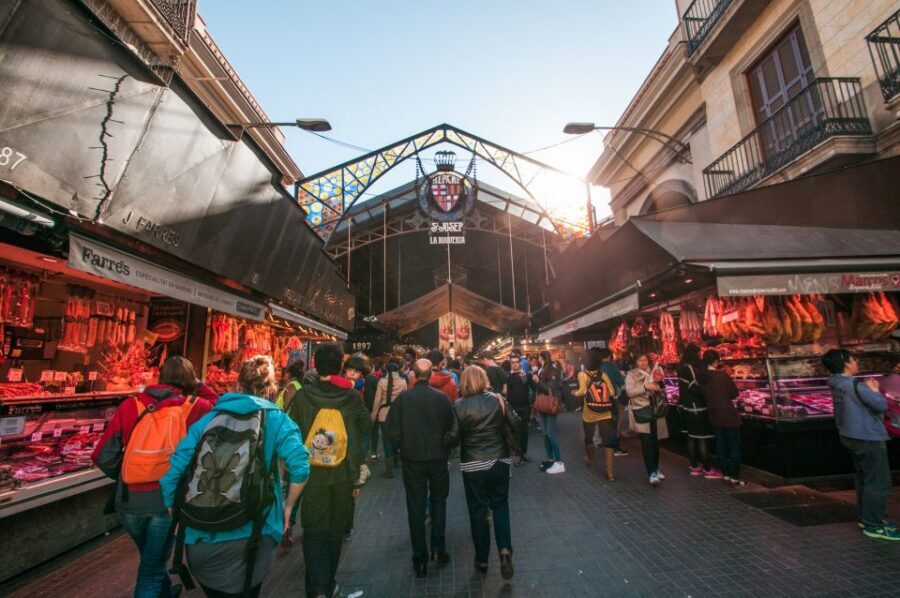
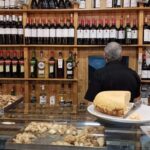
At La Boqueria, you get a pause that’s both fun and practical. The tour includes a taste of local products to share, and people often mention the lineup of classic flavors—cheese and Iberic ham, plus fruit juice—because it gives you a first “taste signature” for Barcelona.
This is one of the most rational parts of the day if you’re traveling without a lot of food research. Markets can be overwhelming. A guided tasting helps you know what to try, and it also gives you a baseline for what you’ll recognize later when you see it again in tapas bars and smaller stalls.
If you’re picky, you may want to tell your guide at the start. With a private group, you can usually adapt the tasting approach more easily than on a big bus-style tour.
Two smart ways to finish: Barceloneta beach or Gaudí-area streets
This tour ends with choice, depending on where you want your day to go.
Option A: toward La Barceloneta and the port vibe
You can head toward Liceu Theater, then Plaza Reial, and continue past the Columbus monument toward Port Vell and finally La Barceloneta. This line makes sense if you want an easy transition from Old Town to the waterfront energy.
Plaza Reial is also a fun cultural bridge point. You’ll hear why it’s connected to Gaudí’s early work, and you’ll pick up the feeling that Barcelona’s story doesn’t stop in the medieval core—it spills into plazas and promenades.
Option B: up toward Plaza Catalunya and Gaudí streets (outside views)
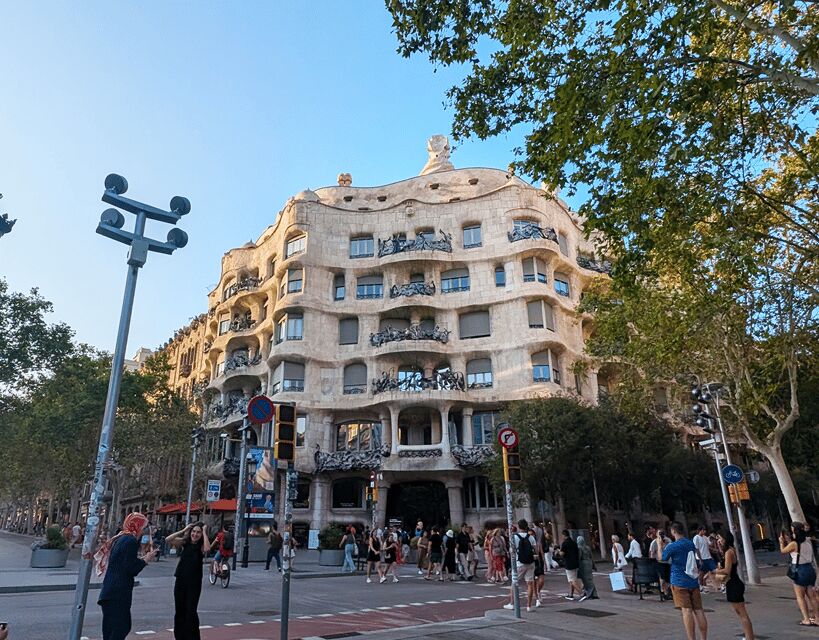
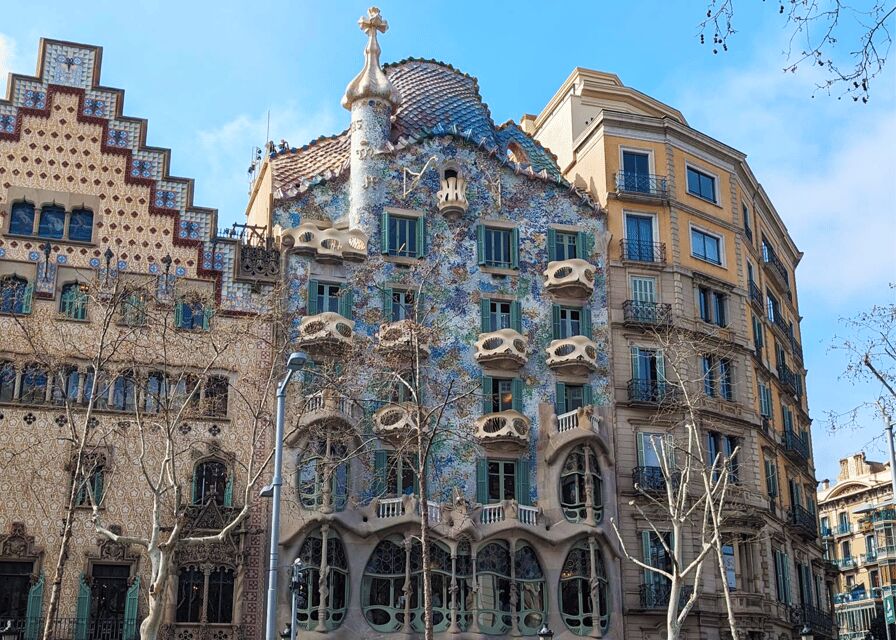
If you’d rather save the waterfront for later, you can finish by ascending toward Plaça Catalunya and walking up Paseo de Gràcia. You’ll see Casa Batlló and Casa Mila from the outside, which is helpful if you either don’t want museum-time today or you’re planning tickets for another day.
This option gives you a clean “modern Barcelona” wrap-up. It also works well if you’re short on time and want a visual sense of why Gaudí is such a big deal.
What makes Fábio’s private guiding style a big part of the value
At $50 per person for a 2 to 3 hour private walk, your money buys more than routes on paper. It buys interpretation, pacing, and practical city knowledge—especially the kind you can’t get from a printed guide.
In accounts from past groups, Fábio stands out for:
- adjusting the pace to your group
- sharing photo-friendly angles and even taking photos for you
- answering questions about history and modern city life
- recommending places to eat and things to do after the tour
- giving practical safety and common-sense tips, so you don’t wander in the wrong direction
Some people also note that communication before the tour was clear, which reduces stress when you’re trying to get oriented on day one.
And yes, it helps that he speaks multiple languages (English, French, Spanish, and Portuguese). If you’re traveling with mixed-language needs, that flexibility can make a big difference.
Price and time: when this tour is a great deal
Let’s talk value honestly. At $50 per person for a private walking tour lasting 2 to 3 hours, the math makes sense if you want:
- a guided overview of multiple neighborhoods in one go
- a tasting stop that you don’t have to plan
- a guide who can tailor the walk to your interests
If you’re traveling solo and you compare it to cost per person for other guided options, private pricing can look expensive until you factor in what you’re getting: small-group attention, practical recommendations, and the ability to slow down without holding up a large crowd.
It can also be a smart first-day booking. You’ll leave with orientation—where things are, what connects, and what to prioritize next.
Practical tips so the walk stays fun (not tiring)
This is a walking tour, so the “bring” list is real:
- Wear comfortable shoes
- Bring sunscreen
If you’re visiting in very warm months, you’ll be grateful the route includes a park break and that the guide can help with practical comfort things. In at least one experience, Fábio provided umbrellas too, which is useful in case the weather shifts.
Also, because the group is small, you can usually make small requests. Want more photos? Want a slightly slower pace? You can ask.
Who should book this tour—and who might want a different format
This works best if you:
- want a guided intro to Barcelona’s Old Town
- like history but don’t want to sit in one place for hours
- care about getting great food info fast
- want a more personal experience than a mass-group tour
You might choose something else if you:
- hate walking long distances
- want a museum-focused day instead of a neighborhood walk
- expect lots of paid-entry stops (tickets aren’t included for attractions you might choose to enter)
Final call: should you book this Barcelona past-and-present walk?
Yes—if you want an Old Town route that actually helps you understand what you’re seeing. The combination of Gothic Quarter layering, El Born context, and a real stop at La Boqueria gives you both meaning and immediate payoff. And with Fábio adapting the pace and adding practical tips (plus photo help), the private angle feels worth it.
If you’re sensitive to walking time, plan for slower pacing and bring sun protection. Otherwise, this is one of the more efficient ways to connect Barcelona’s ancient foundations to today’s street life in just a few hours.
FAQ
How long is the Barcelona Old Town private walking tour?
It runs for 2 to 3 hours. The exact duration depends on the starting time and how the pace works for your group.
What does it cost?
The price is $50 per person.
Is this a private tour?
Yes. It’s a private group experience with a group size capped at 8 participants (children under 6 don’t count in that 8-max limit).
Where do we meet?
The meeting point may vary depending on the option booked, with two listed starting locations: Arc de Triomf or Plaça de Sant Jaume.
What languages does the live guide speak?
The guide offers live guiding in Portuguese, Spanish, French, and English.
What is included in the tour price?
You get a mini eco-friendly bottle of water per guest, plus a taste of local products at La Boqueria market to share.
Are tickets to major attractions included?
Tickets are not included. Tickets to attractions, museums, or monuments are listed as on request.
Can you bring children or pets?
Children under 6 years old are free and don’t count toward the 8-max participants. The tour is also pet-friendly, so you can bring your dog.
Is the tour wheelchair accessible?
Yes, the tour is listed as wheelchair accessible.
What is the cancellation policy?
There is free cancellation up to 24 hours in advance for a full refund.
One last thought before you go
If you’re doing Barcelona for the first time, this tour is a smart way to build context fast. You’ll walk away with the “map in your head” effect, plus food you can actually taste today.