REVIEW · BARCELONA
Barcelona: Sagrada Familia, Modernism, and Old Town Tour
Book on GetYourGuide →Operated by ArtistaTours · Bookable on GetYourGuide
This walk connects two eras of Barcelona fast. It’s built around Sagrada Família exterior storytelling plus a small group pace that keeps the stops meaningful instead of rushed. Two things I really like: the guide is an actor/artist who explains what you’re looking at, and the route links major Modernism sites with Gothic Quarter landmarks in one go. One drawback to plan for: you see most monuments from the outside, so if you’re hunting for inside views, you’ll need extra tickets.
You also get practical support for a long, real-city stroll: a short metro segment, a comfort stop with restrooms, and plenty of photo time along the way. It runs about 3 to 3.5 hours and typically covers 15+ sights, which makes it a strong first-overview move when Barcelona still feels like a maze.
In This Review
- Quick take: what makes this tour worth your time
- Why this Sagrada Família and Modernism walk is a smart first-day plan
- Price, duration, and what you’re really paying for
- Meeting at KFC Sagrada Família: start point and how to avoid a stressful first minute
- Stop 1: Sagrada Família (photo stop + guided exterior)
- A short metro segment: the tour’s way of saving your legs
- Passeig de Gràcia Modernism: Casa Milà, Casa Batlló, and the “real” boulevard feel
- Plaça de Catalunya: the handoff from Modernism to street-level Barcelona
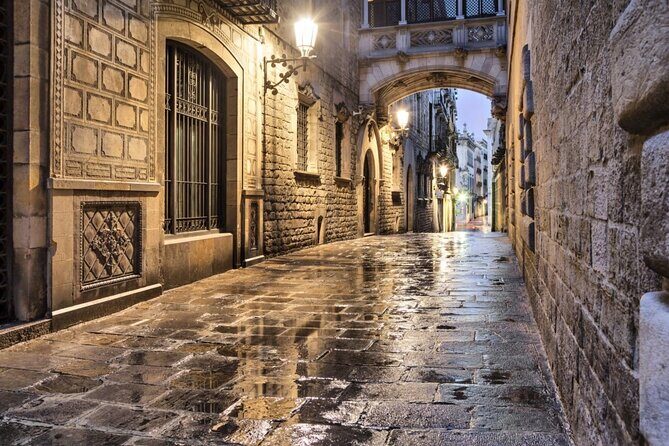
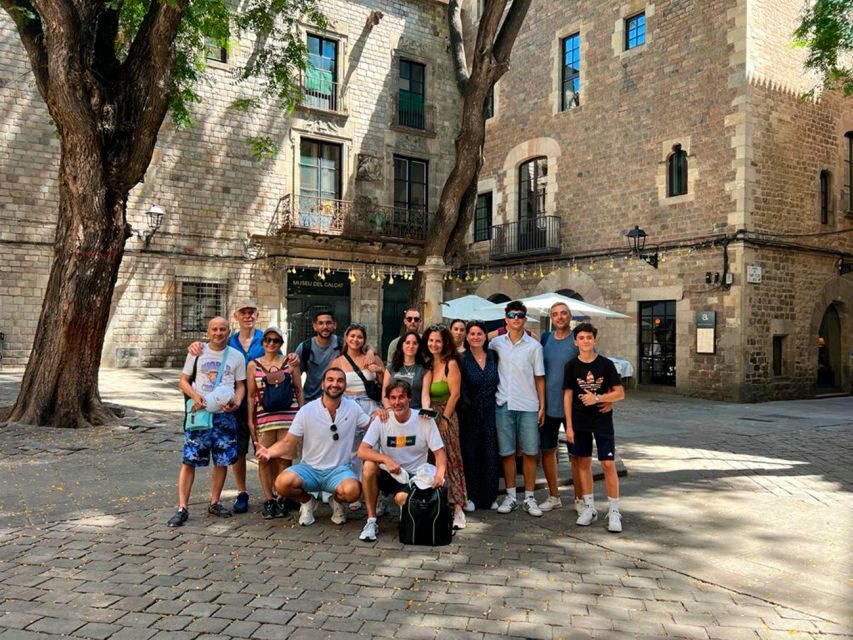
- Plaça de Sant Felip Neri and the road toward the Gothic core
- Barcelona Cathedral: outside views that still teach the story
- Casa de l’Ardiaca and the archive area: where details matter
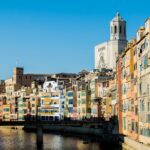
- Bishop’s Bridge, the Gothic Quarter, and the Roman-to-medieval mix
- El Mural del Peto and the final photo stop mood
- Ending in Plaça del Rei: tying 2,000 years into one walk
- What the comfort break and “outside-only” format really means for you
- Who should book this tour (and who should skip it)
- A note on guides: why names like David and Caio keep showing up
- So, should you book this Barcelona tour?
- FAQ
- FAQ
- How long is the Barcelona Sagrada Familia, Modernism, and Old Town Tour?
- What does the tour cost?
- Is entrance to Sagrada Família included?
- How many sights do you visit?
- Where do I meet the guide?
- What languages are available for the live guide?
- Is public transport included?
- Is the tour wheelchair accessible and is it a small group?
Quick take: what makes this tour worth your time
- Sagrada Família exterior, explained clearly: you’ll focus on key details without waiting for entry lines.
- Passeig de Gràcia Modernism cluster: Casa Milà, Casa Batlló, plus the smaller-name houses on the same boulevard.
- Gothic Quarter with Roman-to-Medieval context: you don’t just look, you get the timeline.
- Stops are mostly outside on purpose: fast sightseeing for people who are short on time.
- A small group capped at 10: easier questions, better group flow through crowds.
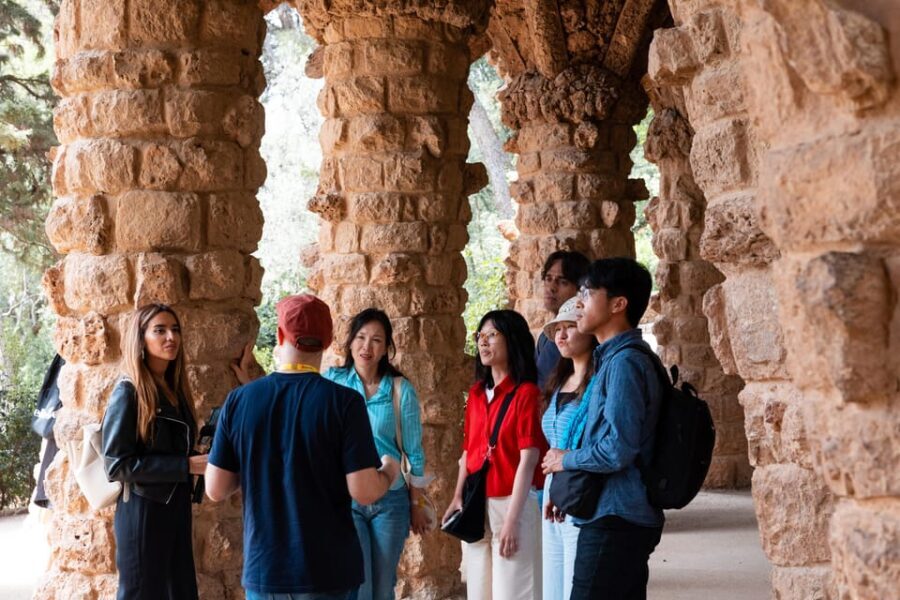
- Actor/artist style guidance: stories that feel like a performance, not a lecture.
Why this Sagrada Família and Modernism walk is a smart first-day plan
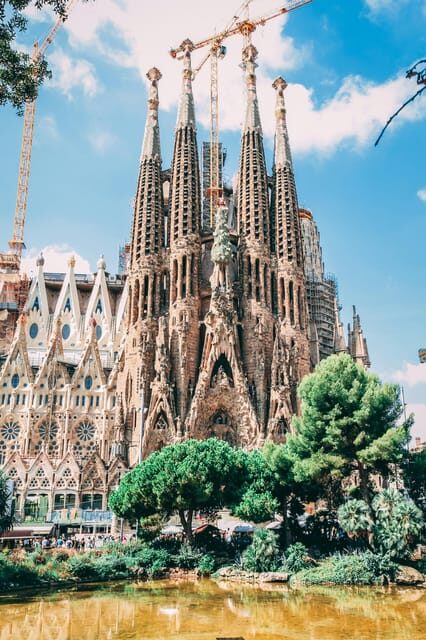
Barcelona can overwhelm you fast. The streets braid together, and suddenly you’re standing in front of famous buildings with no thread connecting them. This tour gives you that thread. In a single 3 to 3.5 hour loop, you go from Gaudí’s most famous unfinished basilica to the city’s Gothic core, with Modernism and medieval Barcelona laid out side by side.
I like that it’s built for orientation. You’re not only collecting landmarks—you’re learning how Barcelona’s identity formed: first the old foundations, then the Catalan modern boom, then the streets and squares where people actually moved through daily life.
And because it’s small group (up to 10 people), the guide can actually respond when questions pop up. In recent tour groups, guides such as Albert, David, Caio, and Nacho have been singled out for strong communication and an easygoing style—so you’re more likely to get answers than just listen.
The big planning note: this isn’t an entry-ticket tour. You’ll learn from the outside for most stops, including Sagrada Família.
You can also read our reviews of more tours and experiences in Barcelona.
Price, duration, and what you’re really paying for
At $52 per person for about 3 to 3.5 hours, you’re buying three things: guided interpretation, efficient routing, and included transit support for at least part of the walk.
Here’s how the value shakes out:
- You’re getting a guided route that strings together 15+ major sights without you having to design the day.
- Transport for the tour is included, and you also receive a Zone 1 metro ticket used during the experience.
- You get a comfort break at a venue with restrooms, which matters on a walking-heavy morning.
Where the price doesn’t stretch as far is inside access. Entry tickets aren’t included, and Sagrada Família is exterior explanation only. If you were expecting to walk into multiple buildings for included admission, you’ll want to adjust expectations and plan those paid entries separately.
For first-timers, though, this price-to-time ratio can be very fair, because it helps you decide what to return to later with tickets.
Meeting at KFC Sagrada Família: start point and how to avoid a stressful first minute
The meeting point is simple: in front of KFC Sagrada Família, and you should look for blue umbrellas.
That matters more than it sounds. Barcelona has a lot of meeting spots and a lot of street noise. Arriving a little early (think 10–15 minutes) saves you from the awkward timing scramble, especially because the tour begins at a landmark area and moves quickly into the first sights.
Also note the practical rules: comfortable shoes are a must, and large bags or luggage aren’t allowed. That’s usually a good thing—it keeps the group moving smoothly in tight streets.
Stop 1: Sagrada Família (photo stop + guided exterior)
Your first major experience is the Sagrada Família area. Expect about 45 minutes for a photo stop plus guided sightseeing.
Even without entry, this is still one of the best ways to start a Barcelona trip. The basilica’s construction story and design language set the tone for everything else you’ll see later. The guide will point out architectural themes you might miss if you only scan for the tallest towers.
A common expectation gap is inside access. This tour is explicit about exterior-only for Sagrada Família. If you want to go in, you’ll need to buy your own admission separately—and that’s a very reasonable way to build a plan, because the exterior talk helps you understand what you’ll later see inside.
A short metro segment: the tour’s way of saving your legs
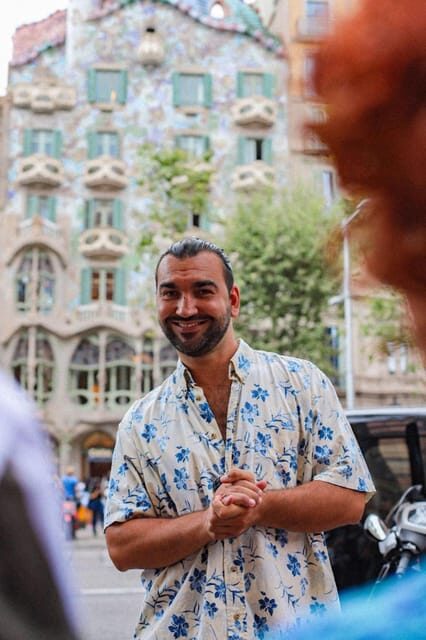
There’s a metro/subway segment (about 15 minutes). This isn’t random. It helps the route connect major Modernism stops without forcing you to walk every single stretch.
From a practical traveler standpoint, this is a win. You get a breather, and you’re less likely to arrive at the next set of sights feeling “tour-walk tired” instead of “actually paying attention” tired.
If you hate public transport, keep in mind that the tour isn’t built to be a pure walking-only experience. It’s a mix, and that mix is part of how the tour fits so many stops into a short window.




Passeig de Gràcia Modernism: Casa Milà, Casa Batlló, and the “real” boulevard feel
The heart of the Modernism portion runs along Passeig de Gràcia, and it’s loaded.
You’ll spend time outside these famous buildings:
- Casa Milà (La Pedrera)
- Casa Batlló
- Casa Amatller
- Casa Lléo Morera
You also get photo stops and short guided moments at each, roughly 15 minutes each at the major houses. The payoff is how the guide teaches the comparisons.
If you only know one Gaudí facade, you might not realize how tightly this boulevard expresses a whole era of ideas. The guide’s job here is to show you that Modernism wasn’t just one artist and one style. It was a whole design conversation happening across neighboring buildings.
What I like about this approach is that you’ll come away with a clearer mental map. For example:
- Casa Milà shows Gaudí’s sculptural imagination and the playfulness of stone.
- Casa Batlló is a face-first lesson in symbolism and form.
- The other houses (Amatller and Lléo Morera) help you see that the boulevard’s fame isn’t only Gaudí.
One more small plus: you’re not stuck in one spot staring at the same angles. You move, you pause, you look from slightly different perspectives, and that makes the architectural details feel more real.
Plaça de Catalunya: the handoff from Modernism to street-level Barcelona
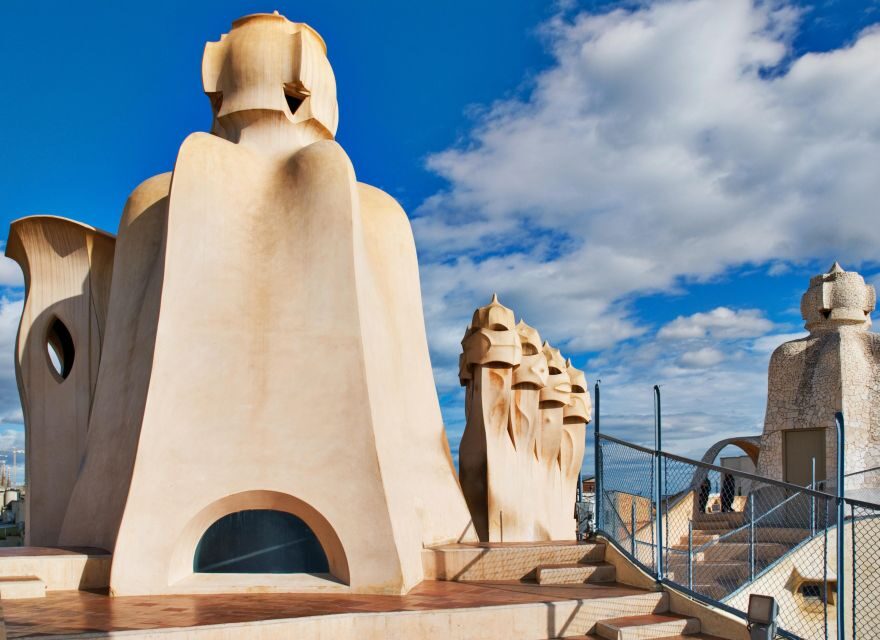
Next you hit Plaça de Catalunya for a photo stop and guided sightseeing (about 10 minutes).
This square is more than a postcard stop. It’s a reminder that Barcelona isn’t divided neatly into “old” and “art.” It’s a living city with constant movement. The guide uses this kind of stop to reset your bearings before the route shifts into the Gothic side.
Think of it like the tour’s navigation checkpoint. After the Modernism close-ups, it helps you reorient before you hit the medieval textures of the old center.
Plaça de Sant Felip Neri and the road toward the Gothic core
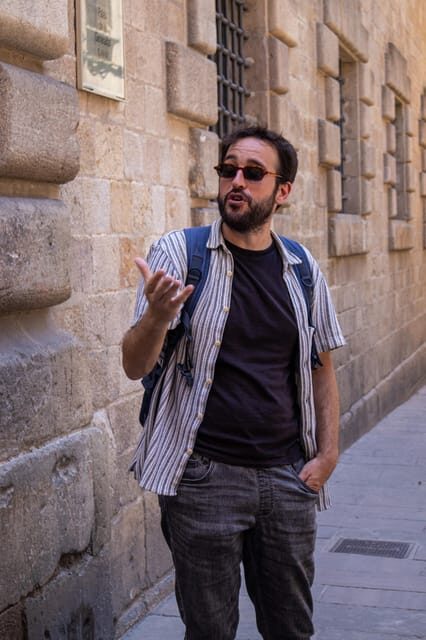
You’ll then move to Plaça de Sant Felip Neri. Expect about 10 minutes here, with scenic views on the way to the next sights.
This is the moment where the streets start to feel older and the city starts compressing visually—less wide boulevard energy, more tight, story-filled corners. If you’re the kind of traveler who enjoys atmosphere as much as architecture, this is where your eyes usually start relaxing and soaking it in.
Barcelona Cathedral: outside views that still teach the story
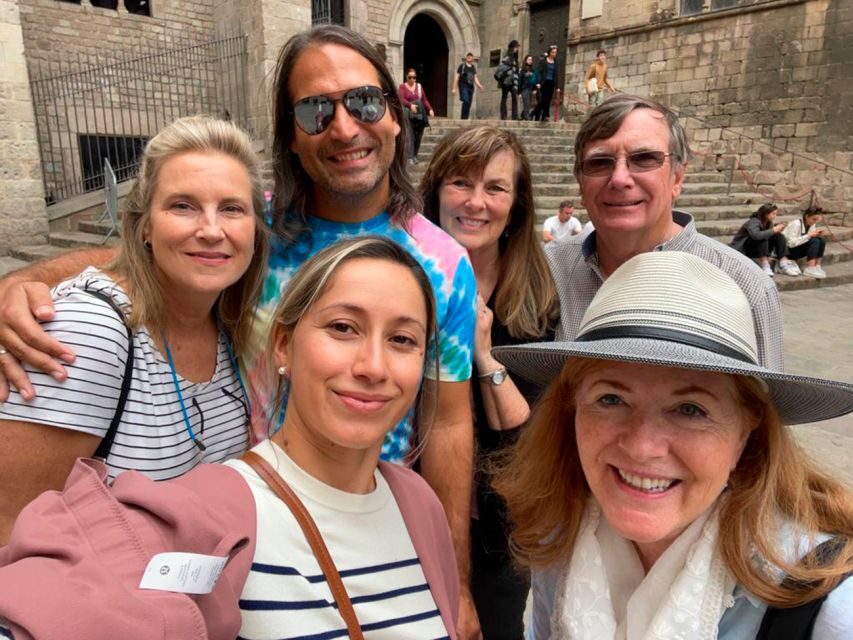
Then comes Barcelona Cathedral, with a photo stop and guided sightseeing (around 10 minutes), plus scenic views while walking into position.
This is one of those sights where you can walk past on your own and still miss the connecting thread. A good guide turns the facade from “big church” into “chapter in Barcelona’s timeline.”
You’ll get context that links the cathedral to the surrounding Gothic grid—so when you later stand near squares and smaller religious landmarks, they feel like parts of one older system, not random stops.
Casa de l’Ardiaca and the archive area: where details matter
The route continues with stops including:
- La Casa de l’Ardiaca (photo stop + guided sightseeing)
- General Archive of the Crown of Aragon (photo stop + guided sightseeing)
These are not the first buildings everyone yells about, but that’s exactly why they’re valuable. The guide uses these sites to point out how power and administration shaped the city as much as religion and art did.
If you like history that isn’t only about wars and kings, this is where you feel it. Archives and civic buildings tell you how a place organized itself day to day—and that’s a different angle from the dramatic facades.
Bishop’s Bridge, the Gothic Quarter, and the Roman-to-medieval mix
You’ll see Bishop’s Bridge next, again with photo stop and guided explanation, plus scenic views (about 10 minutes). Then you get a guided walk in the Gothic Quarter area (around 10 minutes).
During this Gothic section, the guide also covers multiple landmarks and themes such as:
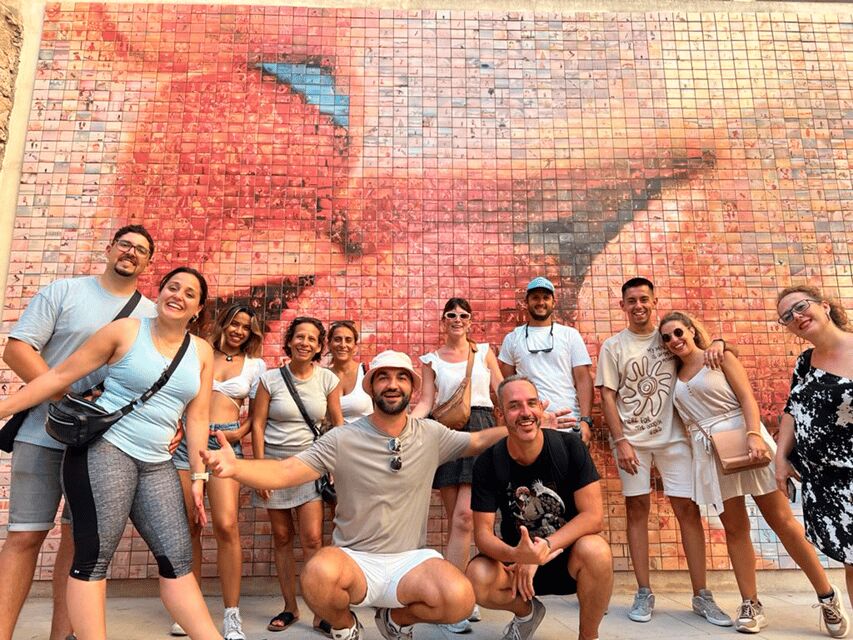
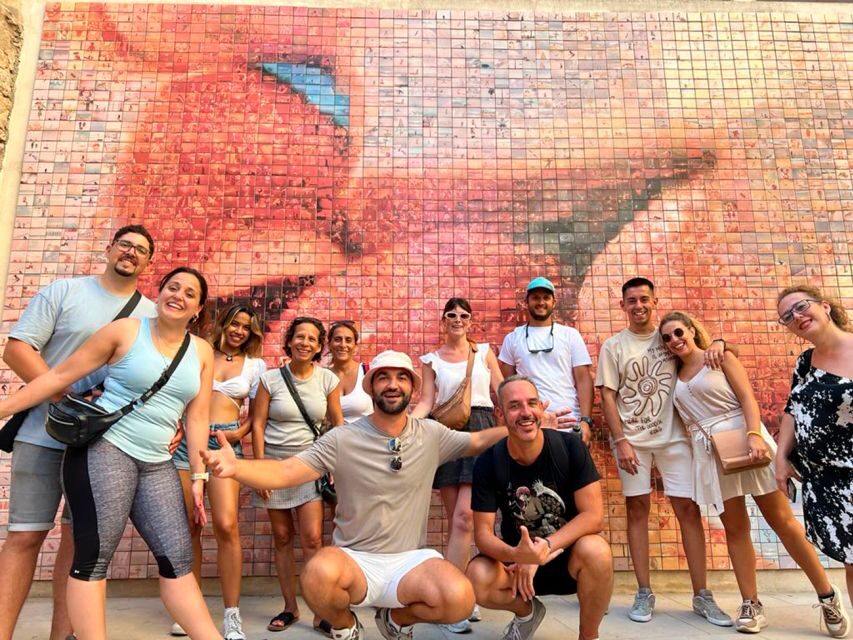
- the Kiss Mural
- Temple of Augustus (Roman context)
- Jewish Quarter
- San Jaume Square
- the Cathedral of the Sea
Even when you’re viewing these from the outside, the guide’s job is to connect what you see to what came earlier. Roman traces alongside medieval squares can feel like two cities stitched together. That’s not an accident—it’s how Barcelona layered itself.
The Temple of Augustus stop is specifically built in near the end of this sequence (photo stop plus guided sightseeing and views). It’s one of the best “wait, Rome really was here” reminders you’ll get without doing a museum-heavy day.
El Mural del Peto and the final photo stop mood
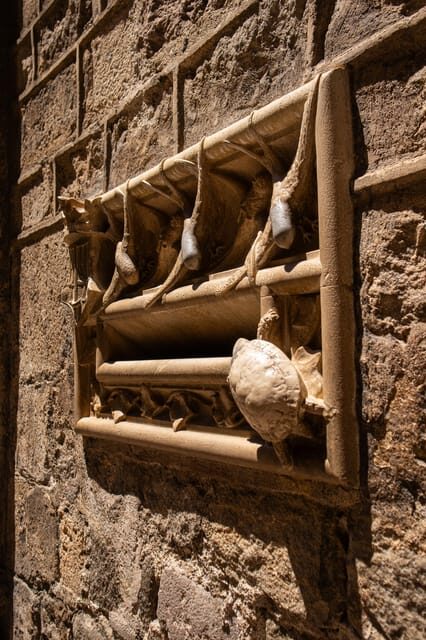
Later you reach El Mural del Peto for a photo stop and short guided explanation (about 10 minutes). This is a classic kind of Barcelona street detail: something that looks small from a distance, but carries a local story when someone explains it.
This is also where pace starts to matter. With so many stops, the final phase can blur together if the guide doesn’t keep you oriented. Here, the route includes another guided moment to tie smaller details back to the larger urban picture.
Ending in Plaça del Rei: tying 2,000 years into one walk
The tour ends with drop-off at Plaça del Rei.
This is a fitting finish point because it brings the Gothic story into focus. By the end, you’ve seen enough squares, bridges, cathedral context, and Roman-to-medieval transitions that the city stops feeling random.
You leave with something practical: a sense of where to return next. You’ll likely know which squares you want to linger in longer. And you’ll probably spot which Modernism building deserves a second look with entry tickets.
What the comfort break and “outside-only” format really means for you
This tour includes a scenic comfort break at a beautiful venue with restrooms available.
On paper, that sounds like a small perk. In real life, it can keep the day enjoyable. When you’re walking for 3+ hours through areas with crowds, restrooms stop being a luxury and start being a core part of the experience.
Now the outside-only format:
- Great for saving time and energy.
- Great for beginners who want a guided orientation first.
- Less great if you’re expecting detailed interior access at multiple sites.
If you want to optimize your trip, use this tour as your plan-making tool:
1) Do this walk early.
2) Pick 1–2 top monuments you’ll return to for paid entry later.
That way you’re not doubling your ticket costs unnecessarily, and you’ll enjoy interiors more because the exterior explanations have already trained your eye.
Who should book this tour (and who should skip it)
You’ll likely love it if:
- you’re seeing Barcelona for the first time and want fast orientation
- you’re a fan of Gaudí and want a strong Modernism overview along Passeig de Gràcia
- you enjoy architecture and history, but you don’t want a museum-heavy day
- you want a guide who tells stories in a performance style (actor/artist format is part of the experience)
You might hesitate if:
- you specifically want interior visits included
- you hate long walks and prefer shorter, ticket-driven sightseeing
- you expect the Sagrada Família stop to include entry (it’s exterior explanation only here)
A note on guides: why names like David and Caio keep showing up
Across recent groups, certain guides are repeatedly praised. Names like Albert, David, Caio, Nacho, and Carlos show up in the feedback, often connected to traits like clear English, strong answering of questions, humor, and patience.
You can’t guarantee a specific guide, but this pattern suggests the operator takes guide quality seriously. Also, the tour runs in multiple languages (German, Spanish, French, Italian, English), which usually helps the experience feel smoother if your group includes mixed nationalities.
So, should you book this Barcelona tour?
Yes, if you want an efficient, guided “big picture” of Barcelona in one morning or afternoon block, especially if you’re aiming to connect Modernism and the Gothic Quarter.
I’d book it when your schedule is tight, your feet are okay with a long walk, and you’re willing to treat this as the orientation layer—not the final ticketed visit. If you can handle that mindset, you’ll leave with direction, context, and a short list of what’s worth paying to see inside next.
FAQ
FAQ
How long is the Barcelona Sagrada Familia, Modernism, and Old Town Tour?
It lasts about 3 to 3.5 hours.
What does the tour cost?
The price is $52 per person.
Is entrance to Sagrada Família included?
No. The tour provides exterior guided explanation of Sagrada Família only.
How many sights do you visit?
The tour covers 15+ top highlights, with many stops made from the outside.
Where do I meet the guide?
Meet in front of KFC Sagrada Família. Look for the blue umbrellas.
What languages are available for the live guide?
The tour offers live guidance in German, Spanish, French, Italian, and English.
Is public transport included?
Yes. The tour includes transport, and a Zone 1 metro ticket is included and used during the tour.
Is the tour wheelchair accessible and is it a small group?
Yes. It is wheelchair accessible, and it is limited to a small group of up to 10 participants.