REVIEW · GIRONA
Besalu,Banyoles Lake & Garrotxa Volcanoes Small Group from Girona
Book on Viator →Operated by Girona Experience Tours · Bookable on Viator
Eight hours in Catalonia, with real story behind every stop. This small-group tour strings together medieval towns, volcanic terrain, and a walk right up to a church inside a crater. You get round-trip transfers from central Girona, then a guided day built for people who like history you can actually see, not just hear.
My favorite part is the small group size (max 6) paired with the convenience of door-to-door style pickup and drop-off in Girona. I also love how the day is led by guides who clearly enjoy explaining how this region became what it is today, with names like Claudia, Eduardo, Gérard, and Pau showing up in past groups.
One thing to keep in mind: you’ll do real walking, including an uphill crater hike at Volcà de Santa Margarida. It’s manageable for most people, but if you hate steep bits or long uneven steps, you may feel it most during the volcano portion.
In This Review
- Key things you’ll notice on this trip
- Girona to Garrotxa and Banyoles: why this route works
- Getting there: 9:00 am start and a small-group day plan
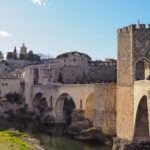
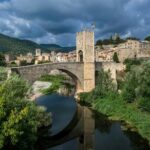
- Besalú’s medieval heart: Puente de Besalua and the Jewish quarter
- Can Gussinye and basalt cliffs: quick photos, big visuals
- Volcà de Santa Margarida: the crater walk and the church inside
- Lunch at Restaurant Can Xel: taste the area, not a generic meal
- Santa Pau in the Garrotxa Volcanic Zone Natural Park
- Estany de Banyoles: lake walking time and optional La Tirona sailing
- What makes the guides here matter for your experience
- Pacing and fitness: what to expect in real terms
- Price and value: is $179.02 worth it?
- Should you book this Girona small-group tour?
- FAQ
- What time does the tour start from Girona?
- How long is the tour?
- What is included in the price?
- Is lunch included?
- Are admission tickets included for the stops?
- How big is the group?
- Is the tour in English?
- What is the cancellation policy?
Key things you’ll notice on this trip
- A max-6 group that makes photo stops and questions feel easy, not rushed
- Round-trip Girona transfers that keep the day focused on the sights
- Puente de Besalua in Besalú, plus time in the medieval and Jewish quarters
- Volcà de Santa Margarida, with a guided walk to the church inside the crater
- Banyoles Lake time along the shoreline, with an optional ecological boat (La Tirona)
Girona to Garrotxa and Banyoles: why this route works
Girona is a smart launch point for this kind of day because you get a full “Catalonia in miniature” feel without changing bases or packing and unpacking. You start in a city setting, then move into medieval towns that feel calm and walkable, and finally end with lake scenery that’s different from the volcanic views earlier in the day.
What makes this itinerary especially satisfying is the way it alternates between built places and natural places. Besalú gives you architecture and old streets. The Garrotxa volcano area adds a very physical sense of place, with basalt cliffs and crater terrain. Then Banyoles shifts the mood again with a long lake walk.
You can also read our reviews of more tours and experiences in Girona.
Getting there: 9:00 am start and a small-group day plan
The tour meets at Plaça de Sant Feliu in Girona at 9:00 am and returns you back to the same meeting point. Expect about 8 hours total, including guided walking time and the lunch break. Language is English, and the tour uses a mobile ticket.
The transfer portion matters more than it sounds. Central Girona pickup means you can show up, meet your guide, and get out into the countryside without spending your morning navigating buses, taxis, and schedules. With only up to 6 travelers, the vehicle can get you closer to key areas, and the day feels structured around people rather than crowds.
Also, several stops are listed as free admission, so you’re not constantly scanning tickets or worrying about which entrance costs extra.
Besalú’s medieval heart: Puente de Besalua and the Jewish quarter
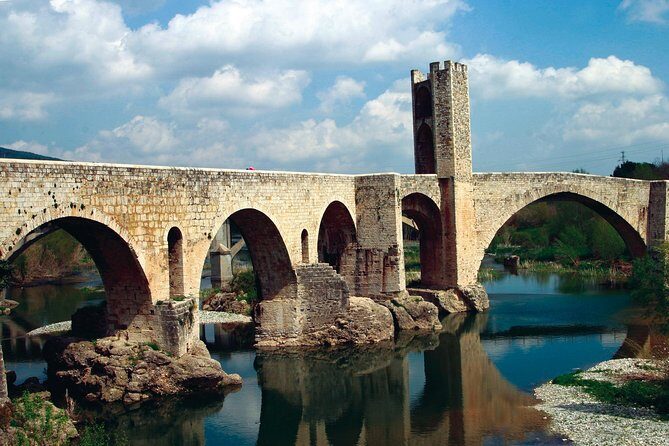
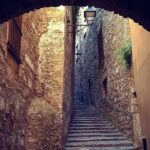
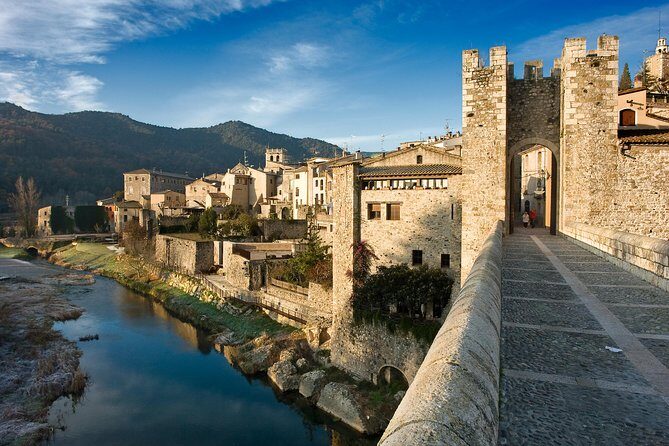
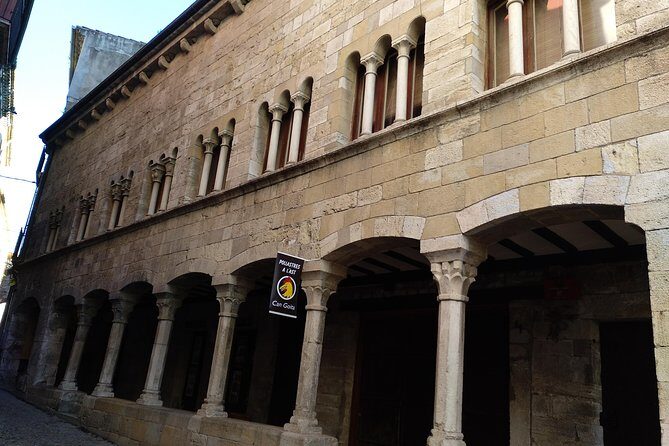
The day starts with Puente de Besalua, where you’ll do a guided walking tour of Besalú’s medieval and Jewish quarters. This is the part of the trip where you’ll get your bearings fast: the streets, the old layouts, and the stories that connect them.
Besalú’s standout is how its history is visible in daily-scale details. You’re not just looking at a monument from far away. You’re moving through the quarter, spotting where people lived and worshipped, and learning how the community shaped the town’s character over time. The guide’s focus on ancient history gives context to what you see—especially useful when the architecture and layout can feel unfamiliar at first.
Practical tip: start with comfortable shoes. This is a walking tour portion, and you’ll likely keep your camera ready because the medieval streets create photo angles quickly.
Can Gussinye and basalt cliffs: quick photos, big visuals
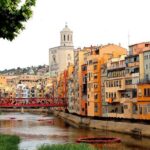
Next comes a short stop at Can Gussinye. You don’t stay long—just enough time for photos of the houses on top of a dramatic basaltic cliff.
Even in a quick window, this is one of those stops that gives you a mental snapshot for the rest of the day. Basalt formations look like nature built the architecture first, and then humans learned how to live on top of it. If you like geology, this is where you’ll feel the day shift from town history into volcano-country reality.
If you’re traveling with someone who gets tired of long museum-style stops, this is a good counterbalance: you get a visual moment without dragging out the time.
Volcà de Santa Margarida: the crater walk and the church inside
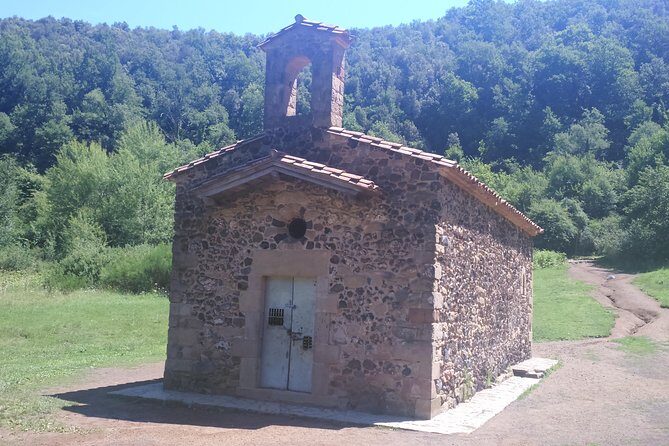
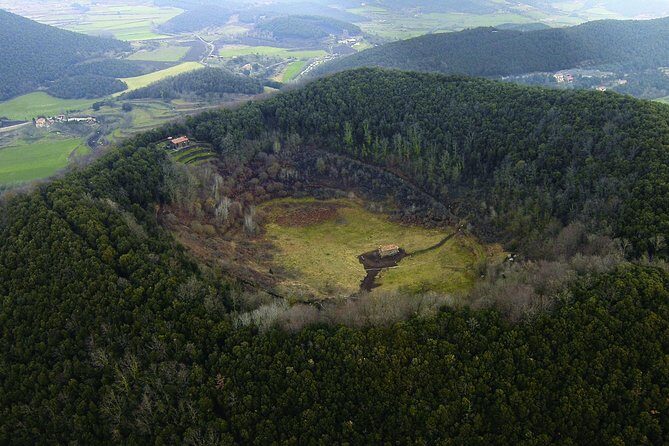
This is the physical highlight: a guided walk to reach Santa Margarida Church, located inside the crater of the Santa Margarida volcano. You’ll spend about one hour on this part, and it’s where you’ll earn your views.
A few things to know before you decide if this is your kind of activity:
- You should expect uphill and a climb feeling.
- The crater setting means you’re walking in terrain shaped by volcanic activity, not flat paths.
- You may find the volcano portion more worthwhile if you enjoy “seeing the shape of a place,” not just strolling.
Some people find this section tougher than the rest of the day, but it’s also the most memorable. Reviews mention the hike being tough in parts but manageable, and they also call out that the church viewpoint feels special once you’re there.
What to do:
- Wear shoes with grip.
- Take water with you—bottled water is included, and it’s smart to use it during the climb.
- If you’re unsure about your endurance, you can still enjoy the rest of the day; the schedule is not entirely built around this one hike.
Lunch at Restaurant Can Xel: taste the area, not a generic meal
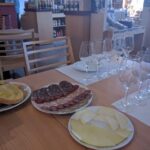
You’ll have about one hour for lunch at Restaurant Can Xel. Lunch itself is not included, but the timing is built into the day so you can refuel without losing the flow of the itinerary.
One guide recommendation that stood out in past days: a fidua instead of paella suggestion. That’s a useful clue about the kind of local-feeling meal you can expect—regional choices rather than just the most famous Spanish defaults. Since you’re in Catalonia, you’ll likely see familiar flavors with local twists.
Practical approach for value:
- Check with your guide about what’s especially good that day.
- If you prefer something lighter before more walking, plan accordingly since you’ll still have additional sights after lunch.
Santa Pau in the Garrotxa Volcanic Zone Natural Park
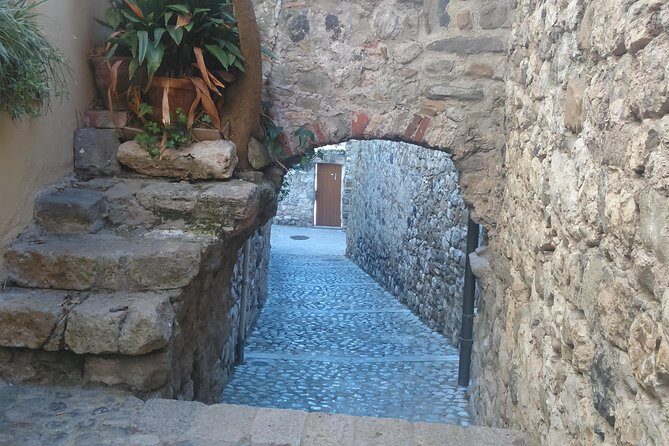
After the volcano crater experience, the tour moves to La Garrotxa Volcanic Zone Natural Park, with Santa Pau as the medieval village stop. You’ll spend about one hour on a guided visit of Santa Pau’s old quarter, including the church and the castle area.
Santa Pau is a great change of pace. Instead of volcanic terrain pushing your legs uphill, you get a town built for slow wandering: narrow streets, church silhouettes, and castle-related viewpoints. This stop also works well if you like your history tied to visible landmarks. The guide can connect the dots between the natural setting and how people built communities here.
If you’re the kind of person who enjoys photo hunting, Santa Pau gives you multiple chances—street angles, church exteriors, and views toward the surrounding volcanic country.
Estany de Banyoles: lake walking time and optional La Tirona sailing
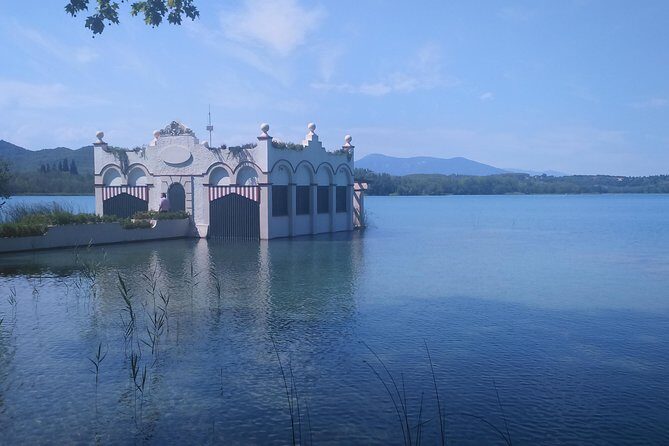
The final major stop is Estany de Banyoles, described as the largest lake of Catalonia. You’ll have about one hour to walk along the lake. This is the “reset” part of the day, where you can breathe a little and enjoy a calmer rhythm after the climbs.
If walking isn’t your thing, there’s an optional way to see the lake: you can sail with the ecological boat La Tirona. Boat tickets aren’t included, so if that matters to you, plan to buy separately on the day.
A practical note: Banyoles time is time. Don’t plan to do a deep hike around the lake in one hour unless you’re moving fast. Instead, use it for:
- a scenic loop along the shore,
- a couple of photo stops,
- and a relaxed end to the day.
What makes the guides here matter for your experience
This trip works because the guide drives the meaning, not just the schedule. Many comments focus on guides being energetic and making history feel alive—talking about architecture, political movements, and the deeper layers behind the places you stand in.
You’ll often hear a guide name connected to this route, like Claudia, Eduardo, Gérard, Alex, Quim, Pau, Julia, or Marc. Whoever you get, the common thread is interpretation: you’re not just passing through towns; you’re learning how they developed.
That’s important because Besalú and Santa Pau can feel similar at first glance if you don’t know what you’re looking for. A good guide helps you notice the details that make each town distinct.
Pacing and fitness: what to expect in real terms
This tour is listed as suitable for most travelers, but the day includes multiple guided walks and at least one more intense segment. Here’s how I’d think about the effort level:
- Morning town walking in Besalú: generally manageable.
- Basaltic cliff/photo stop: short and easy.
- Santa Margarida crater walk: the most demanding part.
- Santa Pau old quarter: walking through streets and up to viewpoints.
- Banyoles lake time: easier, scenic walking.
If you’re traveling with kids or older adults, you’ll want to judge the volcano climb carefully. The best strategy is to go into the day knowing the crater is the main “tough” section, so you can plan accordingly with rest and sensible shoe choice.
Price and value: is $179.02 worth it?
At $179.02 per person, the value comes from how much you get packed into one day without the stress of transport planning. You’re paying for:
- an English local guide focused on history,
- round-trip transfers from central Girona,
- bottled water,
- access to multiple sights where admission is listed as free,
- and the benefits of a max-6 group, which affects pacing and attention.
Lunch is not included, so you should budget for that. Still, the day’s structure is built to make spending time on a good meal worth it, especially with a lunch stop that’s tied to local specialties rather than a generic stop.
If you want a high-efficiency day that still feels personal—and you like the combination of medieval towns plus volcanic scenery—this price can feel fair.
Should you book this Girona small-group tour?
Book it if:
- you want a guided day from Girona that mixes medieval towns with volcanic terrain,
- you like having time for photos and questions (small group helps a lot),
- you’re comfortable with walking, including an uphill crater walk.
Consider a different option if:
- you strongly dislike climbs or uneven terrain,
- you want a fully flat, low-effort day,
- you’re mainly interested in lounging rather than touring by foot.
My take: this is the kind of trip where the day feels full, but not chaotic. The small group setup and the history-forward guiding make it more than just a sightseeing route, and the volcanic crater piece gives it a real sense of Catalonia beyond postcard towns.
FAQ
What time does the tour start from Girona?
It starts at 9:00 am at Plaça de Sant Feliu, 17004 Girona, Spain.
How long is the tour?
The duration is listed as approximately 8 hours.
What is included in the price?
The tour includes a local guide expert in history and bottled water. The tour also offers round-trip transfers from central Girona.
Is lunch included?
No. Lunch is not included, but you will have time to eat at Restaurant Can Xel during the day.
Are admission tickets included for the stops?
Admission is listed as free for the stops on the itinerary. The optional boat tickets on La Tirona are not included.
How big is the group?
This experience has a maximum of 6 travelers.
Is the tour in English?
Yes, it is offered in English.
What is the cancellation policy?
You can cancel for a full refund up to 24 hours in advance. If you cancel less than 24 hours before the start time, the amount paid is not refunded.