REVIEW · GIRONA
Walking Tour in Girona History and Gastronomy with Tasting
Book on Viator →Operated by Girona Experience Tours · Bookable on Viator
Girona tells its story on foot. This 3.5-hour walk connects the medieval streets to the city’s food scene, with a satisfying tasting at the end. I love the outside-first approach, where the guide explains the big monuments so you can decide what to revisit later. I also love the practical payoff: cheeses, sausages, and sweets like el Xuixo, plus DO Empordà wine or beer.
One possible drawback: you’ll be doing steady walking for the full time, and the tour focuses on seeing monuments from the outside rather than going inside. If you want ticketed entry into churches or museums, you’ll need to plan a separate visit.
In This Review
- Key highlights worth planning around
- Why Girona pairs so well with a history-and-food walking tour
- Starting at Plaça de Sant Feliu: the exterior story before the main sights
- El Cul de la Lleona and the legend that ties Girona together
- The Arab Baths name game: a mystery you’ll remember
- Jewish Quarter streets: beautiful lanes plus key context (without rushing into museums)
- Passeig de la Muralla: walking the walled-city line and climbing for views
- Onyar River at Rambla de la Llibertad: bridges, reflections, and quick breaks
- Pont de les Peixateries Velles: the Eiffel Bridge moment
- Plaça de la Independencia: arcades, terraces, and the city’s everyday energy
- Plaça dels Mercaders and Foment Tavern: where the tasting becomes the point
- What you’ll actually eat and drink (and what to watch for)
- Price and value: is $103.03 worth it?
- Who should book this Girona tour (and who might skip it)
- Practical tips so you get the most out of it
- Should you book this Girona history and gastronomy tour?
- FAQ
- How long is the Girona history and gastronomy walking tour with tasting?
- What’s included in the tasting at the end?
- Do you enter monuments or museums during the tour?
- What sights will we see during the walk?
- What languages is the guide available in?
- How big is the group?
- What happens if the weather is bad?
Key highlights worth planning around
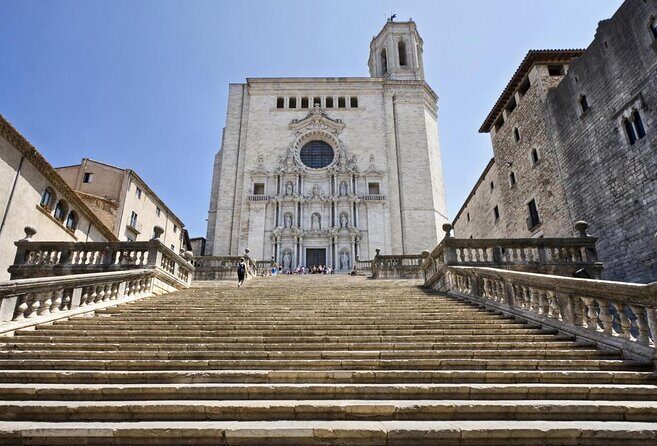
- Outside-the-monuments explanations: you get the story fast without spending time in lines.
- Arab Baths mystery: you’ll hear why the name sticks even when the origin is more complicated.
- Girona’s Jewish Quarter lanes: one of the best-preserved areas from the Middle Ages in Europe, plus context about its synagogues.
- Walls and tower views: you climb up for roof-level perspectives of the old city.
- Onyar River bridges with the Eiffel Bridge: including Gustave Eiffel’s Pont de les Peixateries Velles.
- Foment Tavern tasting with DO Empordà: cheeses, sausages, seasonal bites, and el Xuixo.
Why Girona pairs so well with a history-and-food walking tour
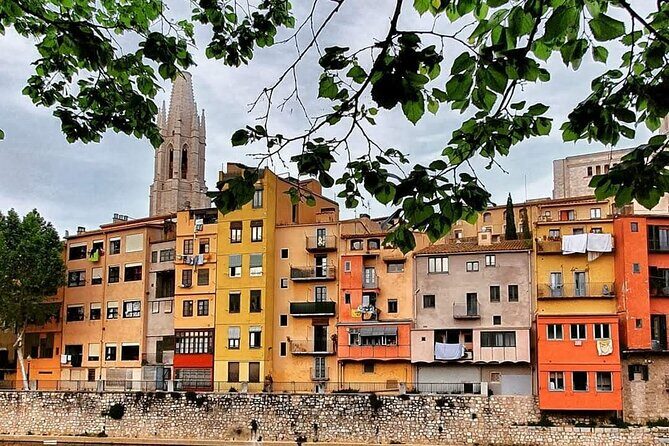
Girona is the kind of city where you can read a thousand years on the street signs, but only if someone helps you look. This tour does that job. In a few hours, you’ll move through monumental areas, then swap heavy facts for real local flavors.
The structure is smart for first-timers. You’ll see the main sights in sequence—cathedral area, Jewish quarter, the walls, river bridges—then finish with a relaxed tasting. That combo is great because you’re not left just staring at buildings; you understand what you’re seeing, and you get a payoff that feels local, not touristy.
One more reason I like this format: the tasting is built into the end of the route, so your appetite naturally shows up at the right time. It turns the walk into a complete Girona “evening in miniature,” even if your schedule is tight.
You can also read our reviews of more walking tours in Girona
Starting at Plaça de Sant Feliu: the exterior story before the main sights
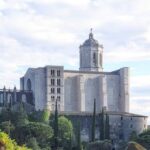
The tour begins at Plaça de Sant Feliu, a good place to orient yourself in the old quarter. From here, you get your first major monument context without entering. You’ll look at the structure from the outside while your guide explains its architecture, its history, and what’s inside.
That outside-only angle is more useful than it sounds. It helps you build a map in your head before you start making choices on your own later. If you decide you want to return for an interior visit, you’ll already know what to notice.
The start location also makes sense for timing. You don’t waste early minutes in ticket lines or slow door checks. You start walking with purpose, and your guide keeps the pace moving between the stories.
El Cul de la Lleona and the legend that ties Girona together
After you get your bearings, you’ll move to El Cul de la Lleona. This stop is short, but it’s fun—and that matters in a history tour. You’ll hear the local legend connected to the statue, including what you should do if you want to return to Girona.
This is the kind of moment that turns “I saw a statue” into “I get why locals care.” It also gives you an easy mental bookmark for later, because legends are often what people remember when the rest of the day becomes a blur of streets.
Even though the stop is brief, it works as a palate cleanser between heavier topics. Girona’s history doesn’t feel like a lecture; it feels like a set of stories layered onto real places.
The Arab Baths name game: a mystery you’ll remember
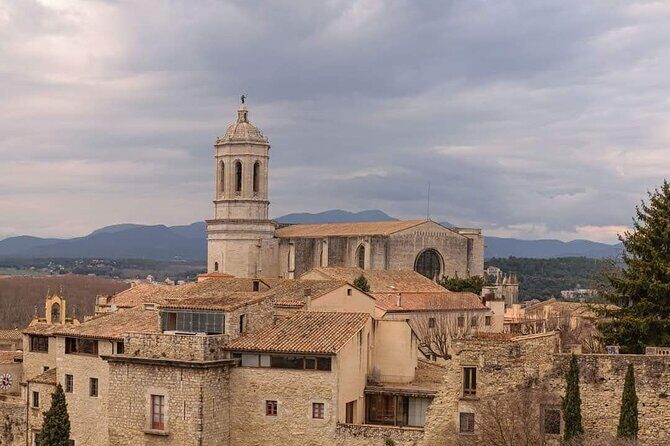
Next comes one of Girona’s most intriguing stops: the area often called the Arab Baths. The guide explains why they’re named that way, even if the label doesn’t match what you might expect. You’ll also get architectural and historical context, plus the curious reasoning behind the name.
This is a classic example of how local history is rarely tidy. The point isn’t to trick you—it’s to show you how names, memory, and cultural labels can stick long after the original details fade.
I like this kind of explanation because it makes the city feel alive. You’re not just collecting dates; you’re learning how the past gets interpreted and repackaged over time.
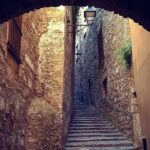
Jewish Quarter streets: beautiful lanes plus key context (without rushing into museums)
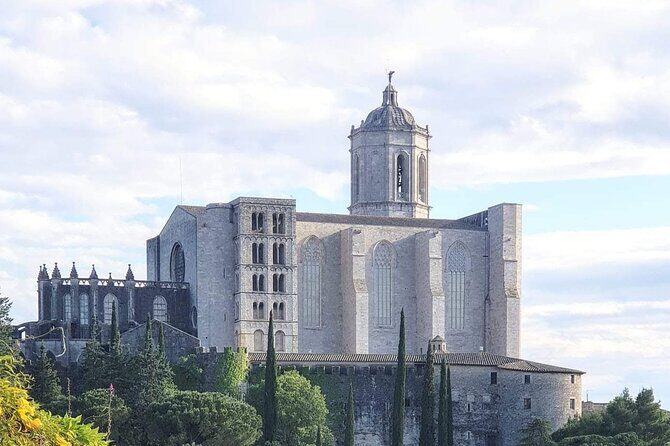
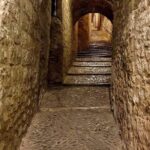
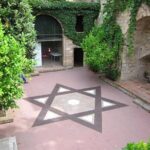
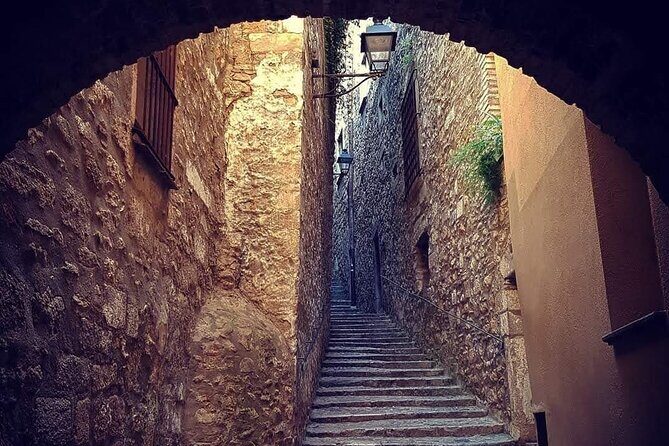
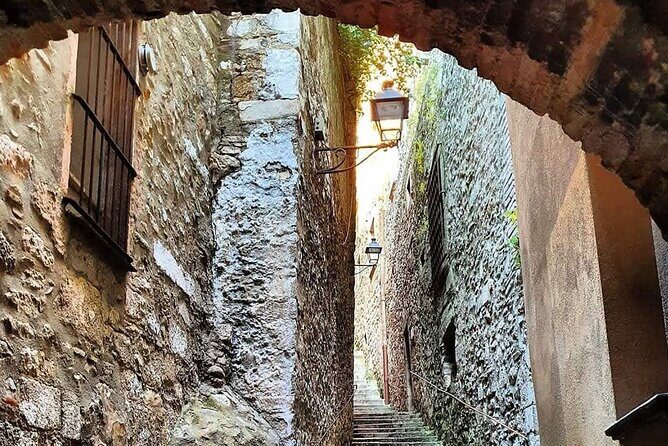
The Jewish Quarter is one of the best-preserved medieval areas you can see in Europe. You’ll walk through its corners and alleys while the guide gives you the bigger historical picture.
Importantly, the tour focuses on the area itself rather than museum time. The Jewish Museum isn’t visited here. That might sound like a loss if you love interior exhibits, but it’s also an advantage if your priority is atmosphere and orientation.
You’ll also learn that Girona had three synagogues in the Middle Ages. That detail helps you understand the layout and significance of what you’re seeing on the street level. Walking without museum stops keeps the route flowing, and your guide can tailor the story to the places you’re actively passing.
If you want museum artifacts afterward, you can add that on your own. The walk gives you the foundation; you decide how far down the rabbit hole you want to go.
You can also read our reviews of more food & drink experiences in Girona


Passeig de la Muralla: walking the walled-city line and climbing for views
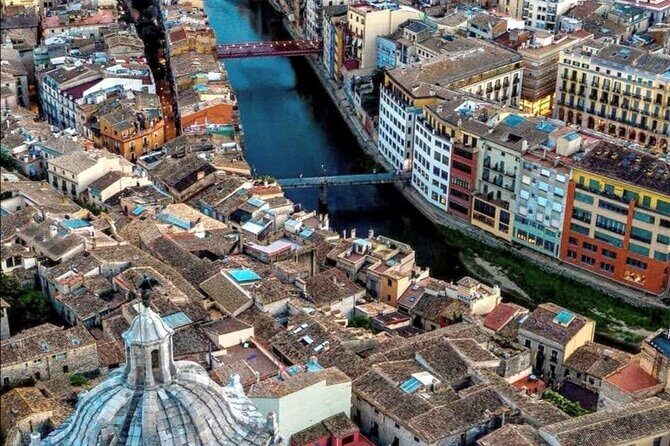
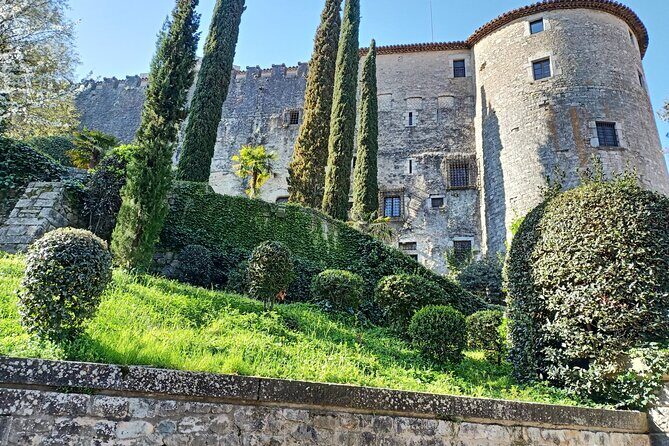
Girona is famous for its defensive walls, and this stop is your chance to see how they shape the city. You’ll walk along the Passeig de la Muralla, which highlights how different periods of construction played out over time.
Then you’ll climb one of the towers. Even without specifying which one, the payoff is clear: you’ll see Girona from above, with views over rooftops that you can’t get at street level.
This part is great for photos and for understanding scale. When you’re down in the streets, the old city can feel like a maze. From a tower, it clicks into place—you start to see the rhythm of neighborhoods, bridges, and where the river fits in.
One practical note: because you do climb, wear shoes that can handle stone steps. It’s not extreme, but it’s real walking on a real medieval structure.
Onyar River at Rambla de la Llibertad: bridges, reflections, and quick breaks
You’ll then shift to the river zone at Rambla de la Llibertad, walking alongside the Onyar River and the bridges that cross it. This is where Girona starts looking like the postcards—except you’ll understand the city around the view, not just the view alone.
The best benefit here is timing. You get a scenic break in the middle of your history route, without turning the tour into a long detour. The guide keeps you moving, but the river air gives your brain a reset.
If you’re the type who likes to pause and frame a shot, this is a good spot. The bridges and river curves make natural photo angles, and you’ll have context for what you’re capturing.
Pont de les Peixateries Velles: the Eiffel Bridge moment
Next up is the Eiffel Bridge—Pont de les Peixateries Velles. The big detail you’ll hear is that it was designed by Gustave Eiffel. That alone makes the bridge memorable, but your guide’s explanation is what turns it into more than trivia.
This is a surprising crossover: a very “European engineering” story inside an old medieval city. It’s a reminder that Girona didn’t stop evolving after the Middle Ages; it kept getting updated, rebuilt, and reinterpreted.
It’s also a stop that works well even if you’re not a bridge fanatic. The structure and the setting give you enough visual cues to appreciate it, and the guide fills in the how-and-why.
Plaça de la Independencia: arcades, terraces, and the city’s everyday energy
From there you’ll reach Plaça de la Independencia, a busy square in the old quarter. The focus here is on how the space functions now: its arcades, and the lively terraces where you can see local life play out.
This stop is less about monuments and more about reading the present-day Girona you’re walking through. It’s a useful balance after the more intense history segments, and it helps you understand why travelers and locals both keep coming back.
If you’re hungry later, this area is a good place to recognize once you start wandering on your own afterward. You’ll have “reference points,” which makes solo exploration easier.
Plaça dels Mercaders and Foment Tavern: where the tasting becomes the point
Then you land at Plaça dels Mercaders, at the Foment Tavern, for the tasting. This is where the tour transitions from history walk to local food experience.
The tasting is designed around a selection of products from the area: cheeses, sausages, and other seasonal bites. You’ll also get typical desserts like el Xuixo. The sweetness matters, because it balances all the savory portions without feeling like a separate event.
The drinks included are DO Empordà wine, and the alternative is beer. Water is included too, so you don’t have to ration for the whole evening.
This part is the reason the price feels reasonable. You’re not paying just for a walking guide. You’re paying for a guided route that ends with a real local tasting, with drinks, in a specific place connected to the old quarter.
What you’ll actually eat and drink (and what to watch for)
The tasting centers on classic Catalan favorites: cheeses and sausages, plus seasonal products that reflect what’s good locally right now. The desserts include el Xuixo, which is a great choice because it’s identifiable and distinctly Girona.
For drinks, you’ll choose between local DO Empordà wine and beer. DO Empordà is a key regional label, so you’re drinking something tied to the broader Empordà area rather than generic “tour wine.” If you’d rather skip alcohol, the tour data notes water is available.
Here’s the practical angle: eat at a comfortable pace during the tasting. This tour is active, and the food comes after walking. If you rush through the plates, you’ll miss the chance to compare flavors and decide what you want to seek out on your own later.
If you’re planning a post-tour meal, keep it lighter after the tasting. It’s not just a sip-and-snack stop; it’s a proper local set.
Price and value: is $103.03 worth it?
For about $103.03 per person, you’re getting a guided walk through major monumental zones plus a structured tasting with drinks. The time commitment is about 3 hours 30 minutes, and the group size is capped at 15, so you’re not trapped in a giant herd.
The “outside-only” format also affects value. You’re not paying for museum entries or monument tickets. Instead, you’re paying for story and orientation—your guide helps you interpret the city quickly, then you decide what to see later if you want deeper access.
The tasting is a big part of the deal. You’re not just getting one bite; you get a selection of cheeses, sausages, seasonal products, and desserts like el Xuixo, plus DO Empordà wine or beer.
So if your goal is a fast overview plus real local food, this is a strong value. If your goal is maximum museum time and interior sights, you’ll likely want additional self-guided stops.
Who should book this Girona tour (and who might skip it)
This tour is best for you if you:
- Want a history-and-gastronomy blend instead of a pure museum day
- Enjoy walking between neighborhoods and learning what you’re seeing
- Like food that’s clearly local, not generic tapas-for-tourists
- Want a guide who can explain legends and architectural quirks in plain language
It may be less ideal if you:
- Hate walking or want minimal steps
- Only care about interior access to monuments and museums
- Prefer food experiences that are strictly restaurant-style rather than tasting-style
In short, it’s made for people who like to connect dots—between architecture, legends, river city life, and what locals actually eat.
Practical tips so you get the most out of it
I’d treat this as a “wear your walking shoes and pace yourself” kind of day. The route is compact but active, and you’ll spend plenty of time on foot between the stops.
Because the tour depends on good weather, plan for the possibility of schedule changes. If the experience can’t run due to poor weather, you’ll be offered a different date or a full refund.
Bring water or plan to use the bottled water included with the tasting. It helps, especially because you’ll be mixing walking and eating.
For the best photos, aim to be ready when you reach the Onyar River and bridge areas. That’s where you’ll get the views that make Girona look instantly recognizable.
Finally, if you’re the type who wants to continue exploring after the tasting, you’ll be in a great location. You’ll have the old quarter rhythm in your head, and you’ll know what kind of streets to follow next.
Should you book this Girona history and gastronomy tour?
If you want a well-paced Girona overview that ends with a real local tasting, I think this is a smart booking. The biggest win is the combination: the guide gives context for the major sites you pass, then you get DO Empordà wine or beer with cheeses, sausages, el Xuixo, and seasonal bites.
Book it if you’re visiting for the first time and want to get oriented quickly. Skip it only if you’re mainly chasing interior monument entry or you don’t do well with a steady walking schedule.
FAQ
How long is the Girona history and gastronomy walking tour with tasting?
It lasts about 3 hours 30 minutes.
What’s included in the tasting at the end?
You’ll taste local products such as cheeses, sausages, typical desserts including el Xuixo, and seasonal items. Drinks included are DO Empordà wine or beer, plus bottled water.
Do you enter monuments or museums during the tour?
No. The tour explains monuments from the outside. It also does not include entry to the Jewish Museum.
What sights will we see during the walk?
You’ll see areas around Plaça de Sant Feliu, El Cul de la Lleona, the Jewish Quarter, the walls with a tower climb, Rambla de la Llibertad along the Onyar River and bridges, the Eiffel Bridge (Pont de les Peixateries Velles), and Plaça de la Independencia before the tasting at Plaça dels Mercaders.
What languages is the guide available in?
The local guide is provided in English and Spanish.
How big is the group?
The tour has a maximum of 15 travelers.
What happens if the weather is bad?
The tour requires good weather. If it’s canceled due to poor weather, you’ll be offered a different date or a full refund.