REVIEW · GIRONA
Girona History, Legends, and Food Walking Tour with food tasting
Book on Viator →Operated by Girona Explorers · Bookable on Viator
Old streets in Girona come with stories.
This history-and-food walk threads you through the compact Old City at an easy pace, with a guide who mixes legends, humor, and local details (Marc and Juan Marco are just two of the names you might hear). It’s a smart way to get oriented fast, especially if you want to understand why places feel the way they do.
I really like two things about this tour. First, it’s tailored to the Old Town’s tight layout, so the route makes sense on foot rather than turning into a bus ride with a quick photo stop. Second, the included tasting is genuinely part of the experience: you’ll finish with Xuixo pastry and ratafia digestif at a café.
One consideration: it’s a walking tour that asks for moderate physical fitness, and it depends on good weather. If rain is an issue, you’ll want a little flexibility in your plans.
Compact Old Town route you can actually follow
You won’t spend the whole tour “finding the tour.” The stops stay close together around the city’s oldest lanes and viewpoints.
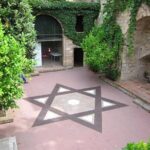
Orientation built in, especially around the Jewish Quarter
You’ll get a mental map of the maze-like Barri Vell area, with context that makes the streets easier to navigate after the tour.
Top photo spots, from Pont de Pedra to the Eiffel Bridge
Expect river views, postcard steps, and the famous bridge area—all timed so you’re not rushing.
Food tasting that’s included, not an optional add-on
You get local snacks (Xuixo and ratafia) and time to slow down instead of just collecting sips and bites.
Small group size keeps it personal
With a maximum of 15 people, the guide can keep the pace, answer questions, and keep everyone engaged.
In This Review
- Girona in Two Hours: What This Walk Is Really For
- Barri Vell De Girona: Getting Your Bearings in the Old City
- Pont De Pedra and Rambla de la Llibertad: River Views and an Old Market Street
- Pont de Pedra
- Rambla de la Llibertad
- Pujada de Sant Domenec: Romantic Steps and a Game of Thrones Connection
- Girona Cathedral and Església de Sant Feliu: Big Symbols and Deep Legends
- Girona Cathedral (outside viewing)
- Església de Sant Feliu
- Pont de les Peixateries Velles (Eiffel Bridge) and the Food Stop That Makes It Complete
- Included tasting: Xuixo and ratafia
- Why the Guides’ Style Matters (Marc, John Marc, Juan Marco, Jean, Jonny)
- Price and Value for $38.71: What You’re Paying For
- Who This Tour Suits Best—and Who Might Skip It
- Should You Book This Girona History, Legends, and Food Walk?
- FAQ
- Where does the tour start?
- What time does the tour begin?
- How long is the walking tour?
- Is the tour offered in English?
- What’s included in the price?
- How big is the group?
- Do I need to be in good physical shape?
- What happens if weather is bad?
- Is there free cancellation?
Girona in Two Hours: What This Walk Is Really For
This is the kind of tour that works best on day one—or at least early in your Girona time. The goal isn’t to show you every corner. It’s to give you the city’s “why” and “where,” so the rest of your visit feels easier.
You’ll meet at Pl. de la Independència, 19, start at 11:00 am, and walk for about two hours. The small group size (15 max) matters more than it sounds. In Girona, the streets are tight and the turns come quickly. A big group can turn a calm stroll into a moving bottleneck. Here, it stays manageable.
One more practical note: you should bring comfortable shoes. Even if you’re not tackling major climbs, the route includes steps and old-street unevenness. The company notes moderate physical fitness for a reason. And yes, good weather is required—so if your Girona dates look iffy, plan to keep a little margin.
If you’re the type of traveler who likes understanding what you’re looking at—architecture, city legends, religious sites, street layout—this format will feel like a shortcut. You’ll finish with a clearer sense of the Old Town’s rhythm and a list of places worth revisiting.
Barri Vell De Girona: Getting Your Bearings in the Old City
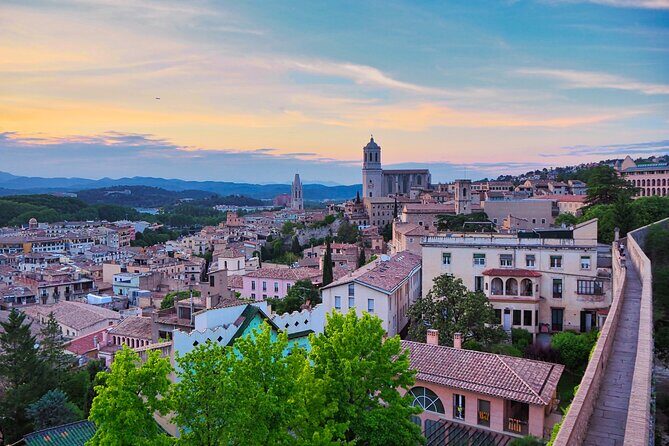
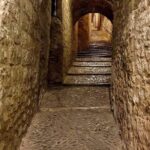
The tour begins where it should: in Barri Vell de Girona, the Old Town area that feels like a living maze. The big value here is orientation. Girona’s old lanes don’t follow a simple grid, and it’s easy to wander without learning what’s important.
Instead of a generic walk, the guide points out story behind the stone. You’ll hear about how the city developed and why certain neighborhoods shaped daily life. One standout benefit from this stop is that it sets you up for later context—especially around the area linked to the Jewish Quarter. Once you understand the street logic, those winding turns stop feeling random.
This first stretch also hits a sweet spot: it’s not too long, so you don’t feel spent before you even get to the views. It’s enough time to learn the basics and start noticing details on your own.
My practical tip: while you’re listening, also look up. Girona rewards that. Old buildings, small markers, and the way streets “bend” are easier to understand when you’re tracking the vertical lines—not only the sidewalk.
You can also read our reviews of more walking tours in Girona
Pont De Pedra and Rambla de la Llibertad: River Views and an Old Market Street
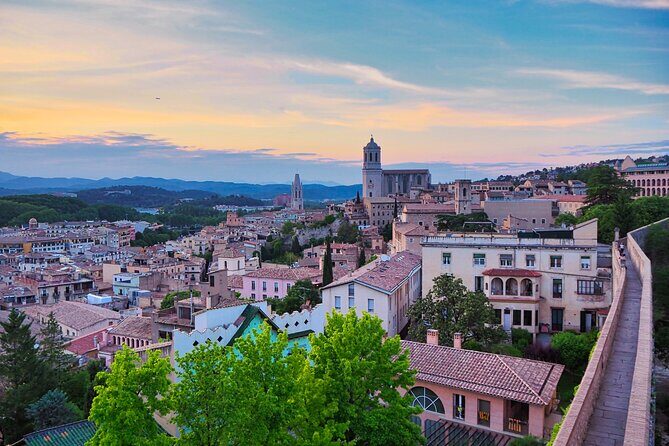
Next comes the transition from medieval lanes to a bigger visual stage.
Pont de Pedra
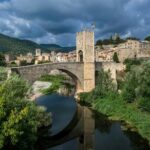
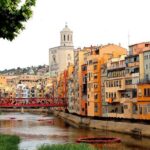
You’ll cross Pont de Pedra, one of Girona’s oldest bridges, with views over the river and the houses along the water. This is a great moment for photos, but it’s also a mental reset. After narrow streets, the river view helps you grasp how the city sits in layers.
The time here is short—about 15 minutes—so the guide uses it well. You’ll get the “look” and the context without turning it into a long detour.
Rambla de la Llibertad
Then you head to Rambla de la Llibertad, a main pedestrian street where the city feels more open and easy to breathe. What makes it interesting isn’t just the walking. It’s the historical role: you’ll learn that it was once a market place.
That matters because today’s Rambla reads like a promenade, but once you know it used to be tied to trade and daily commerce, the street feels more alive. It’s an easy stop to enjoy even if you’re traveling with mixed interests—people who love food will connect it to where meals came from, while history fans will enjoy the “this used to be the hub” explanation.
Pujada de Sant Domenec: Romantic Steps and a Game of Thrones Connection
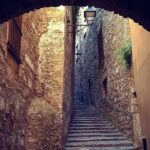
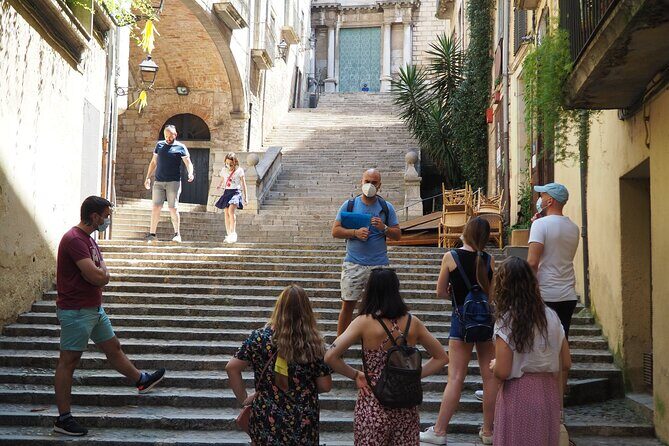
Now for a stop that’s built for both your eyes and your imagination: Pujada de Sant Domenec.
You’ll be in one of Girona’s most romantic settings, and it also has a Game of Thrones connection. Even if you’re not a mega-fan, this is a fun way to understand how Girona’s streets can double as dramatic film locations. The city already has strong “set design” built in—stone, steps, and the angle of the buildings.
This is also where you’ll feel the walking tour’s real pace. A “pujada” is part of the terrain story, so wear shoes you trust. You want grip and comfort, especially if the ground is slick or uneven.
Practical approach: treat this stop like a mini-photo session with a bit of listening time. Look for the viewpoints the guide points out, then give yourself 2 minutes to just stand and take it in. The romantic look doesn’t come from one perfect frame—it comes from the street perspective.
You can also read our reviews of more food & drink experiences in Girona


Girona Cathedral and Església de Sant Feliu: Big Symbols and Deep Legends
The tour then shifts toward two major religious landmarks—one famous for architecture, the other for mystery.
Girona Cathedral (outside viewing)
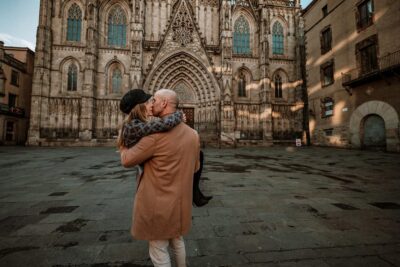
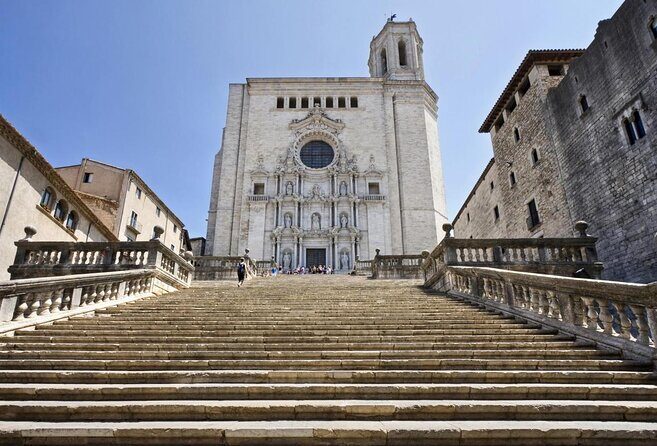
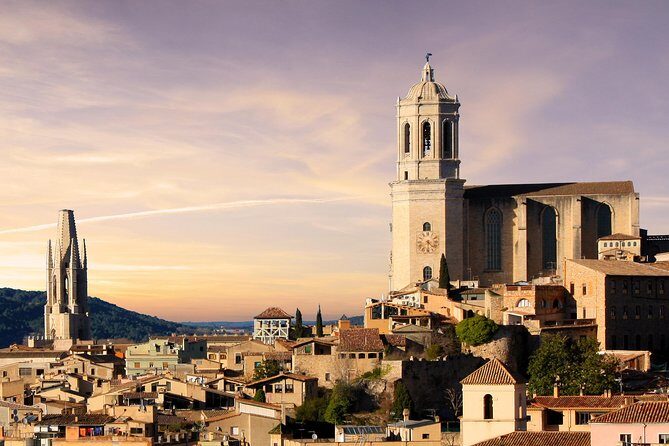
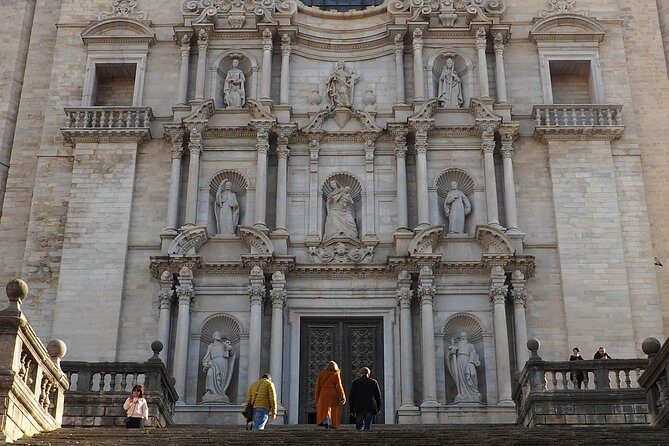
You’ll see the Girona Cathedral from the outside, and that exterior is a whole lesson on architectural layers. The guide explains that it includes three different architectural styles, plus a standout claim: it has the widest Gothic nave in the world.
Even though you’re not going inside on this route, the outside viewing still pays off. Cathedral exteriors give you a map of time periods at once. If you’ve ever wondered why churches feel like they were built over decades or centuries, this stop gives that answer without getting technical.
Església de Sant Feliu
Then you’ll move to Església de Sant Feliu, described as the city’s second most important temple, filled with mysteries and legends.
This is a great contrast to the cathedral. Instead of the focus being measurements and styles, it’s story. Girona has a habit of turning religious sites into living places—places where history feels personal, not museum-dry.
My practical tip: if you’re someone who gets museum-fatigue, don’t worry. The guide’s tone and the short stop length keep it moving. You’ll walk away with real context and a few legend hooks you can follow up on later.
Pont de les Peixateries Velles (Eiffel Bridge) and the Food Stop That Makes It Complete
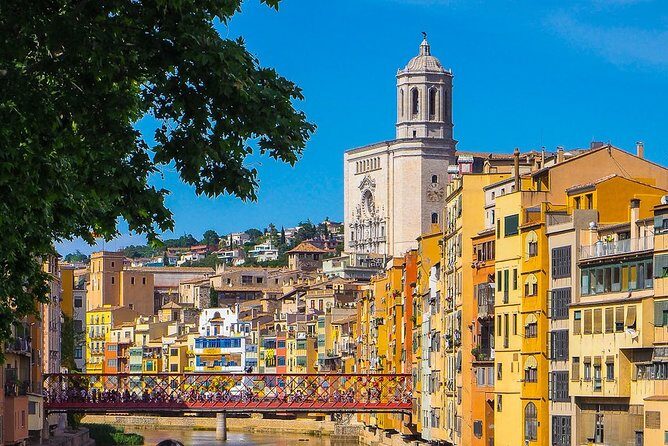
The final sightseeing moment is the famous Eiffel Bridge, officially Pont de les Peixateries Velles. The name itself signals something old and practical, and the setting is a big part of its charm.
You’ll cross it for views and a sense of place, and there’s an extra detail that ties into the food story: it’s next to a world-famous ice-cream connection. That’s not just trivia. It means the area is set up for enjoying something right after the walk.
And that’s exactly what this tour finishes with.
Included tasting: Xuixo and ratafia
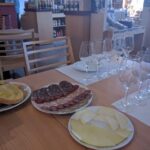
Your snacks are included—Xuixo and ratafia—served at the café stop linked to the route. This is one of the tour’s strongest value points because the food isn’t a random add-on at the end. It’s part of the rhythm: walk, learn, pause, taste.
- Xuixo gives you a sweet taste of local pastry culture.
- Ratafia is a digestif, so it feels like a local “wrap-up” drink rather than a soda-style drink that could fit anywhere.
I like that this tasting stop also gives your guide space to share practical suggestions for what to do next—especially where to eat and what to check out around town. In fact, some guides add extra pointers beyond the route, like recommendations that can lead you to follow-up walks such as the Roman walls area.
Practical approach: don’t treat this as a quick bite. Take the extra minutes. It’s the payoff for the walking and listening, and it’s when Girona starts to feel like your kind of place.
Why the Guides’ Style Matters (Marc, John Marc, Juan Marco, Jean, Jonny)
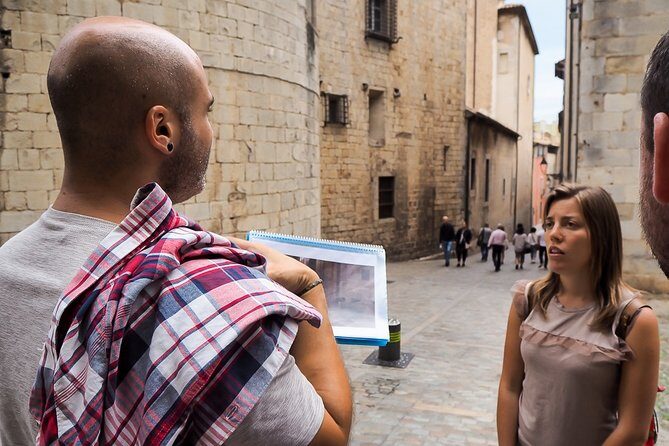
A tour lives or dies by its guide voice. This one clearly leans into storytelling with humor and a strong love for the city. You may hear guides like Marc, John Marc, Juan Marco, Jean, or Jonny/Juan.
What’s consistently valuable is how the guide keeps the information moving and makes it feel tied to real street corners. Instead of reciting dates, the guide connects legends and history to what you’re looking at right now. That’s why the tour stays engaging even when the buildings look similar from a distance.
The other guide talent is pacing. The route is short on paper, but the guide turns those short 15-minute segments into meaningful moments. You don’t just pass landmarks; you learn how to see them.
And there’s a practical bonus: the guide usually shares good on-the-ground recommendations—bars and restaurants—so you can turn the orientation into actual plans for later meals.
Price and Value for $38.71: What You’re Paying For
At $38.71 per person for around two hours, you’re not paying for a long bus transfer or major paid-entry attractions. You’re paying for a guided route that gives you:
- Local guide time throughout multiple key stops
- Local taxes included
- Included tasting (Xuixo and ratafia)
- Short, efficient photo/view moments built into the city’s compact layout
The biggest value piece, though, is how the tour design fits Girona. When you’re walking a city like this, time and attention are the expensive parts. A good local guide helps you avoid wandering without context. They also help you spot the “why” behind the maze—so your self-guided wandering afterward feels smarter.
Also, there’s no stated exclusions, which keeps it straightforward. If you like a clean, simple package, this is that.
Who This Tour Suits Best—and Who Might Skip It
This walking tour is a strong fit if:
- You want fast orientation in Girona’s Old Town
- You like legends and city stories alongside architecture
- You enjoy a food tasting that’s genuinely tied to the route
- You prefer small groups (15 max) so the guide can keep control of pace
It may be less ideal if:
- You don’t enjoy walking or you struggle with uneven old streets
- You need lots of indoor time at major sites (this focuses on outside viewing for the cathedral)
- You’re traveling with a hard weather plan, since good weather is required
For families, mixed-age groups, and first-time Girona visitors, it’s usually a good start because it balances “see it” with “understand it.”
Should You Book This Girona History, Legends, and Food Walk?
If you’re coming to Girona for the streets, the stories, and the food stops, I’d book it. This is a practical way to turn a confusing old-city layout into something you can navigate and enjoy. The added bonus is that the included Xuixo and ratafia make the tour feel complete instead of ending on a “good luck, bye” note.
Skip it only if you know you won’t enjoy walking for two hours, or if your dates are so locked that you can’t handle weather changes. Otherwise, this is the kind of tour that makes the rest of your trip click.
FAQ
Where does the tour start?
It starts at Pl. de la Independència, 19, 17001 Girona, Spain.
What time does the tour begin?
The listed start time is 11:00 am.
How long is the walking tour?
The duration is about 2 hours.
Is the tour offered in English?
Yes. The tour is offered in English.
What’s included in the price?
The price includes local taxes, a local guide, and snacks: Xuixo and ratafia.
How big is the group?
The tour has a maximum of 15 travelers.
Do I need to be in good physical shape?
The tour notes moderate physical fitness requirements, since it’s a walking route.
What happens if weather is bad?
The experience requires good weather. If it’s canceled due to poor weather, you’ll be offered a different date or a full refund.
Is there free cancellation?
Yes, you can cancel for a full refund up to 24 hours in advance of the experience start time.