REVIEW · GIRONA
Medieval Three Villages Small Group Day Trip from Barcelona
Book on Viator →Operated by Explore Catalunya · Bookable on Viator
Three villages, one long medieval mood.
I like the small-group feel (up to 20) and the mix of guided stops with real free time to wander. The best part is that you get both the architecture details and the slower, picturesque moments—especially in Rupit. One drawback: it is a long day (about 10.5 hours) with uneven walking, and it can feel colder than you expect once you get up into the hills.
This trip is run from central Barcelona (meet near Palau de la Música) and returns near Arc de Triomf. You travel by air-conditioned vehicle, and the whole experience runs in English with a local guide who keeps the day moving at a human pace. If you’re picking one day trip outside Barcelona to see medieval Catalonia without the chaos, this is a strong contender.
In This Review
- Key points before you go
- Why these three villages work so well together
- Price and logistics: what $119.72 gets you
- Starting near Palau de la Música: easy meeting, clear start
- Besalú at street level: Romanesque bridge and mikveh details
- Castellfollit de la Roca: the basalt-cliff “blink and you’ll miss it” moment
- Rupit: cobblestones, a hanging bridge, and your main lunch window
- Tavertet and the cliff views over Pantà de Sau
- The return ride: El Montseny UNESCO scenery break
- Guides and small-group pacing: why people rate this so high
- What to pack and how to set your expectations for the day
- Who this tour suits best (and who should think twice)
- Should you book this medieval three-villages day trip?
- FAQ
- What’s the duration of the Medieval Three Villages day trip from Barcelona?
- Is the tour in English?
- What’s included in the price?
- Is lunch included?
- Where do I meet and where do I finish?
- How big is the group?
Key points before you go
- Max 20 people means you’re not lost in a crowd when the guide is talking.
- Besalú + Jewish baths (mikveh) is a rare stop for many Barcelona visitors.
- Rupit gets the most freedom: cobblestones, the hanging bridge, lunch on your own.
- Tavertet cliffs and Pantà de Sau viewpoints deliver big scenery with a short walk.
- El Montseny UNESCO area on the ride back adds a nature break without extra time commitment.
- Guides with real personality: people have praised guides like Sergio and Rod for clear explanations, and Berta/Carmella/Nuria/Xavi for making the day feel smooth.
Why these three villages work so well together
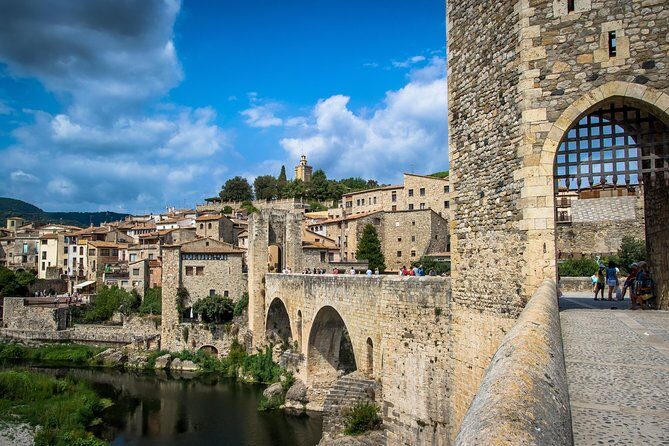
A lot of Barcelona day trips aim for “a quick photo at each place.” This one does something smarter: it groups towns that each show a different side of medieval Catalonia.
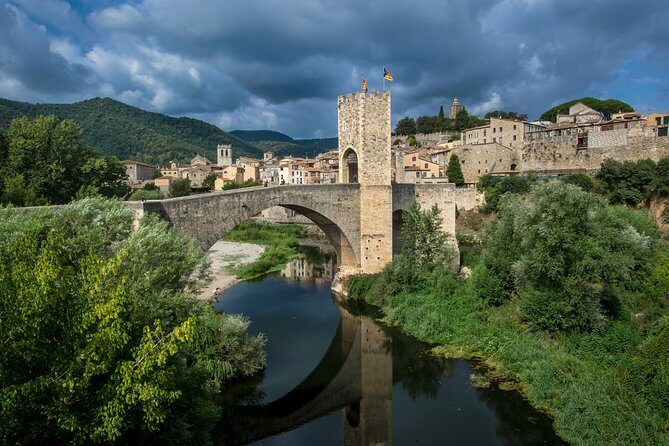
Besalú gives you the heavyweight medieval centerpiece—stone streets, the Romanesque bridge, and the Jewish quarter-era sites like the mikveh. Rupit is your slow village moment, with the kind of cobblestone lanes that make you want to stroll instead of rush. Tavertet finishes with the view-heavy side of the story: a smaller village, but perfect for seeing how people built towns right against the cliffs overlooking the lake.
The other thing I like: the guide handles the history while you’re still fresh in the morning, then lets you breathe in the afternoons. That rhythm matters on a long day.
You can also read our reviews of more tours and experiences in Girona

Price and logistics: what $119.72 gets you
At about $119.72 per person, you’re paying for four big things: a guided day in English, air-conditioned transport, a local guide, and a tight route that gets you out of Barcelona into Girona province and back.
You are not paying for hotel pickup or drop-off. You do meet at a fixed spot near Palau de la Música, and you finish back near Arc de Triomf. That’s normal for day trips, but it means you should build a little time buffer to get there on foot, by metro, or taxi.
Also note the operational detail: you’ll have a mobile ticket, which is convenient. This kind of smooth check-in matters more than people think when you’re traveling in the morning and trying to start on time.
For value, I look at time allocation. You get about 2 hours in Besalú, around 2 hours in Rupit, and a shorter stop in Tavertet (plus driving time). Lunch is on your own. When you budget lunch (and snacks if you get hungry), the day still stacks up well because you’re covering multiple major sites without needing to plan transportation.
Starting near Palau de la Música: easy meeting, clear start
The day begins at Explore Catalunya, right by Palau de la Música in central Barcelona. You meet around 8:15am, with a short pre-departure window to use restrooms or grab a quick coffee if you want. The vehicle pulls out around 8:30am.
This timing is practical. It gets you leaving the city before things get too crowded, and it also means Besalú happens while you still have morning energy. If you’re the type who likes to get oriented fast—great. The guide gives expectations before you drive off, and that helps you relax into the day.
One small practical note from the experience style: if you are sensitive to audio, aim to sit where you can hear the guide clearly. One account mentioned a microphone issue on a past trip, and it was harder for people toward the back. You can prevent that stress by choosing a seat where you’ll naturally hear.
Besalú at street level: Romanesque bridge and mikveh details
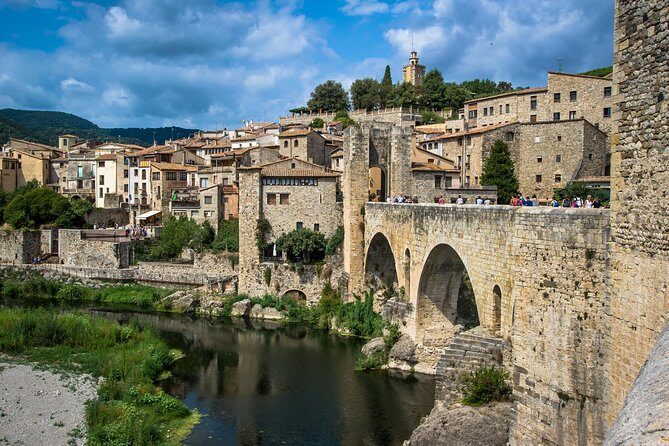
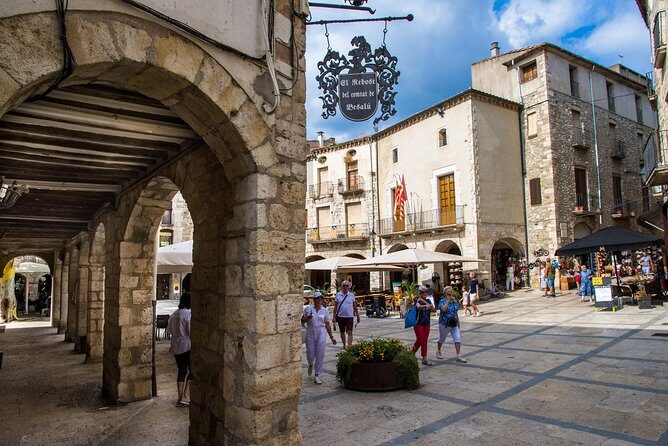
Besalú is the first true medieval immersion. You’ll arrive around 10:00am and spend about 2 hours in town.
What to expect: a walking tour through narrow medieval-era streets, with stops that highlight architecture and local cultural layers. The big standouts are the 12th-century Romanesque bridge and the 11th-century Monastery of St. Pere area. Then comes the part many people don’t expect: the Jewish baths (mikveh) from the 12th century, plus a medieval synagogue stop.
Why this matters for you: Barcelona is great, but it can sometimes feel more Catalan-modern than medieval daily life. Besalú feels closer to how communities lived when religion, trade, and local governance were packed into the same stone streets.
You also get free time inside that stop. Use it. Browse slowly. Find a quiet corner café. Or just do the thing visitors often forget to do: stand still for a minute and let the town’s scale sink in. This is one of those places where you don’t need to chase every angle.
Possible drawback: if you want lots of time for shopping, one review-style note was that Basalú could feel light on shopping time. Plan to focus more on streets and architecture than on buying gifts.
Castellfollit de la Roca: the basalt-cliff “blink and you’ll miss it” moment
On the way between Besalú and Rupit, you’ll pass Castellfollit de la Roca. This is a tiny cliff town built along a basalt precipice, and it’s basically the perfect quick palate cleanser.
You’re not spending a full walking block here, but you do get the visual hit: a minuscule community perched on dramatic rock. Even if it feels like a drive-by moment, it adds variety to the day and helps explain why this region’s settlements look the way they do.
If you like geology or you simply enjoy dramatic views, this stop is a nice proof that the medieval story is also a “how people adapted to land” story.




Rupit: cobblestones, a hanging bridge, and your main lunch window
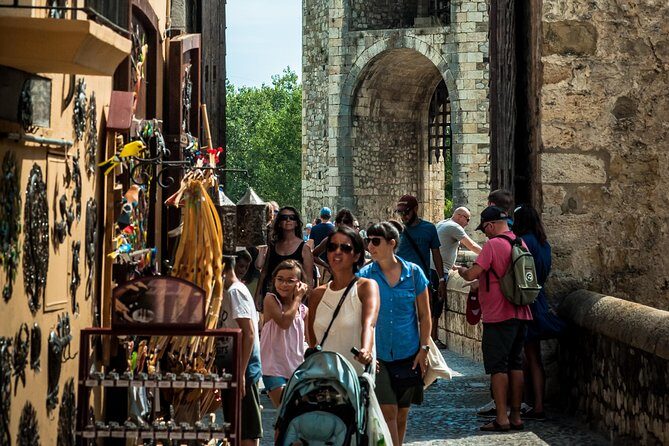
Rupit is where the day slows down the most. You’ll arrive around 1:00pm and get roughly 2 hours there.
Expect a village built for strolling: cobblestone streets, 16th-century houses, and the signature hanging wooden bridge. The tour also includes a visit to Church of Sant Miquel (baroque era). After that, you’re on your own for much of the experience.
Lunch is on your own, and this is the part where you’ll want to plan a little. People have said restaurants can be full, so don’t assume you’ll walk in anywhere instantly. If you can, check where you want to eat as soon as you arrive, or ask your guide for a recommendation early in the Rupit portion. Guides like Sergio and others have been praised for helping with restaurant suggestions and reservations.
After lunch, you have choices. You can go up toward the ruins of the Castle of Rupit on a rocky peak if you want more walking and views. Or you can keep it easy with a relaxed village wander and maybe a picnic-style option if that fits your pace.
One practical reality: Rupit is scenic, but it isn’t a flat stroll. Wear shoes you’d happily wear on cobblestones. If you thought this would be all gentle strolls, adjust that expectation.
Tavertet and the cliff views over Pantà de Sau
Tavertet is your final medieval village stop. You’ll reach it around 4:00pm, with about 30 minutes to explore, plus time for a short walk to viewpoints above Pantà de Sau lake.
This is the “views first, details second” stop. You’ll hear a few points from your guide about the village and then visit the 11th-century Romanesque Church of Sant Cristòfol. Tavertet is also described as having 48 preserved homes from the 16th and 17th centuries, which means the town has an unusually intact feel for a place this small.
Even with the short time window, you should aim to do two things:
- Walk out to where you can see the lake and valley.
- Take a moment to look back toward town. It helps you understand why these cliff villages feel so self-contained.
If you are chasing photo angles, go early in your Tavertet window. Late in the afternoon, light can shift quickly and your patience can run out faster than your camera battery.
The return ride: El Montseny UNESCO scenery break
After Tavertet, you drive back to Barcelona and the route includes countryside scenery through green forest areas tied to the UNESCO Man and Biosphere-listed El Montseny natural park.
The timing is usually comfortable: you’ll be headed back around 5:30pm, and you’ll arrive around 6:45pm near Arc de Triomf. Your guide will help you figure out the easiest way to get back to your hotel—metro or taxi—and may suggest dinner options.
Why this matters: you’re not just stuck on a bus for hours at the end. The scenery break makes the travel time feel part of the day, not dead time.
Guides and small-group pacing: why people rate this so high
This tour’s rating comes from the feeling of being cared for, not just transported. People have praised guides by name—Sergio, Rod, Berta, Carmella, Nuria, Xavi, and others. What shows up across the feedback is consistent: clear explanations, thoughtful timing, and a guide who helps you stay flexible when conditions change.
For example, one note praised Sergio for planning around a tricky weather forecast. Another praised Rod for strong explanations of Catalan culture. Others highlighted guides acting as both driver and tour leader, with patience and helpful restaurant suggestions.
Here’s what you should take from that: this is not the kind of tour where you get a script and then leave you stranded. If you ask a question, you’ll usually get an answer that helps you enjoy the day more.
Still, keep expectations realistic. It’s a long day with multiple stops, so you won’t get hours of guided narration at each village. The value is in the mix: enough guide time to understand what you’re seeing, then enough free time to enjoy it.
What to pack and how to set your expectations for the day
A few practical tips matter on this route.
- Dress warm. One review specifically called out cold due to higher elevations, plus rain possibility. Bring a jacket even if Barcelona feels mild.
- Wear grippy shoes. Cobblestones and uneven stone are part of the experience.
- Bring a small umbrella if the weather looks iffy. Rain can happen in the hills.
- Budget for lunch in Rupit. Food and drinks aren’t included unless specified, and lunch spots can fill up.
Also set the mental model: this is a medieval village tour with views and short climbs, not a museum marathon. You’ll get a lot more satisfaction if you enjoy wandering as part of the plan.
Who this tour suits best (and who should think twice)
This fits you if:
- You want medieval Catalonia outside Barcelona without renting a car.
- You like architecture details but also want time to roam.
- You prefer small groups and clear guide leadership.
You might think twice if:
- You hate walking on cobblestones and stairs.
- You want a full day in one village rather than multiple towns.
- You’re hoping for lunch included or guaranteed availability at specific restaurants.
One more nuance: a couple of people mentioned they wished the order ended differently, because Rupit is often the most memorable stop while the final village is shorter. That doesn’t change the quality, but it does affect how you feel at the end. If you want maximum time in the biggest-feeling village, plan to linger in Rupit during your scheduled free window.
Should you book this medieval three-villages day trip?
I’d book it if your goal is one strong day outside Barcelona that combines medieval towns, a rare stop in the mikveh/jewish historical context, and real scenery time—without driving yourself.
It’s also a good choice if you want value from timing: the day is long enough to be meaningful, yet structured enough that you won’t feel lost. The small-group limit and the repeated praise for named guides like Sergio, Rod, and Berta are good signals that you’ll get both direction and flexibility.
If you hate cold weather and uneven walking, bring layers and adjust expectations. If you’re willing to dress for the hills and plan for lunch, this is the kind of day trip that makes the Barcelona stay feel bigger.
FAQ
What’s the duration of the Medieval Three Villages day trip from Barcelona?
The tour runs about 10 hours 30 minutes.
Is the tour in English?
Yes. The experience operates in English.
What’s included in the price?
Included are a local guide and an air-conditioned vehicle.
Is lunch included?
No. Food and drinks are not included unless specified, so lunch in Rupit is at your own expense.
Where do I meet and where do I finish?
You meet at Explore Catalunya, C/ Palau de la Música, 1, Ciutat Vella (near Palau de la Música) and you return to Arc de Triomf, Ciutat Vella.
How big is the group?
The tour has a maximum of 20 travelers, and it’s described as small group.