REVIEW · BARCELONA
From Barcelona: Private Half-Day Tarragona Tour with Pickup
Book on GetYourGuide →Operated by In Out Barcelona Tours · Bookable on GetYourGuide
Roman Tarragona fits in a half day. You start with hotel pickup and a guide, then walk through some of Spain’s best-preserved Roman remains—walls, forum remnants, and an amphitheater right by the Mediterranean. I especially like the Aquaduct de les Ferreres stop for sheer scale, and the way the tour ties together the Roman, medieval, and modern layers of the city. One watch-out: with a 5-hour schedule, you may feel the pace is brisk, so if the Roman Forum is your main target, you’ll want to make sure it’s part of your route on the day.
The payoff is that this feels structured without feeling like a checklist. You get a private ride in an air-conditioned minivan, a live English/Spanish guide, and tickets included for the Amphitheatre and Circus (plus a separate entrance to help you skip the line). Bring comfy shoes, keep large bags out of the van, and you’ll have a smoother time enjoying Tarragona’s big “wow” moments.
In This Review
- Key highlights worth knowing before you go
- Why Tarragona Is a Smart Half-Day From Barcelona
- Private Pickup in Barcelona: The Part That Sets the Tone
- Aqueduct de les Ferreres: Roman Engineering You Can Feel
- Roman City Walls and the Hidden Circus Under Later Buildings
- Roman Forum Tarragona: Why the Remnants Matter
- The Amphitheater by the Mediterranean: A Sea-Edge “Wow”
- Market Stop and Cathedral Pass-By: The City Beyond Rome
- Balcó del Mediterráneo and the Costa Dorada Drive
- Price and Value: Is $271 Actually Fair?
- How to Work With Your Guide (Without Getting Burned)
- Who This Tour Fits Best
- Should You Book This Tarragona Private Half-Day Tour?
- FAQ
- How long is the Tarragona private tour from Barcelona?
- What time does pickup happen in Barcelona?
- Is the tour private or shared?
- What’s included in the price?
- Which languages is the guide available in?
- Do we need to buy tickets for the amphitheater or circus?
- What should I bring and wear?
- Are luggage and large bags allowed?
Key highlights worth knowing before you go
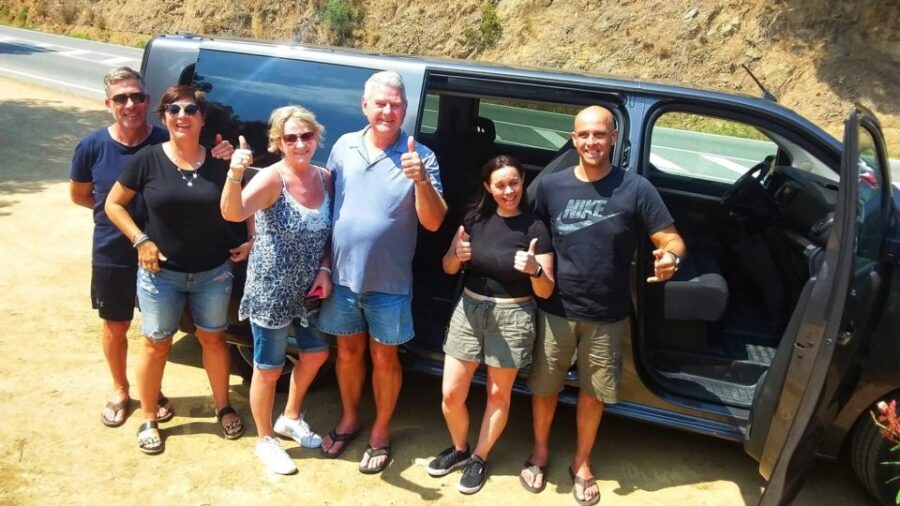
- Hotel pickup in a private minivan gets you out of Barcelona with less hassle than public transport
- Aquaduct de les Ferreres delivers a Roman engineering sight you can’t fake with photos
- Roman circus + city walls show how layers of time overlap in Tarragona
- Tickets included for the amphitheater and circus so you spend time sightseeing, not queuing
- Balcó del Mediterráneo gives you an iconic sea-and-beaches photo stop to close the day
Why Tarragona Is a Smart Half-Day From Barcelona
Tarragona is one of those places where the Roman story isn’t locked behind glass. It’s in the ground, in the street edges, and in the way buildings seem to grow around older bones. In a single morning/afternoon, you get a compact overview of how this city—part of the Roman world—kept evolving long after the empire.
What makes it especially good value for your time is the structure. You’re not left to plan routes, find entrances, and guess where the best viewpoints are. A guide helps you connect the dots: why the city was positioned the way it was, what you’re actually looking at, and what survived through the centuries.
And yes, Tarragona also delivers on scenery. The amphitheater sits by the coast, so even the “history” parts come with sea air and open views.
If you only have a few hours in the region, this tour’s biggest strength is efficiency without feeling totally rushed—though the schedule is still tight, so you’ll want to stay flexible.
You can also read our reviews of more private tours in Barcelona



Private Pickup in Barcelona: The Part That Sets the Tone
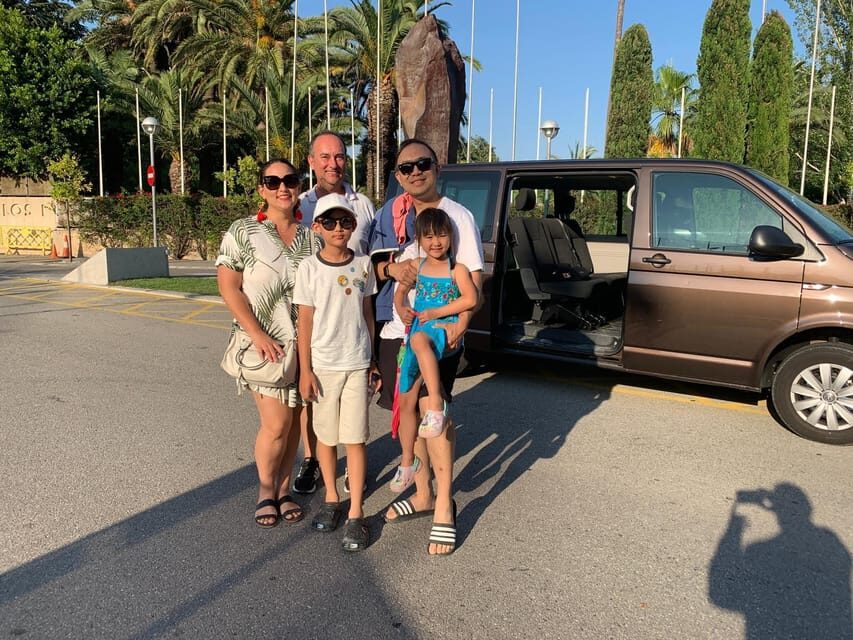
This tour is built around a private hotel pickup in an air-conditioned minivan between 8:00 AM and 9:00 AM. You get a message 24 hours before departure with your exact pickup time, plus the guide’s name and phone number. That matters more than it sounds: it reduces uncertainty when you’re trying to line up transport with your day.
The private setup also changes how you experience the city. You’re not funneling with large groups through timed entrances, and you’re more likely to get answers to specific questions. If you care about the Roman parts, you can ask follow-ups in real time instead of hoping a tour microphone reaches you.
One practical note: the tour doesn’t allow luggage or large bags. Plan for a small day bag only. If you’re the kind of traveler who likes packing a lot “just in case,” this is your reminder to travel light.
Aqueduct de les Ferreres: Roman Engineering You Can Feel
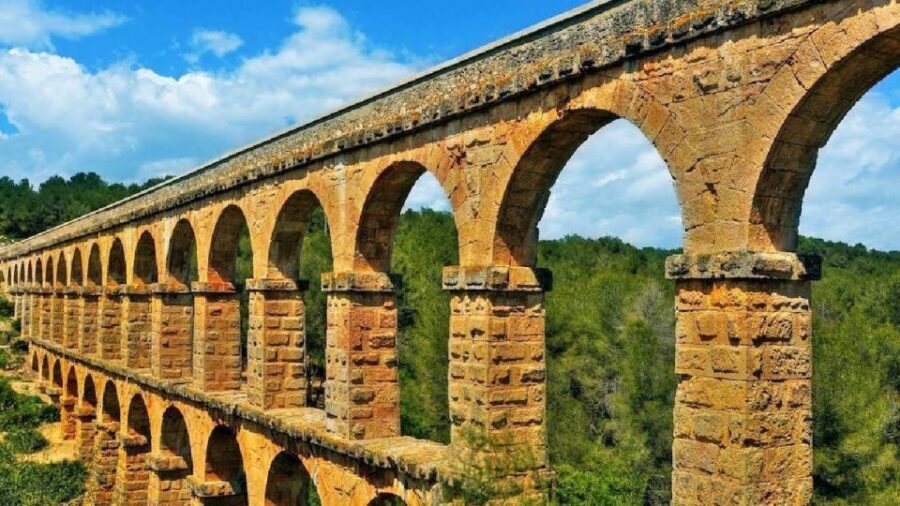
Your tour starts with Les Ferreres Aqueduct, and it’s a great place to begin because it sets the scale fast. Even if you don’t know Roman engineering, you can see the logic: stone arches carrying water across uneven terrain. It’s built for function, but it also ends up looking like something designed for drama.
You’ll do a sightseeing walk here, and that walking time is the point. Up close, you notice the rhythm of arches and how the structure holds up against modern surroundings. From farther viewpoints, you understand how it dominates the area—one of those “how is this still standing?” moments.
For photos, go early and keep your expectations real. This is a working outdoor site with changing light and crowds depending on the day. Comfortable shoes help because you’ll likely be moving on uneven ground.
If the rest of the tour is about ruins and city layers, the aqueduct is about a single idea carried out on a grand scale.
Roman City Walls and the Hidden Circus Under Later Buildings
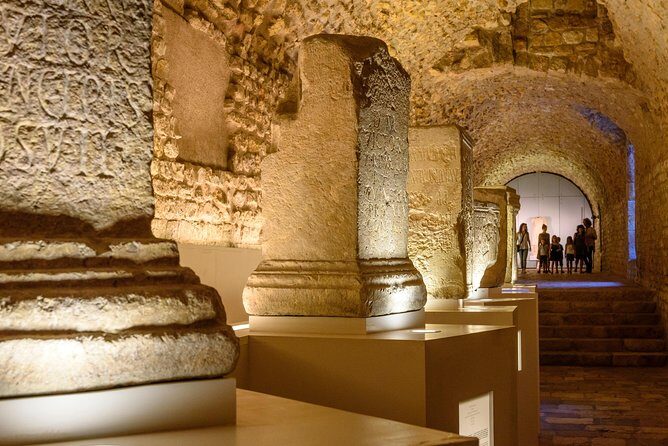
After the aqueduct, the tour shifts into the walking parts of old Tarragona. You’ll explore the ancient walls that once fortified the city—an important foundation for understanding why Tarragona mattered in its region. Seeing remains of walls changes your mental map. The city stops being “ruins in a park” and starts being a place with boundaries, defense, and control.
Then comes a clever contrast: you’ll visit one of the best-preserved Roman circuses in Europe, but it’s hidden beneath structures from the 19th century. That detail is a big deal. You’re not just looking at a Roman relic; you’re seeing how later generations built on top of it, instead of erasing everything.
A guide helps here because the layers can be confusing without context. You might recognize shapes as you walk, but you’ll appreciate it more when someone explains what the circus was used for and how the later buildings affect what you can see today.
This portion is a sweet spot for history lovers who also like a bit of “how do I read this place?” thinking.
Roman Forum Tarragona: Why the Remnants Matter
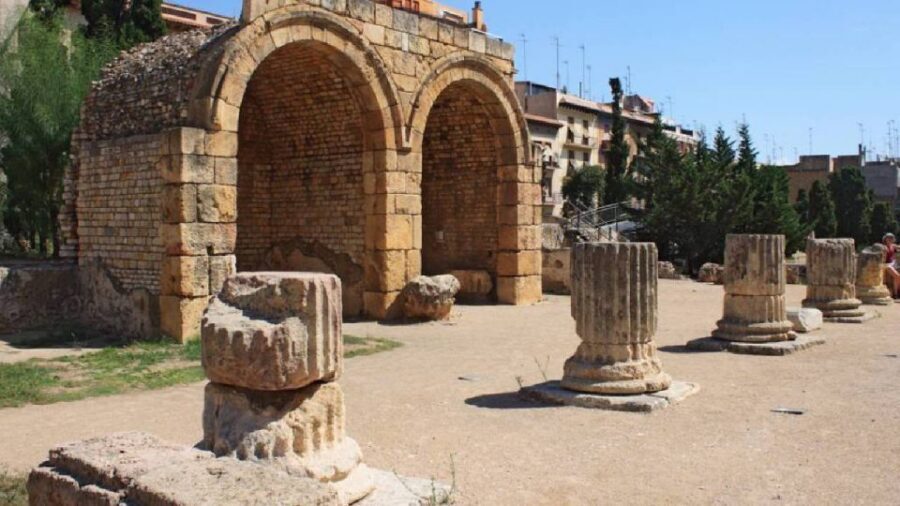
The Roman Forum stop is where Tarragona starts to feel like a layered puzzle. The remnants aren’t isolated like a museum exhibit. They sit among medieval and modern architecture, so you get the sense that the city kept living and rebuilding over time.
The forum is also a key stop for understanding Roman civic life: this was where public affairs and daily rhythms would have centered. Even if the remains look less dramatic than the amphitheater, the forum helps you decode what you’re seeing elsewhere in town.
Here’s the one practical consideration to keep in your head: if you’re relying on the forum as your top priority, confirm that it’s included on your specific route day. There’s at least one documented experience where the tour ended at the Mediterranean Balcony without the forum stop, even though it was expected in the description. Tarragona sites can sometimes be affected by coverage or works, so your best move is to ask your guide early in the tour if the forum is definitely on your plan.
You can also read our reviews of more tours and experiences in Barcelona






The Amphitheater by the Mediterranean: A Sea-Edge “Wow”
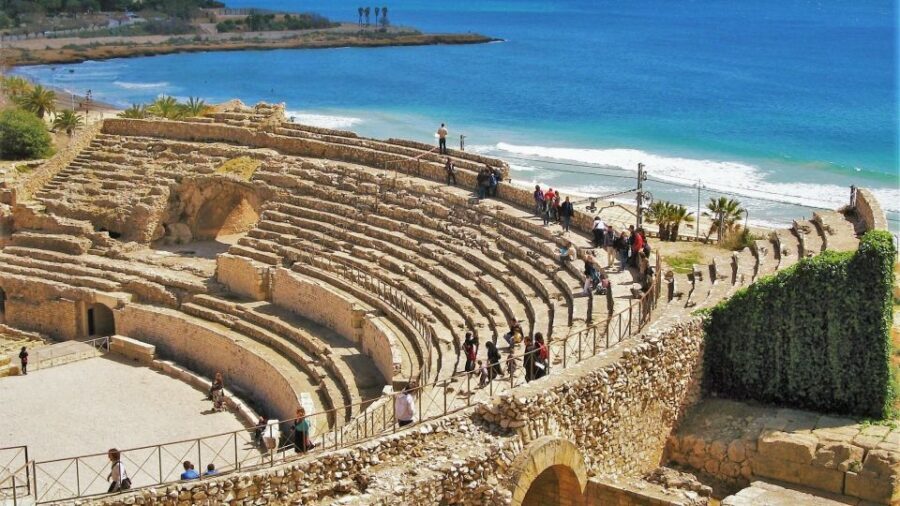
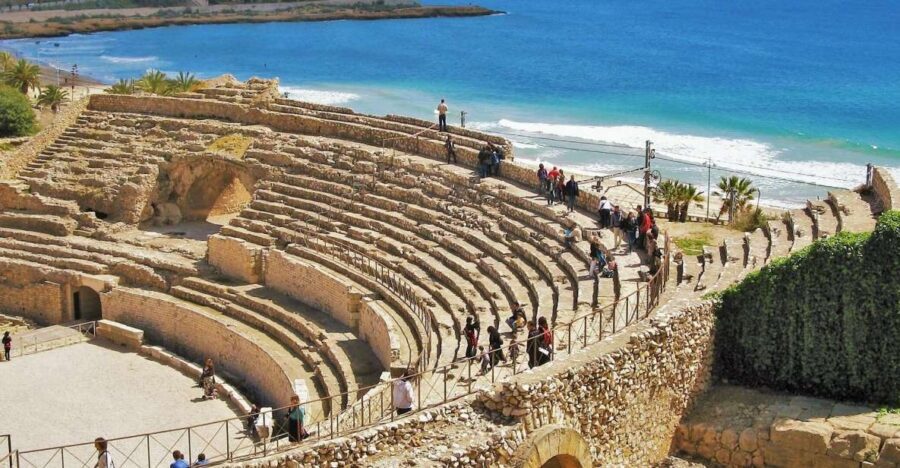
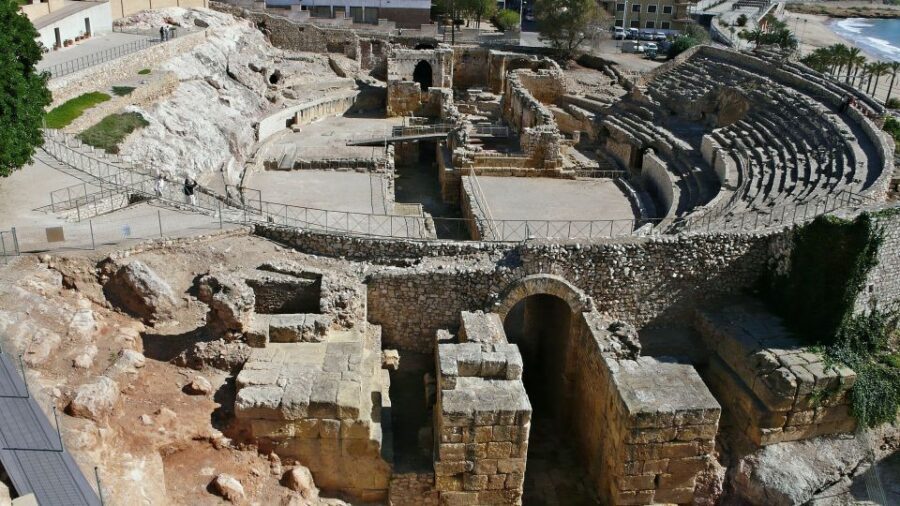
This is the showpiece. The Tarragona amphitheater, built in the 2nd century, sits near the Mediterranean coast. That location is what makes it hit harder than most amphitheaters you’ll see. Instead of imagining battles in a generic arena, you can picture the sea air, the open sky, and spectators arriving for events in a real coastal city.
You’ll visit Parc de l’Amfiteatre with a guided component. Tickets are included, and the setup helps you spend your time inside rather than stuck waiting outside. The tour experience here tends to feel like a proper guided visit rather than a quick photo stop.
You’re given context for what you’re looking at—where gladiators would have performed and how the arena worked as an open-air space. Then the views do their part. The amphitheater doesn’t just preserve the Roman past; it makes you understand why people back then chose to gather here.
If you’re sensitive to walking and steps, wear shoes with good grip. You’ll want stable footing as you move between viewpoint angles.
Market Stop and Cathedral Pass-By: The City Beyond Rome
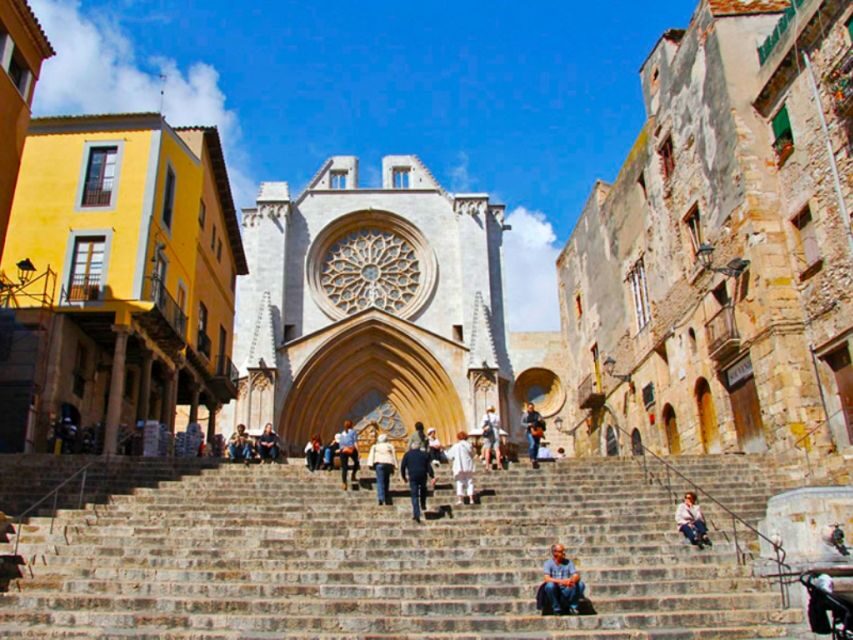
Not every stop needs to be a ruin to be worth it. The tour includes time to see the Mercat Central de Tarragona, plus a sightseeing pass by the Cathedral of Tarragona.
The market stop helps you switch gears. It’s a reminder that Tarragona isn’t only about archaeology; it’s a functioning city with everyday life. Even if you don’t plan to shop, walking through a market area gives you a feel for local culture and the scale of the city.
The cathedral pass-by works more like a signpost than a long visit. It signals the later chapters in Tarragona’s timeline without pulling you away from the Roman focus for too long.
This balance is useful for first-timers. You get the Roman anchors, then the modern Tarragona context so you don’t leave feeling like you visited only a set of rocks.
Balcó del Mediterráneo and the Costa Dorada Drive
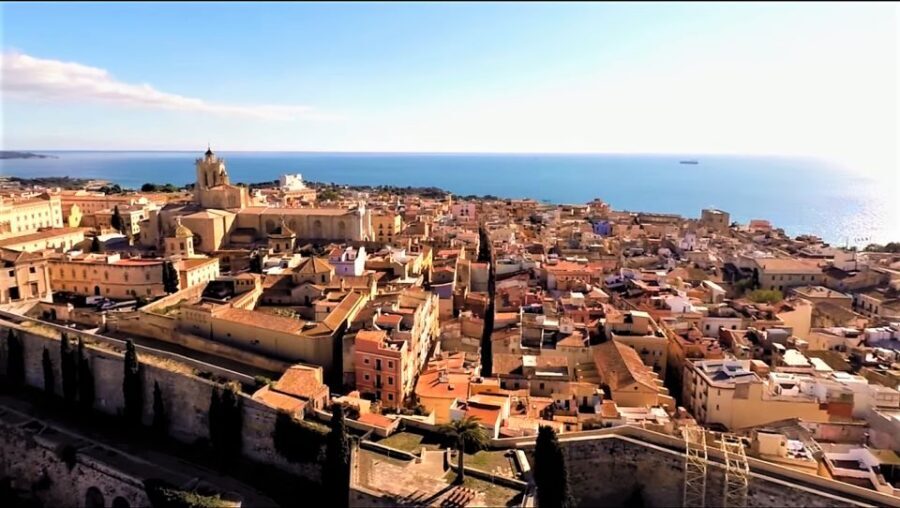
The tour ends with one of Tarragona’s signature moments: Balcó del Mediterráneo, the Mediterranean Balcony. This is a photo stop, but it’s also a proper payoff. By now, you’ve walked through walls, ruins, and public-city spaces, so the sea view feels like a natural finish rather than random sightseeing.
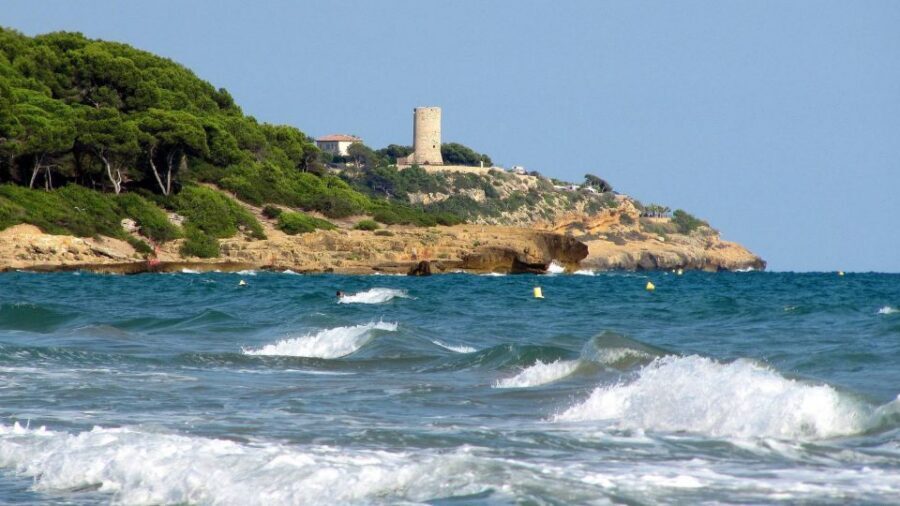
You’ll get sweeping views of the coast and beaches, and that’s exactly why this spot has become iconic. The sea is part of Tarragona’s identity—so it makes sense to close the day looking out toward the water.
A scenic drive along the Costa Dorada brings you back toward Barcelona with a final dose of coastal scenery. It’s a nice transition: history to horizon, with fewer decisions on your end.
Bring sunglasses if the light is strong. The views are great, but bright glare can make it hard to see details in photos or across the water.
Price and Value: Is $271 Actually Fair?
At $271 per person for a 5-hour private tour, you’re paying for more than the sites. You’re paying for private transport, an expert guide, ticketed access to the amphitheater and circus, and the convenience of hotel pickup and drop-off in Barcelona.
For many travelers, the value question comes down to this: would you be willing to handle all the logistics yourself while also trying to cover Roman sites efficiently? If you’re on a tight schedule, the private structure can be a big win. You’re also getting a “guided read” on places that are easy to misunderstand without help.
Where the price matters most is if your group is just one person. Then you’re likely paying a higher per-seat cost versus a shared group tour. Still, if you care deeply about the Roman parts and want smoother timing, the private format can feel worth it.
One caution on value: time is limited. If you’re expecting a slow, unhurried exploration of every ruin, this format won’t feel like that. But if you want the key Roman highlights plus sea views, it’s built to deliver.
How to Work With Your Guide (Without Getting Burned)
The quality of your experience often comes down to the guide’s pace and communication. In the available guide experiences, the best outcomes happen when you stay close and ask questions early.
For example:
- Marco is described as punctual and friendly, and the tour was seen as complete with clear explanations.
- Kurt is noted for a strong sense of place and lots of helpful area insight.
- Vincente is described as smart and sociable, but also a bit rushed, with some issues like not asking if anyone needed the bathroom and a fast pace through stops. There was also a complaint that the Roman Forum didn’t happen as expected.
So here’s your practical playbook:
- Stay with the group. Don’t drift ahead or fall too far behind if the guide is managing timing.
- If you need a bathroom break, speak up early. Tarragona’s biggest stops are outside, and you don’t want to realize the need mid-route.
- If the Roman Forum is a must for you, ask about it in plain terms at the start. It’s better to get clarity early than to wonder later.
That’s how you protect your investment in a half-day schedule.
Who This Tour Fits Best
This private half-day Tarragona tour makes the most sense if:
- you want the major Roman highlights without spending your day figuring out logistics
- you like guided context that helps you read ruins and city layers
- you’re visiting Barcelona with limited time and want a high-impact day trip
- you prefer a private pace with pickup convenience
It may not fit as well if:
- you prefer long, slow museum-style viewing
- your tolerance for “walking plus stairs plus quick stops” is low
- the Roman Forum must be guaranteed under every circumstance, because a tight schedule can create gaps if something changes on the ground
If you fall between categories, you’ll still probably enjoy it—just manage expectations about time.
Should You Book This Tarragona Private Half-Day Tour?
I’d say book it if you want a well-paced, guided day trip that hits Tarragona’s most memorable Roman sites and ends with sea views. The included tickets for the amphitheater and circus plus hotel pickup make it easy to treat this as a real plan, not a gamble.
Before you go, do two things to protect your day: wear comfortable shoes for walking, and keep your day bag small since luggage and large bags aren’t allowed. Then, if the Roman Forum is your top priority, confirm early in the tour that you’ll reach it as planned.
For many travelers, Tarragona is the kind of place where a guide turns scattered ruins into a meaningful story—plus you get the coastal payoff at the end. If that’s your style, this half-day private format is a solid choice.
FAQ
How long is the Tarragona private tour from Barcelona?
The tour lasts about 5 hours.
What time does pickup happen in Barcelona?
Pickup is scheduled between 8:00 AM and 9:00 AM, and you’ll receive your exact pickup time by message 24 hours before departure.
Is the tour private or shared?
It’s a private group tour.
What’s included in the price?
Hotel pickup and drop-off in a private air-conditioned minivan, an expert guide, tickets for the Tarragona Amphitheatre and Circus, plus sightseeing time in medieval/modern Tarragona.
Which languages is the guide available in?
The live tour guide is available in English and Spanish.
Do we need to buy tickets for the amphitheater or circus?
No. Ticket entrance for the Tarragona Amphitheatre and Circus is included, and you enter via a separate entrance to help skip the line.
What should I bring and wear?
Bring comfortable shoes for walking.
Are luggage and large bags allowed?
No. Luggage or large bags are not allowed.