REVIEW · BARCELONA
Full Day Visiting Tarragona and Sitges from Barcelona
Book on Viator →Operated by J&G Elegance Cars · Bookable on Viator
Roman ruins, plus beach time.
This full-day trip is a smart way to swap Barcelona traffic for two very different coastal towns. I love that you get private pickup from Barcelona (city, port, or airport) and a full plan that hits the best-preserved Roman highlights in Tarragona, then finishes with the relaxed vibe of Sitges. Another plus is the pacing: the tour breaks the day into short, focused stops like Pont del Diable and the Balcón del Mediterráneo, then lets you walk on foot in the places that actually feel livable. The only drawback to know up front is that some of the bigger Roman sites have extra tickets you may need to buy, so budget a bit of time and money for those.
If you want the history-to-the-screen version, this trip delivers.
My favorite part is how the day flows from ancient engineering (the aqueduct) to daily life (promenades, towers, and viewpoints) to real coastal culture in El Serrallo, and then on to Sitges’ long seaside walkway. You do spend plenty of time sightseeing, but it’s mostly outside, so it’s worth planning for walking and sun. And if you’re hoping for a fully guided stop-by-stop commentary at every single ruin entrance, know that the day is driven by a mix of narration and free time where you explore on your own.
In This Review
- Key things that make this day trip work
- Private pickup and an 8-hour plan that doesn’t feel rushed
- Pont del Diable and the UNESCO side of Tarragona
- The promenade stops: Rambla Nova and the castellers monument
- El Serrallo and the beachescape between sea and history
- Balcón del Mediterráneo, Parc del Miracle, and the amphitheatre views
- More Roman scale: Circ Roma and the Pretorio Tower area
- Pla de la Seu, Tarragona Cathedral, and walking the Roman walls
- Extra Roman textures near Roda de Bará: Arch of Bará and Roc de Sant Gaietà
- Sitges: the 2.5 km seaside walk and the town’s church-on-a-hill look
- Palau de Maricel: optional culture if you want to go inside
- Tickets and budget: what you’ll likely pay extra
- Who this tour suits best (and who should consider alternatives)
- Final verdict: should you book Full Day Visiting Tarragona and Sitges from Barcelona?
- FAQ
- How long is the Tarragona and Sitges full-day tour?
- What group size is this tour?
- What languages is the tour offered in?
- Where can you be picked up in Barcelona?
- Is lunch included?
- Which ticketed sites are not included?
- Are there included admissions in Tarragona?
- Is there free cancellation?
Key things that make this day trip work
- Private group (up to 7) with pickup from central Barcelona, port, or the airport for less hassle.
- Tarragona’s UNESCO Roman sights are the core of the day, with several stops already covered by included admissions.
- Sea-and-stone contrast: waterfront Tarragona (El Serrallo, Playa del Miracle) followed by Sitges’ 2.5 km promenade.
- A real cast tradition moment at the Monumento a los Castellers with a life-sized 4 in 8 tower.
- Sitges without a museum mandate: you can browse and stroll, and choose Palau de Maricel if you want it.
Private pickup and an 8-hour plan that doesn’t feel rushed
This tour is built for one thing: getting you out of Barcelona and into the Roman world fast, without the stress of planning buses, trains, and timing. You’re traveling with private transportation in an air-conditioned vehicle, and the group size is kept to up to 7, which makes it easier to ask questions and adjust your pace.
The day runs about 8 hours, and the order matters. First you land in Tarragona, where the sites are packed into walkable areas around the old city and the Roman walls. Then you shift to the coast—Tarragona’s fishing quarter and viewpoints—before heading to Sitges for the kind of seaside stroll that feels like a reward rather than a schedule.
For English speakers, the tour is offered in English, and you’ll get a mobile ticket. Bottled water is included, and there are baby seats/boosters on request, which is useful if you’re traveling with kids.
You can also read our reviews of more tours and experiences in Barcelona

Pont del Diable and the UNESCO side of Tarragona
The day starts with the kind of Roman engineering that still looks impossible. Pont del Diable (Acueducto de les Ferreres) is part of the aqueduct system that once carried water from the Francolí River to old Tarraco, about 25 km away. You’ll be looking at a massive Roman arch structure on the outskirts of Tarragona, and the site is recognized as a UNESCO World Heritage monument.
What makes this stop great for you is the context. Roman Tarragona isn’t only about ruins you peer at from a distance—this shows Roman power and planning in a way that’s easy to grasp even if you’re not a history nerd. It also feels cinematic in the landscape, especially in softer daylight, and the included admission ticket keeps it simple.
A small practical note: since it’s outdoors and you’ll be standing and walking around the structure, wear shoes you can move in comfortably. You’ll want them again later during the city-wall and old-town walking.
The promenade stops: Rambla Nova and the castellers monument
Next you step into Tarragona’s daily-life rhythm with La Rambla Nova, the main promenade and social center of the city. This isn’t a “look and leave” street; it has terraces, restaurants, and shops, and it’s also where you notice architecture from the 19th and 20th centuries. At the east end, you reach the Balcón del Mediterráneo—a viewpoint that looks out over the coastline, the sea, the port, and the Roman amphitheatre area.
Along the Rambla Nova you also stop at the Monumento a los Castellers. A casteller is part of a Catalan tradition built around human towers, and this monument depicts a life-sized 4 in 8 tower. If you’ve only heard of castellers as a festival thing, this stop helps you see that it’s also a public identity—literally carved into the city.
One drawback to consider: promenade stops are short (think quick walk-and-look moments), so if you love lingering, you may want to plan extra time for these areas on another day in Tarragona.
El Serrallo and the beachescape between sea and history
Then you slide into Tarragona’s maritime neighborhood, El Serrallo, which is one of those places that just feels like it belongs to the sea. You’ll see fisherman houses in pastel colors, plus cozy tapa bars and a pedestrian waterfront where seafood is the obvious theme. In front of the port area are las Fonts de Serrallo, fountain sculptures with a more modern look.
One useful detail is that this stop comes with time to enjoy the coastal layout. You also get easy access to the area around Playa del Miracle, described as being about 5 minutes from the city center and located under the Balcón del Mediterráneo and near the sports port.
For most people, this is the emotional break in the day: history is still there, but you’re not staring at stone. You’re walking past palm trees and port streets and letting your senses shift from ancient engineering to everyday coastal life.
Balcón del Mediterráneo, Parc del Miracle, and the amphitheatre views
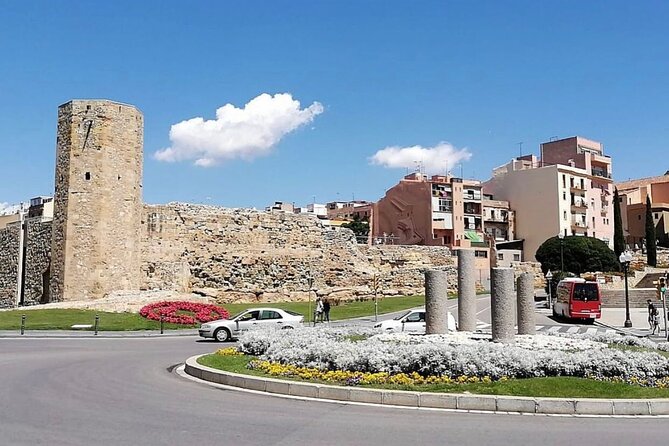
From the viewpoint area, you get to orient yourself: the Balcón del Mediterráneo lets you see the port, the beach, and the Roman amphitheatre zone. The included admission here makes it an efficient stop—no paperwork, no hunting for entry.
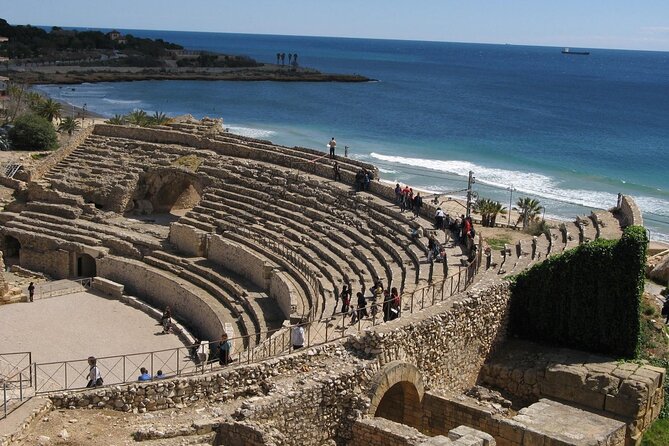
Just down the line is Parc del Miracle, described as a “Roman garden” setting in front of the sea and close to one of Tarraco’s emblematic monuments: the amphitheatre. That combination matters. You’re not just looking at the ruins; you’re standing in a setting that connects sea, views, and the Roman footprint.
The amphitheatre itself is Tarraco Amphitheatre, another UNESCO-listed site. The tour time for it is included, but the admission is not included, so you may need to pay the listed fee (given as €7.00 per person for amphitheatre and Roman circus). If you’re a first-timer to Roman sites, I suggest building in the idea that you’ll either pay for the inside/entry part or be content with the exterior viewpoints.





More Roman scale: Circ Roma and the Pretorio Tower area
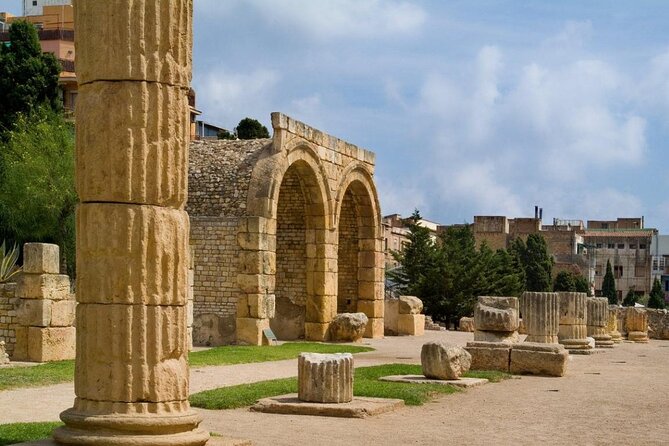
Later you’ll encounter two more major Roman landmarks: Circ Roma (Roman circus) and Torre del Pretorio Romana. Circ Roma is a conserved Roman building built thanks to the Concilium Provinciae Hispaniae Citerioris, the yearly meeting of representatives from the province. It’s also listed as part of UNESCO, and the admission for the circus area is not included (again, budget the €7.00 total group of fees mentioned for the Roman circus and amphitheatre).
The Torre del Pretorio Romana is tied to the circus complex and connects the lower city with the forum. It’s described as dating around 73 AD, which gives you an immediate sense of time depth.
Here’s the practical consideration: these are not “park benches and a photo” stops. You’re dealing with outdoor structures and walkable zones, and you’ll likely be spending time moving between viewpoints rather than sitting in one place.
Pla de la Seu, Tarragona Cathedral, and walking the Roman walls
As the tour continues, it turns medieval—without leaving Roman Tarraco behind. Pla de la Seu is one of the best-preserved medieval-feeling areas, with the cathedral presiding over gothic mansions and older buildings. It’s also a place where you can slow down and connect streets, courtyards, and architectural details.
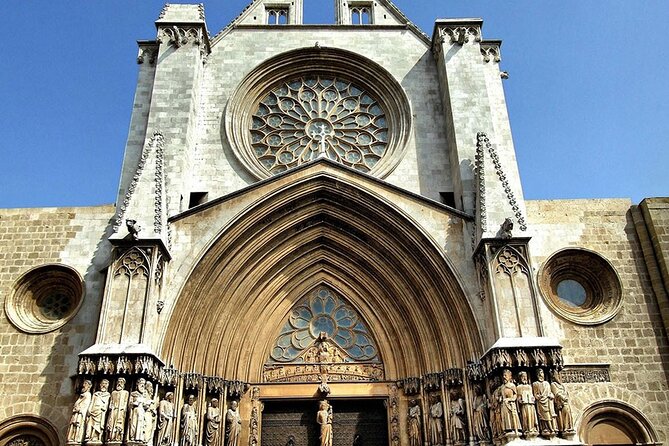
The Tarragona Cathedral (Catedral Basílica Metropolitana y Primada de Santa Tecla) sits on a site that had layers of earlier religious history, including a Roman temple connected to imperial cult, plus later Visigoth and Arabic influences. The cathedral entry is not included, with an admission fee listed at €5.00 per person.
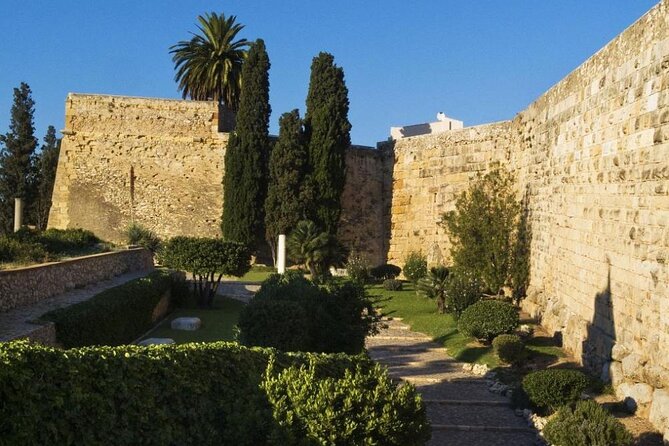
Then you get Murallas de Tarragona, the Roman-origin walls that remain around the old town. This is described as part of UNESCO and as the oldest construction of Roman Tarraco. It’s free to visit as part of the experience (as indicated by admission listed as free).
Next comes Passeig Arqueològic, an archaeological walk that runs along about a kilometer of Roman wall. The walking route sits between the original wall and a later counter-wall, and you can see additions as well as towers like the Tower of the Archbishop and the Tower of Minerva. It’s free, and it’s one of the best-value parts of the day if you like reading the city like a map.
Extra Roman textures near Roda de Bará: Arch of Bará and Roc de Sant Gaietà
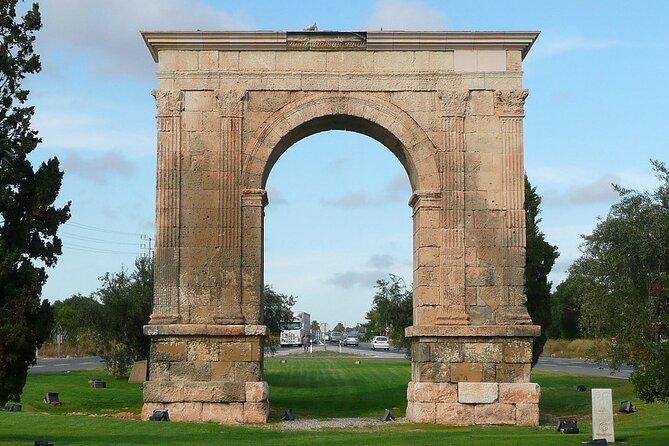
The tour also extends north-east to Roda de Bará for more Roman-era flavor. The Arch of Bará is a Roman triumphal arch built about 20 km north-east from Tarragona. It’s part of the Tarraco archaeological group that’s recognized as UNESCO World Heritage.
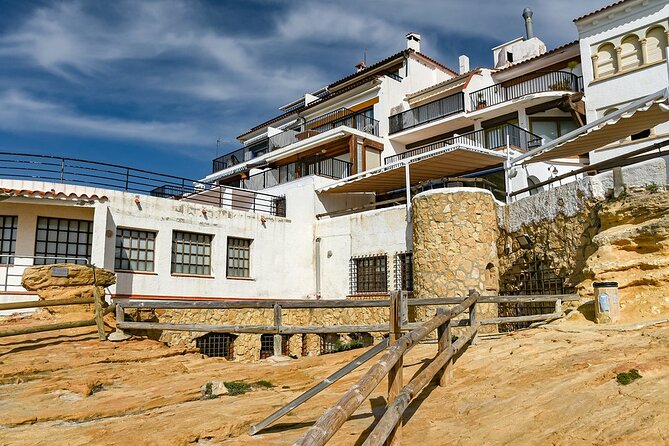
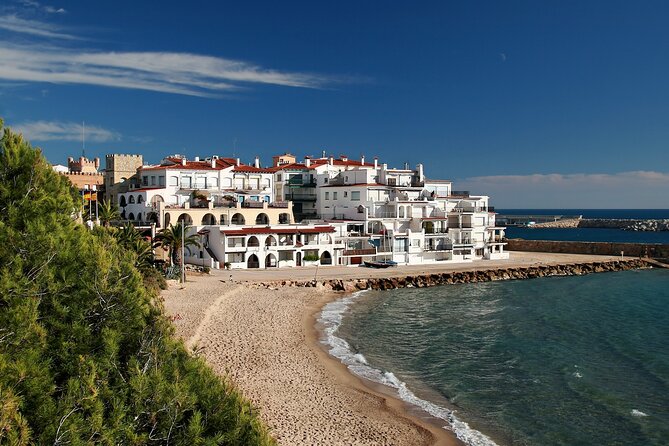
Then you reach El Roc de Sant Gaieta, which is a very different type of stop. It’s a “typical fishermen villa” by the sea with a Mediterranean style, and the construction period ran from 1964 to 1972. The interest here is the mix of styles inside its street layout—Romanesque, Arabic, and Gothic influences are mentioned—so it feels like architecture-as-a-story rather than just another viewpoint.
This pair of stops is the tour’s way of widening the lens. You see the Roman monuments, but you also see how local places shape identity and style over time.
Sitges: the 2.5 km seaside walk and the town’s church-on-a-hill look
After Tarragona, you head to Sitges, a coastal town in Catalonia surrounded by the Natural Park of Garraf. Sitges is known for its beaches, but also for its promenade lined with big mansions, plus a lively old town full of shops, restaurants, and nightlife.
You get about 1 hour in Sitges for wandering and getting oriented. Then the tour focuses on the most Sitges-like experience: the Passeig Maritim, a calming seaside walkway of about 2.5 km from Church of San Bartolomé to Hotel Terramar. This section is included, and it’s a great way to reset your legs after Roman walls.
You also visit Church of Sant Bartomeu & Santa Tecla, described as a 17th-century parochial church with late modifications. The big visual is its asymmetric silhouette above a hill that presides over the beach. The church stop has admission listed as free.
One thing I like about this part of the schedule is that it’s flexible in your head. You can treat it like a stroll you’d do even if you weren’t on a formal tour. The sights aren’t just stone; they’re the whole sea-and-street picture.
Palau de Maricel: optional culture if you want to go inside
If you’re looking for a culture pick inside Sitges, the tour includes a stop at Palau de Maricel (Maricel de Terra). It’s part of the novecentista artistic complex of Maricel, with construction dated between 1913 and 1916. It’s where cultural activities take place today, but the admission is not included.
This is the one stop that’s easiest to treat as optional. If you’re museum-curious, you can pay the entry. If you’d rather spend every minute outside with the sea air, you can skip the interior without feeling like the day collapses.
As a practical matter, if you’re budgeting, add the €10.00 per person entry fee mentioned for Palau de Maricel. It’s listed separately from the Roman site fees, so your total depends on what you choose to enter.
Tickets and budget: what you’ll likely pay extra
The tour includes several admissions, which is a big value lever. In Tarragona, you’ll get admission included at Pont del Diable, Rambla Nova, Monumento a los Castellers, Balcón del Mediterráneo, Parc del Miracle, and parts described as free like El Serrallo, Pla de la Seu, Murallas de Tarragona, and the Passeig Arqueològic.
Where you should expect extra costs are the headline indoor/entry Roman and cathedral pieces:
- Tarraco Amphitheatre and Roman Circus (Circ Roma): €7.00 per person (admission not included)
- Tarragona Cathedral: €5.00 per person (admission not included)
- Palau de Maricel in Sitges: €10.00 per person (admission not included)
Then there’s lunch, which is not included. The tour notes lunch menus typically range €15–€30, which is a helpful window if you want to eat without stress.
To me, the value here is that the tour buys down a lot of “small entry hassles.” You only pay at the sites where the ticket matters for access or inside viewing.
Who this tour suits best (and who should consider alternatives)
This trip is a strong fit if you want a Roman-focused day but you don’t want to handle logistics on your own. The mix of guided narration and walk-time works well for first-timers who still want context, and it also suits couples or small families thanks to private transport and the option for child seating.
It’s also a good match if you enjoy contrast. You get aqueduct drama at Pont del Diable, then promenade life on Rambla Nova, then seafood coastal energy in El Serrallo, and finally Sitges promenade time with beaches and mansions.
The one group I’d think twice for is anyone who wants a fully guided, entrance-by-entrance commentary inside every ticketed site. The structure is more “route plus story plus exploration,” and you’ll likely spend time moving through some areas on your own.
Final verdict: should you book Full Day Visiting Tarragona and Sitges from Barcelona?
Yes, I’d book it if your goal is a high-impact day with UNESCO Roman Tarragona and a satisfying coastal finish in Sitges. You’re paying for convenience—private pickup, air-conditioned transport, bottled water, and a route that hits major sights without making you do the scheduling math.
I’d also book it if you’re okay with tickets being partly extra. When you know the main add-ons in advance (amphitheatre/circ, cathedral, and Palau de Maricel), the day feels clear rather than surprising.
Skip it only if you strongly prefer to control your own stops and you don’t want to pay for multiple separate admissions. In that case, you might prefer a do-it-yourself plan.
FAQ
How long is the Tarragona and Sitges full-day tour?
It runs for about 8 hours.
What group size is this tour?
It’s a private tour for up to 7 people per group.
What languages is the tour offered in?
The tour is offered in English.
Where can you be picked up in Barcelona?
Pickup is available at a pick-up point in Barcelona City, the Port, and the Airport.
Is lunch included?
No. Lunch is listed as not included, with a lunch menu range of €15–€30.
Which ticketed sites are not included?
The tour lists admissions not included for Palau de Maricel (Sitges) at €10 per person, and for the Amphitheater and Roman Circus at €7 per person. Tarragona Cathedral is also not included at €5 per person.
Are there included admissions in Tarragona?
Yes. Admission is included for sites such as Pont del Diable, Balcón del Mediterráneo, and Parc del Miracle (and some other stops are listed as included/free).
Is there free cancellation?
Yes. You can cancel for a full refund up to 24 hours before the experience start time.