REVIEW · BARCELONA
Marvels of Barcelona Walking Tour
Book on GetYourGuide →Operated by Global Experiences · Bookable on GetYourGuide
Barcelona clicks into place on foot. I like how the tour links the Gothic Quarter to 2,000 years of change, from Roman Barcino through the Golden Age, and I really enjoyed the storytelling style from the English-speaking guides like Jamie, Rolene, and Mariah. One thing to plan for: entry into cathedrals and basilicas isn’t included, so you’ll often be looking from the outside unless you add time for tickets on your own.
This is a tight, two-hour walk that keeps moving but doesn’t feel rushed. You hit major squares and landmarks, plus the quieter corners where Barcelona’s older layers show up in street patterns and names. If you want an easy way to learn the city fast, wear comfy shoes and bring your camera.
In This Review
- Key things I’d watch for on this walk
- Why the Gothic Quarter works so well for a first visit
- What $22 buys in two hours, in plain terms
- Your route through Barcelona’s oldest layers, stop by stop
- Stop 1: Barcino Sculpture at Plaça Nova (Escultura Barcino)
- Stop 2: Els Quatre Gats
- Stop 3: The Kiss Of Freedom
- Stop 4: Barcelona Cathedral
- Stop 5: La Casa de l’Ardiaca
- Stop 6: Bishop’s Bridge
- Stop 7: Placa Sant Felip Neri
- Stop 8: MUHBA El Call (former Jewish district)
- Stop 9: Plaça de Sant Jaume
- Stop 10: Plaça del Rei
- Stop 11: St. Mary of the Sea Cathedral
- How the pacing actually feels during the 2-hour walk
- What to expect from the guide (and how to get more out of it)
- Where you’ll land for sightseeing after the tour
- Should you book this Barcelona walking tour?
- FAQ
- How long is the Marvels of Barcelona Walking Tour?
- How much does the tour cost?
- Where does the tour start?
- Where does the tour end?
- Is the tour guided in English?
- Do I get entry into Barcelona Cathedral or other cathedrals?
- What are some of the main stops on the route?
- What should I bring for the tour?
- Are there multiple starting times?
- Is free cancellation available?
Key things I’d watch for on this walk
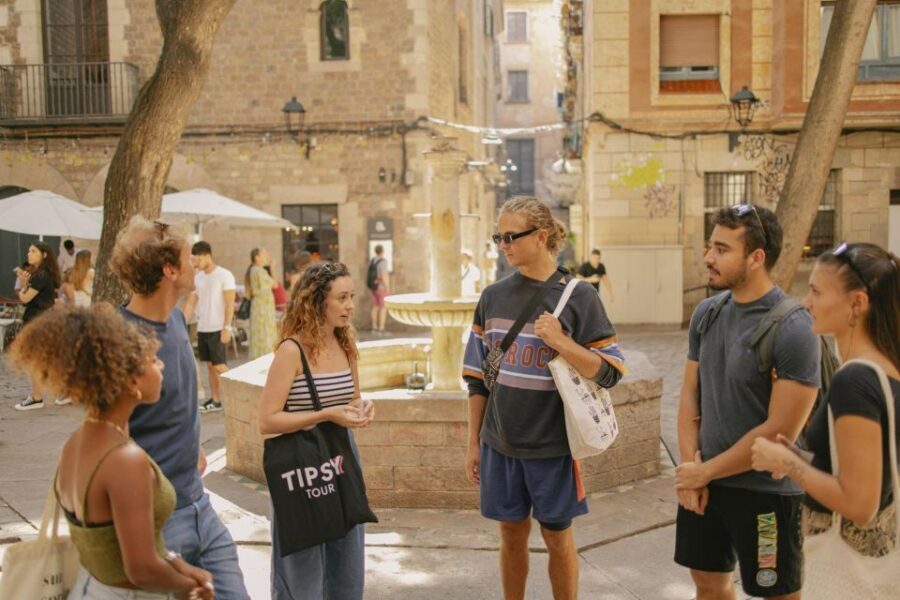
- A 2-hour sweep through 2,000 years: Roman Barcino to the Golden Age, stitched together at each stop.
- Stops you can actually picture: Placa Sant Felip Neri, Barcelona Cathedral area, MUHBA El Call, and major plazas.
- Short guided moments at each landmark: about 10 minutes per site so you don’t lose the thread.
- Photo-friendly pacing: the tour includes breaks and time to take pictures without sprinting.
- Good guide energy in English: you’ll hear clear explanations and even some humour along the way.
Why the Gothic Quarter works so well for a first visit
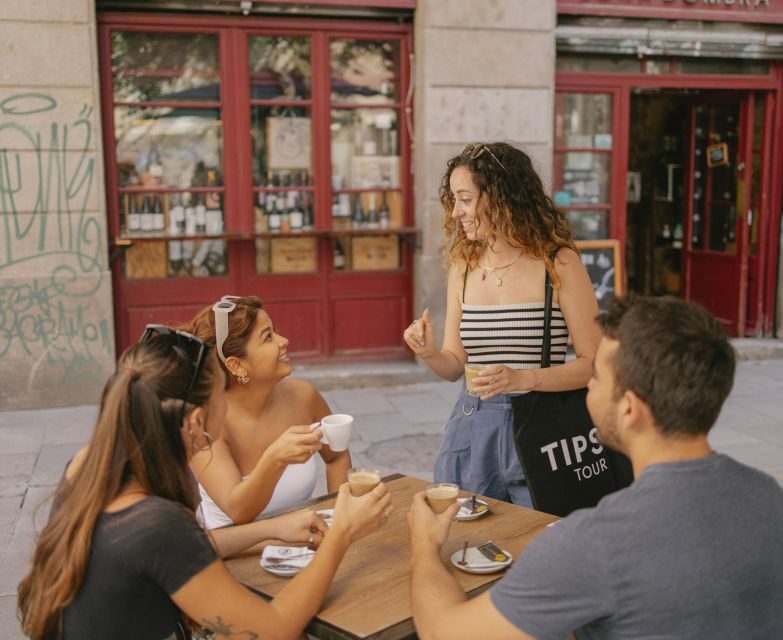
The Gothic Quarter is the part of Barcelona that makes you slow down. Narrow streets, old stone, small squares that seem like they were built for lingering. This walk gives you a path through that maze, not just a pile of sights.
What I like is the way the tour frames the city as a timeline you can walk. You start with Roman Barcino roots and move forward through Barcelona’s later eras. Even if you’ve seen photos of the Cathedral area or major plazas, hearing how the city evolved helps everything click into place. You stop seeing buildings as “pretty stuff” and start seeing them as chapters.
You also get the best kind of local context: not just facts, but stories that explain why people built and rebuilt where they did. That’s what makes the two hours feel worth it rather than like a quick photo session.
You can also read our reviews of more walking tours in Barcelona



What $22 buys in two hours, in plain terms
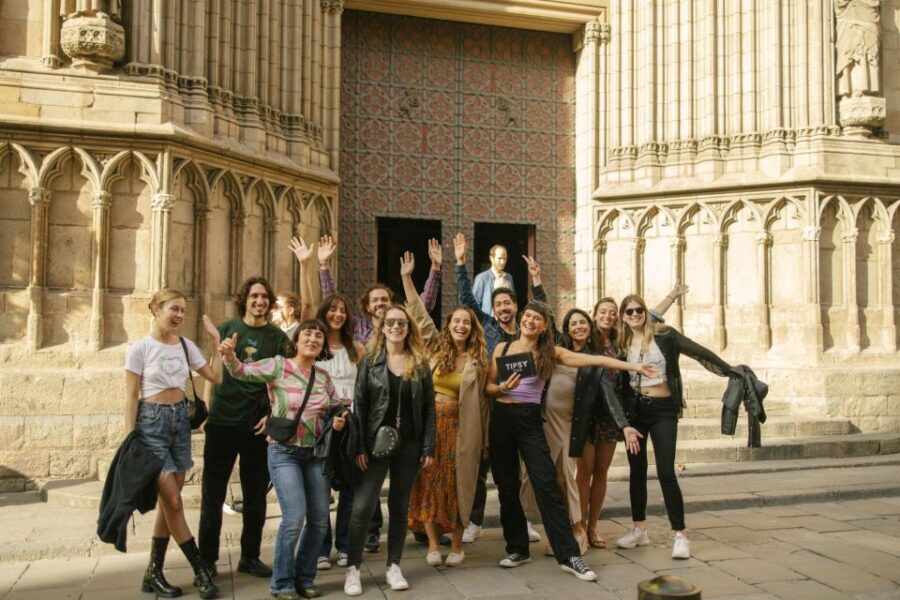
At $22 per person for a 2-hour English guided walk, this is the kind of price that works for a short stay. You’re paying for a real guide who can connect the dots between locations, not just for someone to lead a group from point A to point B.
Here’s the practical trade-off: entry into cathedrals and basilicas isn’t included. So you’re not buying a “see everything inside” experience. You’re buying context—what to notice outside, what to pay attention to as you pass, and which places matter in Barcelona’s longer story.
If you want to go inside major churches, plan that as extra time later. The tour still does a lot for your first day, especially if you’re juggling limited vacation hours.
Your route through Barcelona’s oldest layers, stop by stop
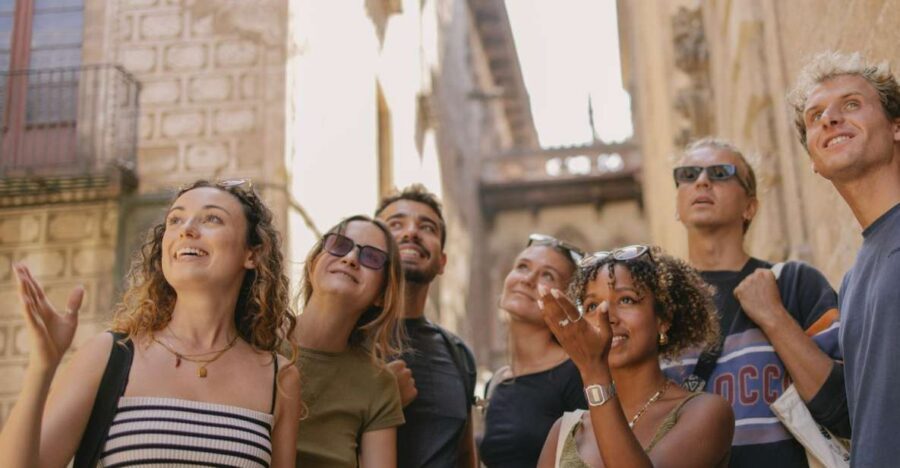
The tour runs from a meeting point in the historic core and finishes back there, so you don’t have to figure out logistics while you’re learning the city. Expect a steady flow of about 10 minutes of guided time at each stop, with short pauses for photos.
Stop 1: Barcino Sculpture at Plaça Nova (Escultura Barcino)
You kick things off at Plaça Nova, 40, right in front of the Barcino sculpture. The guide meets you there holding a yellow Carpe Diem Tours sign, so it’s easy to find the group.
This opening matters. The name Barcino points you toward the tour’s core theme: Barcelona didn’t start where you see it now. It started as a smaller Roman settlement, and the city’s older street logic still affects what you notice today. Starting here helps you “zoom in” for the rest of the walk.
Stop 2: Els Quatre Gats
Els Quatre Gats is one of those spots that feels tied to ideas, artists, and conversation. On this tour, it’s used as a moment in the city’s evolving personality—how different periods left their mark in culture and place names.
Even if you’re not a museum person, this stop is useful because it breaks up the heavy architectural focus. You get a change of mood while staying in the same historic area.



Stop 3: The Kiss Of Freedom
This stop is one of the tour’s story anchors. A name like The Kiss Of Freedom is the kind of clue that tells you Barcelona has always mixed politics, public life, and symbolism into everyday streets.
The guide’s job here is to help you connect that symbolism back to the bigger timeline you’re hearing. That’s what keeps the walk from feeling like unrelated trivia.
Stop 4: Barcelona Cathedral
Now you reach a centerpiece. The Cathedral stop is about perspective: what you can observe from the outside, how the site fits into the Gothic Quarter story, and why it matters to the city’s identity.
Because entry into cathedrals and basilicas isn’t included, treat this as a strong viewing and explanation point. You’ll get what you need to make the Cathedral area “readable” when you pass again later, or if you decide to come back for interior time.
Stop 5: La Casa de l’Ardiaca
La Casa de l’Ardiaca shifts you from the big, obvious landmark feeling into the smaller details that make old cities special. This is a stop where the guide can point out how buildings and street-level spaces reflect the periods that shaped them.
If you like architecture at a human scale (doors, windows, street frontage), you’ll enjoy this section. If you only want grand structures, you might want to keep moving and just absorb the guide’s context.
Stop 6: Bishop’s Bridge
Bishop’s Bridge is a perfect example of why walking tours work. A bridge like this is small compared to a cathedral, but it can connect key viewpoints and explain how the city functions in real life.
On this walk, it’s another short guided segment, so you’re not stuck in one spot. You get enough story to understand what you’re looking at, then you move on—no drag.
Stop 7: Placa Sant Felip Neri
Placa Sant Felip Neri is one of the locations the tour calls out directly. Plazas like this are where Barcelona’s street culture shows up: people pause, gather, and let the buildings do the talking.
This stop is valuable because it gives you a mental reset. After bridges and architecture, you’re back in open space, and you can process what you’ve learned so far.
Stop 8: MUHBA El Call (former Jewish district)
This stop is a key part of the tour’s “2,000 years” promise. The name MUHBA El Call links you to the area known as Barcelona’s former Jewish district.
What I appreciate here is the way the guide uses it to show that the city’s story includes multiple communities and shifting eras. Even without an entry ticket included, you still get meaningful framing for what you’re seeing in the surrounding streets and context.
Stop 9: Plaça de Sant Jaume
Plaça de Sant Jaume is one of the major civic-sounding plazas, and that’s exactly why it belongs on this route. Squares like this help you understand how Barcelona organizes public life—where decisions happen, where people look out over the city, and where history leaves traces.
On a short tour like this, stopping at big plazas gives you useful “anchors.” After you learn about one or two, you can start reading the rest of the neighborhood with more confidence.
Stop 10: Plaça del Rei
Plaça del Rei keeps that civic and historic feel going, and it’s another reason the walking route works. You’re building a mental map of how the city’s power centers and public areas connect.
If you’re the type who likes history that feels like a walkable story rather than a lecture, you’ll enjoy the way the guide ties each plaza into the larger progression.
Stop 11: St. Mary of the Sea Cathedral
You finish at St. Mary of the Sea Cathedral. Like the earlier Cathedral stop, the experience here is about sight and explanation rather than guaranteed interior access, since entry into cathedrals and basilicas isn’t part of the package.
Finishing here gives the tour a strong “full circle” feeling: big religious landmark energy at both ends (Cathedral area and St. Mary of the Sea Cathedral), with the rest of the route filling in the in-between layers.
How the pacing actually feels during the 2-hour walk
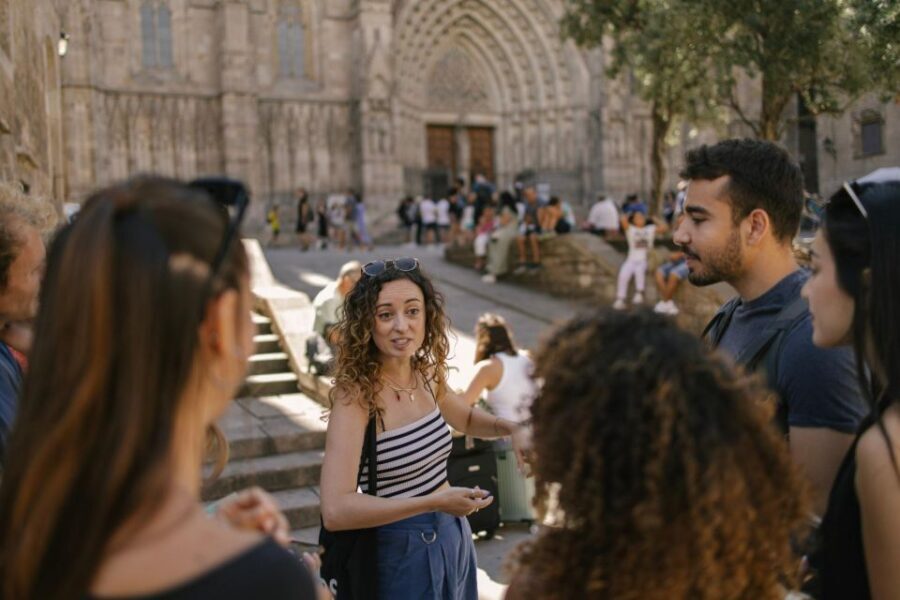
This is where the tour earns its near-perfect rating. Guides keep the tour moving, but they don’t treat it like a sprint. The structure of short guided segments—around 10 minutes each—means you always have a next moment to look forward to.
I also like that there are breaks built into the rhythm. You get time to slow down, check details, and take photographs without feeling like you’re dragging behind. That matters because the Gothic Quarter is visually busy. If you’re rushed, you miss the small things.
Finally, the guides are clear and upbeat in English. Several guides have been described as funny, enthusiastic, and responsive to questions, which makes a difference when you’re learning on the spot.
What to expect from the guide (and how to get more out of it)
The guide is the real product here. You’re not just buying a route; you’re buying someone who knows how to connect architecture, place names, and time periods into a story you’ll remember.
Based on what I’ve seen guides do well on this tour, here’s what you should lean into:
- Ask about how Barcelona changes from Roman times to the Golden Age and what you can notice while you walk.
- Use the pauses to look around. Old streets reward that kind of attention.
- At the end, take the guide’s food suggestions seriously. Getting local restaurant direction right after learning the neighborhood is a smart time-saver.
You’ll hear plenty of anecdotes and explanations along the way, and the overall vibe is designed to keep you entertained while you learn.
Where you’ll land for sightseeing after the tour
Because you return to the same meeting point (back at Plaça Nova area), you can easily plan the next leg of your day. You’ll also leave with a clearer picture of where key landmarks sit relative to one another.
That matters because the Gothic Quarter can feel like a knot at first. After this walk, you’re less likely to wander randomly. You’ll know what you’re seeing when you cross between plazas, bridges, and church-adjacent streets.
If you want more interior viewing, this tour can function as your “orientation layer.” Then you can decide what deserves your time and ticket price later.
Should you book this Barcelona walking tour?
Yes, if you want an efficient way to understand Barcelona’s historic core without spending hours researching first. This walk is especially good for first-time visitors who want context fast, plus anyone who likes guided storytelling in a compact format.
Book it if:
- You have only a couple hours in the Gothic Quarter.
- You prefer walking, photos, and explanations over museum-only visits.
- You want a route that covers major squares and landmarks and also mentions the former Jewish district.
Skip or add extra planning if:
- You mainly care about going inside major cathedrals and basilicas. Since entry isn’t included, you’ll need separate tickets to satisfy that itch.
- You’re sensitive to walking time. You can’t treat this like a slow sit-down tour, so bring comfortable shoes.
FAQ
How long is the Marvels of Barcelona Walking Tour?
The tour lasts 2 hours.
How much does the tour cost?
The price is $22 per person.
Where does the tour start?
Meet at Plaça Nova, 40, in front of the Barcino sculpture, with the guide holding a yellow Carpe Diem Tours sign.
Where does the tour end?
The tour ends back at the meeting point.
Is the tour guided in English?
Yes, it’s a live tour guide in English.
Do I get entry into Barcelona Cathedral or other cathedrals?
No. Entry into cathedrals and basilicas is not included.
What are some of the main stops on the route?
You’ll visit places such as Placa Sant Felip Neri, Barcelona Cathedral, MUHBA El Call, Plaça de Sant Jaume, Plaça del Rei, and St. Mary of the Sea Cathedral, plus several other nearby historic sites.
What should I bring for the tour?
Bring comfortable shoes, a camera, and comfortable clothes.
Are there multiple starting times?
Yes. You’ll need to check availability to see starting times.
Is free cancellation available?
Yes. You can cancel up to 24 hours in advance for a full refund.