REVIEW · BARCELONA
Private Barcelona Old Town Walking Tour: Gothic Quarter & Born
Book on Viator →Operated by PHOTO EBIKE TOUR BARCELONA · Bookable on Viator
Three hours, and Barcelona clicks into place.
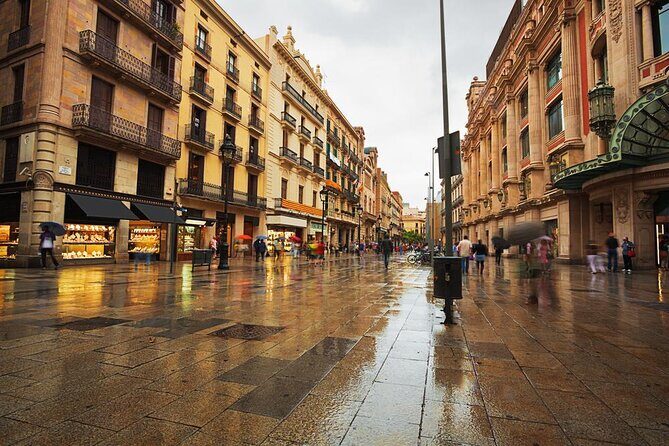
This private old-town tour strings together Barcelona’s layers: medieval streets, Roman fragments, Jewish history, and Born-market remains, all tied to real landmarks you can point at. It starts at the central Plaza de Catalunya and works your way down toward Mercat del Born, with plenty of photo-worthy stops along the way. The vibe is relaxed, but the guide keeps you moving through the city’s story without making it feel like a lecture.
I especially liked two things. First, the guide, Alfredo, was friendly and fun, and he explains the big sights alongside the good, the bad, and the ugly. Second, I love how the route mixes famous stops (like the main cathedral area) with smaller squares and details you’d likely miss on your own, so you walk away with a sharper sense of where you are and why it matters.
One thing to plan around: a couple places you might want to go inside cost extra because admission is not included, like Santa Maria del Pi and the Museu d’Historia de Barcelona (MUHBA). If you’re the type who hates optional entrances, you’ll still get a lot out of the outdoor viewing, but you’ll want to decide ahead of time whether those indoor stops are worth it for you.
In This Review
- Key highlights worth showing up for
- Starting at Passeig de Gràcia: where your old-town day makes sense
- Plaza de Catalunya to Las Ramblas: the city’s main spine in miniature
- La Boqueria and Petritxol: food stops that tell you what people care about
- Santa Maria del Pi: a famous church stop you can actually use
- The Jewish area, a WWII scar, and the Roman wall: the city’s tough layers
- Plaça d’Isidre Nonell, the Cathedral area, and Plaça del Rei: art and power in walking distance
- MUHBA Roman ruins and the Temple of Augustus columns: when you want the extra layer
- Pont del Bisbe and City Hall: legends plus civic Barcelona
- Castellers and Plaça Reial: human towers meet Gaudí-style street lamps
- George Orwell and Traginers: the kind of squares you’d skip alone
- Born’s market world: Santa Maria del Mar and the Mercat del Born ruins
- Hofmann pastry finish: a practical end and a tasty reward
- Price and value: what you’re paying for
- Practical tips so this tour feels easy
- Who this tour fits best
- Should you book this Barcelona Old Town walking tour?
- FAQ
- What’s the duration of the private Barcelona Old Town walking tour?
- Where does the tour start and end?
- Is this tour private or group-based?
- What language is the tour offered in?
- Are admission tickets included for every stop?
- Is there an indoor church visit included?
- Does the tour offer a mobile ticket, and is confirmation immediate?
- What’s the cancellation policy?
- Are service animals allowed?
Key highlights worth showing up for
- Alfredo’s storytelling: clear, upbeat explanations with history served in a real-world way
- A route that covers layers fast: Gothic, Jewish Quarter, Roman references, and Born in one sweep
- Photo stops you’ll actually remember: Pont del Bisbe and key squares throughout the walk
- Castellers and Barcelona civic pride: human towers and government-era landmarks in the same route
- Pastry finish at Hofmann: a practical end point near where you’ll want to hang around anyway
Starting at Passeig de Gràcia: where your old-town day makes sense
The meeting point is at the Apple store area on Passeig de Gràcia (Pg. de Gràcia, 1). If you’ve been using transit or taxis to hop around, this start helps you anchor the day before you plunge into the maze of the old city.
The tour begins at 4:00 pm and runs about 3 hours. That late-afternoon timing is a sweet spot: the light is often nicer for photos, and you’re not starting so early that you only catch cold stone and sleepy streets. You’ll also be walking with a plan, not just following signage that points you in circles.
Because this is a private experience, you get a calmer pace than most group tours. It also means the guide can slow down when you want details, and speed up when you’re scanning for the next “whoa, that’s cool” corner.
You can also read our reviews of more walking tours in Barcelona



Plaza de Catalunya to Las Ramblas: the city’s main spine in miniature
Your first stop is Plaza de Catalunya, the central junction where Barcelona’s different neighborhoods feel like they’re beginning their separate lives. The guide sets the tone right away, helping you see how this city is built: open squares feeding busy corridors, and today’s Barcelona connecting directly to older trading and port routes.
From there, you head to Las Ramblas, the famous street that links the city’s newer areas with the port. Even if you’ve walked it before, it’s worth seeing it with context. You start noticing how the street acts like a corridor for movement, commerce, and crowds—then you’ll compare that to the quieter Gothic lanes you hit later.
A quick stop at Font de Canaletes adds local color. It’s tied to FC Barcelona celebrations, so it’s not just a fountain you pass by; it’s a meeting point in the city’s football culture. Small stop, big sense of place.
La Boqueria and Petritxol: food stops that tell you what people care about
Next comes Mercat de la Boqueria, a major market on Las Ramblas. The point here isn’t to force you into shopping—it’s to help you understand how Barcelona’s public food spaces shape everyday life. Markets like this are where locals grab ingredients, meet friends, and keep traditions visible.
Just off the main corridor you’ll hit Carrer de Petritxol, known as the Street of Chocolate. This is the kind of street that can feel like a “tourist souvenir alley” if you walk it alone. With a guide, it becomes something else: a slice of how old streets become branded for visitors, while still showing the architecture and street texture that make Barcelona feel distinct.
If you’re thinking about timing, aim to keep your focus on quick observation. This is a walking tour, so you don’t want to get stuck comparing chocolate brands while everyone else is moving on.
Santa Maria del Pi: a famous church stop you can actually use
You’ll stop at Basílica de Santa Maria del Pi, a well-known basilica in the Gothic area. Admission is not included, so this is mainly for exterior appreciation and orientation.
This one works well even without entering. The church is a good anchor for understanding how the Gothic Quarter shaped daily life—places of worship were central not just spiritually, but socially. If you do decide to go inside later on your own, you’ll already know where you are and what to look for.
The Jewish area, a WWII scar, and the Roman wall: the city’s tough layers
As you move into the Gothic side lanes, the tour highlights the Call de Barcelona, the Jewish area inside the wider Gothic Quarter. Even when you’re just passing through streets that look similar, the guide helps you attach names and time periods to the layout. That’s the difference between seeing old buildings and understanding them.
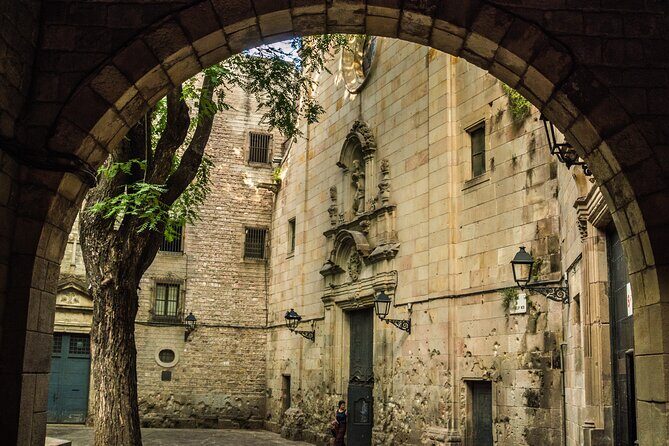
Then comes a square that adds a serious note: Plaça de Sant Felip Neri. It’s beautiful—and it’s also sadly tied to the bombing of 1938. This is the kind of stop that turns a walk into something more human. You’ll look at the stones differently once you understand why the square bears those marks.
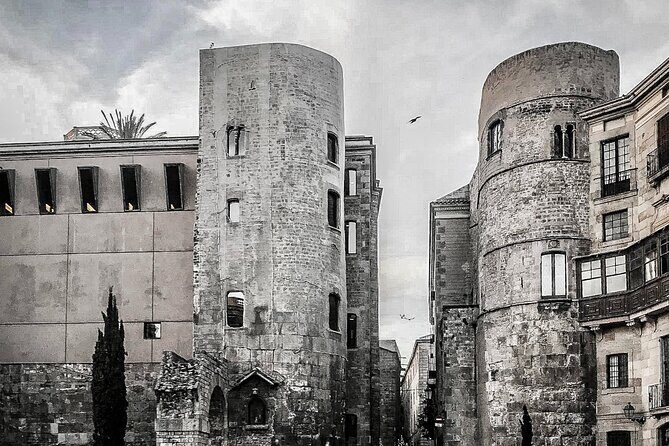
The pace then shifts toward physical history at the Roman city wall entrance. It’s one of the stops that makes you stop and think: Barcelona didn’t “start” in the Middle Ages. It has been stacked, rebuilt, and repurposed for centuries. Even a short look at Roman remnants helps you place everything you’re seeing into a longer timeline.
You can also read our reviews of more private tours in Barcelona



Plaça d’Isidre Nonell, the Cathedral area, and Plaça del Rei: art and power in walking distance
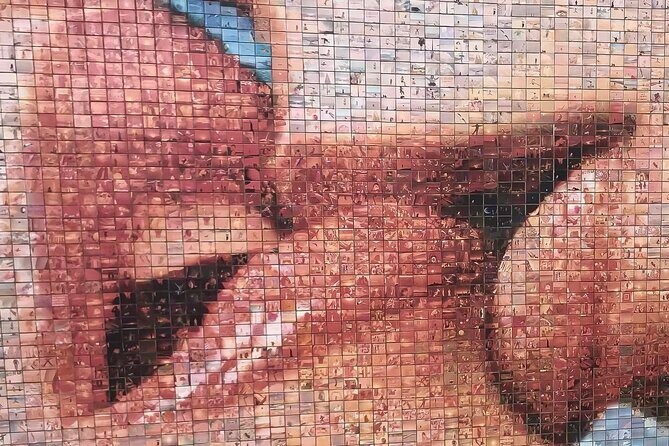
A key quick stop is Plaça d’Isidre Nonell, where you’ll see a mosaic called The Kiss. It’s a nice break from the big architectural moments. You get a modern art detail inserted into an older street setting, and it reminds you that cities don’t freeze in time.
Then you reach the Cathedral of Barcelona area. Admission is not mentioned for inclusion here, but the stop is short and focused on the cathedral’s importance and visibility. This is one of those areas where the building is so prominent that it feels like you’re surrounded by meaning, whether you’re a religious history fan or not.
Next is Plaça del Rei, a monumental square lined with Gothic and Renaissance buildings tied to royal power—seat of government for the Counts of Barcelona and kings of Aragon. The guide’s framing helps you see why a square like this matters: it’s not random open space. It’s built as a stage for authority and administration.
MUHBA Roman ruins and the Temple of Augustus columns: when you want the extra layer
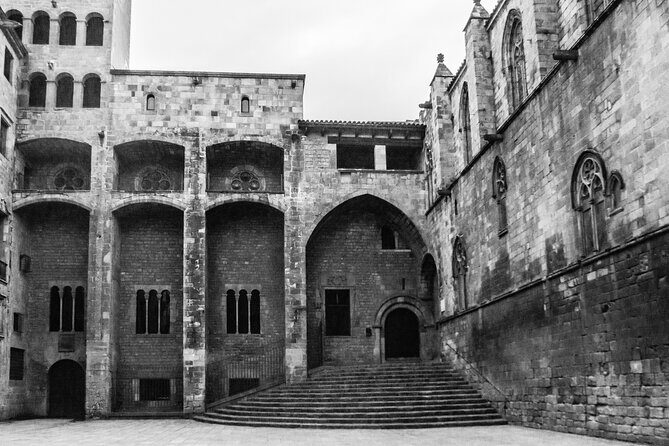
At Museu d’Historia de Barcelona (MUHBA), the tour points out Roman ruins—about 4,000 m² of them. Admission is not included, so you’re deciding whether to stop outside and move on with the group, or pay to see more. The value of this moment is that it gives you a concrete “where did the city come from?” answer without forcing you into a long museum session.
A few steps away you’ll see another Roman-era clue at Centre Excursionista de Catalunya, where there are four columns from the Roman period (linked with the Temple of Augustus). It’s the kind of stop that feels almost too small until you realize what it represents: the old world still visible, built into today’s streets.
Pont del Bisbe and City Hall: legends plus civic Barcelona
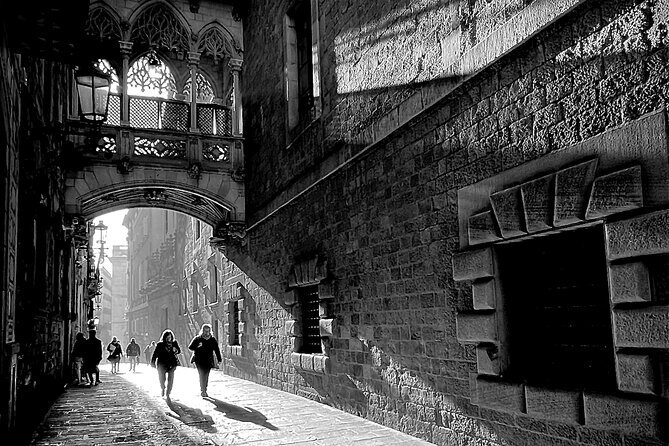
Then you reach Pont del Bisbe, one of Barcelona’s most photographed bridges. This stop isn’t just about the view—it’s about the secrets and legends tied to it. Bridges are perfect for legends because they’re natural choke points: people cross, stories gather, and the physical structure becomes a memory hook.
After that, you’ll come to City Hall (Casa de la Ciutat / Ayuntamiento) and Palau de la Generalitat de Catalunya, the civic and government buildings. These are fast stops, but they matter because they show you how Barcelona’s identity isn’t only churches and castles. It’s also administration, institutions, and public power.
Castellers and Plaça Reial: human towers meet Gaudí-style street lamps
A short walk takes you past the Monument als Castellers, honoring Castellers—the human towers tradition that’s strongly tied to Catalonia. Even without joining a tower event, this gives you a sense of how communal tradition lives in public space.
Next comes Plaça Reial, a beautiful square that connects the Gothic area with Las Ramblas. You’ll also see one of Antoni Gaudí’s early works: the street lamps. This is a great moment for photos, but it’s also a good reminder that Gaudí’s influence isn’t limited to the famous buildings people travel across town to see.
George Orwell and Traginers: the kind of squares you’d skip alone
You’ll pass Plaça de George Orwell, then continue toward Plaça dels Traginers, which includes an old Roman tower. These squares are shorter stops, but they give you variety. Instead of only big-ticket monuments, you get “pause points” where the street opens up and you can breathe, look, and reorient.
If your previous plan was just walking between major sights, this part can feel like a bonus. Small places build a city’s texture.
Born’s market world: Santa Maria del Mar and the Mercat del Born ruins
In the Born area, you’ll stop at Basílica de Santa Maria del Mar. Admission is not included, but depending on timing you may be able to go inside. That uncertainty is normal on walking tours, and it’s one of those practical realities: you’re not guaranteed an open door, but you do get a legitimate chance if the timing works out.
Then comes Passeig del Born, a pleasant boulevard where the energy shifts from dense Gothic lanes to a more residential-feeling historic neighborhood vibe.
Finally, you reach Mercat del Born, an old market now functioning as a cultural center because of ruins you can see underground from the 18th century. This is the kind of ending that feels satisfying because you see a historic structure turned into a living public space.
The tour finishes near Plaça Comercial, 12 in Born, at the meeting/end point.
Hofmann pastry finish: a practical end and a tasty reward
The last stop is Patisserie Hofmann. This is where the tour stops being about marching and turns into the real Barcelona habit: take a break and linger. You can choose dessert there, or grab a nearby drink and keep the evening going at your own pace.
Since the tour ends around the Born market area, it’s a great time to keep exploring on foot afterward. You’ll already know the route spine, so you won’t feel as lost in the streets.
Price and value: what you’re paying for
At $180.04 per person for about 3 hours, the price isn’t cheap in absolute terms. But in practice, you’re paying for a private guide and a route that’s built to save time in the oldest parts of the city.
The value jumps if you like history explained with a human tone, not just facts. Alfredo’s delivery—friendly, professional, and fun—seems to be the main reason the experience earns a near-perfect score. You also get a structured flow from major landmarks to smaller squares, plus a clear finish point for food.
If you’re traveling in a larger group, look for the group discounts option mentioned for the experience. That can make the per-person cost feel more reasonable.
Practical tips so this tour feels easy
- Wear comfortable walking shoes. This is a dense area and you’ll be on your feet for the full 3 hours.
- Bring a light layer if it cools down in the late afternoon. You start at 4:00 pm, and evenings can feel different than midday.
- If you care about entering indoor sites, decide in advance which ones are worth paying for—Santa Maria del Pi and MUHBA are the ones called out as not included.
- Use the mobile ticket and keep it ready. You’ll move through multiple stops quickly, and it’s easier if you don’t have to rummage mid-walk.
Who this tour fits best
This works especially well if:
- it’s your first time in Barcelona and you want a fast orientation to the Gothic Quarter and Born
- you like your history guided by real places, not just museum labels
- you’d rather have one good explanation than try to piece it together yourself while tired and hungry
It may be less ideal if:
- you want a tour focused only on indoor museum time (this is mainly a walking route with optional entries)
- you prefer ultra-slow sightseeing where you never feel rushed
Should you book this Barcelona Old Town walking tour?
I think it’s a strong booking when you want structure. The route covers big-name sights and quieter squares, and the guide style—Alfredo’s friendly, clear approach—makes the differences between places feel meaningful. If you’re willing to plan for two possible paid entrances, you’ll likely feel like the tour earns its cost.
If you’re on a tight budget, you could do much of it independently. But you’d lose the quick context that helps you connect Roman traces, Jewish history, civic landmarks, and Born’s market ruins into one coherent picture.
FAQ
What’s the duration of the private Barcelona Old Town walking tour?
It runs for about 3 hours.
Where does the tour start and end?
It starts at Apple Passeig de Gràcia, Pg. de Gràcia, 1, Eixample, 08007 Barcelona, Spain, and ends at Mercat del Born, Plaça Comercial, 12, Ciutat Vella, 08003 Barcelona, Spain.
Is this tour private or group-based?
It’s a private tour/activity, so only your group participates.
What language is the tour offered in?
The tour is offered in English.
Are admission tickets included for every stop?
Most stops have admission ticket free, but a couple listed stops have admission ticket not included, including Santa Maria del Pi and the Museu d’Historia de Barcelona (MUHBA).
Is there an indoor church visit included?
Basílica de Santa Maria del Mar may allow you to go inside depending on the time, but admission is not included.
Does the tour offer a mobile ticket, and is confirmation immediate?
A mobile ticket is used, and confirmation is received at the time of booking.
What’s the cancellation policy?
You can cancel for free up to 24 hours in advance for a full refund.
Are service animals allowed?
Yes, service animals are allowed.