REVIEW · BARCELONA
‘The Cathedral of the Sea’ Walking Book Tour
Book on Viator →Operated by Icono Spain Tours · Bookable on Viator
The Cathedral of the Sea turns streets into a story. I love the way this tour links Ildefonso Falcones’ book to real medieval Barcelona, especially at Santa Maria del Mar. I also like that you pack in key Gothic landmarks—the Jewish Quarter and Plaça del Rei—without feeling like you’re doing a scavenger hunt.
One thing to think about: if your group includes both Spanish and English speakers, the guide may repeat parts in two languages, which can cut into the amount of English commentary.
In This Review
- Key points before you go
- Why this Cathedral of the Sea walking tour works in Barcelona
- Timing, pace, and who this fits best
- Stop 1: Basilica de Santa Maria del Mar and why it hits hardest
- Carrer Montcada: palazzos on a medieval main street
- Plaça del Rei: where Gothic Barcelona looks most like medieval Barcelona
- Plaça Sant Jaume: the Gothic Quarter’s political “lung”
- Sinagoga Major and the medieval Jewish Quarter calls
- Catedral de la Santa Creu i Santa Eulàlia: Gothic layers that need to be seen inside
- Guide quality and what language mixing can change
- Price check: what $17.86 buys you, and what to bring
- Should you book this tour for your Barcelona days?
- FAQ
- How long is the Cathedral of the Sea walking tour?
- Where does the tour start and end?
- What sites will I see during the walk?
- Is admission included for the stops?
- Is food or drinks included?
- Is the tour in English?
- What should I bring or wear?
- What is the cancellation policy?
Key points before you go
- Novel-to-stone storytelling: You’ll connect locations to the book’s world, not just point at buildings.
- Compact Gothic Quarter route: A small-group walk focused on the areas the story lives in—plus El Born sights nearby.
- Free entry stops on the route: Major sites on the itinerary are listed as admission free, so you’re mostly paying for guiding time.
- Jewish Quarter context in the right setting: The restored synagogue visit gives you a real sense of medieval community life.
- Small group size: With a maximum of 15 travelers, you’re more likely to get personal attention and keep the pace manageable.
- Comfort matters: You’ll be on your feet for close to 2–2.5 hours, so plan for walking shoes and weather.
Why this Cathedral of the Sea walking tour works in Barcelona
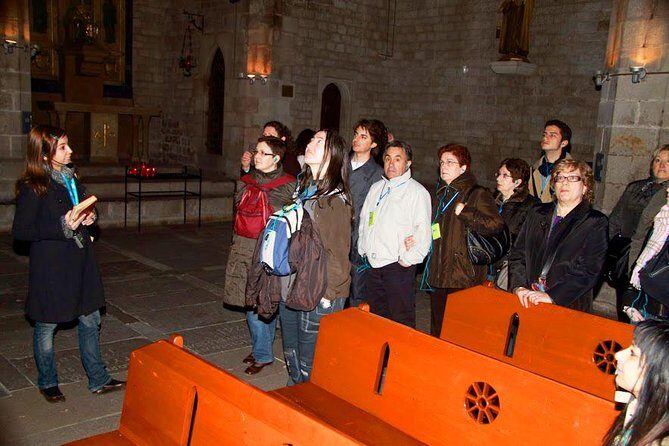
This tour is built for people who like the city as much as the book. Instead of treating Barcelona like a list of sights, the guide ties places to the plot and the social world behind it. That means you’re walking through the Gothic Quarter and nearby El Born with a “why is this here?” feeling, not just a “what is this?” moment.
Ildefonso Falcones’ story is all about the lived reality of medieval Barcelona—class, religion, labor, and politics—and you see those themes mapped onto real stone. The route is practical too: you’re moving through compact neighborhoods where medieval streets and big civic spaces are still easy to read.
You should also know what kind of experience it is. This is a narrated walk with stops, not a slow museum day. If you want to linger for long photo sessions in every church, you might feel a bit rushed.
You can also read our reviews of more walking tours in Barcelona



Timing, pace, and who this fits best
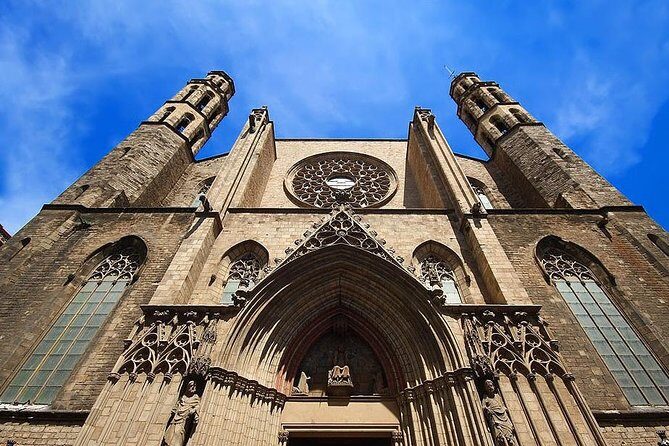
The tour runs around 2 hours, and the narrated walk is described as closer to 2.5 hours depending on the flow. It starts at 10:00 am in Ciutat Vella, and it ends near Plaça Nova, so you’ll finish in a central spot that’s handy for continuing on your own.
It’s a small group—up to 15 people—which helps for questions and keeps the group from turning into a moving traffic jam. The operator also runs it in all weather conditions, so plan for rain or strong sun. Comfortable shoes aren’t just a suggestion; this is the kind of walking where you’ll notice if your footwear is wrong.
This tour is a great match if you:
- read The Cathedral of the Sea (or want to after seeing the settings)
- like guided history that connects to places you can actually see
- want a structured route through Barcelona’s oldest streets in a short window
Stop 1: Basilica de Santa Maria del Mar and why it hits hardest
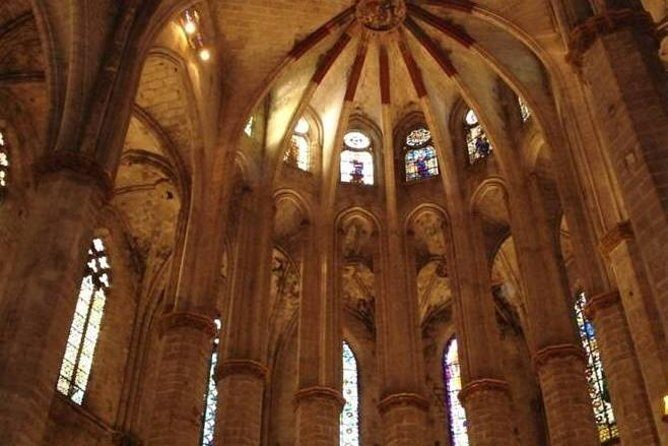
Your first major stop is Basilica de Santa Maria del Mar, often called the cathedral of La Ribera. This is one of Barcelona’s most harmonious Gothic churches: strong lines, balanced proportions, and a calm feeling once you’re inside. Even if you’ve seen other Gothic buildings in Europe, this one tends to feel focused—like the architecture is doing its job quietly.
The tour’s whole idea is that Falcones’ book stops being abstract when you stand here. The church’s construction ties to the story’s backstory, so the guide can explain what you’re looking at in a way that feels connected, not academic.
The listed stop time is about 30 minutes, and admission is marked as free. That’s useful value. Still, remember it’s a walking tour—so you’ll get time to see the church and hear commentary, but you won’t have unlimited hours to wander at your own pace.
Practical tip: If you care about photos, aim to shoot outside first, then use your inside time for details that most people miss—columns, spacing, and the overall sense of light.
Carrer Montcada: palazzos on a medieval main street
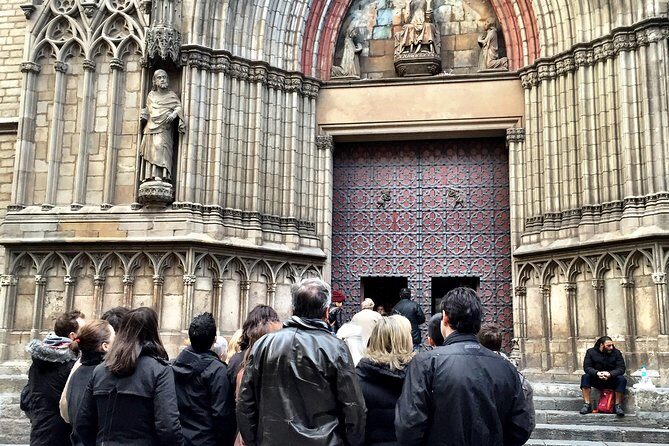
After Santa Maria del Mar, you’ll walk toward Carrer Montcada, a street famous for its succession of palazzos from different periods. Medieval, Renaissance, and baroque doorways line the street, and the guide focuses on how this was tied to the old noble world of Barcelona.
This part of the tour works well because it shows you layers. You get a sense of how Barcelona’s wealth and power moved through time, and the street itself becomes an open-air reference map. It’s also a nice rhythm break after the church stop: you’re outside, walking, and learning how the city’s social hierarchy left visible marks.
If you’re expecting a big landmark every 30 seconds, you might find this segment more about context than spectacle. But that’s kind of the point: medieval Barcelona is street-level as much as it is monument-level.
Plaça del Rei: where Gothic Barcelona looks most like medieval Barcelona
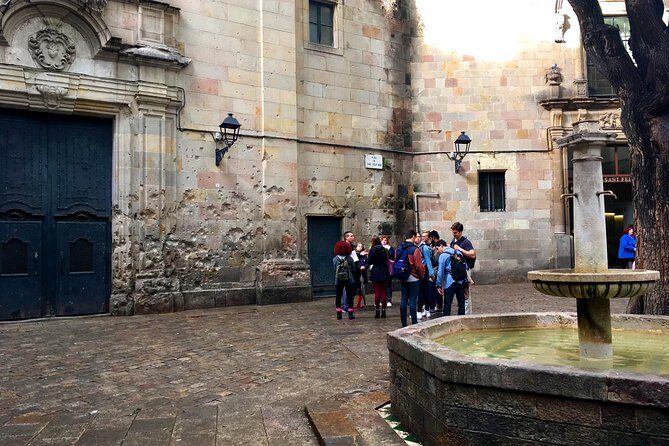
Plaça del Rei is where the tour leans hard into the medieval vibe. The stop centers on the Conjunt Monumental de la Plaça del Rei, one of the best Gothic architectural ensembles for picturing the city’s past.
This square is not just pretty architecture—it’s a place where you can imagine authority and civic life happening. Once you know that squares like this functioned as stages for public power, the stone stops looking decorative and starts looking functional. The guide’s commentary here matters, because it turns the space into a story you can follow.
You’ll spend about 30 minutes here, and admission is listed as free. That gives you enough time for the key takeaways without dragging.
Watch for: wind. Squares can feel exposed, especially around midday in summer.




Plaça Sant Jaume: the Gothic Quarter’s political “lung”
Next comes Plaça Sant Jaume, a square that has acted as a political center for a long time. Today it’s an open space—described as a lung in the middle of the Gothic Quarter—which makes it a natural pause point in the walk.
The important buildings to notice here are the City Hall and the Palau de la Generalitat. Even if you don’t know their details, the tour framing helps you understand why they belong together in one place. Think of it as Barcelona’s civic spine: the city grew up around power, administration, and public life.
You get about 15 minutes at this stop. It’s short on purpose, so you can keep moving through the tour without losing the momentum of the narrative.
If you like architecture but also like people-focused history—who ran the city and how it functioned—this is one of the most satisfying stops.
Sinagoga Major and the medieval Jewish Quarter calls
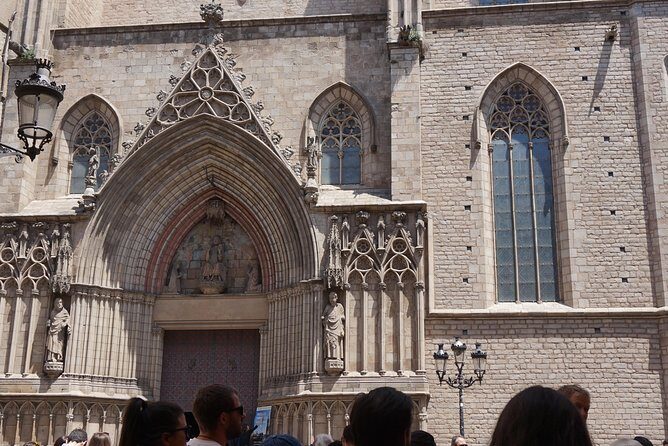
One of the standout components is the visit to Sinagoga Major de Barcelona, set in the restored Jewish Quarter. This is one of Europe’s oldest synagogues (as described in the tour materials), and it’s open to the public after restoration.
The guide also puts numbers and neighborhood structure on your mental map. From the 9th to the 14th century, the Jewish community in Barcelona is thought to have been around 4,000 people. Around them, two clusters of narrow streets formed what are called calls, from a Hebrew word meaning community or congregation.
That background helps a lot. It prevents the visit from feeling like a quick “look at a building” moment. Instead, you understand why the streets matter and how a community shaped everyday life. You also get a clearer picture of how medieval Barcelona wasn’t only Christian and noble—it was a mix of religious communities with distinct neighborhoods.
This stop is about 15 minutes, with admission listed as free. Treat it respectfully and keep your voice down. Not because you’re being watched—because the place is meant for quiet understanding.
Catedral de la Santa Creu i Santa Eulàlia: Gothic layers that need to be seen inside
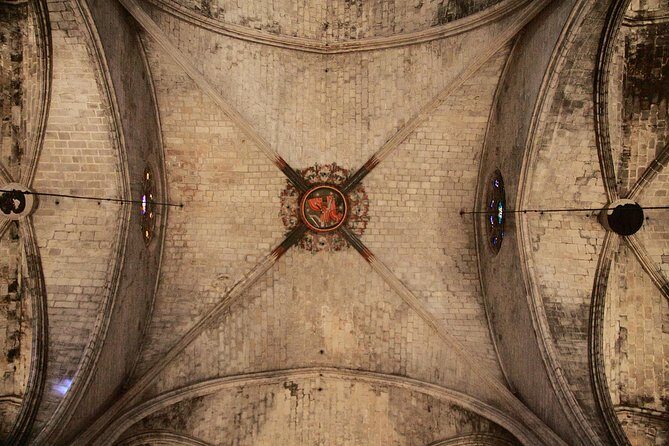
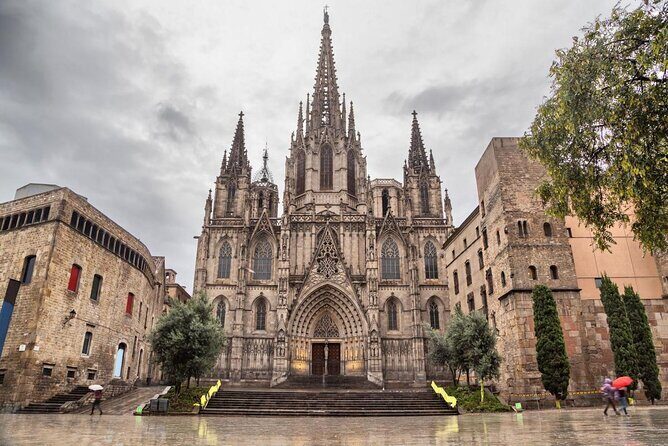
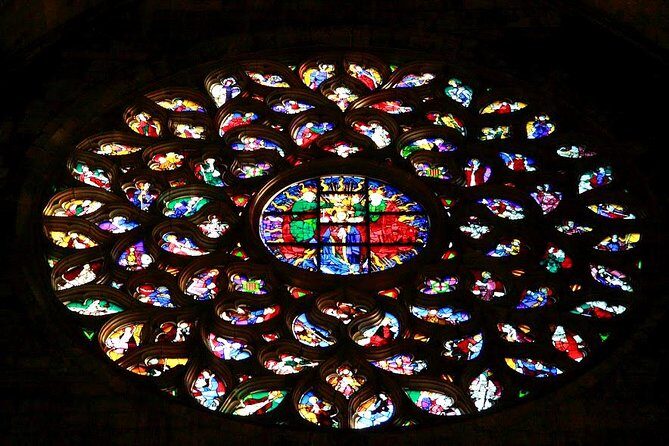
The walk also includes Catedral de la Santa Creu i Santa Eulàlia, a building that reflects Barcelona’s constant change over time. The exterior can feel like it’s just watching the world go by, but the tour highlights that you really need the inside view to grasp its splendor.
This is a different kind of stop than Santa Maria del Mar. Here the emphasis is on how architectural styles blend within a predominantly Gothic building. The guide’s commentary helps you connect what you’re seeing to how generations left their imprint.
Admission isn’t spelled out for this stop in the same way as the others, so don’t rely on it being free unless your booking notes confirm it. Still, the tour’s focus is the explanatory value: it helps you read the building instead of just recognizing it.
If you’re sensitive to long standing, bring that up to yourself ahead of time. Churches ask more patience than streets do.
Guide quality and what language mixing can change
This kind of tour rises or falls on the guide. In strong moments, the narration makes medieval Barcelona feel like a living place. One guide named Cristina is specifically praised for strong knowledge about city and book history, and the experience gets described as following the steps of characters through real locations.
Another guide named Antonia is praised for making the history of Catalonia easy to understand. That tells me the tour can explain complex themes in a way that doesn’t overwhelm you.
But there’s also a realistic downside: if you’re grouped together with Spanish speakers and the guide repeats content in two languages, your time can feel sliced thinner than expected. One review notes that English commentary may be reduced to snippets if most narration is in Spanish. Another notes the guide repeated everything in two languages, which made the tour feel a bit long.
My practical advice: when you book, look closely at the language description. If you’re relying on English, arrive a little early and ask the meeting-point staff (or the guide when you find the group) what language split you should expect that day.
Price check: what $17.86 buys you, and what to bring
At $17.86 per person for a guided walk, this is priced like a “value history” experience. The big reason it feels fair is that multiple key stops are marked as free admission on the itinerary. You’re essentially paying for expert storytelling, route guidance, and timed access to the right places without having to plan it all yourself.
Also, you get a mobile ticket and a max group size of 15, which usually keeps the experience smoother. Group discounts are mentioned too, which is worth considering if you’re traveling with someone who wants a structured plan.
What’s not included is food and drinks. So don’t plan this as your entire day meal plan. Use it as a cultural anchor, then stop for lunch after.
Bring:
- comfortable shoes (non-negotiable for a walking tour)
- a light layer for changing weather
- water if it’s a warm day
If you’re the type who likes to read while you walk, bring your copy of the book and jot a few character names you want to map to streets.
Should you book this tour for your Barcelona days?
Book it if you:
- want a short, structured way to see Barcelona’s Gothic Quarter and El Born with context
- have read The Cathedral of the Sea (or plan to) and want the settings to click
- enjoy churches and squares when the guide explains what to look for
Skip it (or be cautious) if:
- you strongly need lots of English commentary and language mixing would frustrate you
- you prefer independent exploration over guided narration
- you want long museum-style time inside each site rather than a moving story route
If you have limited time in Barcelona, this tour is a smart way to get your bearings fast in the medieval core. Just go in knowing it’s a guided walk with stops, and you’ll come away with a clearer mental map of the city—and how Falcones’ world fits on real streets.
FAQ
How long is the Cathedral of the Sea walking tour?
The tour is listed at about 2 hours, with the narrated walking experience described as around 2.5 hours depending on pacing and how the stops flow.
Where does the tour start and end?
It starts at Plaça de Santa Maria in Ciutat Vella, Barcelona, and ends at Plaça Nova in Ciutat Vella.
What sites will I see during the walk?
You’ll visit Basilica de Santa Maria del Mar, Carrer Montcada, Plaça del Rei, Plaça Sant Jaume, the Sinagoga Major de Barcelona, and the Catedral de la Santa Creu i Santa Eulàlia.
Is admission included for the stops?
Admission is listed as free for the Basilica de Santa Maria del Mar and for the stops at Plaça del Rei, Plaça Sant Jaume, and the Sinagoga Major de Barcelona. The tour price covers the guided experience.
Is food or drinks included?
No. Food and drinks are not included unless specified.
Is the tour in English?
The tour is described as an English-speaking walking tour, but language experience can vary depending on group composition. If you’re booking specifically for English narration, check the language details for your date.
What should I bring or wear?
Wear comfortable shoes. The tour runs in all weather conditions, so dress appropriately for rain or heat.
What is the cancellation policy?
You can cancel for free up to 24 hours in advance for a full refund. If you cancel less than 24 hours before the start time, the amount paid is not refunded.